Articles
-
The Sno-Freighter’s Final Rescue
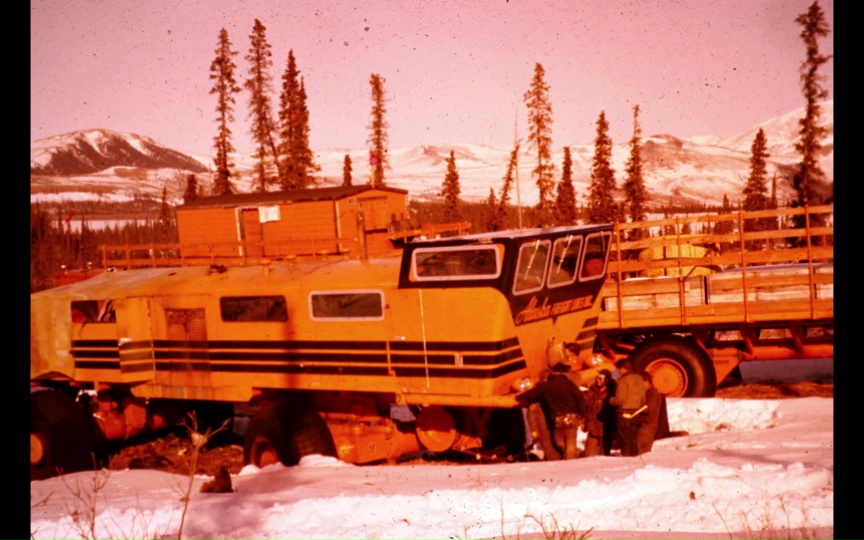
In May 1961, the Sno-Freighter was being prepared for its final rescue. It had been sitting for nearly five years in a valley without the ability to move. It’s engine’s were inoperable and the wiring in the control car were destroyed after it jackknifed and caught fire during a DEW Line resupply mission. However, the crew assigned to bring it back to civilization successfully negotiated its freedom. The Sno-Freighter was unable to recover from the fire that night. But, there is more than one Monster in the Yukon.
Image: M. Martinez -

Man on the TC-497’s Radar Unit in Yuma
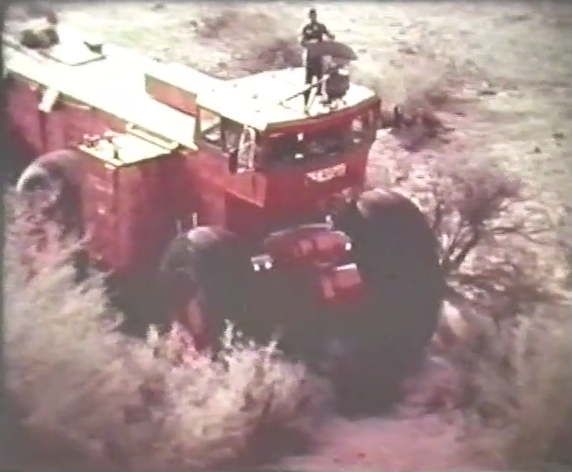
I was editing the TC-497 chapter early this morning and took a little detour in my video folder. Around three minutes into the video showing the TC-497 just after unloading at Yuma in 1962, I captured this still frame of an Army service member. He is standing on top of the TC-497, over 16 feet in the air while moving, and holding on to the radar unit. Let’s hope that was not activated during travel!
-
Overland Train Product Card
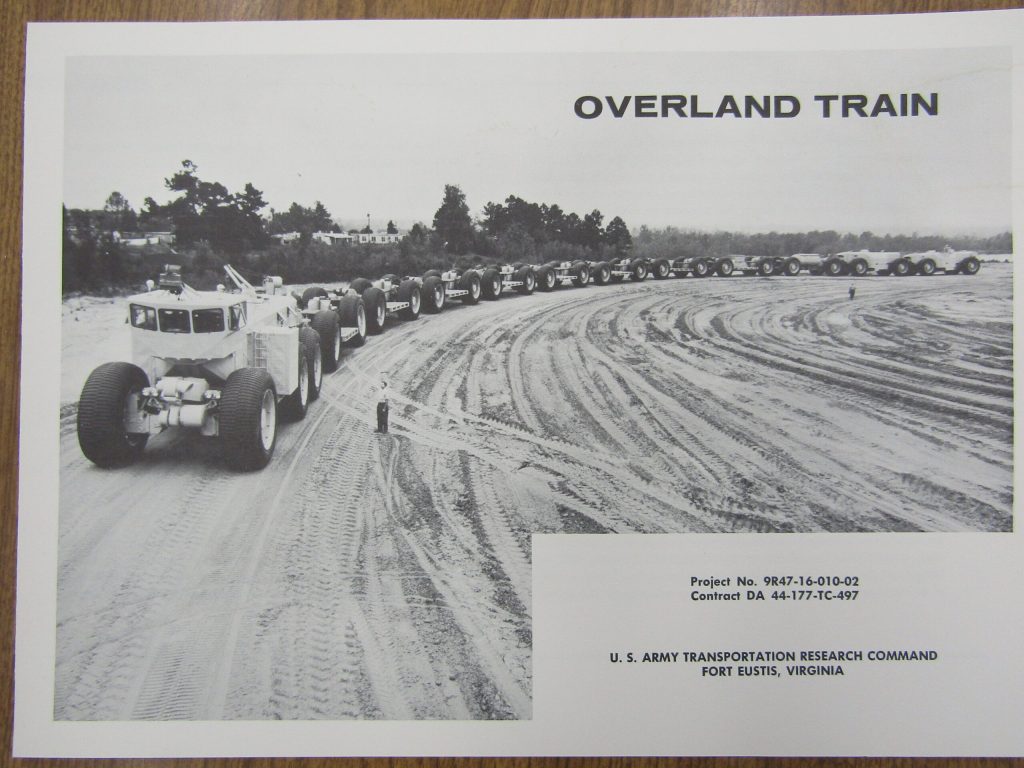
The Overland Train was the final train vehicle made by R. G. Letourneau. The back of this product card showed the technical specifications including an overall length of 572 feet and wide of 16 feet, 6 inches.
-
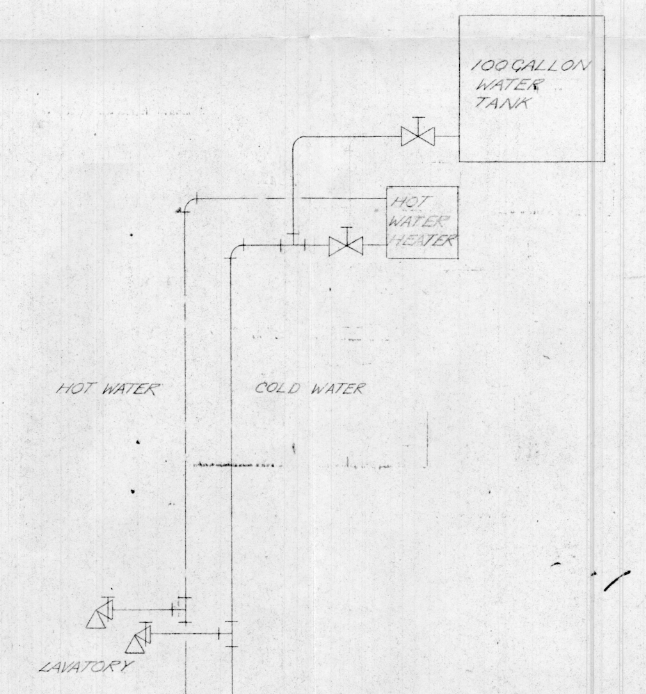
Overland Mark 2 Water System
The Overland Mark 2 (Mark 2) was designed to support a crew of six and operate unsupported for a short period of time. The Mark 2 had a cold and hot water system that supplied water to the kitchen and a lavatory for washing hands and meal preparation. However, the water was not used for flushing the toilet. I’ll talk more in-depth about that in my book.
The Mark 2 contained 2*100 gallon water tanks. These tanks provided water under gravity to the hot water heater and the rest of the system. Water lines traveled underneath the insulated flooring. The drawing below shows that only one tank fed the hot water heater. Depending on the line pressure, it may be possible that the second 100-gallon tank could have also provided supply too. There is no mention or diagram of a wastewater system. It is entirely likely that the greywater from lavatory hand washing and the kitchen sink was drained outside as it was used.
The Mark 2 water system zoomed and right 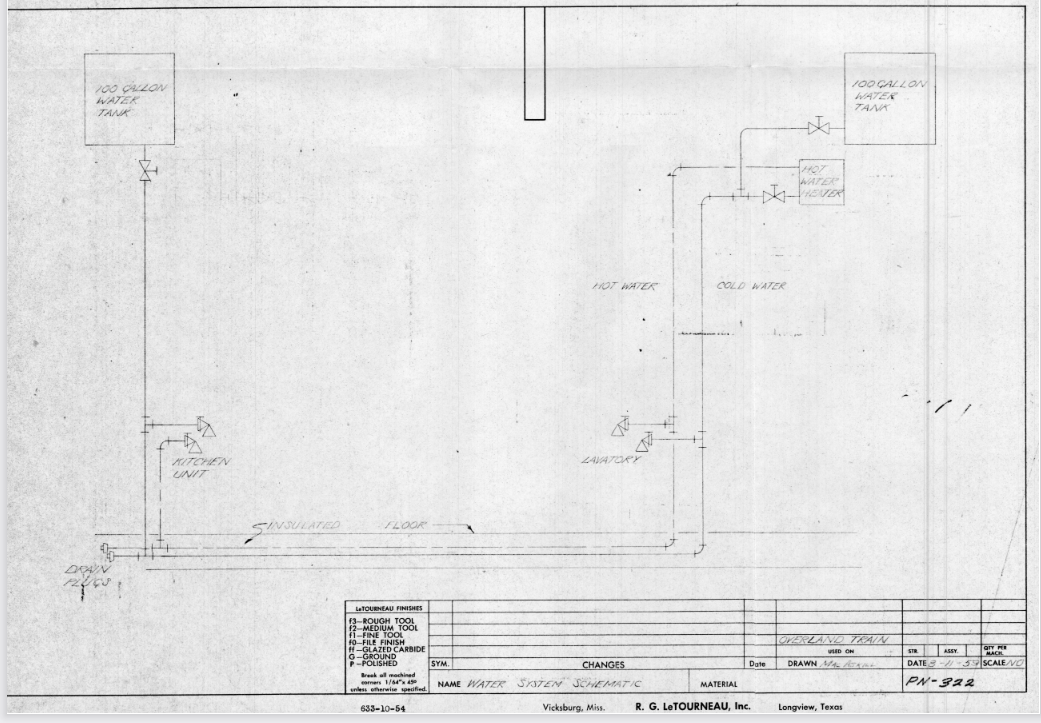
The Mark 2 water system 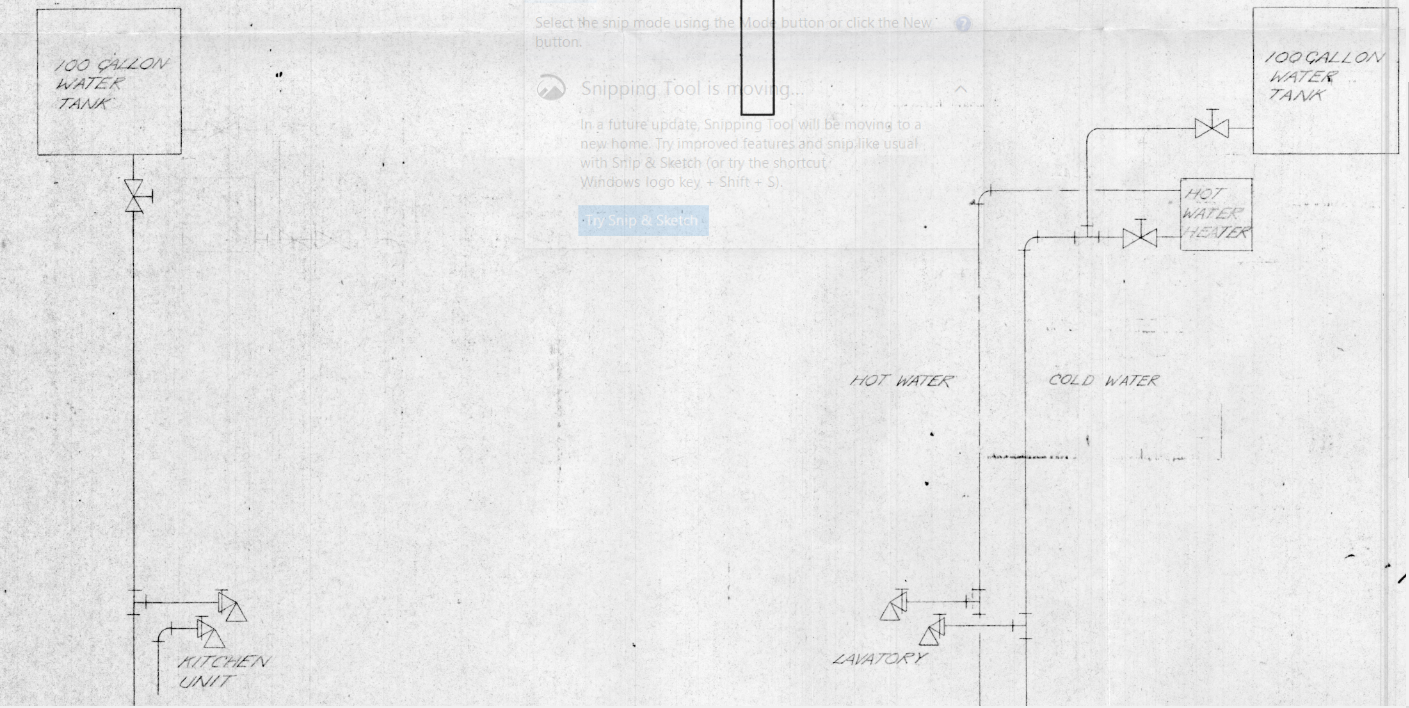
The Mark 2 water system diagram close -
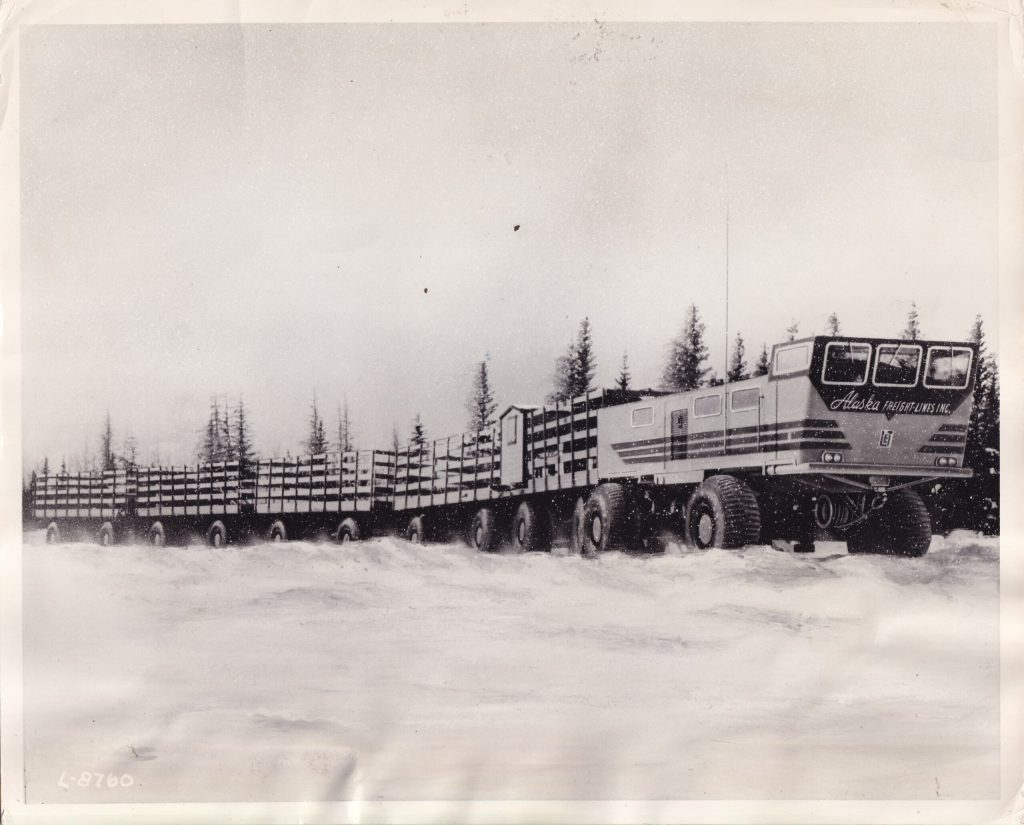
Alaska Freight Lines Sno-Freighter: Dates are Not What they Seem
I am a bit of a sucker whenever a LeTourneau image is for sale online. I opened my front door and found the USPS had delivered my latest image. When I started writing this book nearly two years ago, I erased all of my assumptions and previous data I thought that I knew about the Overland Trains. All of the content that I have written on the Overland Trains so far has been supported by factual data and interviews with folks that were directly in contact with the machines, and backed up by the original or scanned original documents, not conjecture. When I find an image like the one seen below, I make sure to ignore the data on the back of the photos – they are usually wrong – and work off of what I can see and what I know for certain about the timeframes associated with the Sno-Freighter.

Alaska Freight Lines Sno-Freighter. Some of these photographs show an “L” number that helps to date the photograph. In this instance, the L-8760 number shown on the bottom left corner of the image refers to a date of 09-26-55. The back of the image shows a date of March 12, 1962. In this case, both of the dates are incorrect. The Sno-Freighter was sitting at the mouth of the blow river until November of 1955. A similar photo dated July 1955 (below) is a more reasonable date for this image (above)

VC-22 Sno-Freighter -
The Army Nuclear Power Program and Camp Thule’s PM-2A Reactor
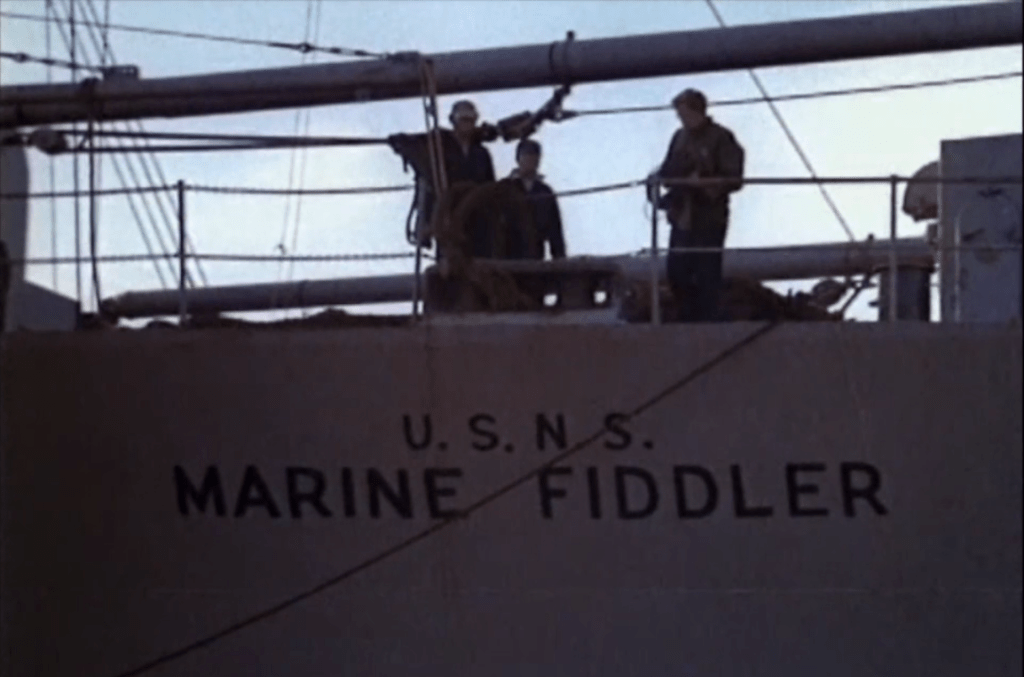
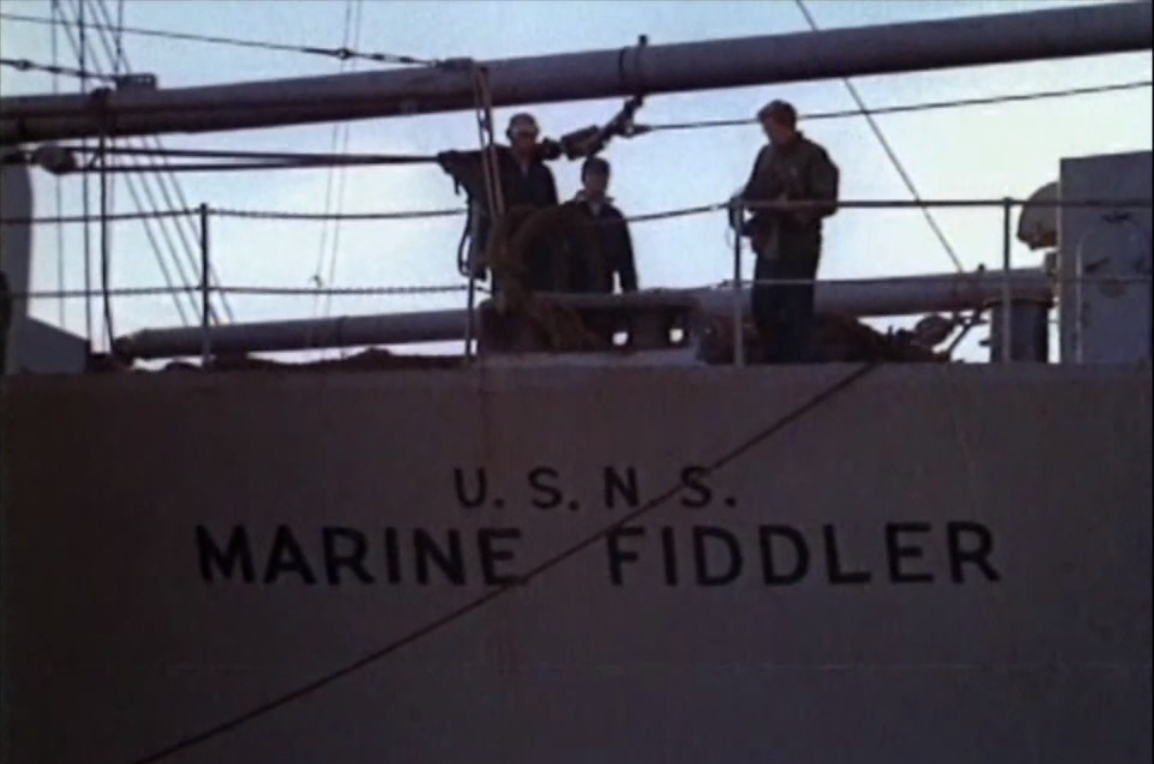
On June 25, 1960, the United States Navy Ship (USNS) Marine Fiddler departed from Buffalo, NY. It was the first cargo ship of the 1960 shipping season in the Arctic. It arrived at Thule on July 10, 1960, carrying some of the most important cargo the Army would see for years to come.
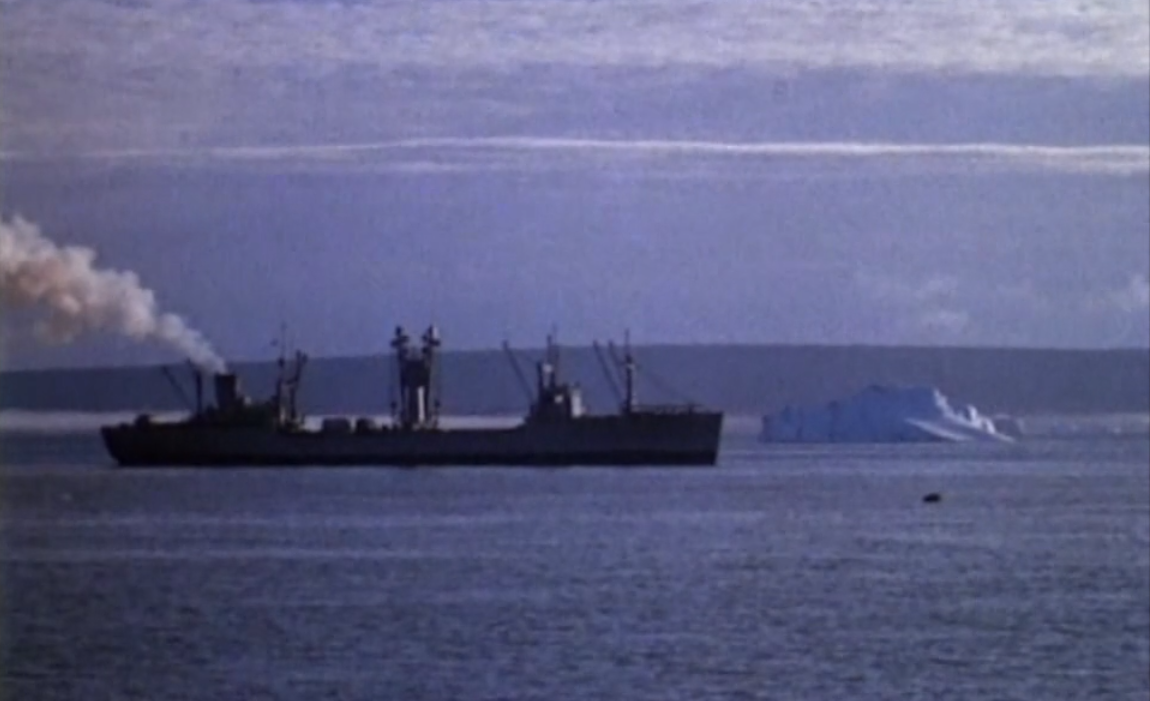
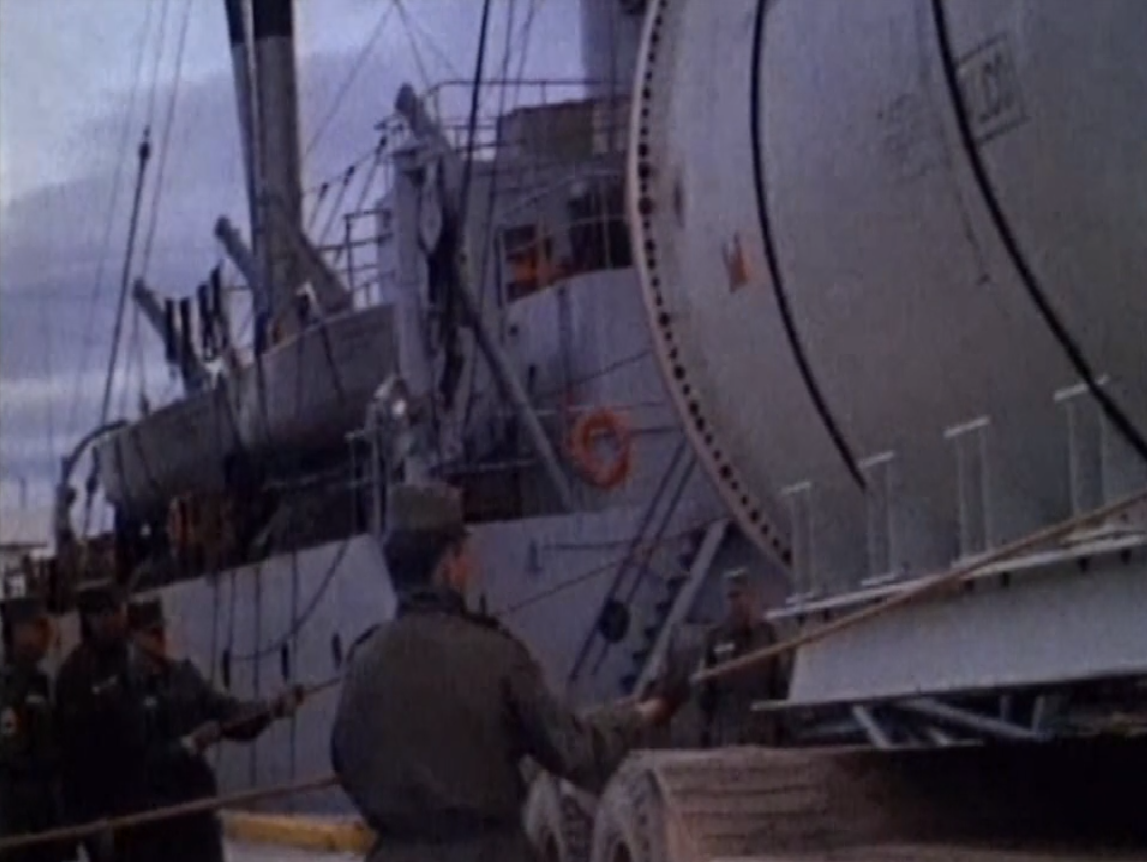
In three days of uninterrupted operations, the Army’s first small modular reactor would be placed in trailers and shipped to Camp Tuto. It was designated as PM-2A.
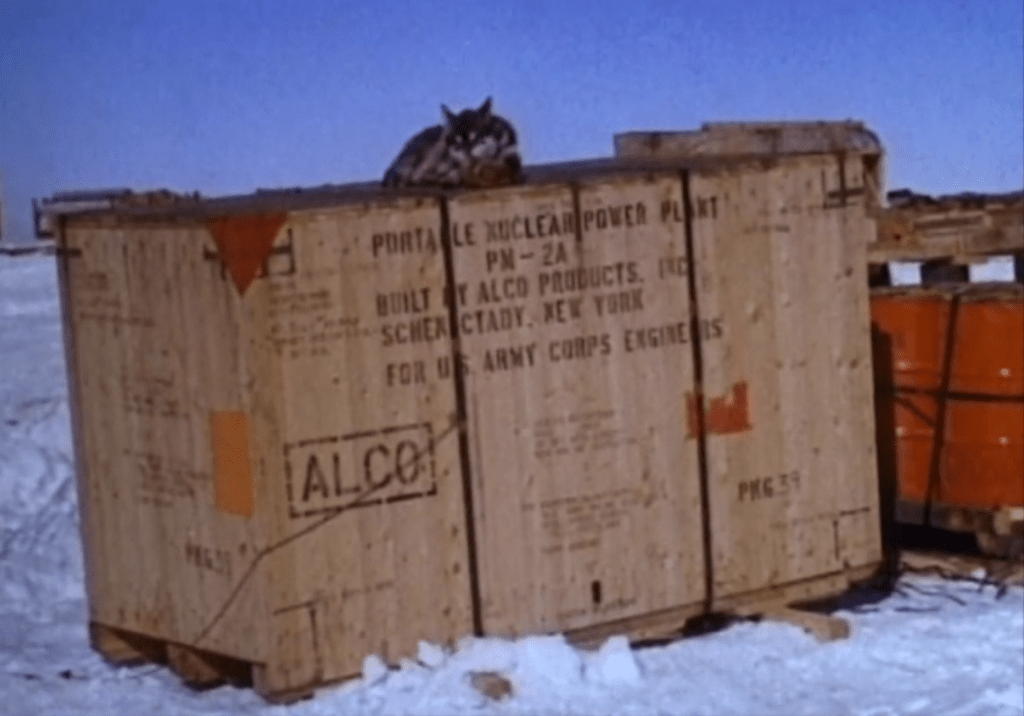
PM-2A small modular reactor for Camp Century Roland Jasmin was one of the service members that were part of Polar Research & Development Center (PR&DC) out of Fort Belvoir. From there, the reactor was transferred to sleds where it would find its new home at Camp Century.
The Camp Century PM-2A reactor cost around $6 million dollars at the time. The 800 pound core was the equivalent to more than a million gallons of diesel fuel (1 pound of uranium equaled around 6,000 pounds of diesel).
-
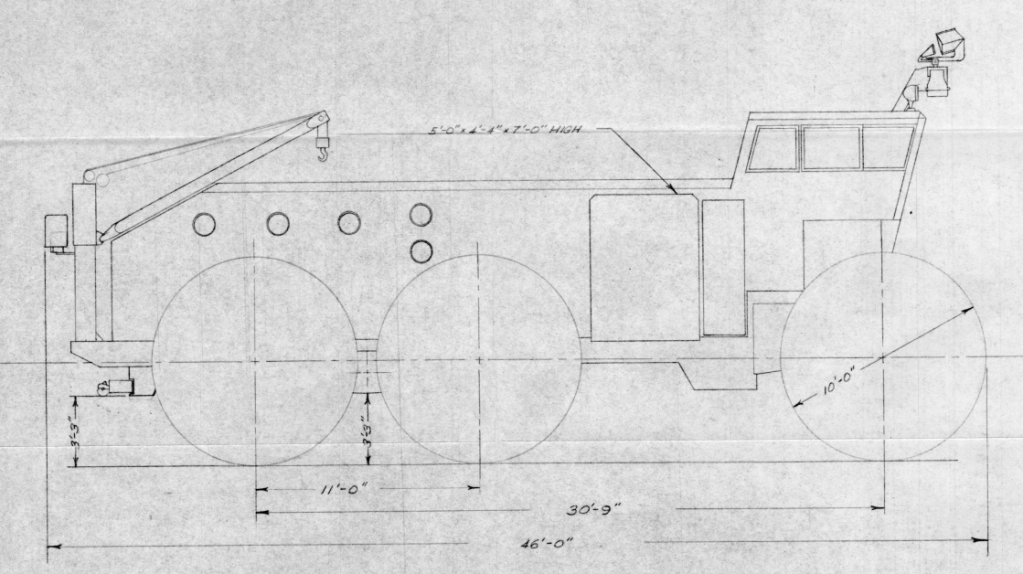
Overland Train Mark 2 General Dimensions
R. G. LeTourneau, Inc. and the Army had milestones built into The Overland Train Mark 2 (Mark 2) contract. These were defined as Phase I, Phase II, Phase III, and Phase IV. The Army and LeTourneau were designing and building some of the Mark 2 as they went along, including the suspension and interior layout. The following drawing is listed as Part Number, or PN-328. It is one of many drawings included in a Phase I design book created by R. G. LeTourneau, Inc. The drawing shows front-facing, passenger side, and top dimensions view, minus the removable side compartments. If you want to download the file, click the downward-facing arrow with the line under it on the top-right of the document area below or scroll to the bottom of this article.
The Mark 2 body, minus the tires, was 40 feet long. Once the tires are included in the measurements, the Mark 2 is 46 feet long as measured from the rear jib crane to the front tire.
It measured 16 feet, 6 inches wide, as measured from the outside edge of each tire. Each of the Firestone 120x48x68 tires was 4 feet wide!
If you measure the Mark 2 from the bottom of the tire to the top of the cab, it is 16 feet, 9 inches. Add the radar unit and the height extends to 20 feet, 7.5 inches tall.
-
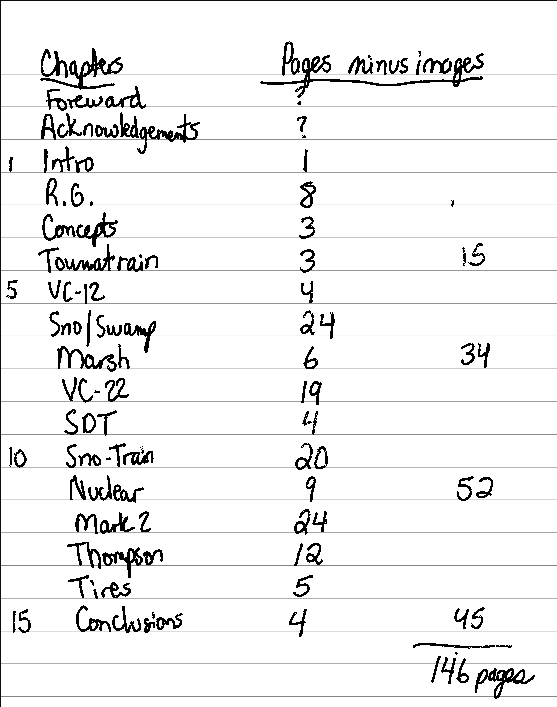
Book Writing Update as of February 22, 2022
I have had 4 days off for the weekend, President’s Day, and one day of vacation to write. The work week does not leave much time past email correspondence to work on the Overland Train book. There are 15 chapters in the book, with all but 2 or 3 that are in the editing phase.
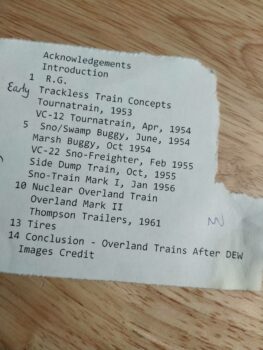
Draft Overland Trains book chapters list. The editing phase means that I am no longer incorporating new content. Changes are grammatical, shifting content around, and spelling or word choice changes. The remaining two chapters where I am still incorporating content are relatively minimal.
As a curiosity, I opened up each chapter document and counted the pages. Using Amazon Kindle Direct for publishing does not limit reasonable page count, rather the overall uploaded files size. If I recall, the maximum page count was something like 828 pages…? After counting all of the pages, single spaced and no images, I came out to 146. Once I add images and another 5-10 content pages, I should be around the 300-350 page mark.
-
R. G. LeTourneau, Inc. VC-12 Promotional Card
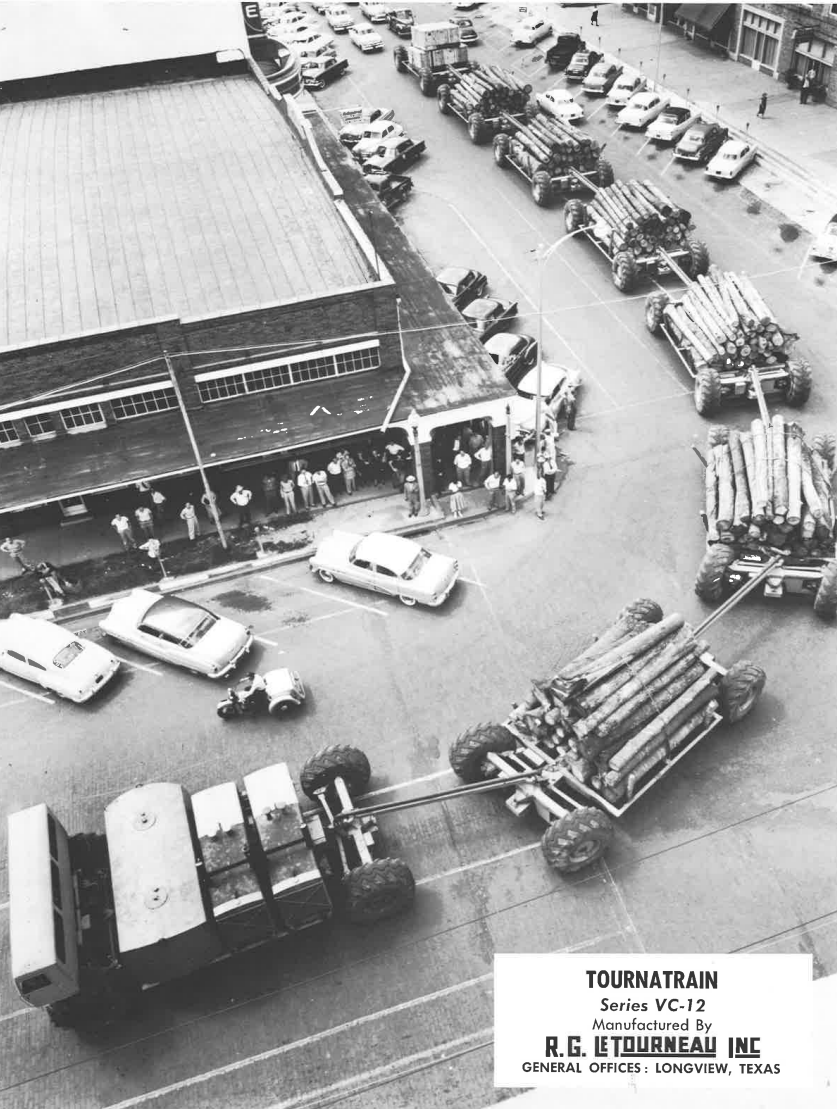
On July 4, 1954, the VC-12 Tournatrain traveled around Longview, Texas as a promotional exercise. I like how this image shows a top-down view of the VC-12s control car. The operator’s cab is relatively small, showing that it cannot sustain operators for more than day trips. the large vessel behind the operator’s cab is a fuel tank. You’ll also see two engine housings for the Allison engines and LeTourneau generators. Also, that trike riding next to the VC-12’s passenger rear wheel is pretty neat!
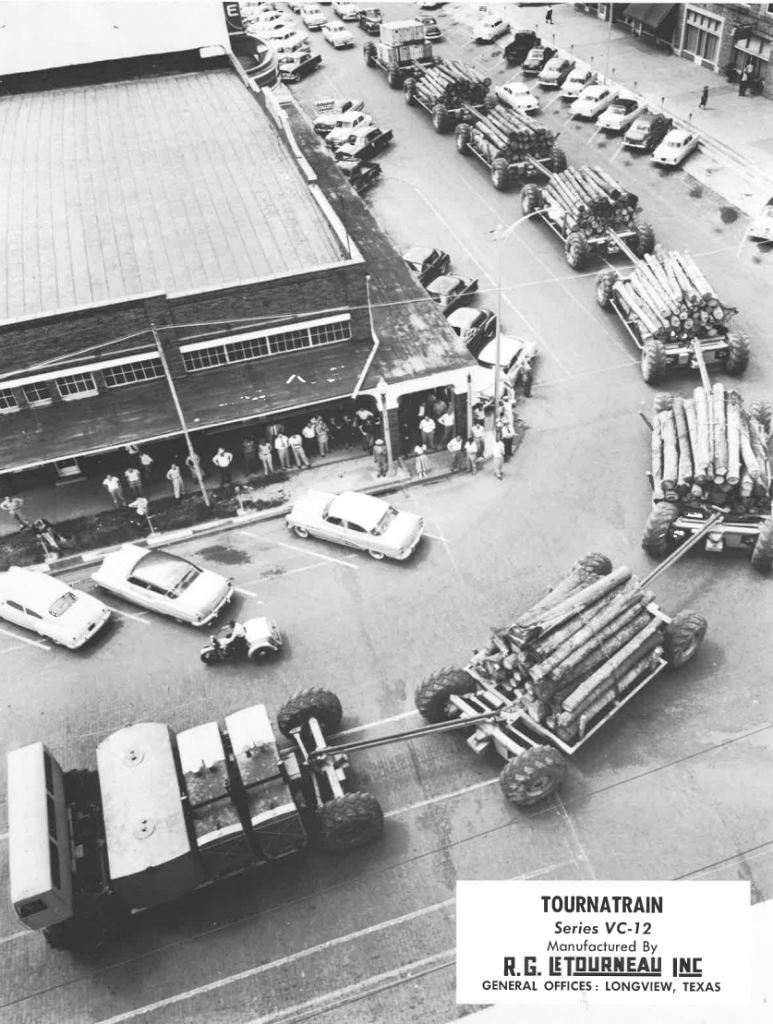
VC-12 promotional card. Image: D. Hardy archives
 Overland Trains