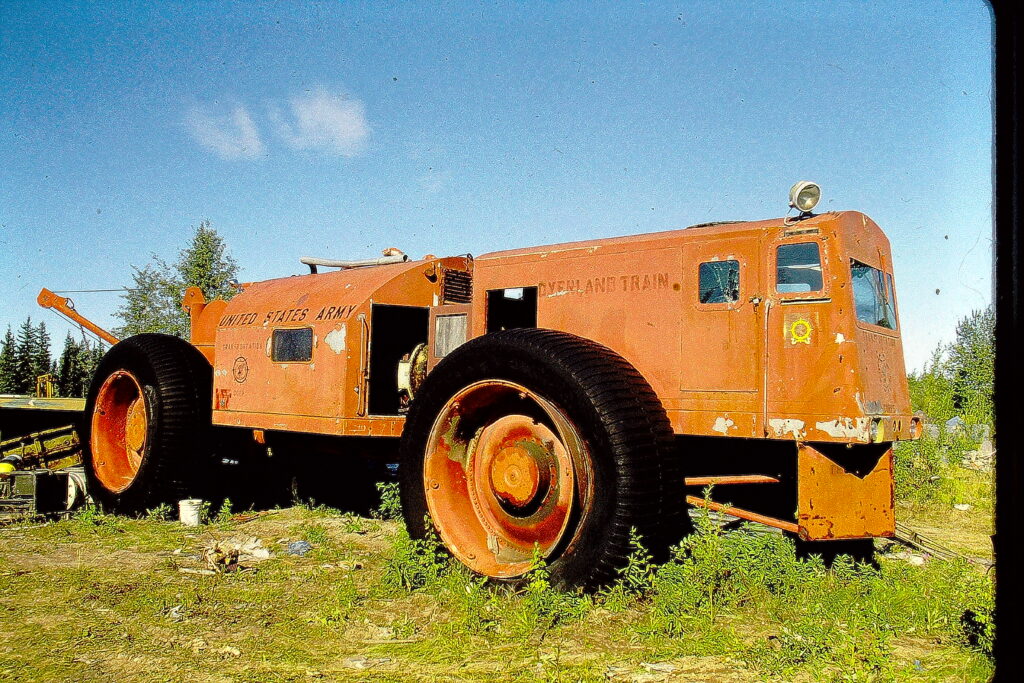
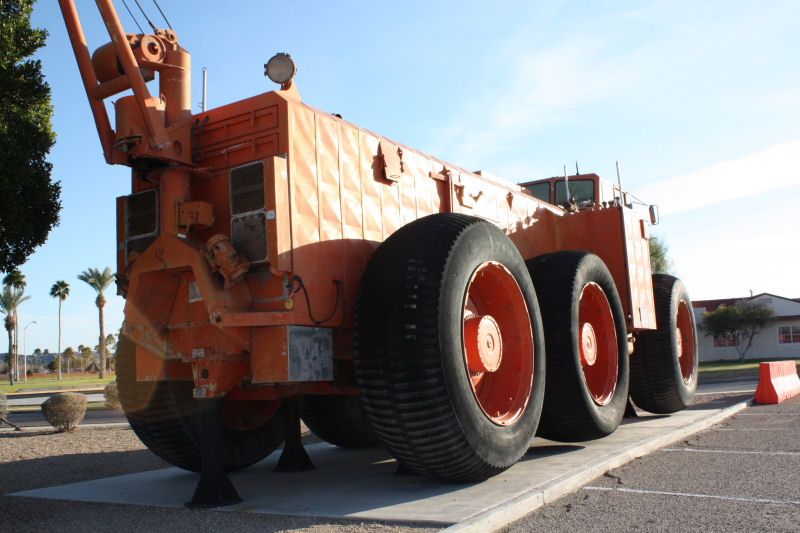
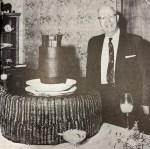
I started writing this book in February of 2020. Two and a half years later, I have captured the most complete Overland Trains story ever published. Buy the book now on Amazon.com (https://www.amazon.com/dp/B0BFL91FX6).
Articles
-

Book Writing Update: Kindle eBook Version is Available for Pre-Order
-

Sno-Train Traveling to Gulkana, AK for Operation Willow Freeze
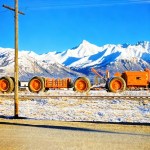
During the two and a half years research for the Overland Trains book, I poured through mountains of original operating manuals, images, and personal slides. There aren’t too many images of the six Overland Trains that I haven’t seen. A couple of months ago, I came across an original slide for sale with the Sno-Train (LCC-1) that I had not previously discovered.

The slide has the date of “8 FEB 61” and the text “see little men in front.” There are three people at the front of the train, two on the ground and one in the doorway. One of the limitations for old slide images is the quality. Slides must be digitally photographed with a light table. There are other methods available, but the light table method is generally accepted.
In an attempt to clean up the image, I processed it through Perplexity AI, but it cut off both image sides. I then used ChatGPT which applied a reasonable result without chopping the sides. Both images below.

Perplexity AI enhanced image 
chatgpt ai enhanced image Where was the Sno-Train in this Image?
On or around February 1961, the LCC-1 Sno-Train was located in Alaska, specifically in the Palmer and Gulkana areas. After being reassembled at Palmer in harsh winter conditions in mid-January 1961, it was put on public display there until January 30. Immediately after, the Sno-Train was dispatched to Gulkana, Alaska, for “Operation Willow Freeze,” a winter military field maneuver in the Copper River Basin. The Sno-Train convoy left Palmer on January 30, 1961, and traveled to Gulkana, which became the base for its operational activities in February 1961.
If the slide’s date of February 8, 1961 is accurate, In preparation for the Sno-Train’s first mission, the three trailers were loaded with 25 tons of ammunition and 5 tons of rations. Each of the trailers could carry 15 tons of cargo, for a total of 45 tons. The Sno-Train’s cargo was due at a location 18 miles away by February 10, 1961, an estimated 24 hours away.
As I do not see any cargo in the trailer, this image was captured prior to arrival and cargo loading at Gulkana, AK.
-

TC-497 Design Report For Sale on eBay – Sam Duncan
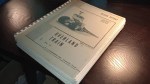
A couple of days ago, a TC-497 Overland Train Design Report became available for sale on eBay. The initial cost was set at $7,000. A day or so later, the price is decreased to $3,000 or best offer. After reviewing the photos in the eBay ad, the front cover is stamped with the name Sam Duncan.

Upon thinking up the idea for the TC-497, R.G. LeTourneau advertised for an engineer help help build the machine. Sam Duncan (Duncan) was hired to implement LeTourneau’s idea. When Duncan arrived in Longview, TX at LeTourneau’s facility, the TC-497 was already in the design phase. Once completing it, men who worked on it use to call it a mobile city.
Duncan contributed to the project after writing the technical manual for the Overland Train.
-

R.G. LeTourneau’s Overland Trains now Available as an Audiobook

Amazon provided the opportunity for me to create an audio book using Artificial Intelligence. It is now available for $4.99 on my Amazon page. Select “Audiobook” and pay $4.99 or select it as a free option with an Audible membership trial – R. G. LeTourneau’s Overland Trains: a complete history: Moore, Mark I.: 9798840211878: Amazon.com: Books

-

Visitors to the Panama Canal, Miraflores Locks: 1955 and 2025
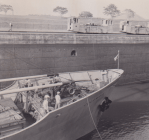
R.G. and R.L. LeTourneau visited the Miraflores Locks on Sunday, March 27, 1955. They were visiting the Panama Canal (Canal) to assess and propose a more modern approach to pulling ships through the locks, specifically the Miraflores Locks.


Upon returning from the Canal, LeTourneau went to work. He created a replica of the undulating terrain to test his new Panama Canal Tug.


In late 1956, the Panama Canal Company awarded R.G. LeTourneau, Inc. a contract to significantly modernize how ships are pulled through the Panama Canal. This is the first major modernization since 1914. LeTourneau was asked to build two prototype machines at a cost of $650,000. These prototypes would be used for one year. If acceptable, the Panama Canal Company would order 25 additional units at a cost of over $4MM.
In July 1957, LeTourneau had the first prototype locomotive and test tug ramp in operations at the Longview, TX plant. The ramp simulated the wall and grade that the locomotive would need to climb during operations at the Canal. Later than year (November), two electric locomotives were released for shipment – the LT Electric.
Modern Day
On January 31, 2025, on his first overseas trip in his new role, U.S. Secretary of State Marco Rubio visited Panamanian leader José Raúl Mulino on Sunday. His message, Immediately reduce Chinese influence over the Panama Canal area or face potential retaliation from the United States.

Further Reading
LeTourneau Builds Electric Panama Canal Tugs in 1957 – R. G. LeTourneau’s Overland Trains
-
Hello World!
Welcome to WordPress! This is your first post. Edit or delete it to take the first step in your blogging journey.
-

Firestone Birthday Cake for R.G.
On R.G. LeTourneau’s 75th birthday, Mrs. R.G. surprised her husband with a 108-pound cake. This was no ordinary cake, as it mirrored the Firestone 120x48x68 tires found on the Sno-Train, TC-497, and other LeTourneau machines. The cake was 30 inches in diameters and 14 inches thick, requiring three days to bake. Attached to the enormous tire was his highly successful Electric Wheel.

R.G.’s 75th birthday cake, 1964 LeTourneau NOW -

Driving a Car through the Firestone 120x48x68
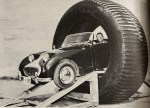
The Firestone 120x48x68 tires have a massive inner diameter. Captured to demonstrate the tremendous size of the new tires, a ramp was built so that a car could drive through the center.

-

LeTourneau Builds Electric Panama Canal Tugs in 1957
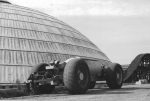
In late 1956, the Panama Canal Company awarded R.G. LeTourneau, Inc. a contract to significantly modernize how ships are pulled through the Panama Canal. This is the first major modernization since 1914. LeTourneau was asked to build two prototype machines at a cost of $650,000. These prototypes would be used for one year. If acceptable, the Panama Canal Company would order 25 additional units at a cost of over $4MM.
In July 1957, LeTourneau had the first prototype locomotive and test tug ramp in operations at the Longview, TX plant. The ramp simulated the wall and grade that the locomotive would need to climb during operations at the Canal. Later than year (November), two electric locomotives were released for shipment – the LT Electric Locomotives.

Panama Canal test tug ramp with TC-497 fuel car in the foreground The long boom seen in the following three images was used to send a cable to an approaching ship. The tires seen within the images were used as a cushion between the locomotive and the ship.

panama canala test tug – https://www.youtube.com/watch?v=Mzseq5Ti3Xg Still frame from a video by Don LeTourneau shot at the Longview plant, of the tug that was to pull ships through the Panama Canal.
-

Steve McPeak and the Sno-Freighter
In December 2024, I received an email from someone who told an interesting story about Steve McPeak and owning one of the Overland Trains. McPeak was a daredevil and holder of 24 world records.
“Around 1980 I met a guy named Steve Mcpeak who at the time was doing a daredevil act act at Chicago fest at navy pier where he performed on a trapeze under a helicopter. He said that he owned a snow train in Alaska and he even showed us a video tape that was produced by an Anchorage TV station. The tape showed the snow train going through the woods knocking small trees as it went. It also showed it in a parade in Anchorage. He said that he bought it from the salvage yard and got it running again. This would of been late 70s. He said that he looked into getting new tires for it and the molds still existed then and it would very expensive to have them made. Does this make any sense to you? You can google Steve Mcpeak daredevil for more information on him. The best I can find I think that he went to prison in his later years for drugs. He lived in Las Vegas.“
Analysis
In trying to figure out whether McPeak had ties to the Sno-Train or the Sno-Freighter, I looked back at the documentation to understand where each machine was located during the 1970s and whether the details of a parade and tires had any traceable elements.
The Sno-Freighter sat at International Boundary for three years, from 1968-1971. Bobby Miller was trying to sell it to the oil industry. Miller later placed the Sno-Freighter at his salvage yard called Miller Salvage at 1485 30th Avenue in Fairbanks, AK. Eventually, Rick Winther purchased the Sno-Freighter from Miller’s Salvage for $2,000, with hopes to have it on display at Pioneer Park.
Shortly after 1964, the Sno-Train was purchased from Fort Wainwright by Carl Peterson. It then sat in Peterson’s Arctic Plus Salvage Yard until 2010, when it was purchased by Keith Byram off of eBay for $15,000.
In the July 16, 2020 version of the Sno-Freighter chapter, I had notes about Steve McPeak that never made it to the final book. He was involved in one of the machines, but I didn’t have enough supporting documentation to support his ownership at the time.
The comment that the reader sent me about getting new tires for the Overland Train also struck me as an important detail. Tires for the Sno-Freighter were not available during the 1970s. It’s unclear whether LeTourneau produced the tires for other machinery models. However, the tires on the Sno-Train were used for a number of machines and projects to include the Sno-Buggy, TC-497, the Panama Canal Tug system, Gold Digger, Crash Pusher, and Thompson Trailers to name a few. They would be relatively widely available without the need for reproduction.
At many times during the Sno-Freighters’ existence, it was transported on public roads. I don’t have any evidence of a parade, but it stands to reason that it could be part of one considering the massive size and general oddity.
During one of many interviews for my Overland Trains book, Mike Haskins did mention that “the family of Steve McPeak lived down the road…” in Alaska. This lends itself to McPeak having a tie within Alaska and potential knowledge of the Overland Trains.
Conclusion
The data suggests that Steve McPeak may have owned the Sno-Freighter for a short period of time or was in discussions or researching to purchase the Sno-Freighter from 1968 to 1971. Numerous people, including the reader who sent in the email mention McPeak with ties to Alaska, the potential machine ownership, and the multiple accounts of McPeak’s ownership. The Sno-Freighter was actively for sale during that time and McPeak would have the opportunity to purchase the machine.
If you, the reader, has more information about Steve McPeak and his ties to the Overland Trains, please reach out to me at mark@nwlinux.com.
-

Building the Firestone 120x48x68 Tire Molds with a BETTS Vertical Boring Mill
R. G. LeTourneau, Inc. was no stranger to building huge machinery. However, it wasn’t until 1952 that R. G.’s son, Ben LeTourneau built the tire mold that would help shape a critical component of the Overland Trains story – the monstrous tires! From this custom mold came the Firestone 120x48x68 tires that would support the Crash Pusher, the Swamp Buggy, Marsh Buggy, Sno-Buggy, the Thompson Trailers, Gold Digger, and several of the Overland Trains.

R. G. LeTourneau (left in hat) in the Longview, TX manufacturing line with the BETTS Vertical Boring Mill in the top-right, 1948. In 1952, R. G. LeTourneau entered into contract with the Firestone Rubber and Tire Co. to build the 10 foot tall and 4 feet wide tires. However, they did not have a mold for them. At the age of 18, Ben LeTourneau helped build this mold for Firestone.
The BETTS Vertical Boring Mill (BETTS) had a 12’ diameter table and was used to build the custom tire mold. The table “rotated with tools mounted on a bridge over the table, while the table rotated under the bridge.”
After the two-halves of the mold were built and placed on the BETTS 12 foot diameter table, Ben “mounted it onto the rotating table and, after making a basket which I attached to the tool bar, rode the tool down into the mold while it was rotating under me. In this way we cut a smooth mold which was used to form the new tires.”


The BETTS was still in use at the factory until 2006, when the company owners at the time dismantled and removed it. It is unknown whether it was scrapped or sold to another company.