I just drove back from a local printer with three copies of the near-final Overland Trains book. I am sending a copy to a Historian who has been helping me over the last two and a half years. He will review the draft and suggest corrections. I will read and edit one of the copies in tandem. The other copy will be given to another major contributor to the Overland Trains story. Once the final edits are made, I will be formatting and publishing the book on Amazon with two versions: (1) Kindle (sans images) and (2) a color paperback. I expect the book to be out mid to late summer 2022.
A few moments ago, I submitted my proposal to the Alaska Historical Society’s 2022 Annual Conference (http://alaskahistoricalsociety.org/about-ahs/conference/). The book should be published by October 2022. If not, I have other problems 🙂
I am working on final edits for chapter 10, the TC-497. With that chapter nearly complete, the remaining chapters won’t take more than 2 more weeks. Once complete, I am printing three copies, with one going to a Historian in Texas for review, one to a couple that had a significant impact on the story, and one for myself to review.
There are two book versions that will be available. The first version will be Kindle. It will not have the rich images, close to 200, that are available in the color paper book. I am up to 190 single spaced pages of content without the images.
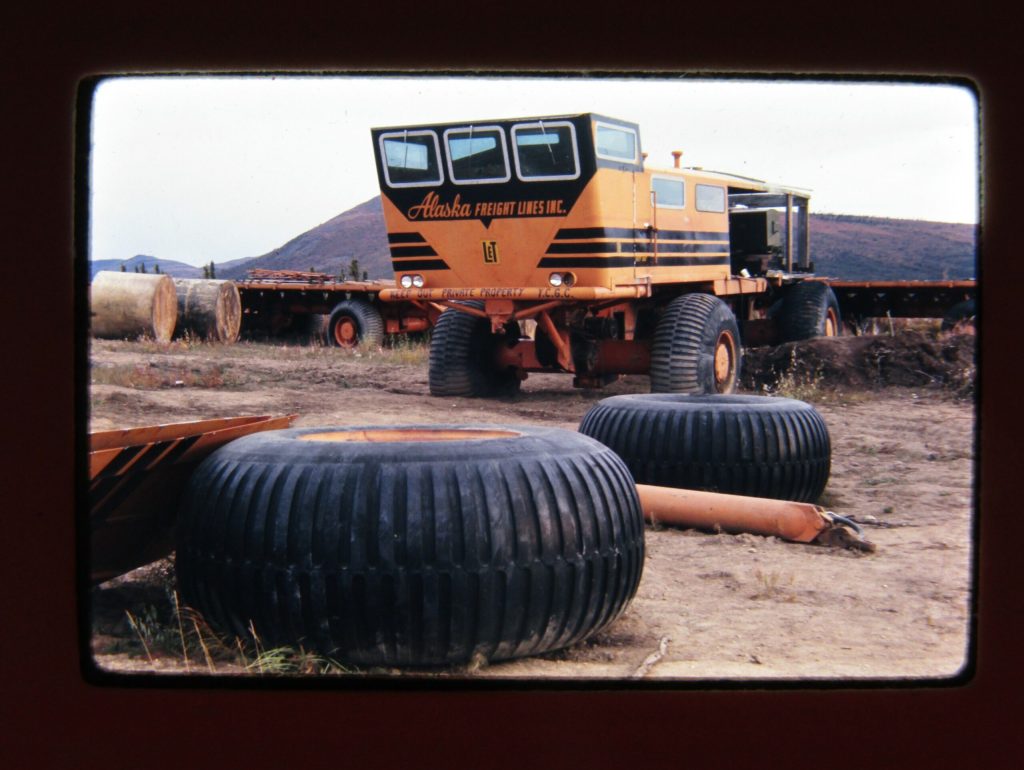
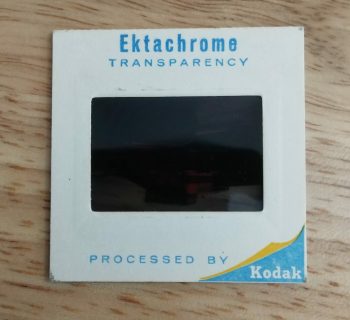
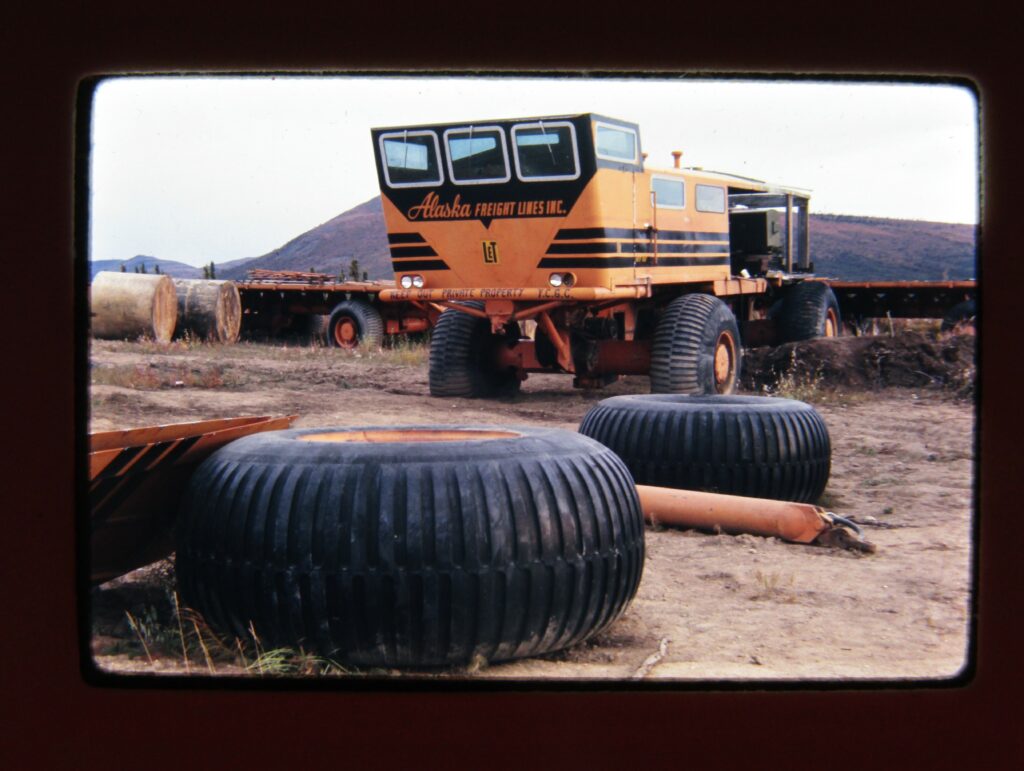
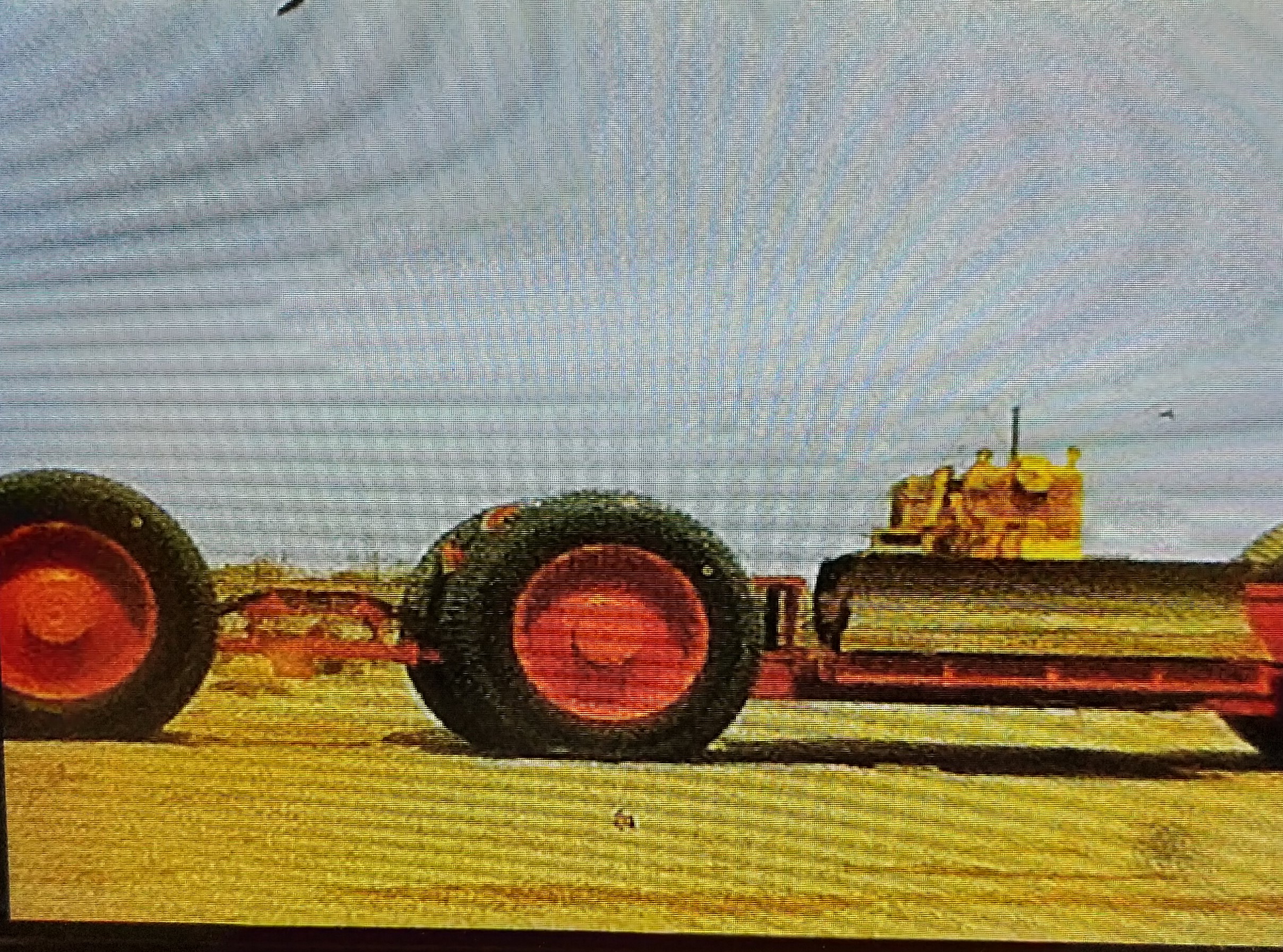
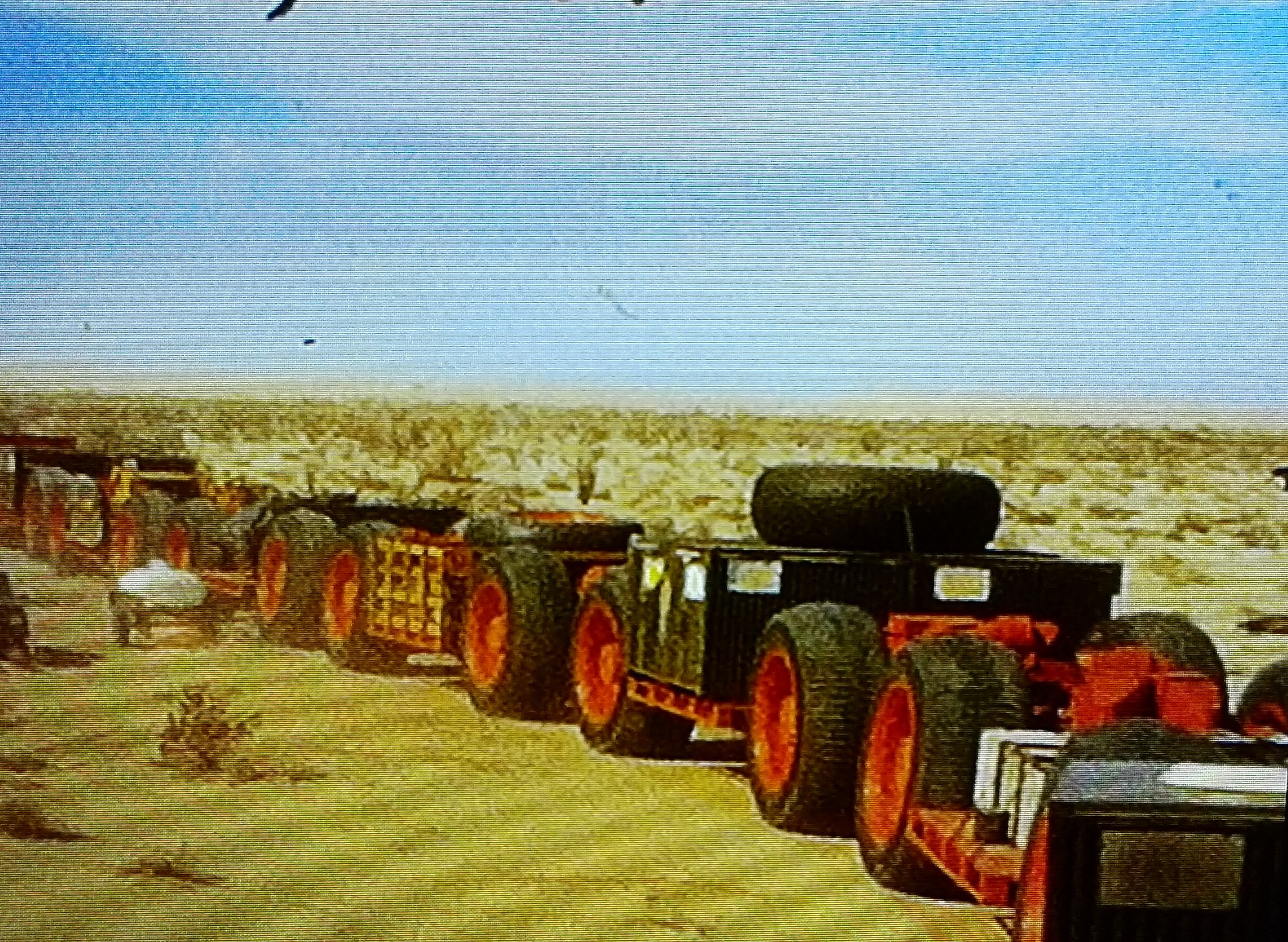
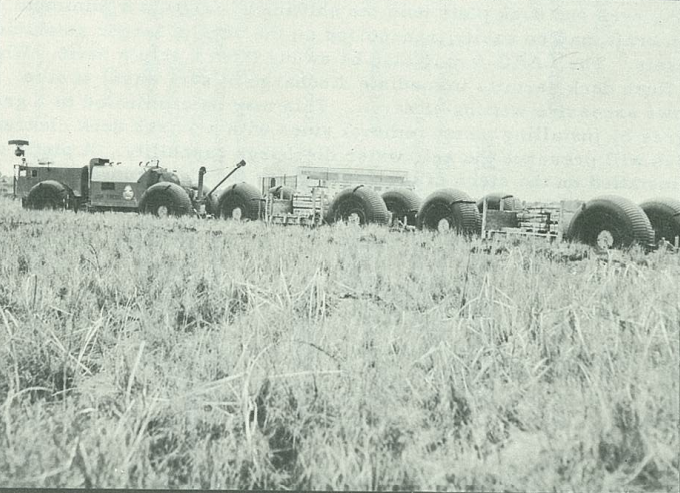
I recently acquired a new Sno-Freighter image slide. The slide is dated September 1969, which places it in Alaska, just after it left Bear Creek, YT.
Slide negative dated September 1969
After I digitized the photo, it came out like this.
Sno-Freighter slide dated September 1969
As you can see in the photo, two tires in the foreground appear to be from the trailers. The orange bar between the tires is how the trailers connect to each other. The side paneling in laying on the side of one of those tires. There are two cylinders on let-hand side of the photo. To the rear of the Sno-Freighter sticking out on the right-hand side, you see a metal cage of sorts. It houses a military green generator that was used during the Sno-Freighter’s recovery in 1961-1962.
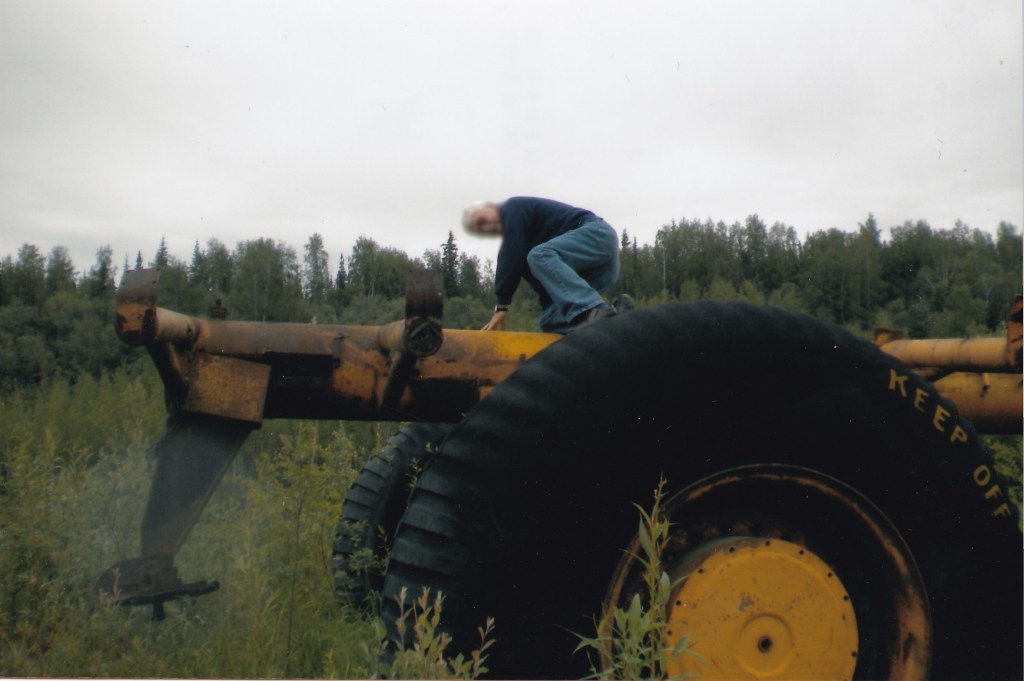
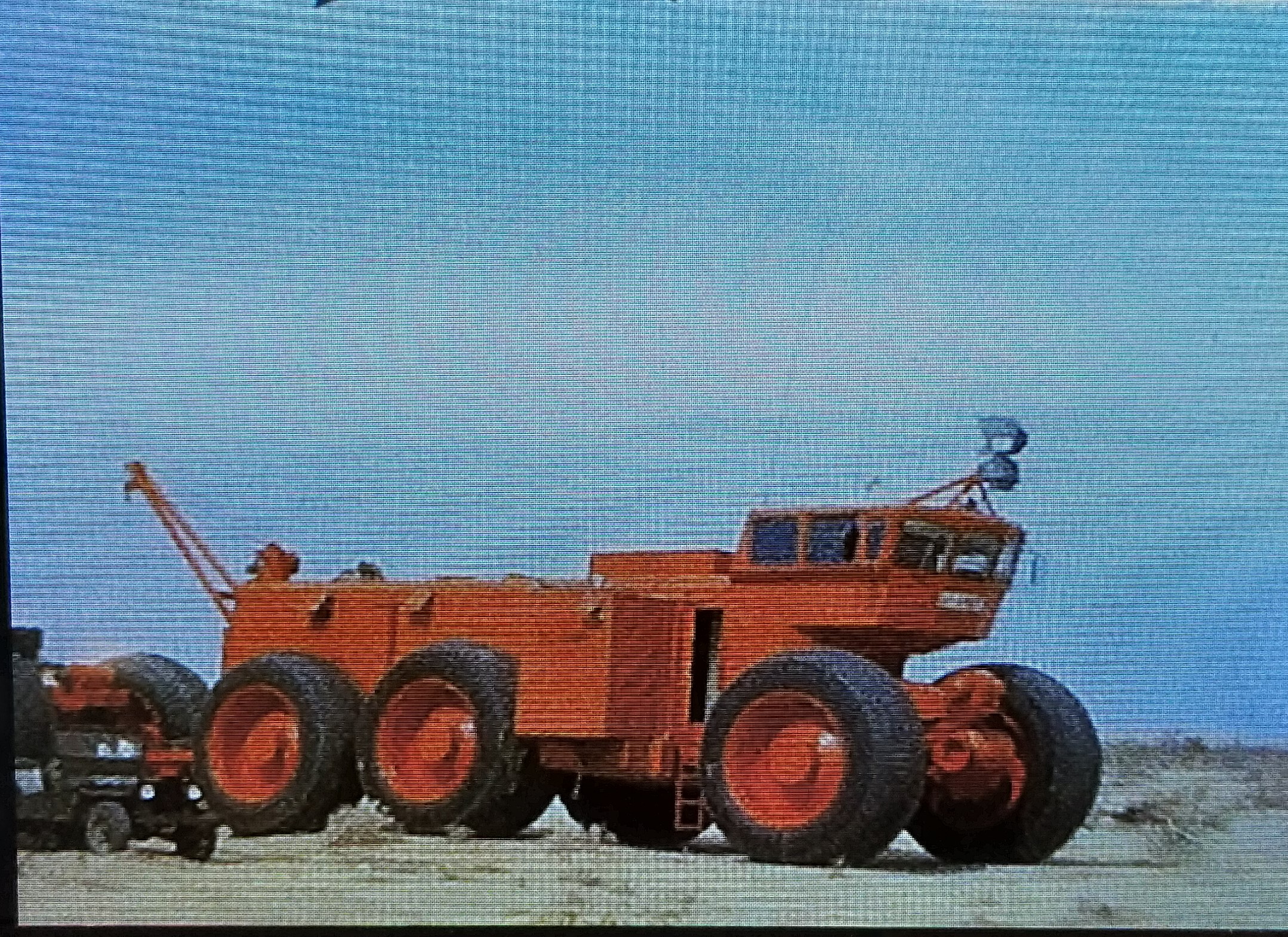
In 1968, the Sno-Freighter was towed from Bear Creek, Yukon Territories to the Alaska, United States. The trucking company that was contracted to haul the Sno-Freighter placed the the trailers on flatbeds. The control car was fitted with a 5th wheel attachment and towed from the rear. If you were following the Sno-Freighter as it was being towed, it would have looked like it was traveling the wrong direction.
Sno-Freighter with 5th wheel attachment, M. Martinez.
I have been communicating with the private seller of a new TC-497 8mm film. Even after the sale was complete, he continues to communicate the origins of the digitized film below. Through some careful and detail oriented observations, he rewrote my narrative on the film origin. This type of “people helping people” is one of the great rewards of writing the Overland Trains book. Thank you Paul.
“I bought this previously unreleased 8mm film from a private seller in England. The film’s seller bought it with a collection of other films and has since determined that the film was shot by an officer of the British Army’s Royal Engineers (most likely based at the Longmoor Military Railway in England). The officer was on secondment to Fort Eustis, VA from late 1962. It is likely that this secondment provided him with the opportunity to visit the Yuma Proving Ground.”
Video Timeline
0-0:52 flying in an airplane 0:52-1:48 seeing the local sites 1:49-3:57 first site of TC-497 and support vehicles, helicopter ride 3:58-4:14 Yuma Proving Ground 4:15-5:23 TC-497 close-up walk around 5:24-6:17 tractor loaded on trailer, more close-ups and personnel walking around 6:18-6:28 inside control car with operator 6:29-7:20 external view of electrical cabling, more control car inside, 7:21-conclusion external view with man sitting on top of control car while driving, external view from power cars (rear)
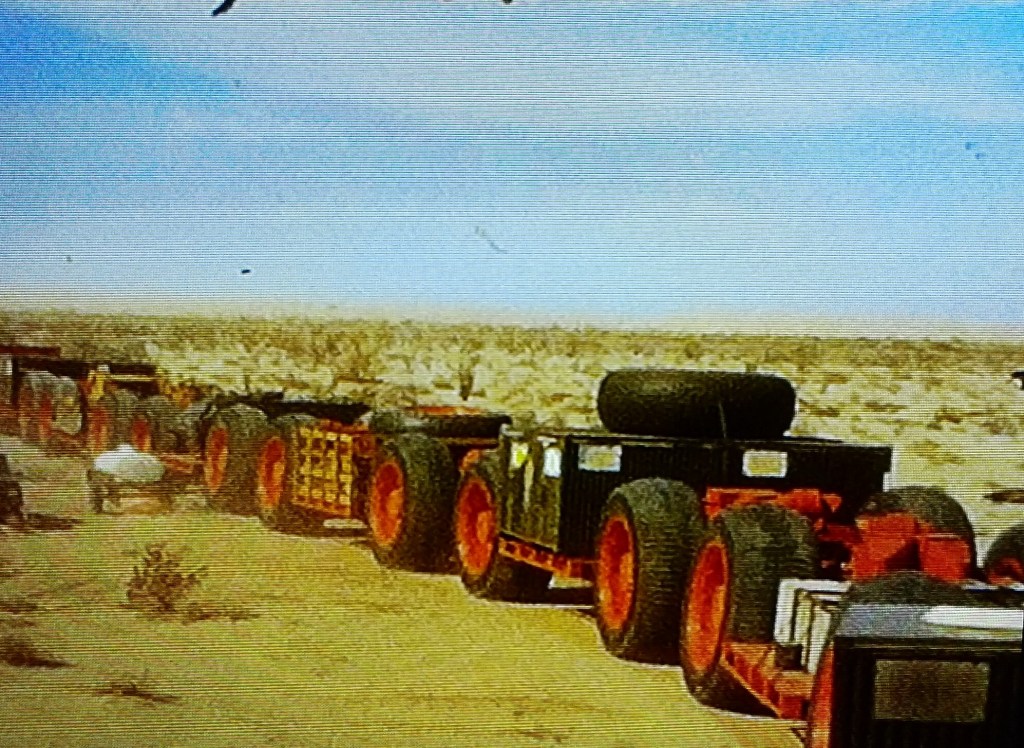
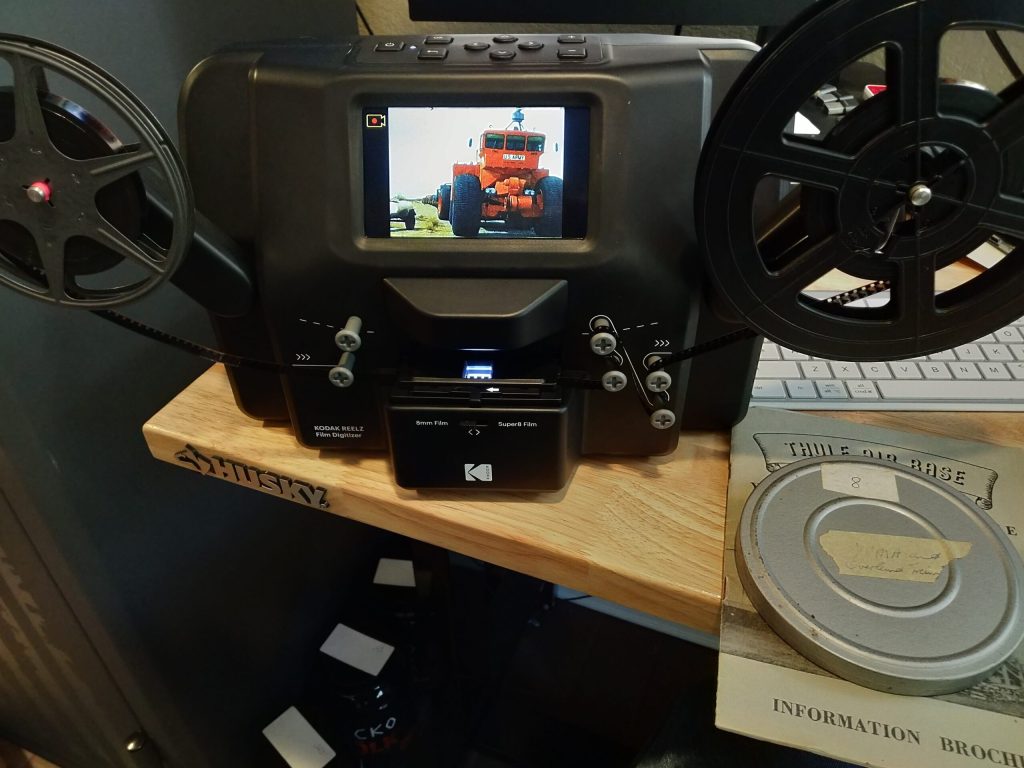
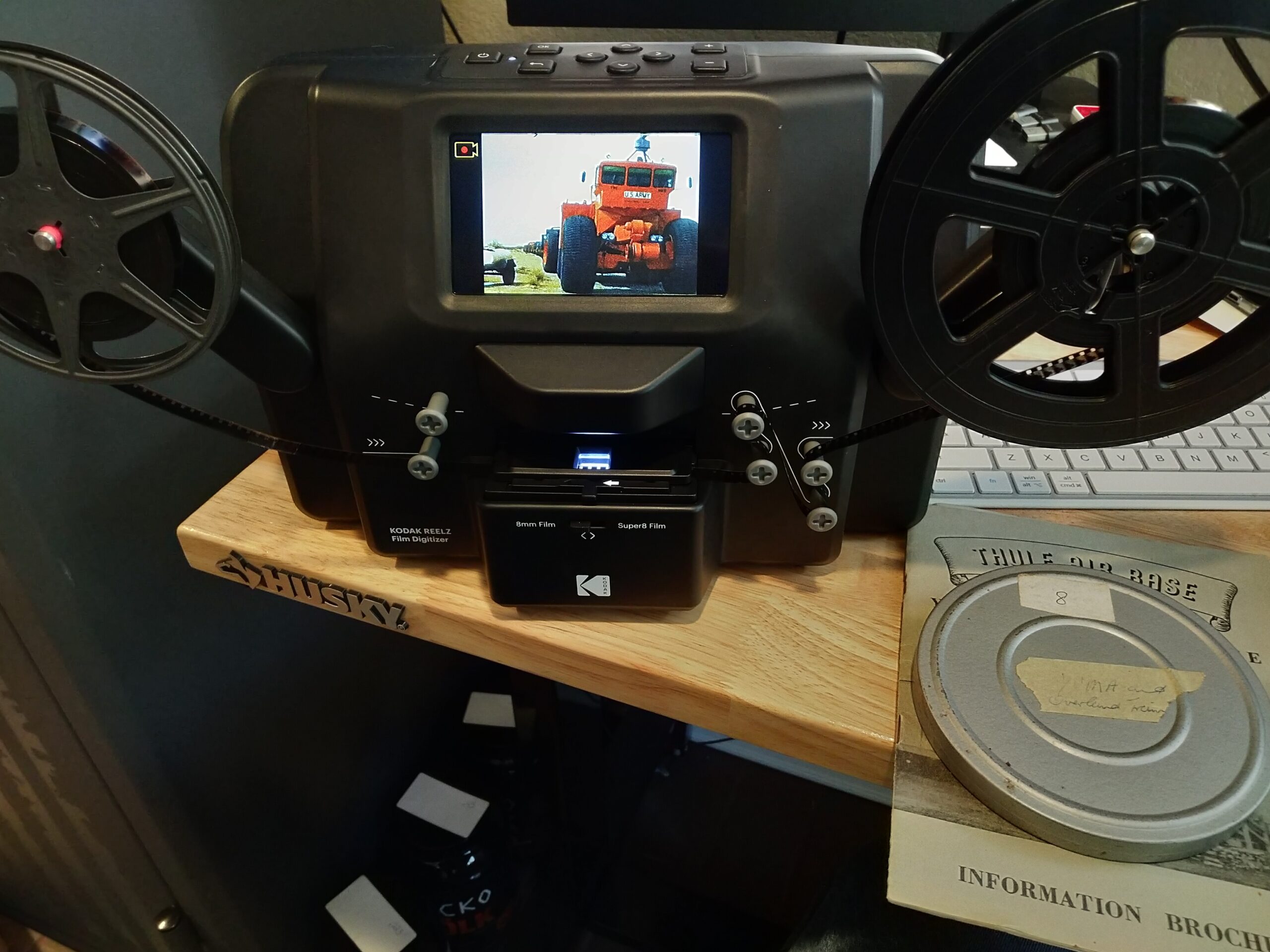
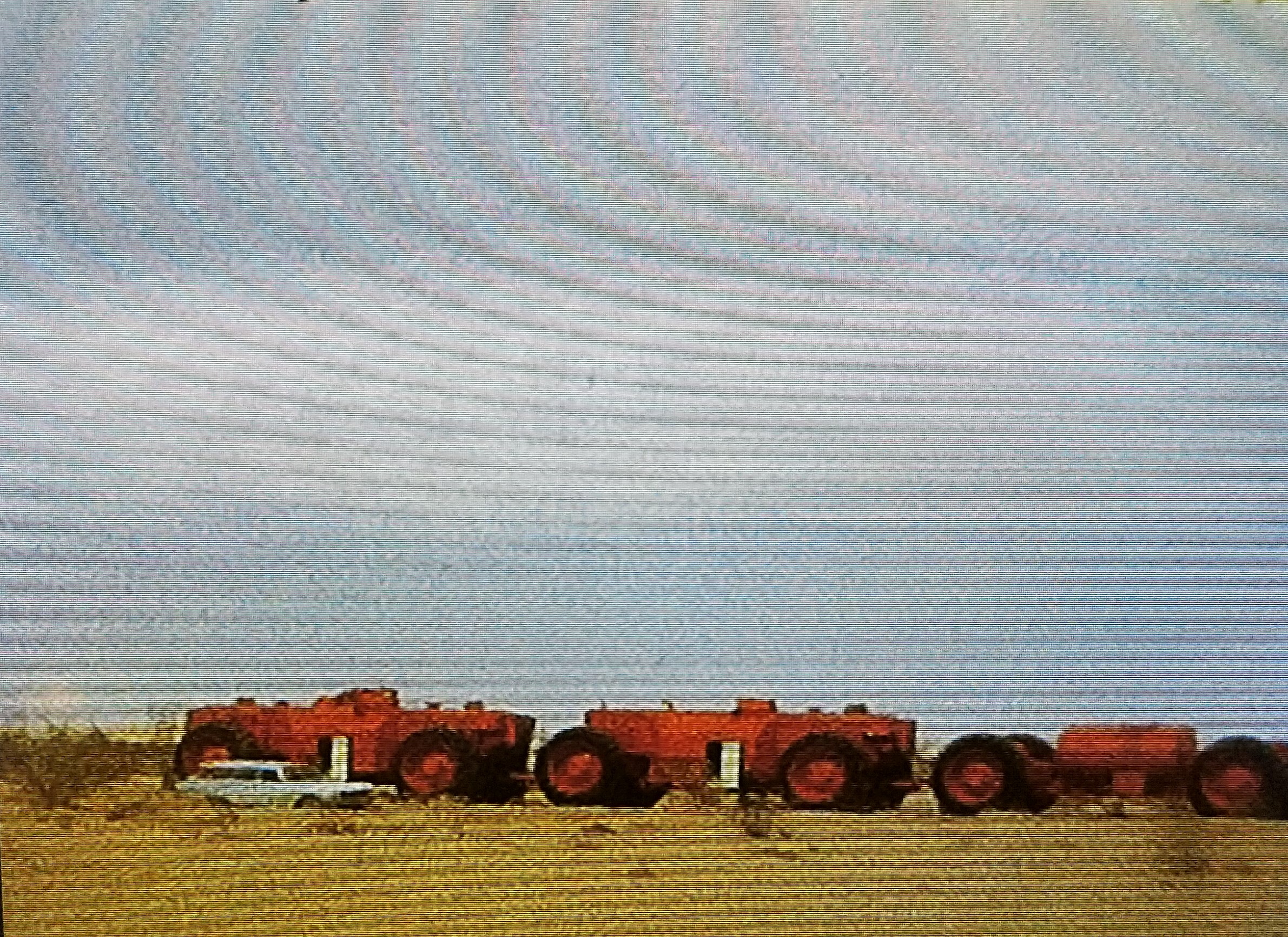
I acquired an 8mm film of the TC-497 in the Army’s Proving Ground, Yuma, AZ. The process is extremely slow going, as the digitizing projector captures every.single.frame. Soooo slow. Once it is digitized and formatted as an MP4, I will upload it to Vimeo for everyone to see. Until then, here are a few stills from the process.
My wife and I had brunch with some friends yesterday. He just celebrated his 90th birthday over the weekend. He has had a significant impact on the Overland Trains story. His direct involvement with the Sno-Train and Sno-Freighter, along with the never before seen images and stories are significant history contributions. I couldn’t imagine a better way to spend our Saturday morning. Thank you for meeting up for brunch Marty and Cyndi!
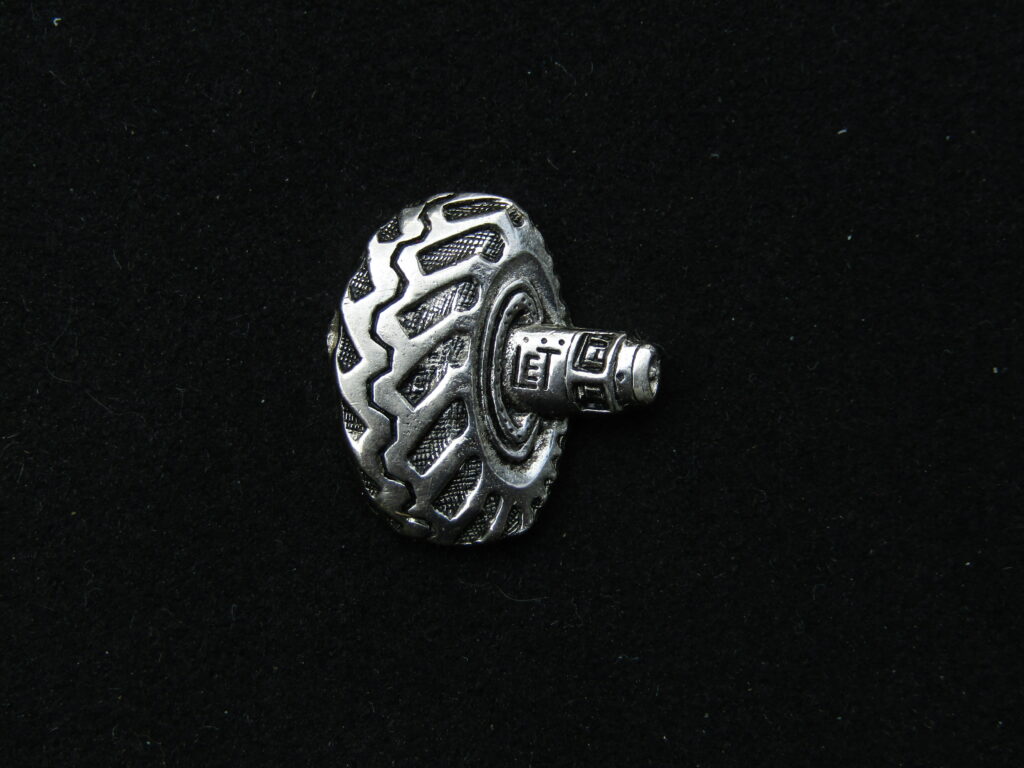
This Electric Drive metal is part of a tie clip. It fell off the clip on the way home, but can be easily glued back on again. The tie clip also came with a matching set of cufflinks – not shown. Thank you Marty!
I stopped major writing around 4 months ago. Since then, I have been working through each chapter, editing each chapter over and over again. I started this journey a little over two years ago. I have collected over 33GB of data for the project and book, which is all synced with Nextcloud to my PC and backed up locally to a USB thumb drive. Who would have ever thought that there would be so much information? I completed near-final edits on Chapter 6 this morning. The monster chapters are the Sno-Freighter, Sno-Train, and TC-497. These are individually 40-45 pages without images. Once I complete all of the near-final editing, I will print each chapter and send it away for final edits.
Chapter organization
Unlike some of the more prominent authors, writing is not my day job. Most weekdays, I get up a little before 0500 hours and start editing first thing… Well, coffee and letting the dog out take priority. I get in around an hour of editing per day. The weekends are a balance between house chores and 4-5 hours per day of editing.
There will be two book versions, one Kindle and one color paper. The Kindle version will not have more than a half dozen images. If you read a book on Kindle that is image heavy, you’ll know why. Otherwise, viewing images on Kindle is not a great experience and tends to break up the story. The color print book will have around 200 images, most of which have never been seen.
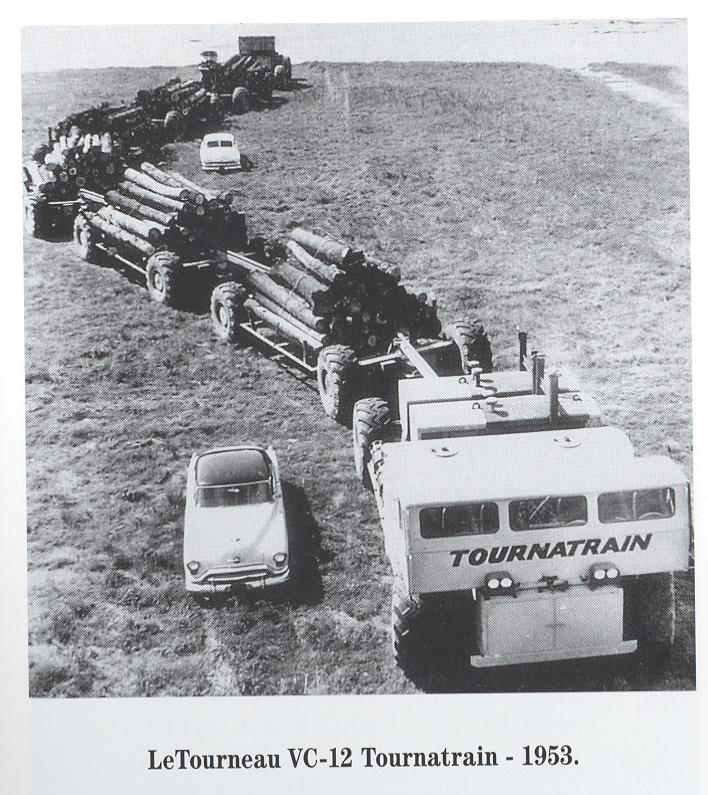
The VC-12 Tournatrain (VC-12) was R. G. LeTourneau’s second Overland Train. It consisted of 7 cargo cars and a control car. The VC-12 had two engines versus the single engine on the Tournatrain. It also featured a steering mechanism not seen on the previous train. But, that is for another day!
R.G. LeTourneau Museum & Archives at LeTourneau University.
Project Mobility occurred from June 5-10, 1961 at Fort Eustis, Virginia. During the 6 day exercise, The United States Army Transportation Training Command conducted daily demonstrations at Fort Eustis and Fort Story – Fort Story is a sub-installation of Fort Eustis. The exercise goals were to help the audience understand (1) the new techniques under development in resupply and amphibious areas and (2) demonstrate equipment recently added to the Army capabilities.
A paper booklet lists out the exercise scope, events schedule, observer participation, other equipment not shown during the exercise, maps of Fort Eustis and Fort Story, and administrative information.
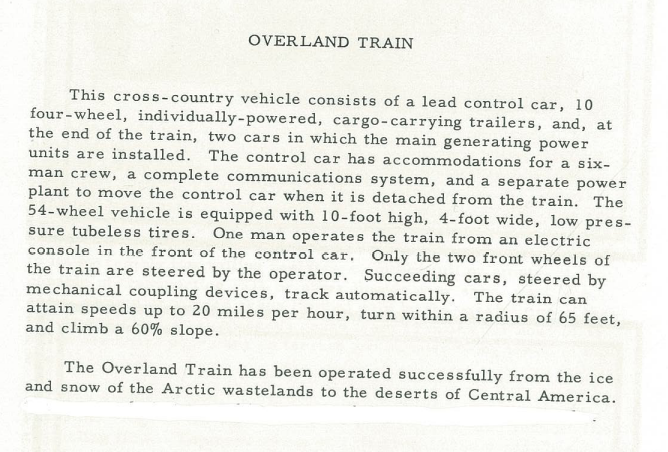
Some of the equipment not shown during the exercise, but highlighted in the booklet include the LARC, BARC, Rolling Liquid Transporter, GOER vehicle, Sikorsky S-60 helicopter, Landing Craft Retriever, and the Overland Train. Page 22 and 23 of the booklet show a brief description of the Overland Train. This description was for the TC-497.
Overland Train description from Project Mobility 1961, U.S. Army Fair Use.
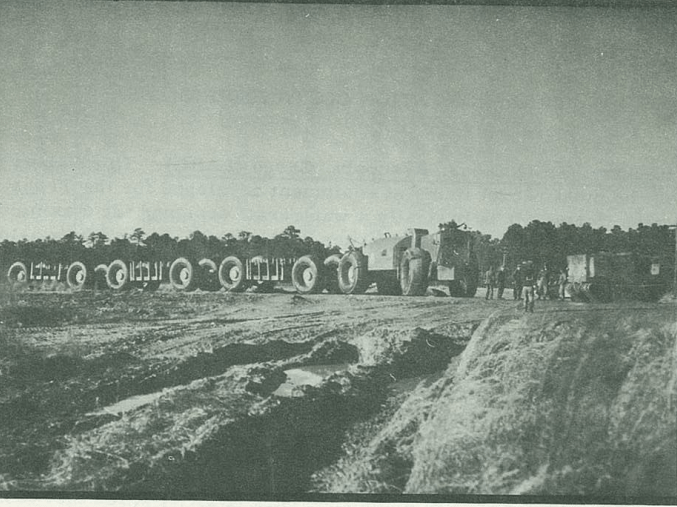
However, the images below the TC-497 description were of the Sno-Train.
Sno-Train image from Project Mobility 1961, U.S. Army Fair Use.Sno-Train image from Project Mobility 1961, U.S. Army Fair Use.

 Overland Trains