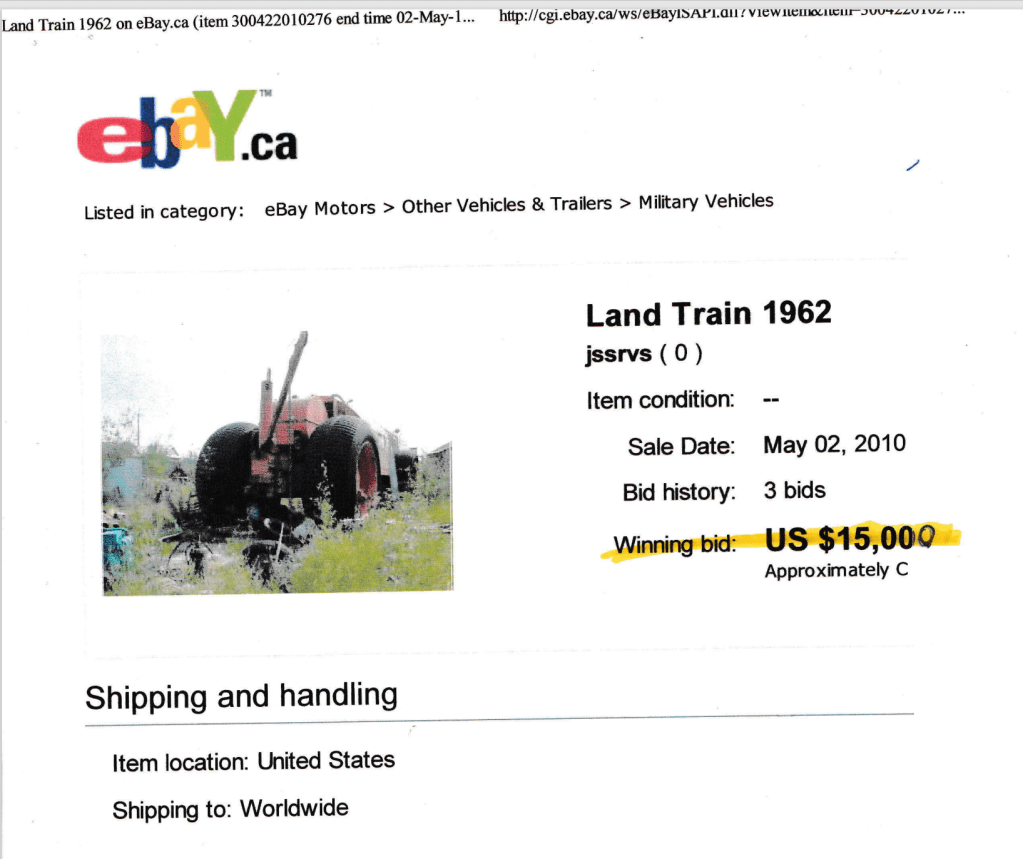
Well, you can sell it on eBay of course! When the Sno-Train’s owner past away in 2009, his son was left to liquidate the machine. There were a number of bids on the Sno-Train. Ultimately, a man in Whitehorse, which you can read about in my book, bought the Sno-Train and had it trucked on numerous flatbeds. The machine was transported at great expense from its home in Alaska to Whitehorse, YT, where it found its near-forever home at the Yukon Transportation Museum.
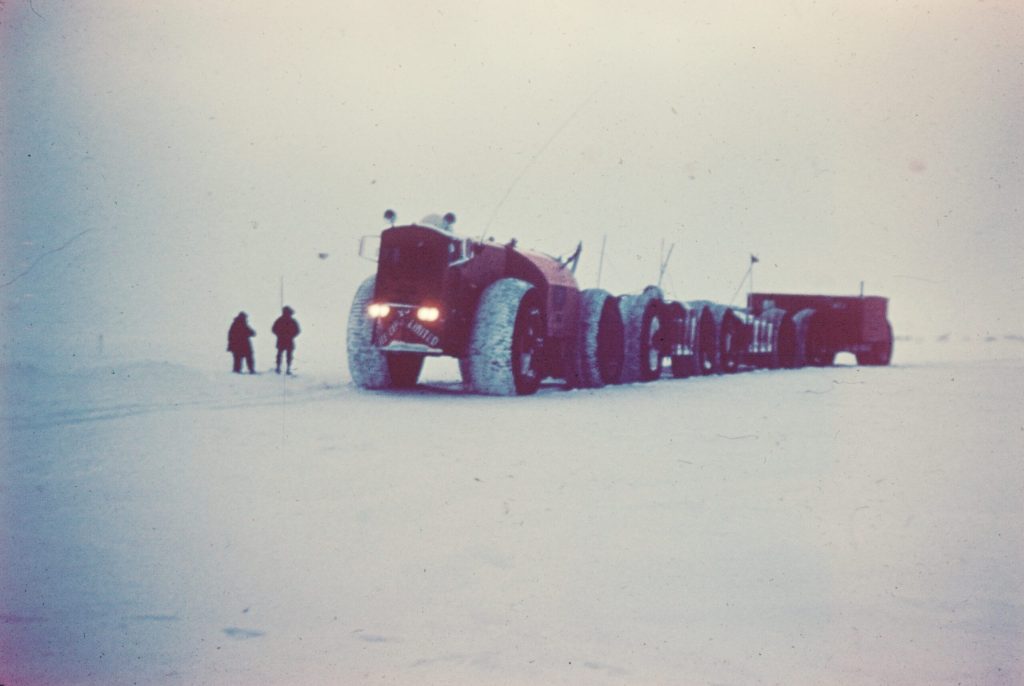
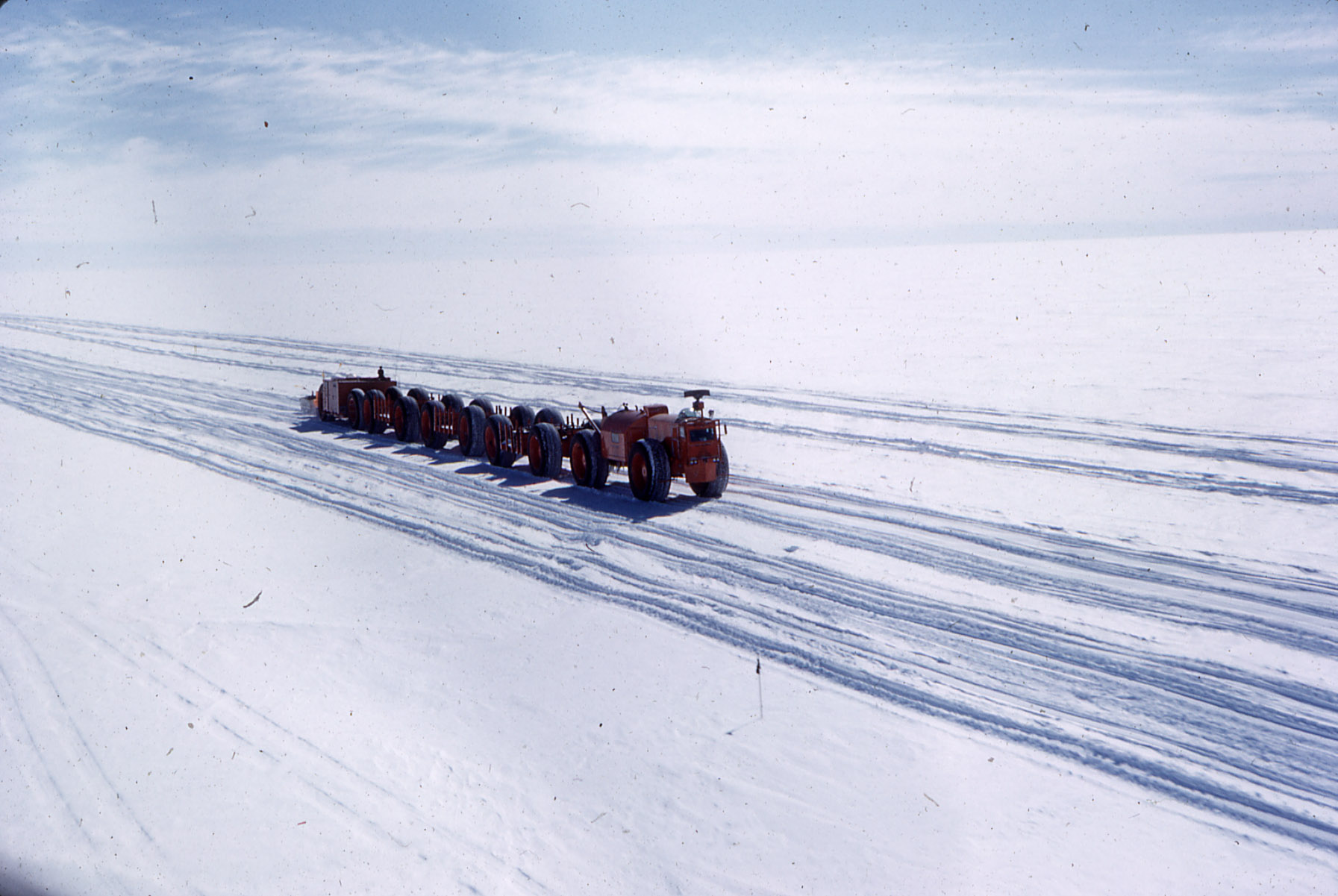
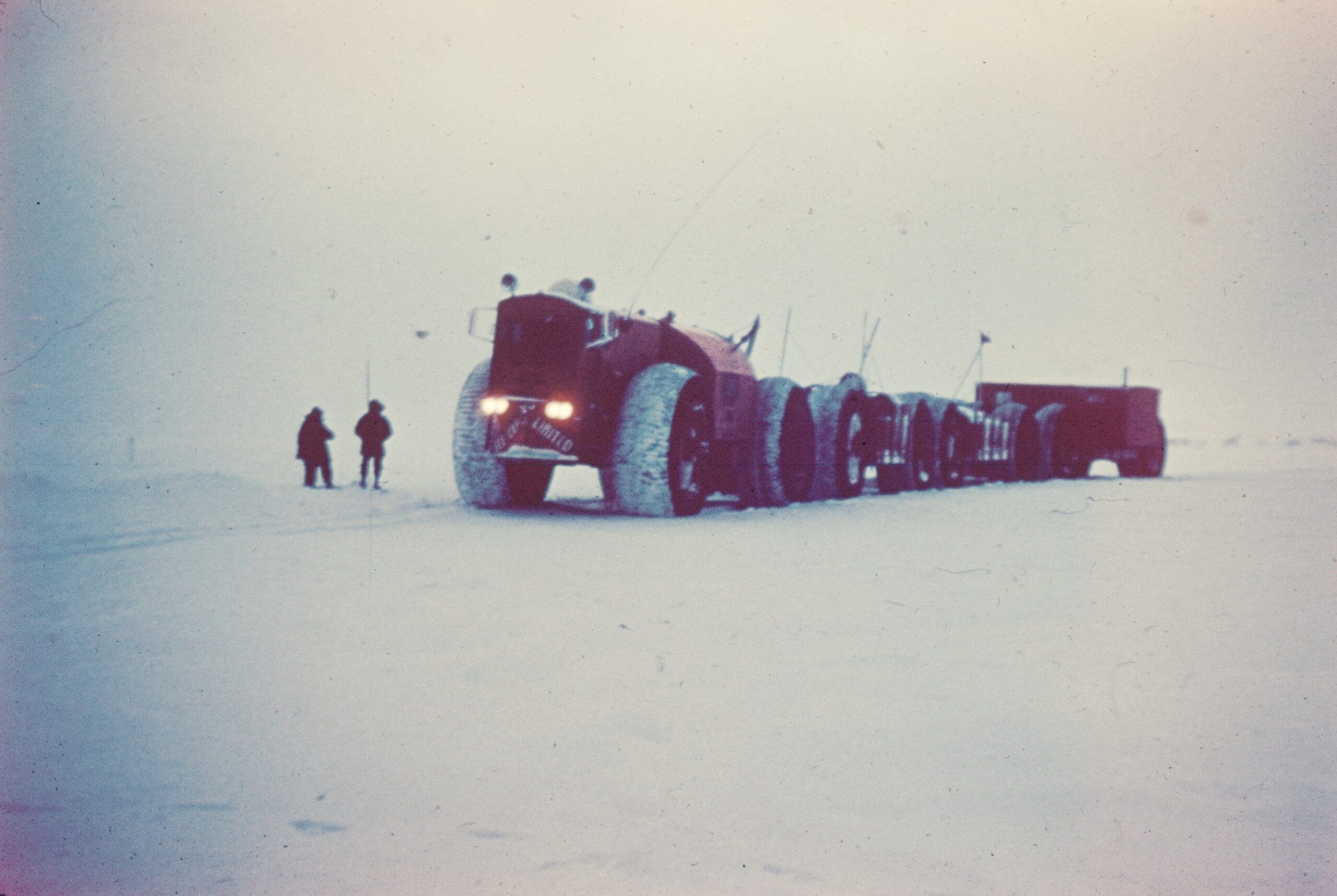
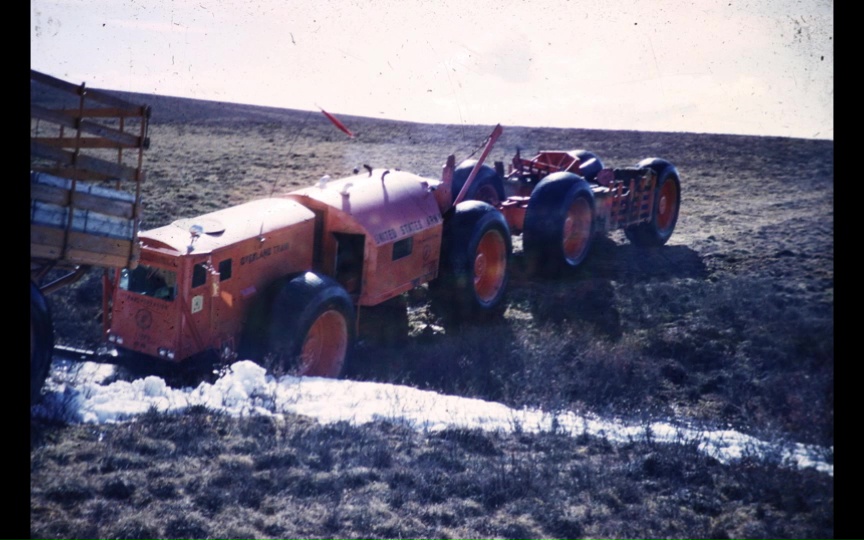
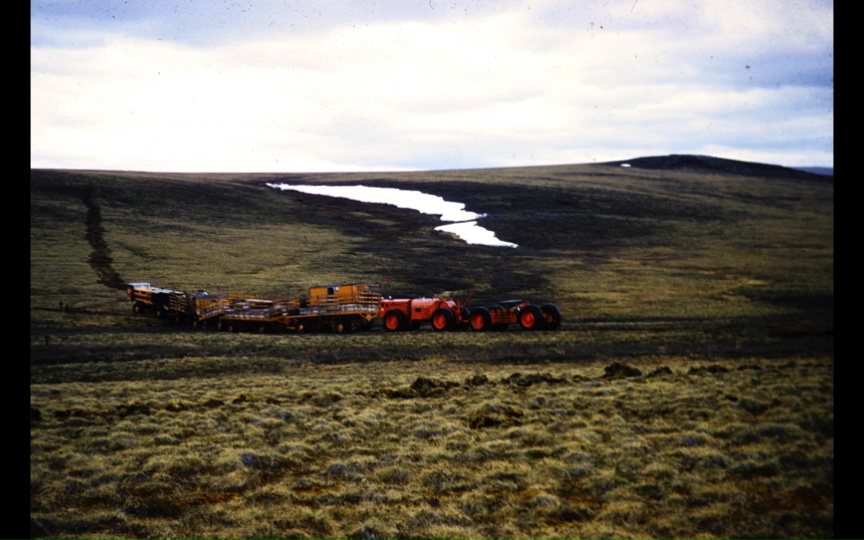
When the Sno-Train arrived in Greenland, it logged over 2,000 miles across the Ice Cap. Several men that were stationed in Camp Tuto, Thule Air Base, and others captured these images of the Sno-Train.
Image courtesy of John Davis.
Above: The Sno-Train travels across the CAT train road with a Goodyear tired based Thompson Trailer towing what appears to be a wanigan. The horizontal bar atop the Sno-Train’s front car, or control car, is a radar unit.
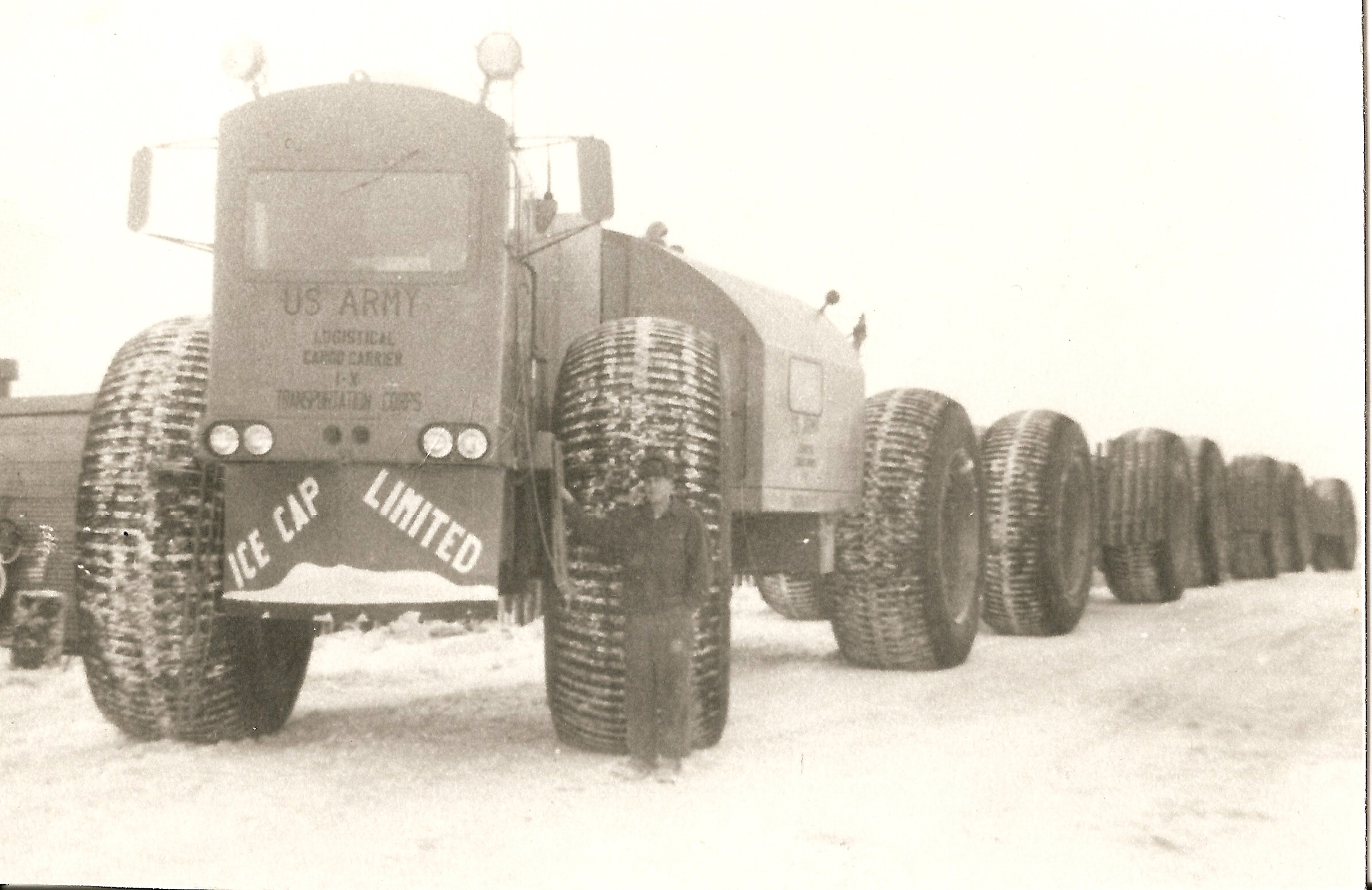
Image courtesy of Joe Cahill
Above: The Sno-Train in Greenland pulling a wanigan and Thompson Trailer. The “ICE CAP LIMITED” on the snow cowl was more of a hazing than anything else. It did not last too long.
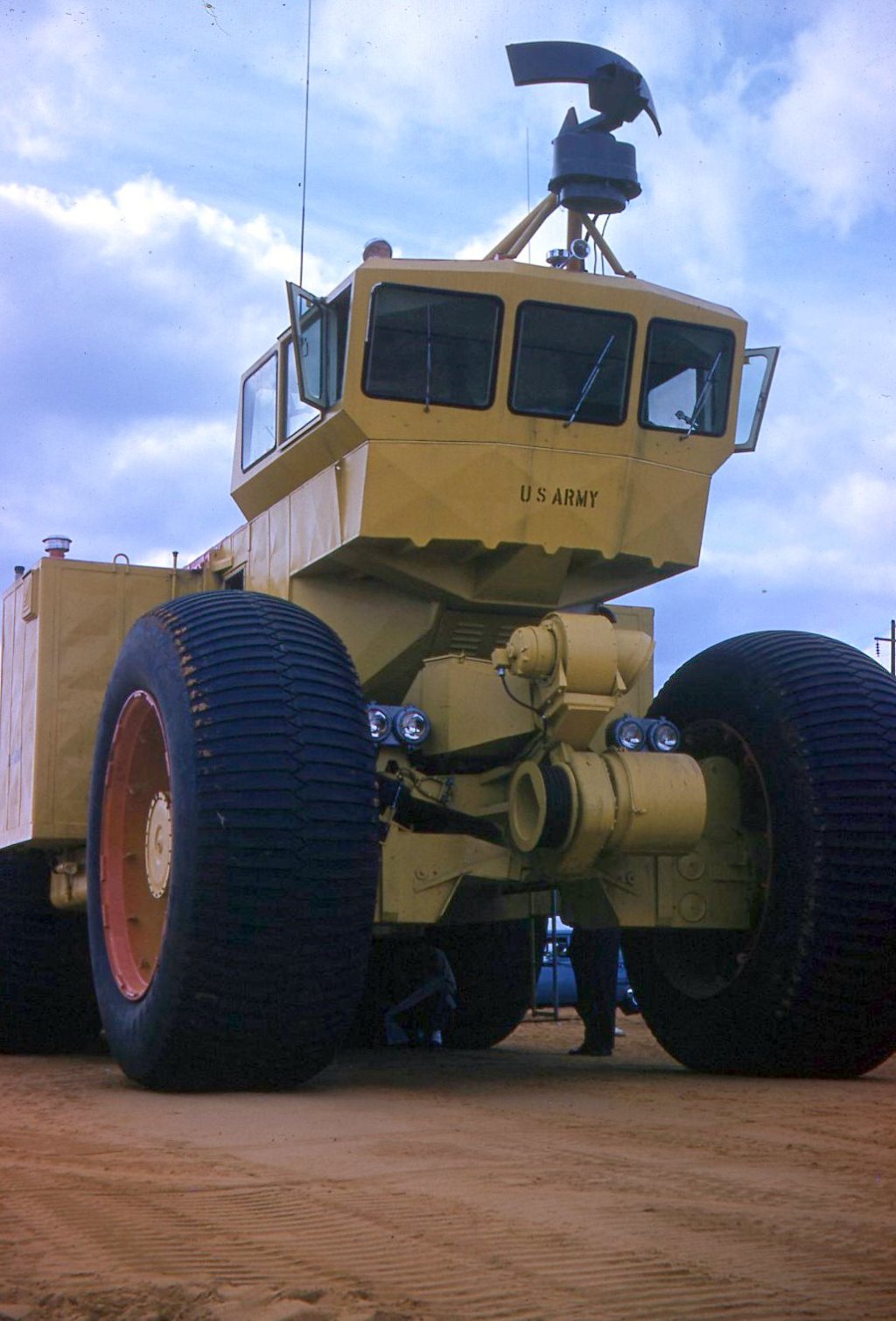
Image courtesy of Arnold Haynes
Above: One last image of the Sno-Train in Greenland with Arnold Haynes standing in front of the massive Firestone 120x48x68 tires.
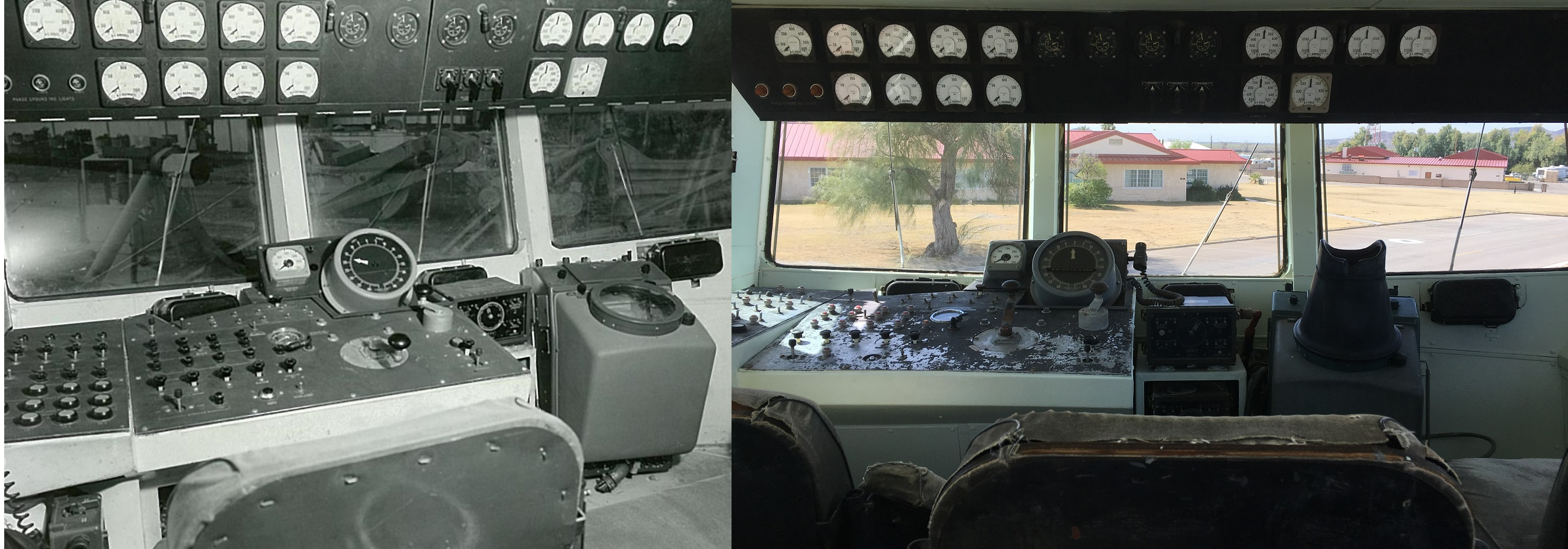
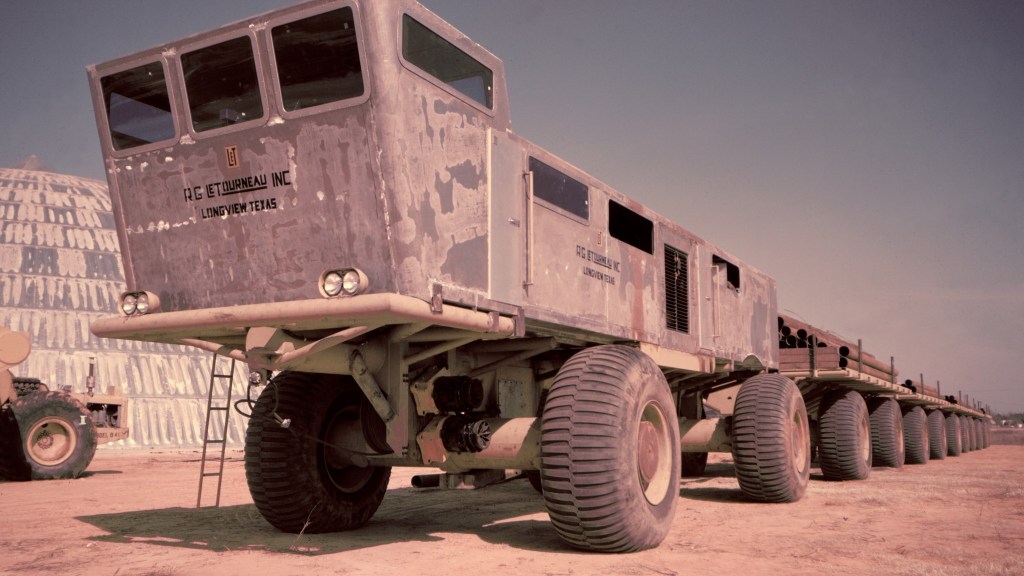
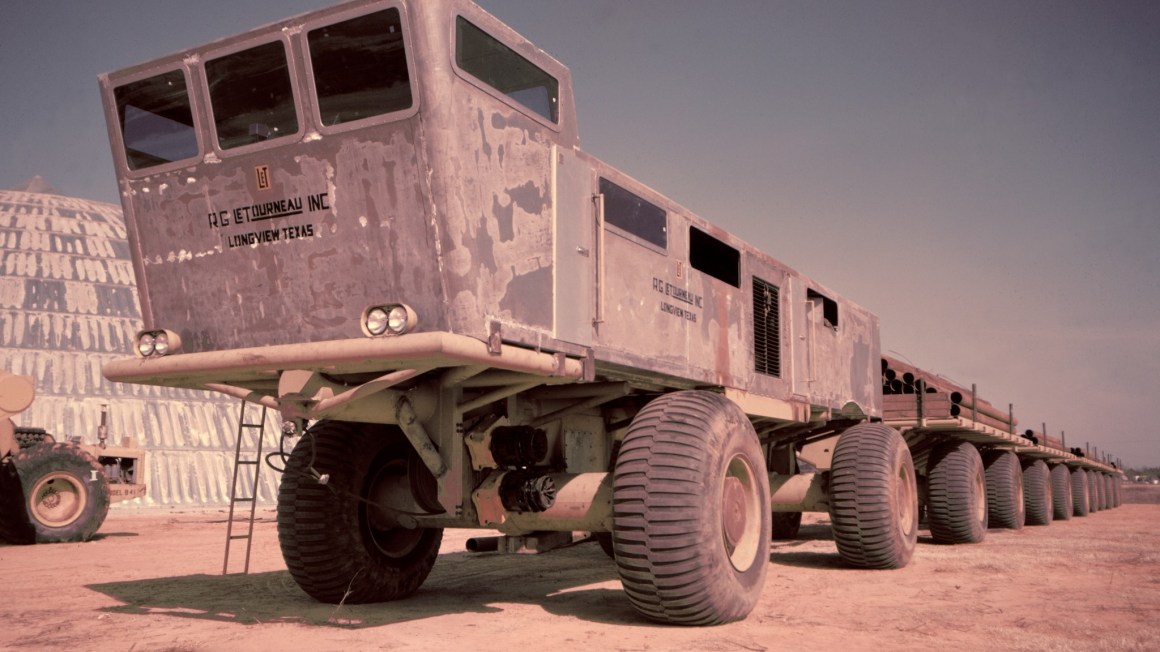
Aside from a little paint and some wear and tear, I would say that the Operator’s seat and controls on the TC-497 have weathered well over the last 60 years. The left half of the image shows the Operator’s area while in LeTourneau’s Longview, TX factory. If you look closely, through the windows, you can see various components on the factory floor. The image on the right was captured around 2019 during a period of restoration, led by Mark Sandercock and others.
The tc-497’s Operator’s station: Image (left) shows the TC-497 interior while in the Longview Factory, Courtesy R. G. LeTOurneau Museum & archives at LeTourneau university; image (right) shows the same view after restoration at the yuma proving ground heritage center, courtesy of mark sandercock, US Army RET.
I appreciate it when folks get ahold of me and point out issues, inconsistencies, or flat out errors in my published works, both my book and this website. It gives me the opportunity to make corrections or further explain something.
In this case, a man name “Bob” wrote to me and said…
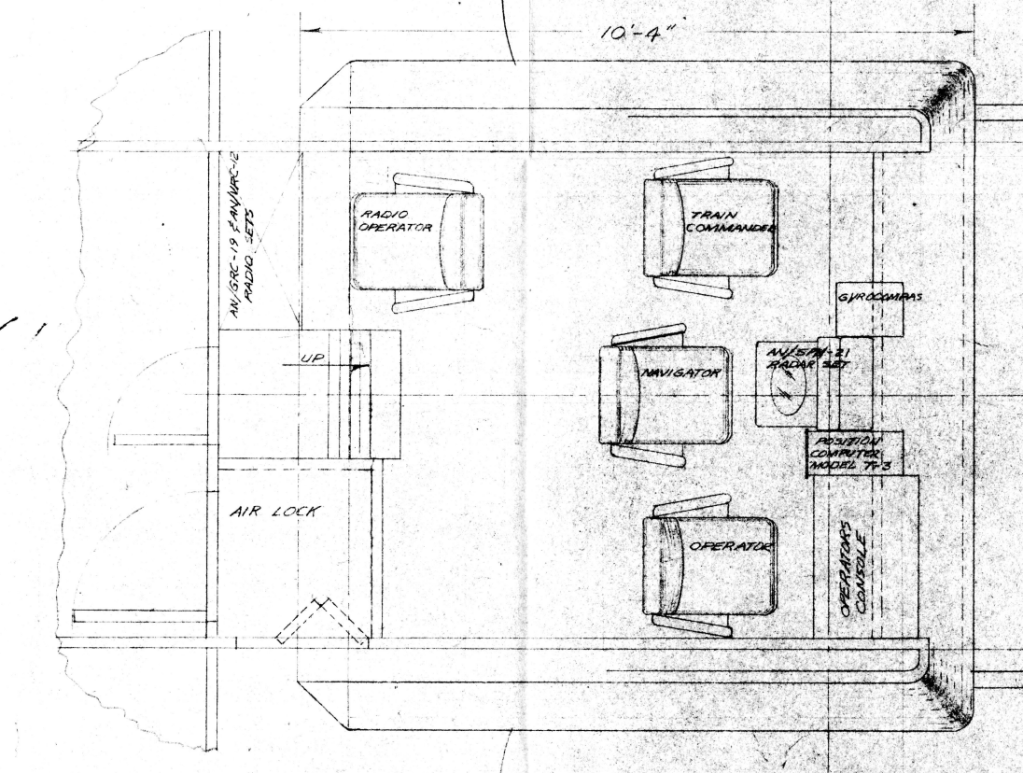
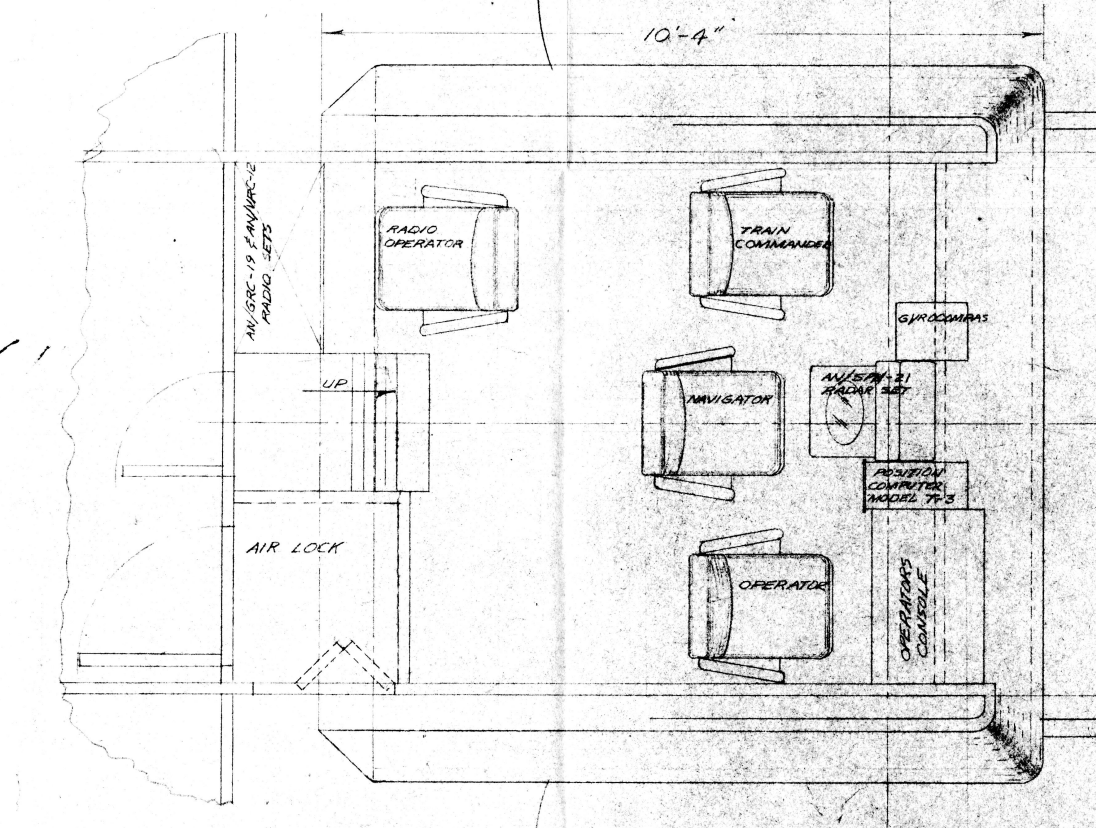
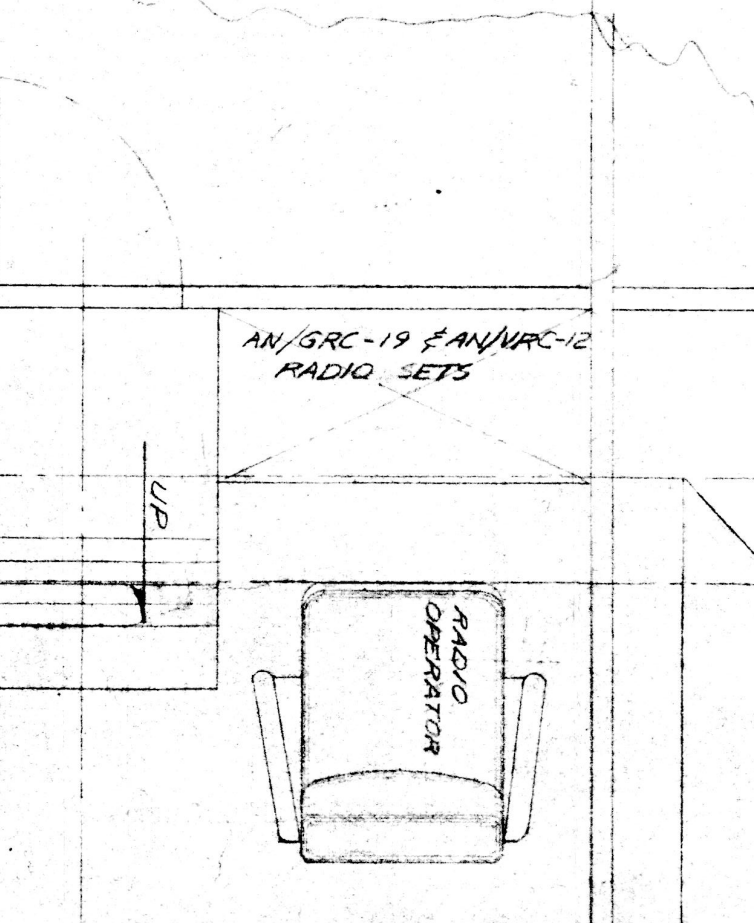
I looked back at the documentation for the TC-497, Phase 4 booklet and found the reference for the AN/VRC-12 radio set. Sure enough, the radio set is noted as the AN/VRC-12. In my book, I incorrectly wrote it was the AN/NRC-12.I searched my documentation and the internet for references to this radio set, which did not come out until 1965. The Phase 4 booklet would not have come out until 1961.
Phase 4 booklet showing the control cab layoutPhase 4 booklet zoomed on the radio sets
In this case, I made a mistake in the book for the radio sets model number as seen here in the documentation. Thank you for pointing this out Bob!
On the Alaska Freight Lines Sno-Freighter’s third journey resupplying the Distant Early Warning (DEW) Line stations, it jackknifed and caught fire. The machine sat immobilized for five years in a valley east of Eagle, AK, just inside the Yukon Territories. The United States Army and the Sno-Freighter’s owner set out to recover the Sno-Freighter; they connected the Sno-Train’s electrical system and a portable generator (to unlock the wheel motors) to the Sno-Freighter. Both machine’s wheel motors were powered by the Sno-Train’s 600-hp Cummins VT-12 engine.
The Sno-Train (rear) providing power to the Sno-Freighter (front). Image courtesy Augustin (Marty) Martinez
The Sno-Train struggled to get moving at first. But, a CAT provided an initial tug up a hill, when moving forward from a dead stop, or when the load was simply too much to overcome. You can read more about this story in my book – https://www.amazon.com/dp/B0BFL91FX6.
Sno-train moving through a stream bed while recovering the sno-freighter. Image courtesy Augustin (Marty) Martinez
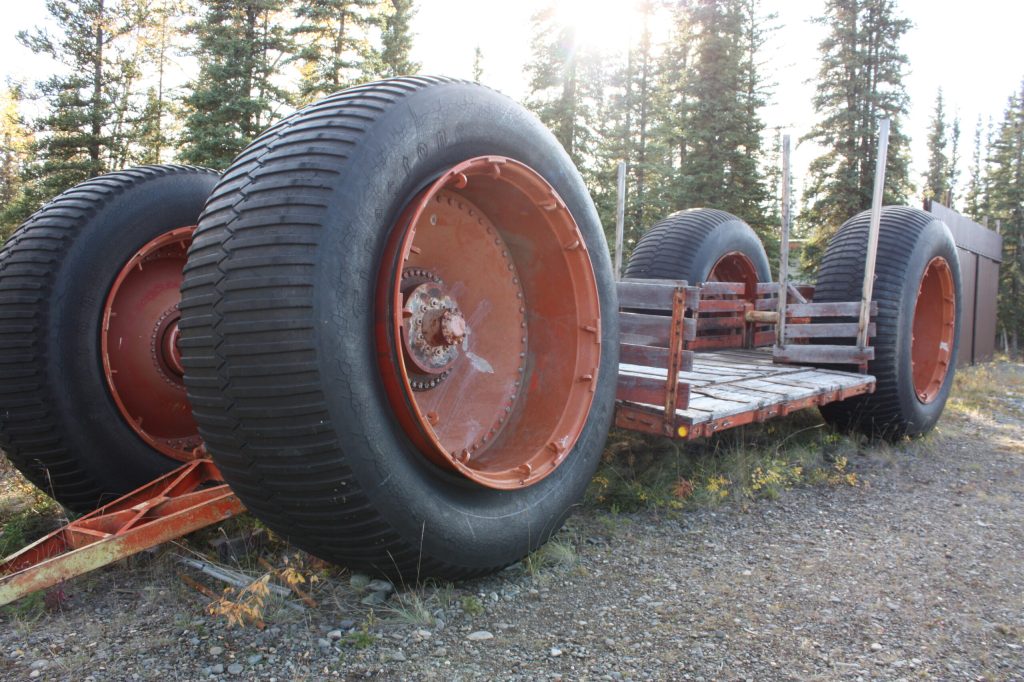
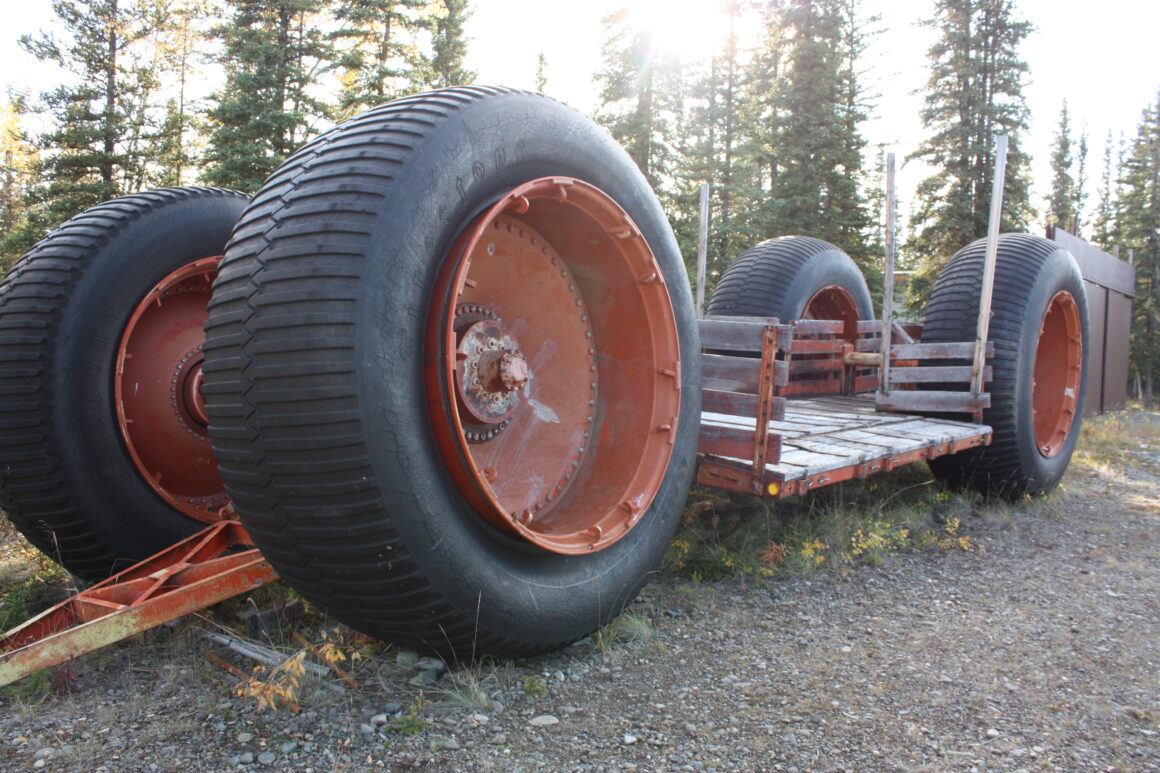
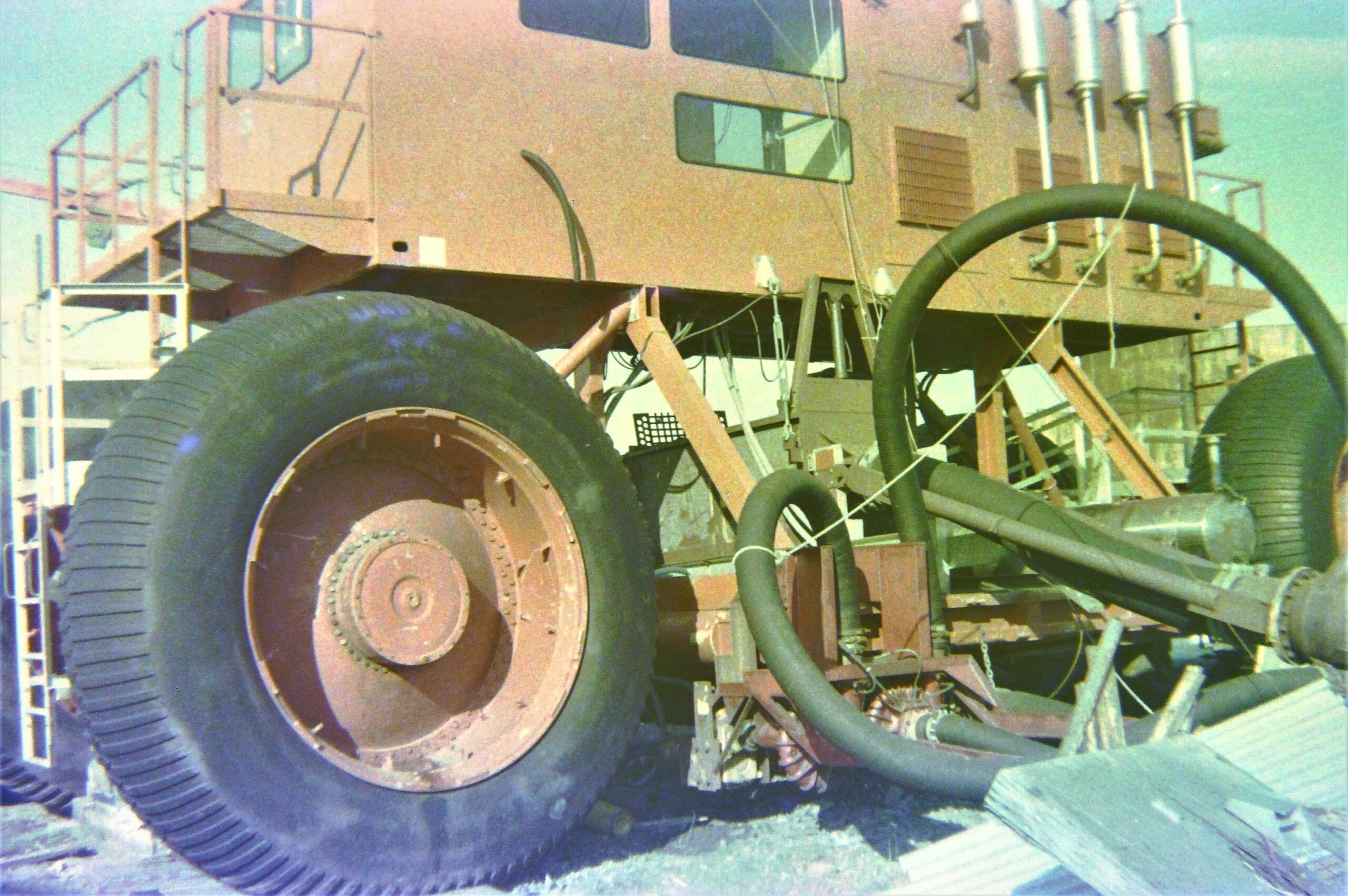
Thompson Trailers were unpowered trailers used from 1959 to around 1968. The trailers were towed by the Sno-Train, D8/D9 CATs, and other equipment; they had a load rating of 10-tons. The wheels were built by LeTourneau and 120x48x68 tires by Firestone.
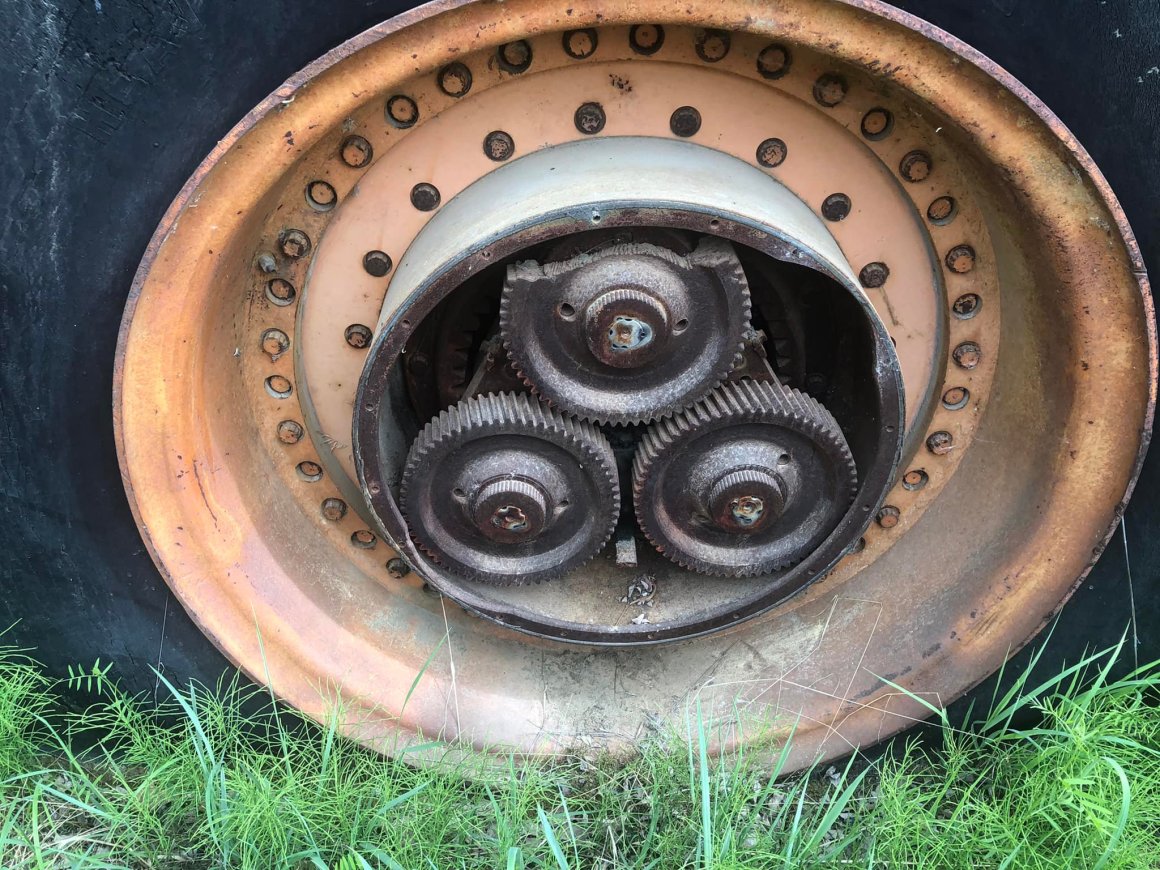
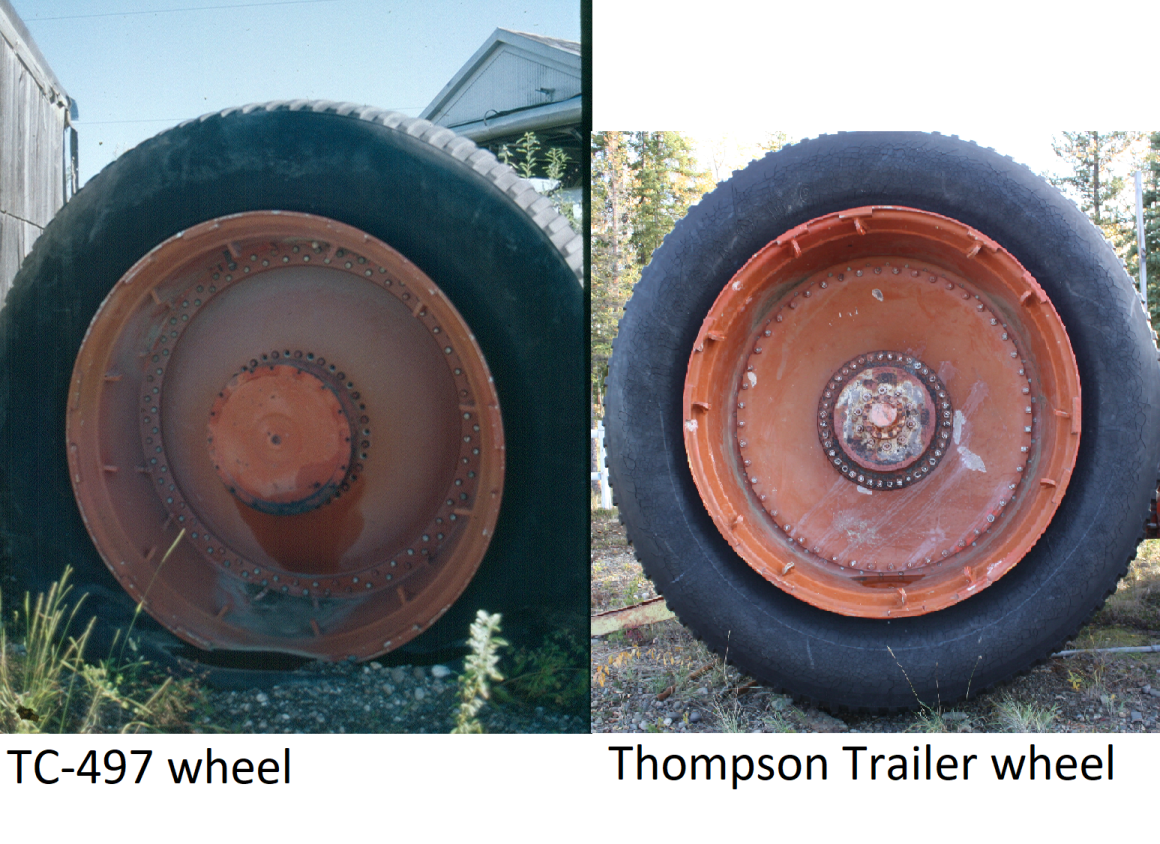
The most significant differentiator between the Thompson Trailer and Overland Train wheels are found in the center of the wheel. The Overland Trains used LeTourneau’s Electric Drive, which used his Tornatorque motor, drivers (gears), and other components. The large circular cap on the Overland Train wheels contains the driver, or gear reduction.
Alaska Freight Lines Sno-Freighter driver. Image courtesy Tim Musgrove
The Thompson Trailer wheels used a large metal cap and nipple.
comparison between the TC-497 wheel and the thompson trailer wheel
There were numerous historical events that caused a mix and match between the Sno-Train, TC-497, and Thompson Trailers. That history are found in detail in my book. For example, if you visit the Sno-Train at the Yukon Transportation Museum in Whitehorse, YT, you will see rims from the Sno-Train and Thompson Trailers.
There are other differences in the two wheel styles above. Can you find them?
Thompson Trailer CT10 at the entrance of Mukluk Land; image courtesy Robert Danzi
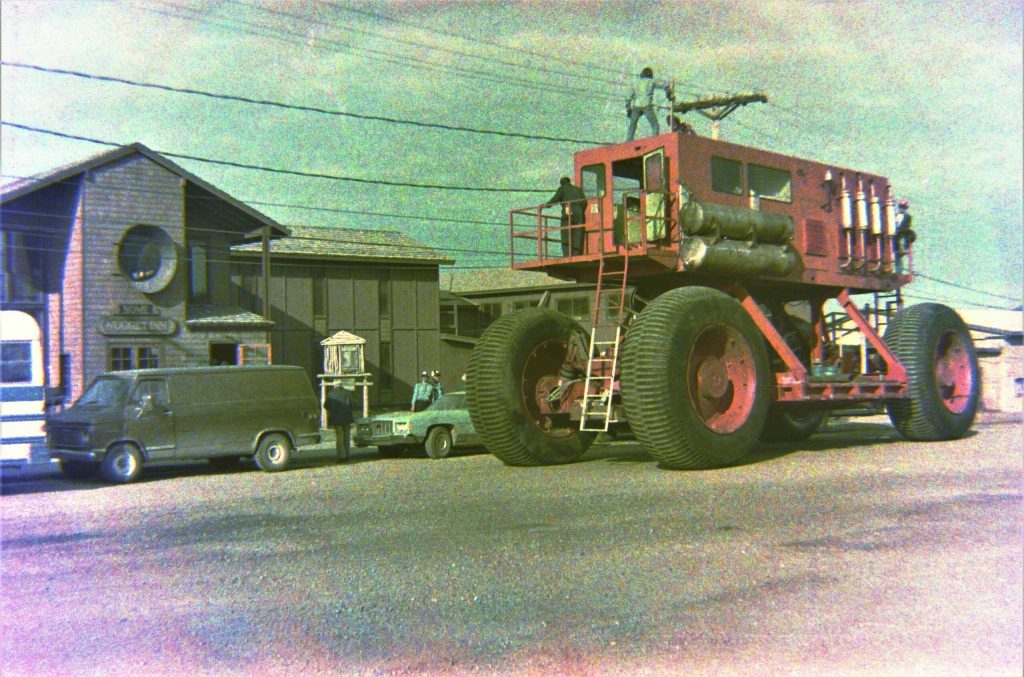
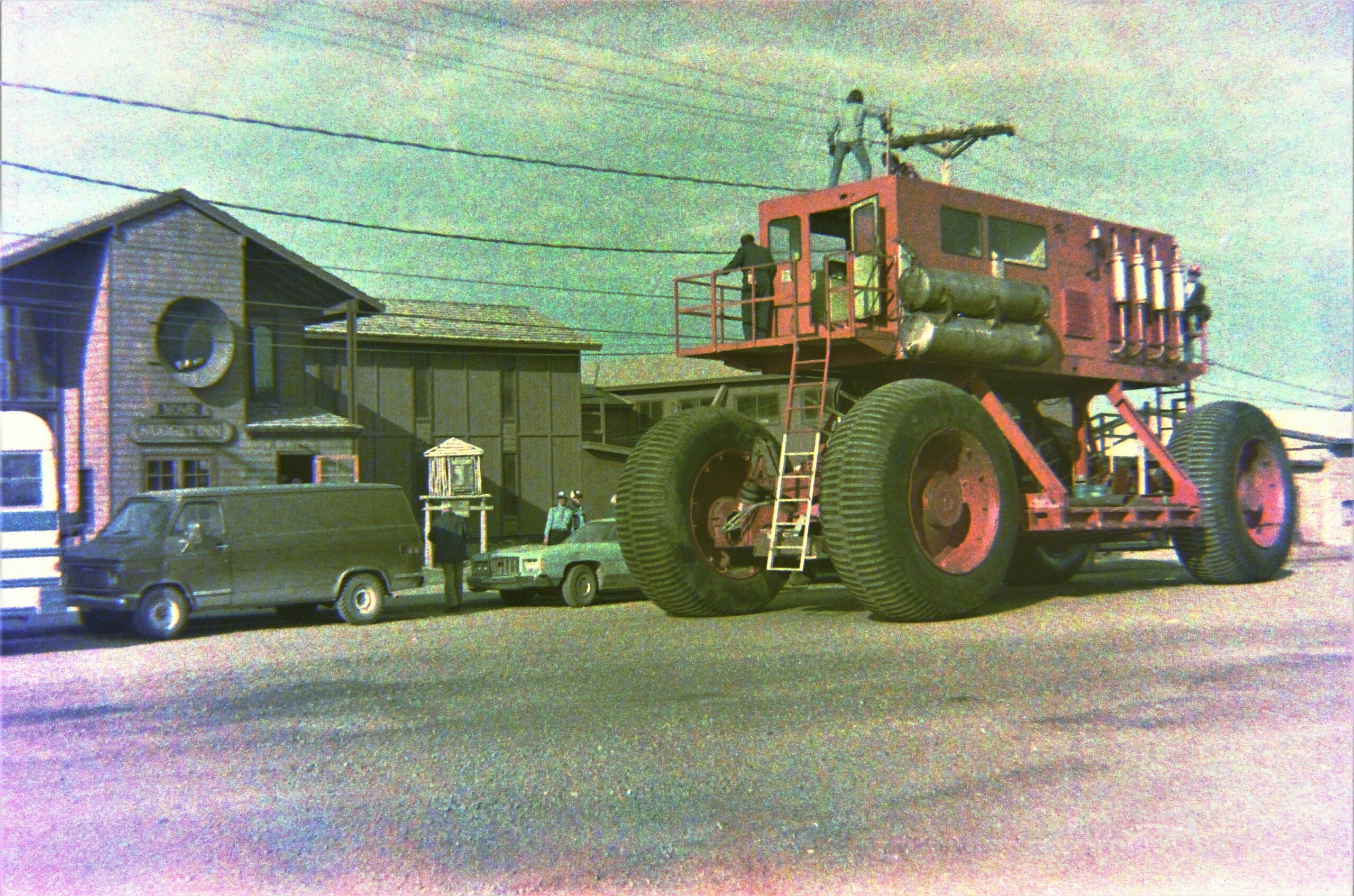
Gold Digger was a custom-built gold dredging machine. It was built by Lloyd Molby, an extremely talented engineer and builder. Here are a few images from it’s time rolling through Nome, Alaska after it was shipped from Seattle, WA.
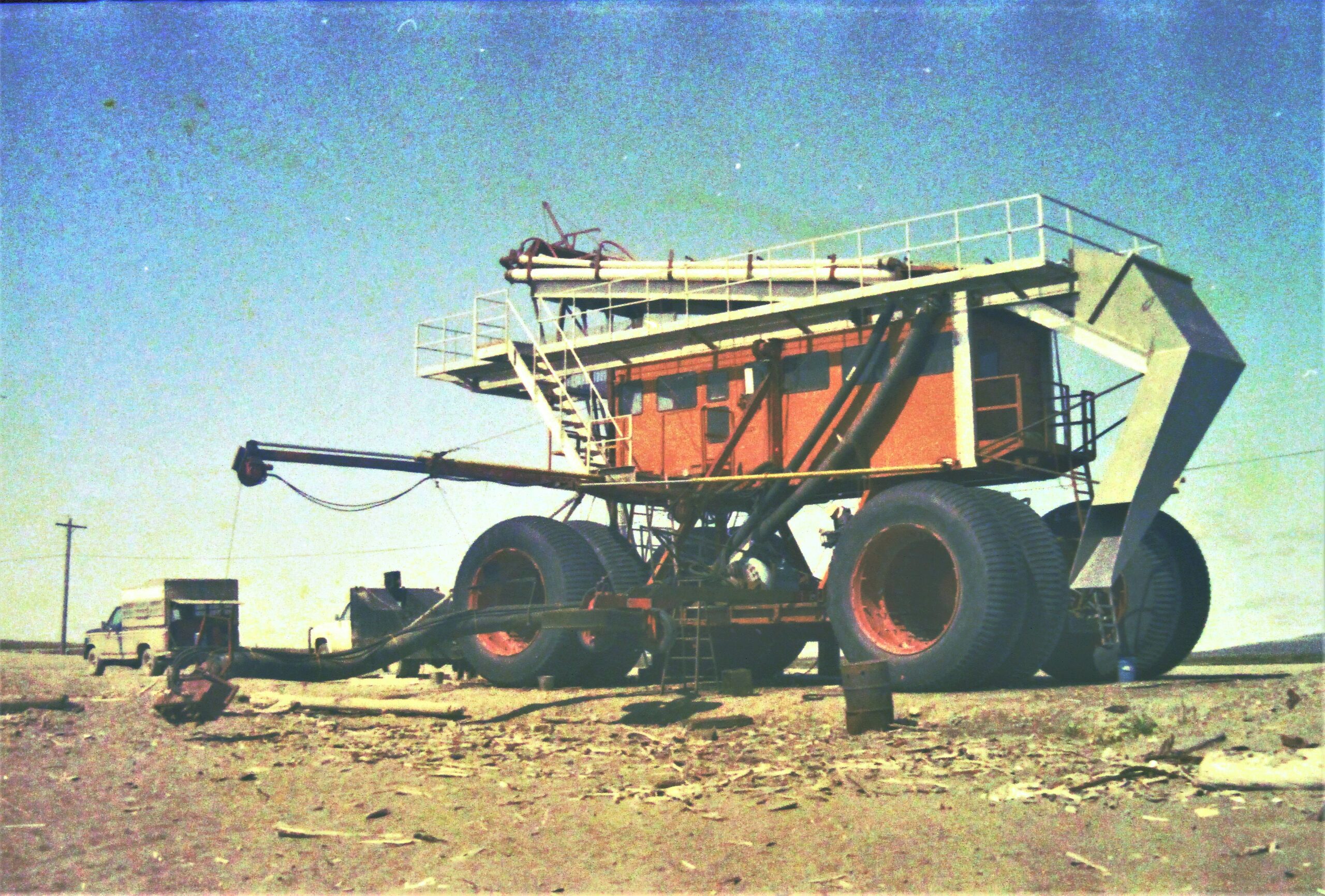
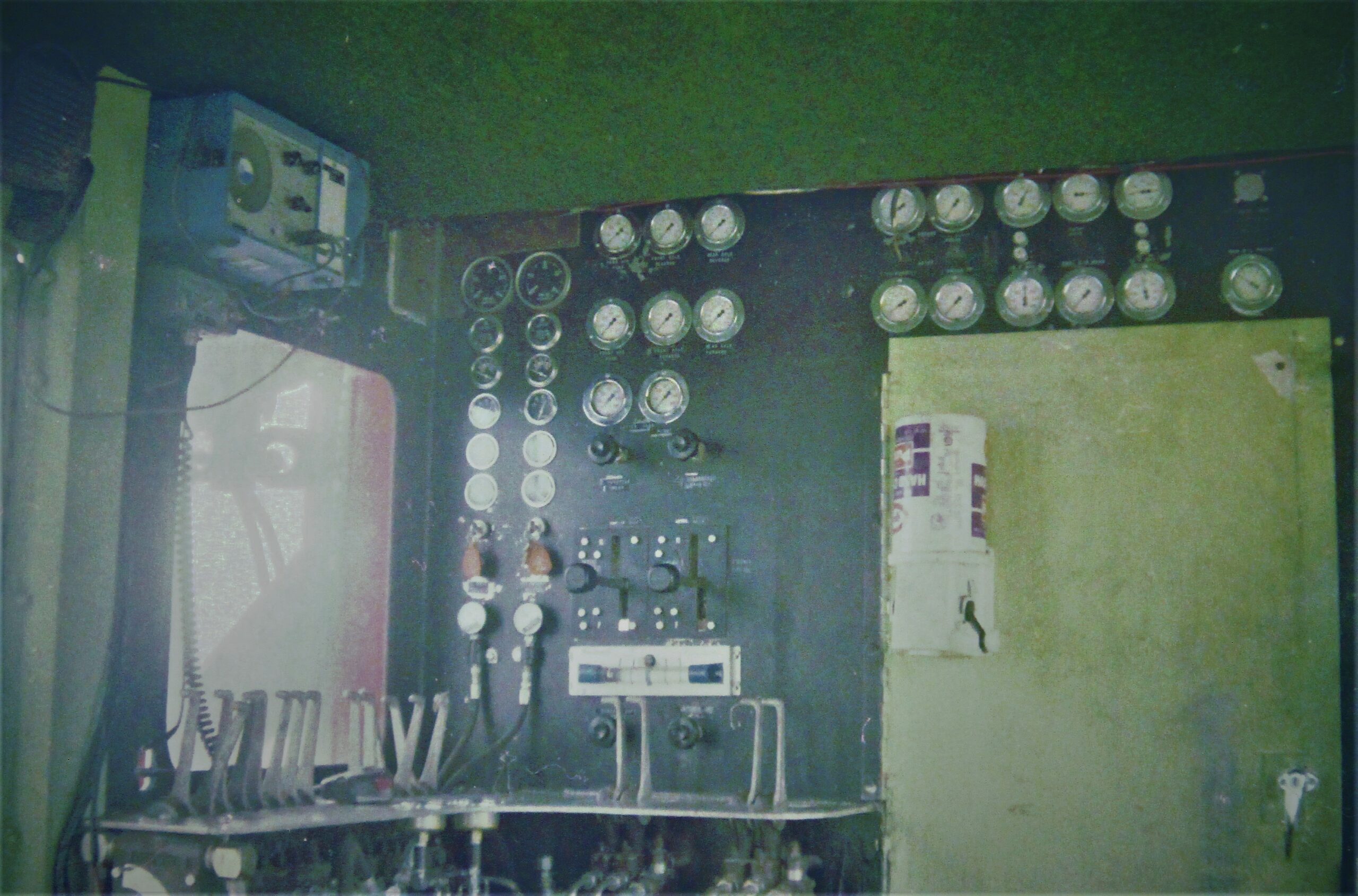
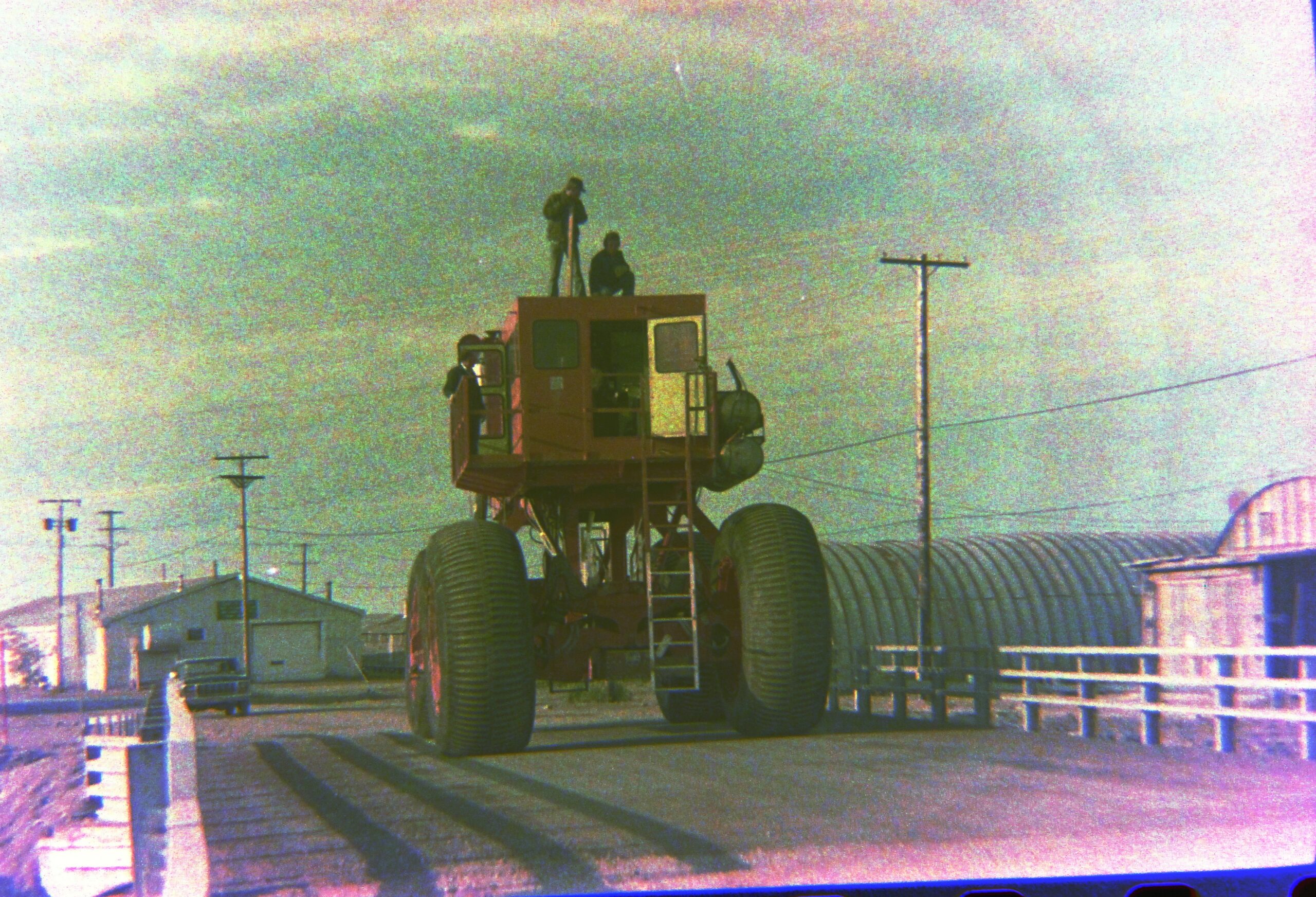
Gold Digger passing down River/Front Street in front of the Nugget InnClose-up of gold dredging pumpsexternal view of Gold Digger – notice the dual wheels per cornerinside the cab, showing the extent of hydraulics integrationDriving through Nome, AK
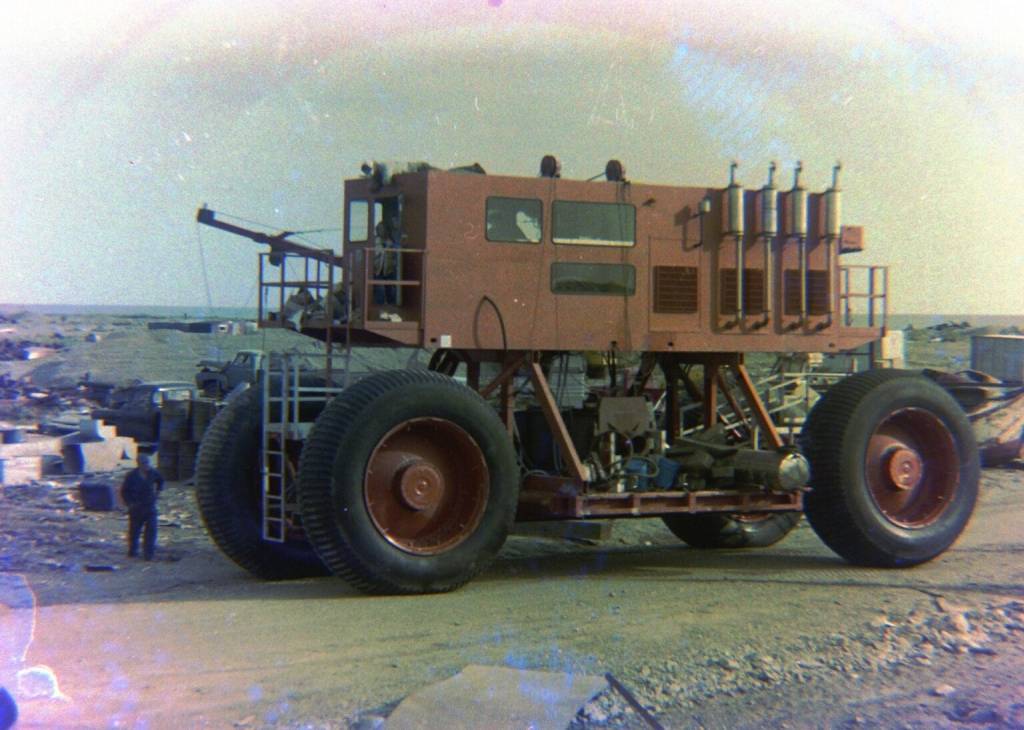
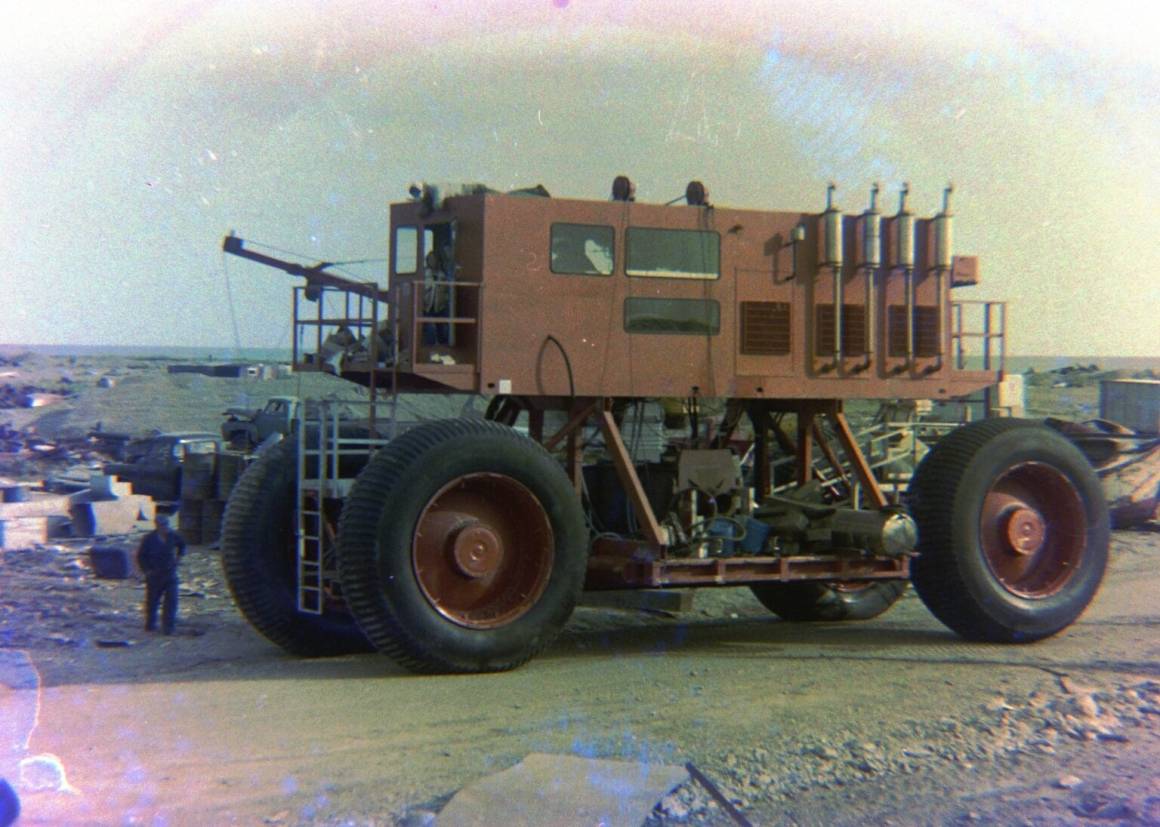
This is Gold Digger. It was built by a man named Lloyd Molby in Longview, TX. It used wheels and a trailer from the TC-497 as the platform. Unlike LeTourneau’s machines, this was largely hydraulic. It was designed for gold dredging in Nome, AK.
The image below is the Alaska Freight Lines Sno-Freighter, built in January-February of 1955. This image is dated February-March 1955. There is a healthy post discussion about it on the Overland Trains Facebook page (https://www.facebook.com/OverlandTrains).
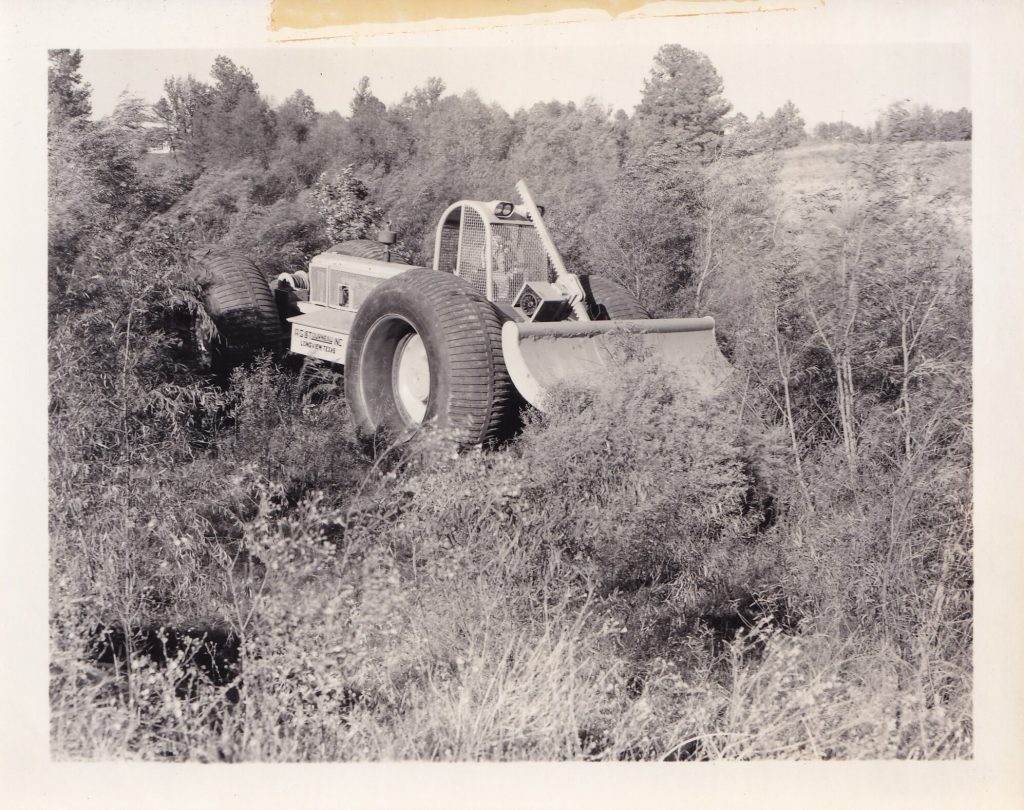
This image of the TC-266 Marsh Buggy was scanned from R. L. LeTourneau’s photo diary. You can see the tape remnants still on the top of the photograph. Once the Marsh Buggy was tested in LeTourneau’s Longview factory, it was sent to Vicksburg and then to his Tournata settlement in Liberia, Africa.
Image: R. G. LeTourneau Museum & Archives at LeTourneau University.

 Overland Trains