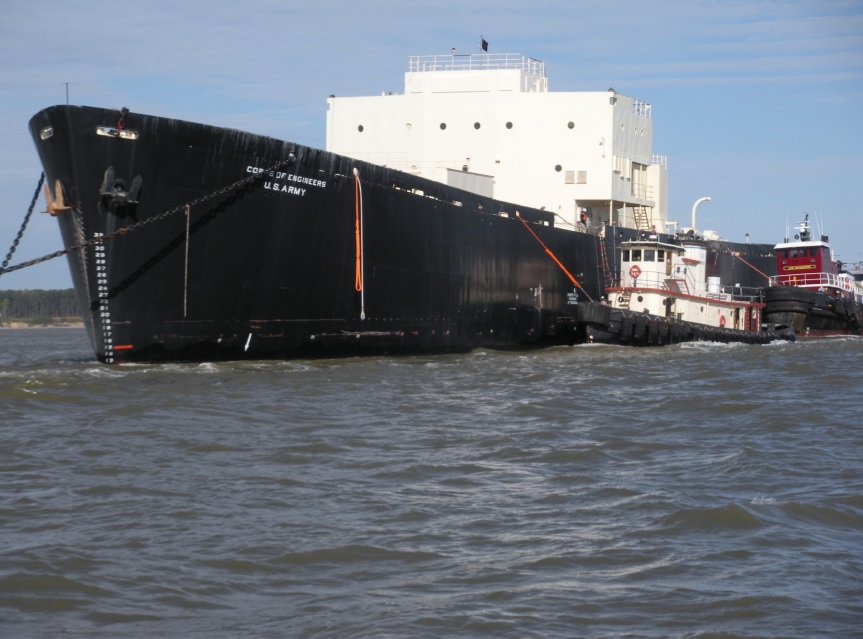
The Army’s Nuclear Power Program (ANPP) had 7 nuclear prototypes. One of those was the Power Barge Sturgis. It was the highest nuclear power providing reactor in the fleet. The MH-1A nomenclature stood for Mobile High Power (over 10mW) – the first one (1) built and (A) field installation. It was in service from 1968 to 1976. It was first testing in Ft. Belvoir, Virginia. It was then moored in Gatun Lake, Panama.
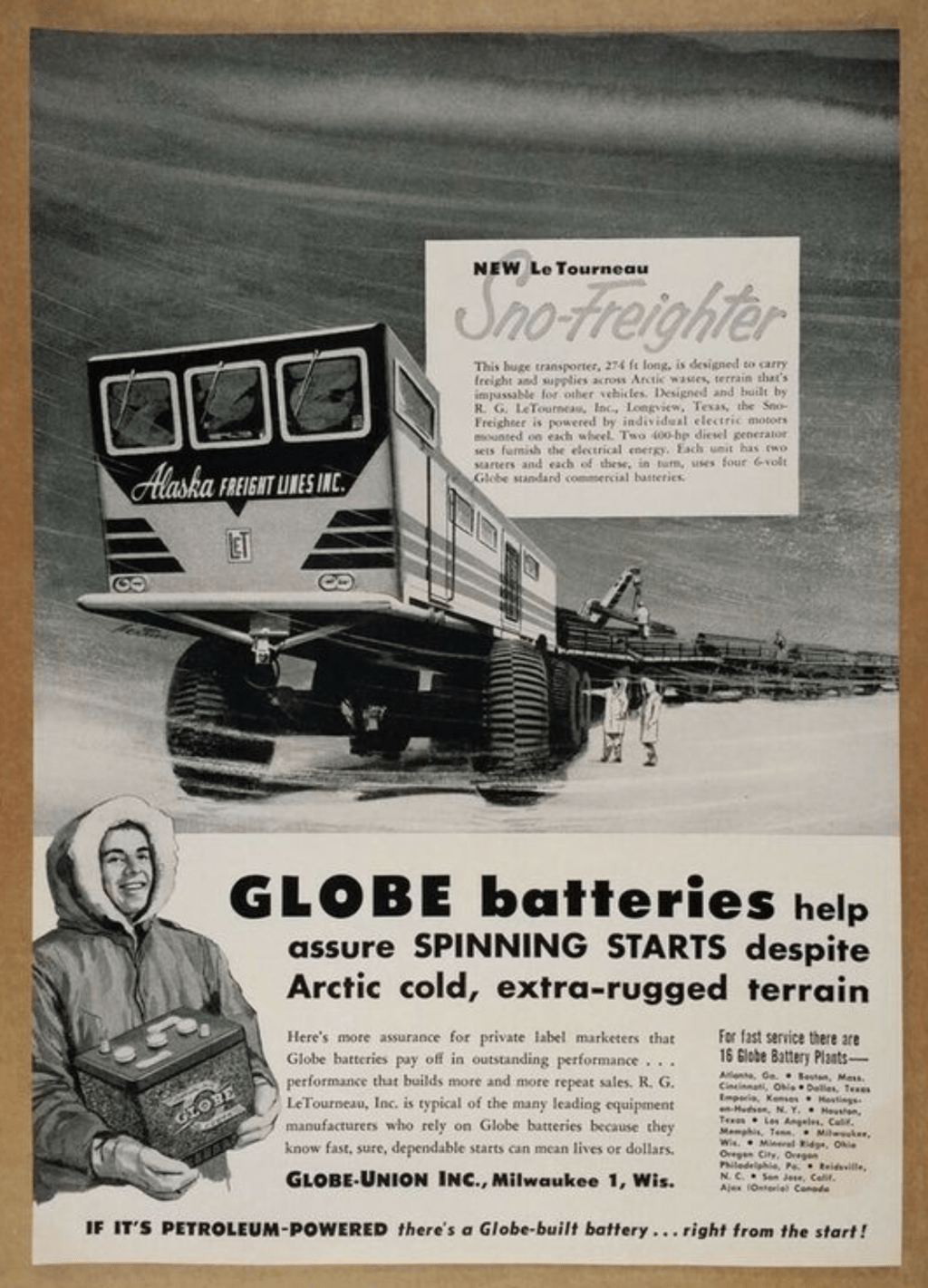
Have you noticed your car, truck, or equipment starts a little slower when it is cold outside? Anyone who lives in or near the Arctic knows that you better have a well maintained battery. When it gets cold, batteries lose efficiency. When the Sno-Freighter came to Alaska to help supply Distant Early Warning (DEW) Line sites, it captured the attention of corporate America. The Sno-Freighter was designed to carry heavy loads through the back country. Companies had the new rugged product comparison that they always wanted.
The advertisement assures performance of Globe-Union Inc. batteries with “…SPINNING STARTS despite the Arctic cold.”
The logs shown in the advertisement above were from the tests at LeTourneau’s Longview, TX facility. Typical cargo for resupplying DEW Line stations were cement, petroleum, oil, and liquids (POL), and a wannigan for housing the men and chef.
Globe-Union Inc. Notes
Globe-Union batteries production started at Tampa Industrial Park in 1958.
In 1970, battery production was up to 400,000 a year
In February of 1982, the Globe-Union factory experienced a gas fire at their factory.
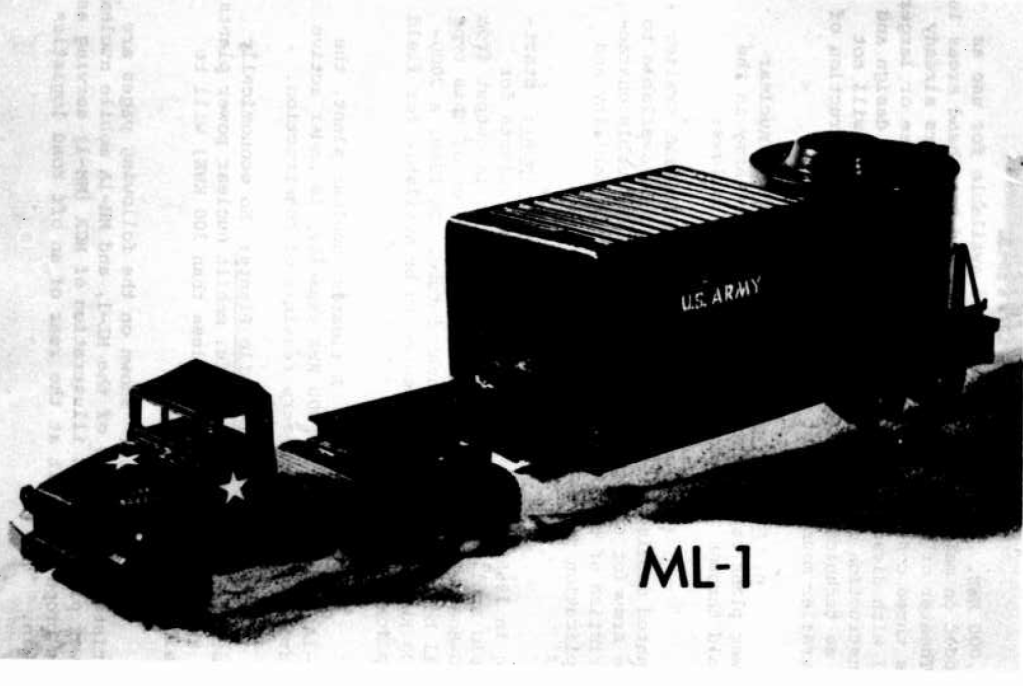
In the late 1950’s, the United States Army Nuclear Power Program (ANPP) was exploring a number of nuclear reactor types. One of those reactors was the ML-1. The ML-1 is a 30-ton, trailer mounted reactor. It was designed to produce 300-500 KWE and could run at full power for 10,000 hours before refueling.
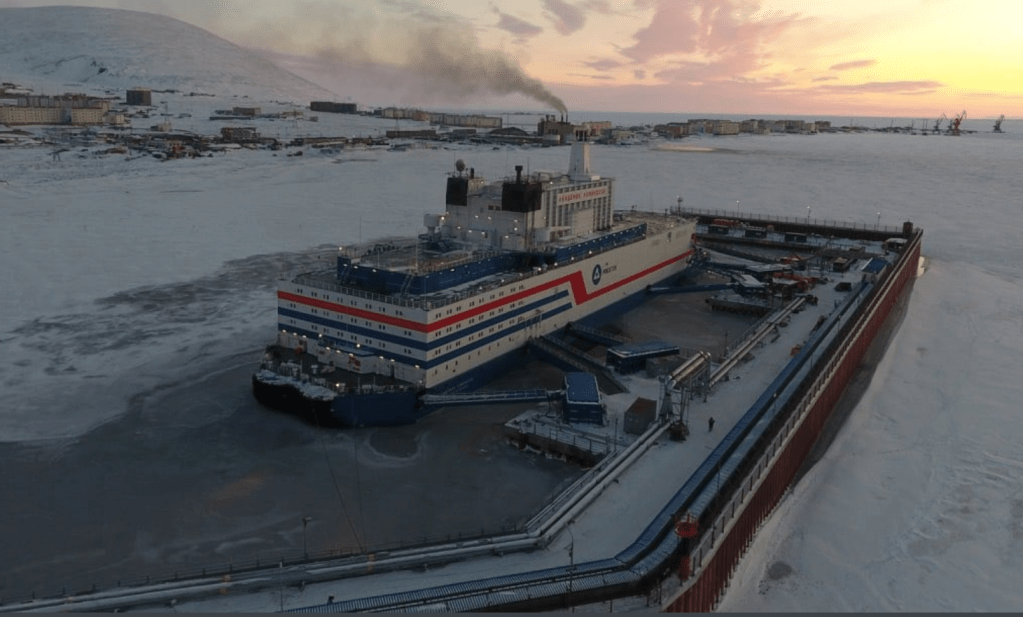
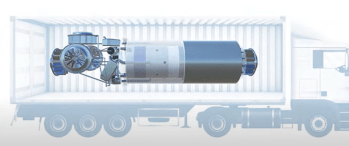
Nearly 60 years later, the United States Department of Energy’s MARVEL reactor program aims to do the same thing. Project Pele at the United States Department of Defense has fever for micro-reactors too. These new reactors are much safer than those of reactors past. They use a TRISO fuel that is virtually melt-down proof. Let us see if we can make this happen!
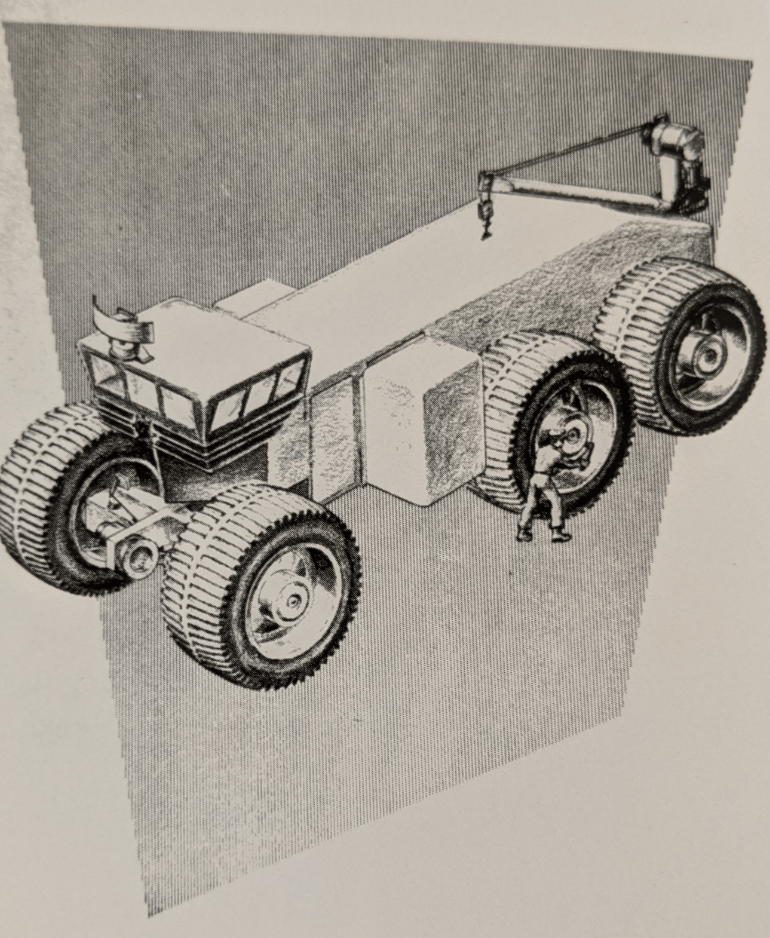
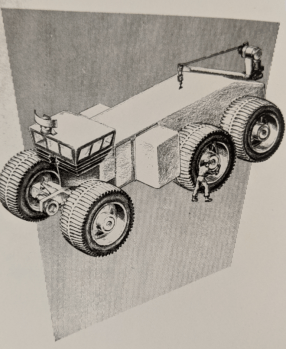
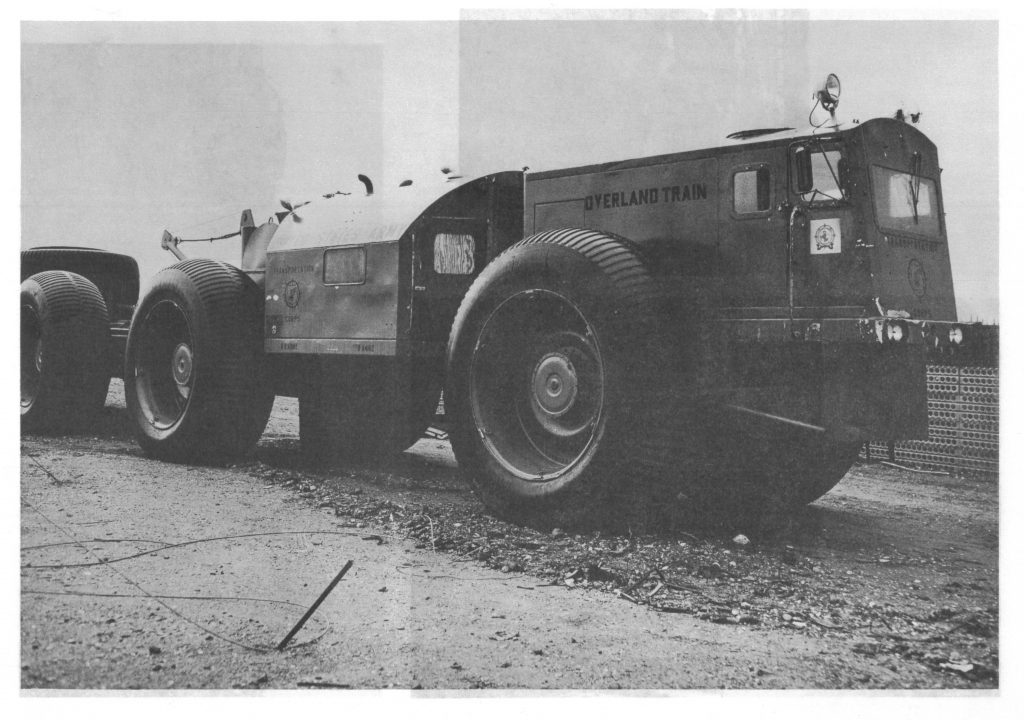
The TC-497 Overland Train MkII was the final Overland Train produced. In early 1958, the United States Army requested a quote from R.G. LeTourneau, Inc. to research and develop a large Overland Train. The project was divided into 4 phases. At the end of Phase I, the concept art below showed the Army what LeTourneau had in mind. Other drawings included in the Phase I book were engineering diagrams, power car, and cargo car diagrams, and over 200 pages of typed text describing the project. The Overland Train concept began in 1955, with a variety of conceptual tests. It was not until 1958, that it got real!
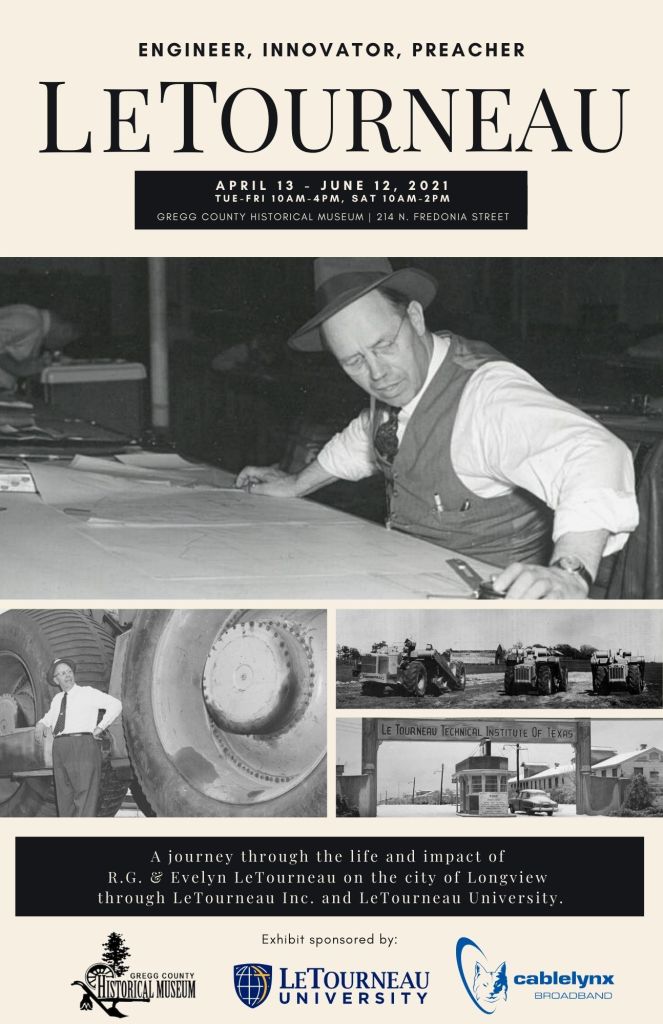
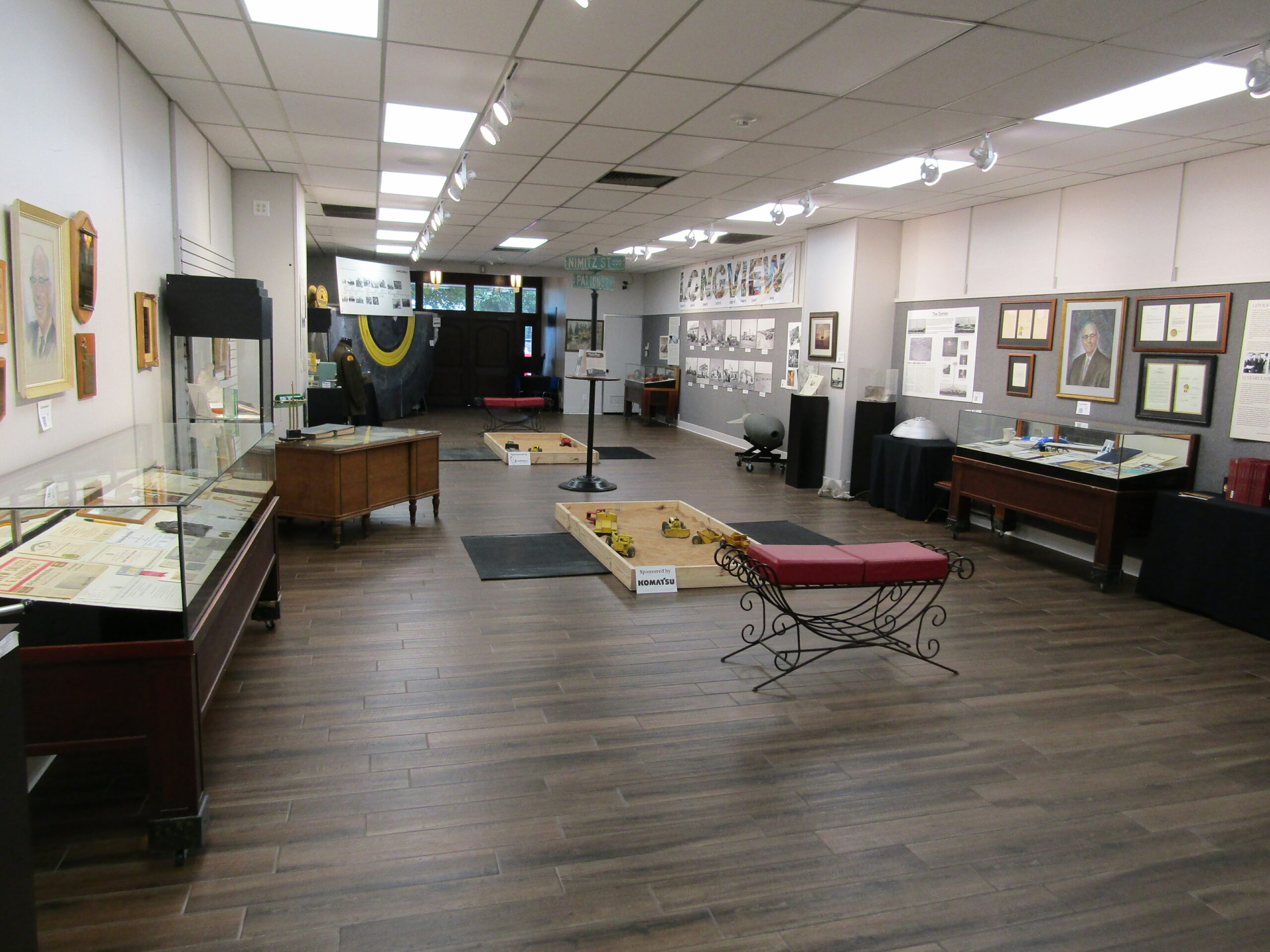
Beginning April 13 and extending until June 12, 2021, the Gregg County Historical Museum will host an R.G. LeTourneau exhibit. Gregg County is where LeTourneau’s Longview, TX facilities used to reside – now Komatsu. Come and celebrate R.G.’s accomplishments and visit the Museum exhibit. Visit the museum website at http://gregghistorical.org.
EDIT: Adding a gallery from the trip.
The main floor of the R.G. LeTourneau exhibit
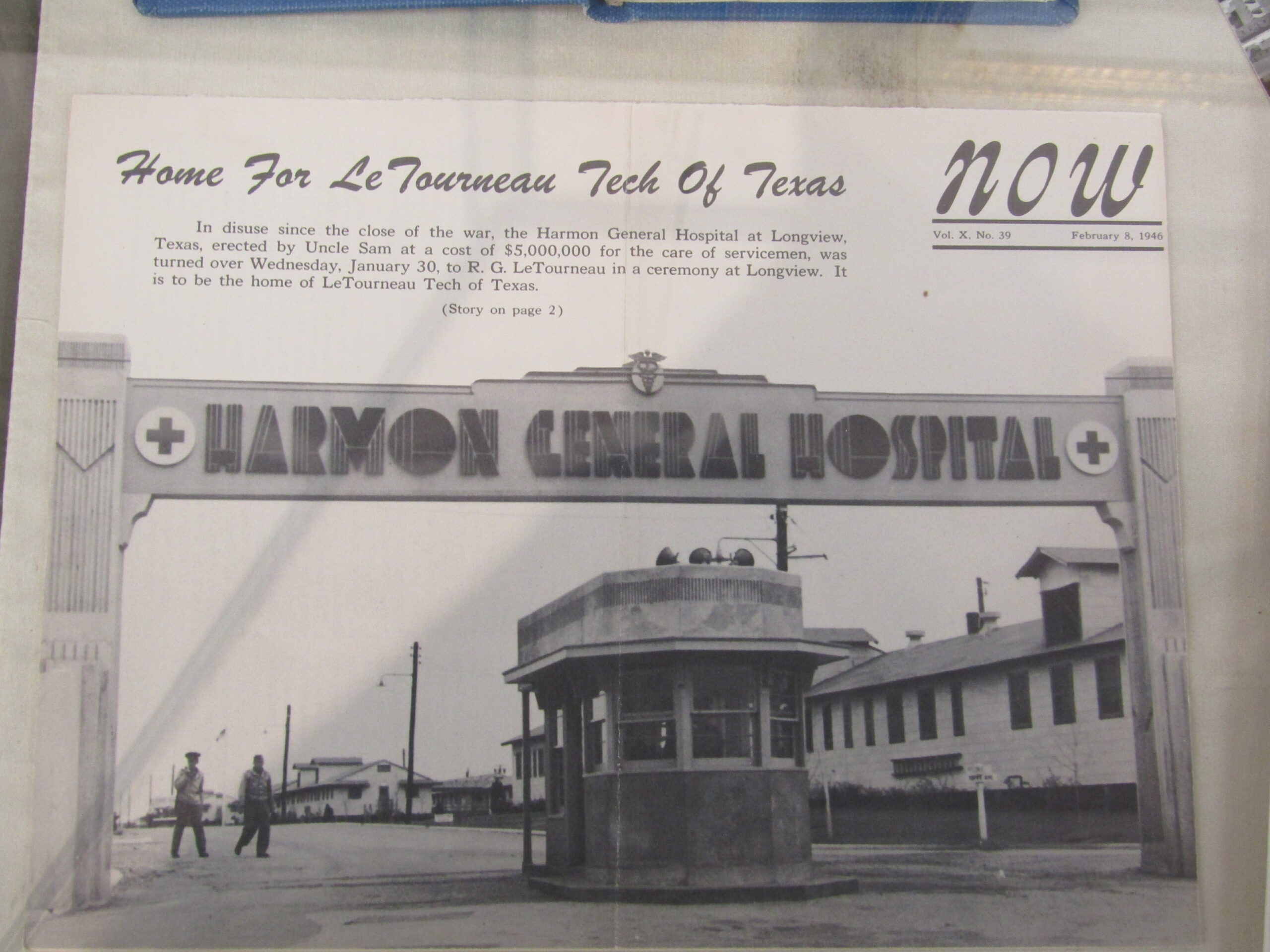
Harmon General Hospital was an Army hospital, which later became LeTourneau Technical college, now LETU
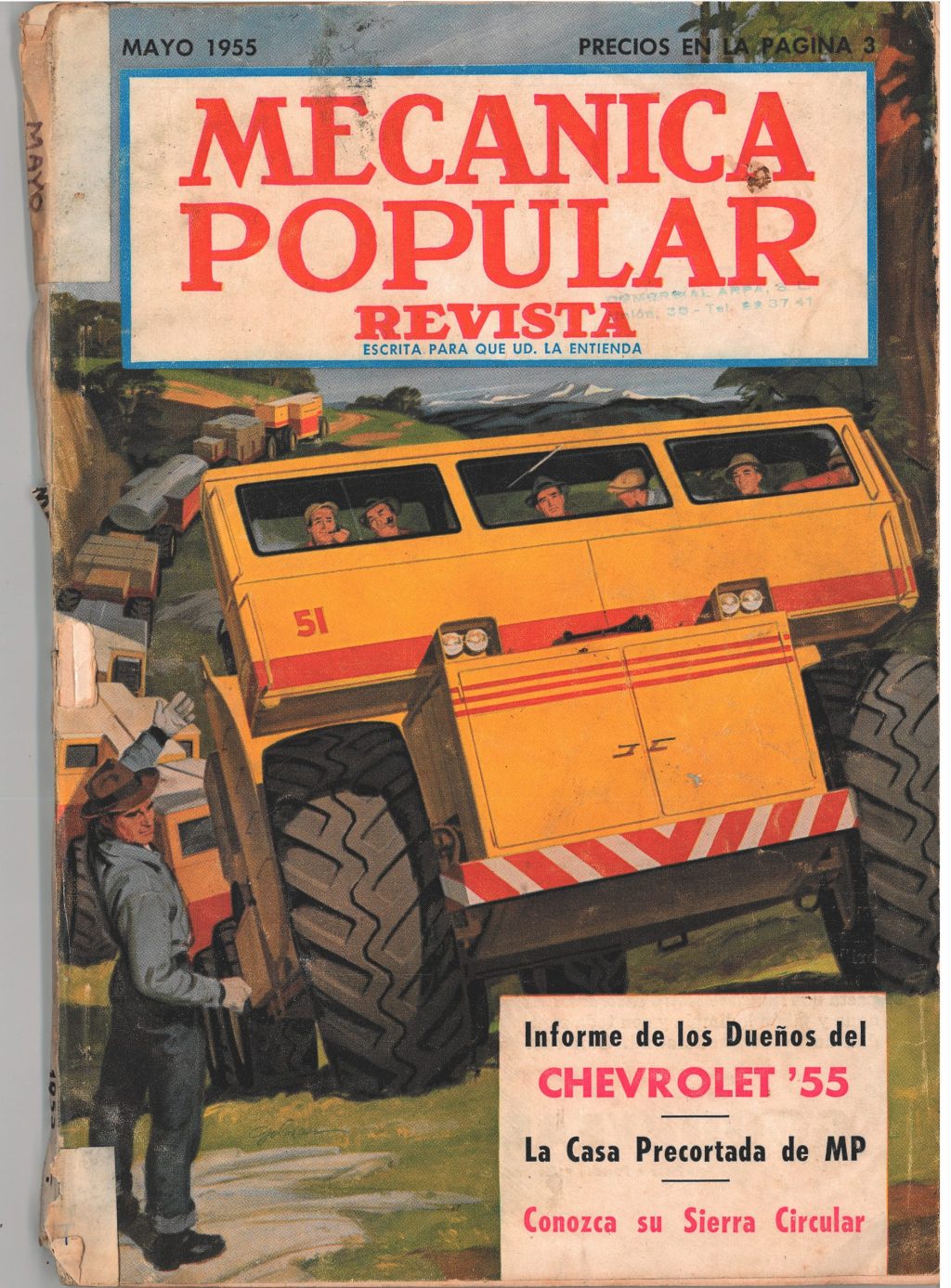
The May 1955 edition of Mechanic Popular (Popular Mechanics) featured an original painting you might find familiar. This cover image is a one of a kind Tournatrain painting. If you search for the American Popular Mechanics of the same date, you will find a completely different cover – no Tournatrain. I will talk more about this cover and painting in the Overland Trains book. Until then, enjoy!
For the most part, I work on some aspect of the book every day. Some days my actual job, the one that sustains my life, will burn me up and I won’t have the energy to work on it during the evening. Last night, I spent some time working on the Sno-Train. This machine is one of the top two popular Overland Trains. It traveled the most and was engaged in the most field based testing.
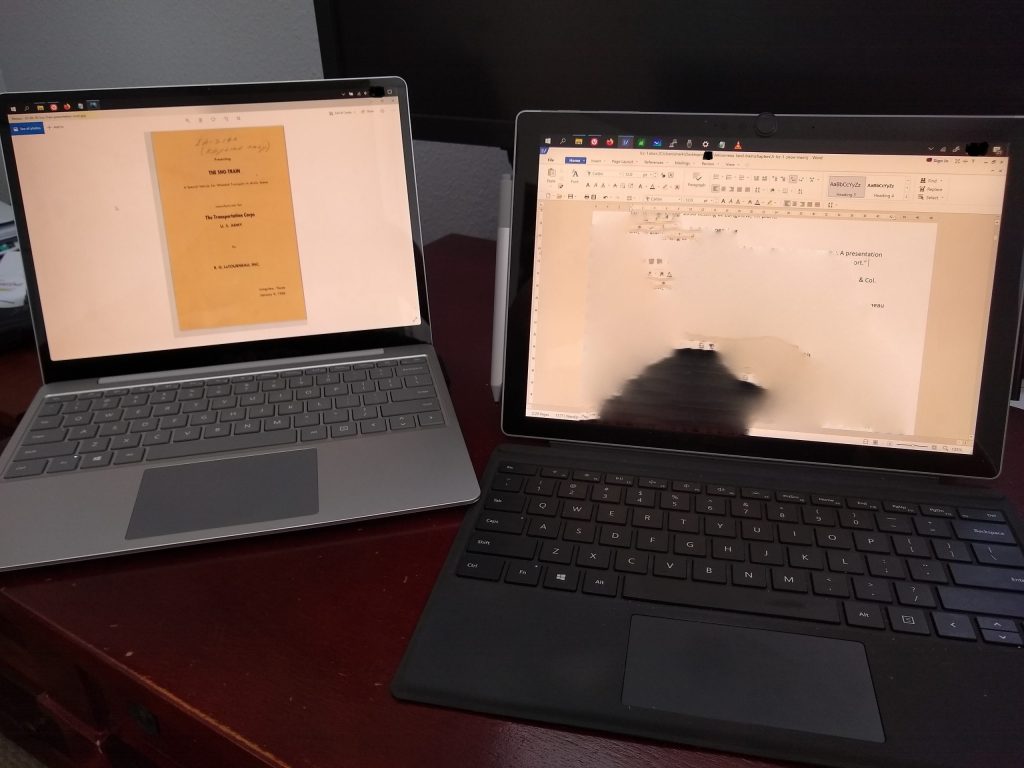
Writing the Overland Trains book has been much more of an undertaking that I previously thought. As I dug in and started talking to folks, the storyline just kept getting deeper. In the image below, you see both of my laptops that I use for writing. On the laptop to the left, I am working on reviewing “The Sno-Train” demonstration pamphlet. It contains images and details on Train usage and attending military dignitaries.
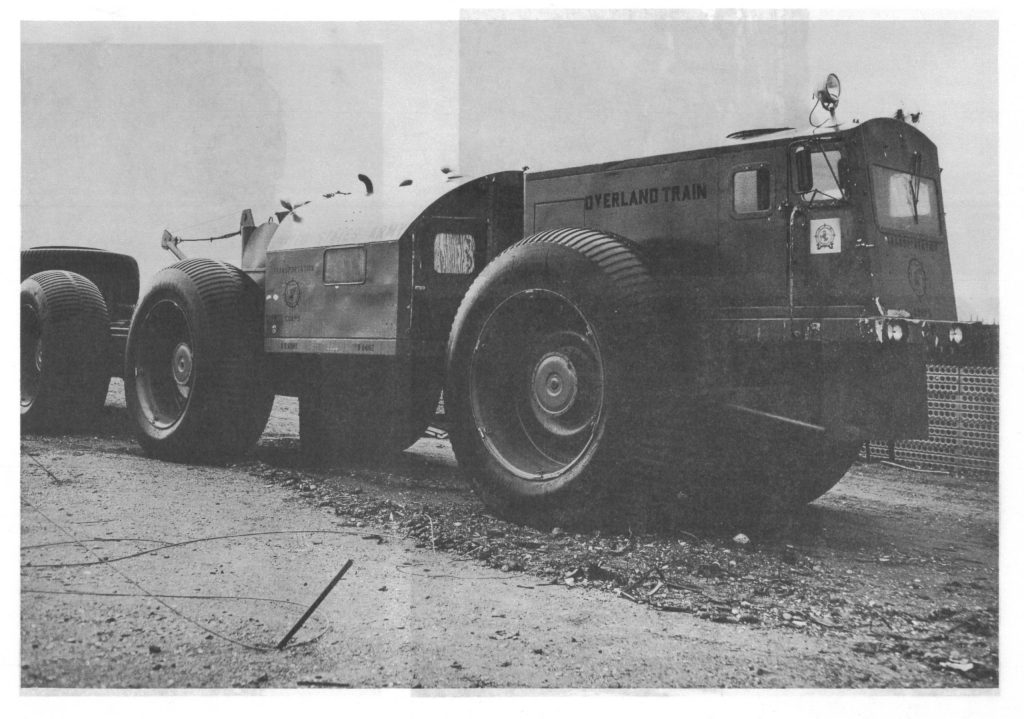
When the Army Sno-Train was sold as surplus out of Fort Wainwright, AK, the Army surplus form contained an equipment inventory, images, and other operational information. The image below was included in the surplus package. Towards the end of the surplus document, it states “THIS VEHICLE WAS IN OPERATING CONDITION WHEN SHUT DOWN.” The “Locomotive” car was cited to weight 57,200 pounds. The “freight car” weight was cited at 29,400 pounds. The surplus sheet also states that there were “20 crates of spare parts, inventory available, are stored aboard, and are included in the sale.” I would have loved to take a look at those crates! More details coming in the book!
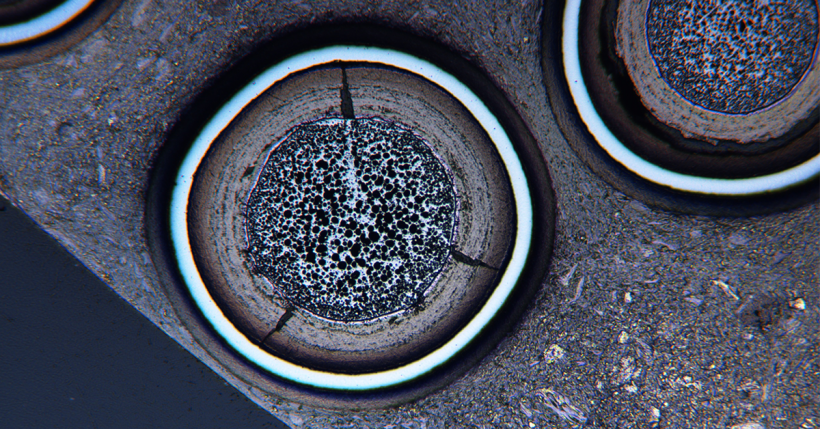
TRISO, or Tri-Structural Iso-Tropic particle fuel, contain uranium, carbon and oxygen fuel kernel. The kernel has three layers of carbon- and ceramic-based materials that prevent the release of radioactive fission products. The DoD recently selected X-energy and BWXT Advanced Technologies, LLC micro-reactor design to continue with their micro-reactor prototypes.
During the Overland Trains development, an MM-1 nuclear micro-reactor was being developed for use to possibly power the Train. I will have more in the book about that development and what eventually came of the nuclear Train concept.
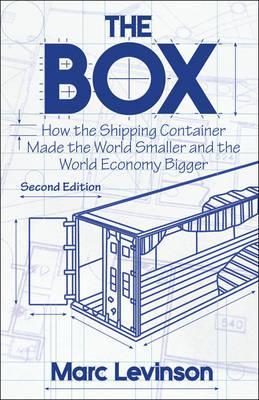
Marc Levison’s “The Box.” So far, this book reads well for anyone interested in history, economics, and a topic that is just a little bit off the norm. I am on Chapter 3 right now. I started reading this book to learn more about shipping during the Cold War and Alaska Freight Lines.


 Overland Trains