Articles

  • Mobile Micro Reactors Resurrected from the Army’s Nuclear Power Program

    Mobile Micro Reactors Resurrected from the Army’s Nuclear Power Program

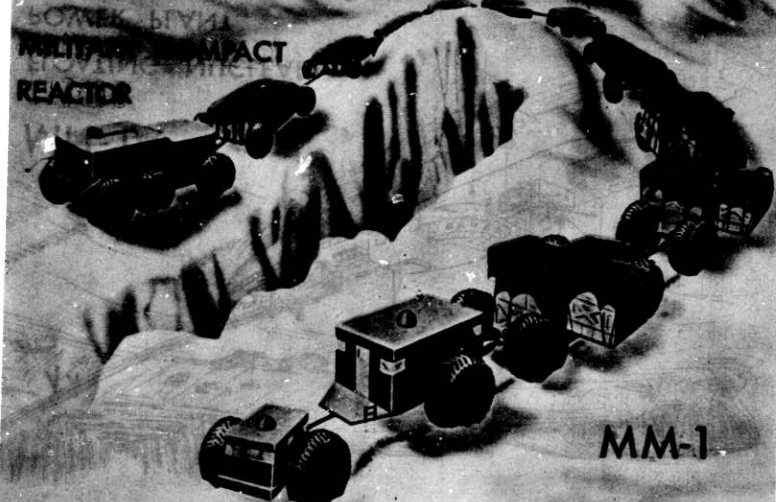
    In 1960, the Army’s Nuclear Power Program had completed several nuclear reactors for research and testing purposes. Their micro-reactor (MCR (MM-1)) expected outputs were 500-800kW (MCR) and 2,000-3,000kW (MM-1). The MM-1 was targeted for use on a large logistical train and designed to help offset Petroleum, Oil, and Lubricants (POL) logistics needs in active war-time environments. During the 1960-1970 Army estimates, a theater of military operations would require fuel equivalent to 3.4 gallons/man/day to 7.5 gallons/man/day.
    The Army’s Nuclear Power Program had conceptualized the MM-1 reactor being placed in a logistical cargo carrier. Image from U.S. Army Engineer School, Mobile Nuclear Power Program Plants 1960-1970.

    The MM-1 concept never came to reality, as the radiation shielding needed to protect men and equipment was too heavy. In 2016, the Defense Science Board (DSB) identified energy use as a major requirement for military operations. We have know this since before the Army Nuclear Power Program in the 1960’s. I am not sure why this point needed to be justified again.

    Renewable power sources simply can not keep up with the military demands, which catalyzed the military to restart their efforts at a meltdown-proof (see TRISO fuel), miniature nuclear reactor concepts as Project Pele. As of March 22, 2021, to companies, BWXT Advanced Technologies and X-energy were given the go-ahead for their final mobile micro-reactor designs.

    Similar to the 1960’s designs, these modern day micro-reactors are targeted at electrical output between 1mW to 5mW (1,000-5,000kW). I doubt we will see another logistical cargo train concept anytime soon. If you want to read more about Project Pele and micro-reactors, here are a few good places to start.
    https://www.cto.mil/pele_eis/

    https://www.mobilemicroreactoreis.com

    https://www.defense.gov/Newsroom/Releases/Release/Article/2545869/strategic-capabilities-office-selects-two-mobile-microreactor-concepts-to-proce/

    https://www.ans.org/news/article-3260/draft-eis-released-for-project-pele-mobile-microreactor-demo-at-inl/

  • Sno-Train Testing in Houghton, MI

    Sno-Train Testing in Houghton, MI

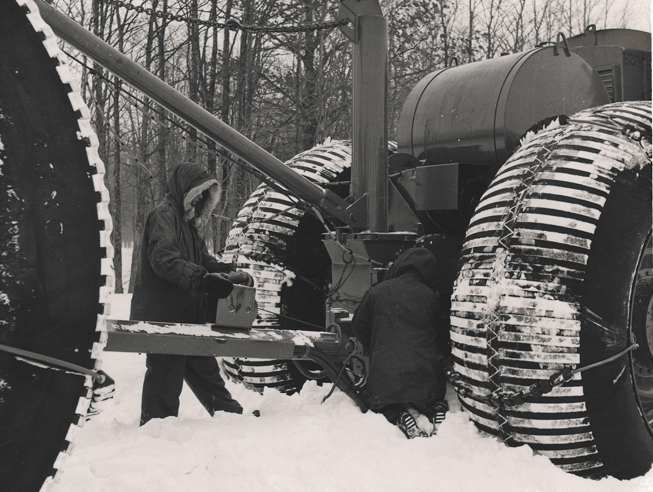
    When the Sno-Train manufacturing was completed, it was sent to Houghton, MI for the Army to test capabilities. In the image shown below, you see two personnel checking trailer connection or power cables. The large pill-shaped canister between the rear tires is the fuel tank. This photo also shows the Sno-Train with traction lugs attached.

    Inspecting the Sno-Train in Houghton, MI dated 3-10-56

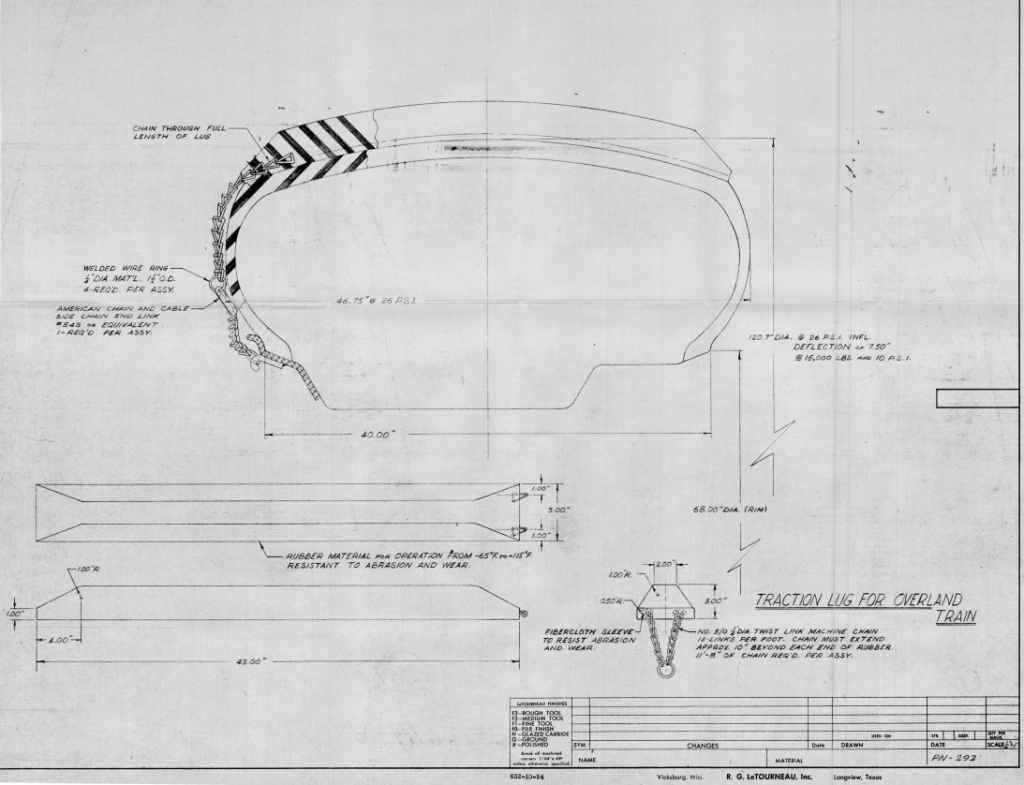
    Traction lugs are the equivalent to tire chains, but they are for the monster 120x48x68 tires. Seen below is the diagram showing the Overland Mark 2 traction lugs, which vary from the lugs seen above. R.G. and his engineers iterated on many of the designs as they learned more about how they operated in field conditions. The traction lugs were one of those iterative devices.

    Traction lug diagram for the Overland Mark II
  • Book Writing Update September 19, 2021

    Book Writing Update September 19, 2021

    The first 6 book chapters are being reviewed and edited! I received the first copy edit on Chapter 1 last night. I have three “Monster” chapters in the book, the Sno-Freighter, Sno-Train, and the Overland Mark II. The good news is that the remaining chapter drafts are complete, aside from the aforementioned three.

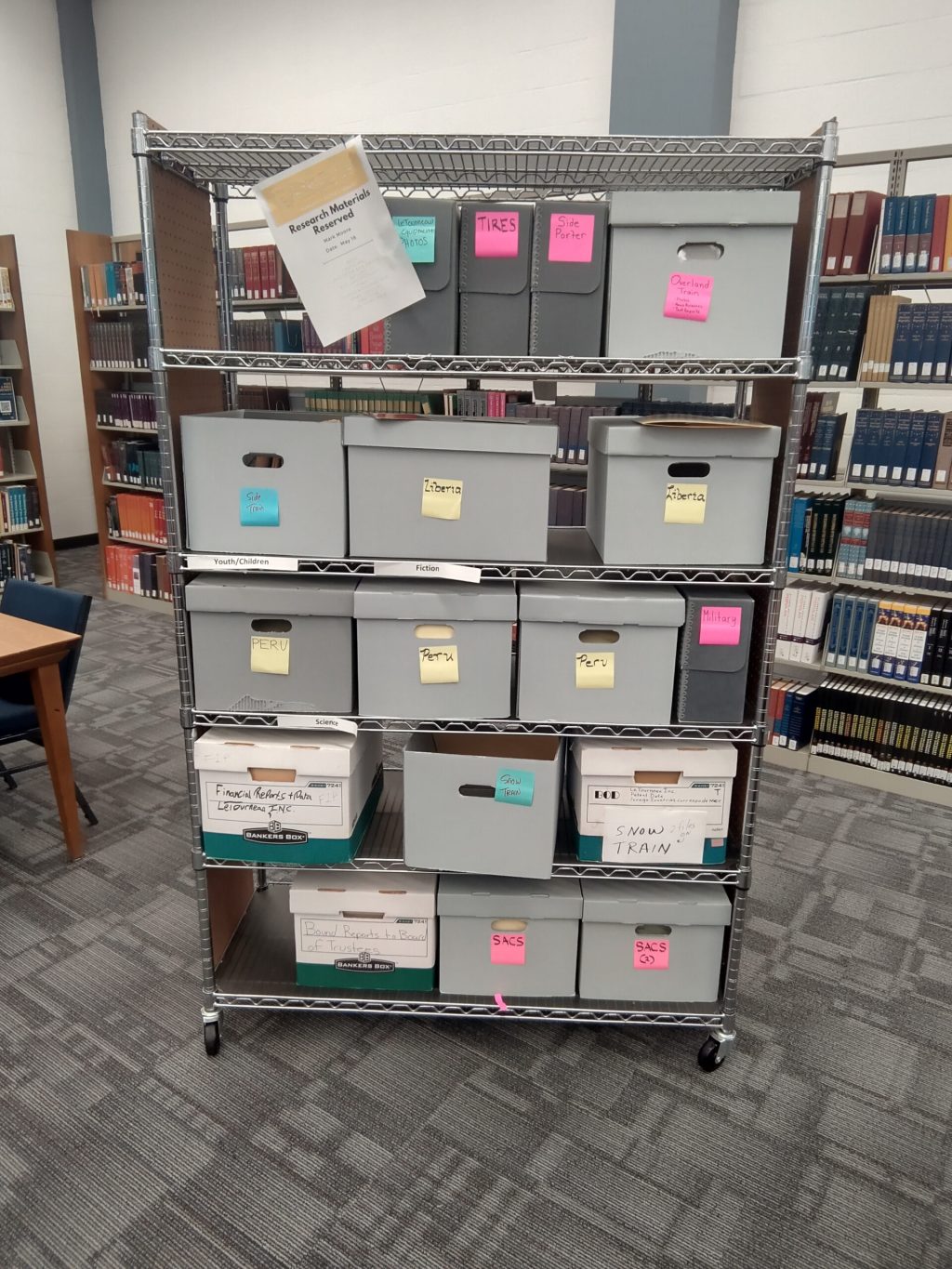
    When I went to Texas for research last month, I had boxes and boxes of old documentation to review. The image below is just a small percentage of data that were reviewed. Part of the problem with all of these fantastic data sources was filtering. Sometimes, there were an excessive amount of documentation on a particular topic; I had to mentally step back and filter what was important to telling the story.

    Some of the historical records researched for this book

    As I started writing this book, I wanted to throw out any of the data derived from stories. I started from scratch, presenting information only from physical documentation or from those present during the event. Aside from the mass amount of information in this book, it is based on data that I can back up by documentation and first hand accounts.

  • Overland Trains Facebook Page Reaches 1,000 Followers

    Overland Trains Facebook Page Reaches 1,000 Followers

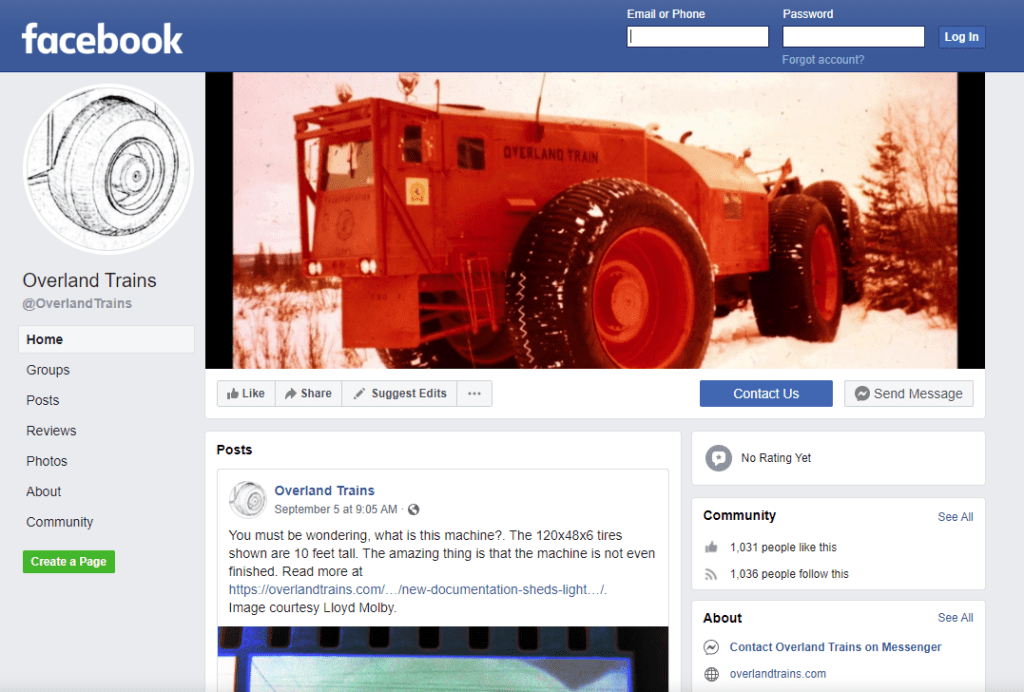
    Our Facebook Overland Trains page reached 1,000 followers yesterday! The first 7 chapters of the Overland Trains book are being edited, while I continue to work on the larger 3 chapters, the Sno-Freighter, Sno-Train, and Overland Mark II. Thank you for joining our Facebook Page – https://www.facebook.com/OverlandTrains.

  • New Documentation Sheds Light on the Overland MarkII Surplus Parts

    New Documentation Sheds Light on the Overland MarkII Surplus Parts

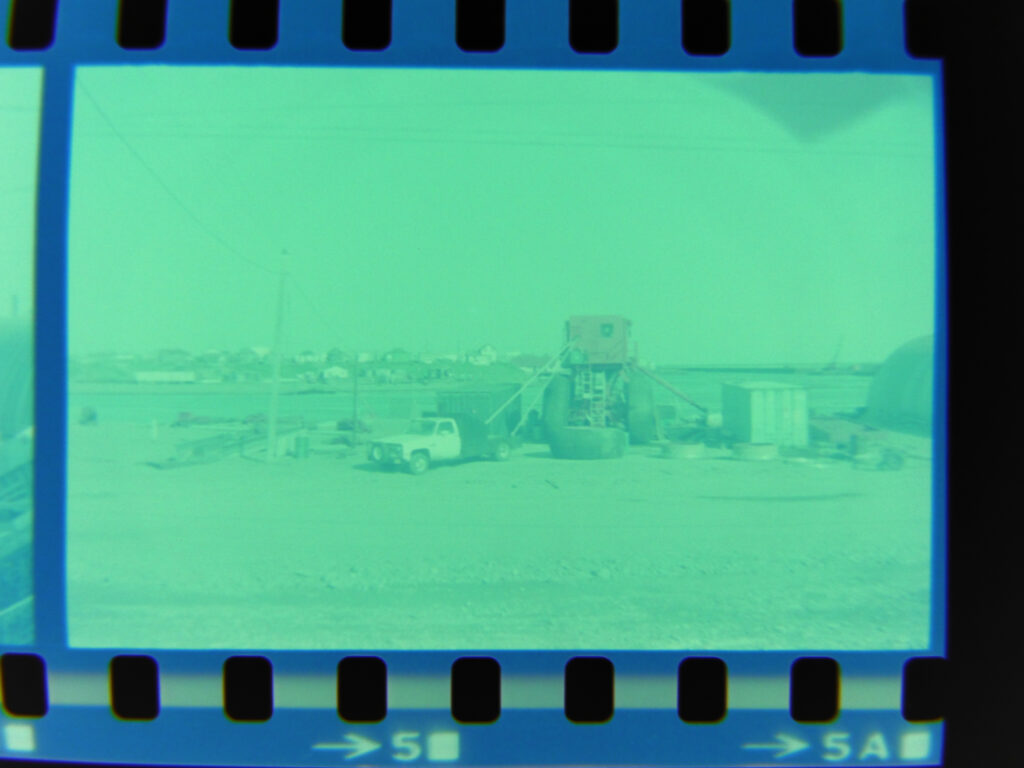
    As part of researching “The Overland Trains Project,” I have been able to take use some of my technical background to good use. These slides show one of the Overland Trains trailers. On Thursday, I received an envelope of old film negatives. These needed to be digitized and analyzed for content. How in the heck do I do that?

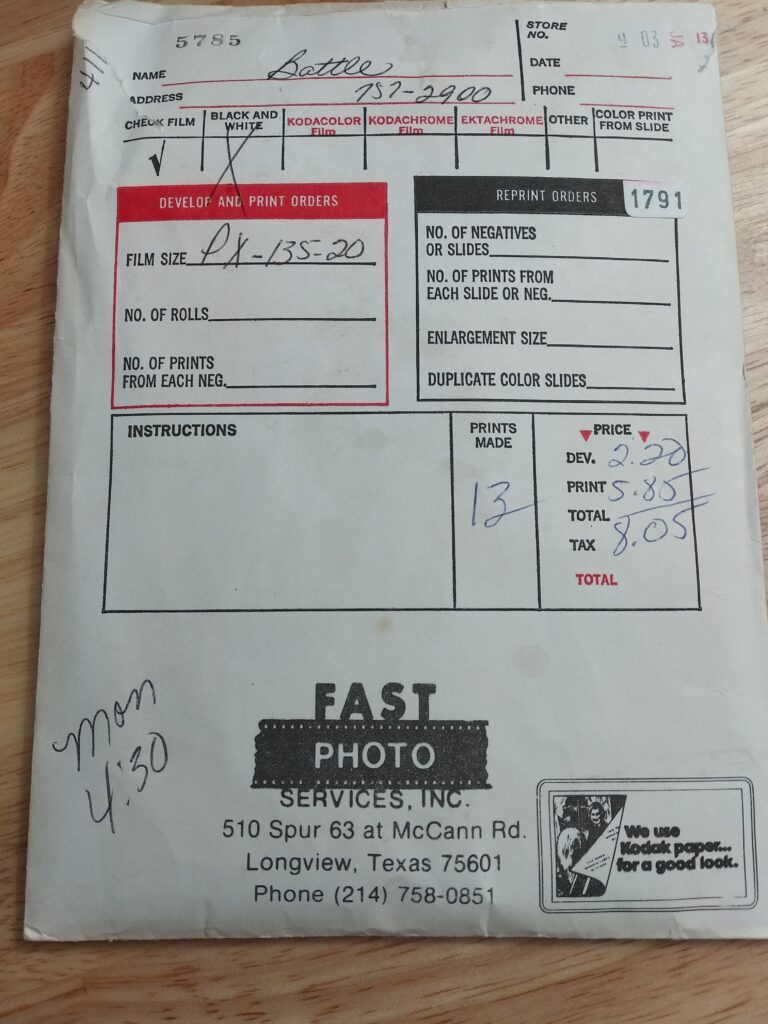
    Film negatives pouch

    When I was a kid, I used to buy 35mm film, take random pictures, and take them to PayLess for developing. I would get back pictures and these negatives. I did not realized until now, how important these negatives are as a part of history.

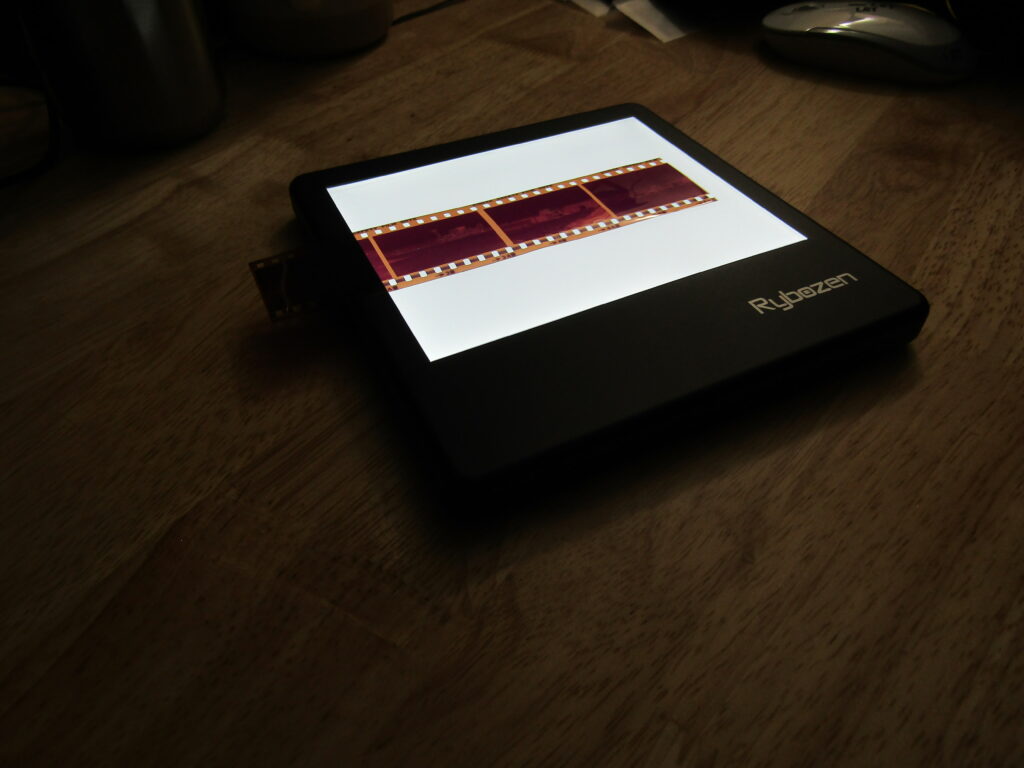
    I called up a couple of pharmacy stores that had photo print capabilities. Anytime a customer wants negatives digitized, they are sent to Fuji, with a turnaround time of 2-4 weeks. Realistically, this would end up being 6-8 weeks. I searched Neeva and found out that digitizing negatives is quite simple. In short, use a high quality, uniform light source, take a completely still digital camera image, then edit the colors in a photo editor.

    Rybozen 5″x4″ light table

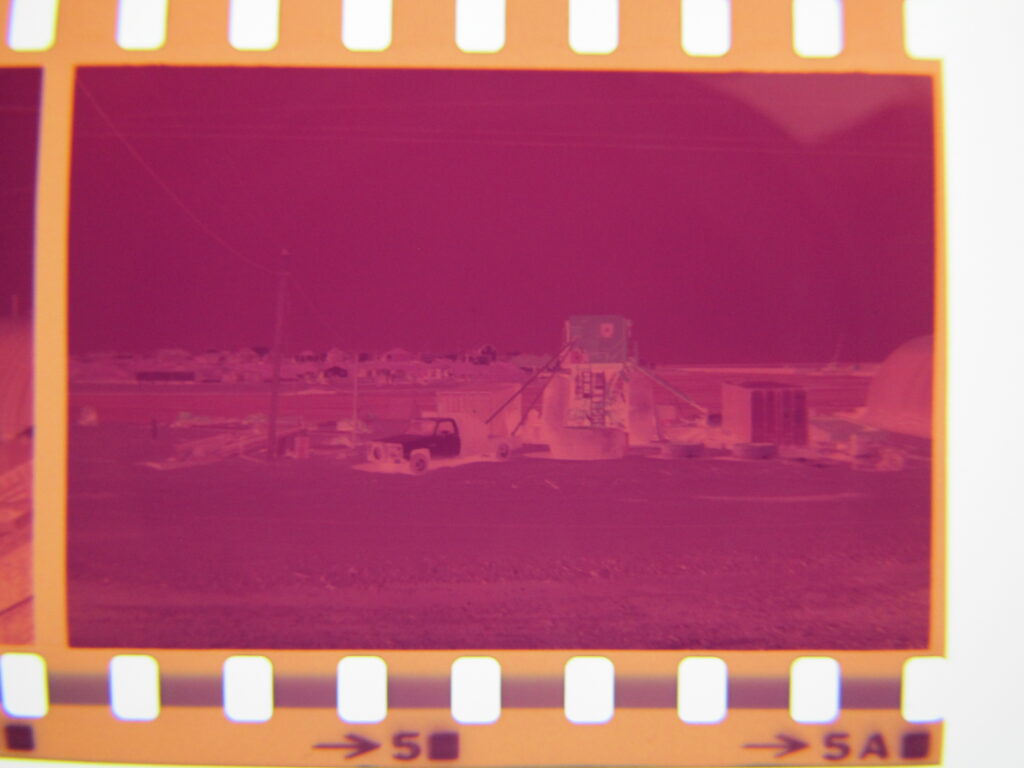
    I used a high quality digital camera to capture an image of the negative. The raw image looks like this.

    Raw negative image under a light table

    Next, I used Gimp photo editor to Invert the colors, which makes the image have a blue hue.

    Negative image after Invert colors was applied.

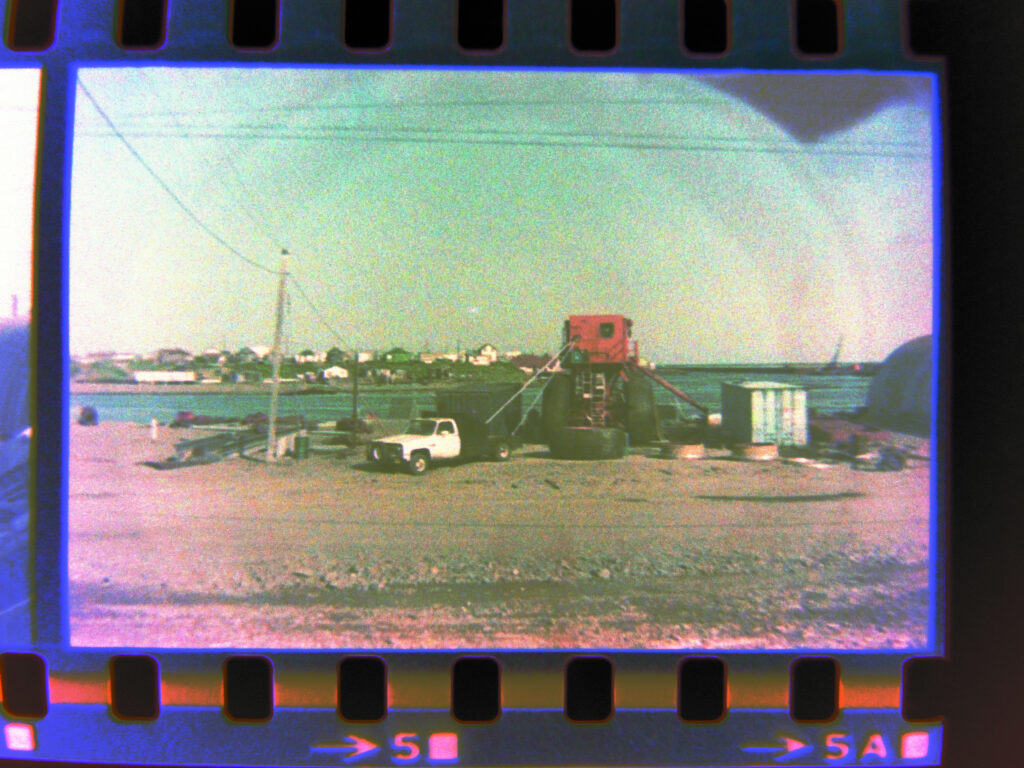
    Lastly, Auto Equalize the image, and you are left with a digitized negative to image.

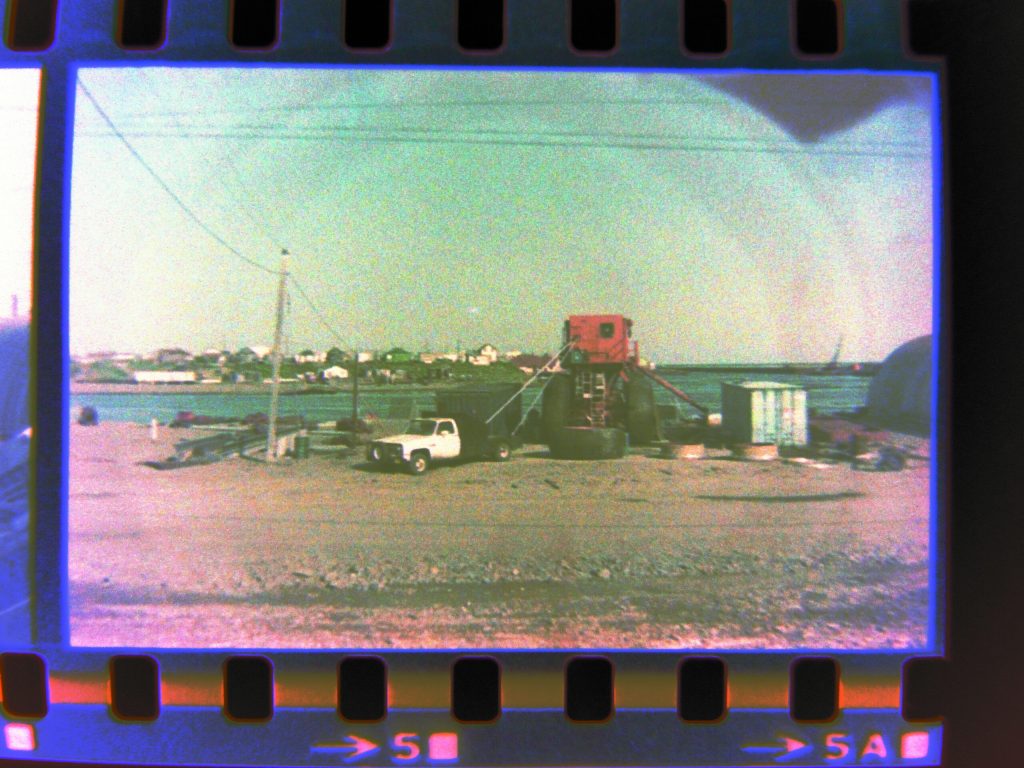
    Final processed image from film negatives

    Once the image is processed, crop and apply additional filters to meet your needs.

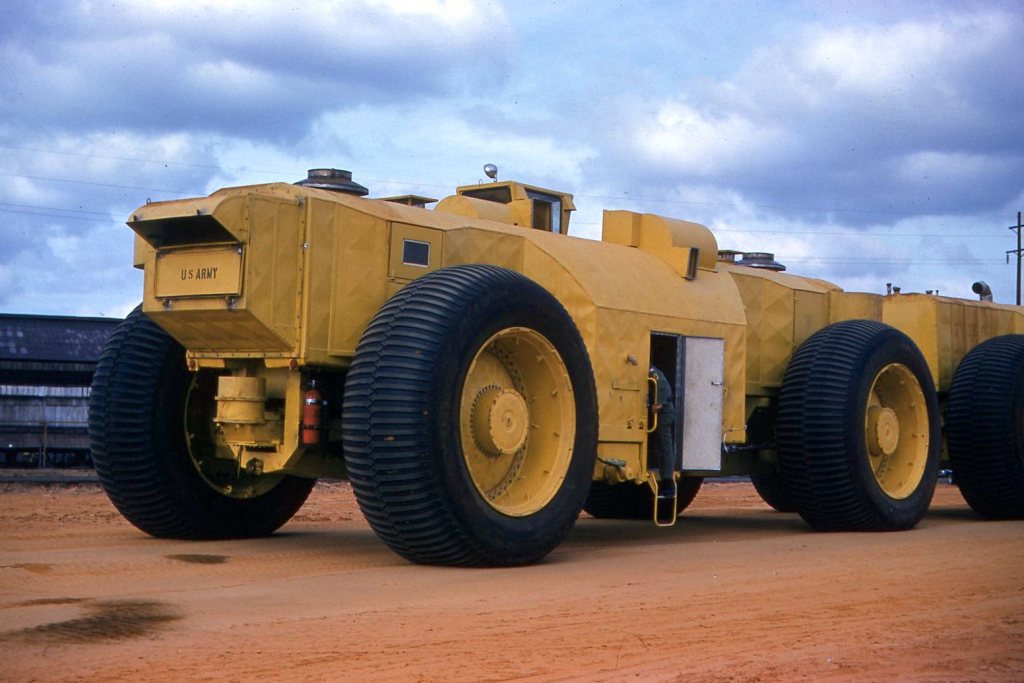
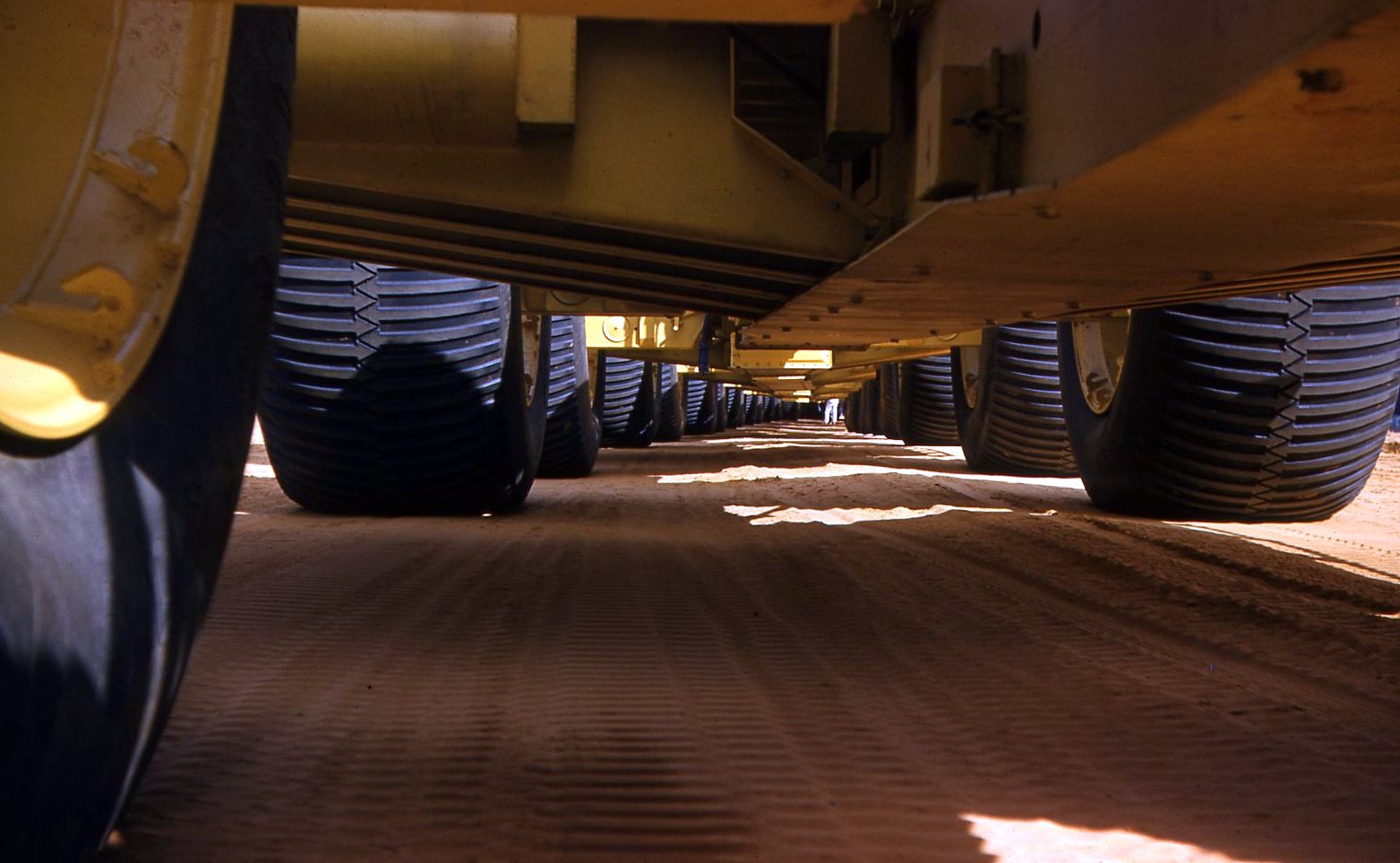
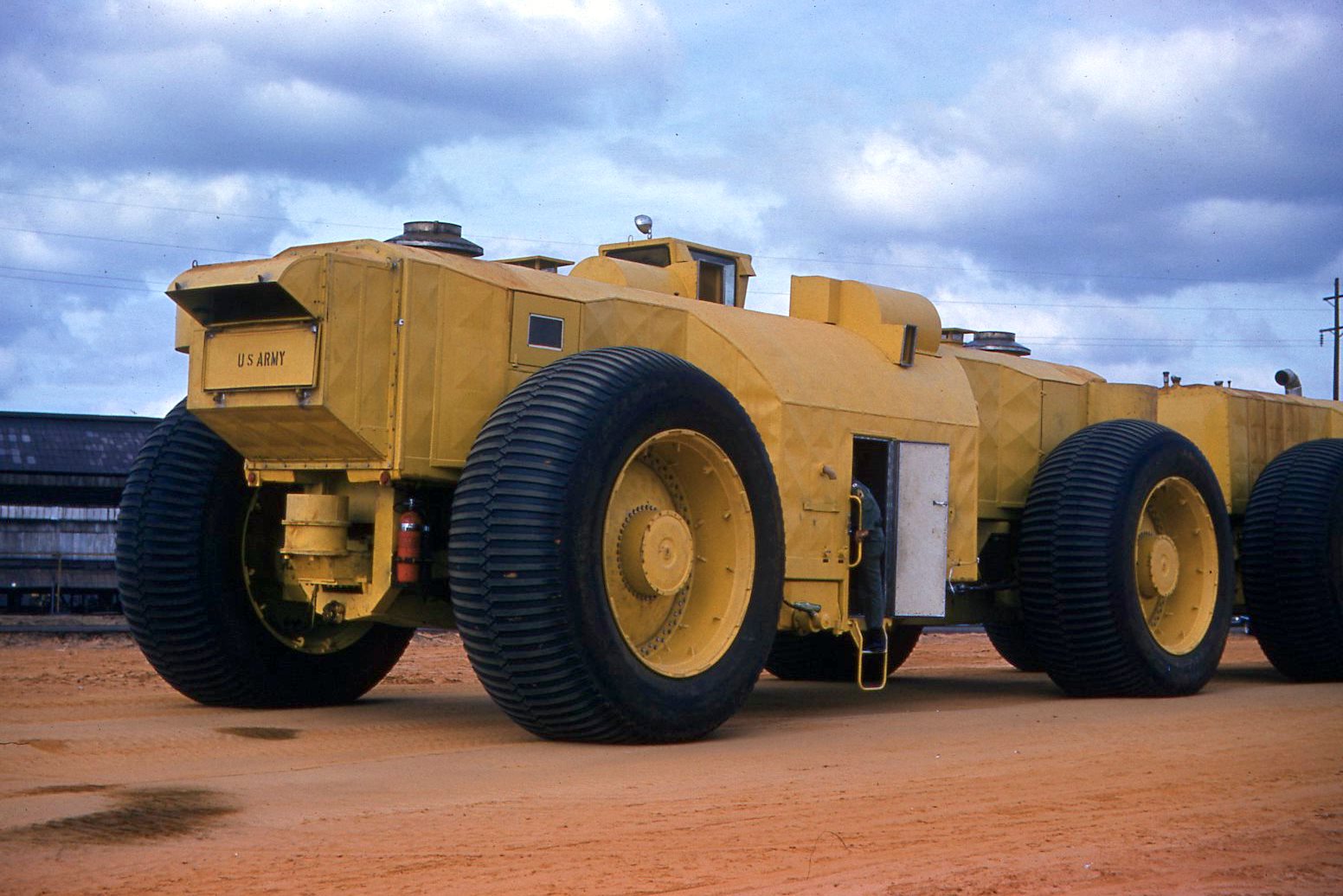
    By now, you must be wondering what is the machine in this image. One of the more recognizable feature is the Firestone 120x48x68 tires. The tires above are 10 feet tall, with the machine standing well above the tire height. The amazing thing is that the machine is not even finished. Additional slides in this series show closeups of the rims and trailer. The trailer platform for this machine is from the Overland Mark II from Yuma Proving Ground, AZ. There is an additional top deck that is placed on top – not shown. I will discuss this machine, provide additional images, and talk about the story of this machine in my book.

    The photo negative above was captured by Lloyd Molby. Thanks to a few amazing people, we are able to learn and relive Lloyd’s experiences. This is just the surface.

  • Tournatrain “Rubber Tires Trackless Train” Advertisement

    Tournatrain “Rubber Tires Trackless Train” Advertisement

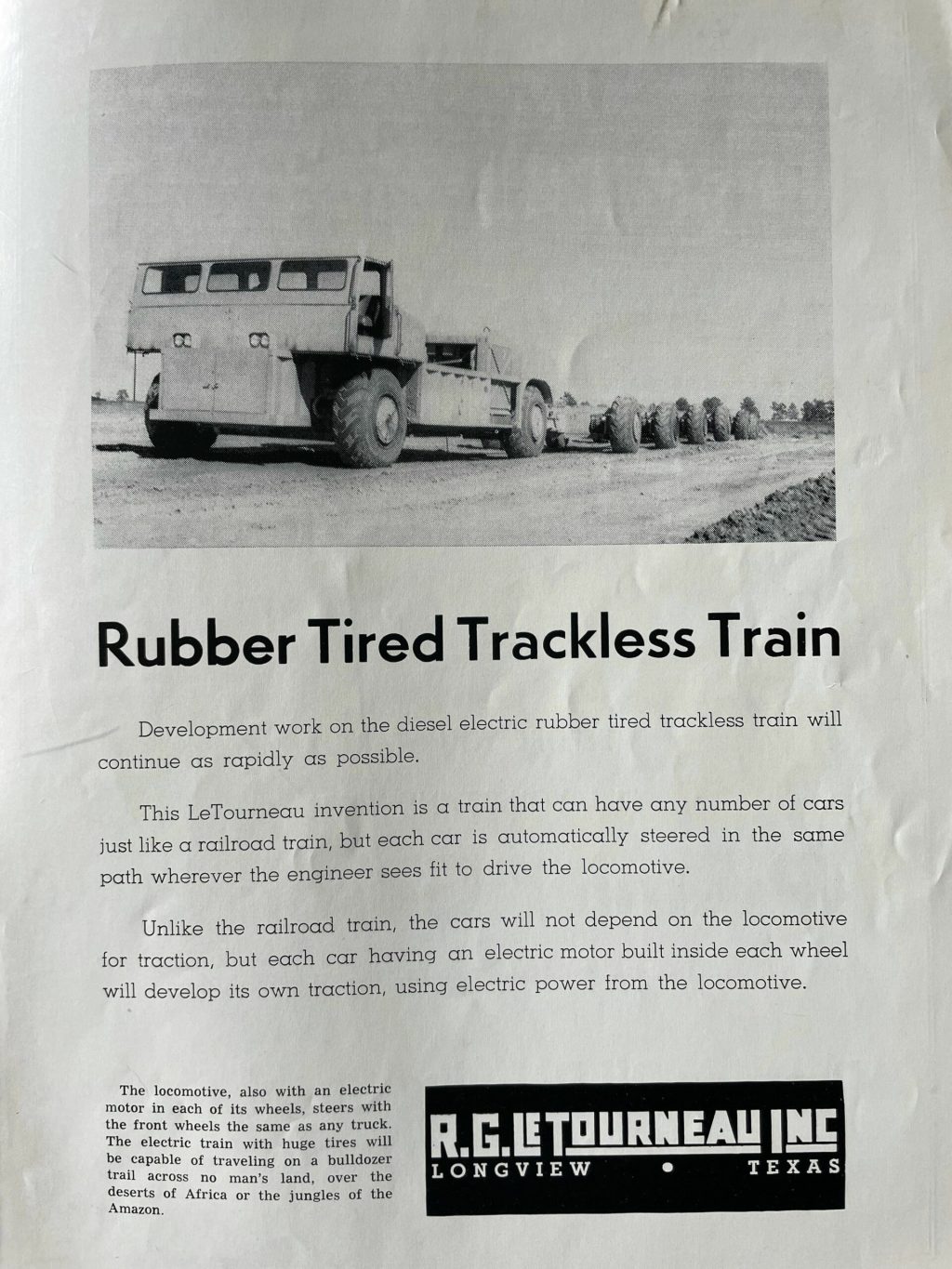
    During the early 1950’s Tournatrain development, numerous ads were published about the trains, or the products that they used. This particular ad by R.G. LeTourneau, Inc., was meant to advertise it’s capabilities in multiple terrain types (e.g. deserts or jungles). Additional language within the ad also advertises LeTourneau’s newly re-designed electric wheel.

    R.G.’s Overland Trains had quite a few names. You will read or see the machines referred to as trackless trains, land trains, or others. Read about the many Sno-Train names at https://advnscuba2.wordpress.com/updates/the-lcc-1-sno-train-has-many-names/.

  • Overland Train Mark II Testing in 1961

    Overland Train Mark II Testing in 1961

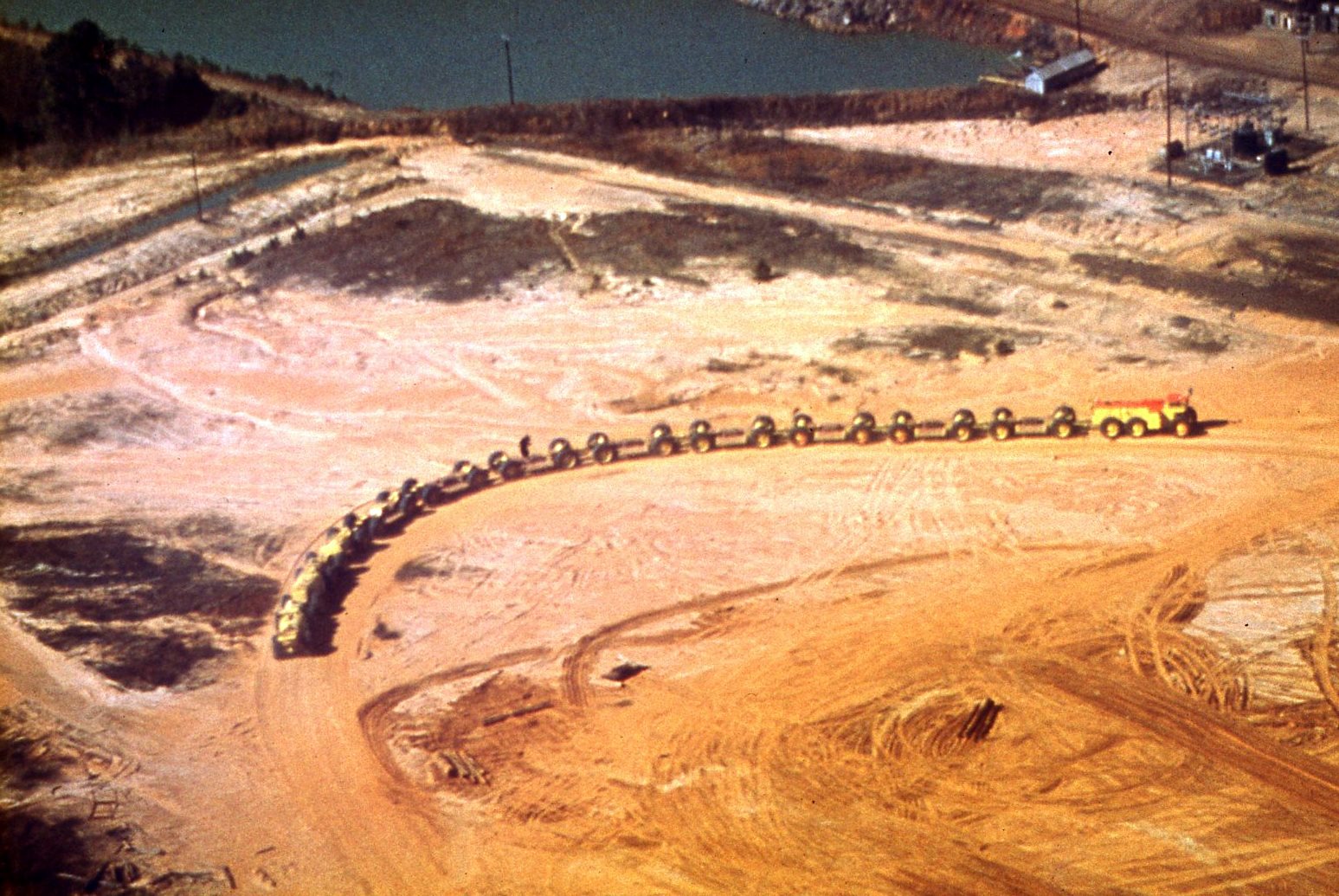
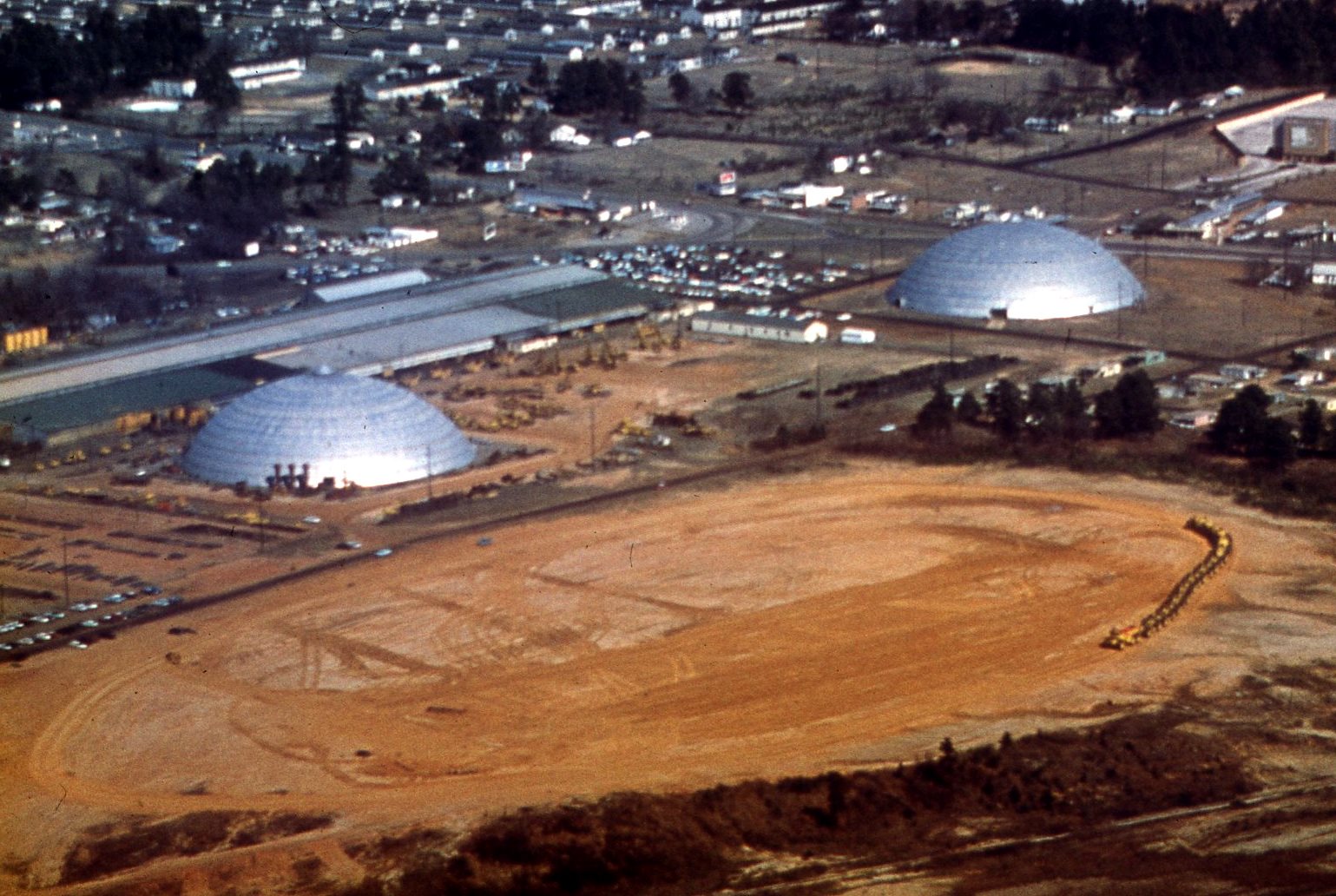
    The Overland Train Mark II concept began in 1955. While the Mark II was the last of the Overland Trains to be built, it had the longest history. R.G. LeTourneau, Inc. would not see a purchase order for the Mark II until 1958. The images below show the Mark II on the test track at R.G. LeTourneau, Inc. in Longview, TX in 1961. Once the Army accepted the Mark II in Texas, it was sent by rail to Yuma Proving Ground in Arizona in April, 1962. This is where the real machine testing would occur. Today, the Mark II Control Car, the lead car, sits at the Yuma Proving Ground Heritage Center – https://history.army.mil/museums/IMCOM/yumaProvingGround/index.html.

  • Overland Train Mark II National Carbon Company Advertisement

    Overland Train Mark II National Carbon Company Advertisement

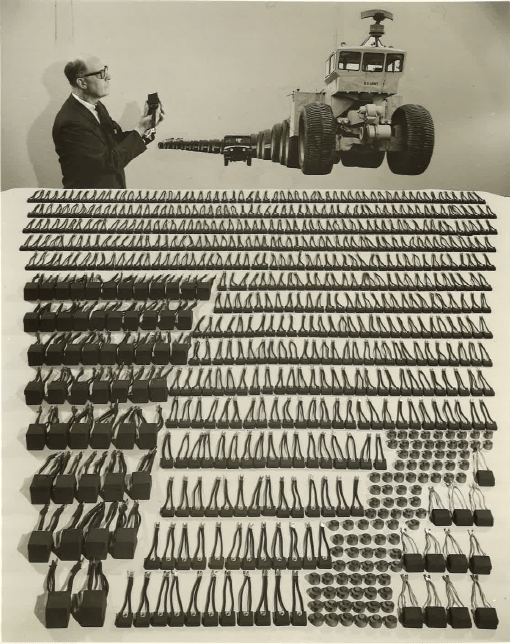
    LeTourneau Overland Trains used a variety of American made parts and materials. Companies used their contributions to help America fight and win wars. Advertisements like the one here helped to bolster their product lines. After all, if the United States military used their products, why wouldn’t you? The advertisement below is from a news release of the National Carbon Corporation, a division of Union Carbide Corporation.

    The last Overland Train, the Overland Mark II (Mk2), consisted of 13 cars – the leading Control Car, 10 Cargo Cars, and two trailing Power Cars. Each of the 54 wheels had its own wheel motor that used National Carbon Company brushes. A total of 668 brushes were needed to complete the Mk2 – 504 brushes were used in the traction motors within the wheels, 56 large brushes for the DC generators, 12 for the exciters, and 96 round items for AC generator contacts.

    image: news release of the National Carbon Corporation, a division of Union Carbide Corporation, date unknown.
  • Abbreviations and Acronyms

    Abbreviations and Acronyms

    If the military is involved, you can be certain that they will use an abbreviation or acronym for their organized name, project, or equipment. Here are a few of the more commonly used abbreviations and acronyms used during the scope of the Overland Trains.

    ACAN – Army Command and Administrative Network

    ACFEL – Arctic Construction & Frosts Laboratory

    APPR – Army Package Power Reactor

    ERDL – Engineer Research & Development Laboratory

    FESA – Facilities Engineering Support Agency

    LCC – Logistical Cargo Carrier

    PR&DC – Polar Research & Development Center

    SIPRE – Snow, Ice, Permafrost & Research Establishment

    TRADCOM – Transportation Research Development Command

    TRARG – Transportation Arctic Group

    TRECOM – Transportation Research Command

    TREOG – Transportation Research & Environmental Operations Group

    USARSG – United States Army Research & Standardization Group

  • Overland MkII Dimensions: How Big is the MkII?

    Overland MkII Dimensions: How Big is the MkII?

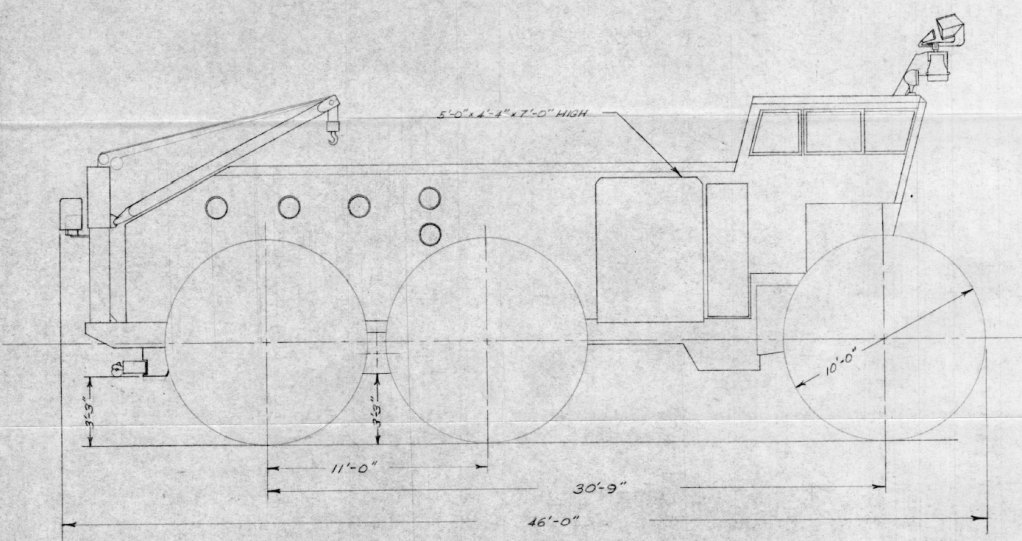
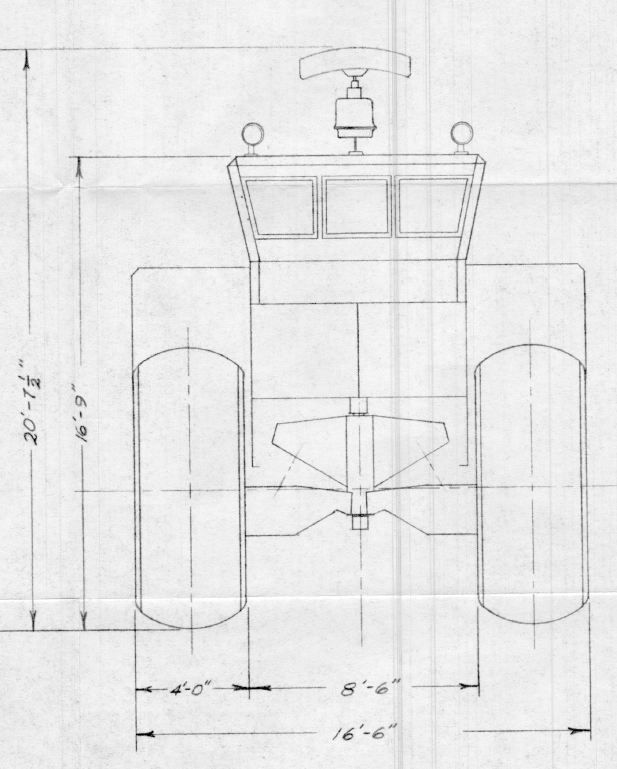
    The United States Army contracted with R.G. LeTourneau, Inc. to build the Overland MkII. The two drawings and the image below show the primary Control Car. In the drawing shown, the Control Car has a radar mounted on the top-front and a boom jib on the rear for tire changing.

    image: Phase I included diagrams.

    The Overland MkII is 46 feet long and 20 feet, 7 and a half inches tall with the radar. Without the radar, the Control Car is 16 feet, 9 inches tall.

    image: Phase I included diagrams.

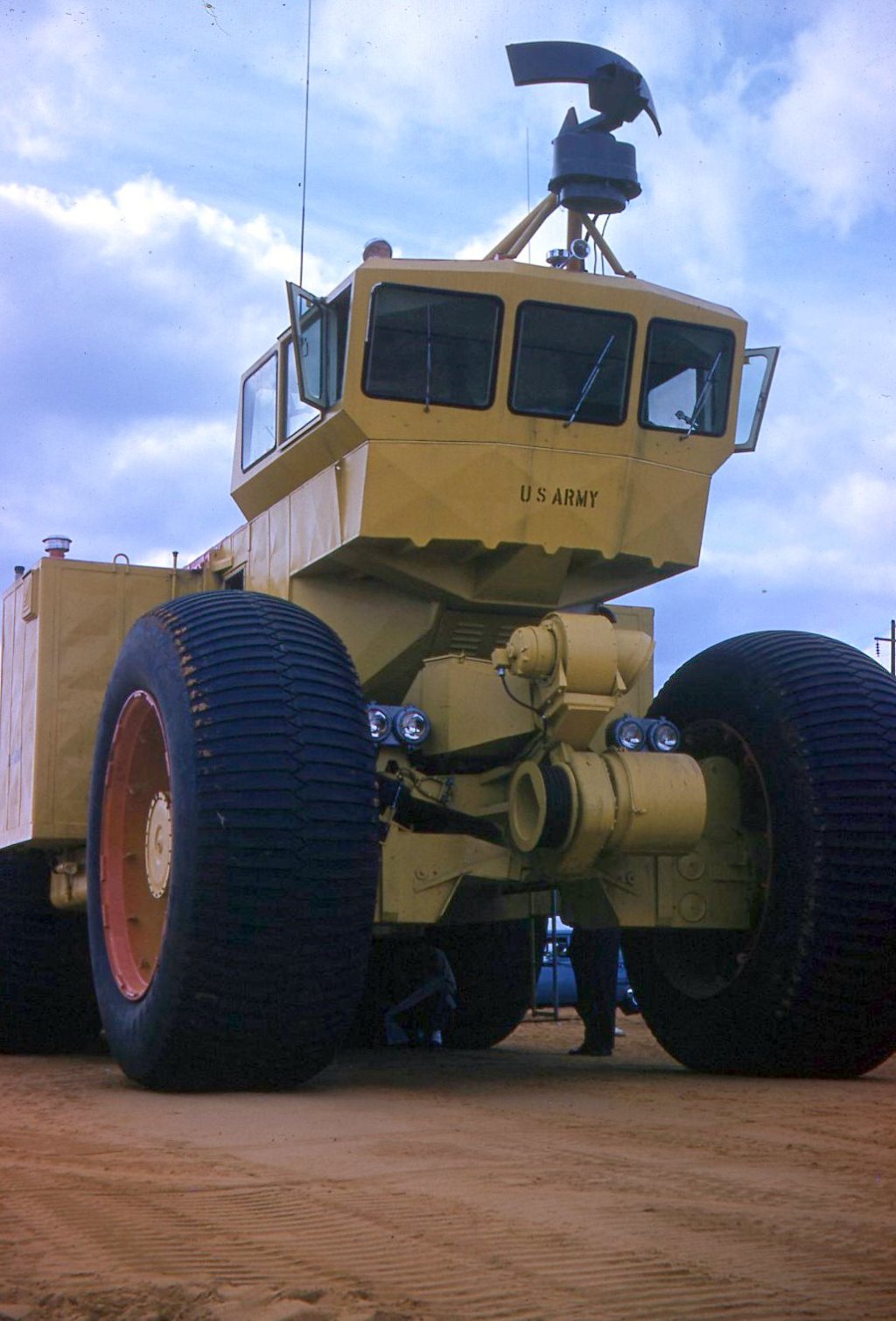
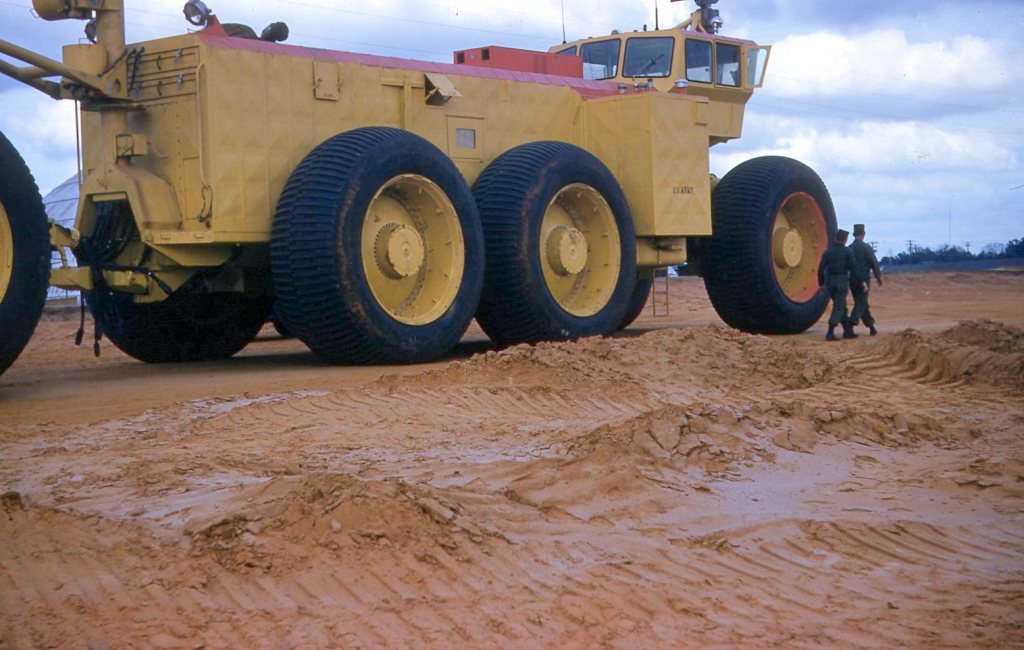
    In the image below, two men walk by the front passenger side tire. Note how they compare to the 10 foot tall tire and center of the rim. The Overland MkII Control Car is found at the Yuma Proving Ground Heritage Center (https://history.army.mil/museums/IMCOM/yumaProvingGround/index.html).

    photo: Lloyd and Larry Smith | description: two military men walk on the passenger side of the train’s most forward Firestone 120x48x68 tire.