My original deadline for publishing at the end of 2021 has come and gone. Researching, learning, and writing has evolved so much more than I thought was possible. The amount of details and history about these machines is staggering. Every time that I think an information source is exhausted, someone will email me or I will read a social media comment and I come across more history. The book will be completed in early to mid 2022. A critical historical resource for the Sno-Train chapter will not be available until May. Until then, I am finishing up the Overland Mark 2 chapter and editing the remaining chapters.
Editing the chapters has been the most laborious. I am publishing on Amazon, but that does not mean the editing scrutiny is any less robust. I have one editor for content and another applying the Chicago Manual of Style.
The video below shows the Mark 2 leaving the shop at Yuma Proving Ground, Arizona. This traverse was the first time the Mark 2 drove as a train in Yuma. As the overland train leaves, you can see the trailer tracking capabilities.
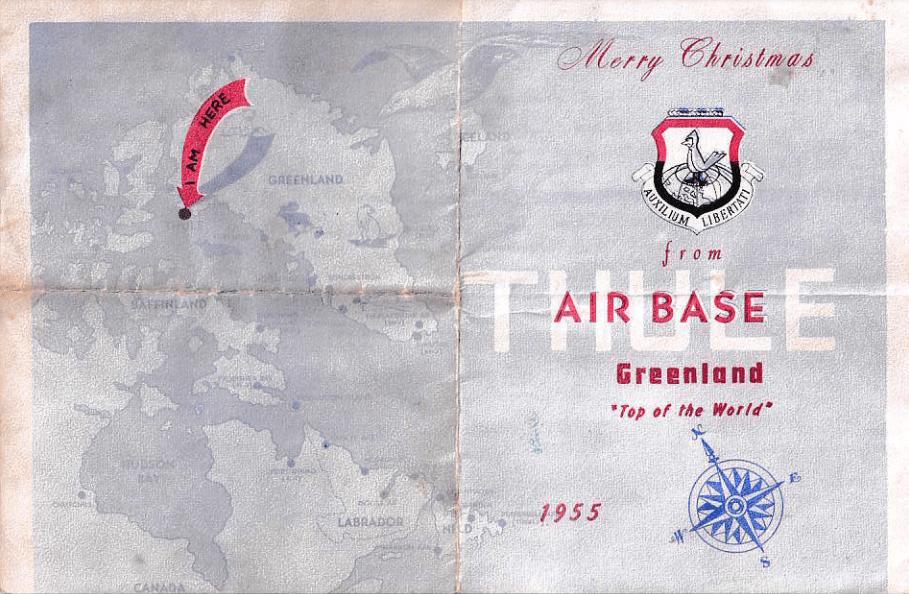
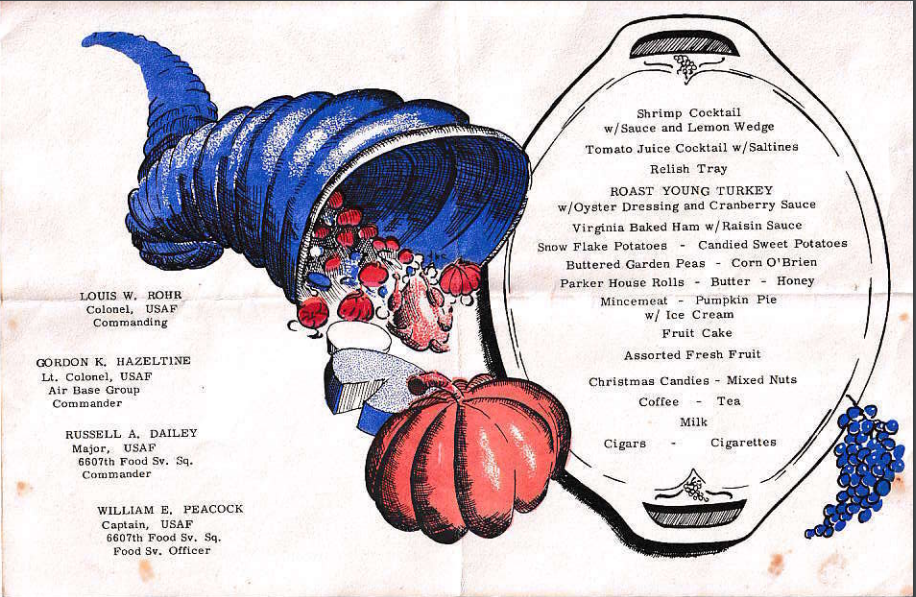
In 1955, Christmas dinner looked and felt a little different for Air Force Service Members at the “Top of the World.” The menu included Shrimp Cocktail, a relish tray, roast young turkey, Virginia baked ham, Christmas candies, coffee, tea, and milk. Something that you won’t typically see on a Christmas menu are cigars and cigarettes. Thank you to Jackie for sharing your father’s small piece of history with me. Jackie’s father spent 27 years in the United States Air Force. He was stationed in Thule Air Base during Christmas, 1955.
Thule Air Base, Greenland Christmas Dinner 1955Thule Air Base, Greenland, Christmas menu
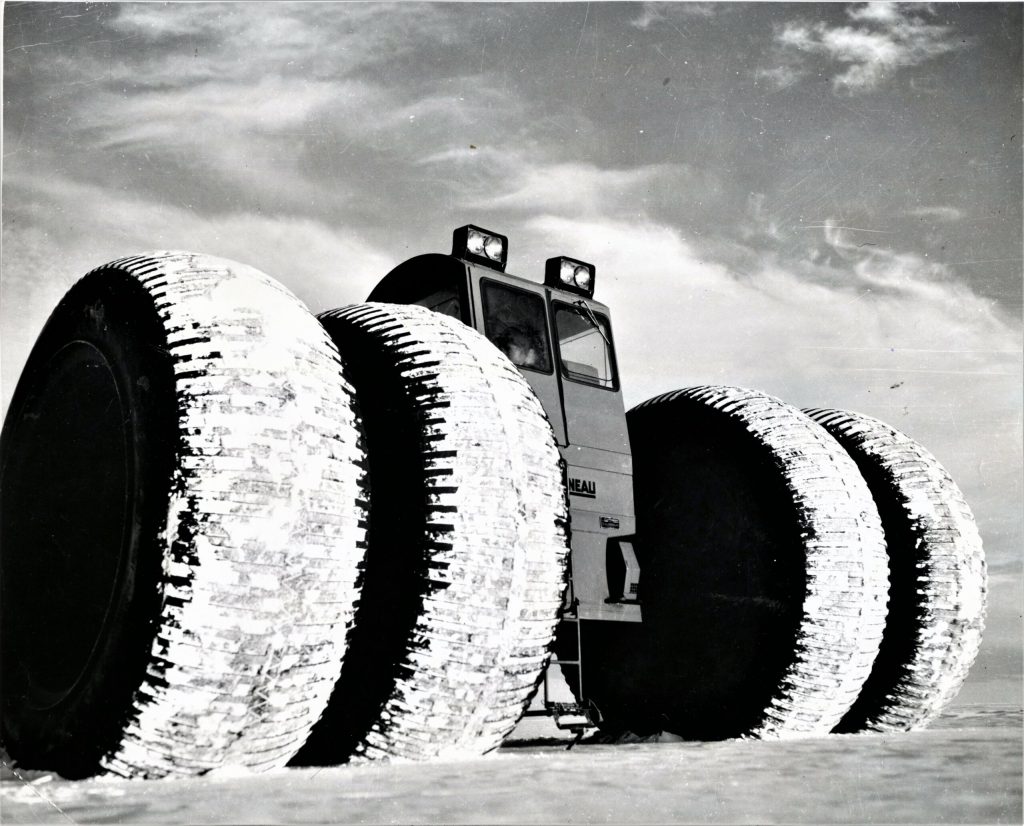
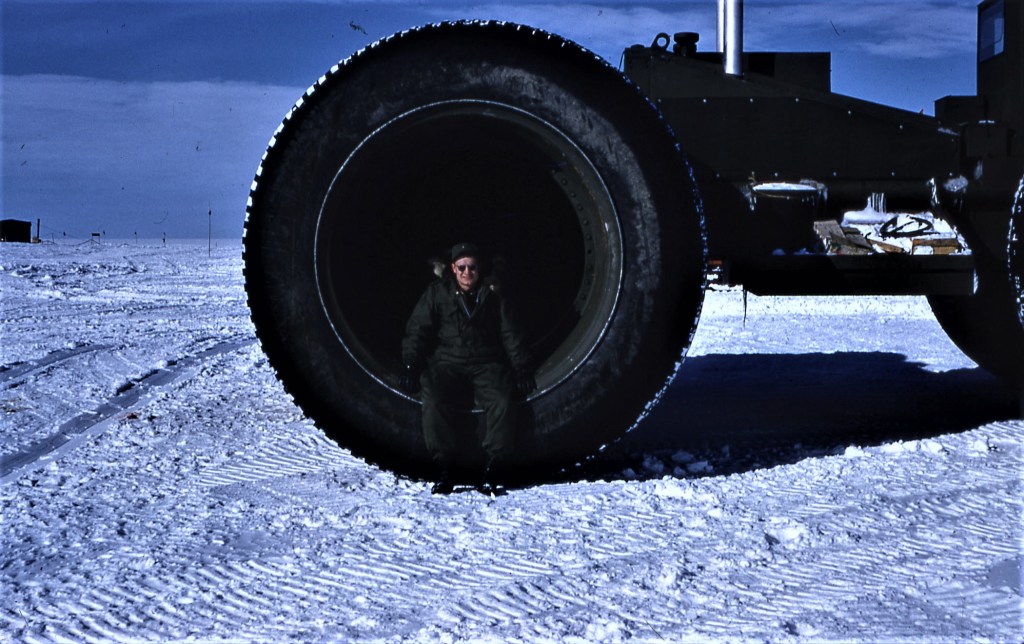
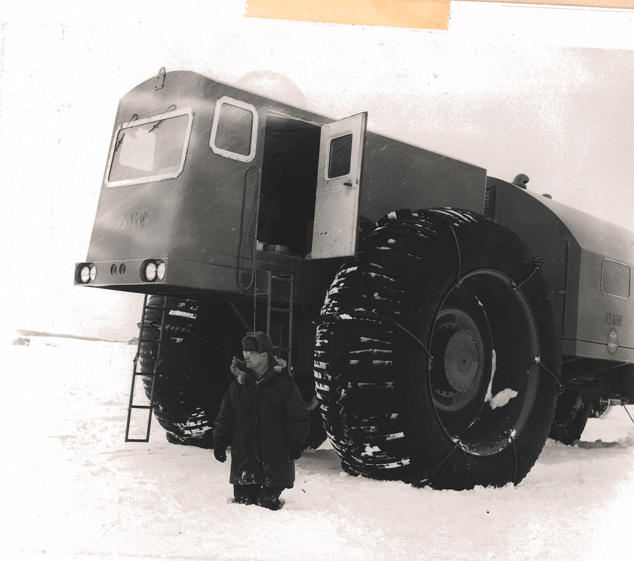
The TC-264 Sno-Buggy spent some time in Greenland testing out the HUGE Firestone 120x48x68s and a few unpowered trailers. It participated in tests as Camp Sierra and was driven by Nate Galbreath. Galbreath was assigned to the 9223rd Transportation Service Unit (Transportation Arctic Group). We know a great deal about the Sno-Buggy and its time in Greenland. During testing, R.L. and R.G. LeTourneau visited the testing areas and received valuable feedback that would eventually shape the Overland Trains we know today. R.L. kept a photo journal with original images and descriptions that very few have seen, which is part of why we have such a rich machine and storyline history.
Nate Galbreath in Greenland, 1954. Image: U.S. Army, fair use.
Nate Galbreath. Image: thule1954.com
Unlike many of R.G. LeTourneau’s machines, the Sno-Buggy was painted an olive, or drab green. With its dual tires on each of LeTourneau’s Electric Drives, it spanned 24 feet wide and was 27.5 feet long.
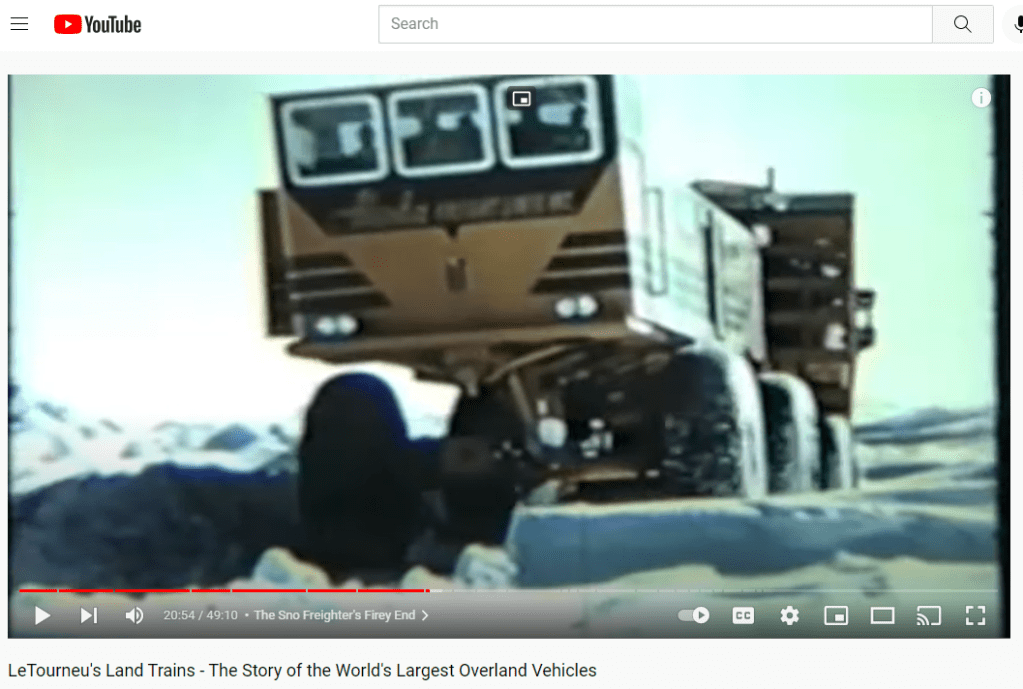
An acquaintance of mine posted a video on the Overland Trains today. It has been a labour of love for him over the past 2 years. His research and narration are top class. I can’t recommend watching his video enough.
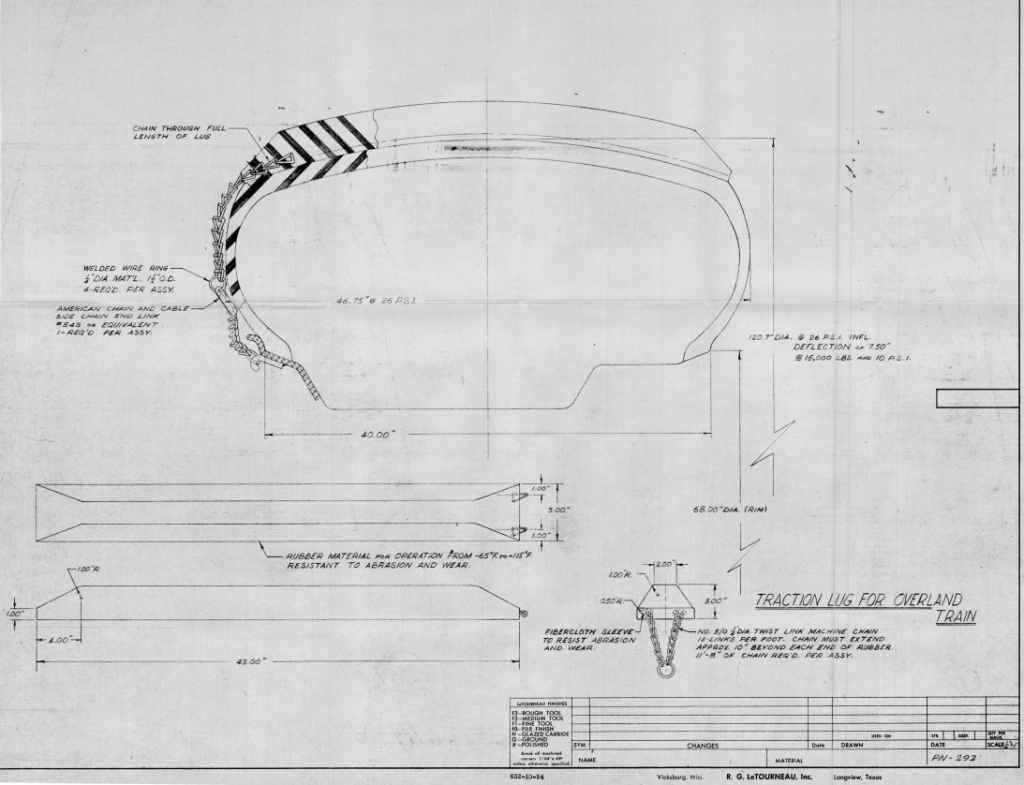
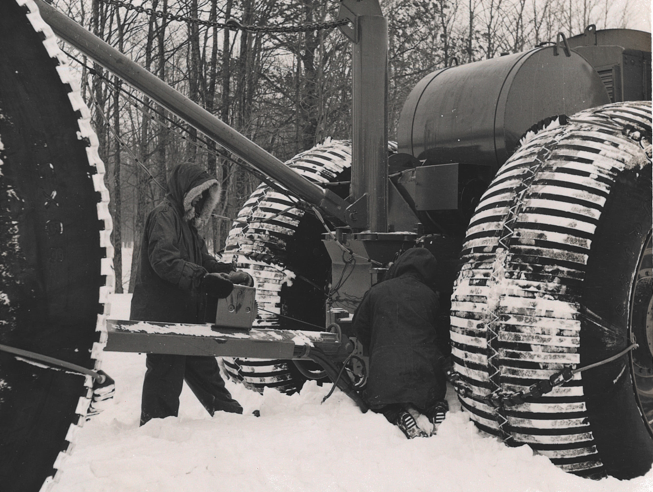
Well, kind of. The Sno-Train’s wheels came equipped with what LeTourneau called traction lugs. Breaking it down a little more simply, the traction lugs were long rubber pieces or cables that were on the tread bearing part of the tire. The rubber or cable was attached to the wheel, or rim, by other chain and cables. The connection points and traction lugs varied in design over the years. The drawing below shows traction lugs for the last Overland Train called the Overland Mark 2. The traction lugs on the later Mark 2 train had pointy, claw-like attachments for the lugs. While, the traction lugs attachments for the Sno-Train rims used circular, washer-like attachments for the traction lugs.
Traction lug diagram for the Overland Mark II
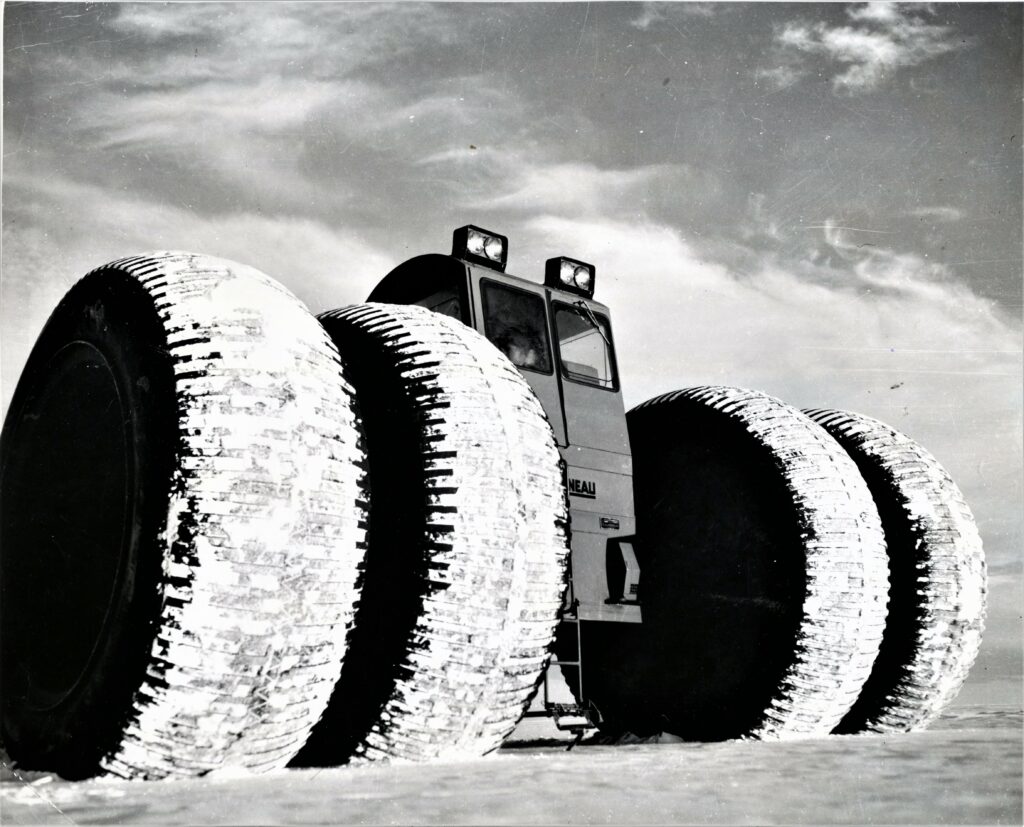
The Sno-Train also used a more cable-like lug to wrap around the massive Firestone 120x48x68 tires. The traction lugs were not used all that often during real world missions. The Sno-Train tracked extremely well in snow and ice. Which, is not to say that it did not have its fair share of jackknifes. More on that in my book.
The Sno-Train’s mechanical and electrical connections are being inspected in Houghton, Michigan – dated 3-10-56
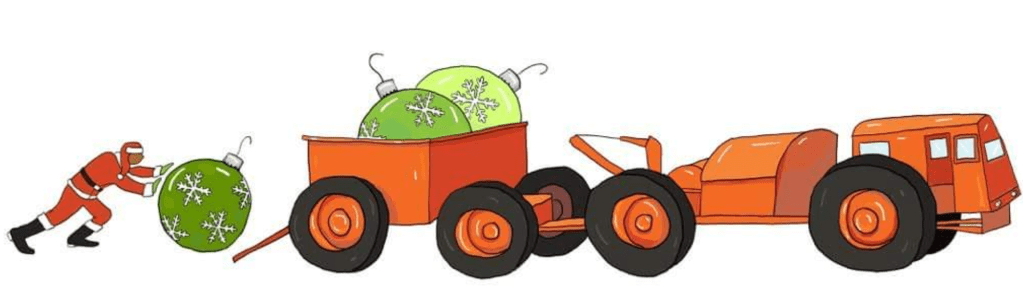
While the Sno-Train never transported Christmas ornaments, it did move tons of cargo for supplying Distant Early Warning (DEW) Line sites in the Arctic. The Sno-Train had the most diverse and longest operational career out of all 6 trains. It was tested in Longview, TX and Michigan. After testing state side, it was sent to Greenland where it was operationally tested in the cold Arctic environment and driven over 2,000 miles.
The Sno-Train participated in numerous Army logistics exercises and engaged in a massive vehicle equipment recovery operation, where personnel and equipment were pushed to their limits. It even performed a rescue operation for an Eskimo child.
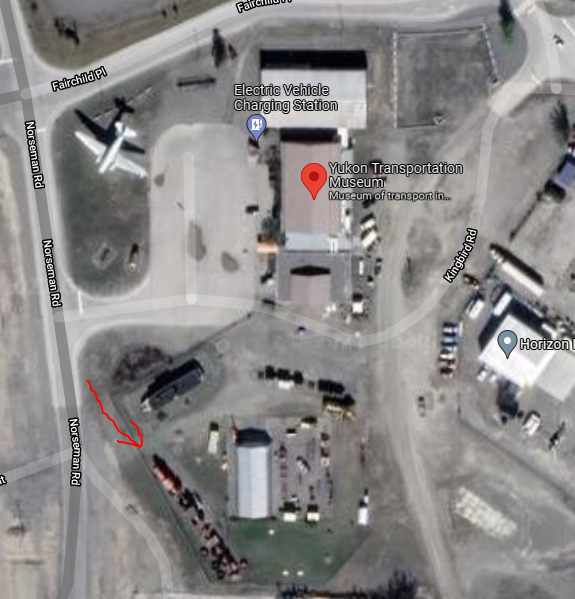
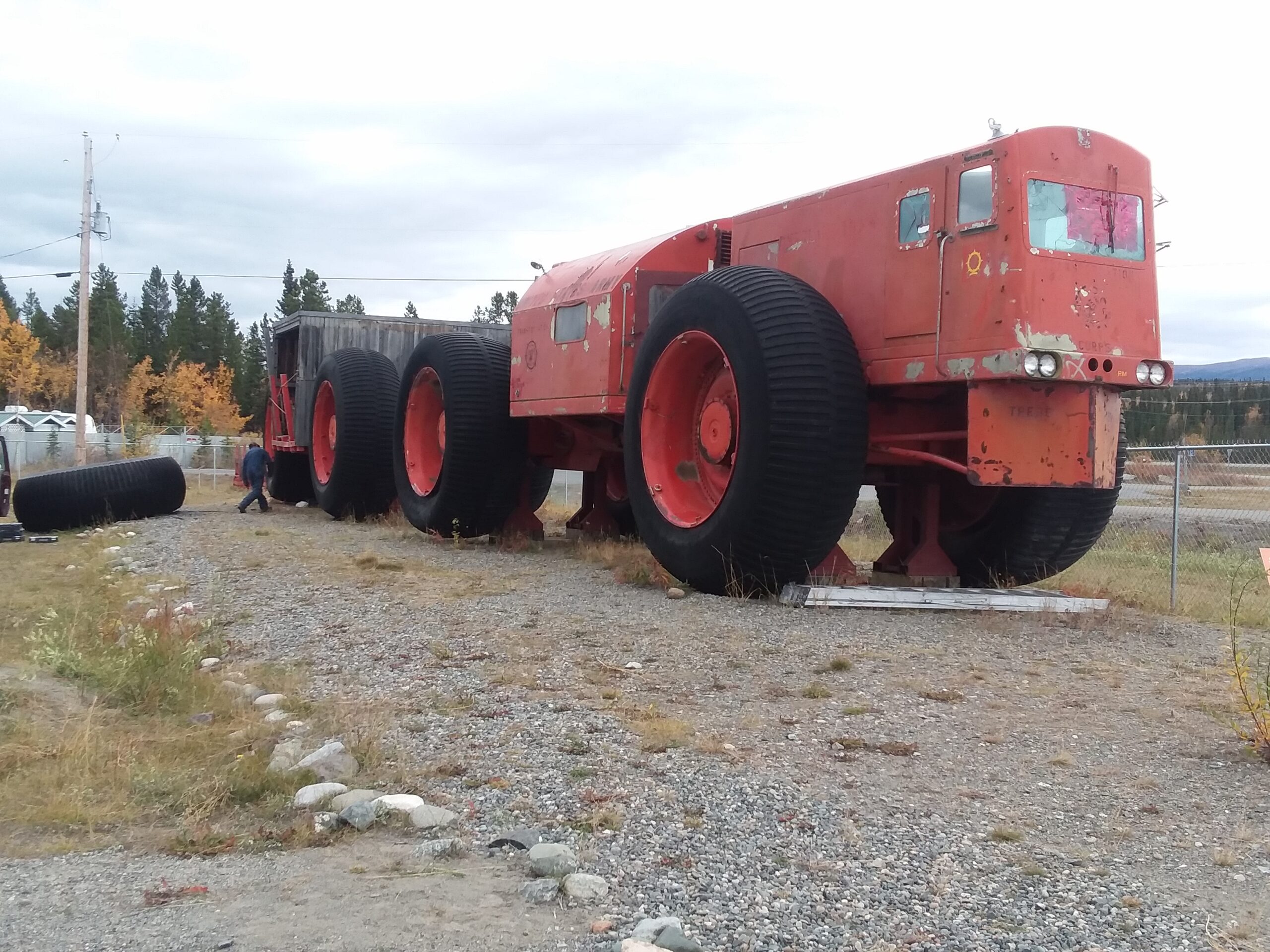
You can see the Sno-Train at the Yukon Transportation Museum in Whitehorse, YT. If you are averse to the cold, Google Maps shows it here -> https://g.page/goYTMgo?share.
Sno-Train seen in Google Maps on the lower-left corner denoted by a red arrow.
About the Artist:Monika Melnychuk is a transient illustrator who has worked out of Los Angeles, Toronto and Whitehorse. She’s currently in a committed long-term relationship with her Macintosh laptop, which has resulted in several wine labels for west coast wineries including the award winning Blasted Church series. Her work has also appeared in many other publications such as UTNE Reader, The Wall Street Journal and Key Porter Books. When not illustrating Monika enjoys running, biking, sketching in coffee shops and hanging out with her dog Boogaloo.
Camp Century was a United States military installation buried under the northwestern tip of the Greenland ice sheet. It was active from 1959 and quickly dismantled in 1967. In 1960, Camp Century received it’s electrical and heat energy from a Portable Medium-sized nuclear reactor, starting operations on October 3, 1960. It ceased operations the next year when Camp Century shifted operations to summer only. Camp Century was used for a wide array of experiments, from using the ice for fuel storage to determining if it was feasible to have a city under the ice. When Camp Century was abandoned, the Army left behind equipment, petroleum, oil and lubricants (POL), and other materials.
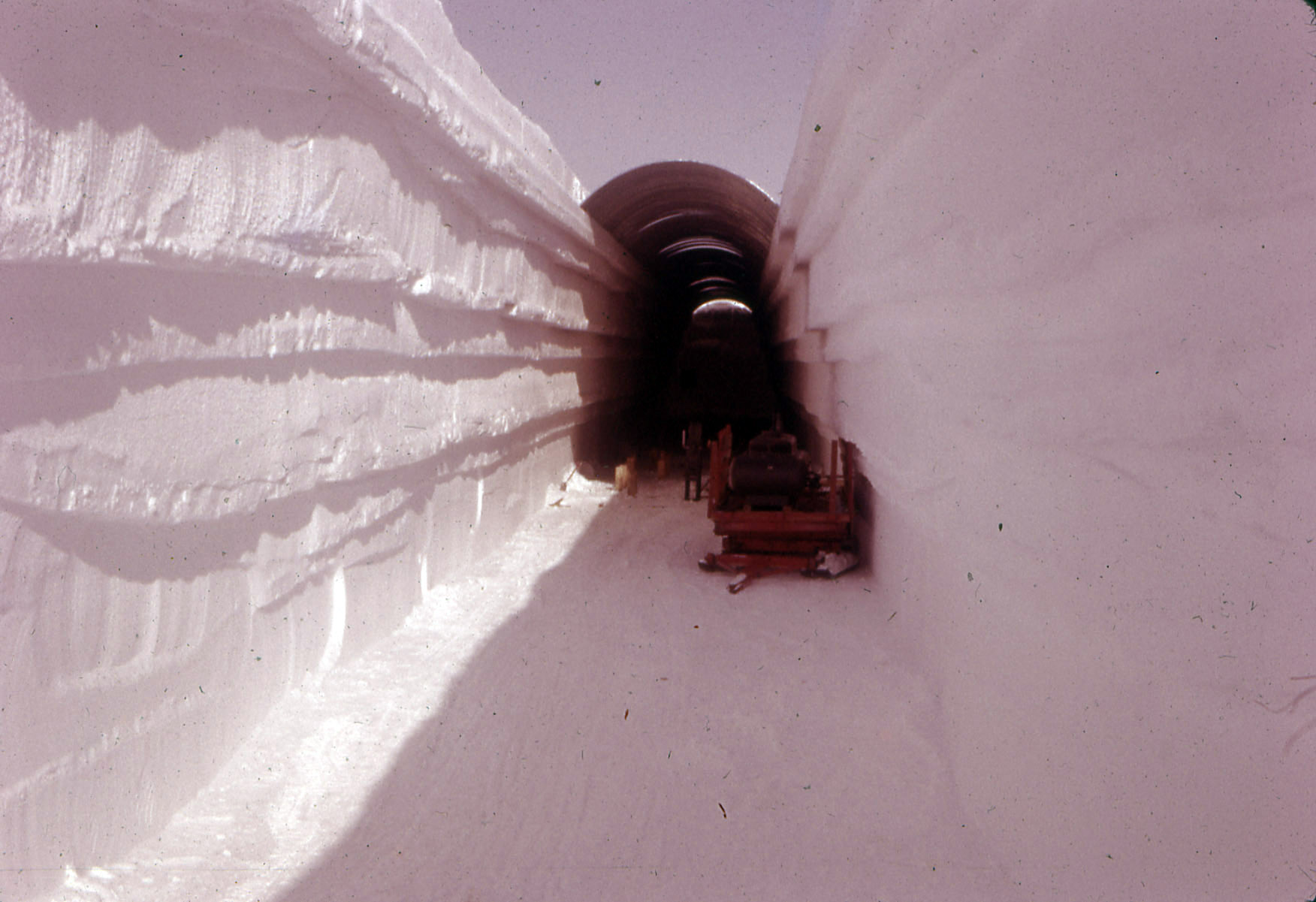
Building a tunnel under the ice at Camp Century. Image: Arnold Haynes.
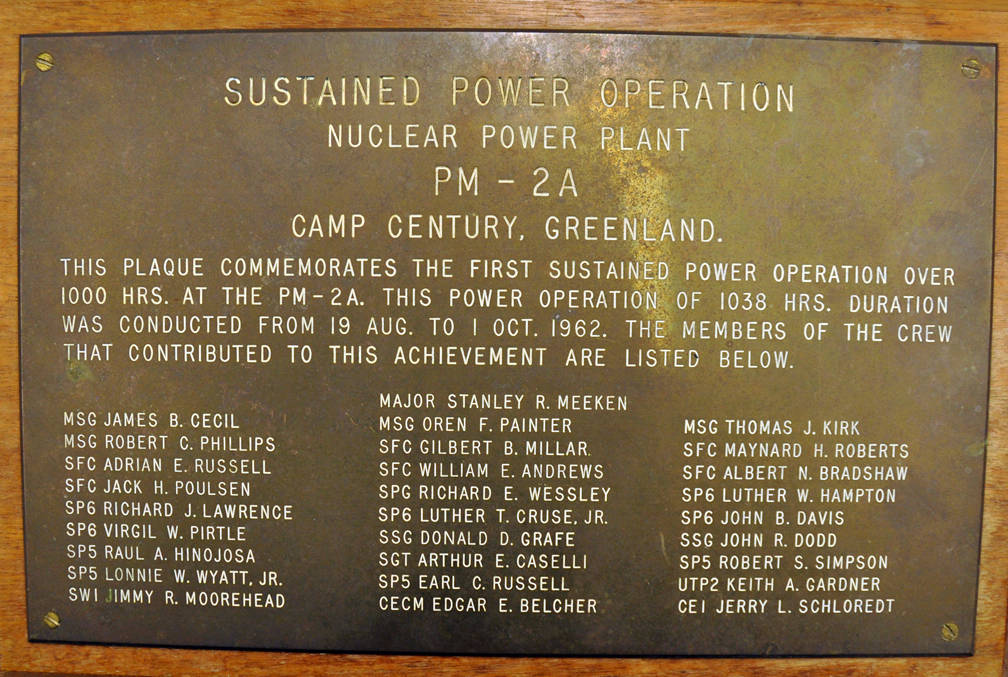
Camp Century Pm-2A plaque. Image: Office of History, HQ, U.S. Army Corps of Engineers
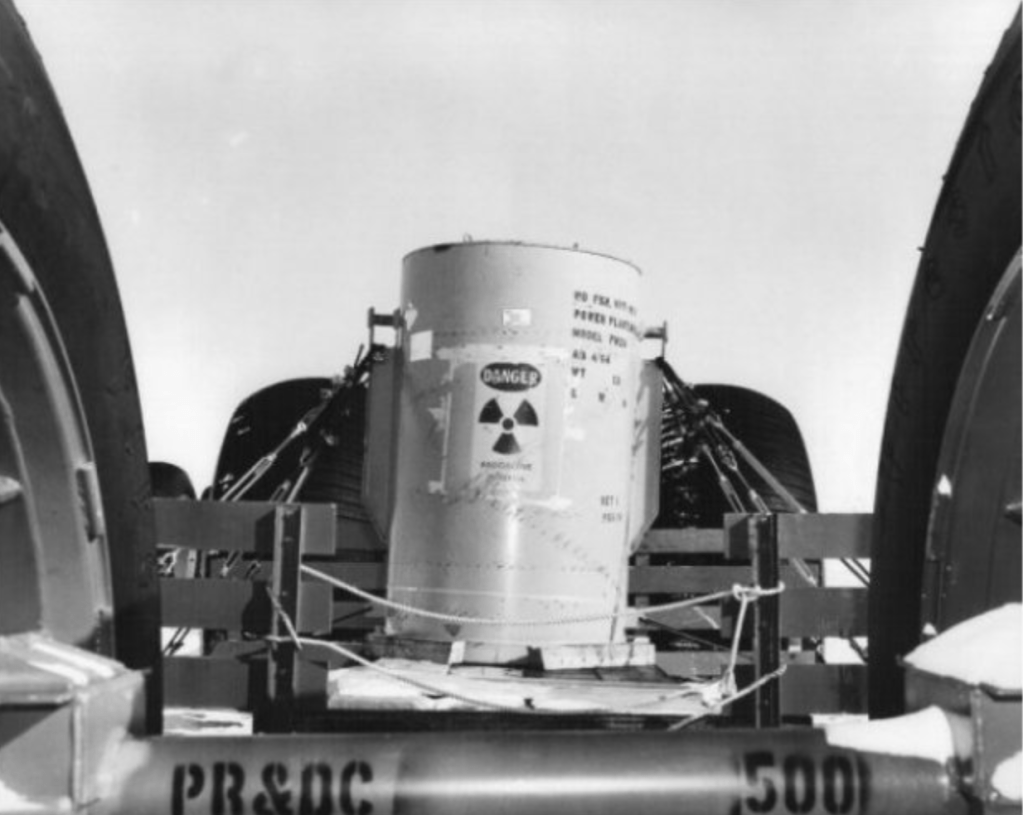
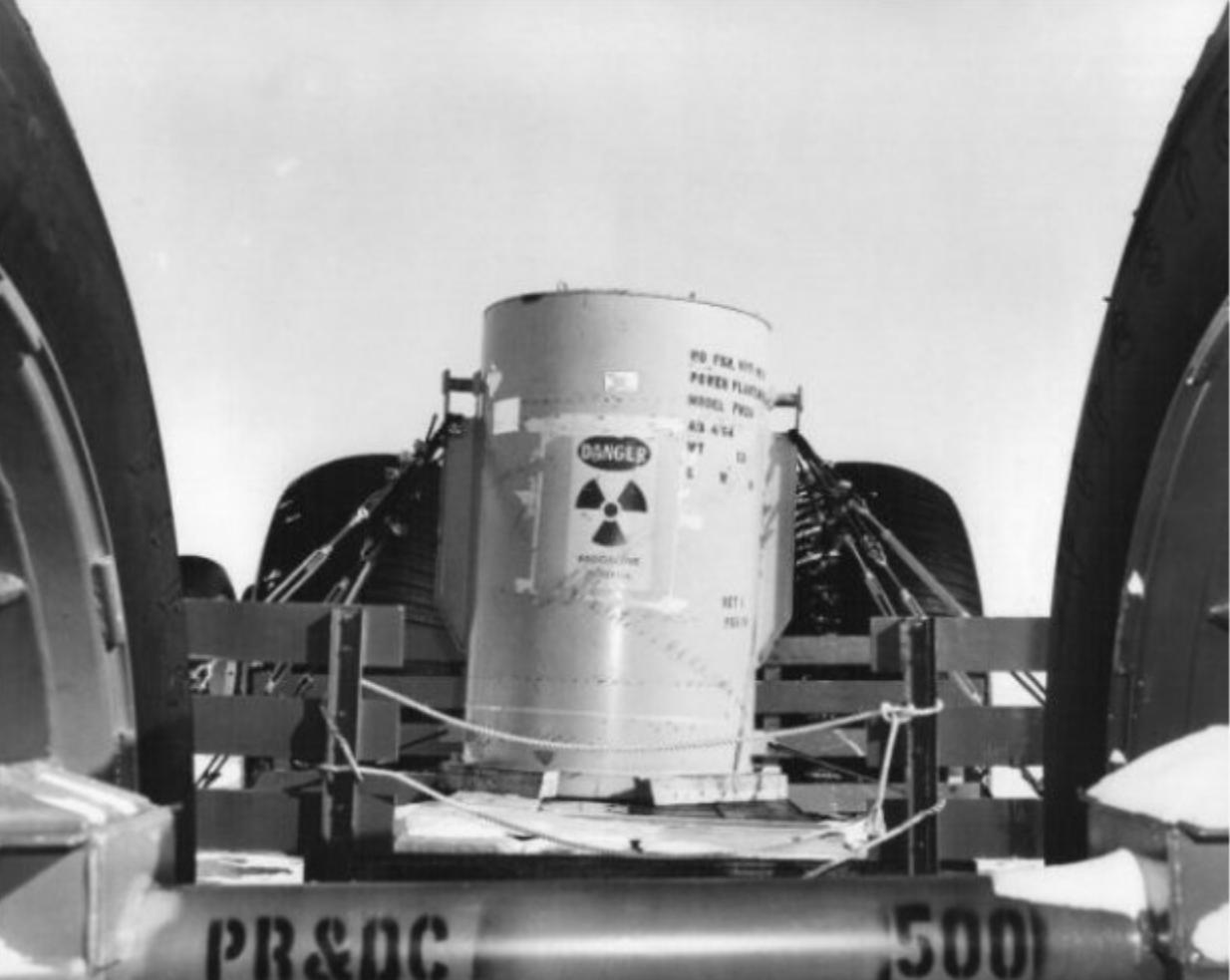
A 14-ton cask of nuclear material from Camp Century, May 1964. Image: Steffan Winther – The ThuleForum
In the summer of 2017, scientists at the Geology Survey of Denmark and Greenland (GEUS), lead by Project Manager William Colgen, headed up a project to understand the climate and snow cover at Camp Century (http://campcenturyclimate.dk/ccc). The nuclear material, POL, and other leftovers from Camp Century has scientists wanting to understand more of how glacial and water flows under the ice might transport these toxic materials. The report conclusion was the snow will continue to accumulate on top of Camp Century and meltwater will not reach the toxic debris field – by the year 2100, it will be buried under 190 feet to 209 feet of ice and snow. Read more about the project and data at http://campcenturyclimate.dk/ccc.
 Overland Trains