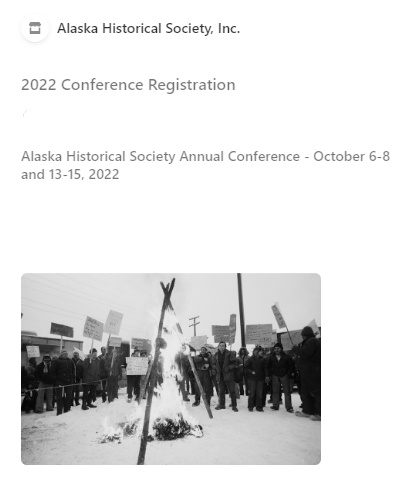
On October 15, 2022, I will virtually present at the Alaska Historical Society Annual Conference. The presentation track is called “Conflicts Over Transportation.” If you would like to view any part of the conference, please visit the Society’s website at https://alaskahistoricalsociety.org/about-ahs/conference/.
Presentation Schedule for the Transportation Block
11 a.m.-12:30 p.m. Conflicts Over Transportation
Mark Moore – Researching R. G. LeTourneau’s Overland Trains: Stories from the North
Leanna Prax Williams – Altering Course: Alaska’s Aviation Industry and the 1938 Civil Aeronautics Act
Philip Wight – Whose Haul Road? How the Dalton Highway Became Public, 1968-2001
I started writing this book in February of 2020. Two and a half years later, I have captured the most complete Overland Trains story ever published. Buy the book now on Amazon.com (https://www.amazon.com/dp/B0BFL91FX6).
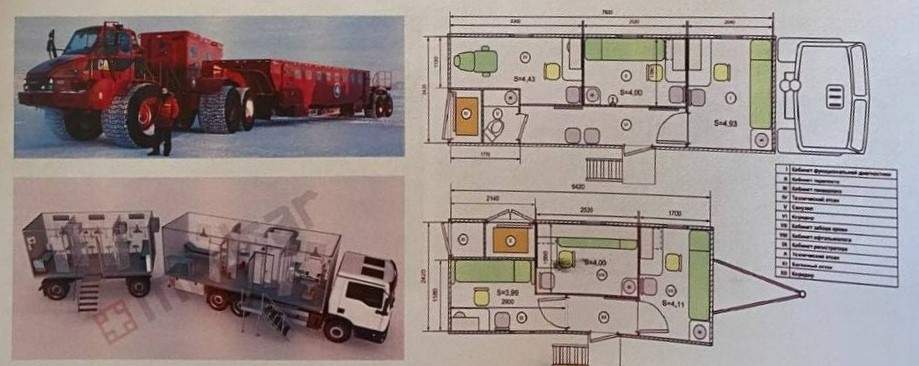
South Ural State University is engineering an Overland Train. It’s purpose is multi-faceted. A one-page slide describes it as an “Arctic road train with transportable functional module.” It will include a medical functional module, cooking module, educational or research module, and a module for “household use.”
Image: South Ural State University
The University is also building an Arctic Bus to accompany the Overland Train. Ramil Zakirov is the project head on behalf SUSU.
I have been working on the Overland Trains story for the past two and a half years. It has taken me hundreds of hours, if not thousands to complete the book to where it is now. At some point, you have to put a stop to adding the minutia and get out the book. Based on the current book’s draft state and editing, I set a target pre-release date of September 14, 2022. The book will be released on Kindle (sans images) and a high quality color gloss paperback.
New information about the Overland Trains are found or sent to me every month. Quite often someone will message me on social media with an obscure document that shows a piece of the story, while another might be a mind blowing connection between people or the machines. On July 5th, 2022, I received a parcel from a man in Alberta, Canada that just opened up a can of historical worms.
The original documentation sent to me spelled out the sale of the Sno-Train in 2010 to its current owner with several dozen photographs and emails. I knew about the sale and a few of the details, but not to this level. The provided documentation opened up more rabbit holes for me to follow, while completing the sales history in the Sno-Train chapter. These new data have been incorporated in the rough draft of my book.
My proposal to speak about R. G. LeTourneau’s Overland Trains was accepted for the Alaska Historical Society’s (AHS) Annual Conference. We are still ironing out the details on the date. However, the presentation will occur on the morning or afternoon of October 6-8 or 13-15, 2022. You can read more about the conference on the AHS website at https://alaskahistoricalsociety.org/about-ahs/conference/.
Camp Century, Greenland was an American Cold War era under-ice base designed for research and development. It hosted the first nuclear reactor used for energy production and part of the Army Nuclear Power Program. There have been numerous articles and papers about electrical production. However, let’s talk water.
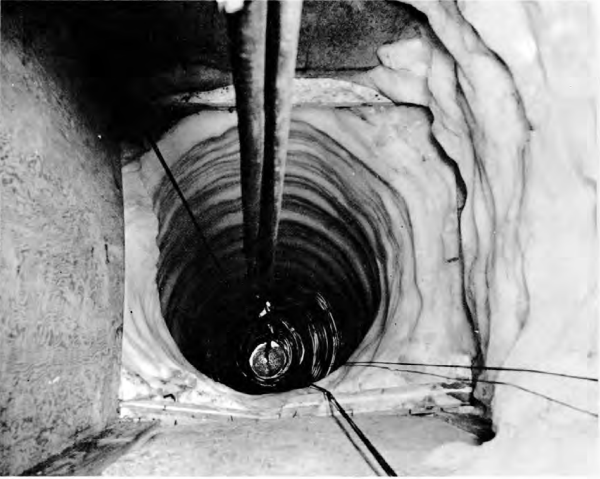
Greenland is largely made up of ice – glaciers to be more specific. When the United States began populating Camp Century, they had to come up with a way to provide for drinking water and sanitation needs. Their solution was a subsurface water well called the Rodriguez Well.
Rodriguez Well, U. S. Army Public Domain.
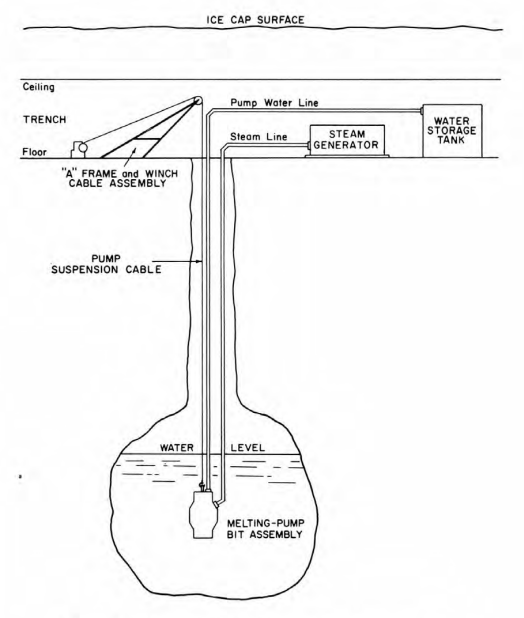
The 500 feet deep well was installed at Camp Century during the summer of 1960. The primary well components were a diesel-fired steam generator capable of producing 165 psi of saturated steam, a melting-drill bit assembly for melting a well shaft into the ice; a melting-pump, and a pump for moving the melted water to the surface. Engineers also used a gasoline engine-powered cable winch for raising and lowering the bit assemblies. Once water was melted by the steam and pumped up the well shaft, it was stored in a 5000-gallon insulated and heated water storage tank.
Line diagram of Rodriguez Well at Camp Century, U. S. Army Public Domain.
The water that the Camp consumed was suitable for drinking without the need for filtration or chemical sanitization. A report of the water quality cited that it was better than “water obtained by triple distillation in glass.”
Source: CRREL Technical Report 174, Camp Century Evolution of Concept and History of Design Construction and Performance, Clark, Elmer F., October 1965
Our Facebook Community has grown to over 1,500 Followers this week. We’ve had some fantastic interactions among our group. If you would like to join, please click the “Facebook Page” link at the top of the Overland Trains website. Thank you for your collaboration!
My wife and I had brunch with some friends yesterday. He just celebrated his 90th birthday over the weekend. He has had a significant impact on the Overland Trains story. His direct involvement with the Sno-Train and Sno-Freighter, along with the never before seen images and stories are significant history contributions. I couldn’t imagine a better way to spend our Saturday morning. Thank you for meeting up for brunch Marty and Cyndi!
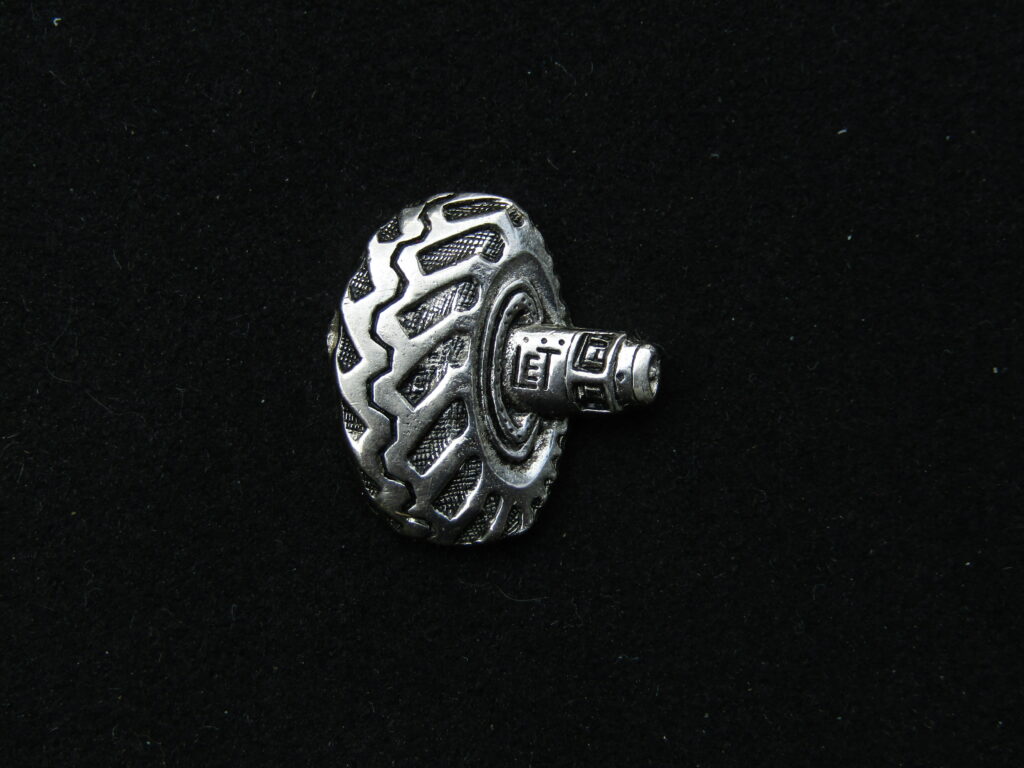
This Electric Drive metal is part of a tie clip. It fell off the clip on the way home, but can be easily glued back on again. The tie clip also came with a matching set of cufflinks – not shown. Thank you Marty!
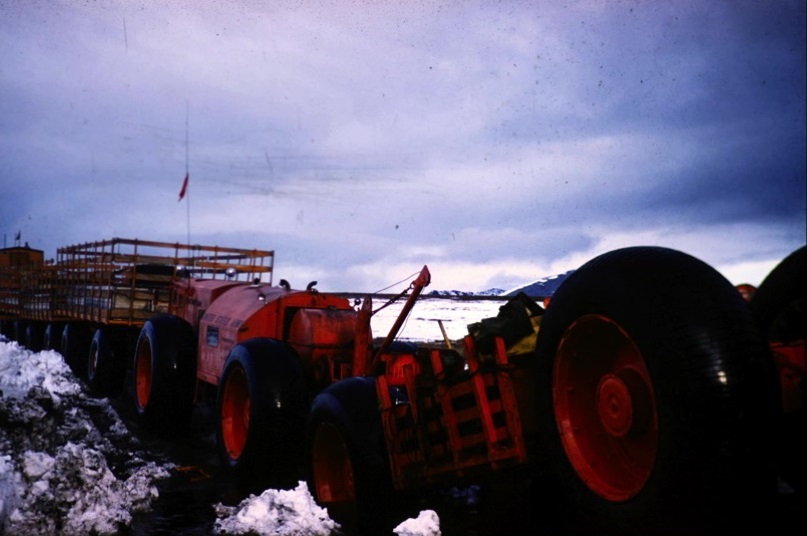
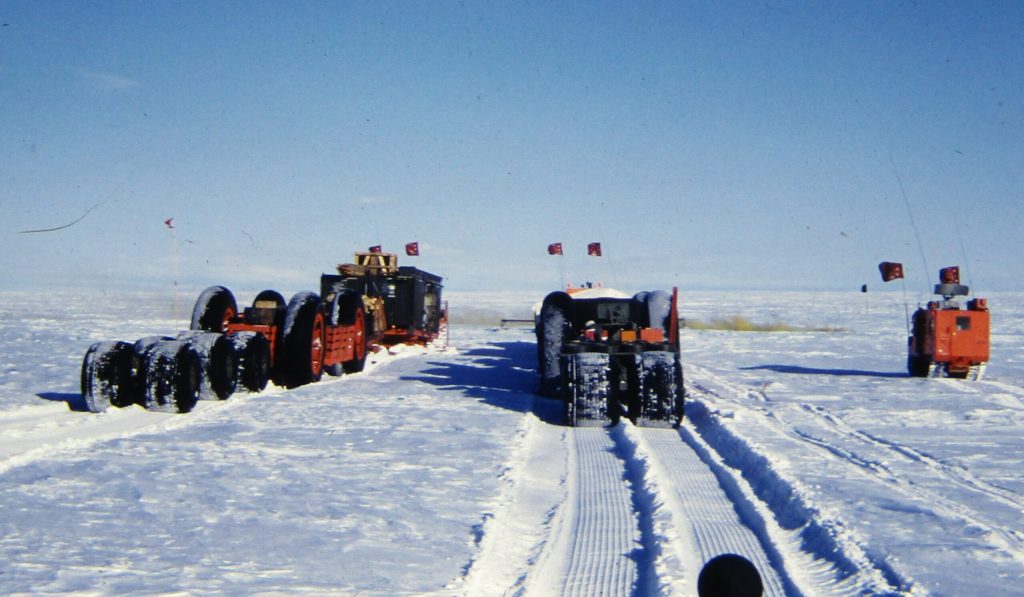
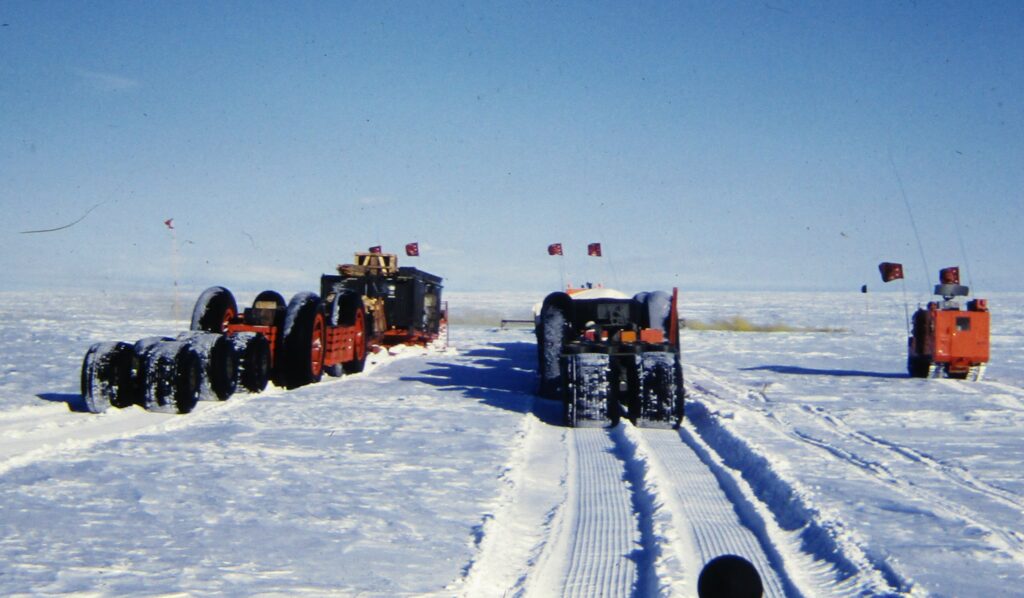
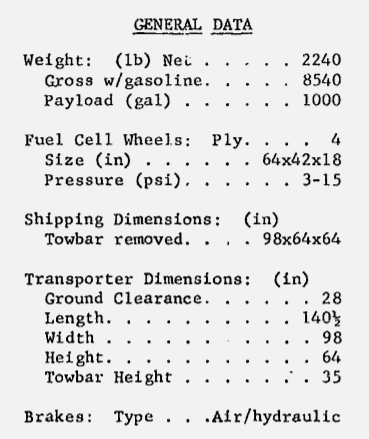
The Rolling Liquid Transporters (RLT (Model T-3)) are 1,000 gallon fuel vessels. These were unique in that the primary storage device were the two large wheels. During a military exercise in Greenland called Lead Dog 60, they performed well at transporting diesel fuel for the exercise.
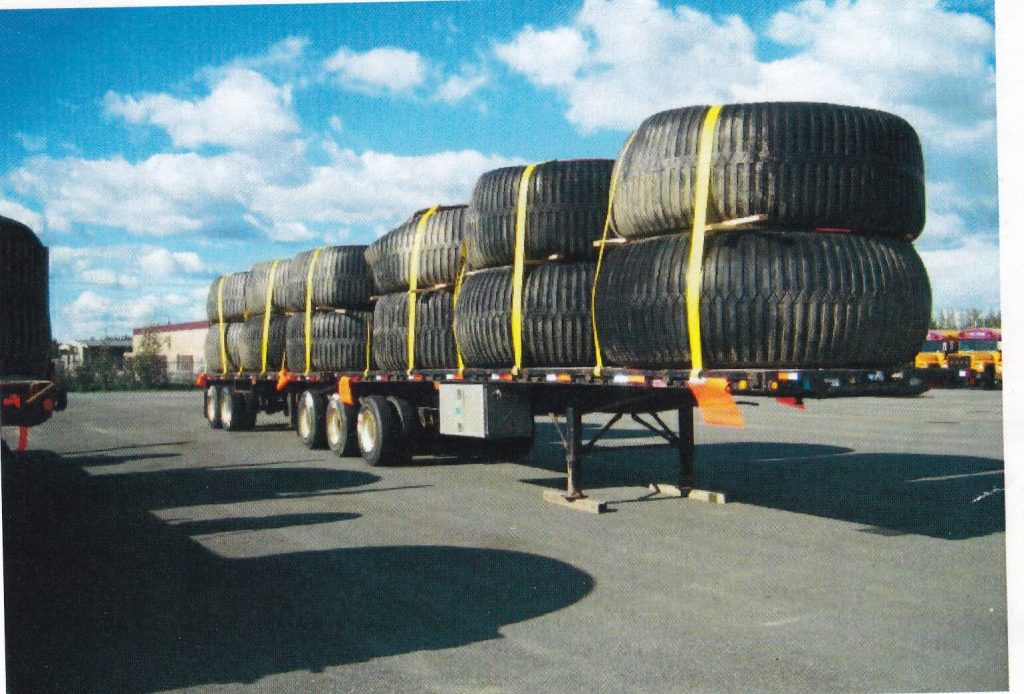
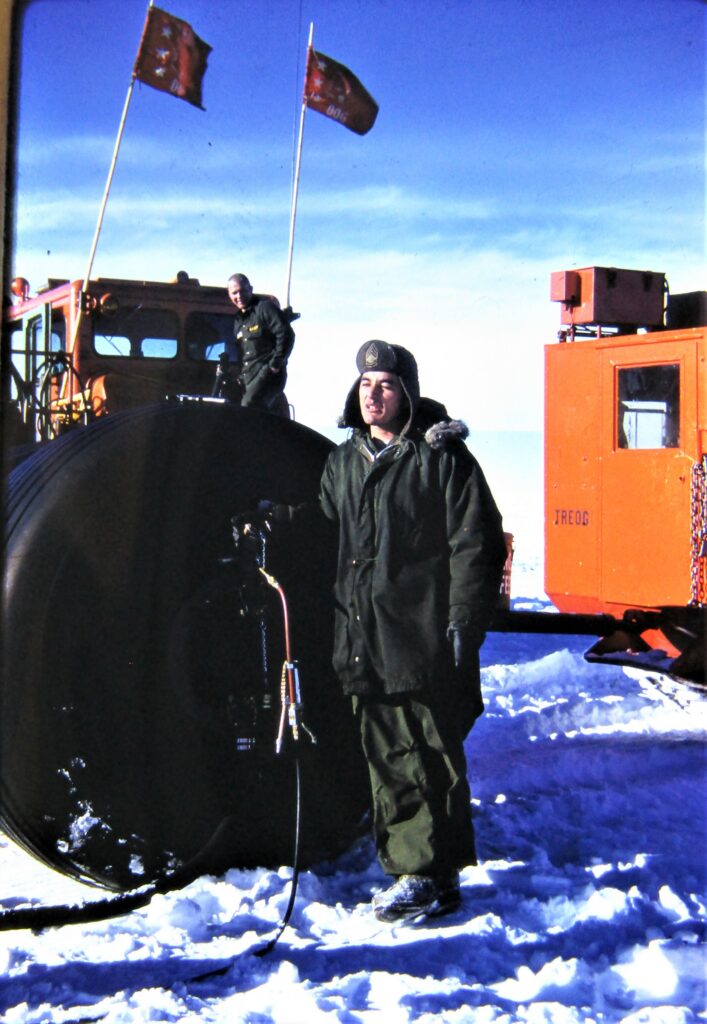
The two – 500 gallon fuel cells (the tires) were filled using a gasoline powered pump, at a volume of 30 gallons per minute. Extracting the fuel was done using a 6 CFM compressor, creating a pressurized cell. In the image below, you can see Marty Martinez using a welding torch to melt ice around the spring loaded fueling valve. Ice formations around the filling valves was a common problem with the RLTs.
A Rolling Liquid Transporter wheel. Image: Marty Martinez – also shown above
During the exercise, four of the wheel bearings failed. The Army’s only concern was that fuel could only be dispensed out of one RLT at a time. A total of 7 RLTs were used during the exercise.
Rolling Liquid Transporters on the Greenland ice cap during Lead Dog 60. Image: Marty Martinez.Rolling Liquid Transporters general data. Image: Lead Dog 60 report.


 Overland Trains