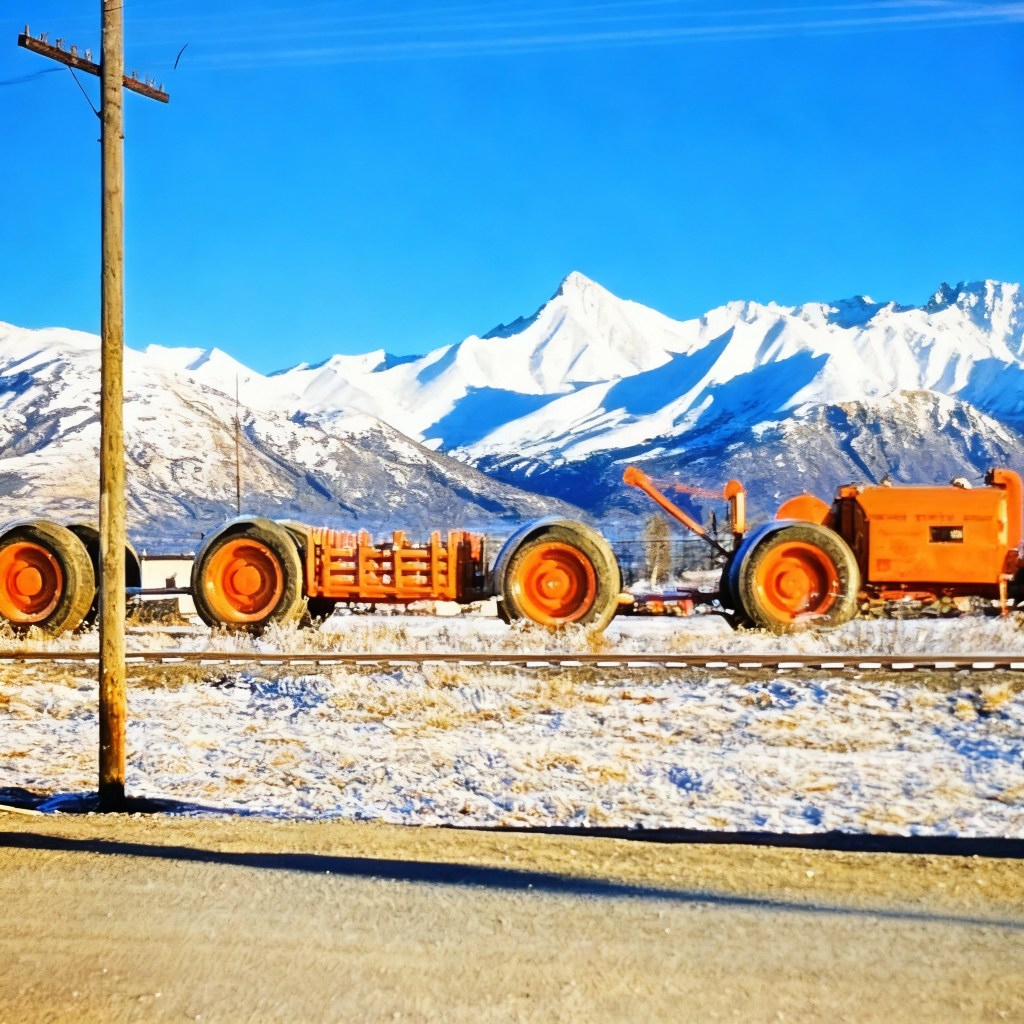
During the two and a half years research for the Overland Trains book, I poured through mountains of original operating manuals, images, and personal slides. There aren’t too many images of the six Overland Trains that I haven’t seen. A couple of months ago, I came across an original slide for sale with the Sno-Train (LCC-1) that I had not previously discovered.
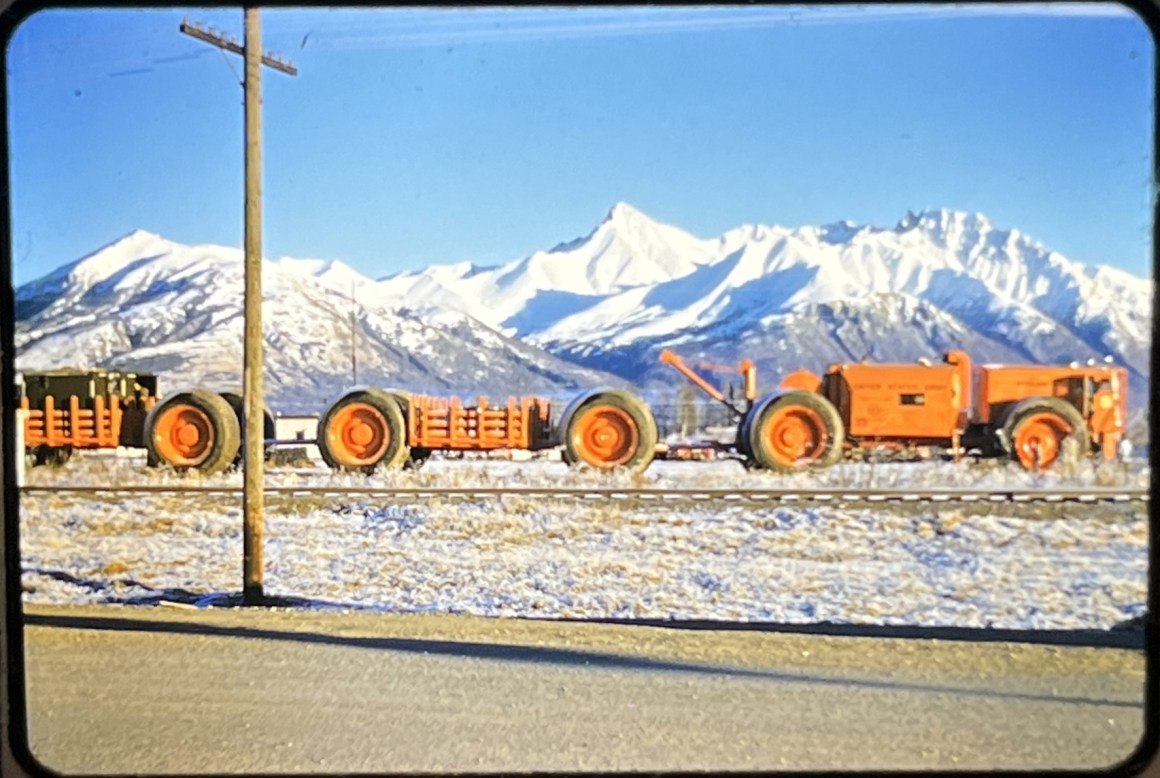
The slide has the date of “8 FEB 61” and the text “see little men in front.” There are three people at the front of the train, two on the ground and one in the doorway. One of the limitations for old slide images is the quality. Slides must be digitally photographed with a light table. There are other methods available, but the light table method is generally accepted.
In an attempt to clean up the image, I processed it through Perplexity AI, but it cut off both image sides. I then used ChatGPT which applied a reasonable result without chopping the sides. Both images below.
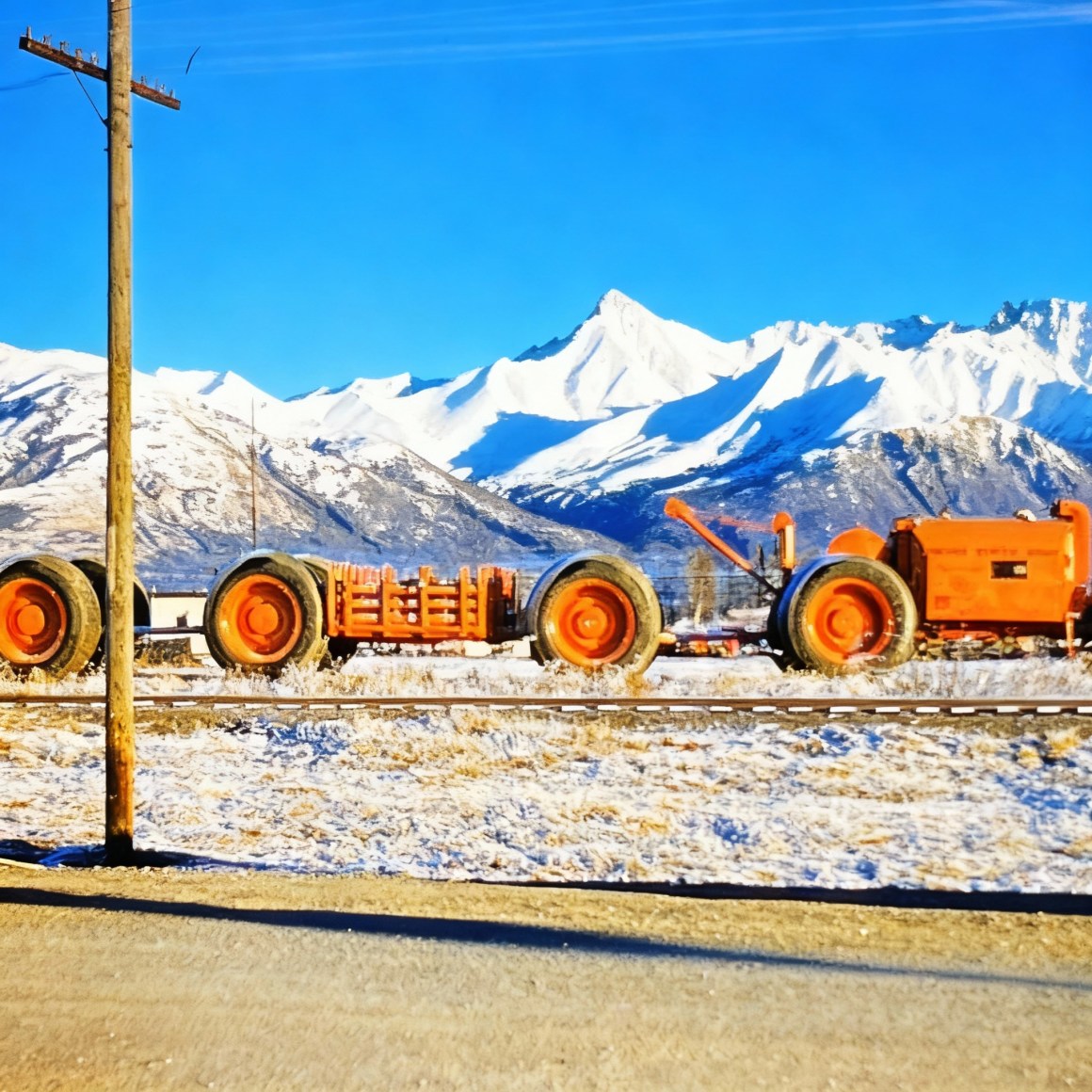
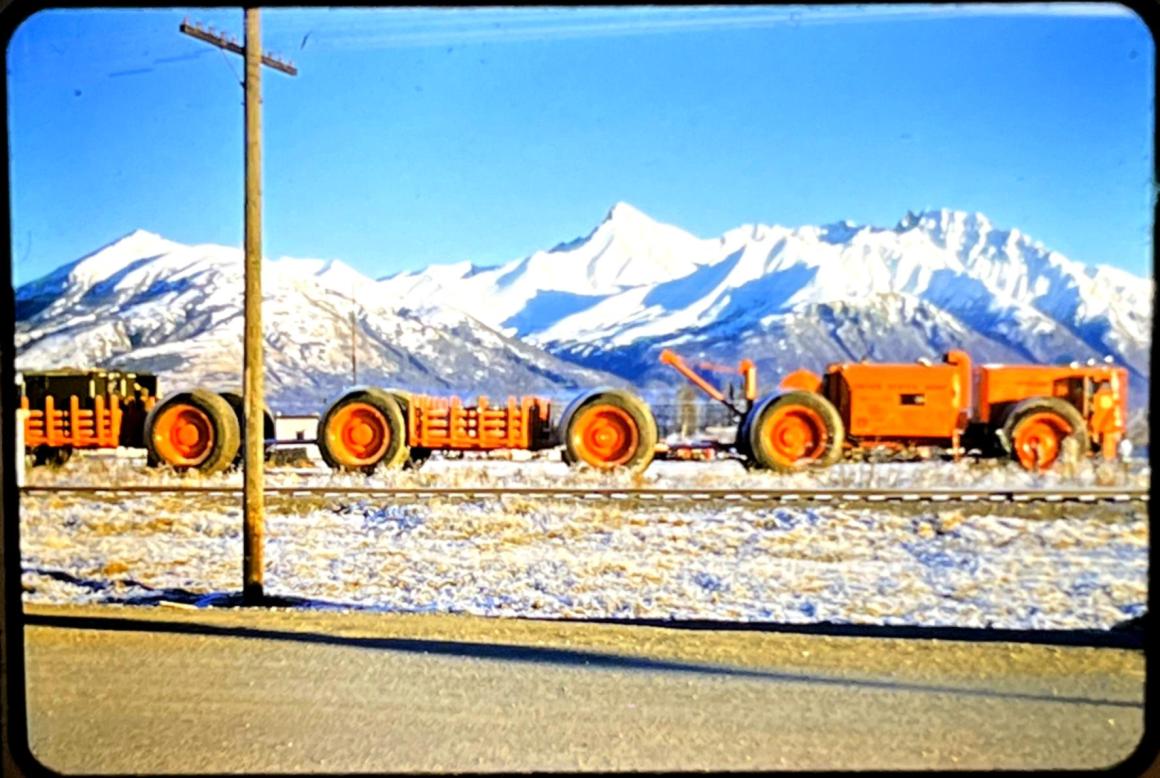
Where was the Sno-Train in this Image?
On or around February 1961, the LCC-1 Sno-Train was located in Alaska, specifically in the Palmer and Gulkana areas. After being reassembled at Palmer in harsh winter conditions in mid-January 1961, it was put on public display there until January 30. Immediately after, the Sno-Train was dispatched to Gulkana, Alaska, for “Operation Willow Freeze,” a winter military field maneuver in the Copper River Basin. The Sno-Train convoy left Palmer on January 30, 1961, and traveled to Gulkana, which became the base for its operational activities in February 1961.
If the slide’s date of February 8, 1961 is accurate, In preparation for the Sno-Train’s first mission, the three trailers were loaded with 25 tons of ammunition and 5 tons of rations. Each of the trailers could carry 15 tons of cargo, for a total of 45 tons. The Sno-Train’s cargo was due at a location 18 miles away by February 10, 1961, an estimated 24 hours away.
As I do not see any cargo in the trailer, this image was captured prior to arrival and cargo loading at Gulkana, AK.

 Overland Trains