I started writing this book in February of 2020. Two and a half years later, I have captured the most complete Overland Trains story ever published. Buy the book now on Amazon.com (https://www.amazon.com/dp/B0BFL91FX6).
Category: Tournatrain
-
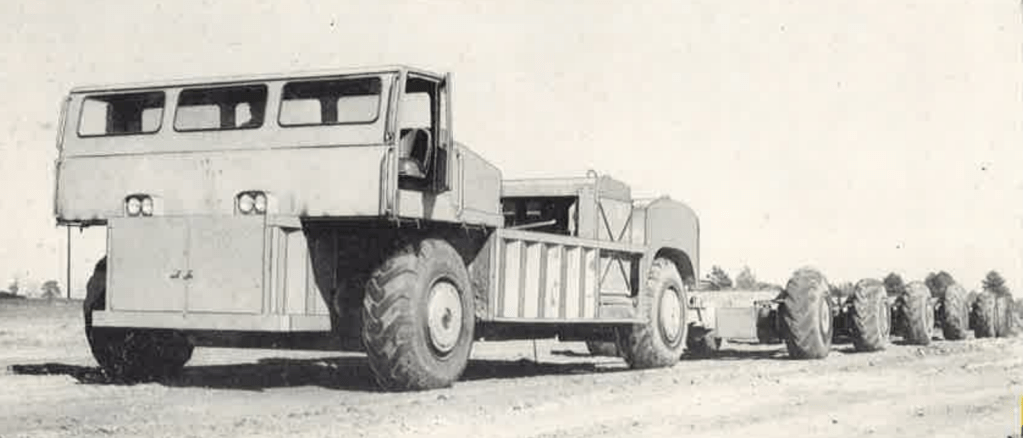
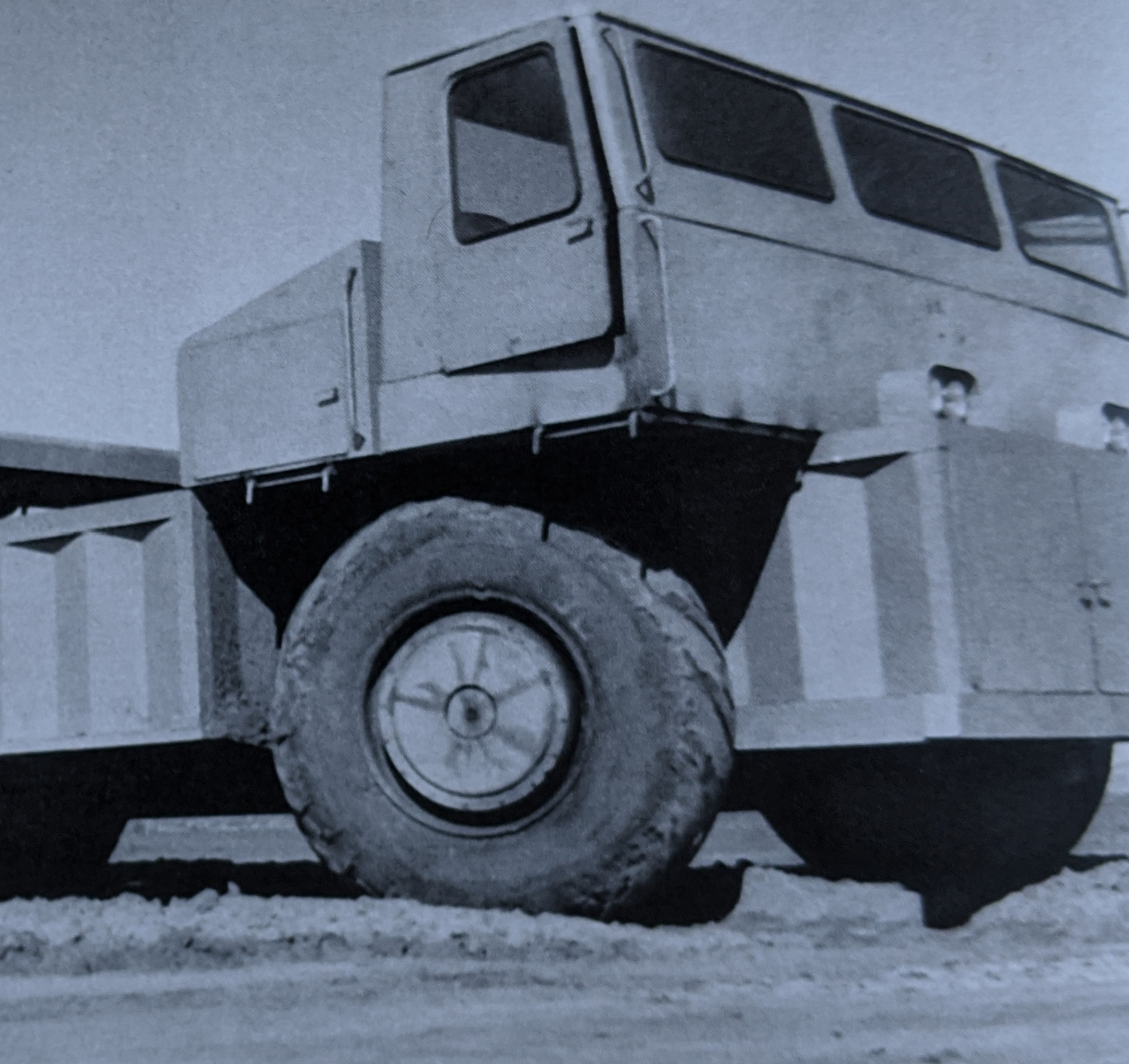
Tournatrain Shown on R. G. LeTourneau, Inc. 1953 Annual Report
The Tournatrain was the first produced Overland Train by R. G. LeTourneau, Inc. In the 1953 annual report, it was described as being “developed for remote regions, primitive roads.” R. G. LeTourneau’s recently re-engineered Electric Drive were one of the highlights of the new machine. The description goes on to say that “The resulting driving power and traction make the train well suited to rugged terrain”
The Tournatrain. Image: 1953 R. G. LeTourneau, Inc Annual Report The later VC-12 Tournatrain featured two engines, instead of the single engine Tournatrain. These were two completely different machines and only shared a similar physical appearance.
-
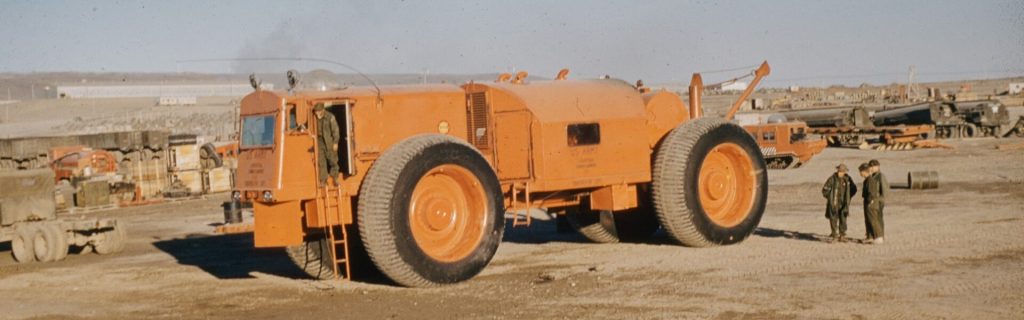
There were 6 Overland Trains
When I watch or read about Overland Trains, authors typically forget, or don’t know, that there are 6 of them. The Overland Trains were built from 1952-1961.
The first built train was the Tournatrain. R. G. had many concepts prior to building the first train.
Next, was the VC-12 Tournatrain. This was an entirely different machine than the first train. It had two engines versus one in the original.
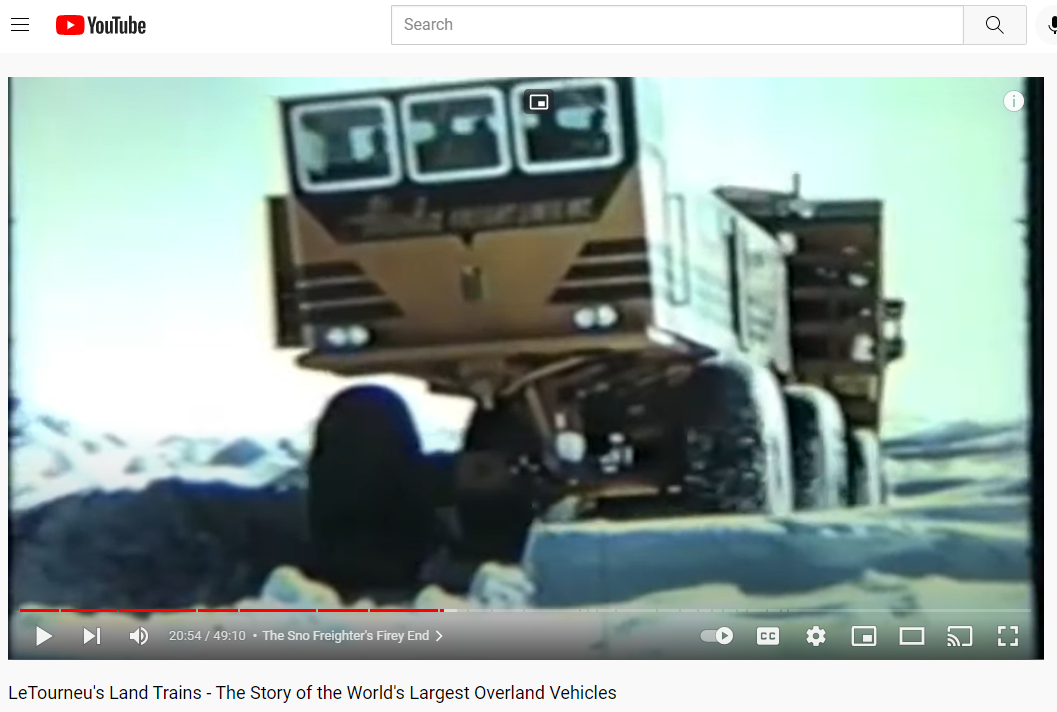
Alaska Freight Lines was the recipient of the 3rd Overland Train, the Sno-Freighter. This was the only train that was purchased by a private party. This train made several trips to the Distant Early Warning (DEW) Line stations
The Side Dump Train had a few concepts before coming up with the built machine we know of. It also had a royal visitor!
The Sno-Train has the most complex and active history out of all the trains. Expect some mind blowing stories and facts when the book comes out. This was the first Overland Train to use the Firestone 120x48x68 tires.
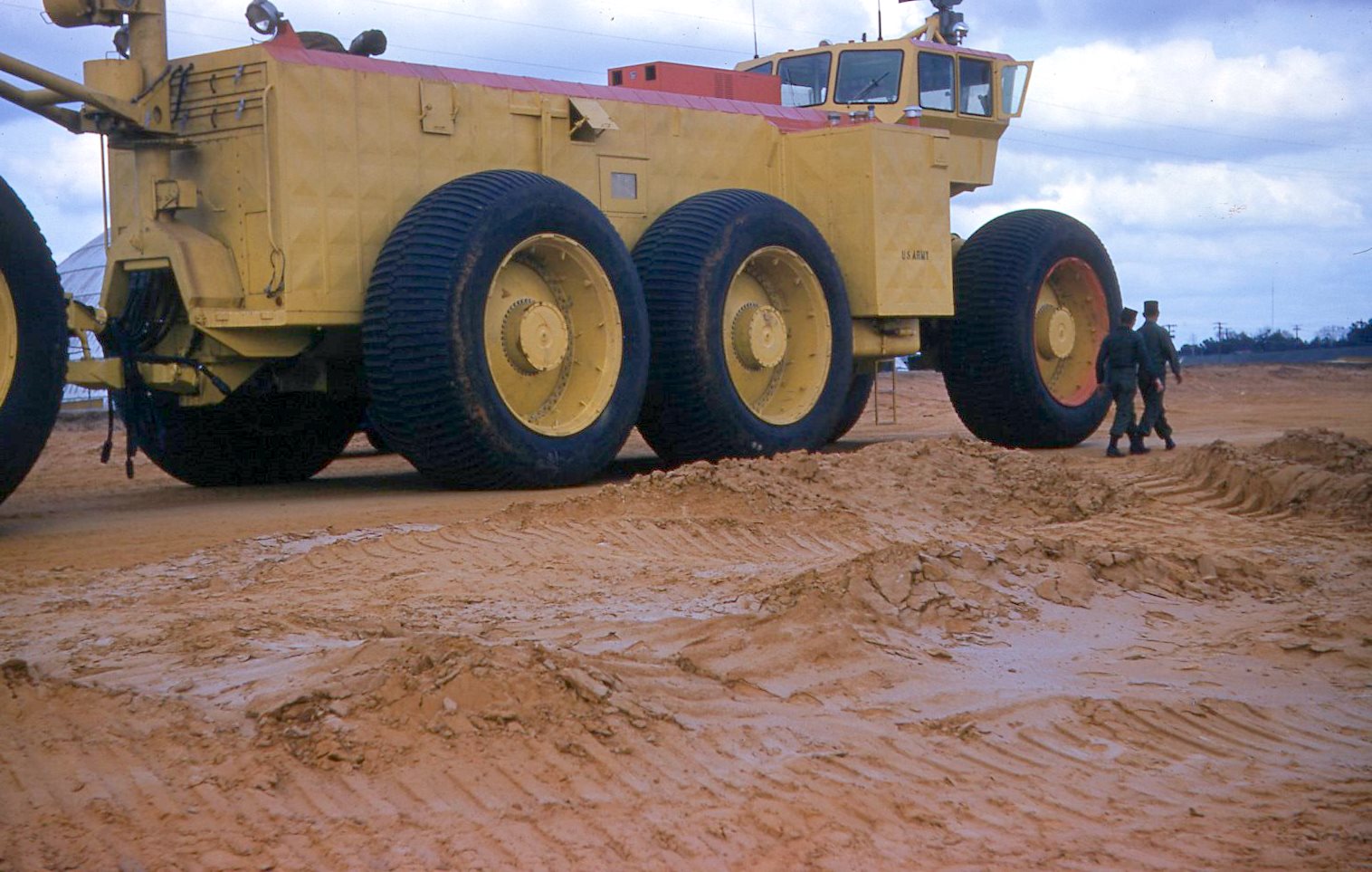
Lastly, the Overland Train Mark 2. It was the most engineered and well thought out train of them all. it never entered active service and went from Longview, TX to Yuma, AZ. While it is said that none of the train made it out of the scrapper besides the control car, that is not accurate.
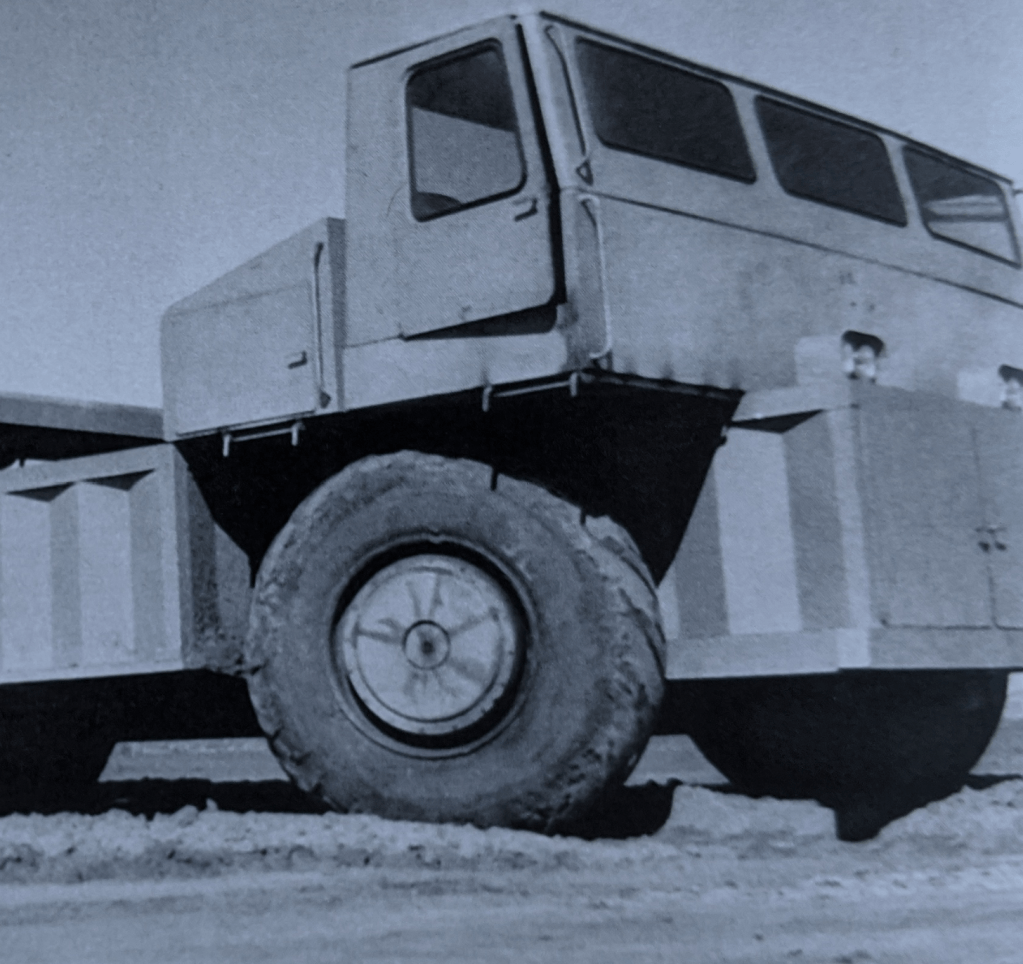
Tournatrain 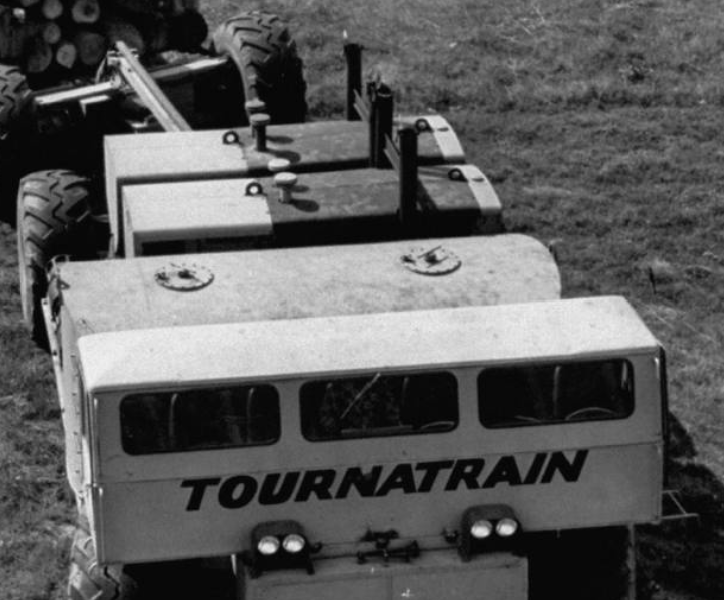
VC-12 Tournatrain 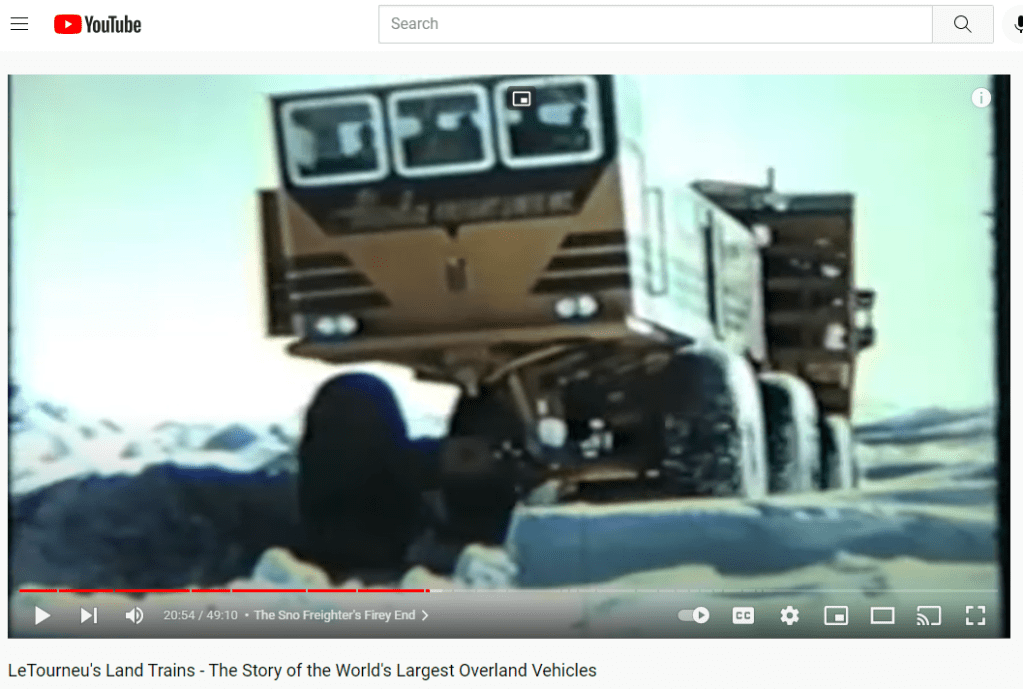
Sno-Freighter 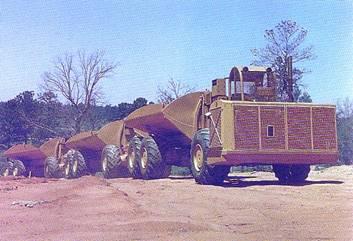
Side Dump Train 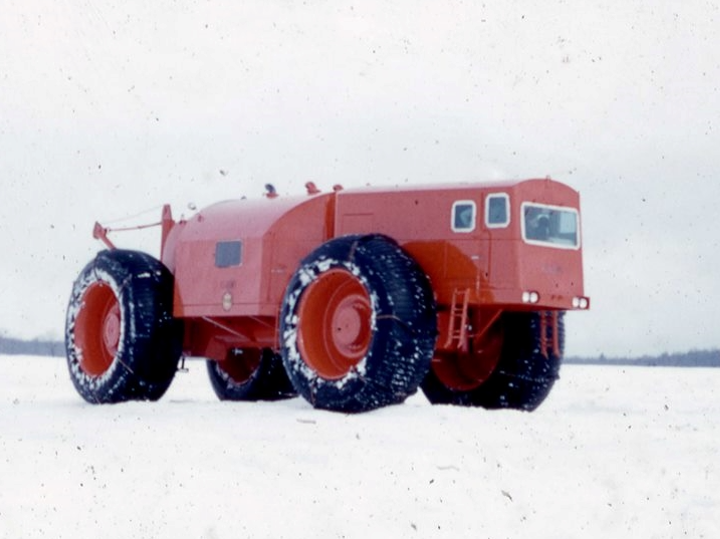
Sno-Train 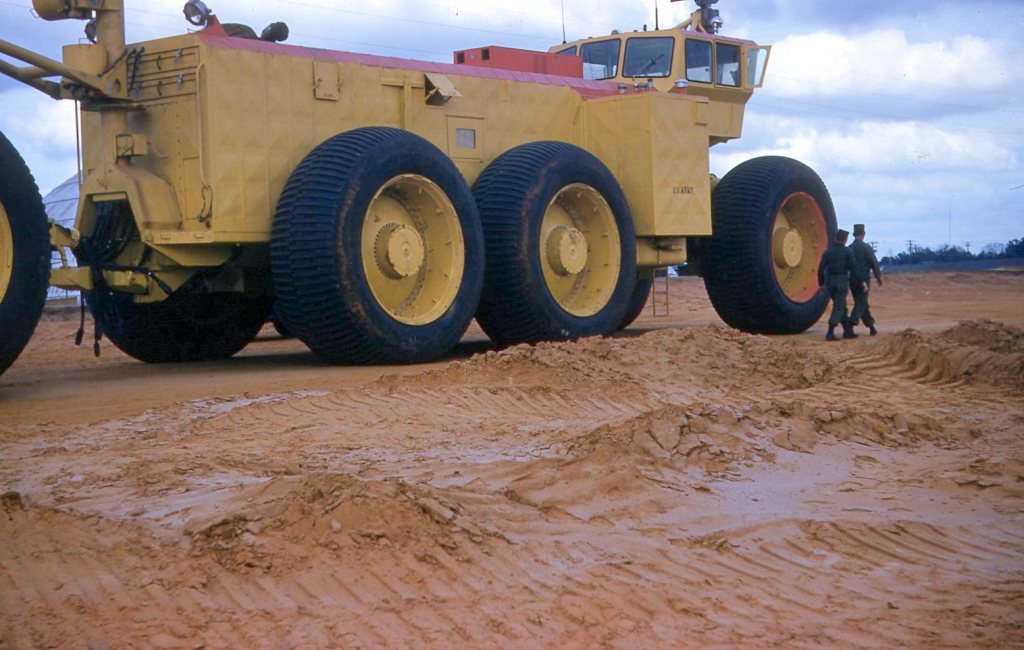
Overland Mark 2
-
Overland Trains Video by Calum
An acquaintance of mine posted a video on the Overland Trains today. It has been a labour of love for him over the past 2 years. His research and narration are top class. I can’t recommend watching his video enough.
https://www.youtube.com/watch?v=abGyX2uwXsw -
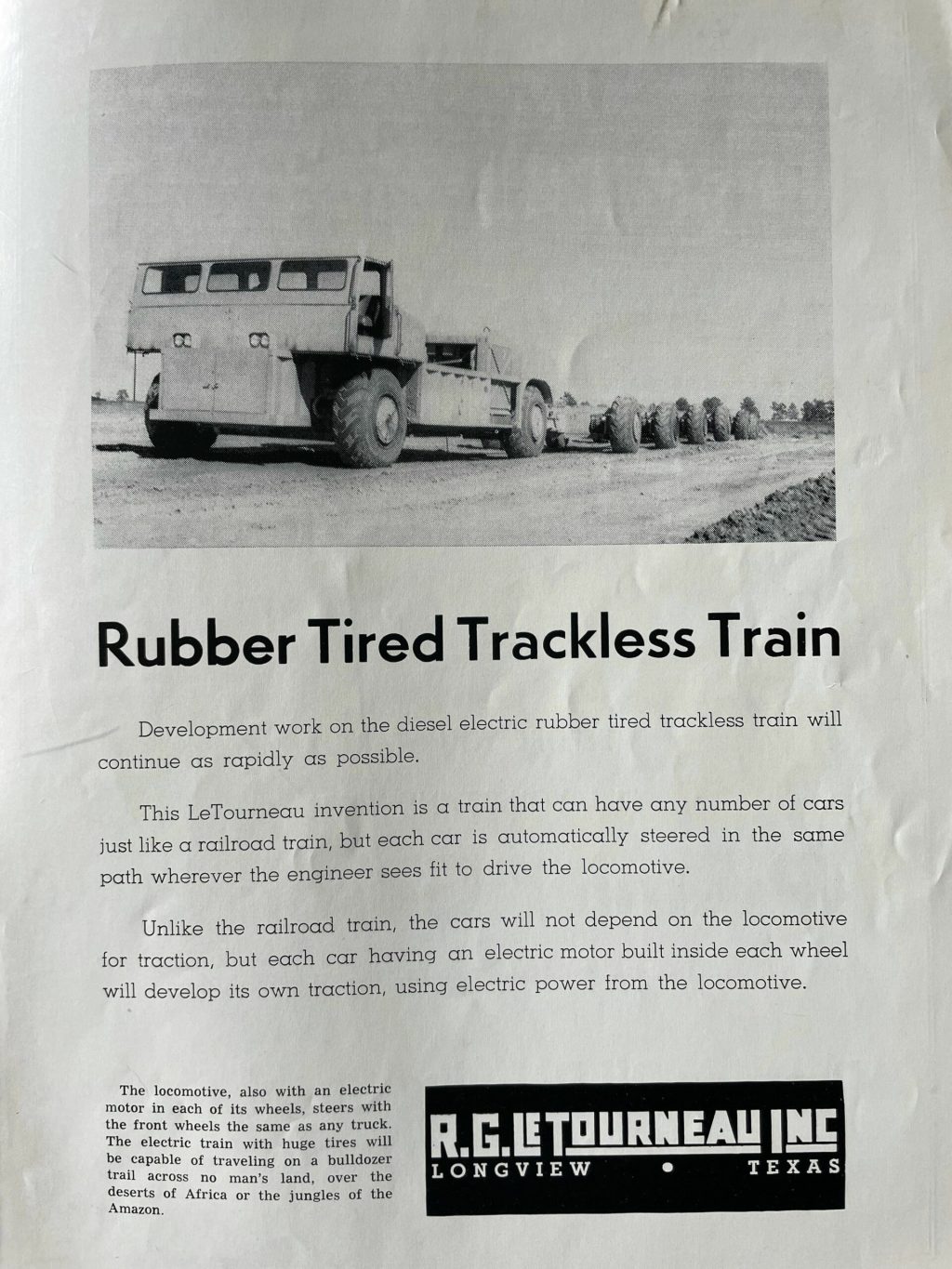
Tournatrain “Rubber Tires Trackless Train” Advertisement
During the early 1950’s Tournatrain development, numerous ads were published about the trains, or the products that they used. This particular ad by R.G. LeTourneau, Inc., was meant to advertise it’s capabilities in multiple terrain types (e.g. deserts or jungles). Additional language within the ad also advertises LeTourneau’s newly re-designed electric wheel.
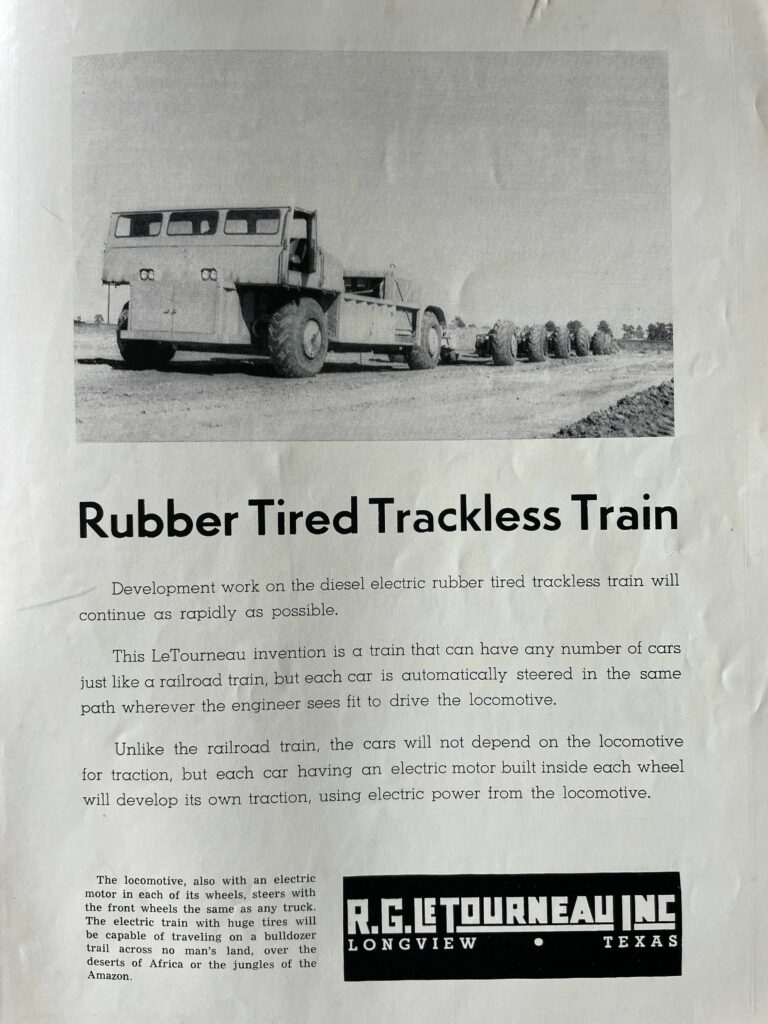
R.G.’s Overland Trains had quite a few names. You will read or see the machines referred to as trackless trains, land trains, or others. Read about the many Sno-Train names at https://advnscuba2.wordpress.com/updates/the-lcc-1-sno-train-has-many-names/.
-
Abbreviations and Acronyms
If the military is involved, you can be certain that they will use an abbreviation or acronym for their organized name, project, or equipment. Here are a few of the more commonly used abbreviations and acronyms used during the scope of the Overland Trains.

ACAN – Army Command and Administrative Network
ACFEL – Arctic Construction & Frosts Laboratory
APPR – Army Package Power Reactor
ERDL – Engineer Research & Development Laboratory
FESA – Facilities Engineering Support Agency
LCC – Logistical Cargo Carrier
PR&DC – Polar Research & Development Center
SIPRE – Snow, Ice, Permafrost & Research Establishment
TRADCOM – Transportation Research Development Command
TRARG – Transportation Arctic Group
TRECOM – Transportation Research Command
TREOG – Transportation Research & Environmental Operations Group
USARSG – United States Army Research & Standardization Group
-
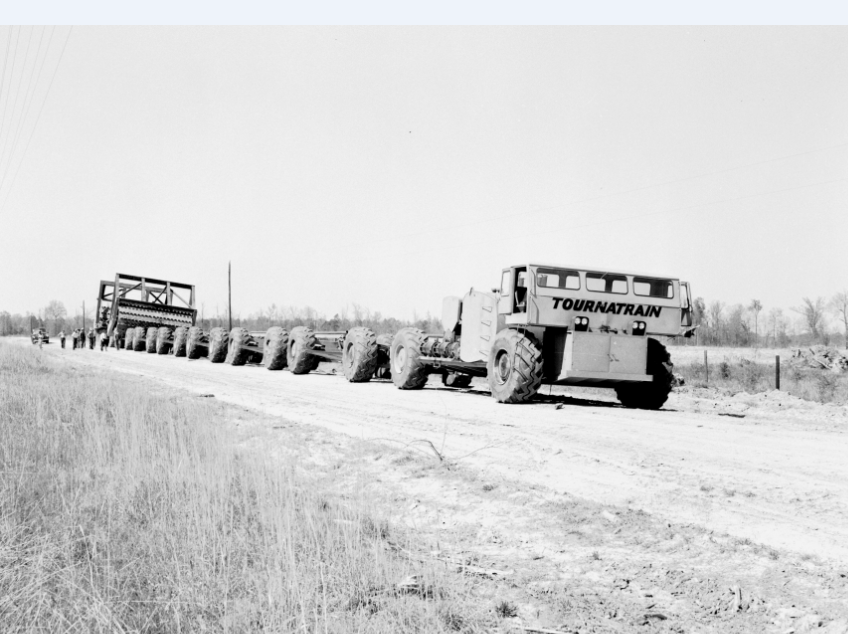
Tournatrain Test: Pulling Heavy Tree Crusher Push Beams & Rollers
A critical part of any newly developed machine is testing. On April 3, 1954, the VC-12 Tournatrain, R.G.’s successor to the Tournatrain, carried the front and rear push beams and rollers to the Tree Roller/Tree Crusher. The total weight of one machine was 100 tons, with the rollers and push beams seen in the photo, contributing significantly to that weight. The zoomed image at the bottom shows the front roller and beam on one trailer and the rear roller and beam on another trailer.
VC-12 Tournatrain carrying a Tree Crusher push beams and roller 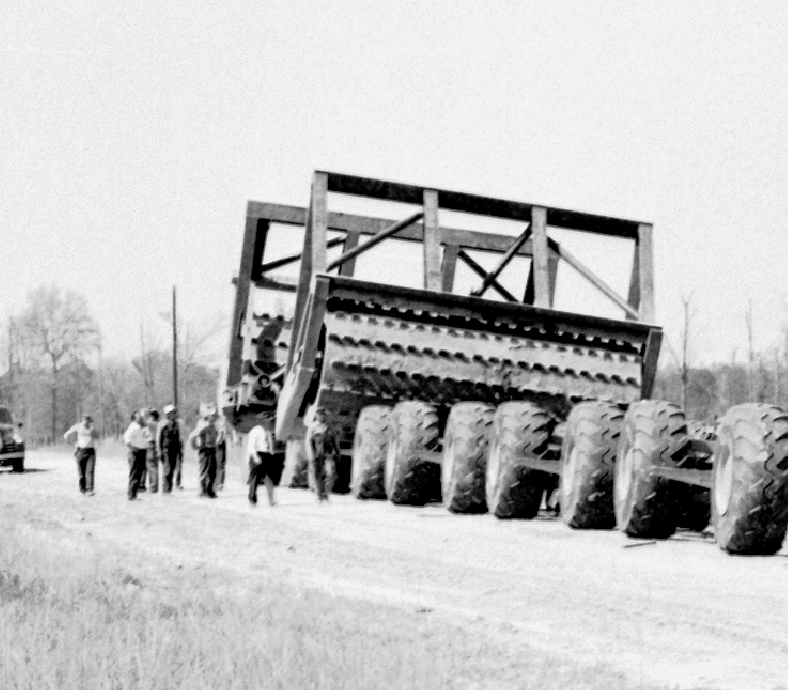
Zoomed – VC-12 Tournatrain carrying a Tree Crusher push beams and roller Later in the month, the VC-12 Tournatrain was scheduled for some very important visitors.
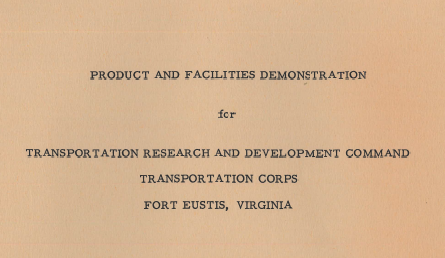
Dale Hardy contributed significantly to this article.
-
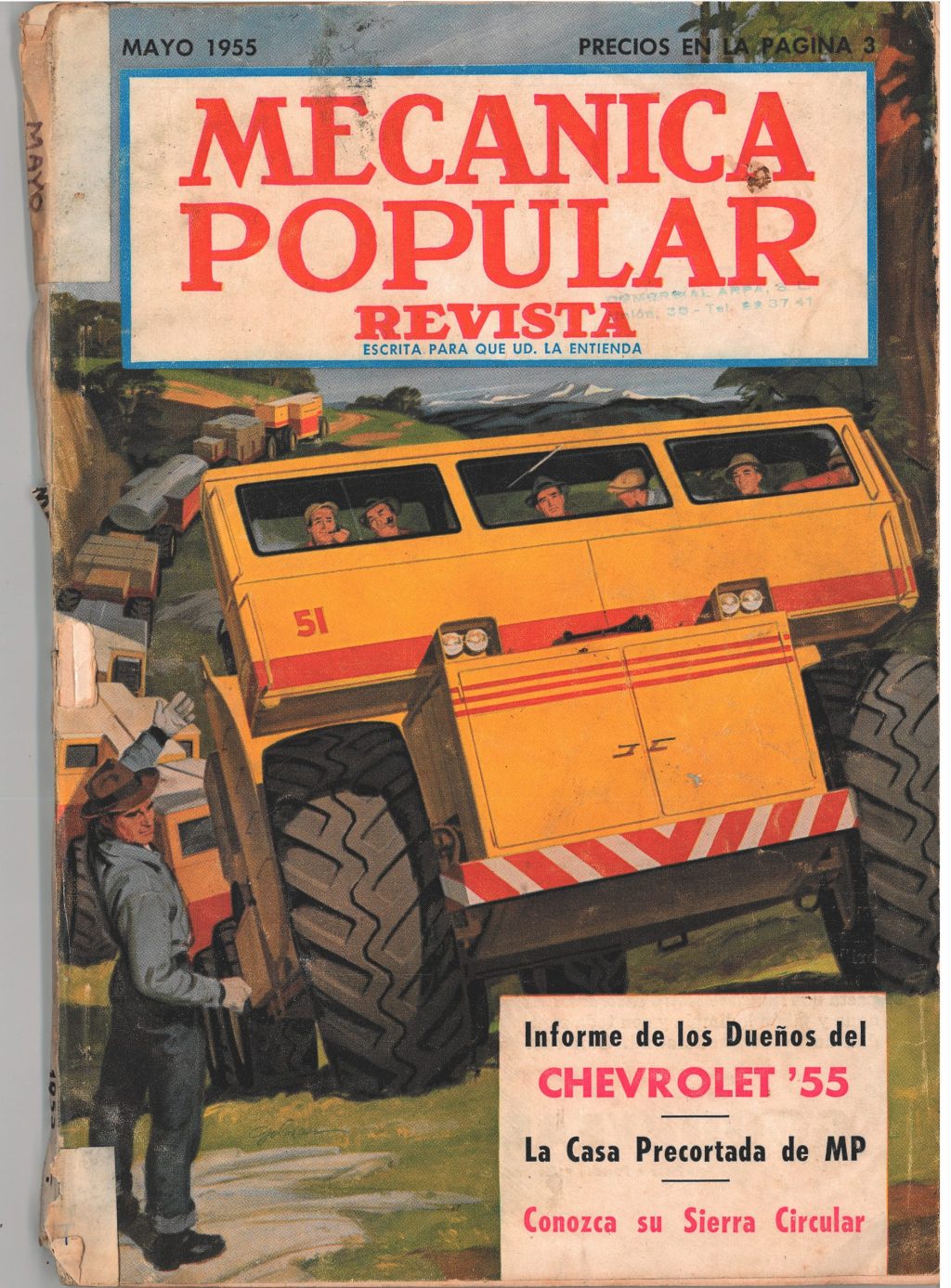
Tournatrain Painting Featured on Mechanica Popular
The May 1955 edition of Mechanic Popular (Popular Mechanics) featured an original painting you might find familiar. This cover image is a one of a kind Tournatrain painting. If you search for the American Popular Mechanics of the same date, you will find a completely different cover – no Tournatrain. I will talk more about this cover and painting in the Overland Trains book. Until then, enjoy!

 Overland Trains