Category: TC-497 Overland Train

  • Overland MkII Dimensions: How Big is the MkII?

    Overland MkII Dimensions: How Big is the MkII?

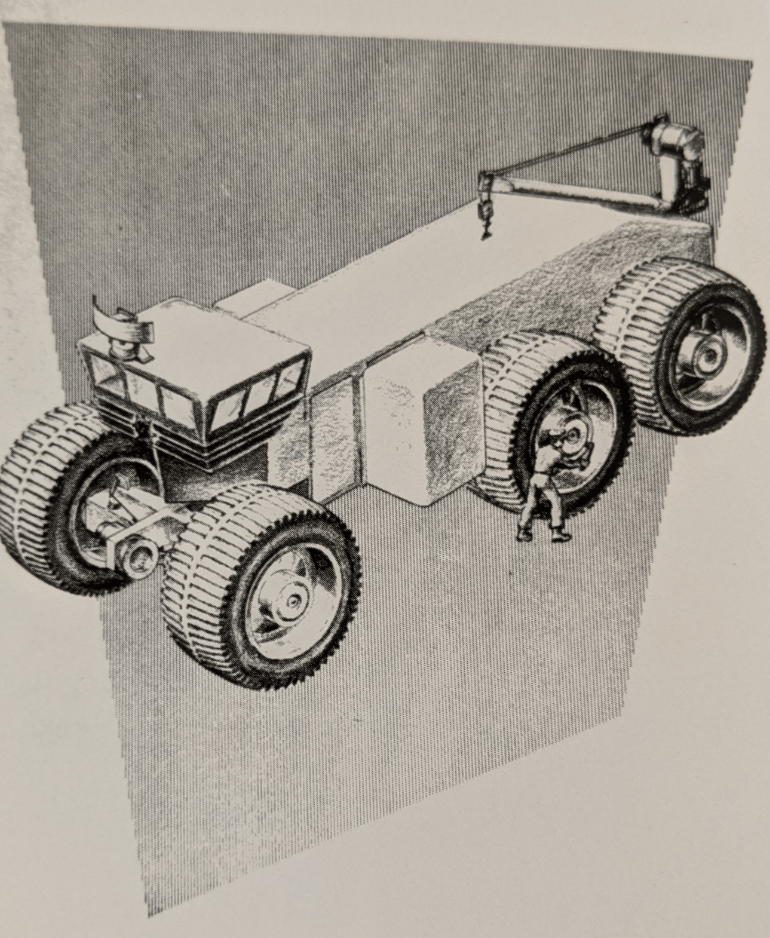
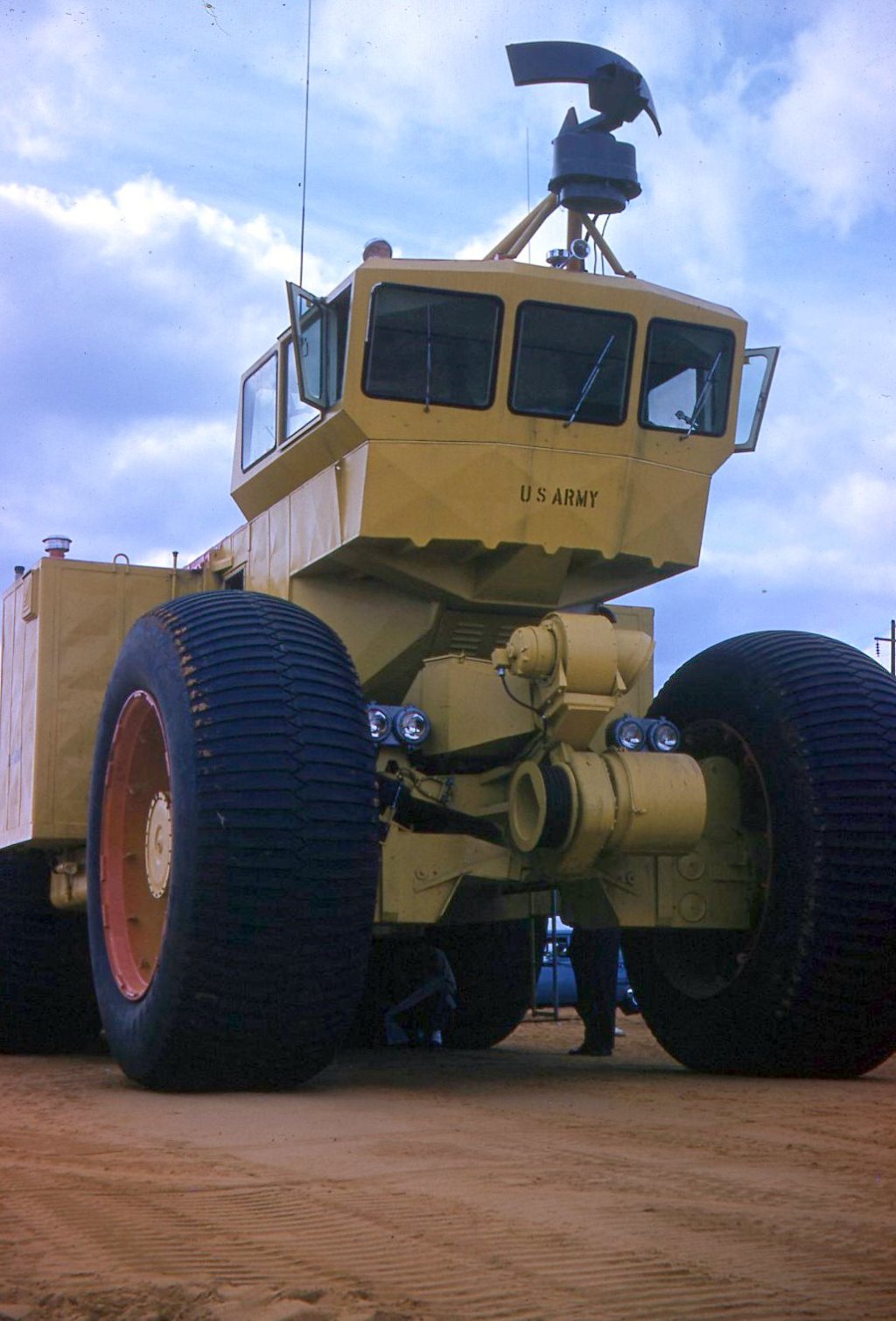
    The United States Army contracted with R.G. LeTourneau, Inc. to build the Overland MkII. The two drawings and the image below show the primary Control Car. In the drawing shown, the Control Car has a radar mounted on the top-front and a boom jib on the rear for tire changing.
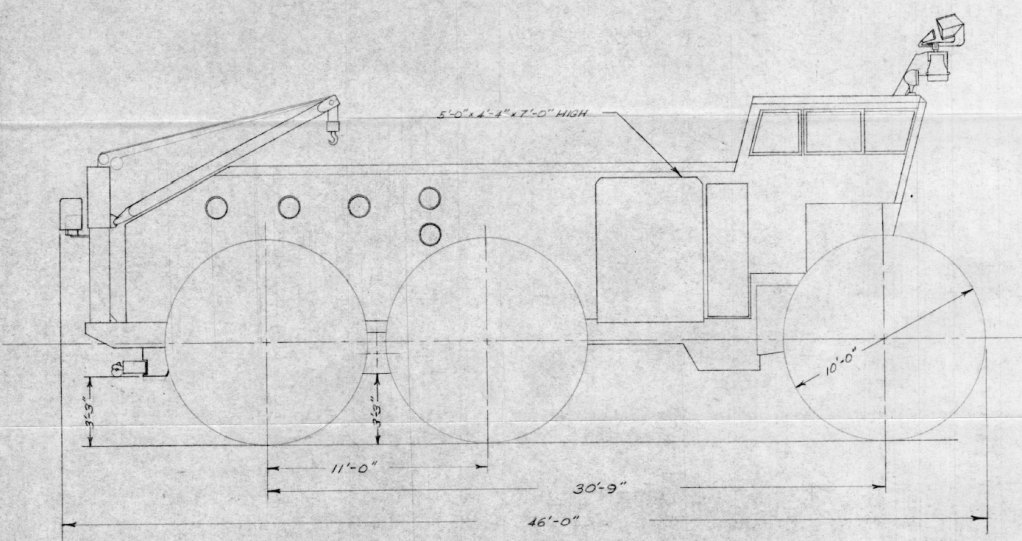
    image: Phase I included diagrams.

    The Overland MkII is 46 feet long and 20 feet, 7 and a half inches tall with the radar. Without the radar, the Control Car is 16 feet, 9 inches tall.
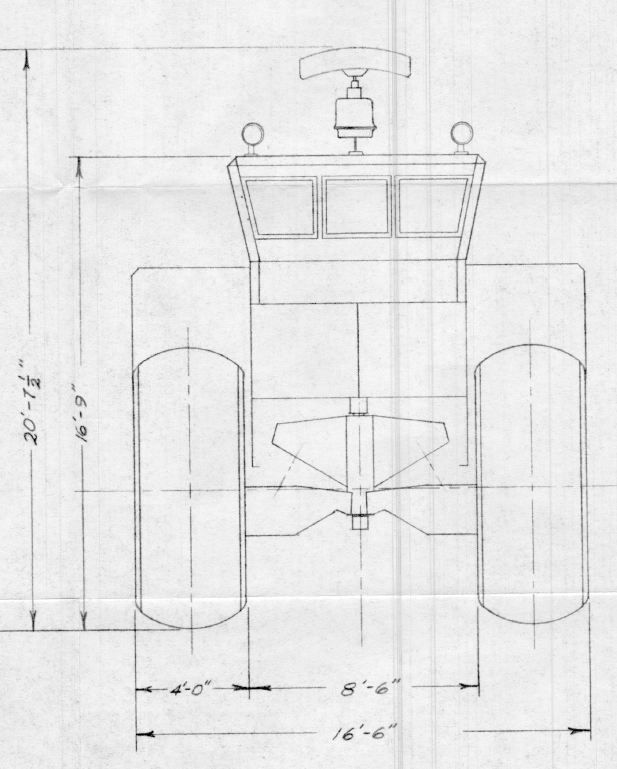
    image: Phase I included diagrams.

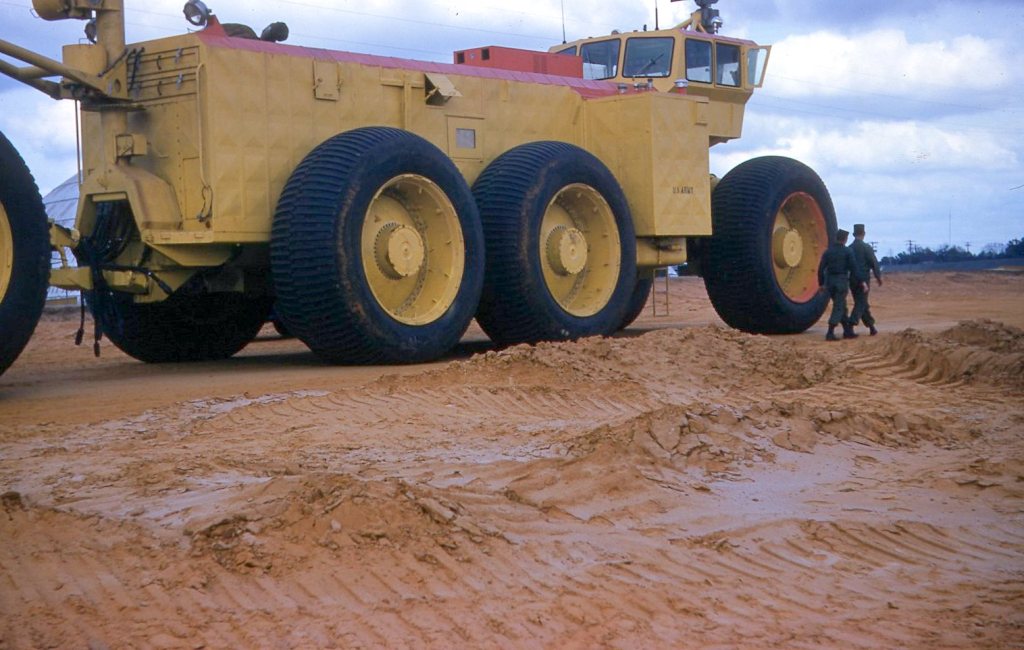
    In the image below, two men walk by the front passenger side tire. Note how they compare to the 10 foot tall tire and center of the rim. The Overland MkII Control Car is found at the Yuma Proving Ground Heritage Center (https://history.army.mil/museums/IMCOM/yumaProvingGround/index.html).
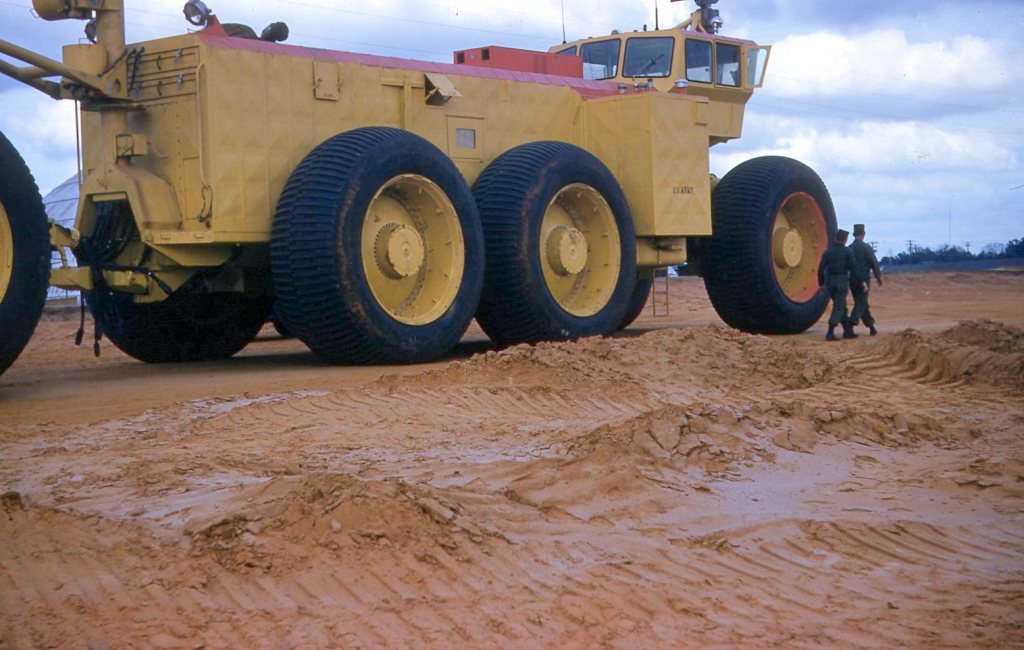
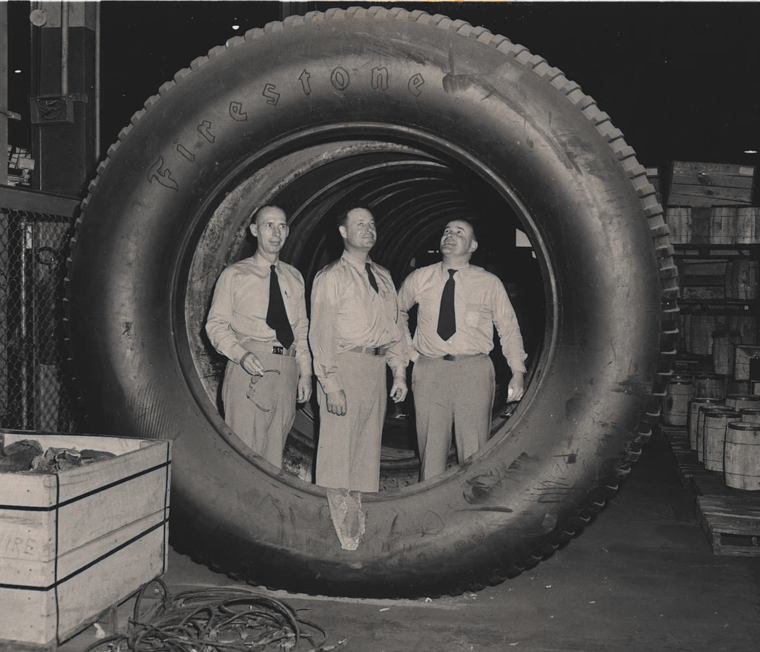
    photo: Lloyd and Larry Smith | description: two military men walk on the passenger side of the train’s most forward Firestone 120x48x68 tire.

  • Firestone 120x48x68 Tires

    Firestone 120x48x68 Tires

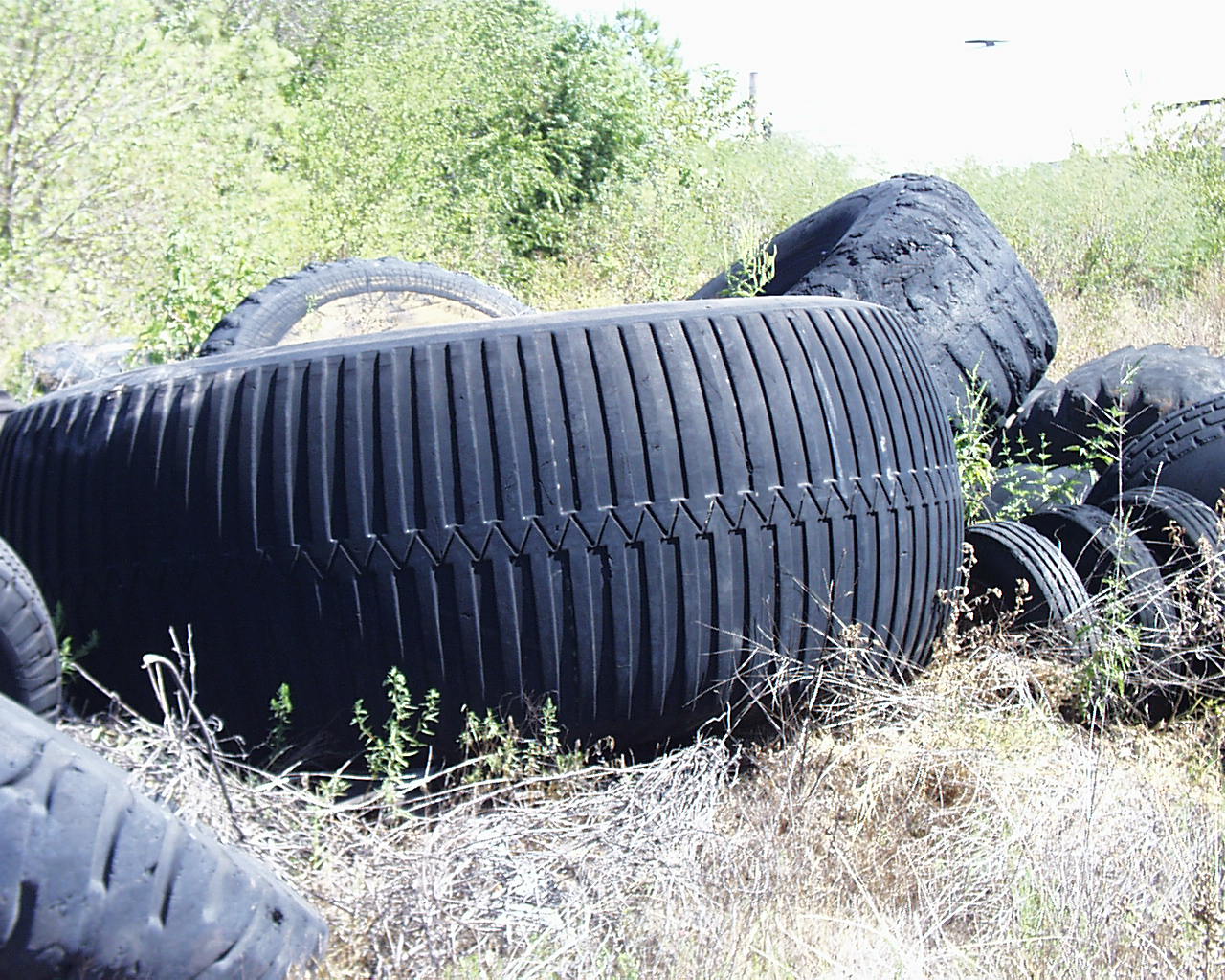
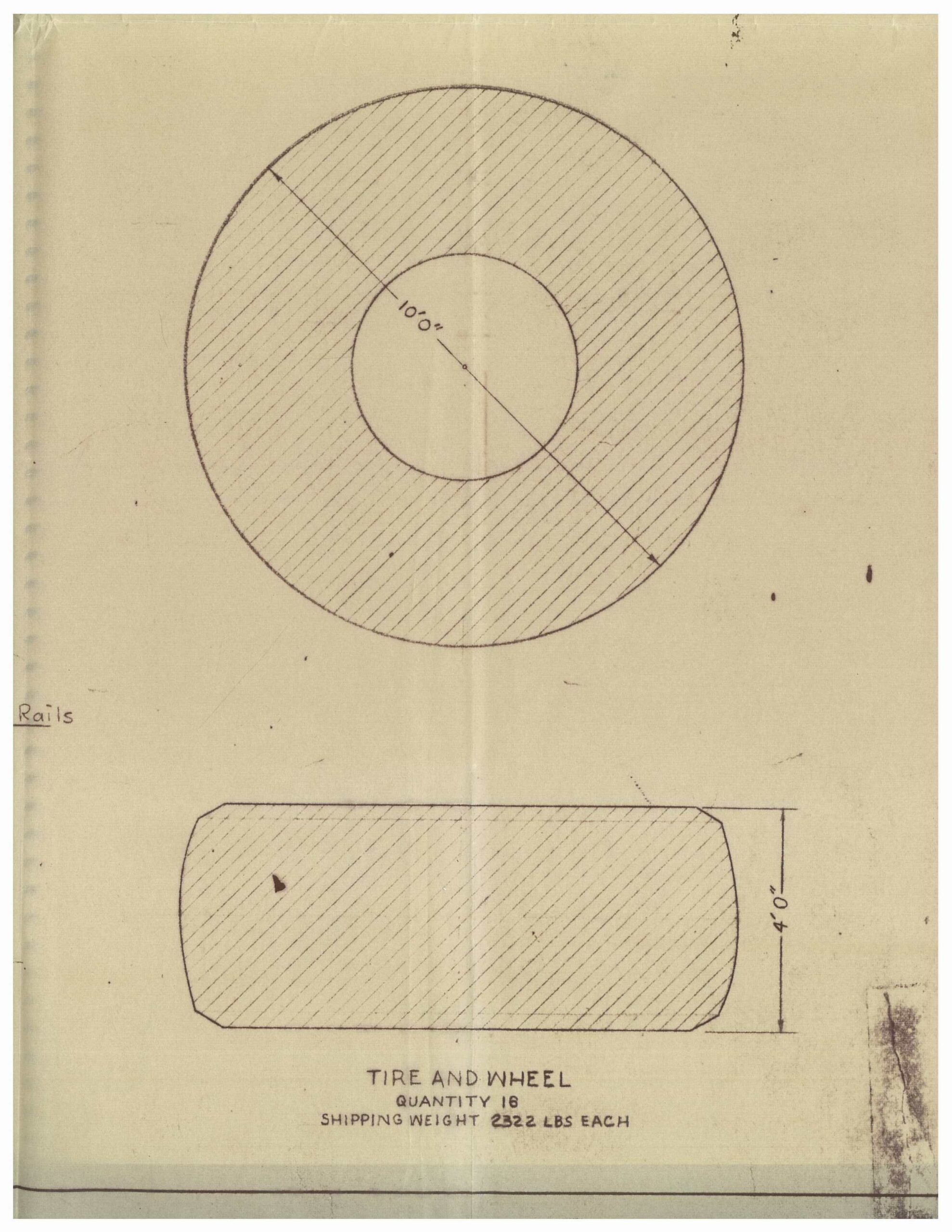
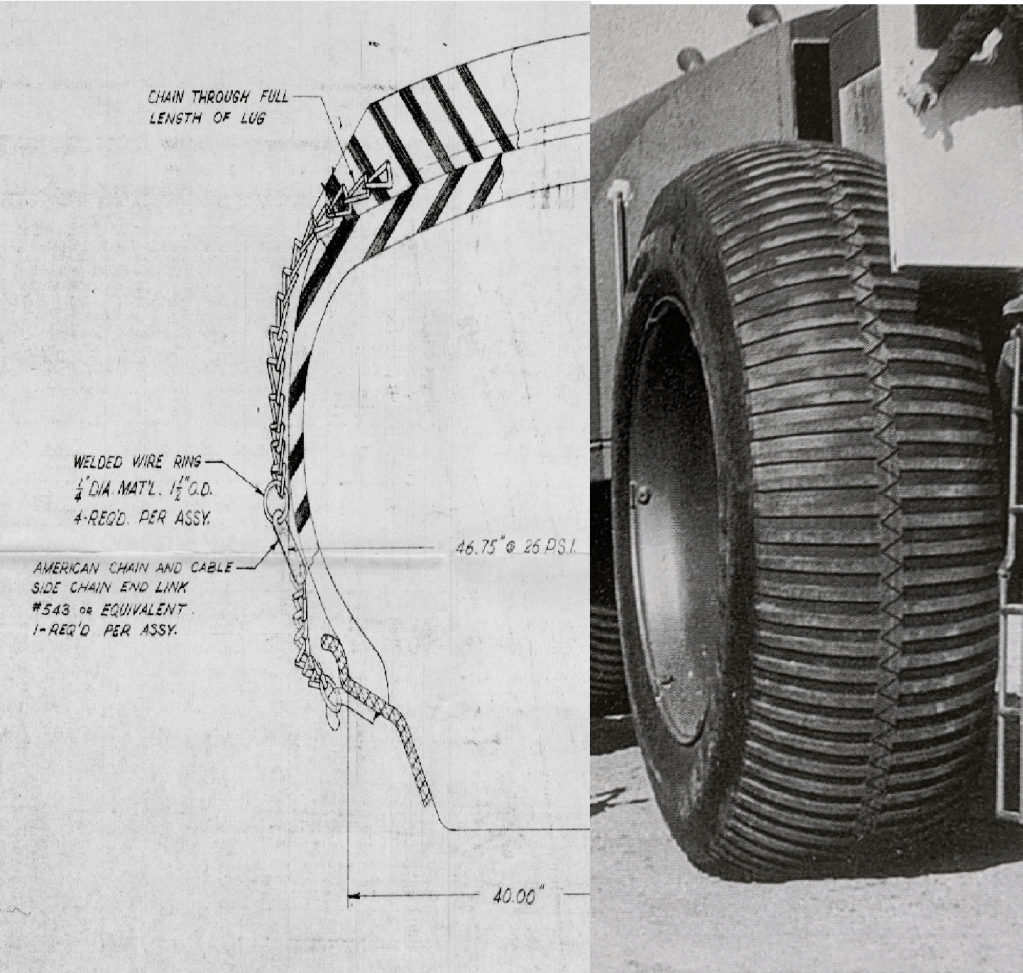
    The Firestone 120x48x68 tires are arguably, one of the most recognizable features on the last 3 LeTourneau Overland Trains. These tires were first produced in 1952. The numbers describe the tire dimensions as 120 inches tall – diameter (10 feet), 48 inches wide (4 feet), and 68 inches inner diameter. The were manufactured in thicknesses of 10-ply to 36-ply based on the machine it was used. If you wanted to buy a tire and rim combination during the 1960s, you would expect to shell out around $3,500 per tire and $1,600 per rim.

    Tire and rim combination weights will vary by rim model, rim metal composition, and tire plies. These tires were also used on the Crash Pusher, Water Wagon, Marsh Buggy, Sno/Swamp-Buggy, and possibly a few others that I have not seen.

    April 15, 1954 – Ft. Eustis, VA. Three visitors marvel at the new Firestone tires.
  • Overland Train MkII Rear Control Car Electrical Connection

    Overland Train MkII Rear Control Car Electrical Connection

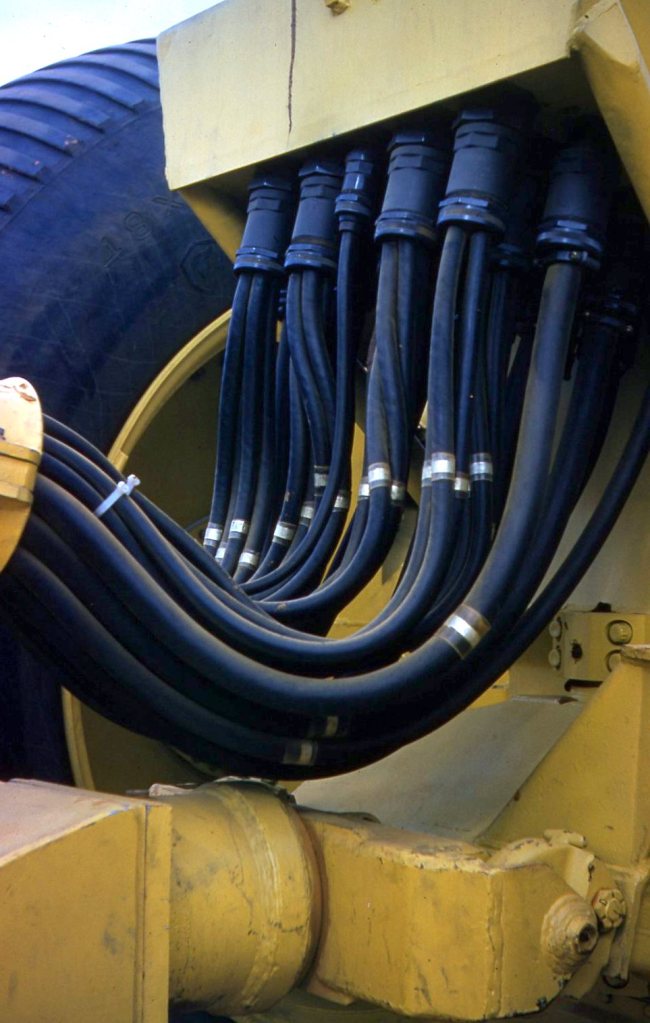
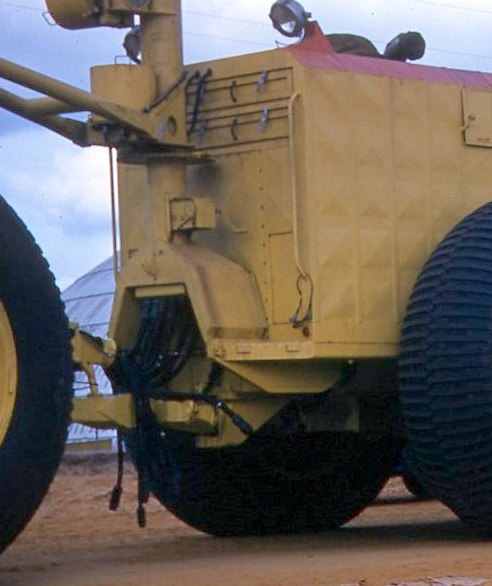
    In 1961, the Overland MkII was being fabricated and tested, prior to handing it over to the United States Army in 1962. The image to the left shows the large quantity of electrical wire gauges coming out of the Control Car. The MkII Control Car produced enormous amounts of current from the Solar engines (company name, not solar panels) connected to electric generators. The Control Car’s AC generator produced 150-KVA, 480 volt, 60 cycle, 3-phase, while the DC generator produced 600-V.

    These images were captured at the previous R.G. LeTourneau, Inc. in Longview, TX.

  • Custom Slingshot from a R.G. LeTourneau, Inc. Draftsman I Interviewed

    Custom Slingshot from a R.G. LeTourneau, Inc. Draftsman I Interviewed

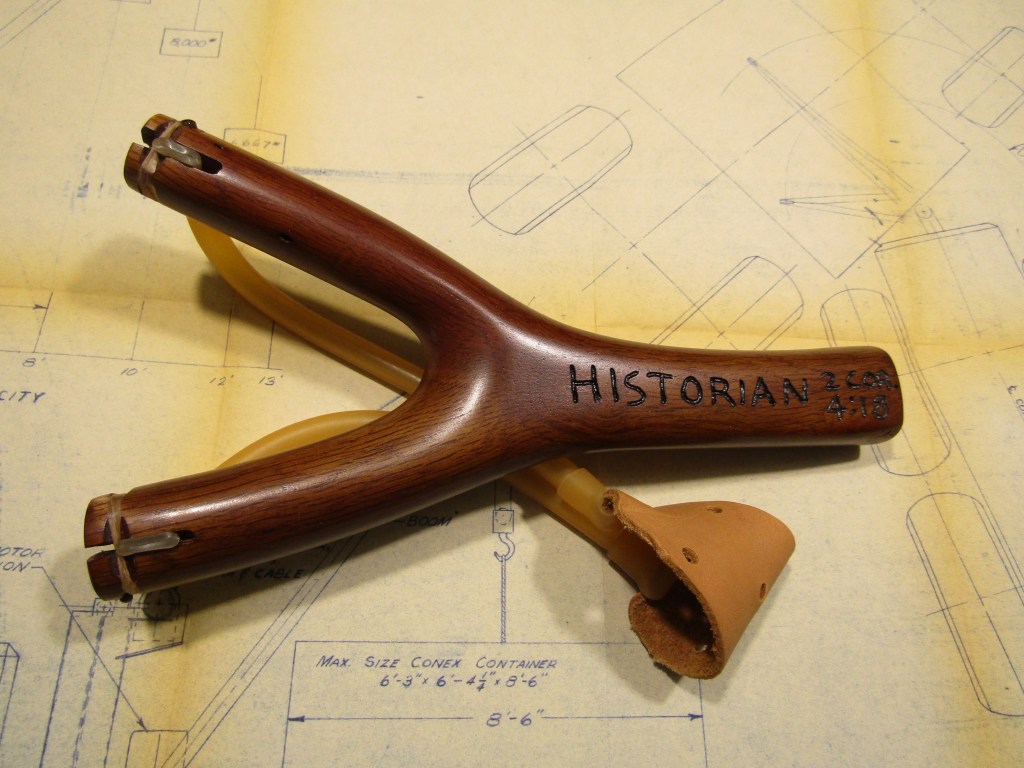
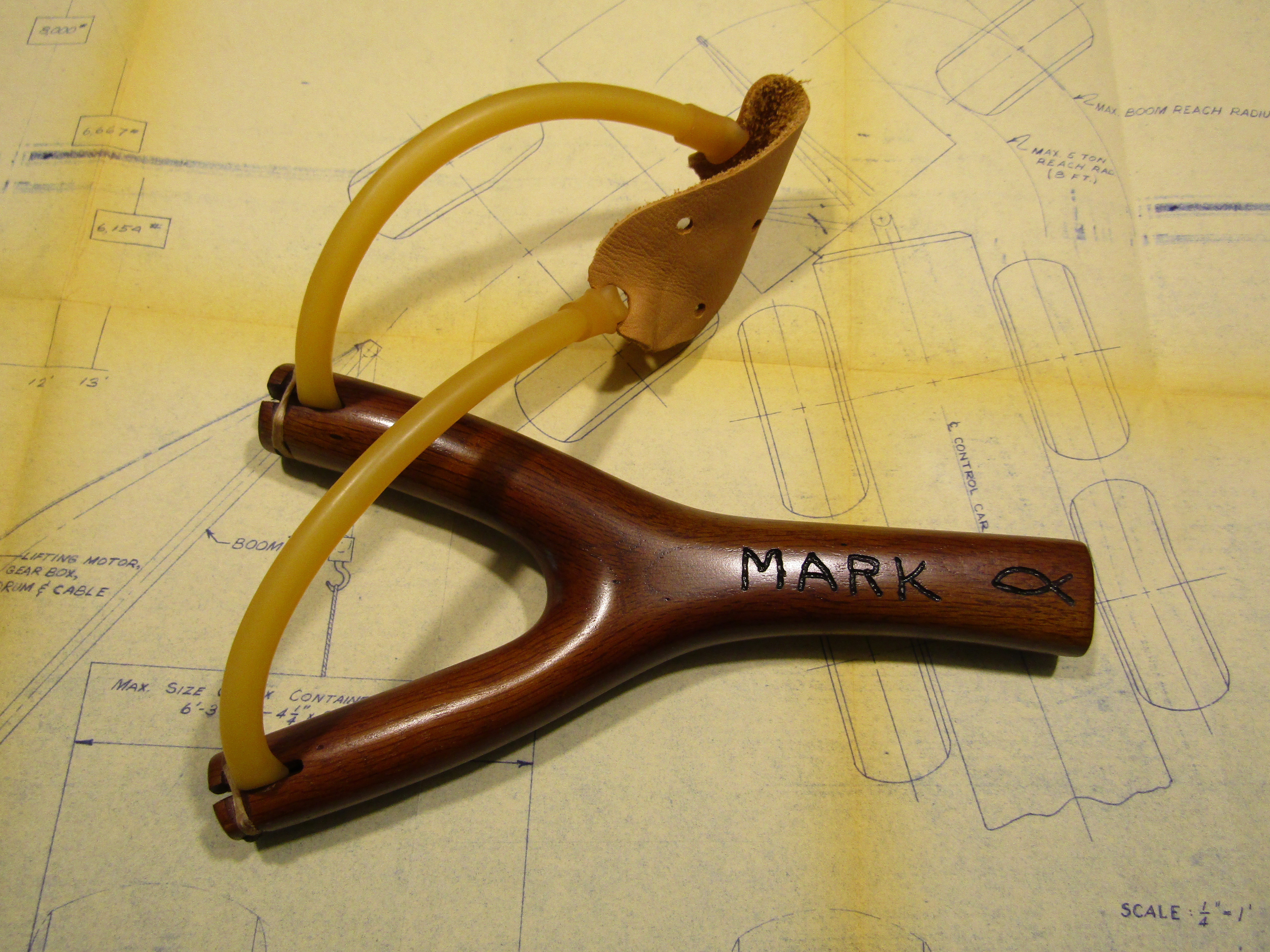
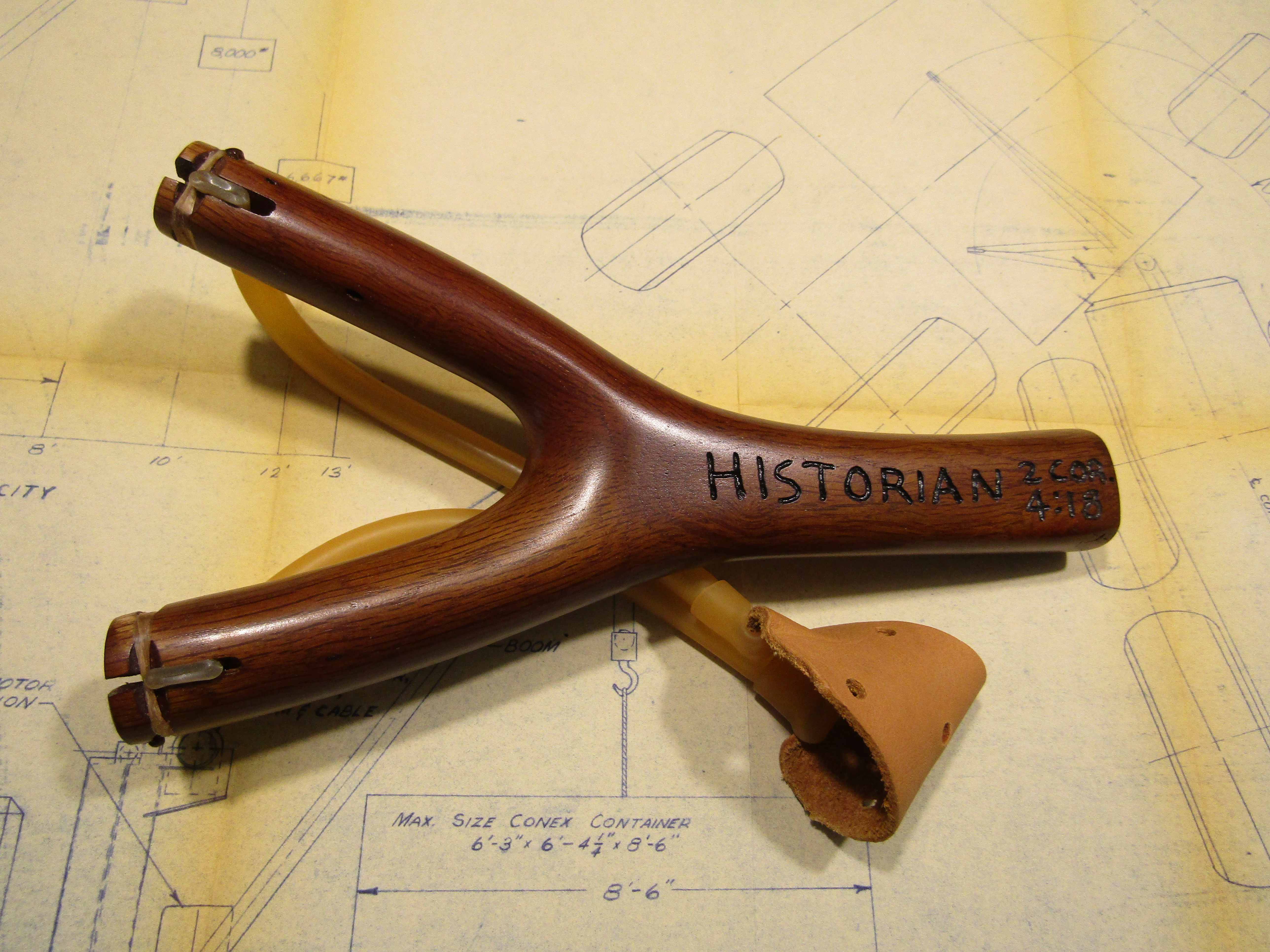
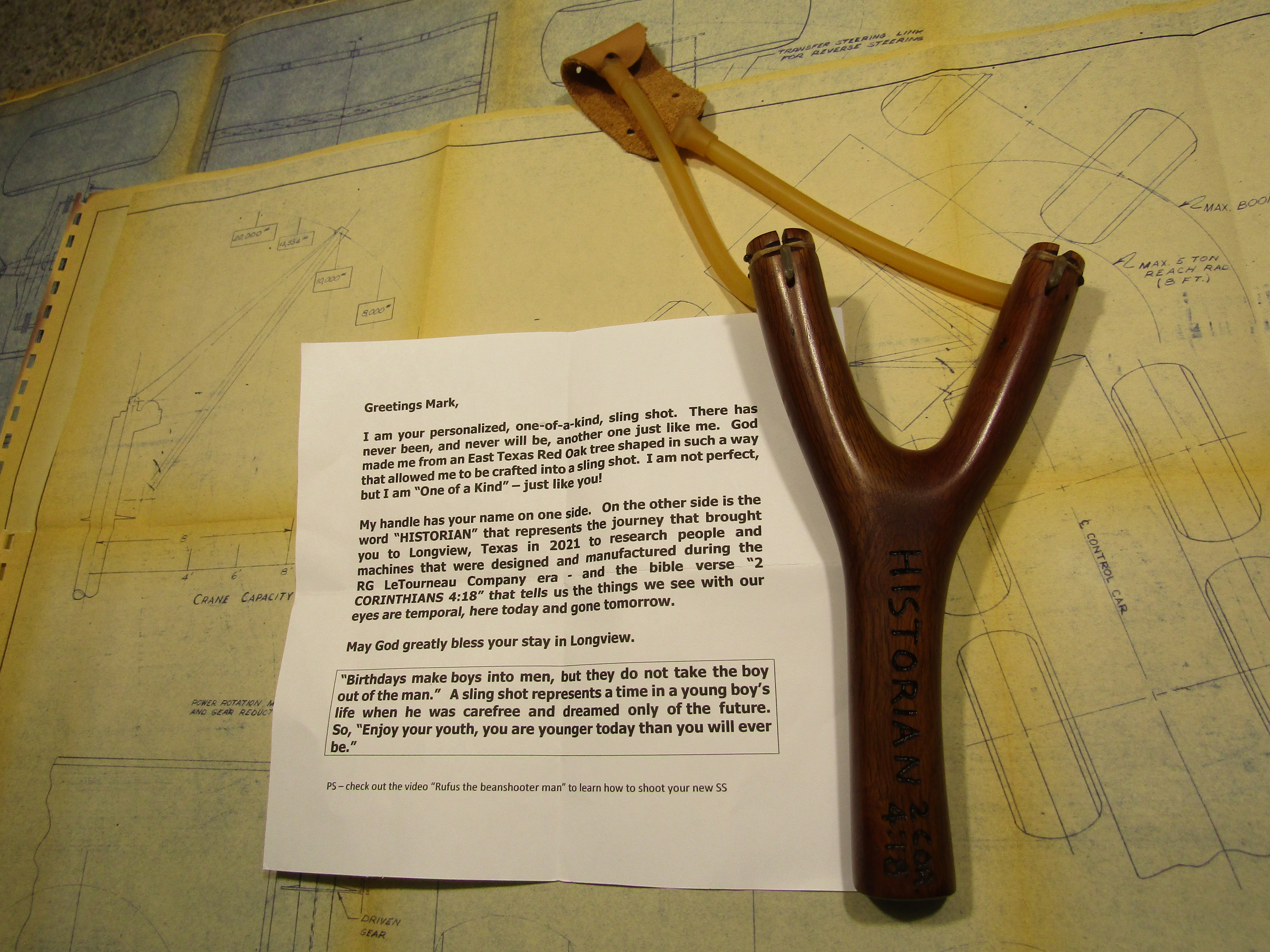
    During my trip to Texas last week, I interviewed a man who drafted the suspension components for the Overland Train MkII. The interview lasted only an hour. A couple of days later, we met up with another man who worked on the R.G. LeTourneau, Inc assembly line. During the 2 hour lunch, he gave me a custom slingshot. He makes these custom for each person that he deems worthy of his creations. This is built out of Red Oak and has custom engravings on each side.

  • Bringing back Trailer Mounted Nuclear Micro-reactors

    Bringing back Trailer Mounted Nuclear Micro-reactors

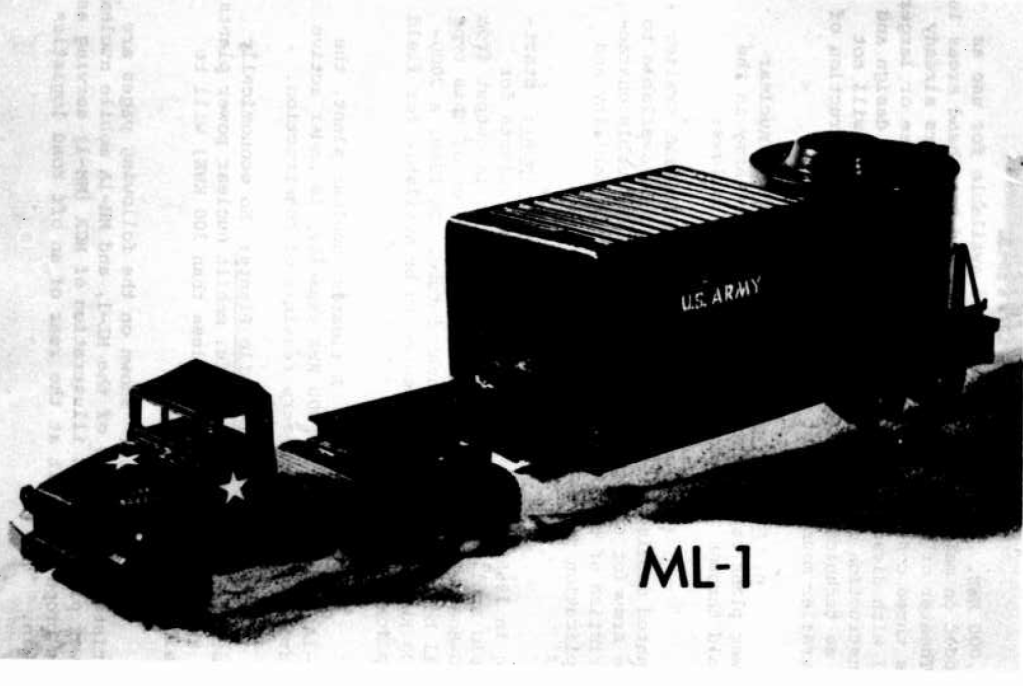
    In the late 1950’s, the United States Army Nuclear Power Program (ANPP) was exploring a number of nuclear reactor types. One of those reactors was the ML-1. The ML-1 is a 30-ton, trailer mounted reactor. It was designed to produce 300-500 KWE and could run at full power for 10,000 hours before refueling.

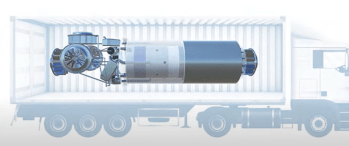
    Nearly 60 years later, the United States Department of Energy’s MARVEL reactor program aims to do the same thing. Project Pele at the United States Department of Defense has fever for micro-reactors too. These new reactors are much safer than those of reactors past. They use a TRISO fuel that is virtually melt-down proof. Let us see if we can make this happen!

    United States Department of Energy’s Project MARVEL – image:https://www.energy.gov/ne/articles/new-marvel-project-aims-supercharge-microreactor-deployment

  • Phase I Overland MkII: Early Drawing

    Phase I Overland MkII: Early Drawing

    The TC-497 Overland Train MkII was the final Overland Train produced. In early 1958, the United States Army requested a quote from R.G. LeTourneau, Inc. to research and develop a large Overland Train. The project was divided into 4 phases. At the end of Phase I, the concept art below showed the Army what LeTourneau had in mind. Other drawings included in the Phase I book were engineering diagrams, power car, and cargo car diagrams, and over 200 pages of typed text describing the project. The Overland Train concept began in 1955, with a variety of conceptual tests. It was not until 1958, that it got real!

    • Gregg County Historical Museum LeTourneau Exhibit

      Gregg County Historical Museum LeTourneau Exhibit

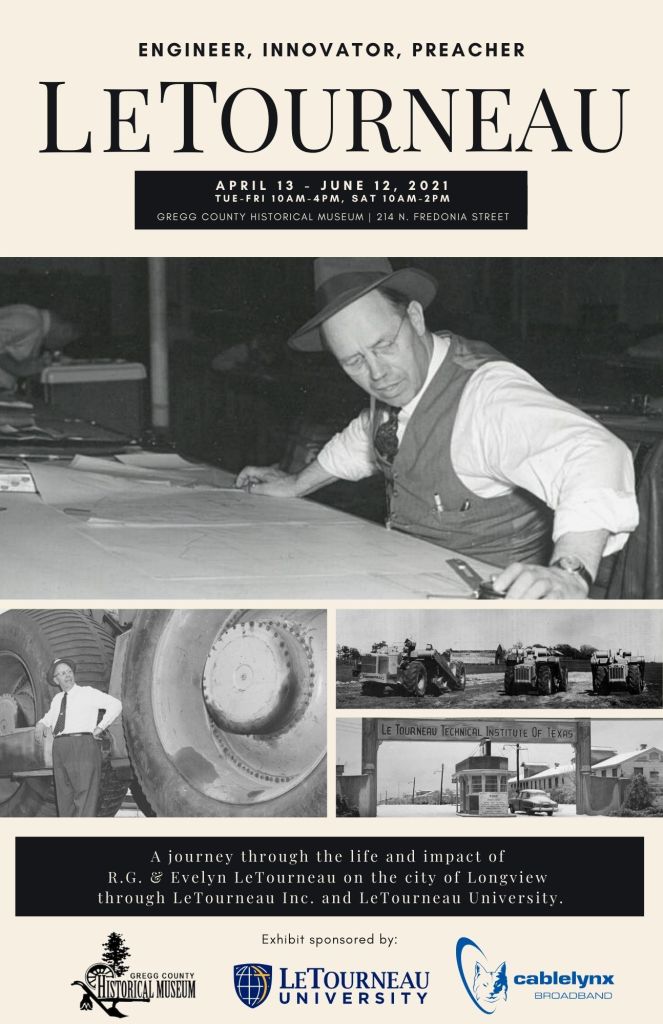
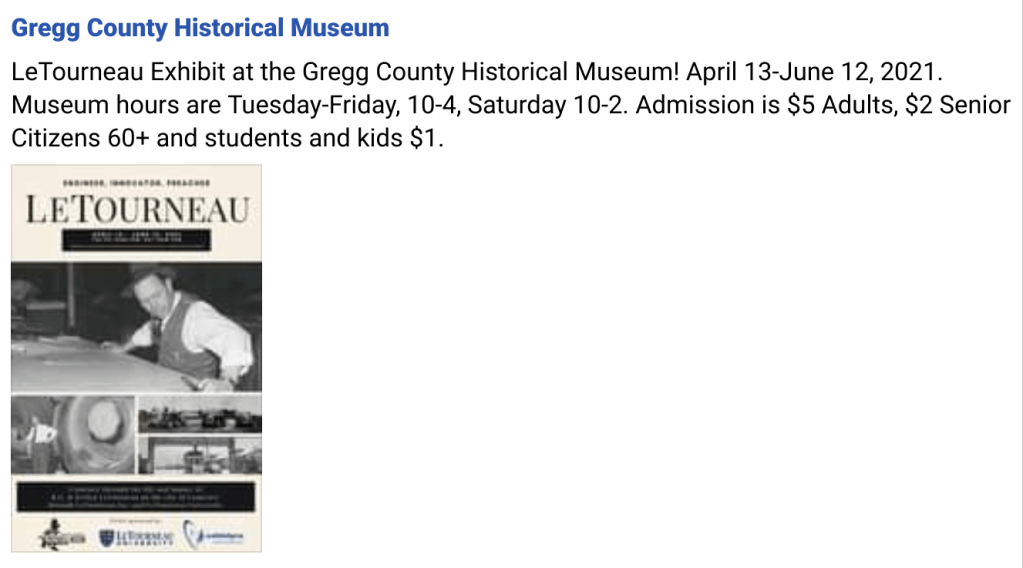
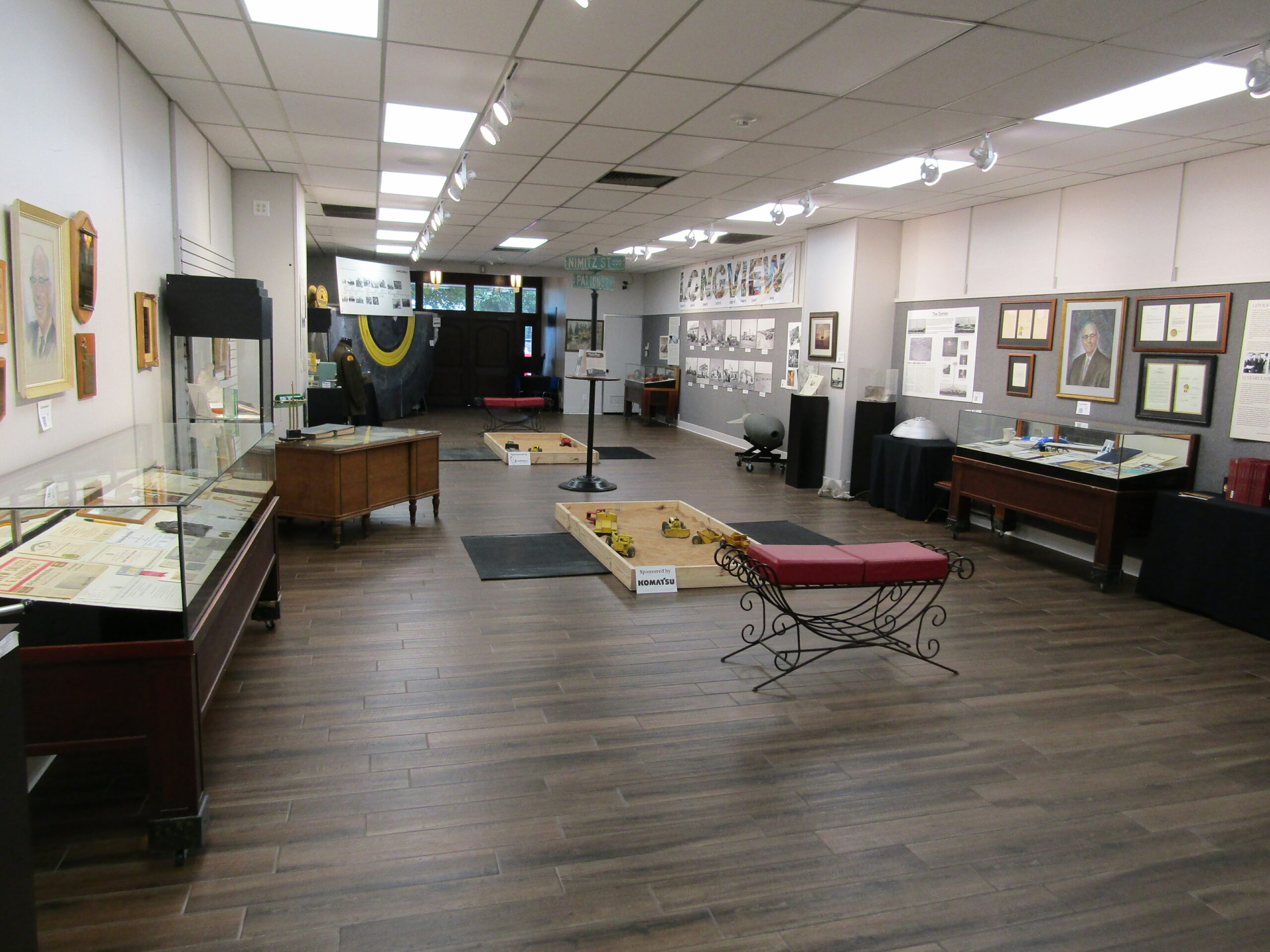
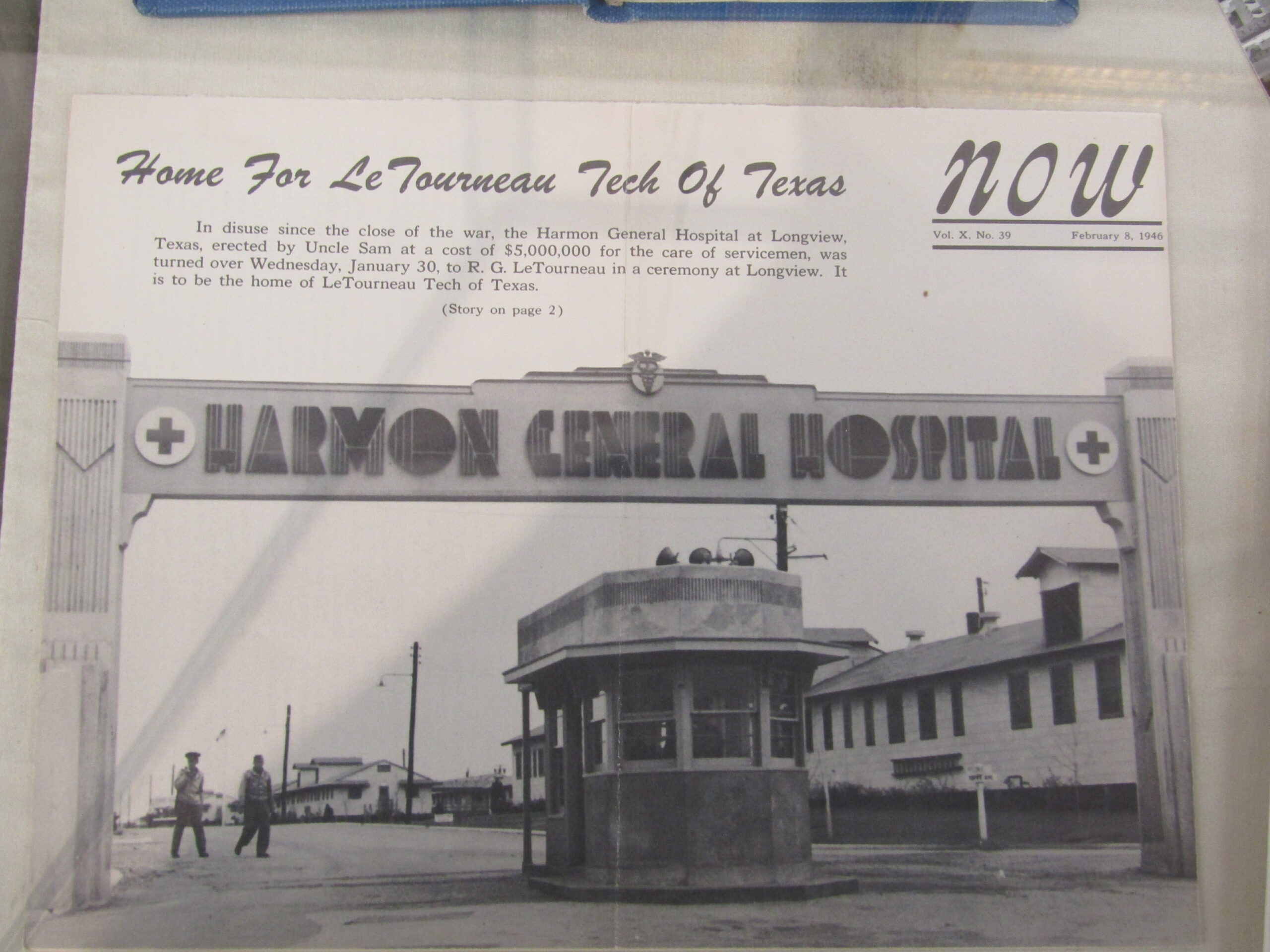
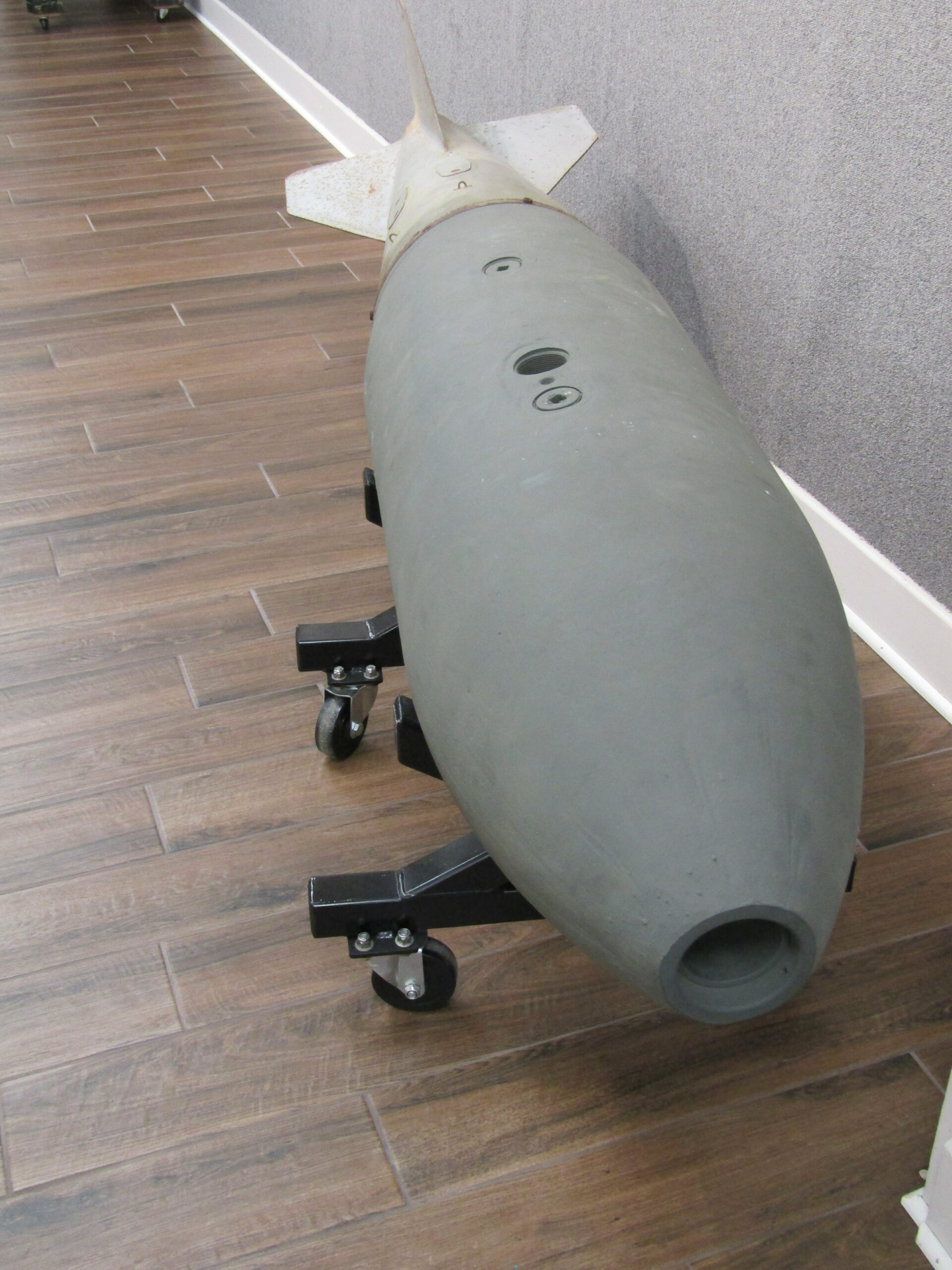
      Beginning April 13 and extending until June 12, 2021, the Gregg County Historical Museum will host an R.G. LeTourneau exhibit. Gregg County is where LeTourneau’s Longview, TX facilities used to reside – now Komatsu. Come and celebrate R.G.’s accomplishments and visit the Museum exhibit. Visit the museum website at http://gregghistorical.org.

      EDIT: Adding a gallery from the trip.

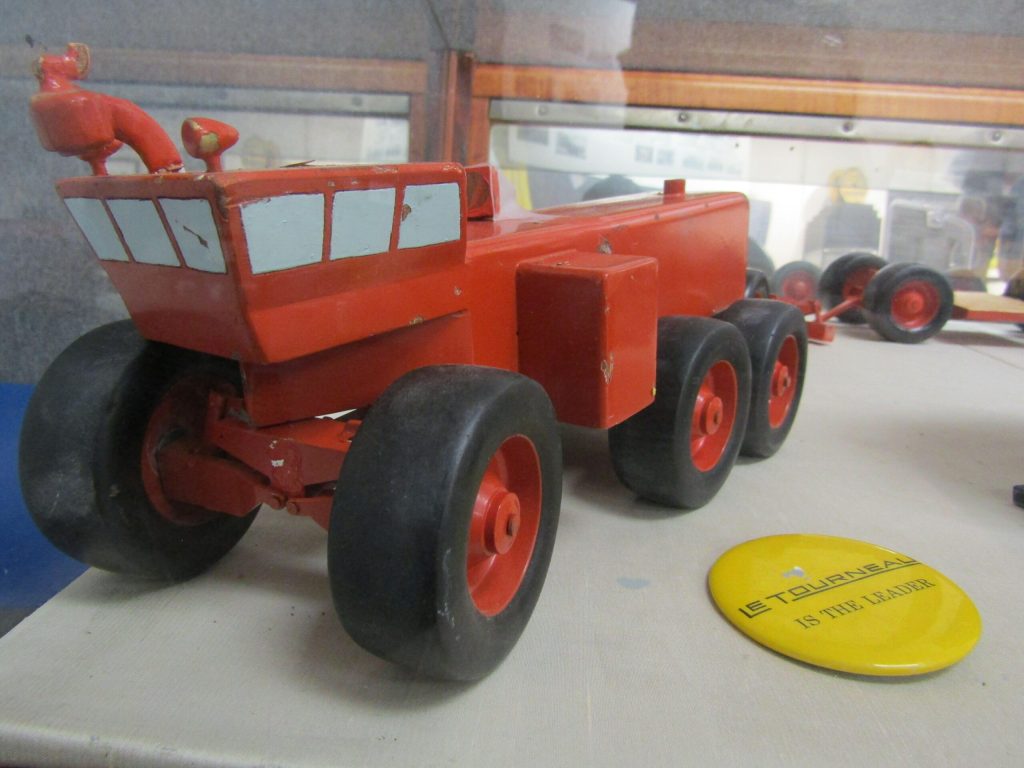
      Overland Mark II model
    • Getting Traction in the Snow with the Overland Trains

      Getting Traction in the Snow with the Overland Trains

      The Yuma Proving Ground publishes their newsletter electronically. This month, the front page topic focused on traction in the snow. I figured that they had already done those tests with the Firestone 48x68x120 tires found on the Overland Train 🙂

      https://platform.twitter.com/widgets.js

      Read the Yuma Proving Ground newsletter at https://www.dvidshub.net/publication/issues/57460

    • The Overland Train MkII (TC-497) with Power Car

      The Overland Train MkII (TC-497) with Power Car

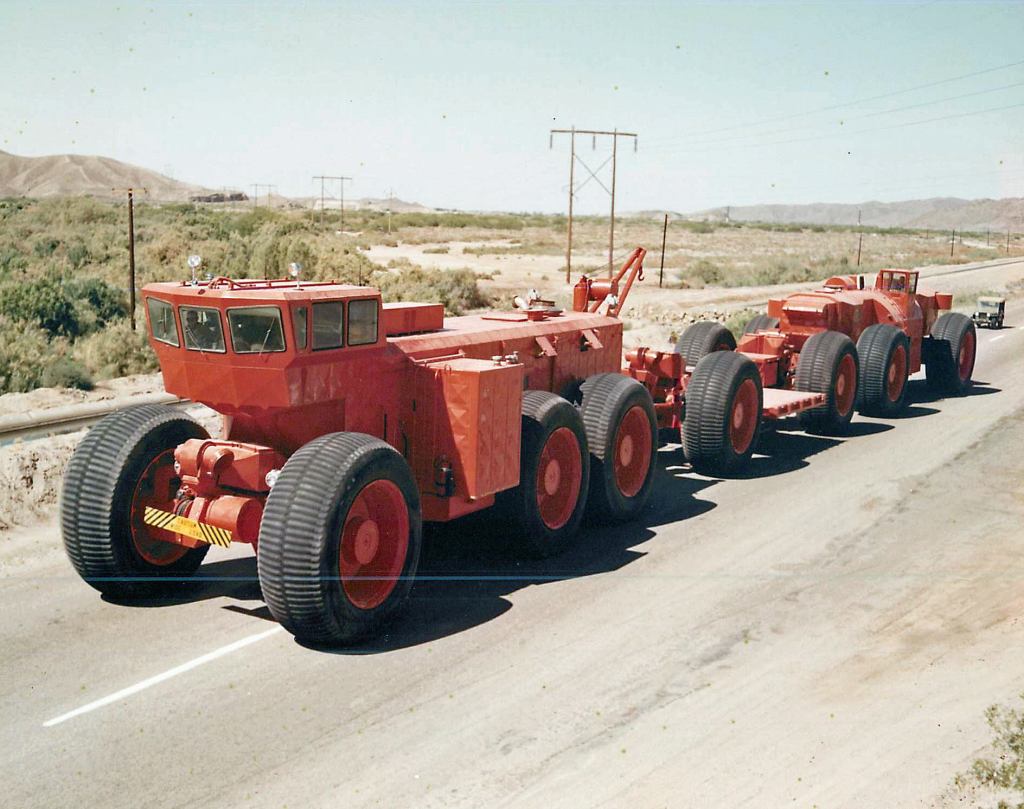
      Below, the Overland Train MkII rolls along with a Cargo Car and Power Car in Yuma, AZ. There is no backstory for this image and the source is unknown. This week was largely spent working on the TC-497 chapter. Phase I of the Army’s contract for R.G. LeTourneau, Inc. to create the Overland Train, was to build out the preliminary design. Using data from the Sno-Train (LCC-1), LeTourneau engineers worked out the gaps and started work on the machine you see below.

      source: unknown.
    • Scanning: Overland MkII Summary Report December 28, 1959

      Scanning: Overland MkII Summary Report December 28, 1959

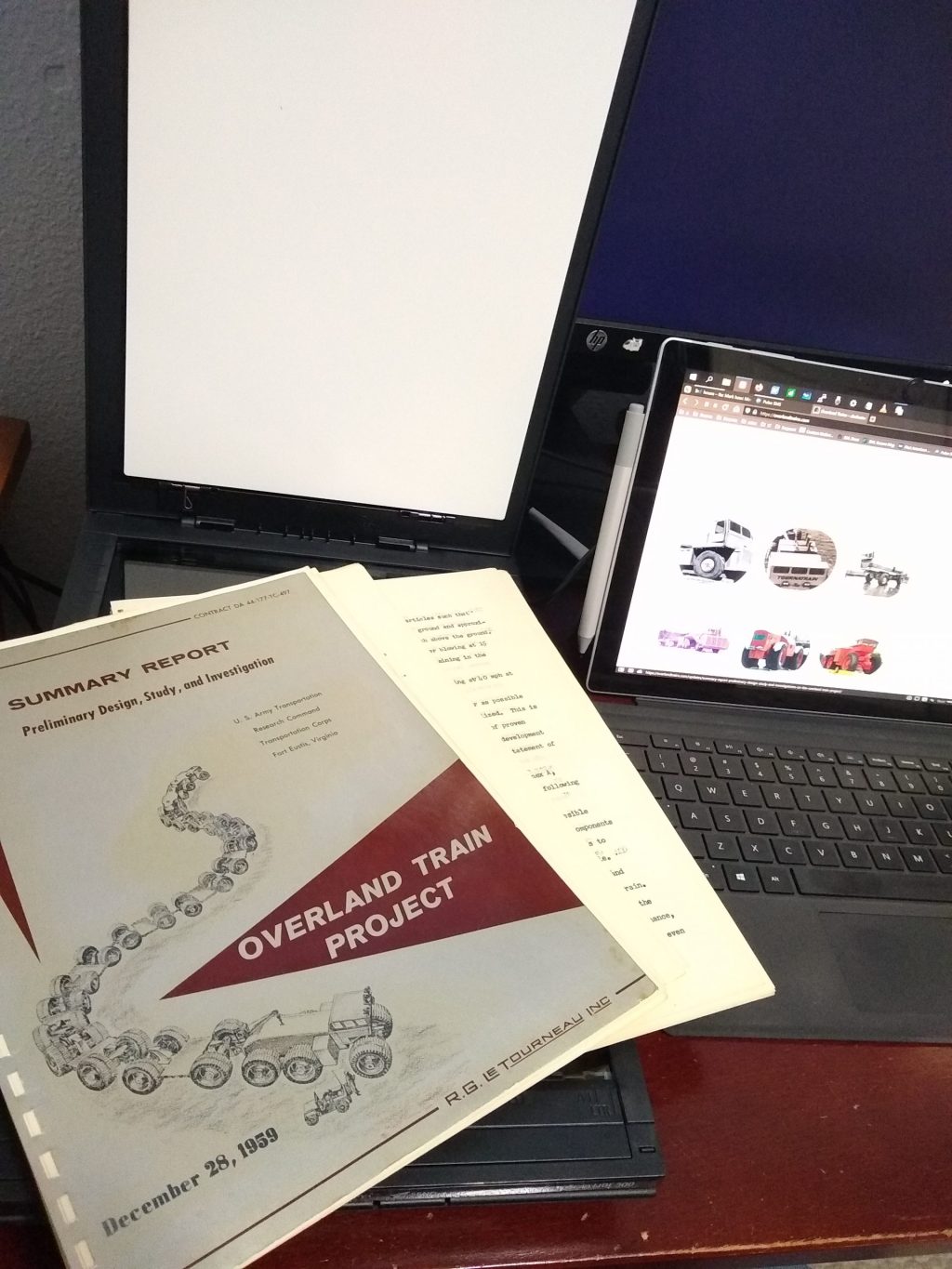
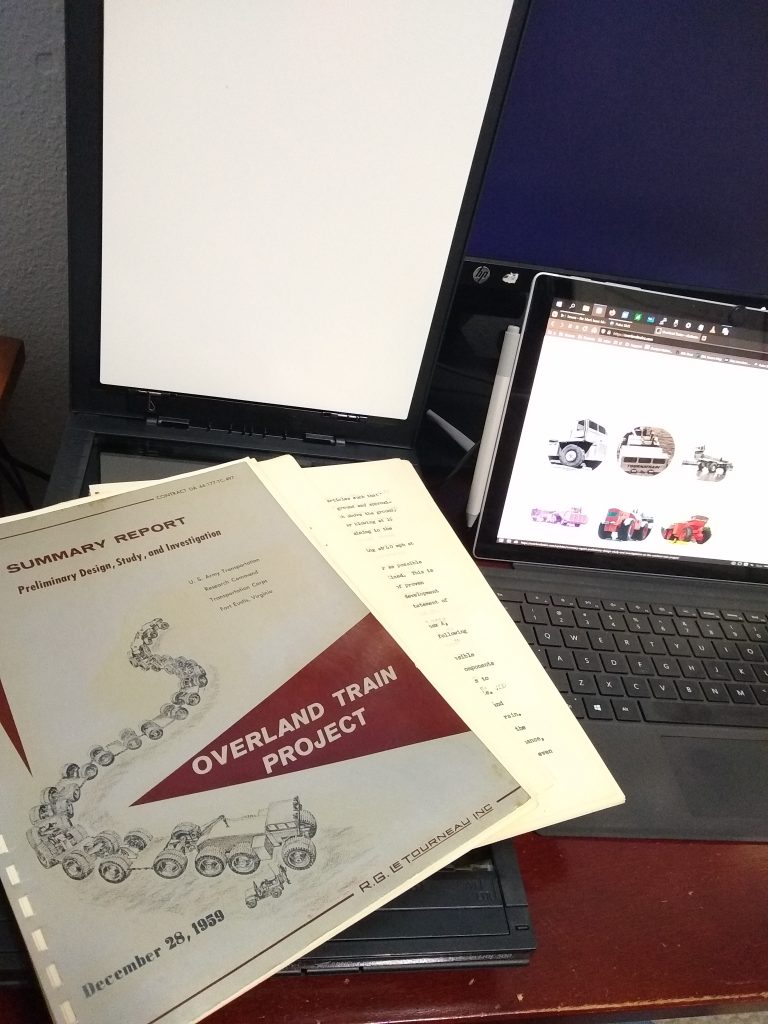
      I worked on scanning the Overland Mk II Preliminary Design, Study, and Investigation report this weekend. The report is unpublished and a one of a kind. Once scanned, it will be given back to the source and held on file at LeTourneau University. Until then, back to scanning!

      Read more about the Summary Report: Preliminary Design, Study, and Investigations on the Overland Train Project