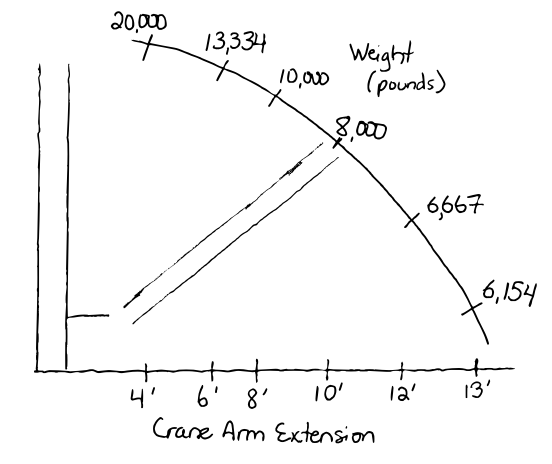
Similar to the LCC-1 Sno-Train, the Overland Mark 2 came with a jib crane. It was designed for moving freight and even changing a tire if needed. The jib crane had a usable capacity of 20 tons. But, the weight capacity changed based on the angle of the crane arm.
Drawing showing Mark 2 crane arm extension angle versus weight capacity
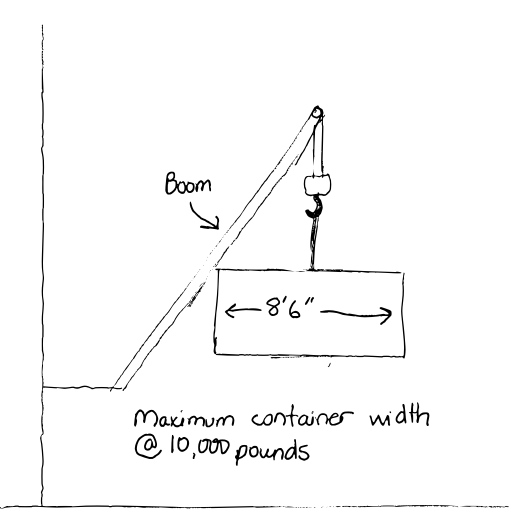
The cargo size limitations also changed depending on the jib crane angle. For example, if your working load was 10,000 pounds, the maximum width crate the Mark 2 could load was 8 feet 6 inches.
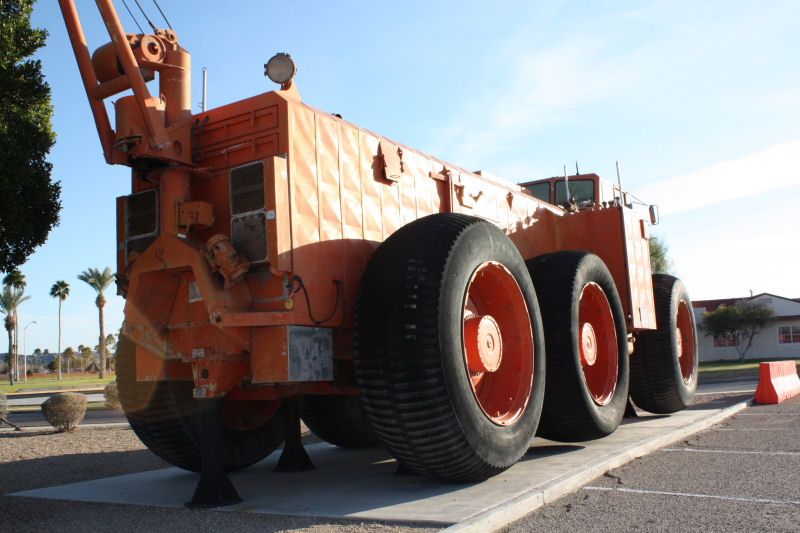
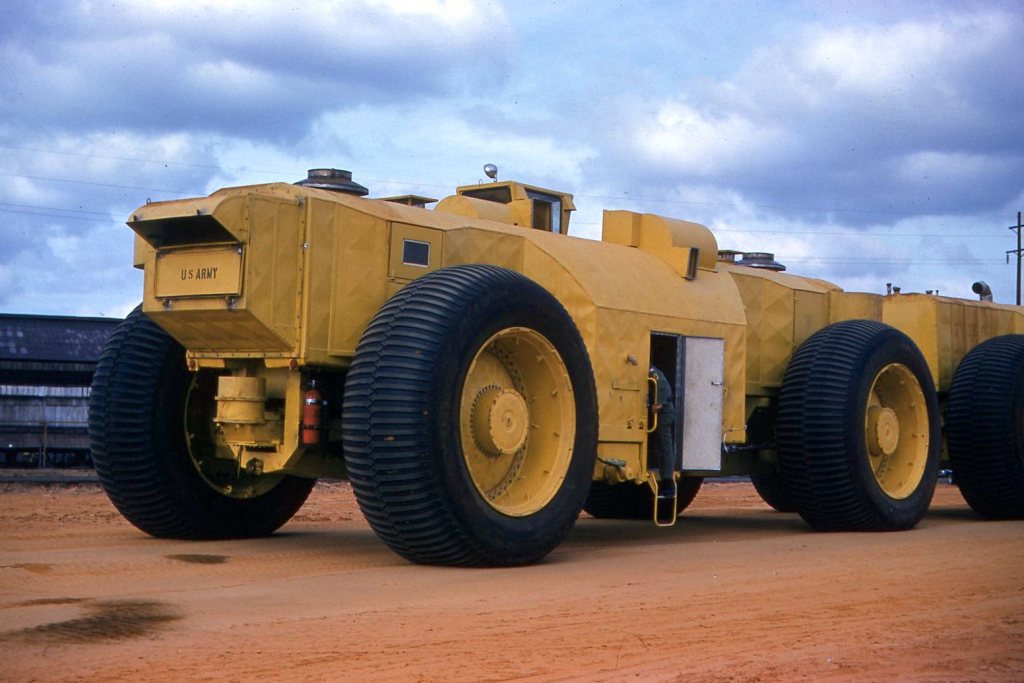
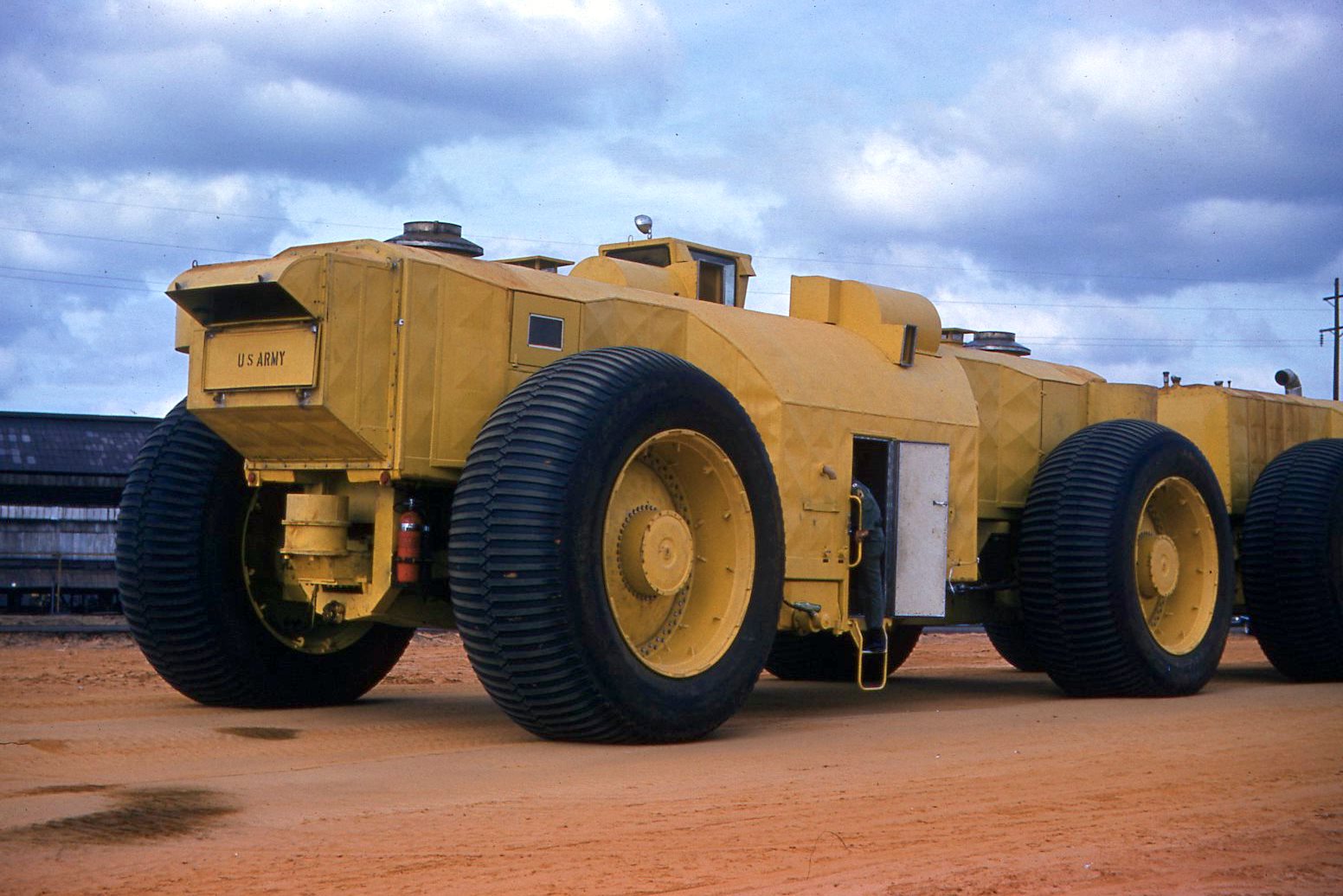
Max container width at 10,000 poundsRear view of Overland Mark 2 at Yuma Heritage Museum, Yuma, AZ. Image: source unknown, for educational purposes only. Contact for attribution.
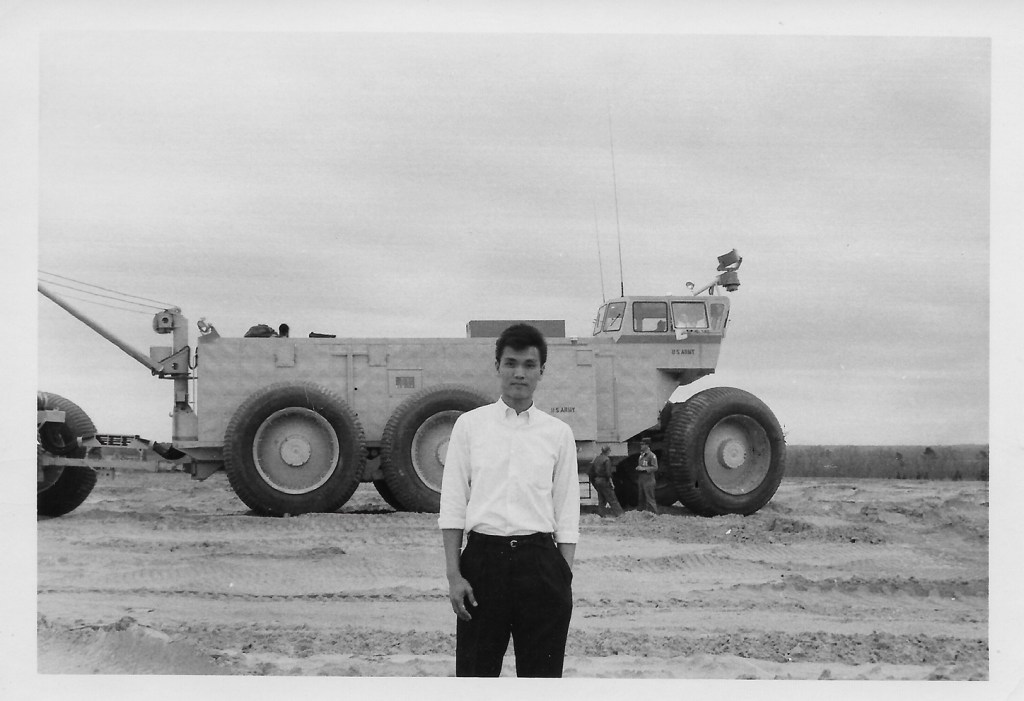
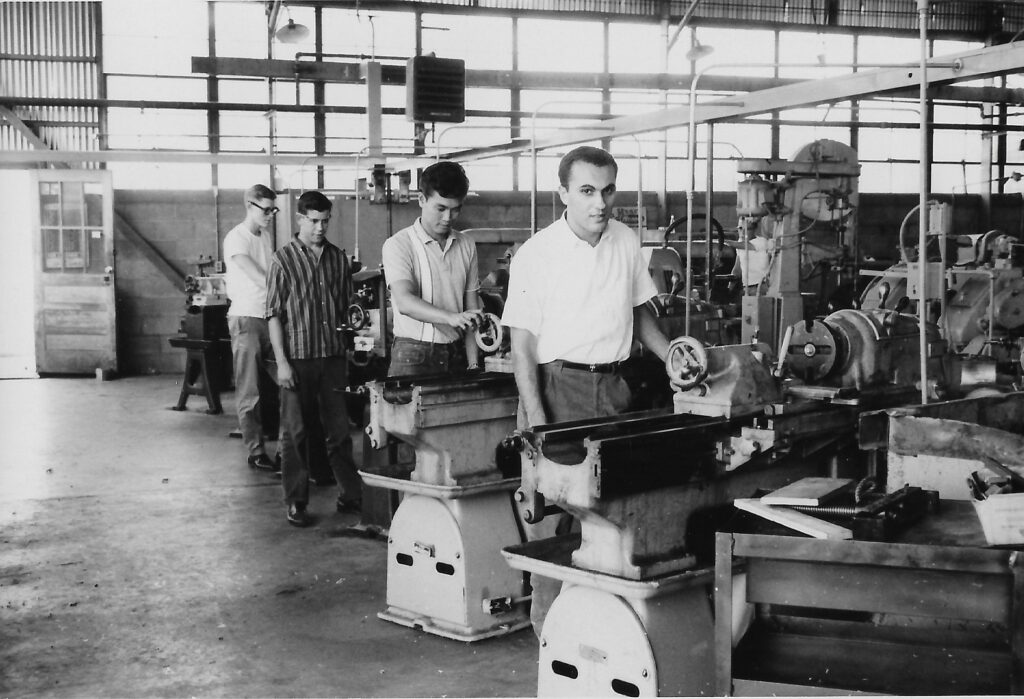
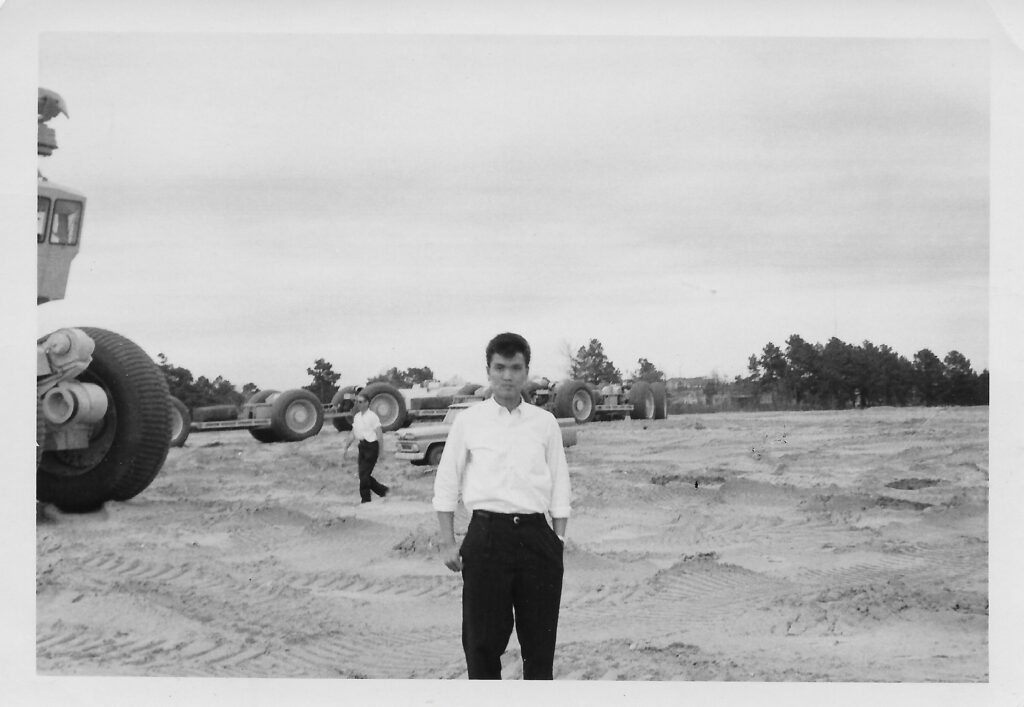
A few days ago, I received an email from a man who said his dad, Vic Vessakosal, had been around the Overland Mark 2. His email goes on to say that his dad went to high school then worked at R.G. LeTourneau, Inc. He also knew H.D. “Red” Reynolds, or “Mr. Reynolds” as his dad imparted upon him. His family has a number of his wildlife nature paintings and had no clue that Red painted for R.G. LeTourneau, Inc. His son Timmy said, “I knew him as a kid in the 1970s but, he was just Mr Reynolds to me.”
Timmy’s dad came from Thailand and attended LeTourneau University, while working at R.G. LeTourneau, Inc. I’ll talk more about Vic Vessakosal and his ties to a Thailand Colonel in my book.
Vic standing in front of the Overland Mark 2. Image courtesy Timmy VessakosalVic Vessakosal, second from front, at the Longview, TX R.G. LeTourneau, Inc. factory. Image courtesy Timmy VessakosalVic Vessakosal at the Longview, TX factory. Image courtesy Timmy Vessakosal.
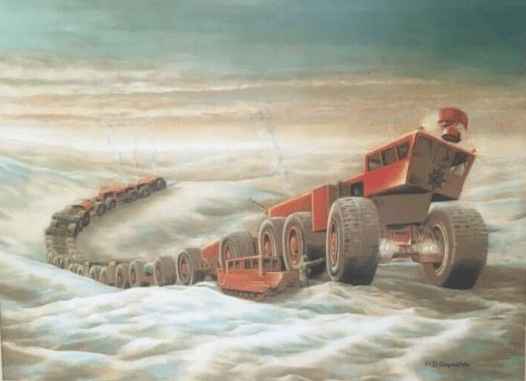
The image below was painted by Marathon LeTourneau, Co.’s Art Supervisor and company artist H.D. “Red” Reynolds. He started his professional career as a painter in 1951 for LeTourneau College. Reynold’s private paintings mainly focus on nature and wildlife. He was active in local Longview, Texas art events and in his encouragement of youth participation in the art field.
Before companies had marketing departments filled with Mac laptops, companies used to employ artists. The R.G. LeTourneau, Inc. company art is amazing to see – the shading, precise line work, and attention to detail is unimaginable by today’s standards. The painting shows the Overland Train Mark 2 traveling over Arctic terrain accompanied by a weasel. As you can slightly make out, exhaust is coming from the last two cars and the engine and generator set in the control car. The painting now resides in a private office in Longview, TX.
Gregg County Historical Museum hosted a R.G. LeTourneau exhibit from April 13, 2021 through June 12, 2021. During which time, the painting, or a print of it, was on exhibit.
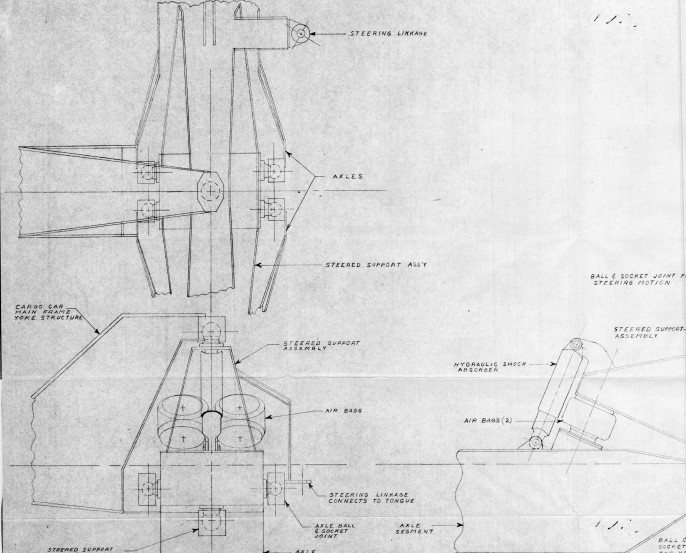
There was a request of Facebook for drawings of the suspension on the Overland Mark II, or as the military contract number was cites, the TC-497. These drawings are from the Phase I Overland Train Project report dated December 28, 1959.
As part of researching “The Overland Trains Project,” I have been able to take use some of my technical background to good use. These slides show one of the Overland Trains trailers. On Thursday, I received an envelope of old film negatives. These needed to be digitized and analyzed for content. How in the heck do I do that?
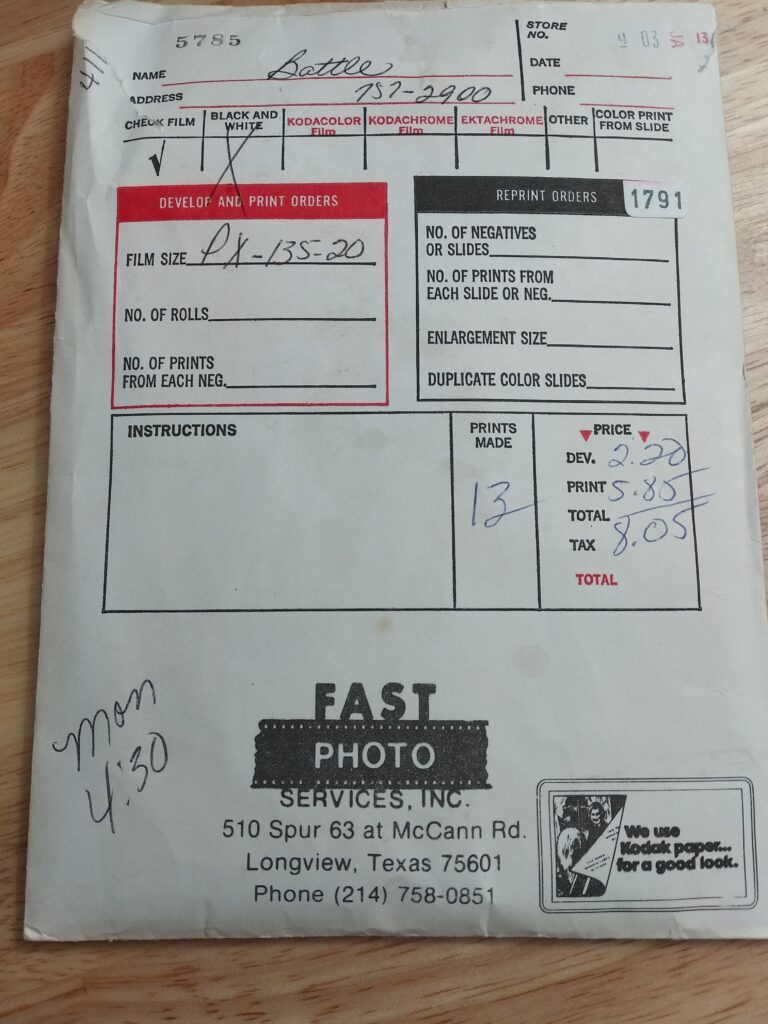
Film negatives pouch
When I was a kid, I used to buy 35mm film, take random pictures, and take them to PayLess for developing. I would get back pictures and these negatives. I did not realized until now, how important these negatives are as a part of history.
I called up a couple of pharmacy stores that had photo print capabilities. Anytime a customer wants negatives digitized, they are sent to Fuji, with a turnaround time of 2-4 weeks. Realistically, this would end up being 6-8 weeks. I searched Neeva and found out that digitizing negatives is quite simple. In short, use a high quality, uniform light source, take a completely still digital camera image, then edit the colors in a photo editor.
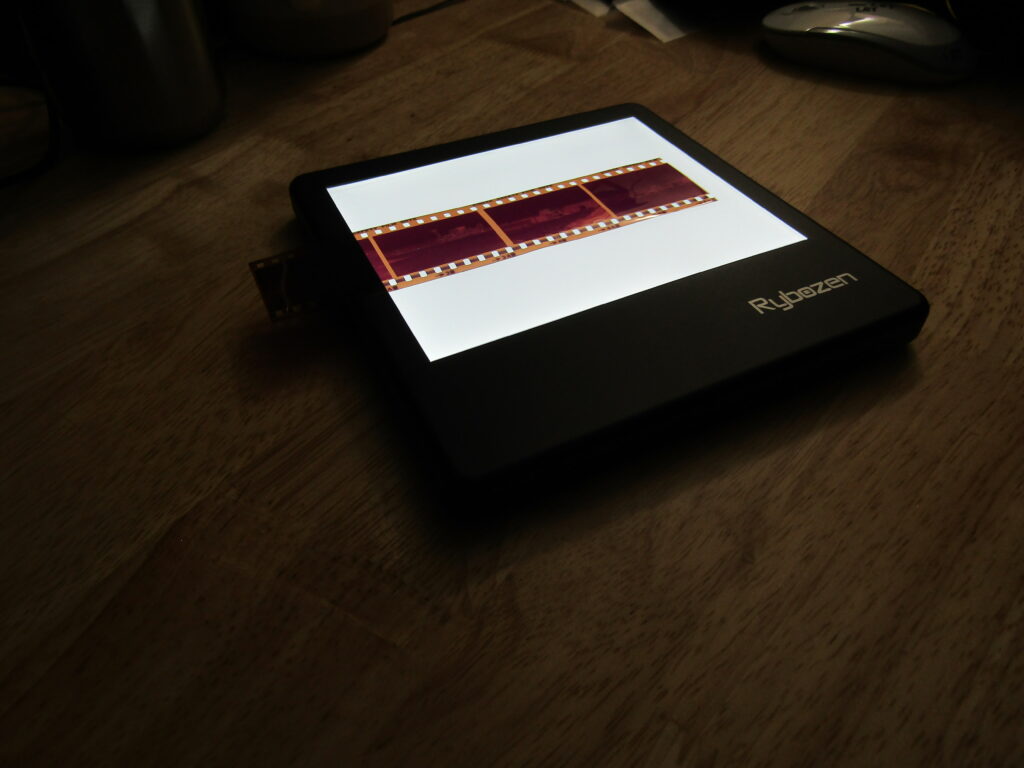
Rybozen 5″x4″ light table
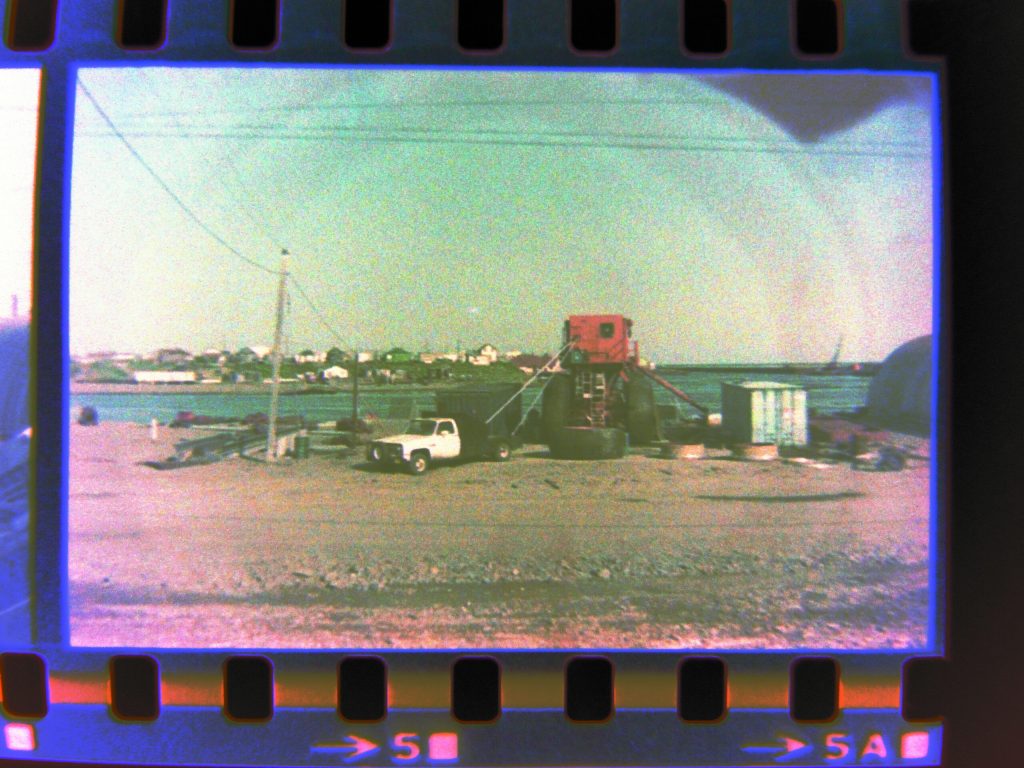
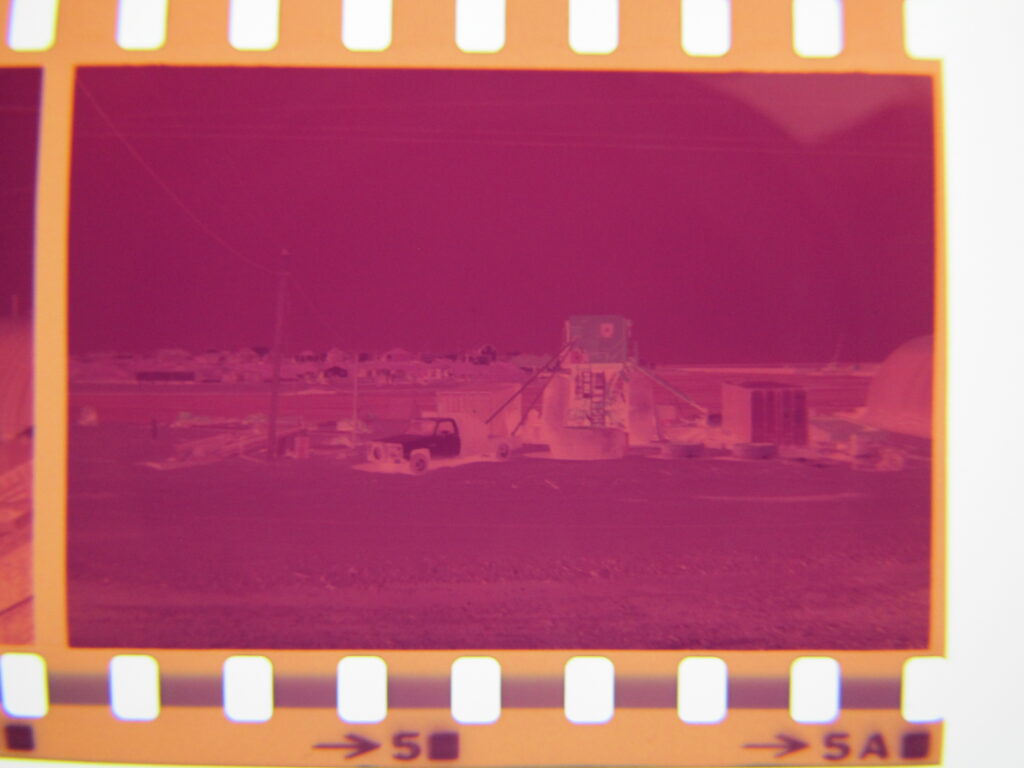
I used a high quality digital camera to capture an image of the negative. The raw image looks like this.
Raw negative image under a light table
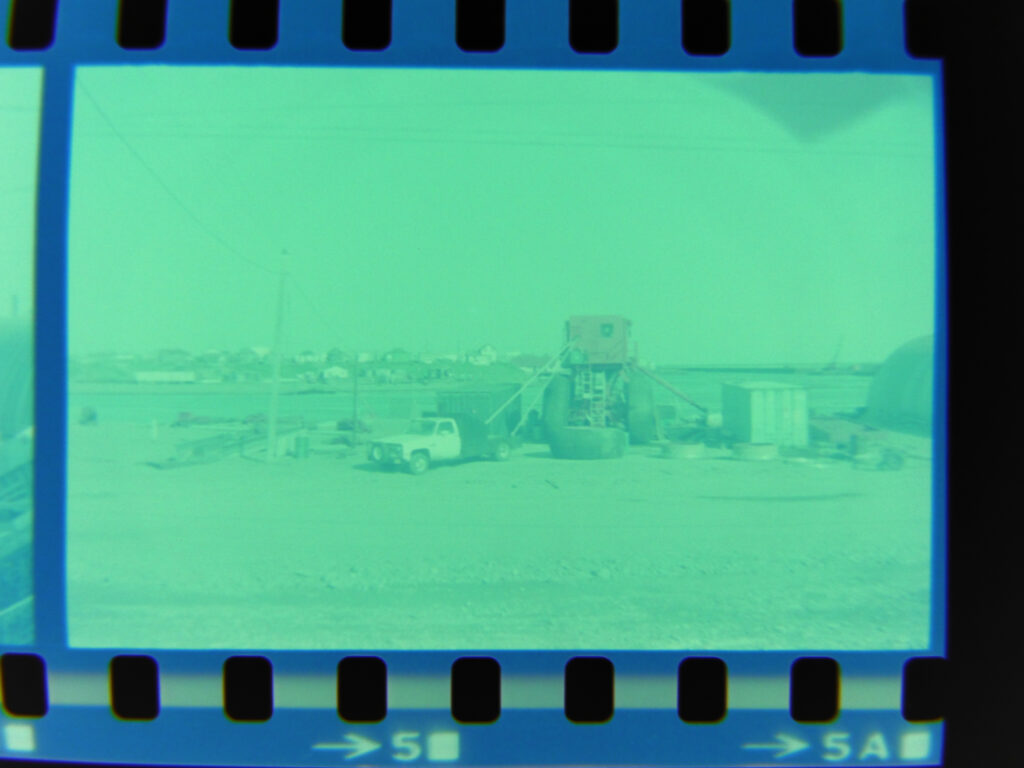
Next, I used Gimp photo editor to Invert the colors, which makes the image have a blue hue.
Negative image after Invert colors was applied.
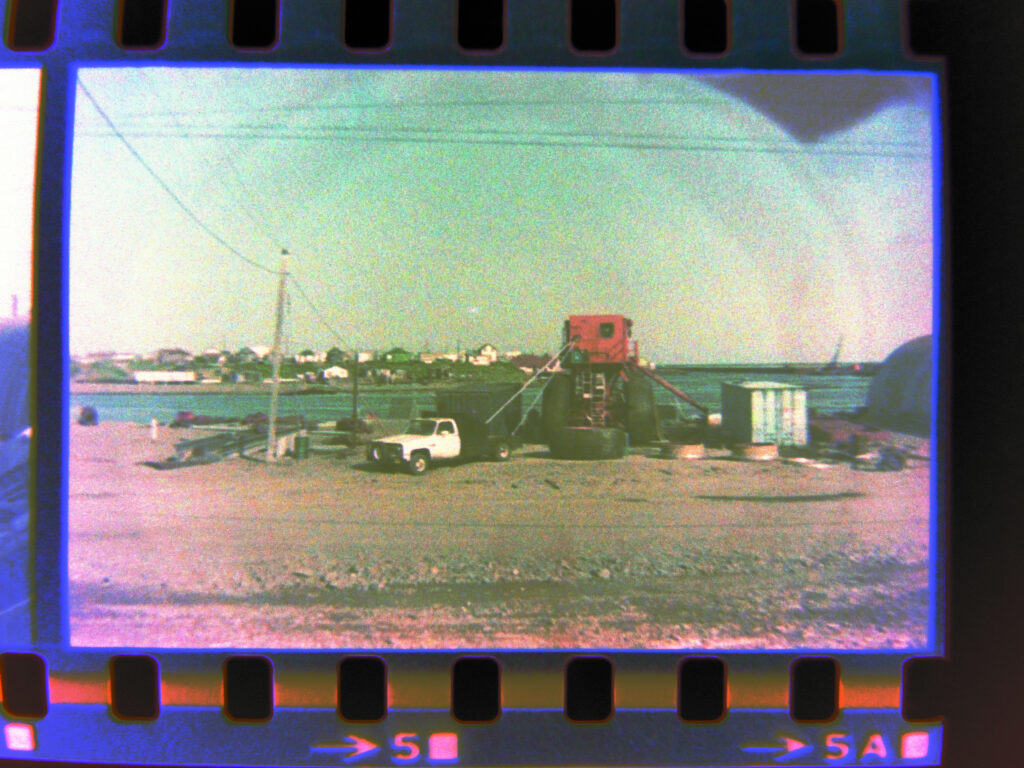
Lastly, Auto Equalize the image, and you are left with a digitized negative to image.
Final processed image from film negatives
Once the image is processed, crop and apply additional filters to meet your needs.
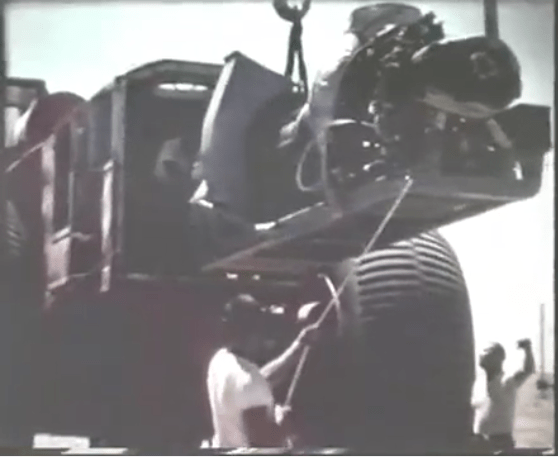
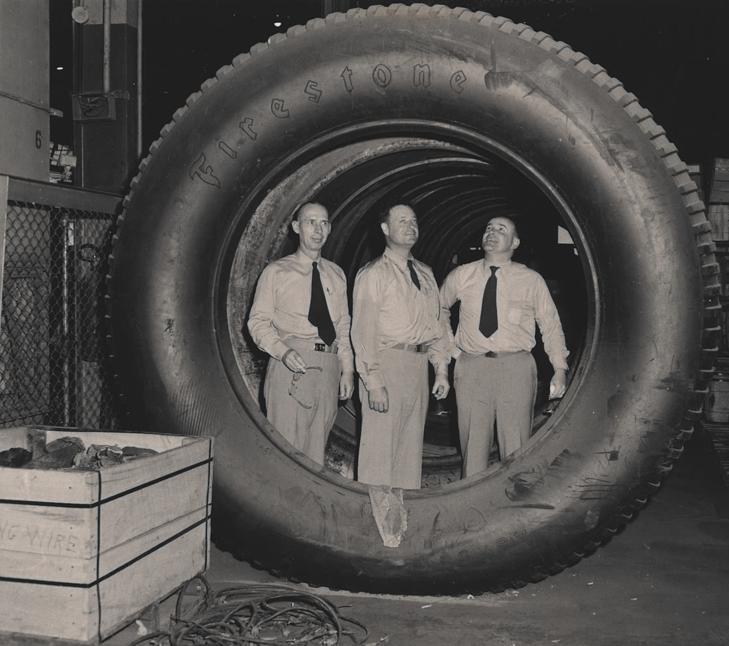
By now, you must be wondering what is the machine in this image. One of the more recognizable feature is the Firestone 120x48x68 tires. The tires above are 10 feet tall, with the machine standing well above the tire height. The amazing thing is that the machine is not even finished. Additional slides in this series show closeups of the rims and trailer. The trailer platform for this machine is from the Overland Mark II from Yuma Proving Ground, AZ. There is an additional top deck that is placed on top – not shown. I will discuss this machine, provide additional images, and talk about the story of this machine in my book.
The photo negative above was captured by Lloyd Molby. Thanks to a few amazing people, we are able to learn and relive Lloyd’s experiences. This is just the surface.
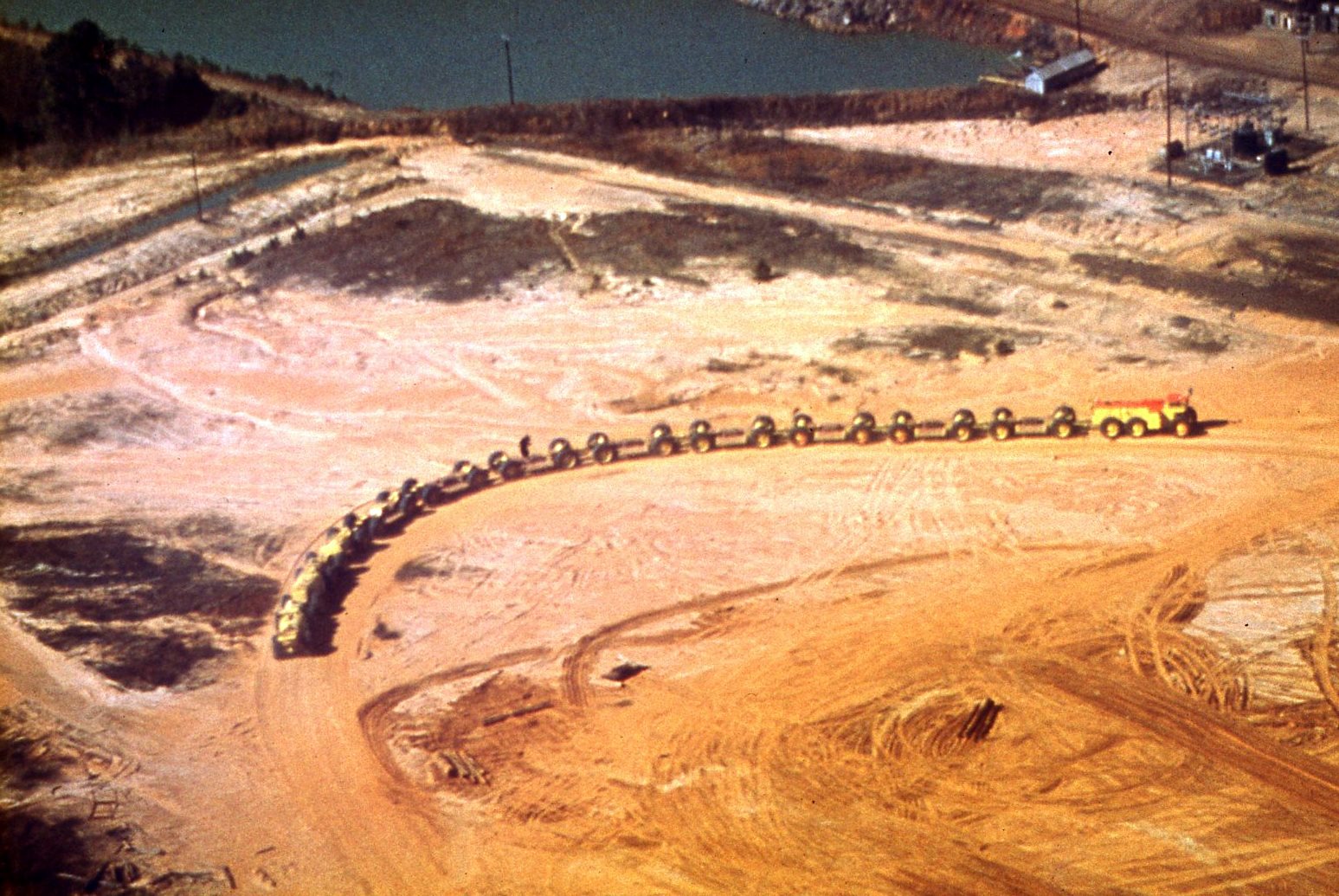
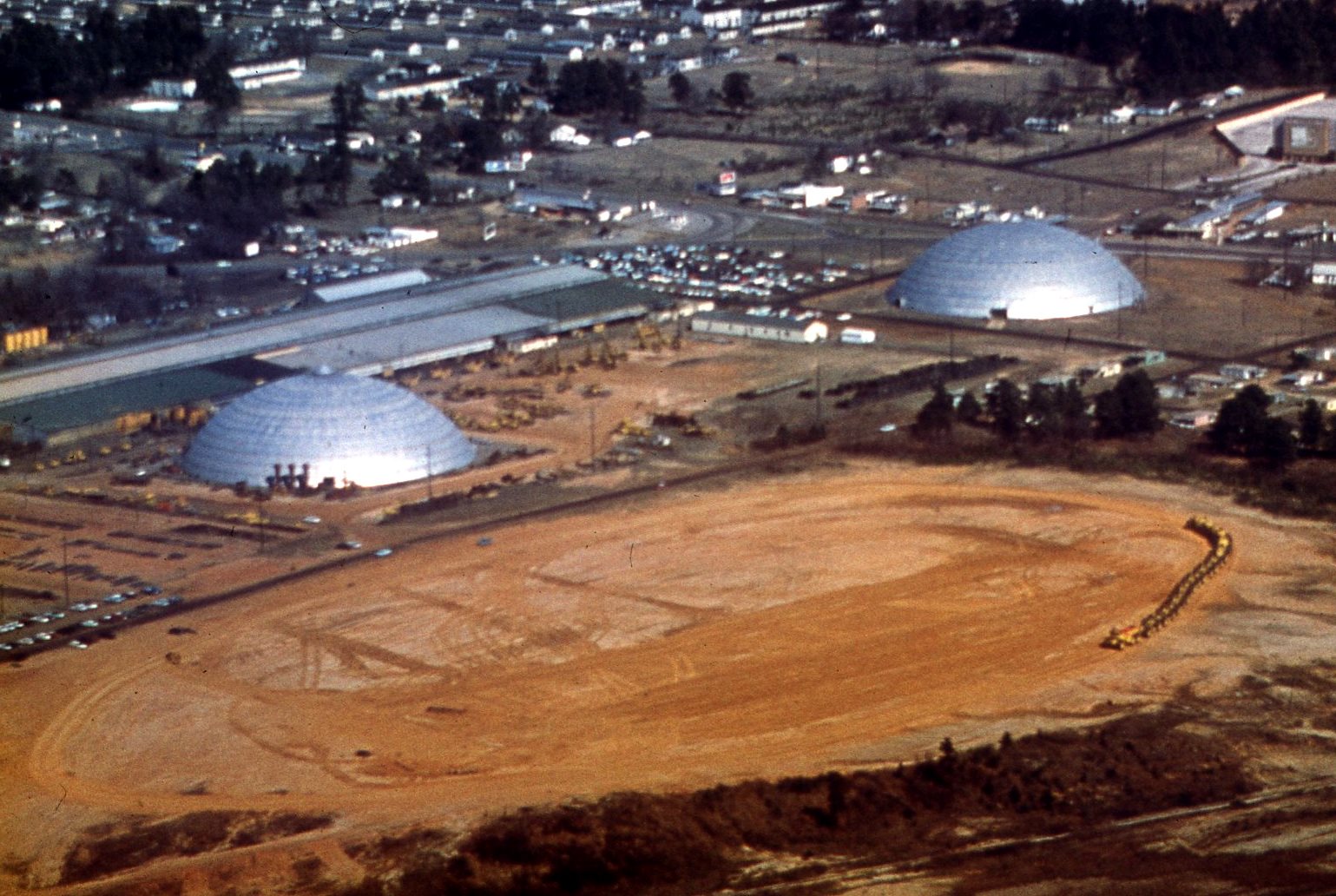
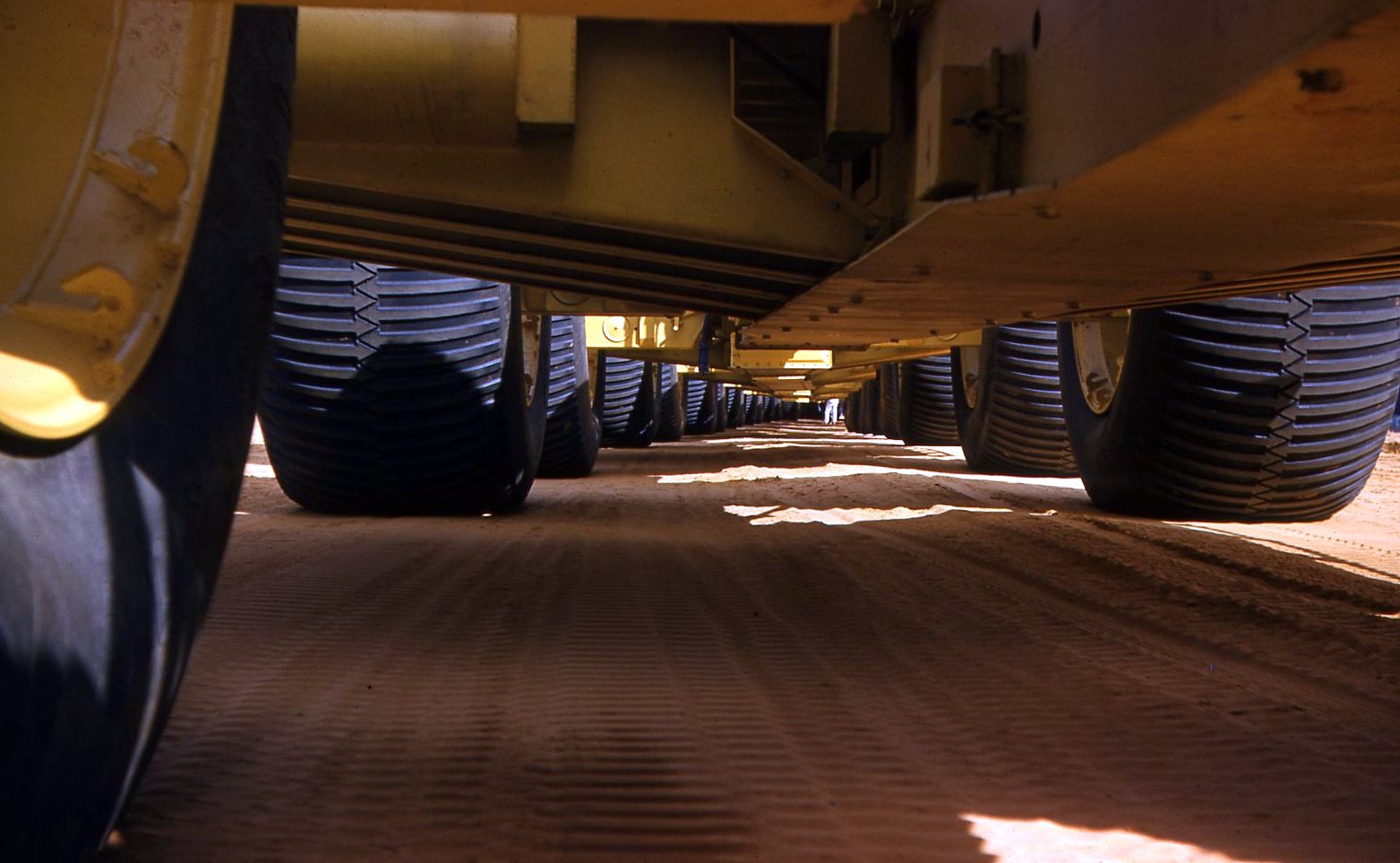
The Overland Train Mark II concept began in 1955. While the Mark II was the last of the Overland Trains to be built, it had the longest history. R.G. LeTourneau, Inc. would not see a purchase order for the Mark II until 1958. The images below show the Mark II on the test track at R.G. LeTourneau, Inc. in Longview, TX in 1961. Once the Army accepted the Mark II in Texas, it was sent by rail to Yuma Proving Ground in Arizona in April, 1962. This is where the real machine testing would occur. Today, the Mark II Control Car, the lead car, sits at the Yuma Proving Ground Heritage Center – https://history.army.mil/museums/IMCOM/yumaProvingGround/index.html.
Overland Mark II Undergoes Testing – image: Lloyd and Larry Smith
Overland Mark II at R.G. LeTourneau, Inc.; image: Lloyd and Larry Smith
Under the Overland Mark II; image: Lloyd and Larry Smith
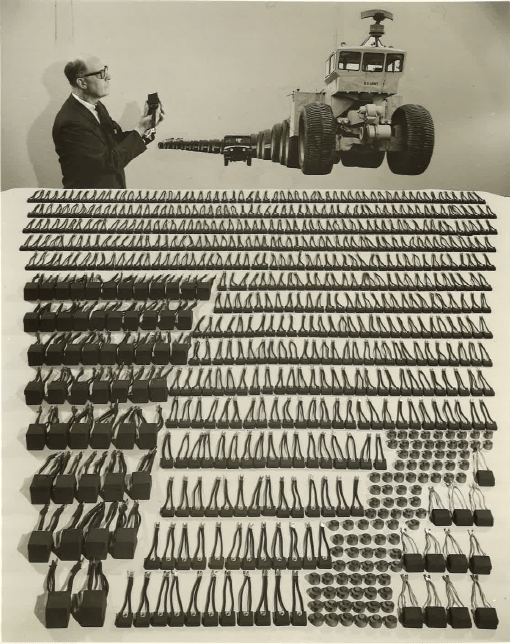
LeTourneau Overland Trains used a variety of American made parts and materials. Companies used their contributions to help America fight and win wars. Advertisements like the one here helped to bolster their product lines. After all, if the United States military used their products, why wouldn’t you? The advertisement below is from a news release of the National Carbon Corporation, a division of Union Carbide Corporation.
The last Overland Train, the Overland Mark II (Mk2), consisted of 13 cars – the leading Control Car, 10 Cargo Cars, and two trailing Power Cars. Each of the 54 wheels had its own wheel motor that used National Carbon Company brushes. A total of 668 brushes were needed to complete the Mk2 – 504 brushes were used in the traction motors within the wheels, 56 large brushes for the DC generators, 12 for the exciters, and 96 round items for AC generator contacts.
image: news release of the National Carbon Corporation, a division of Union Carbide Corporation, date unknown.
If the military is involved, you can be certain that they will use an abbreviation or acronym for their organized name, project, or equipment. Here are a few of the more commonly used abbreviations and acronyms used during the scope of the Overland Trains.

 Overland Trains