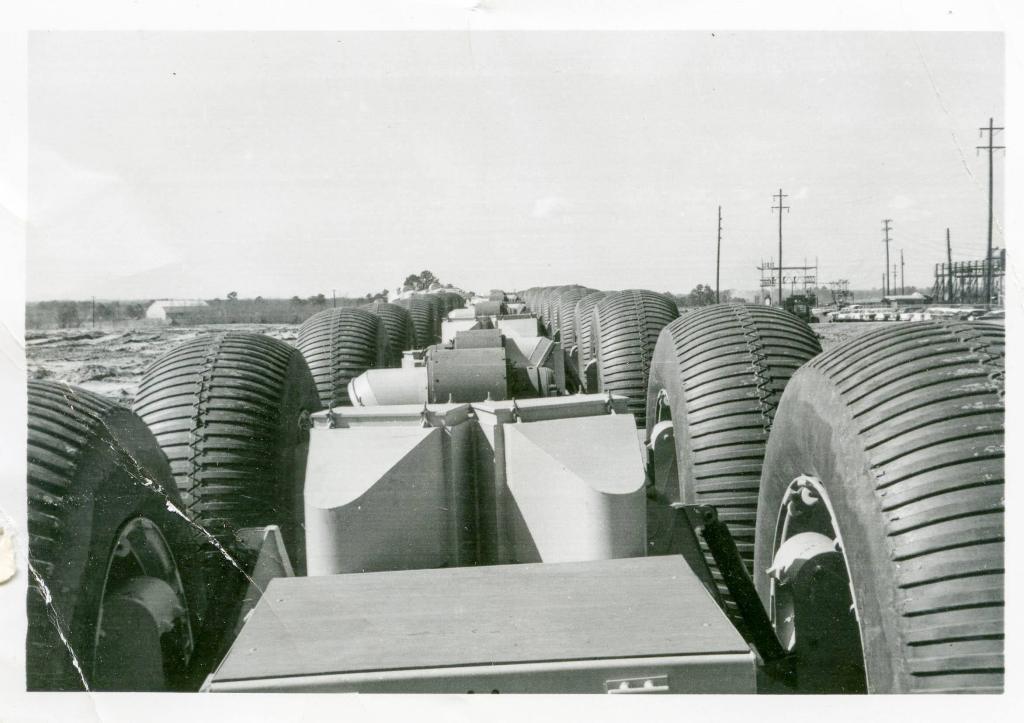
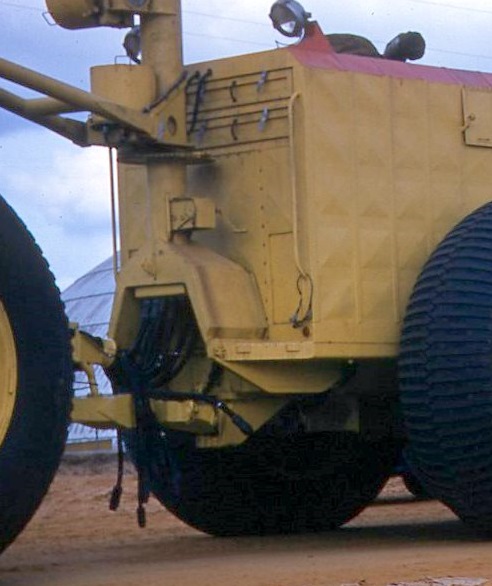
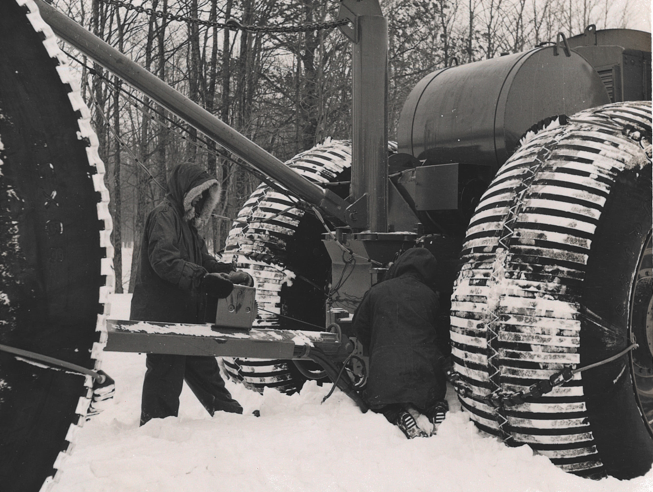
This image was recently uncovered by two brothers that attended school at LeTourneau College from 1960-1963. LeTourneau College became LeTourneau University in 1961. The foreground-right tire shows a pretty good vantage of the shocks used on the Mark II. Looking beyond the shock and in the center of the trailers you see a darker colored cylindrical object and a downward facing light colored tube. This is the axle blower motor and intake. This blower pushes air through the axle housing to keep R. G. LeTourneau’s Electric Drive nice and cool.
Overland Mark II at Longview, TX. Image: Lloyd and Larry Smith
When I watch or read about Overland Trains, authors typically forget, or don’t know, that there are 6 of them. The Overland Trains were built from 1952-1961.
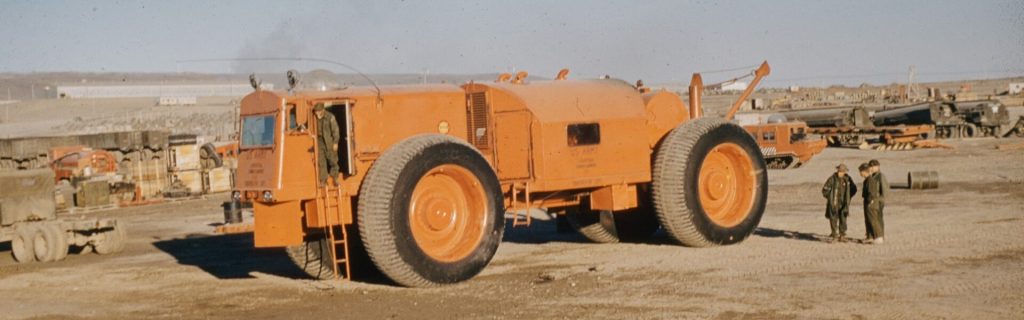
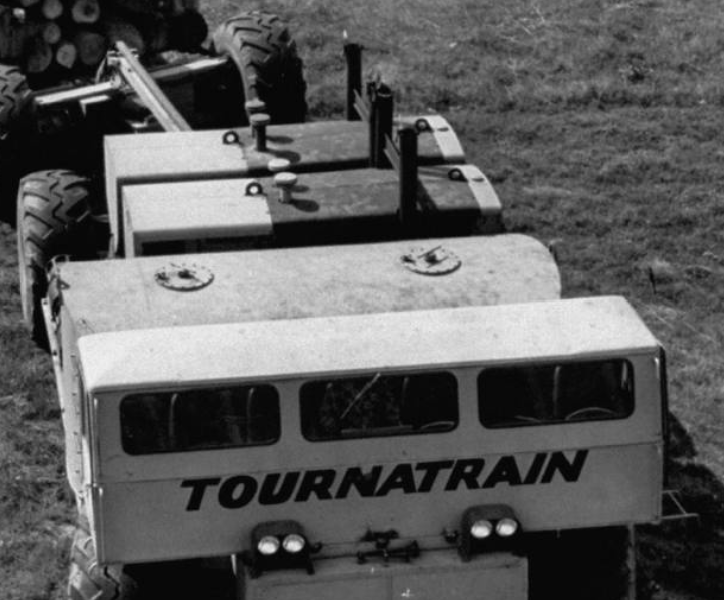
The first built train was the Tournatrain. R. G. had many concepts prior to building the first train.
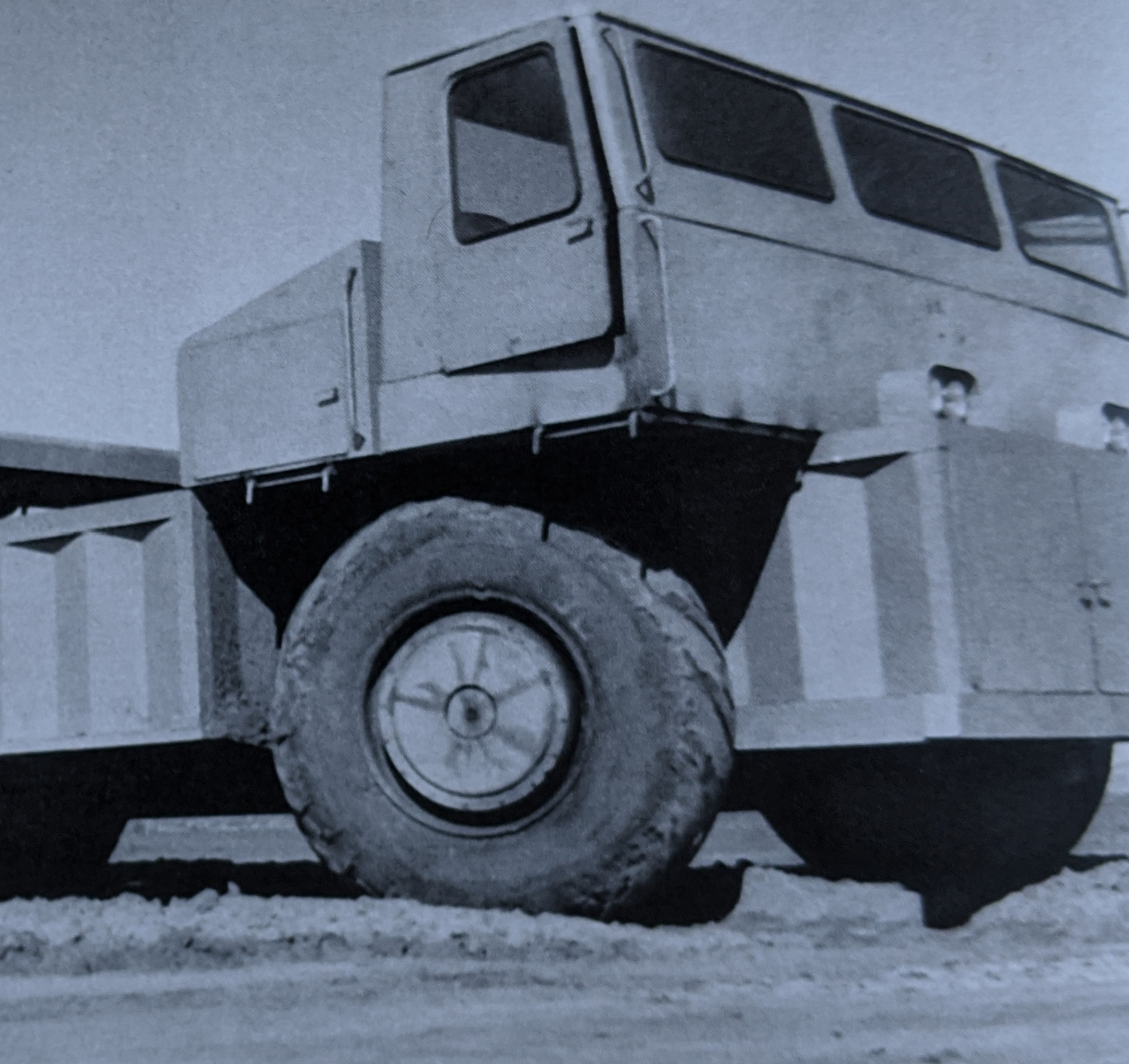
Next, was the VC-12 Tournatrain. This was an entirely different machine than the first train. It had two engines versus one in the original.
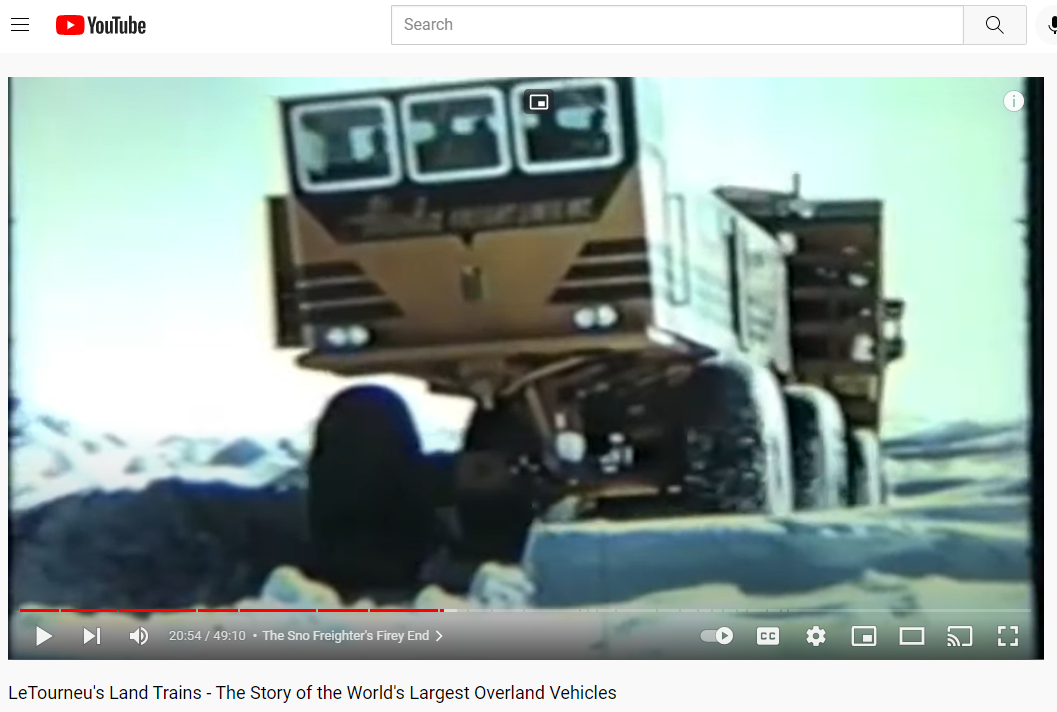
Alaska Freight Lines was the recipient of the 3rd Overland Train, the Sno-Freighter. This was the only train that was purchased by a private party. This train made several trips to the Distant Early Warning (DEW) Line stations
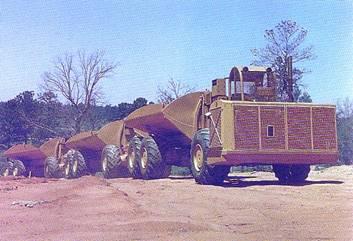
The Side Dump Train had a few concepts before coming up with the built machine we know of. It also had a royal visitor!
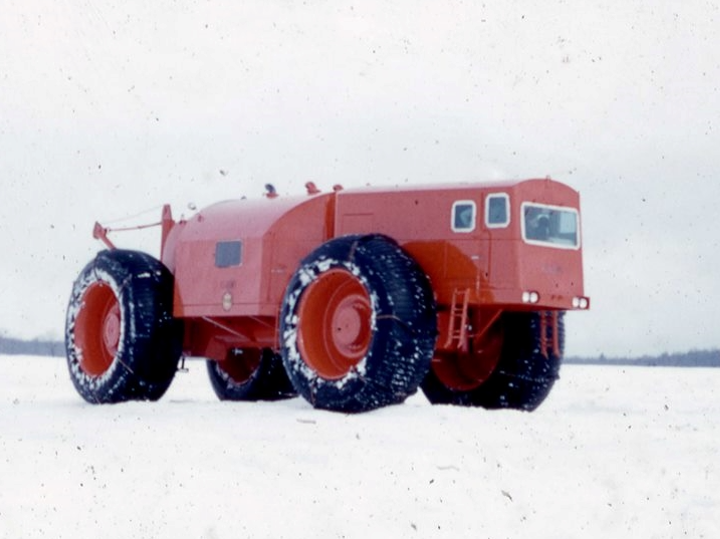
The Sno-Train has the most complex and active history out of all the trains. Expect some mind blowing stories and facts when the book comes out. This was the first Overland Train to use the Firestone 120x48x68 tires.
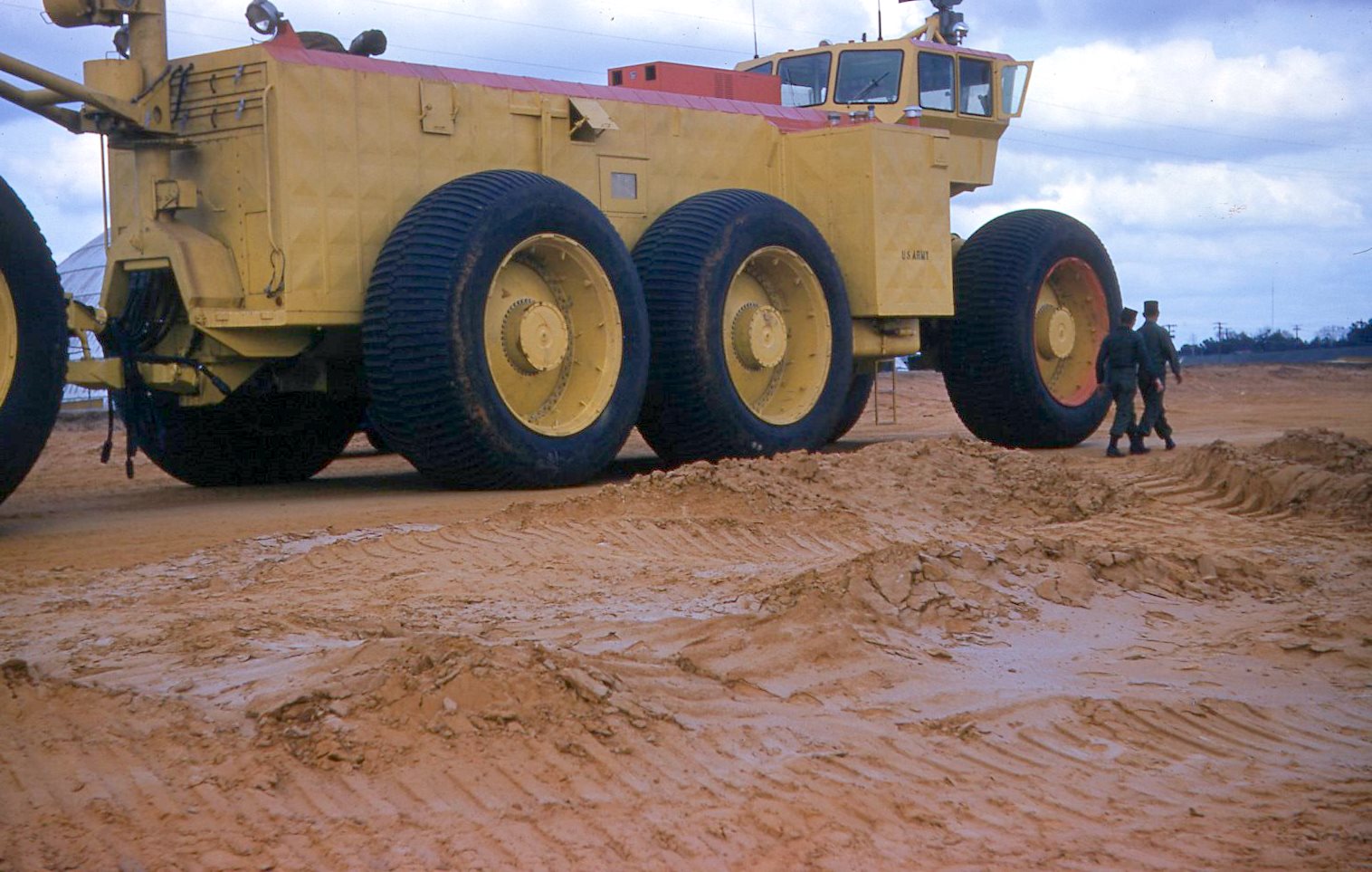
Lastly, the Overland Train Mark 2. It was the most engineered and well thought out train of them all. it never entered active service and went from Longview, TX to Yuma, AZ. While it is said that none of the train made it out of the scrapper besides the control car, that is not accurate.
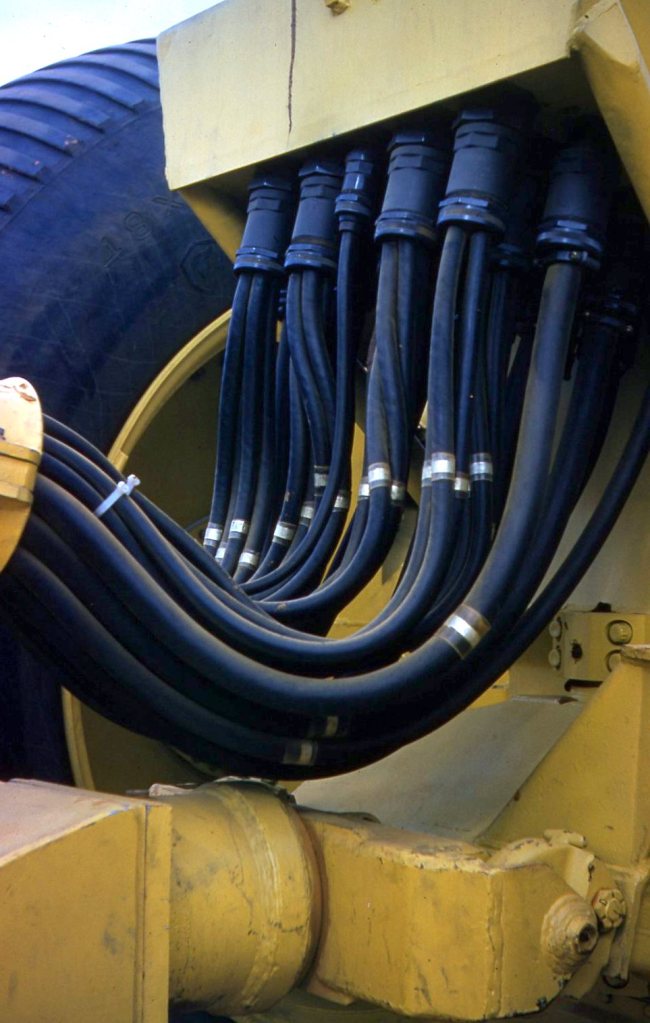
When R. G. LeTourneau, Inc. engineers were calculating the Mark 2’s electrical systems, they had to consider electrical systems and cable weight. The largest insulated copper cable that could be handled by a person was 1.86 inches in diameter, weighing 5.91 pounds per foot. After calculating cable weight and conductors, engineers came up with 4,137 pounds for conductors and 1,044 pounds for cable weight per car – 5,181 pounds. The copper cabling used was designed to handle a 5,730 ampere load.
Overland Mark 2 electrical connectors. Image: Lloyd and Larry Smith
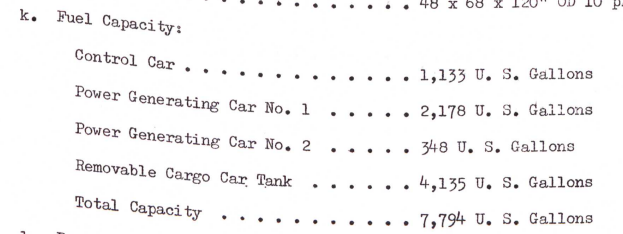
The Overland Train Mark 2 performance standards were proposed in 1958 to R. G. LeTourneau, Inc. Engineers had to work backwards to determine how to best meet the Army’s needs for self support, cargo capacity, and resiliency. In total, the Mark 2 was able to carry 7,794 gallons of fuel. The control car, power generating car number 1 and 2 all had space heaters with 150 gallon tanks, adding on an additional 450 gallons of fuel.
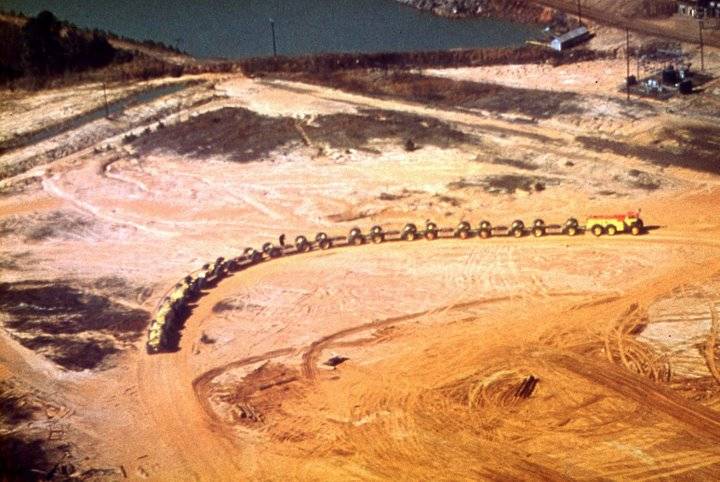
Mark 2 fuel capacity. Image: snippet from Phase 4 Design ReportAerial view of the Mark 2 during testing at R. G. LeTourneau, Inc. Image: Lloyd and Larry Smith.
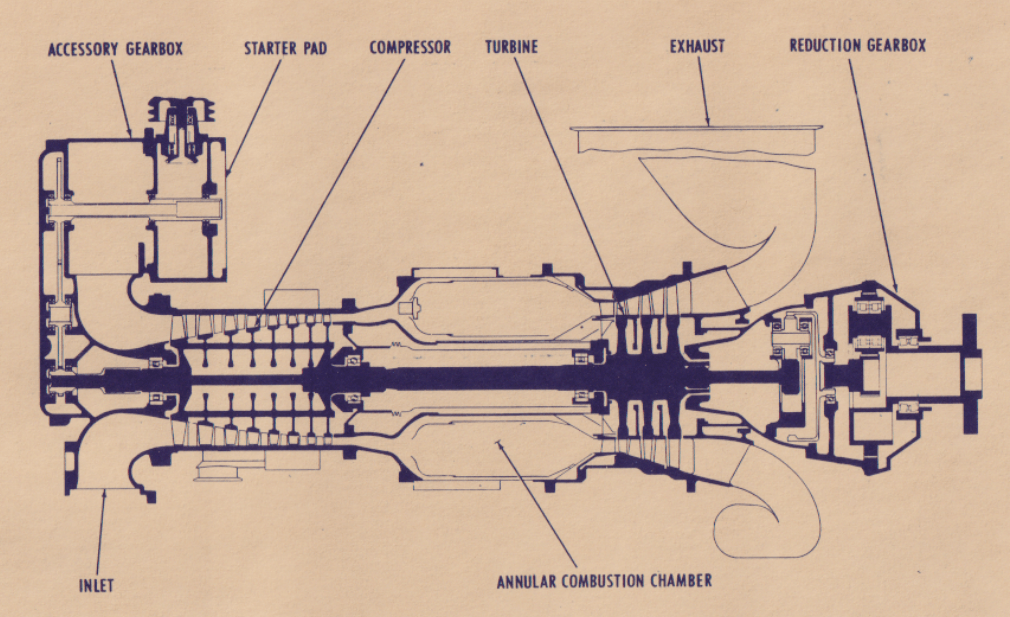
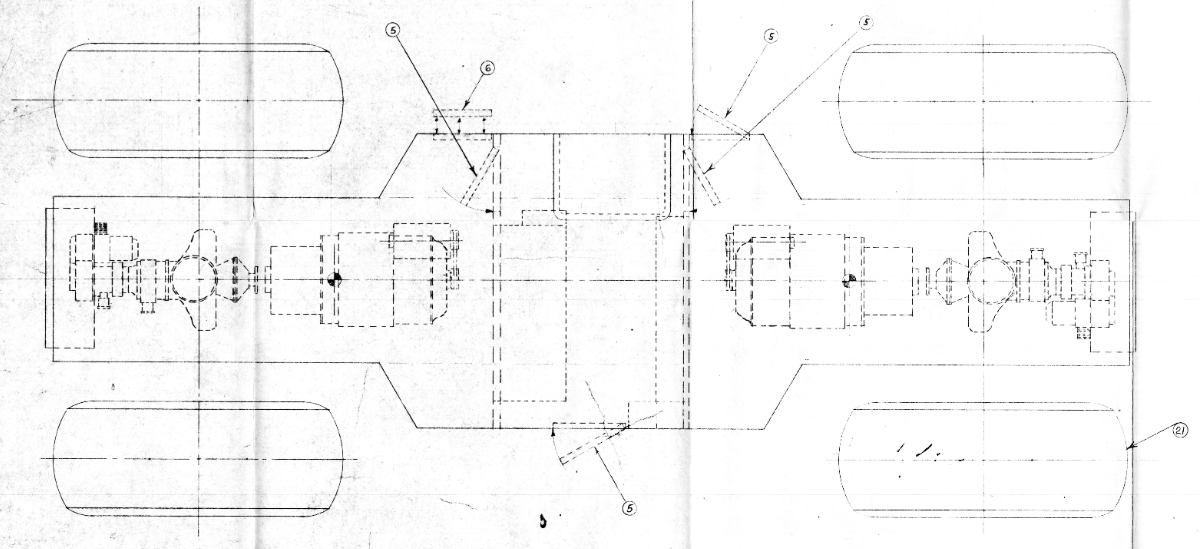
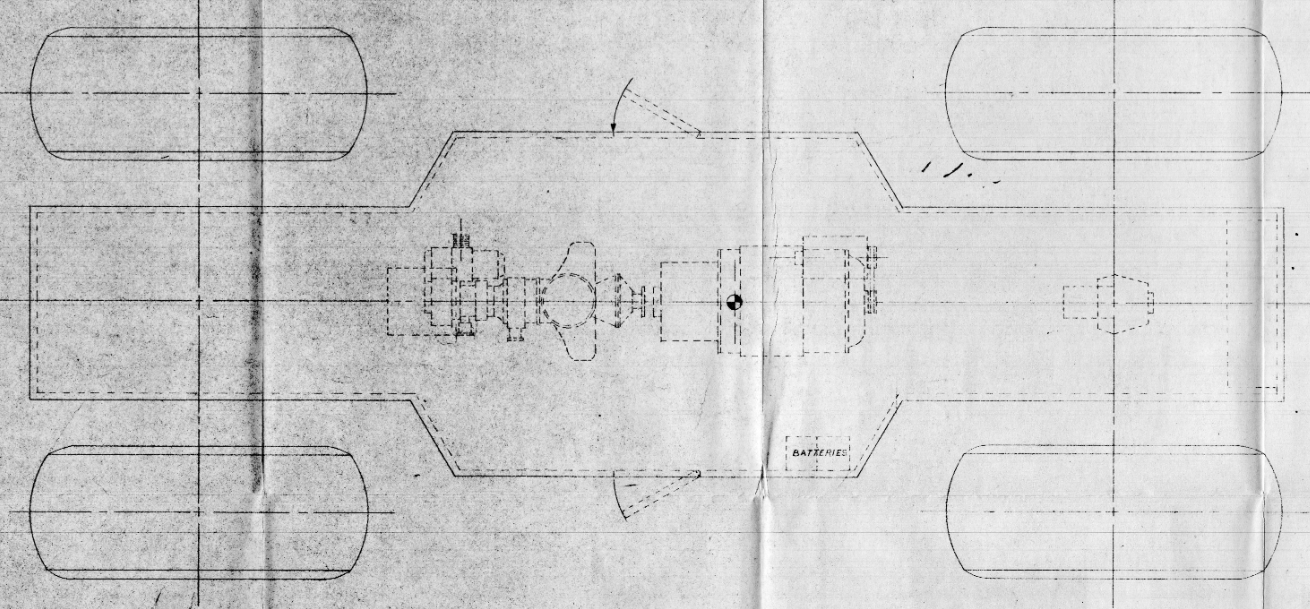
The Overland Mark 2 SOLAR 10MC gas turbines were an off the shelf product at the time of their use in 1961. R. G. LeTourneau, Inc. mated the turbines directly to inline A/C and D/C generators. The Mark 2 had 4 SOLAR turbines. One was located in the control car, which is where the driver and crew occupied. The second to the last car contains one turbine, while the last car contains two. The turbine intake was designed to be filtered, especially in desert terrain. The intake is located to the rear of the train, while the engine room air is circulated using a blower fan. The turbine intake was never taken from the engine room.
Mark 2 double turbine layout. Image: Phase 2 Book
Mark 2 single turbine layout. Image: Phase 2 Book
SOLAR 10MC gas turbine diagram. Image: Phase 1 book
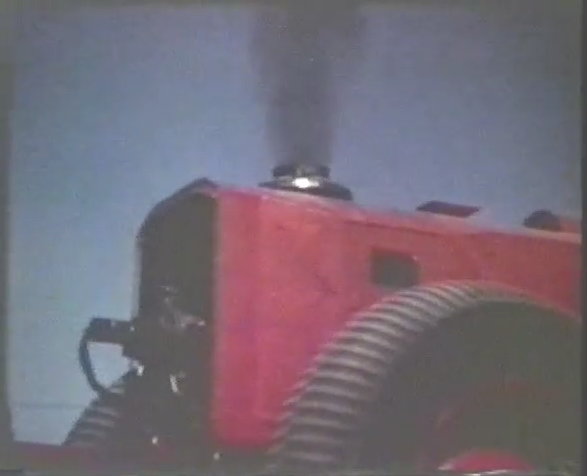
Turbine exhaust exits the turbine out a large circular exhaust pipe on top of the car bodies. The image below shows the Mark 2 control car starting up for the first time at Yuma Proving Ground, Yuma, AZ.
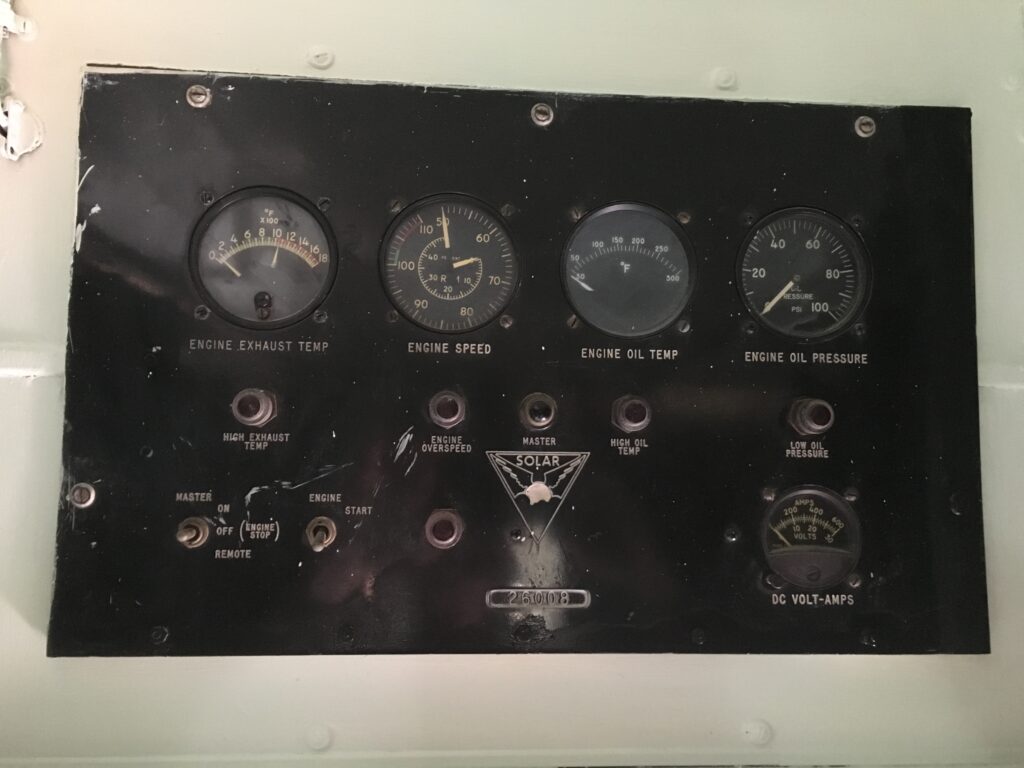
Overland Train Mark 2 exhaust. Image: U.S. Army, fair use. SOLAR 10MC instrumentation on the Mark 2. Image courtesy of Mark H. Sandercock, US Army, RET.
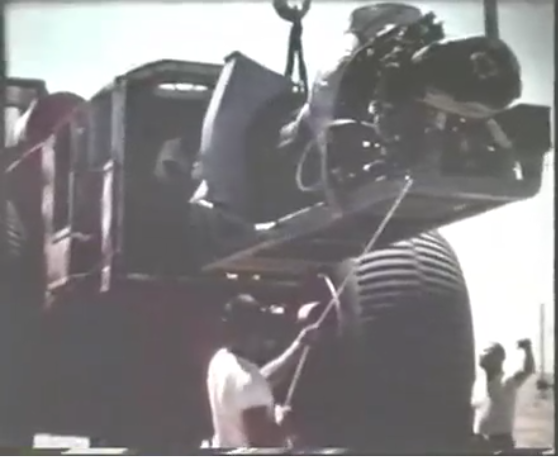
A few weeks ago, I published an image of a SOLAR 10MC (Model Saturn T-1020S-4) gas turbine being installed within the Mark 2. The large circular tube on the top of the Mark 2 power generation cars and control car are exhaust ports – one port per turbine. Fuel use ranged anywhere from 30-65 gallons per minute while operating off road and 18-28 gallons per minute while on road.
Installing a Solar turbine in the Overland Train Mark II at Yuma Proving Ground. Image: United States government fair use.
Overland Train Mark 2 startup exhaust. Image: U.S. Army, fair use.
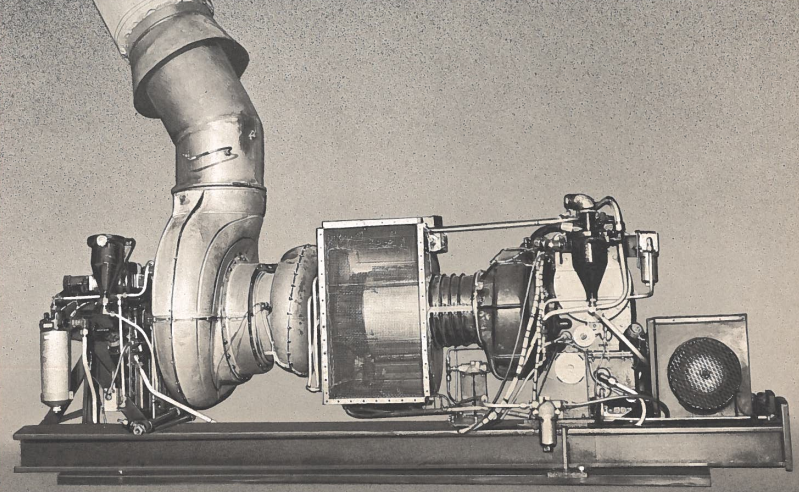
SOLAR gas turbine. Image: SOLAR brochure.
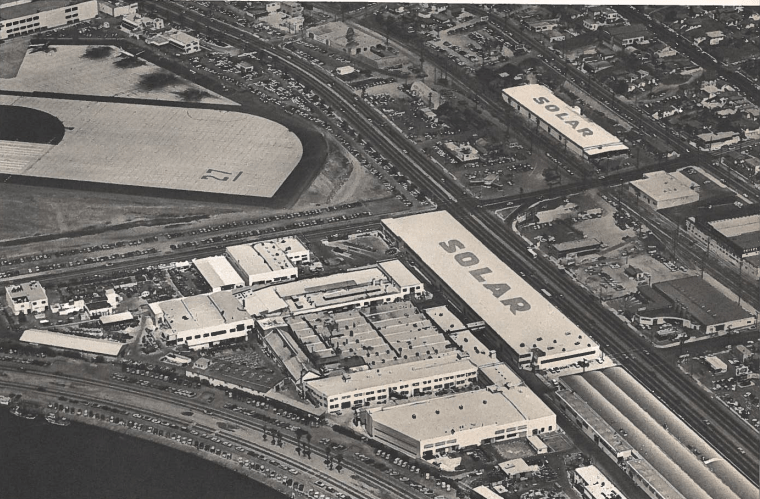
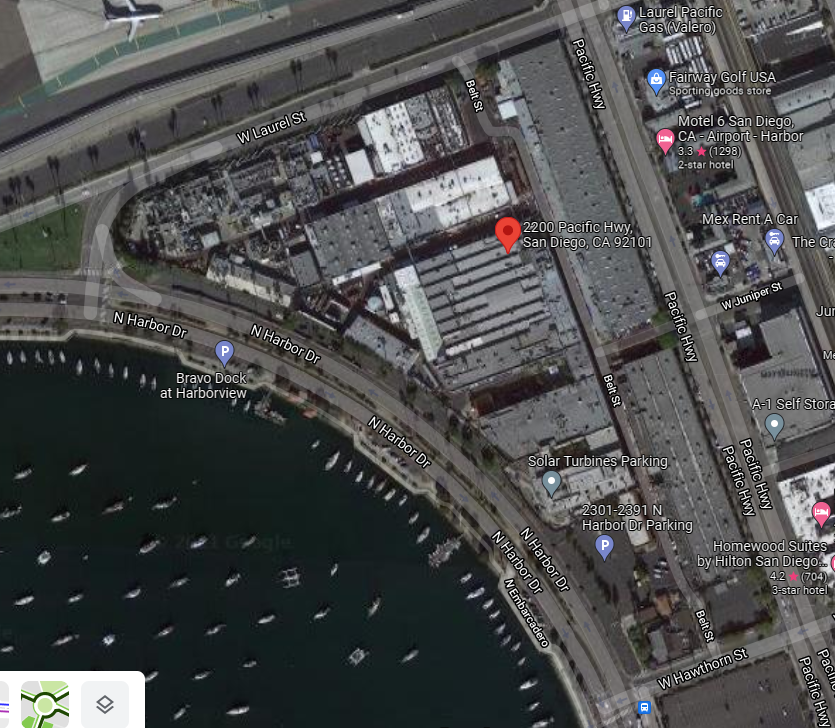
Here is a quick comparison of the SOLAR factory in San Diego. The first image is from a SOLAR Jupiter brochure, while the image on the right was captured 27Dec21 on Google Maps.
SOLAR plant in San Diego, CA. Image: SOLAR brochure
SOLAR factory 27Dec21. Image: Google Maps, for educational purposes only.
The video below shows the Mark 2 leaving the shop at Yuma Proving Ground, Arizona. This traverse was the first time the Mark 2 drove as a train in Yuma. As the overland train leaves, you can see the trailer tracking capabilities.
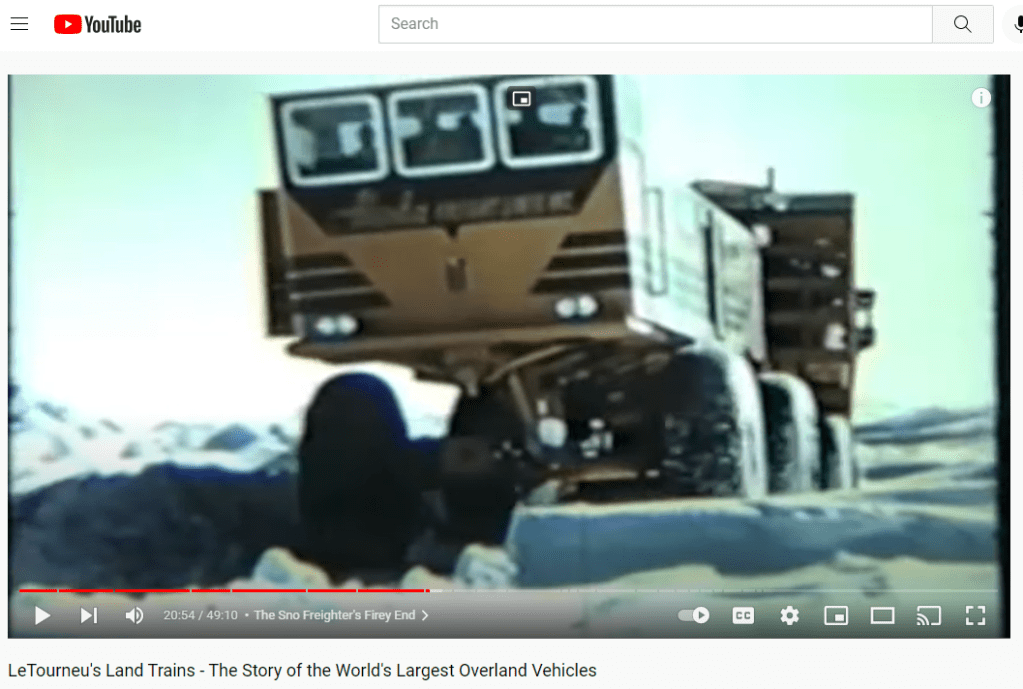
An acquaintance of mine posted a video on the Overland Trains today. It has been a labour of love for him over the past 2 years. His research and narration are top class. I can’t recommend watching his video enough.
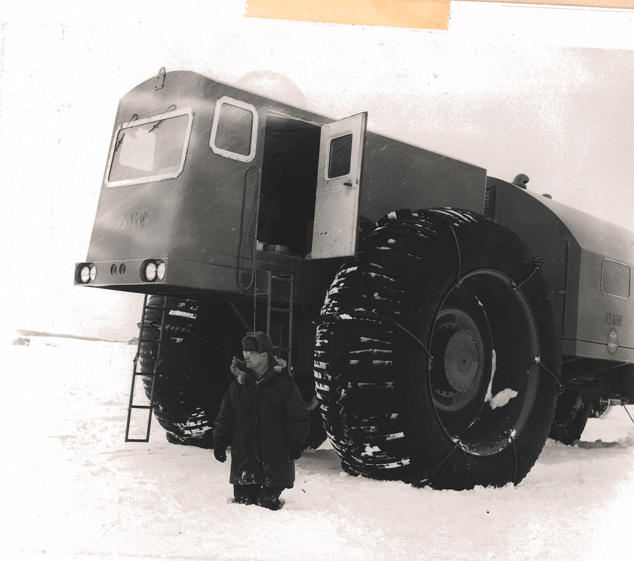
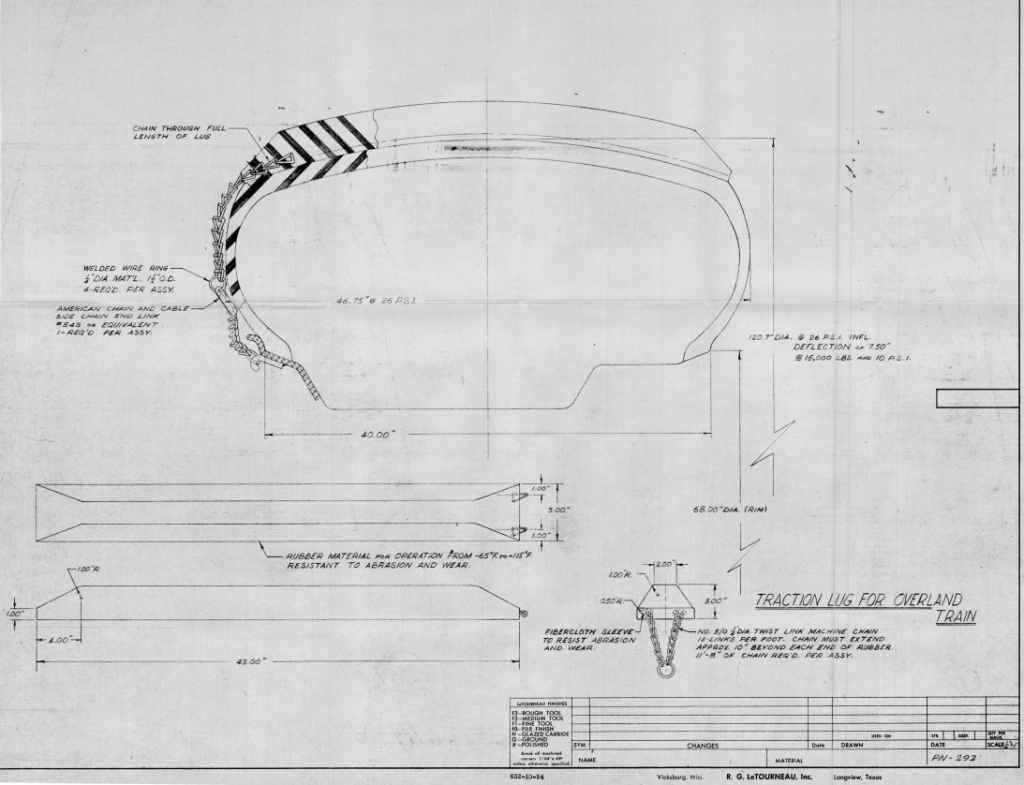
Well, kind of. The Sno-Train’s wheels came equipped with what LeTourneau called traction lugs. Breaking it down a little more simply, the traction lugs were long rubber pieces or cables that were on the tread bearing part of the tire. The rubber or cable was attached to the wheel, or rim, by other chain and cables. The connection points and traction lugs varied in design over the years. The drawing below shows traction lugs for the last Overland Train called the Overland Mark 2. The traction lugs on the later Mark 2 train had pointy, claw-like attachments for the lugs. While, the traction lugs attachments for the Sno-Train rims used circular, washer-like attachments for the traction lugs.
Traction lug diagram for the Overland Mark II
The Sno-Train also used a more cable-like lug to wrap around the massive Firestone 120x48x68 tires. The traction lugs were not used all that often during real world missions. The Sno-Train tracked extremely well in snow and ice. Which, is not to say that it did not have its fair share of jackknifes. More on that in my book.
The Sno-Train’s mechanical and electrical connections are being inspected in Houghton, Michigan – dated 3-10-56
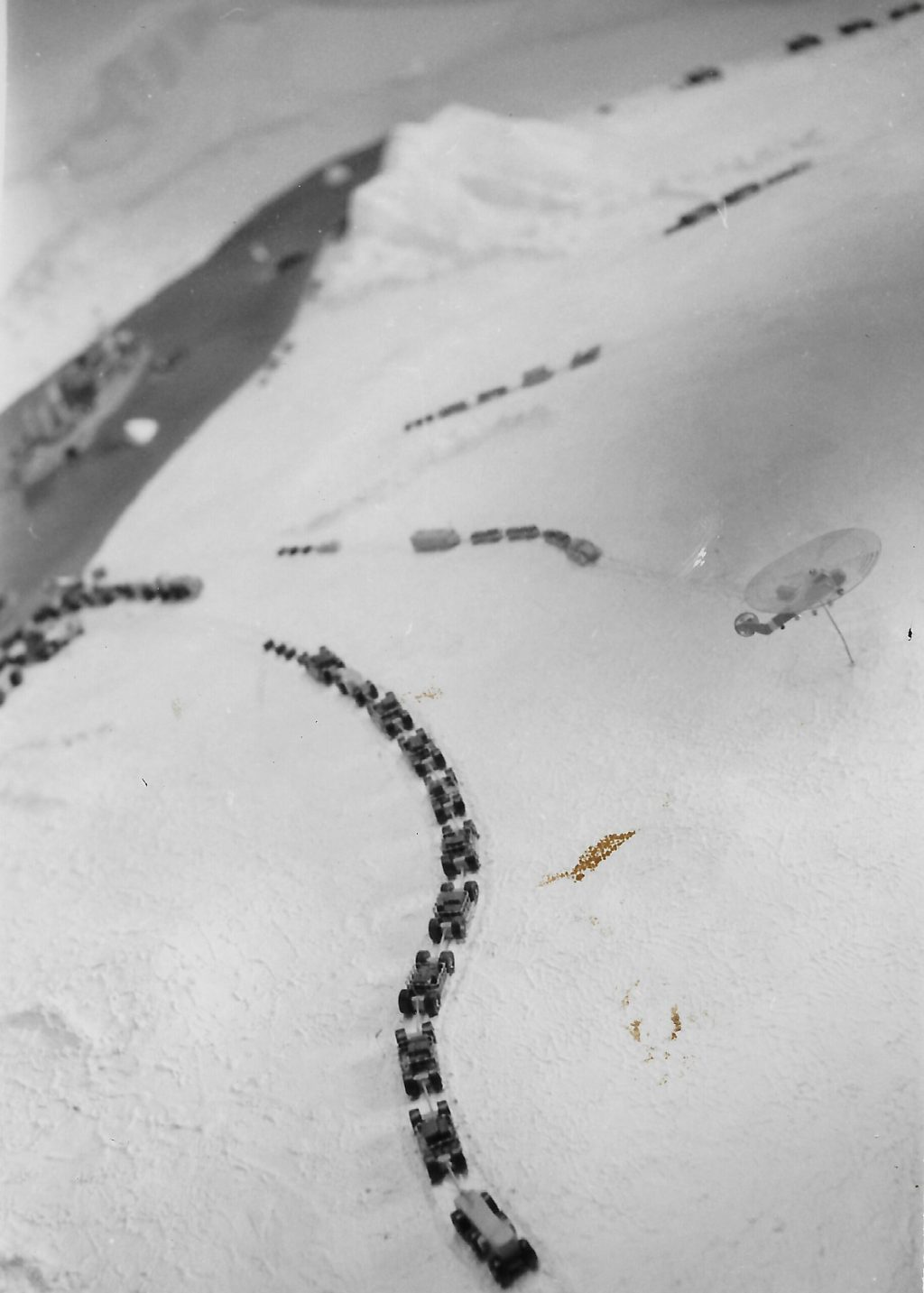
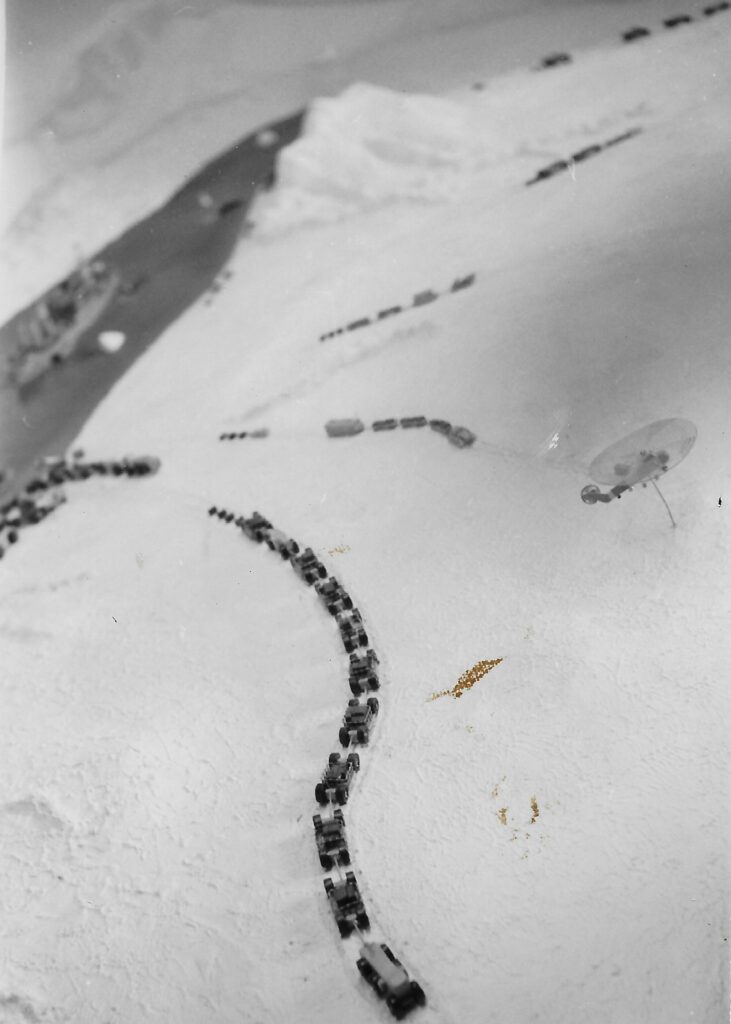
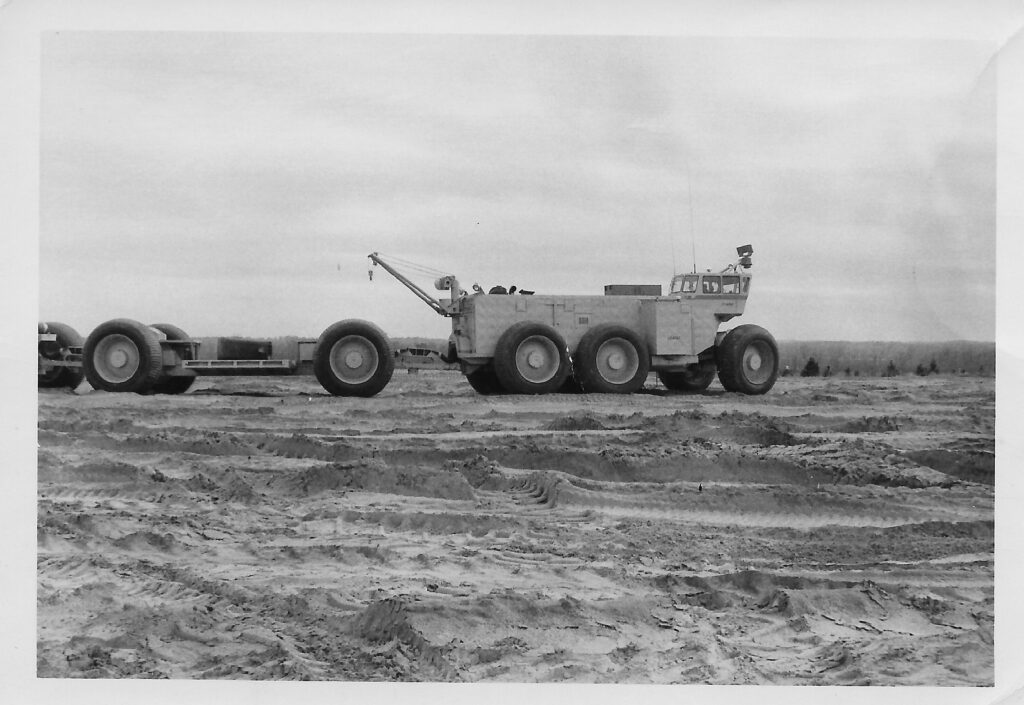
Last month I was contacted by a man who said that his father worked at R.G. LeTourneau’s Longview, TX factory. He went on to provide a fascinating story of his father’s birth country of Thailand and a Thailand Army Colonel – more on that in my book. The man included several images of the Overland Mark 2 (Mark 2) while it underwent testing at LeTourneau’s Longview factory. He also provided the image below of an Arctic scene with the Mark 2 in the foreground. In the model image below, the Mark 2 has 10 trailers and the control car leading the charge. It is difficult to say for certain, however there appears to be 4 Rolling Liquid Transporters, or RLTs trailing the Mark 2. These were trailers with very large, balloon-like tires designed to carry fuel. The remaining scene shows a ship (top-left) with a helicopter (middle-right), and what appear to be swings, or vehicle convoys, in the middle and top-middle.
Arctic Scene with Overland Mark 2. Image Virothai “Vic” VessakosolOverland Mark 2 in Longview, TX. Image Virothai “Vic” Vessakosol
 Overland Trains