Category: TC-266 Marsh Buggy

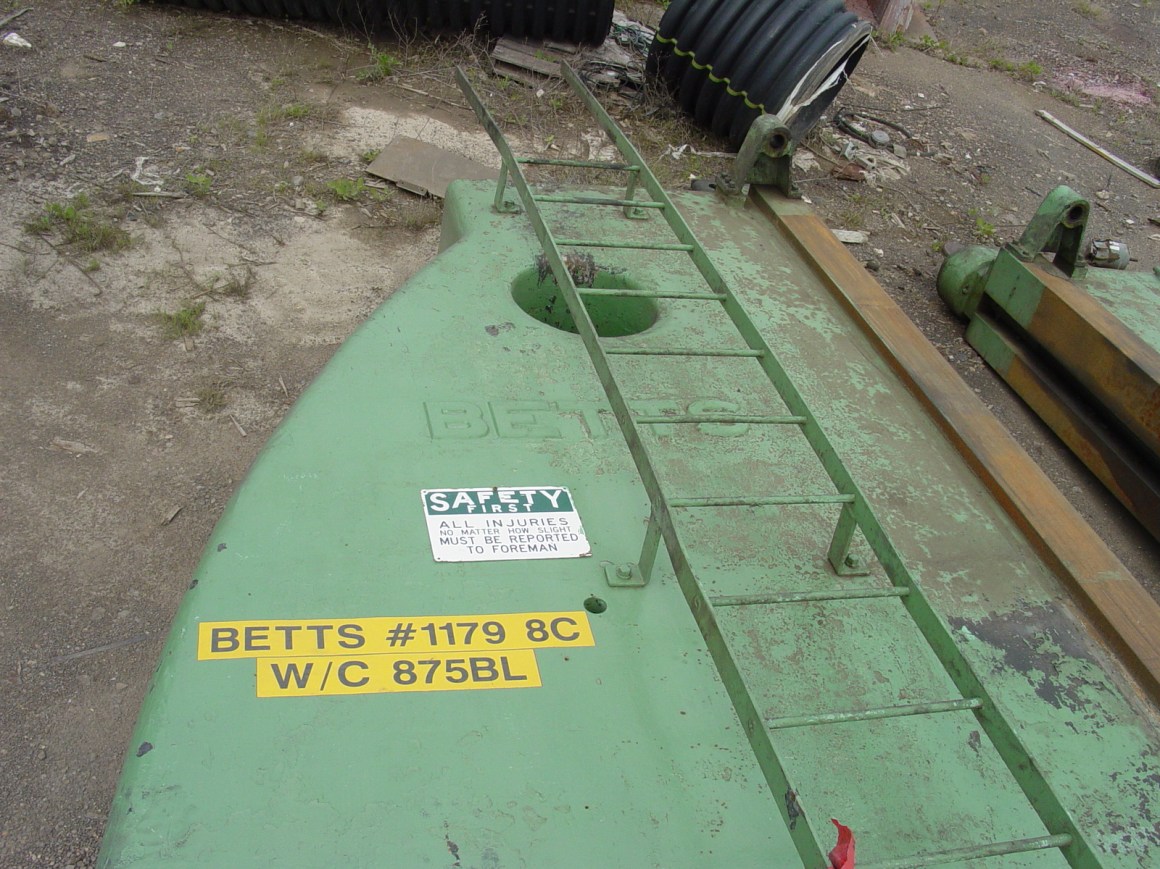
  • Building the Firestone 120x48x68 Tire Molds with a BETTS Vertical Boring Mill

    Building the Firestone 120x48x68 Tire Molds with a BETTS Vertical Boring Mill

    R. G. LeTourneau, Inc. was no stranger to building huge machinery. However, it wasn’t until 1952 that R. G.’s son, Ben LeTourneau built the tire mold that would help shape a critical component of the Overland Trains story – the monstrous tires! From this custom mold came the Firestone 120x48x68 tires that would support the Crash Pusher, the Swamp Buggy, Marsh Buggy, Sno-Buggy, the Thompson Trailers, Gold Digger, and several of the Overland Trains.
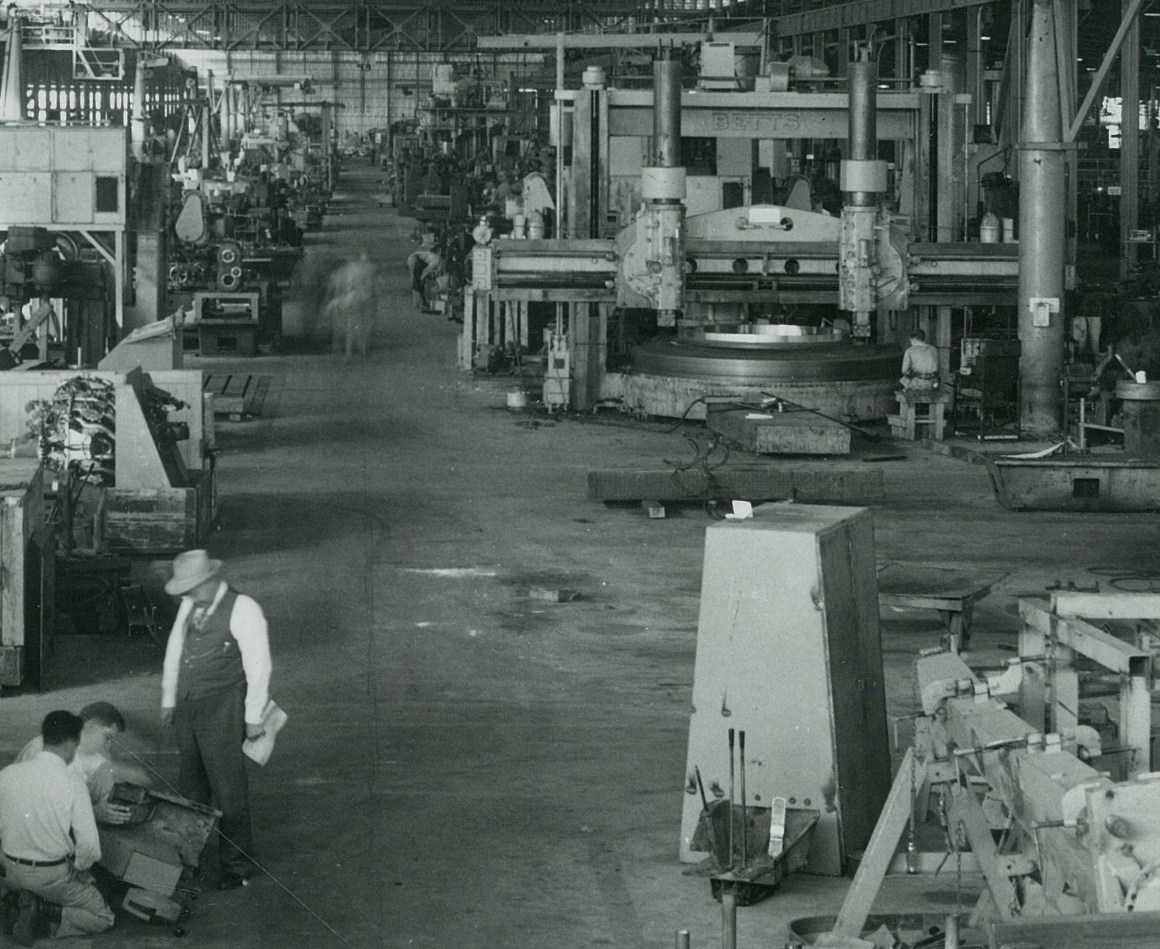
    R. G. LeTourneau (left in hat) in the Longview, TX manufacturing line with the BETTS Vertical Boring Mill in the top-right, 1948.

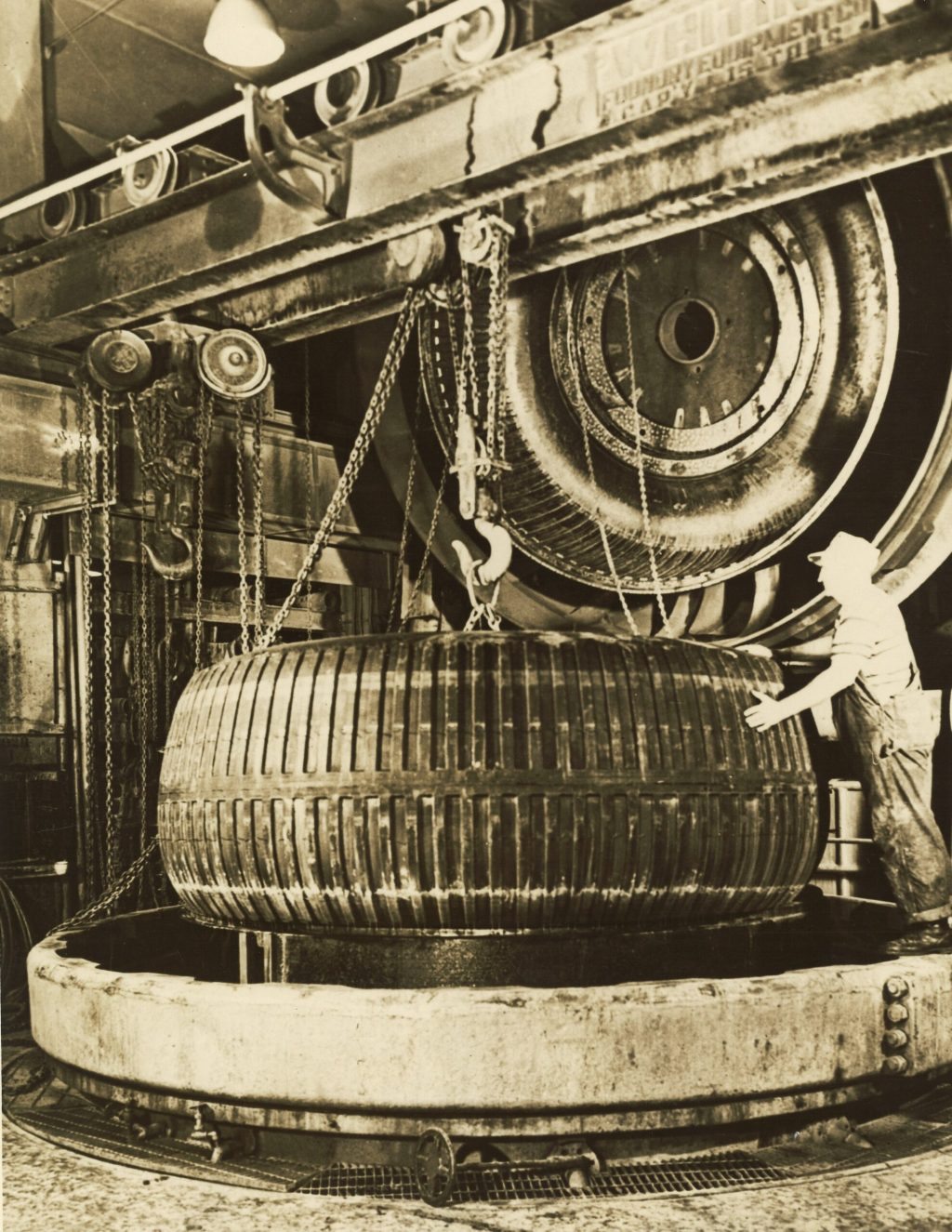
    In 1952, R. G. LeTourneau entered into contract with the Firestone Rubber and Tire Co. to build the 10 foot tall and 4 feet wide tires. However, they did not have a mold for them. At the age of 18, Ben LeTourneau helped build this mold for Firestone.

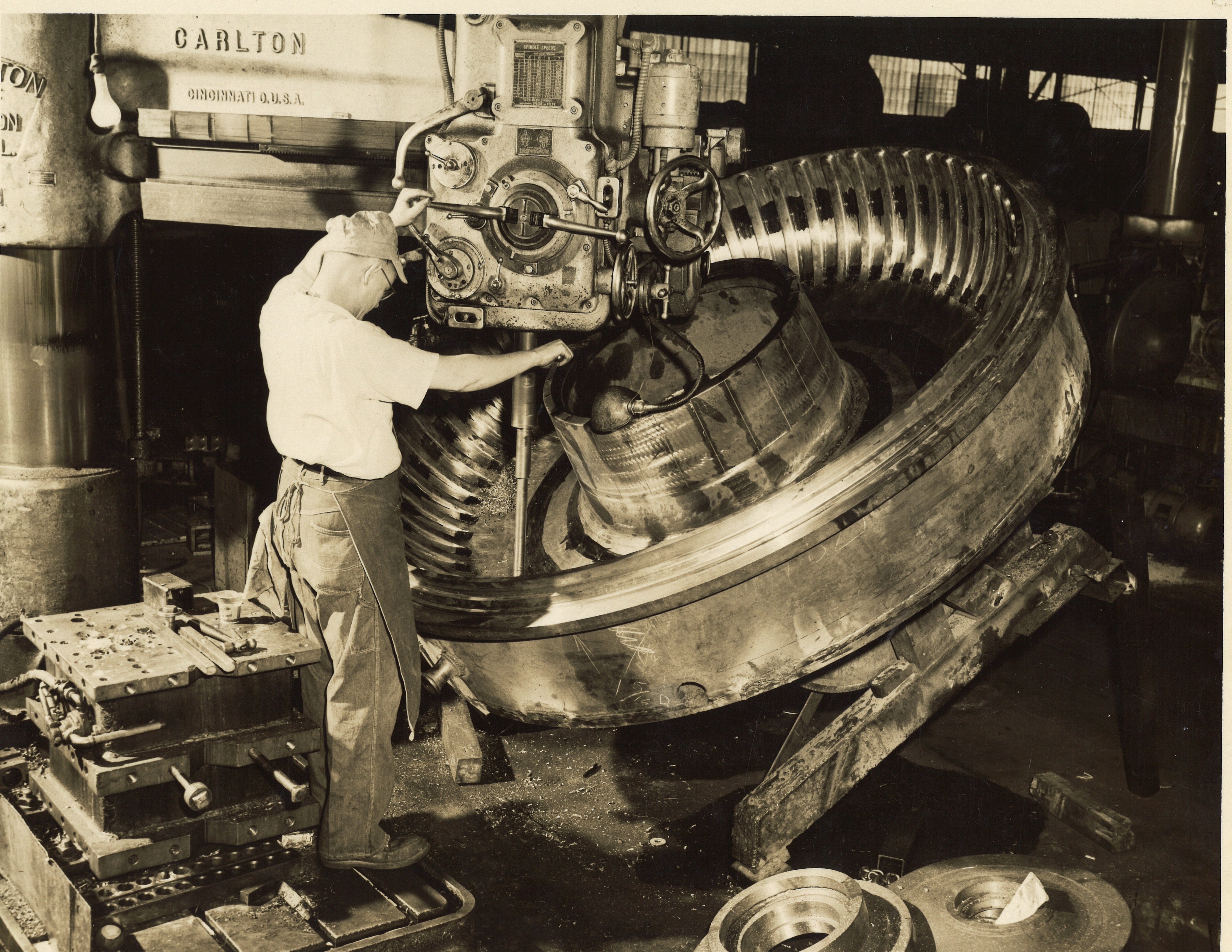
    The BETTS Vertical Boring Mill (BETTS) had a 12’ diameter table and was used to build the custom tire mold. The table “rotated with tools mounted on a bridge over the table, while the table rotated under the bridge.”

    After the two-halves of the mold were built and placed on the BETTS 12 foot diameter table, Ben “mounted it onto the rotating table and, after making a basket which I attached to the tool bar, rode the tool down into the mold while it was rotating under me. In this way we cut a smooth mold which was used to form the new tires.”
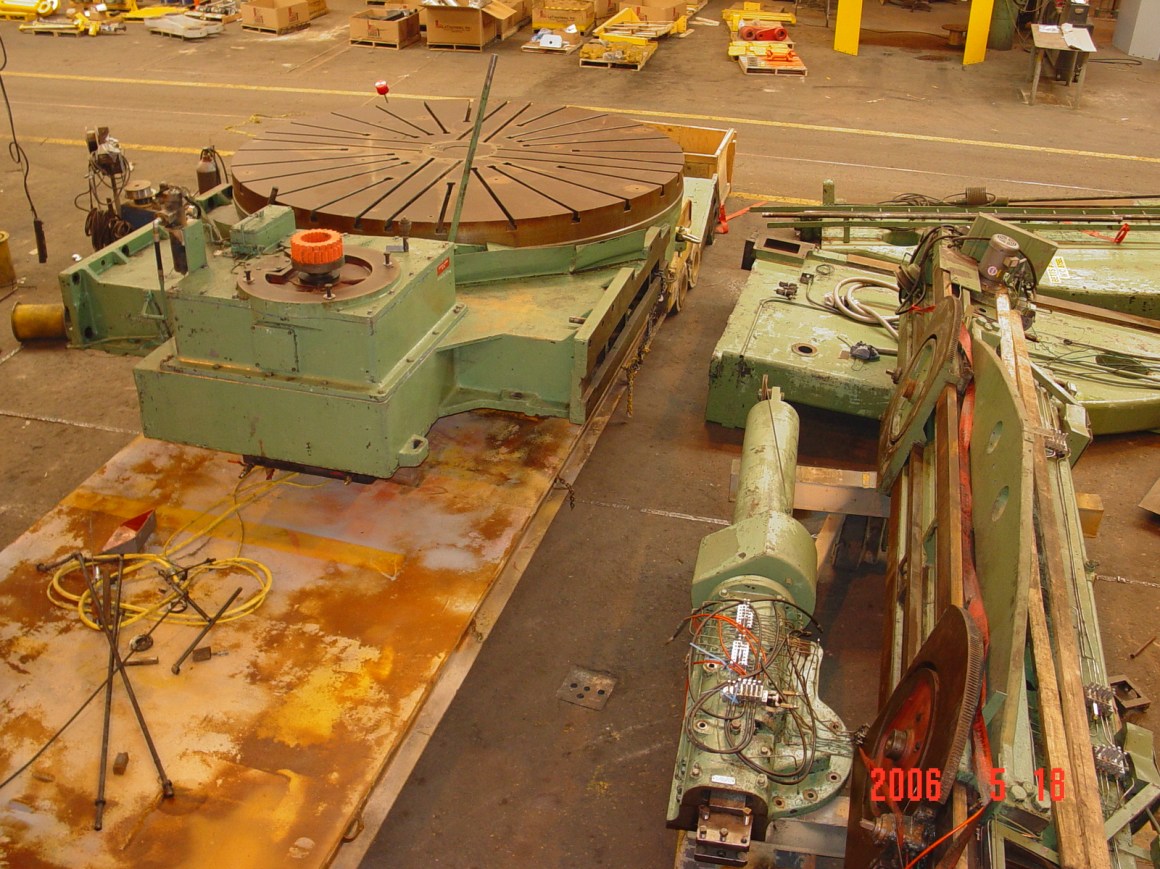
    The BETTS was still in use at the factory until 2006, when the company owners at the time dismantled and removed it. It is unknown whether it was scrapped or sold to another company.
  • Overland Train TC-497 and Buggy Fan Art

    Overland Train TC-497 and Buggy Fan Art

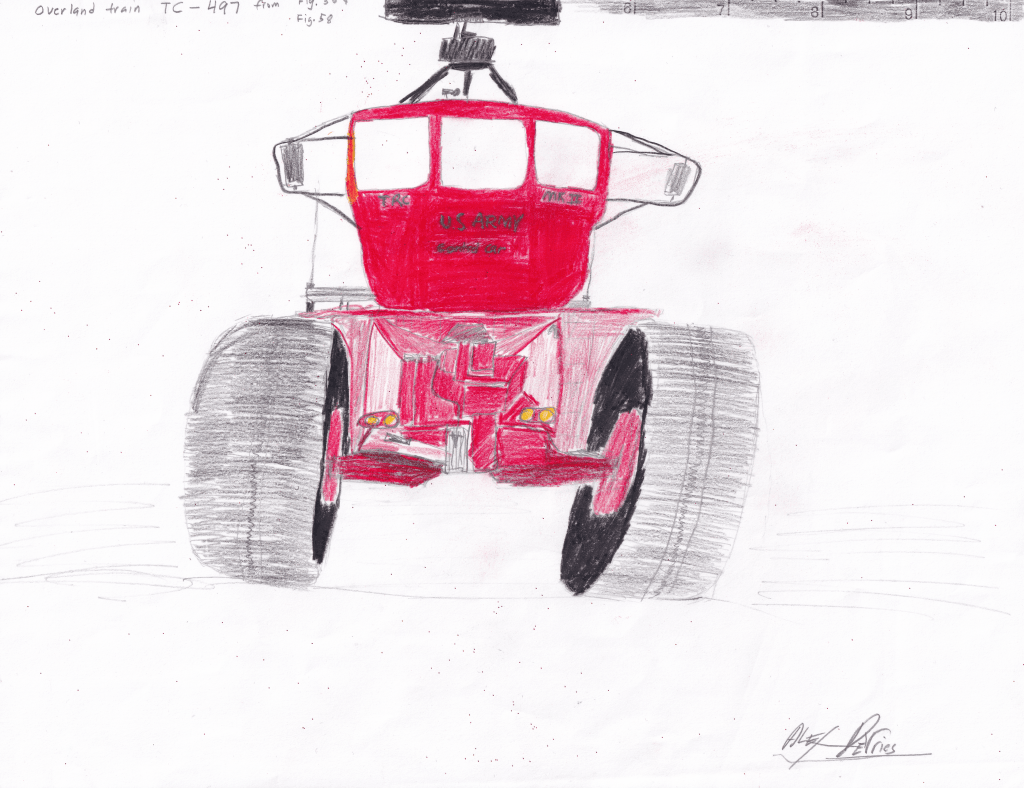
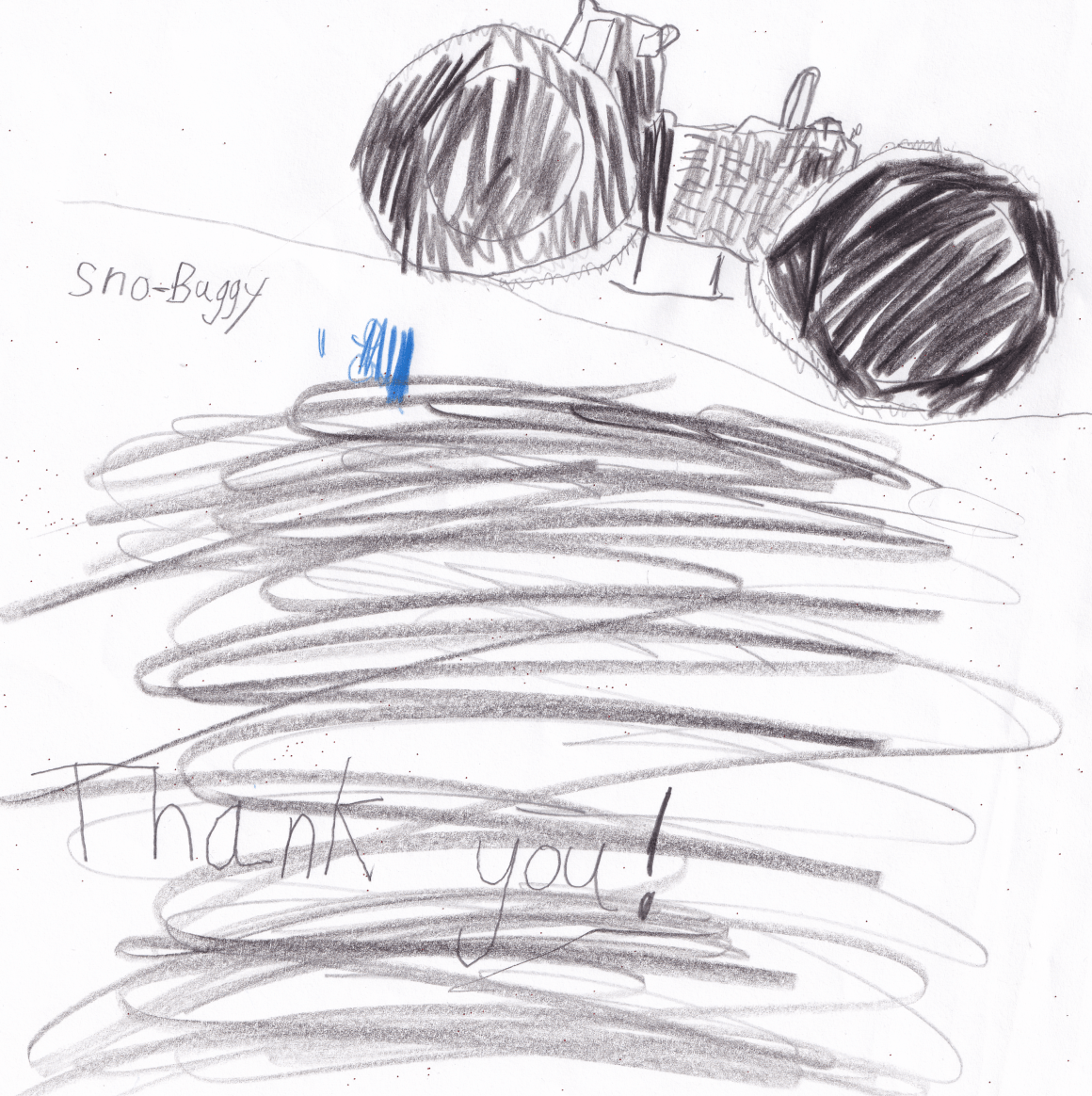
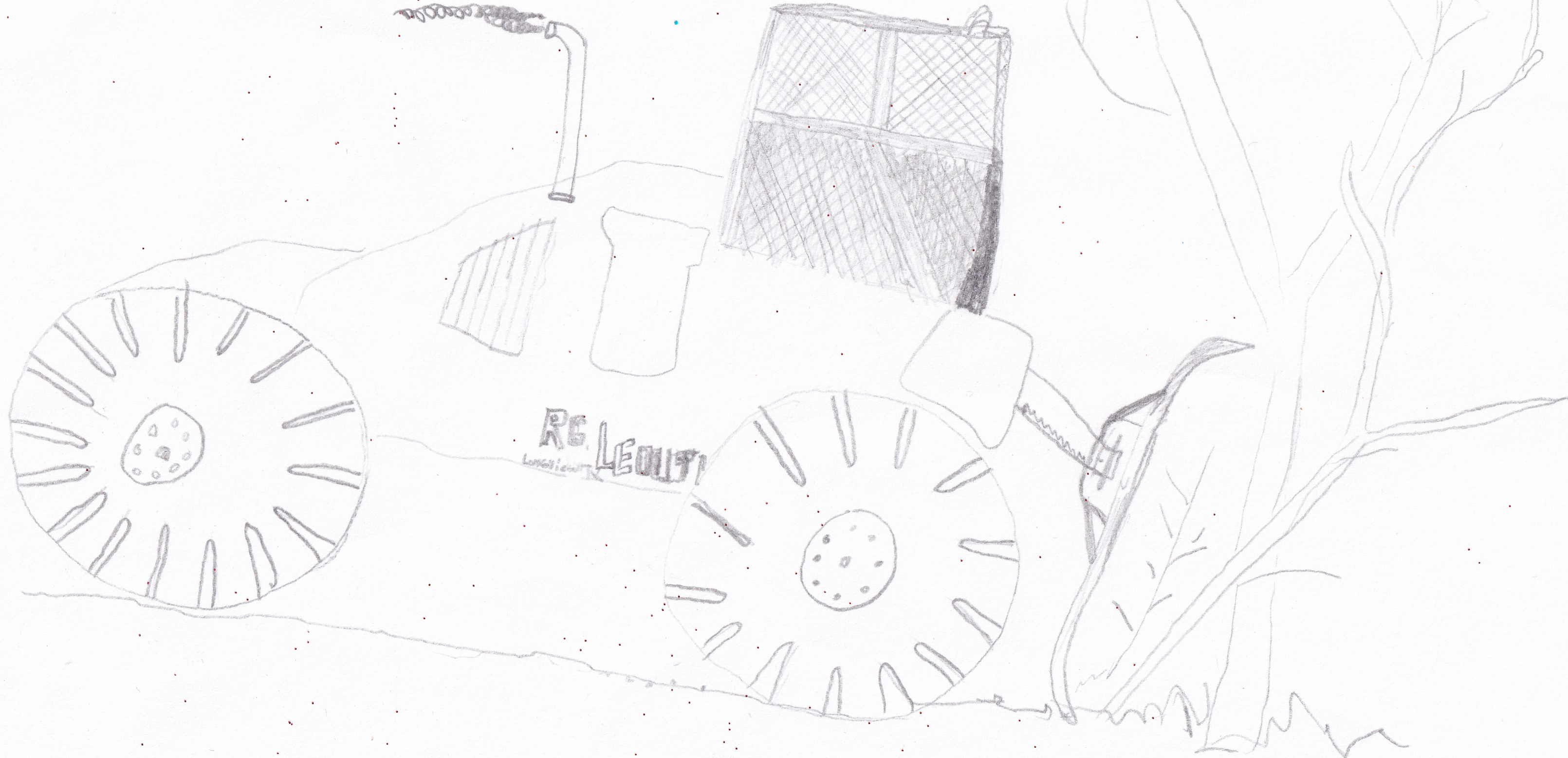
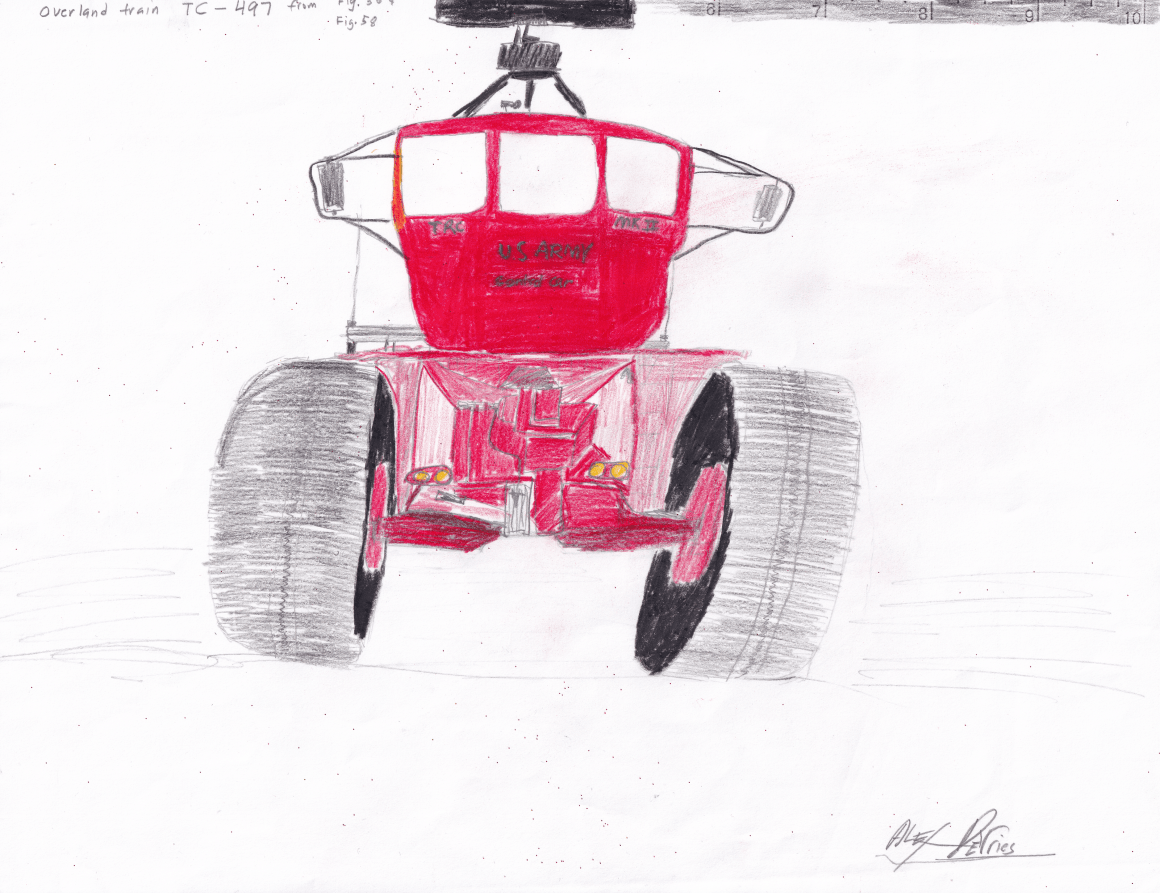
    Several young fans of R. G. LeTourneau’s Overland Trains sent in their fan art. The first drawing is of the Sno-Buggy. It had eight Firestone 120x48x68 wheels and was tested in Greenland.

    The next drawing is the Marsh Buggy. It used an AC electric motor and gear drive to lower and raise a blade, which was used for pushing down small vegetation or shaping small amounts of overburden.

    The final drawing is the TC-497. The control car is at the U.S. Army Proving Ground in Yuma, AZ. The two power cars and most of the trailers were scrapped. At least one trailer is in Nome, AK and was part of a gold dredging project built by Lloyd Molby called Gold Digger.

  • TC-266 Marsh Buggy Roaming through the Brush

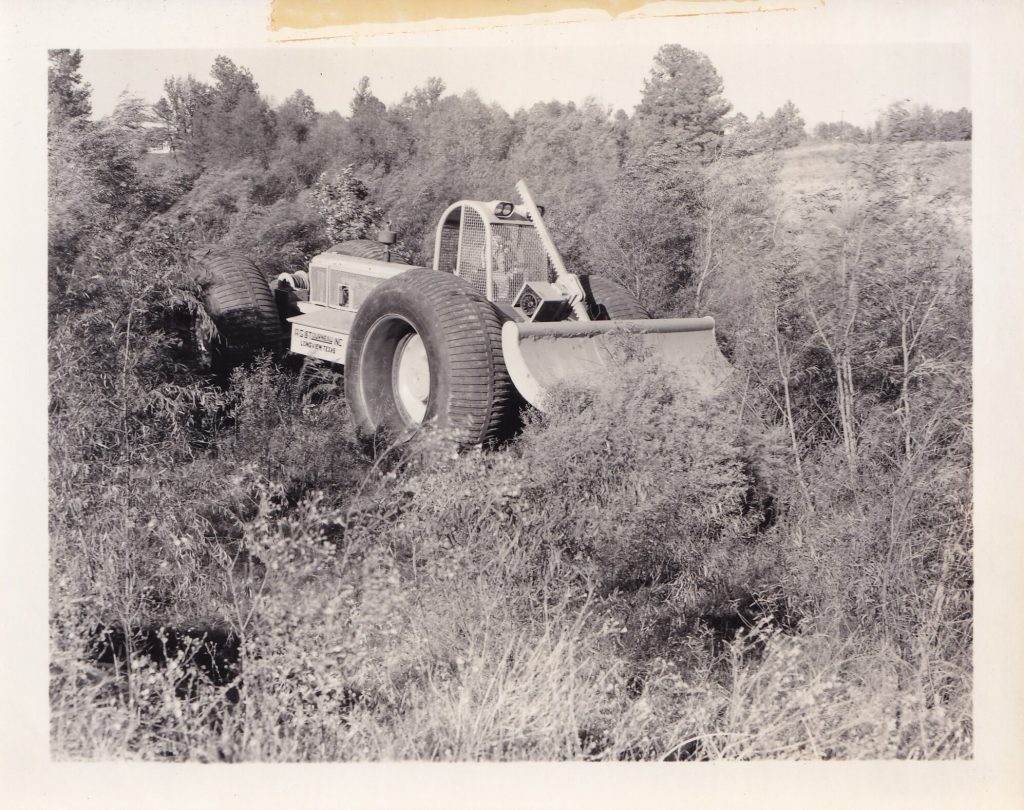
    TC-266 Marsh Buggy Roaming through the Brush

    This image of the TC-266 Marsh Buggy was scanned from R. L. LeTourneau’s photo diary. You can see the tape remnants still on the top of the photograph. Once the Marsh Buggy was tested in LeTourneau’s Longview factory, it was sent to Vicksburg and then to his Tournata settlement in Liberia, Africa.

    Image: R. G. LeTourneau Museum & Archives at LeTourneau University.
  • R. G. LeTourneau’s Overland Trains: a complete history is now AVAILABLE

    R. G. LeTourneau’s Overland Trains: a complete history is now AVAILABLE

    I started writing this book in February of 2020. Two and a half years later, I have captured the most complete Overland Trains story ever published. Buy the book now on Amazon.com (https://www.amazon.com/dp/B0BFL91FX6).

  • Overland Trains Video by Calum

    Overland Trains Video by Calum

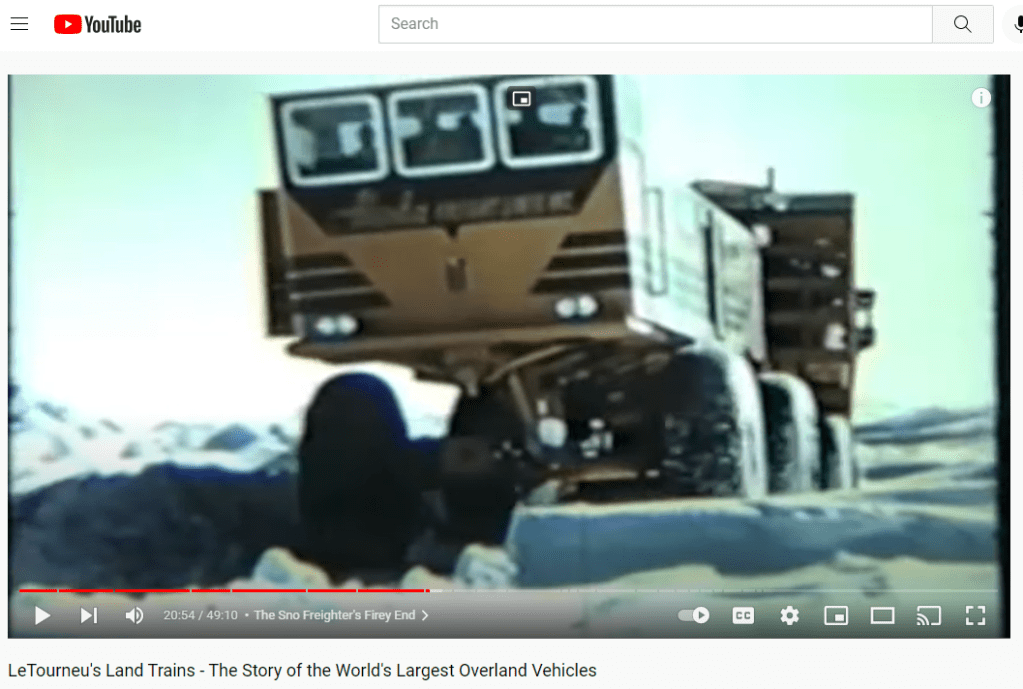
    An acquaintance of mine posted a video on the Overland Trains today. It has been a labour of love for him over the past 2 years. His research and narration are top class. I can’t recommend watching his video enough.

    https://www.youtube.com/watch?v=abGyX2uwXsw
  • Abbreviations and Acronyms

    Abbreviations and Acronyms

    If the military is involved, you can be certain that they will use an abbreviation or acronym for their organized name, project, or equipment. Here are a few of the more commonly used abbreviations and acronyms used during the scope of the Overland Trains.

    ACAN – Army Command and Administrative Network

    ACFEL – Arctic Construction & Frosts Laboratory

    APPR – Army Package Power Reactor

    ERDL – Engineer Research & Development Laboratory

    FESA – Facilities Engineering Support Agency

    LCC – Logistical Cargo Carrier

    PR&DC – Polar Research & Development Center

    SIPRE – Snow, Ice, Permafrost & Research Establishment

    TRADCOM – Transportation Research Development Command

    TRARG – Transportation Arctic Group

    TRECOM – Transportation Research Command

    TREOG – Transportation Research & Environmental Operations Group

    USARSG – United States Army Research & Standardization Group

  • Firestone 120x48x68 Tires

    Firestone 120x48x68 Tires

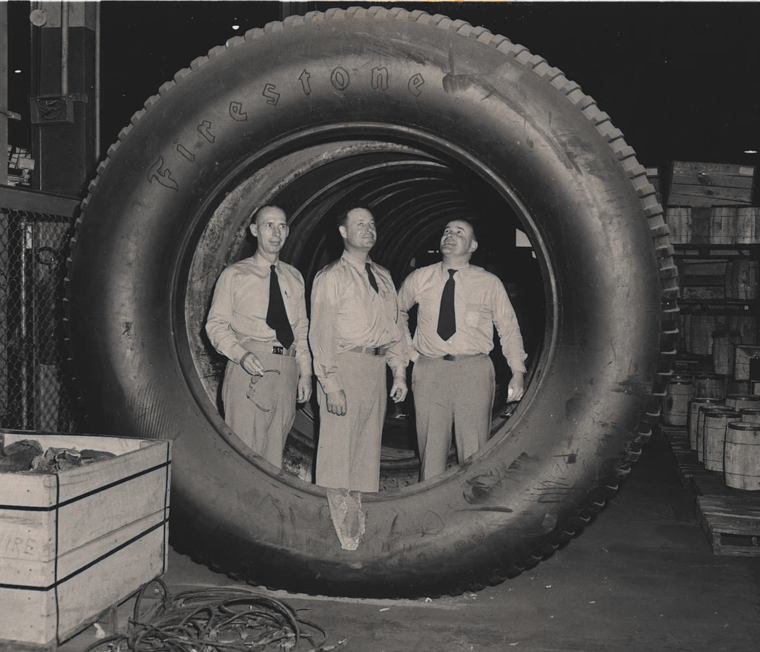
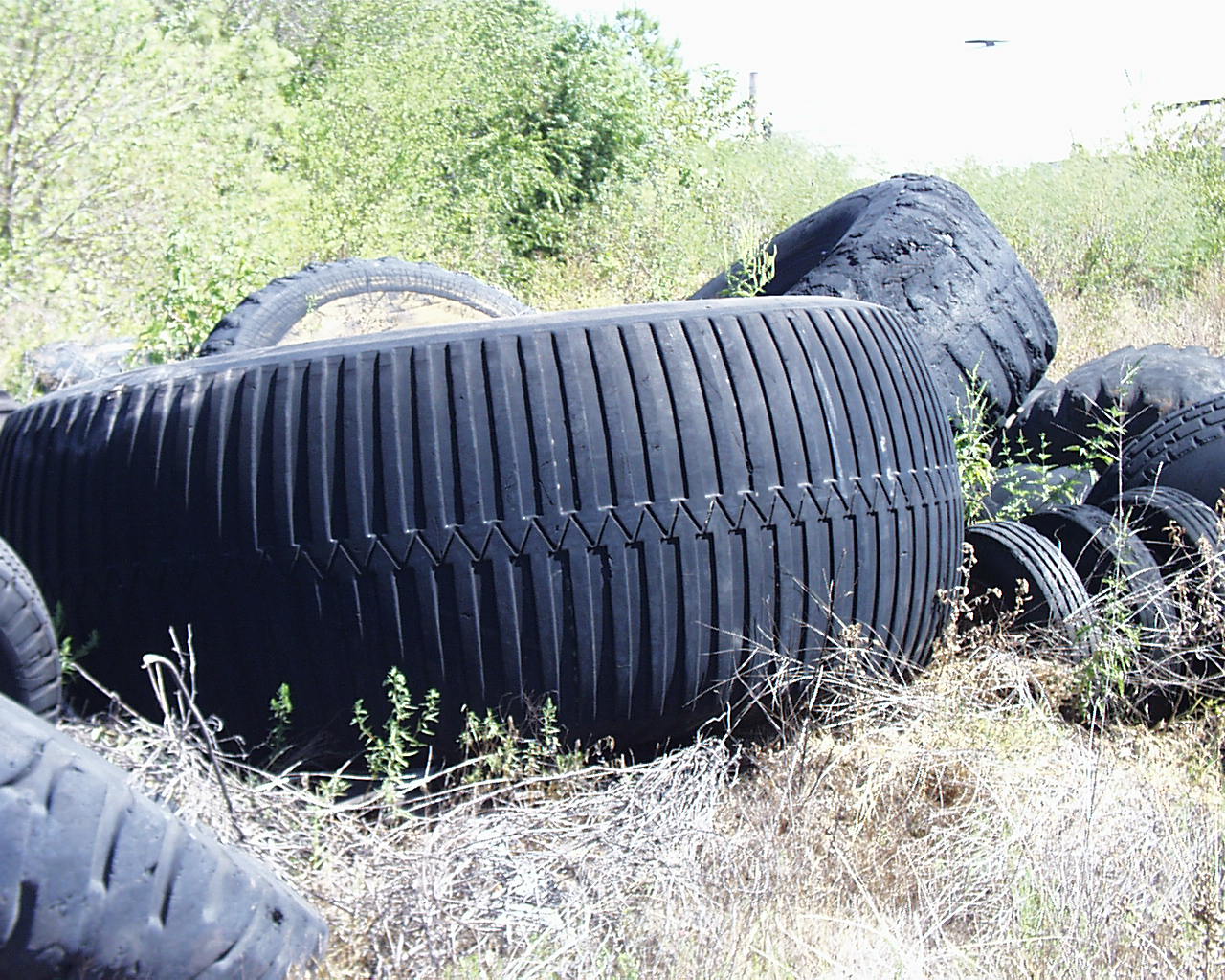
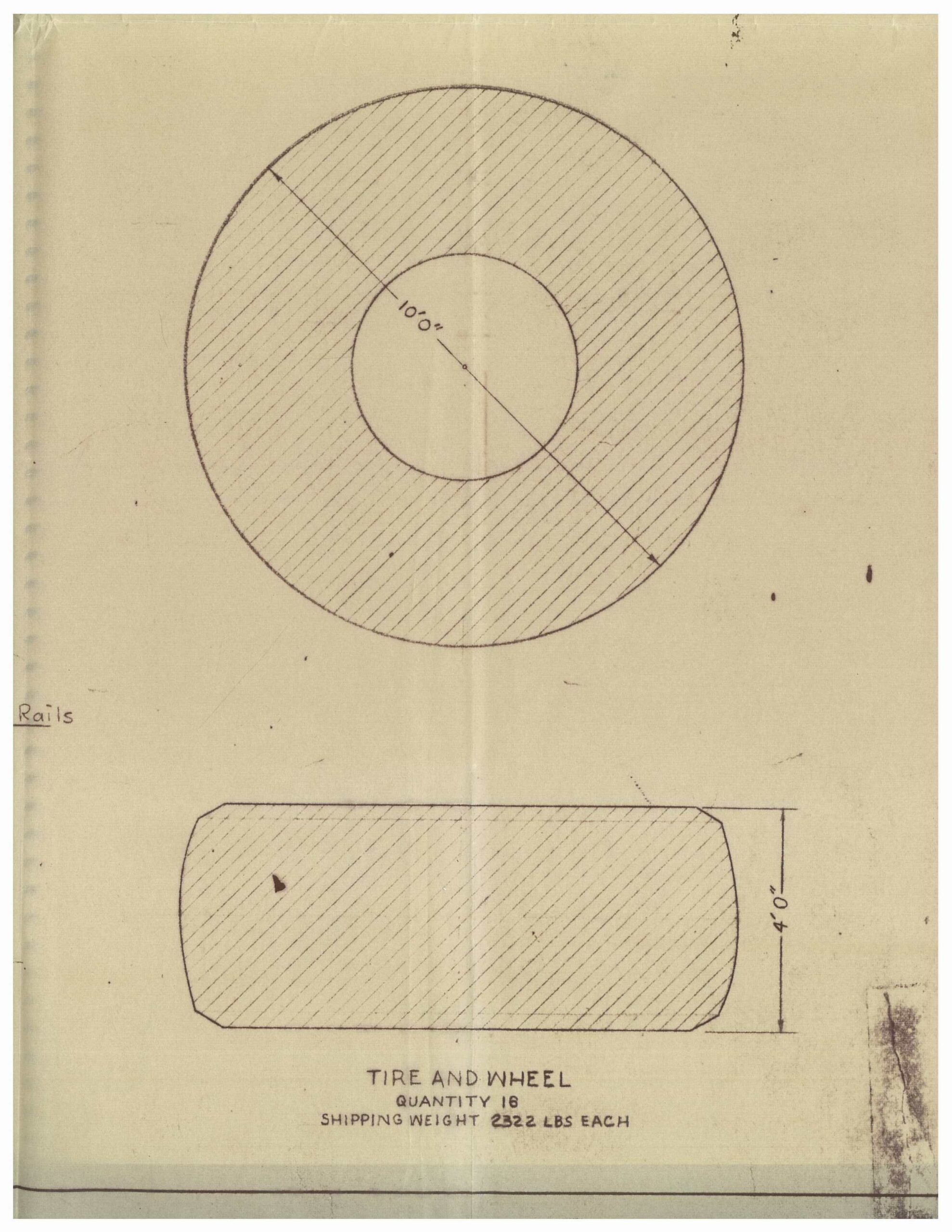
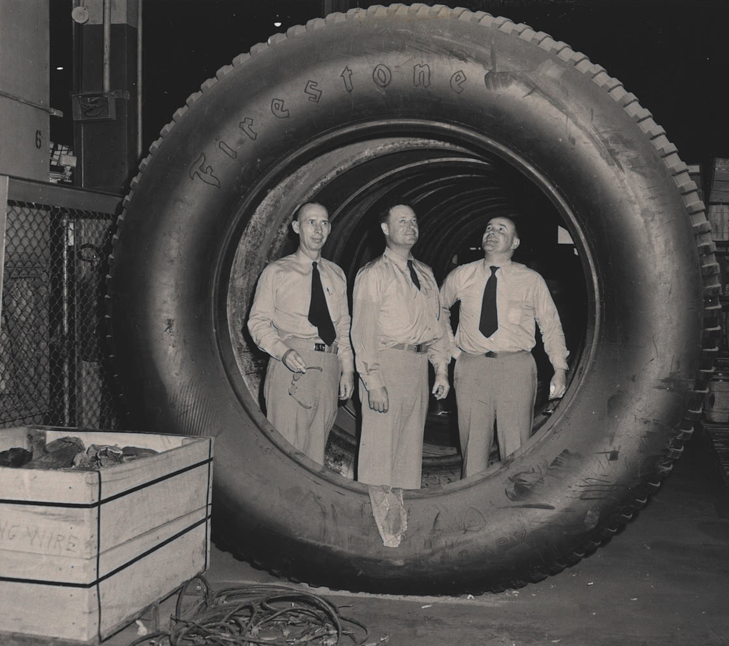
    The Firestone 120x48x68 tires are arguably, one of the most recognizable features on the last 3 LeTourneau Overland Trains. These tires were first produced in 1952. The numbers describe the tire dimensions as 120 inches tall – diameter (10 feet), 48 inches wide (4 feet), and 68 inches inner diameter. The were manufactured in thicknesses of 10-ply to 36-ply based on the machine it was used. If you wanted to buy a tire and rim combination during the 1960s, you would expect to shell out around $3,500 per tire and $1,600 per rim.

    Tire and rim combination weights will vary by rim model, rim metal composition, and tire plies. These tires were also used on the Crash Pusher, Water Wagon, Marsh Buggy, Sno/Swamp-Buggy, and possibly a few others that I have not seen.

    April 15, 1954 – Ft. Eustis, VA. Three visitors marvel at the new Firestone tires.
  • TC-266 Marsh Buggy Basics

    The Marsh Buggy was built as an experiment, a concept vehicle. It was completed in October of 1954. Only one was ever built. The Marsh Buggy had a gear driven scraper up front. This vehicle never ended up in service and was shipped overseas. Not too many images exist of this machine. I am going to save the details and images for my book. Stay tuned!