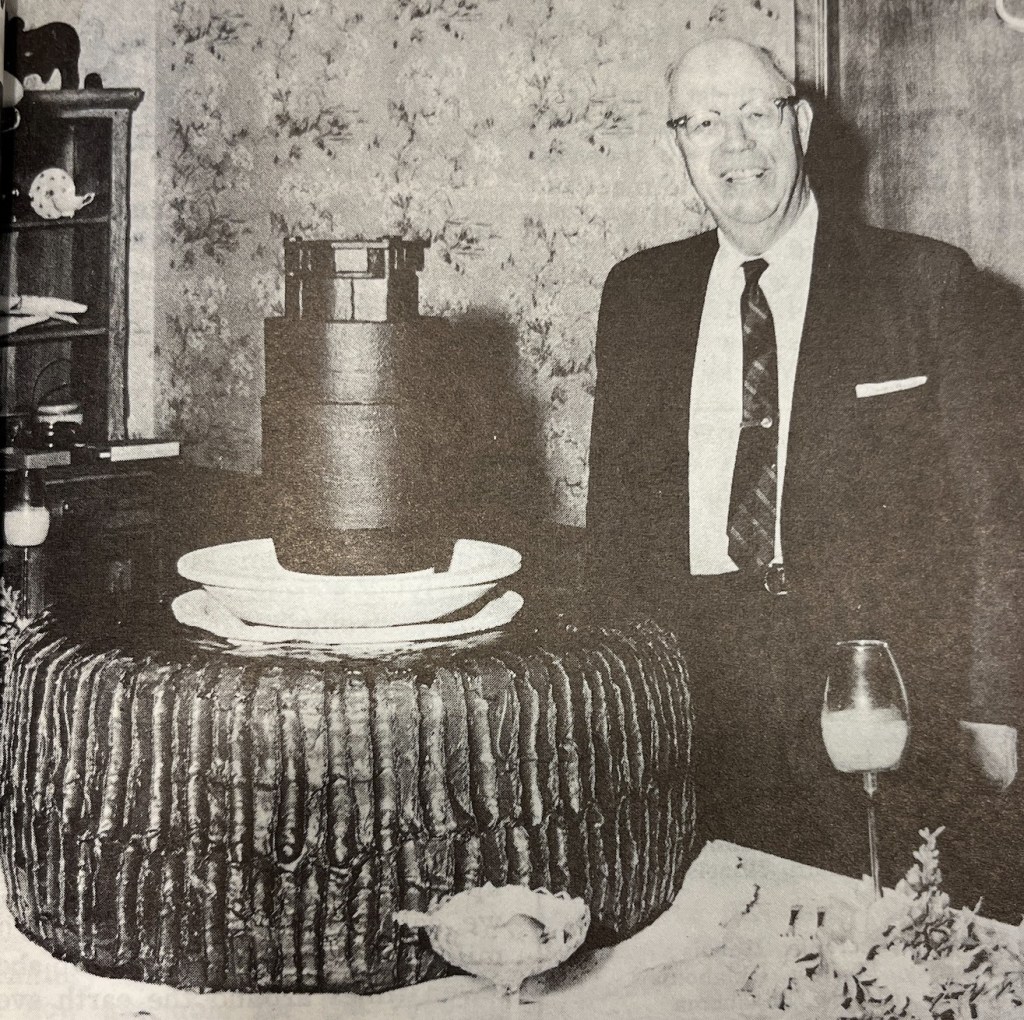
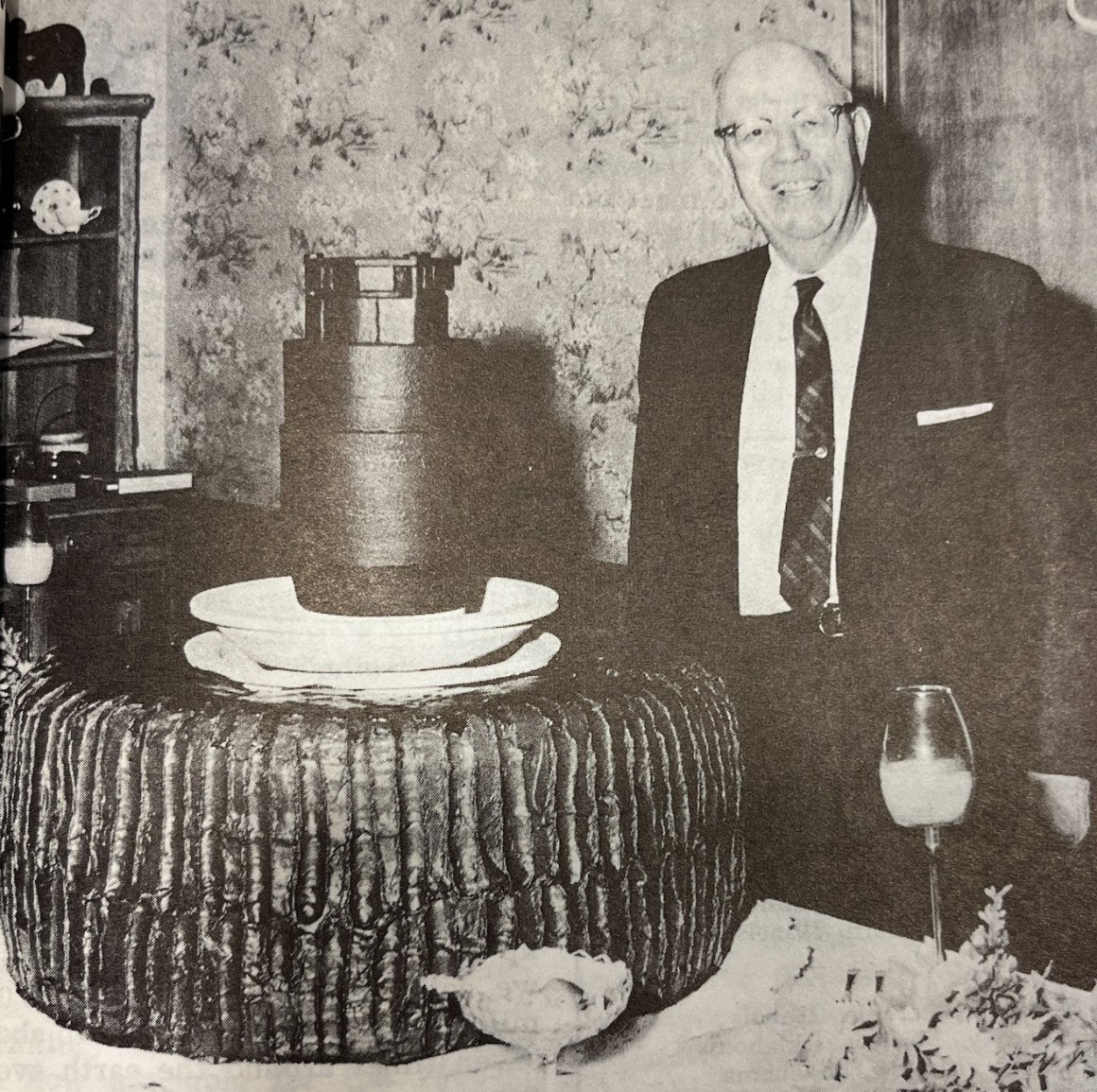
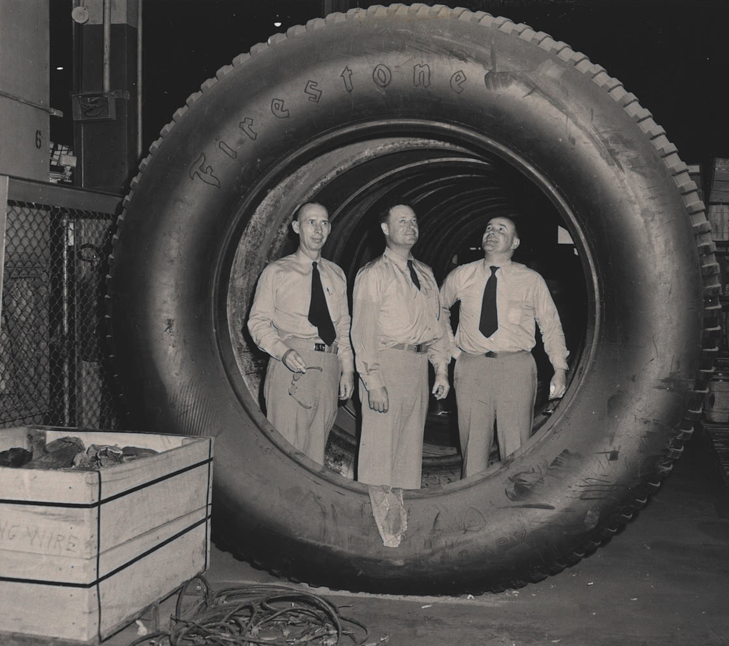
On R.G. LeTourneau’s 75th birthday, Mrs. R.G. surprised her husband with a 108-pound cake. This was no ordinary cake, as it mirrored the Firestone 120x48x68 tires found on the Sno-Train, TC-497, and other LeTourneau machines. The cake was 30 inches in diameters and 14 inches thick, requiring three days to bake. Attached to the enormous tire was his highly successful Electric Wheel.
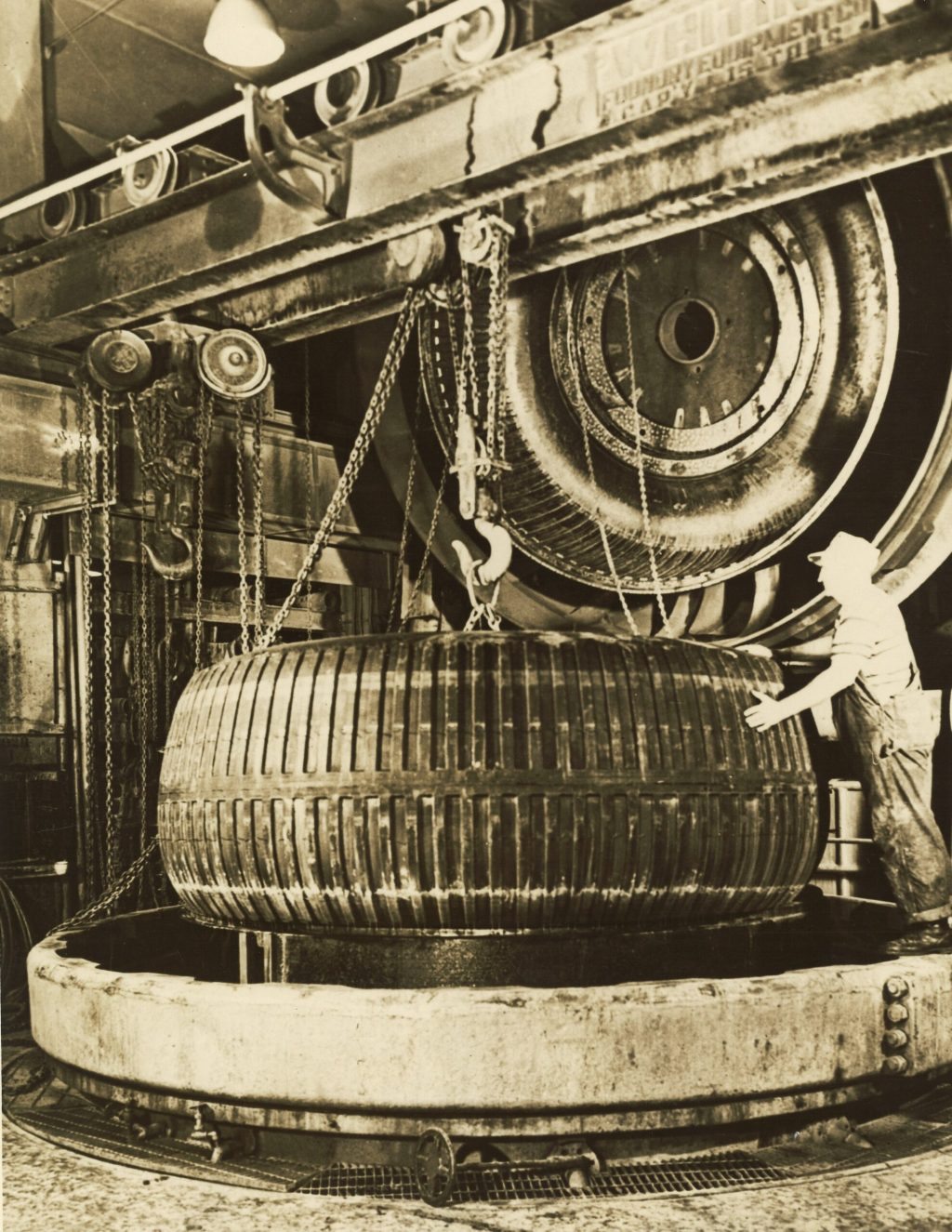
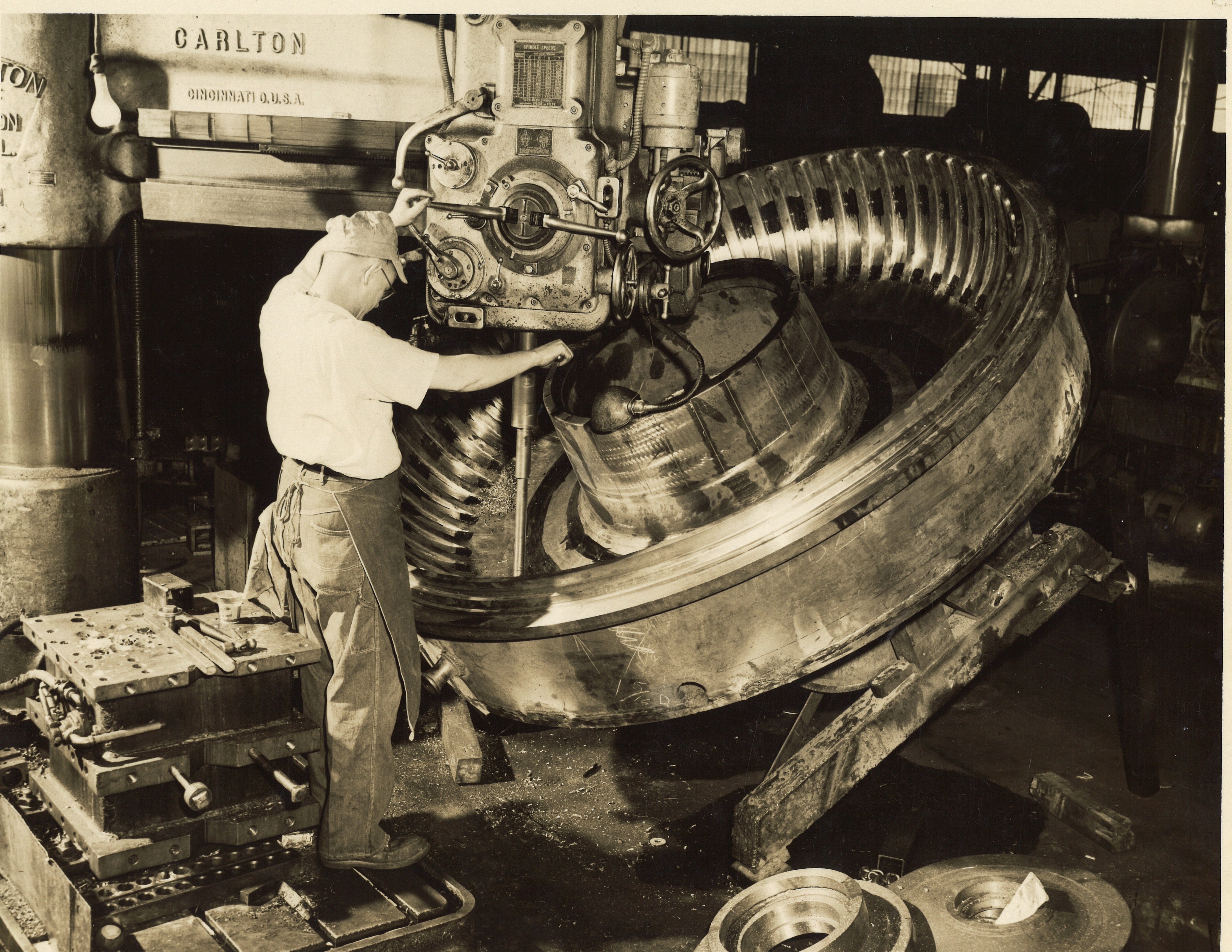
R. G. LeTourneau, Inc. was no stranger to building huge machinery. However, it wasn’t until 1952 that R. G.’s son, Ben LeTourneau built the tire mold that would help shape a critical component of the Overland Trains story – the monstrous tires! From this custom mold came the Firestone 120x48x68 tires that would support the Crash Pusher, the Swamp Buggy, Marsh Buggy,Sno-Buggy, the Thompson Trailers, Gold Digger, and several of the Overland Trains.
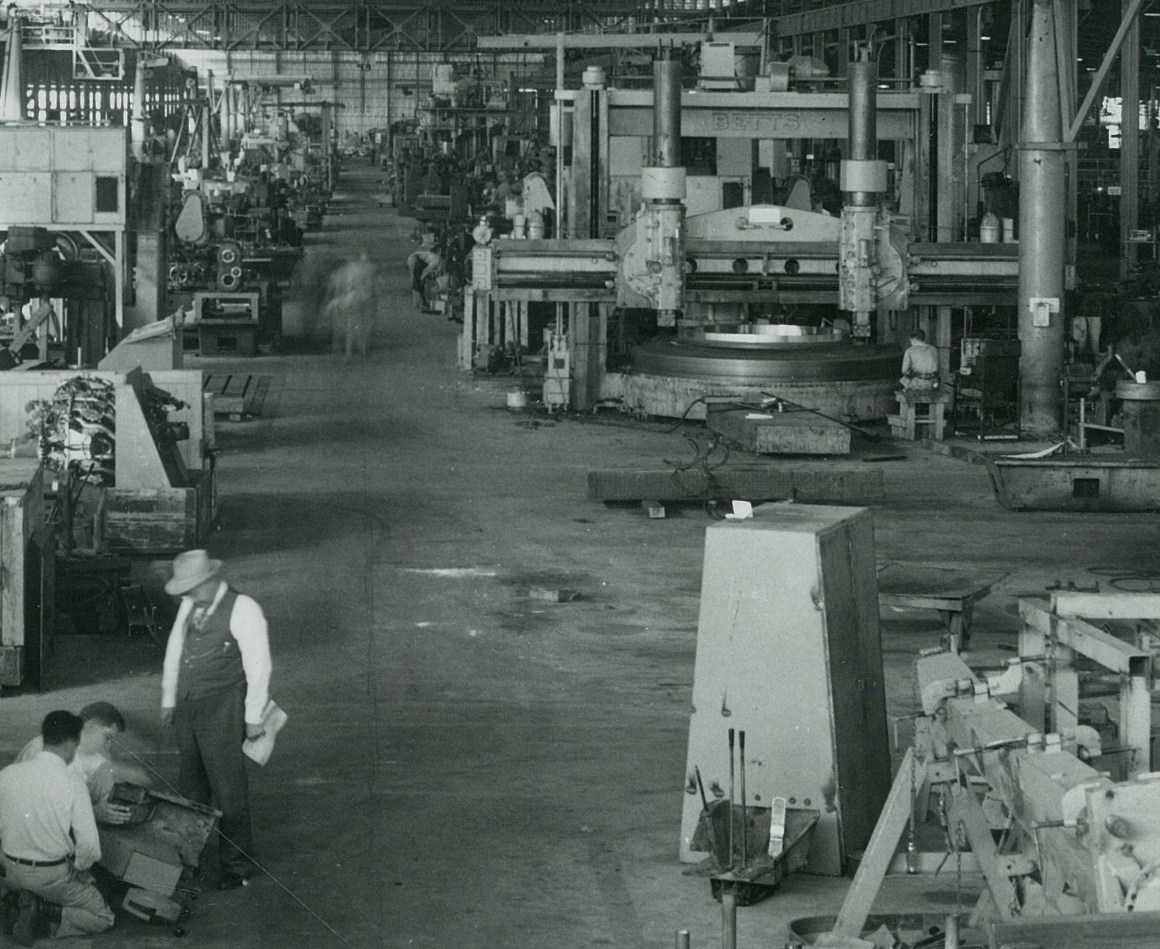
R. G. LeTourneau (left in hat) in the Longview, TX manufacturing line with the BETTS Vertical Boring Mill in the top-right, 1948.
In 1952, R. G. LeTourneau entered into contract with the Firestone Rubber and Tire Co. to build the 10 foot tall and 4 feet wide tires. However, they did not have a mold for them. At the age of 18, Ben LeTourneau helped build this mold for Firestone.
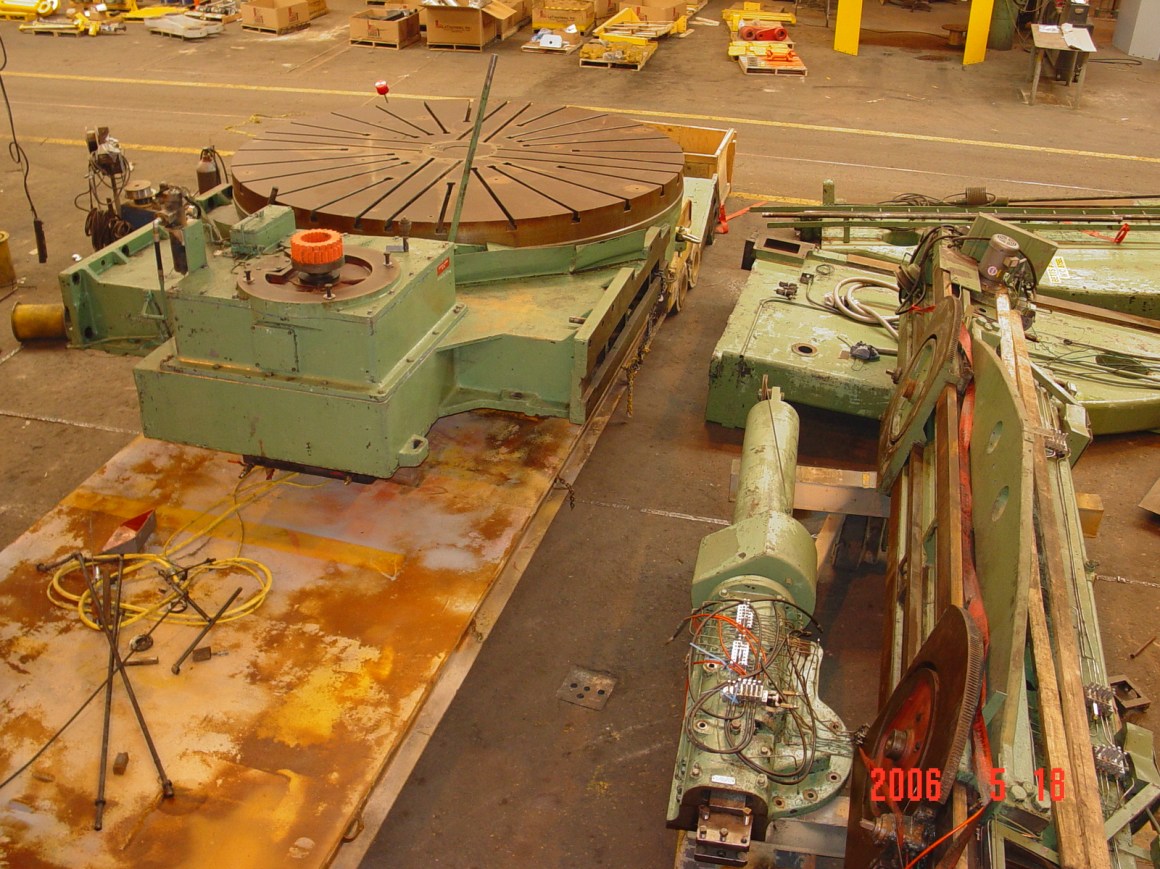
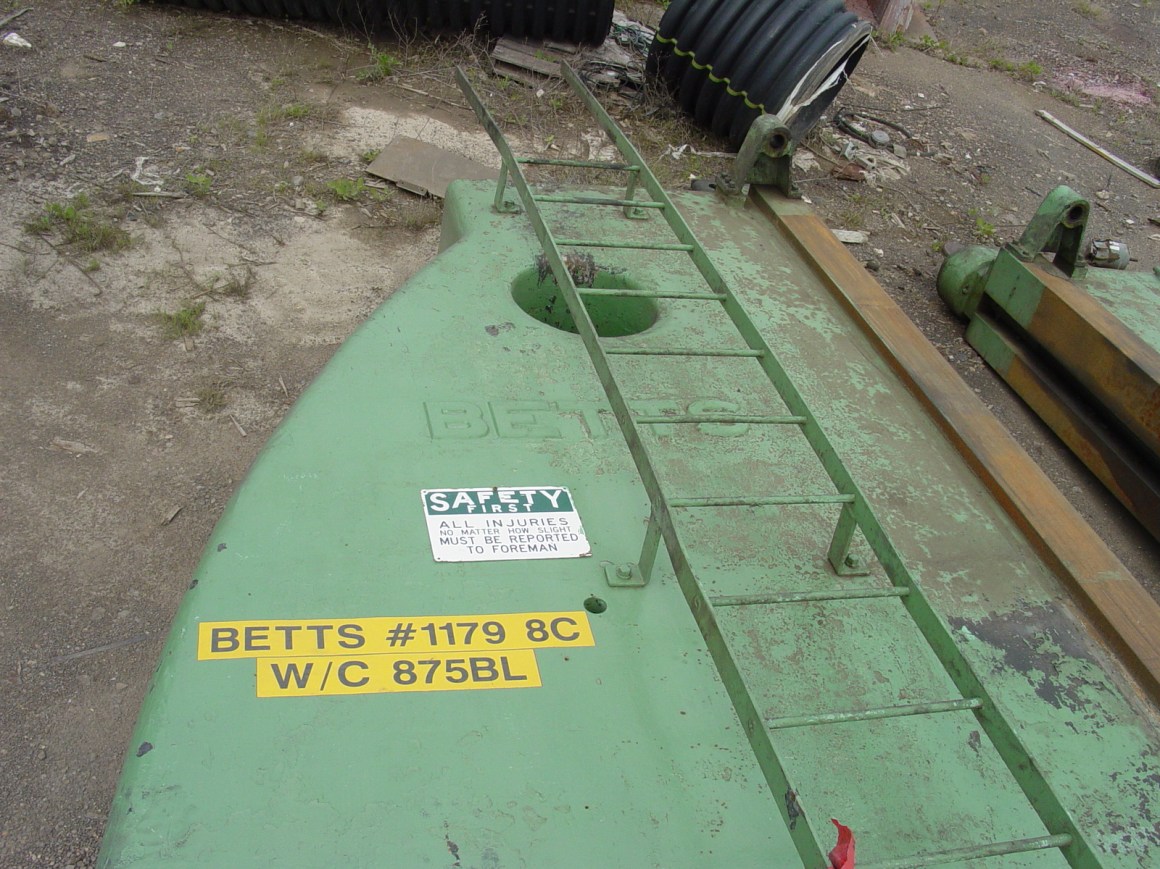
The BETTS Vertical Boring Mill (BETTS) had a 12’ diameter table and was used to build the custom tire mold. The table “rotated with tools mounted on a bridge over the table, while the table rotated under the bridge.”
After the two-halves of the mold were built and placed on the BETTS 12 foot diameter table, Ben “mounted it onto the rotating table and, after making a basket which I attached to the tool bar, rode the tool down into the mold while it was rotating under me. In this way we cut a smooth mold which was used to form the new tires.”
The BETTS was still in use at the factory until 2006, when the company owners at the time dismantled and removed it. It is unknown whether it was scrapped or sold to another company.
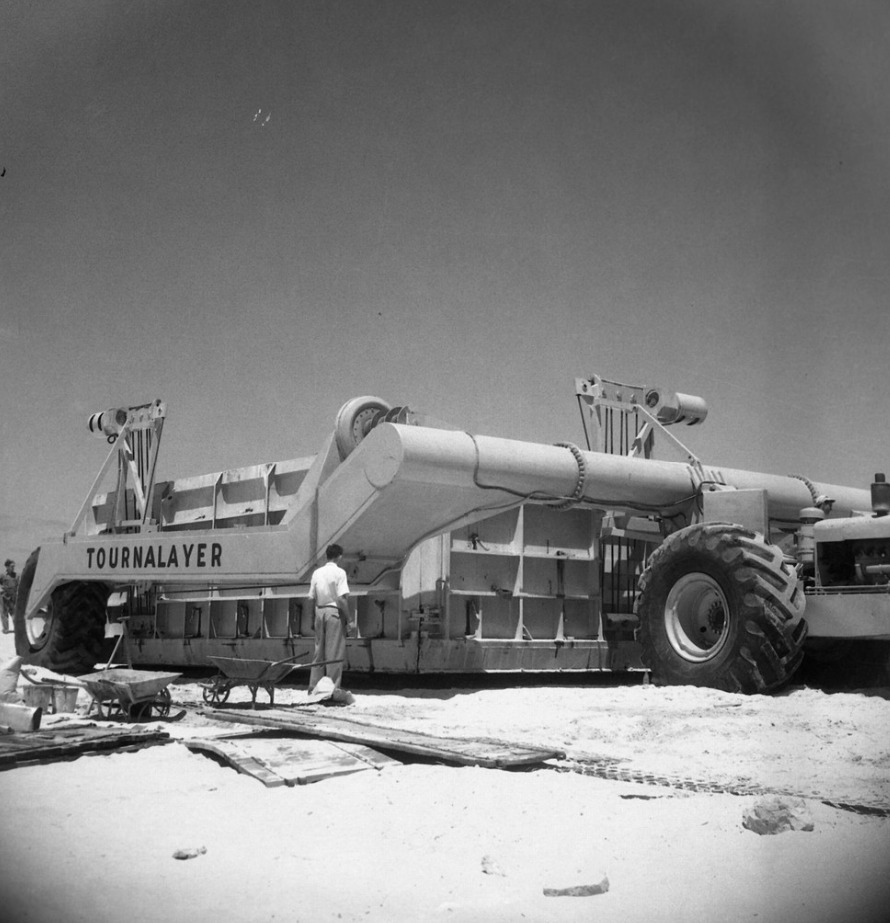
Tournalaid homes were made in the hundreds during the WWII-era. These cement homes were prefabricated by a machine called the Tournalayer, designed and built by R. G. LeTourneau. The first Tournalayers were built in 1946 at the LeTourneau factory in Peoria, IL.
tournalayer, image courtesy r. g. letourneau museum & archives at Letourneau university
The Tournalayer was a giant mobile concrete form on wheels, a large 3-D printer of sorts using concrete. It was designed to build steel-reinforced concrete Tournalaid homes – one every 24 hours.
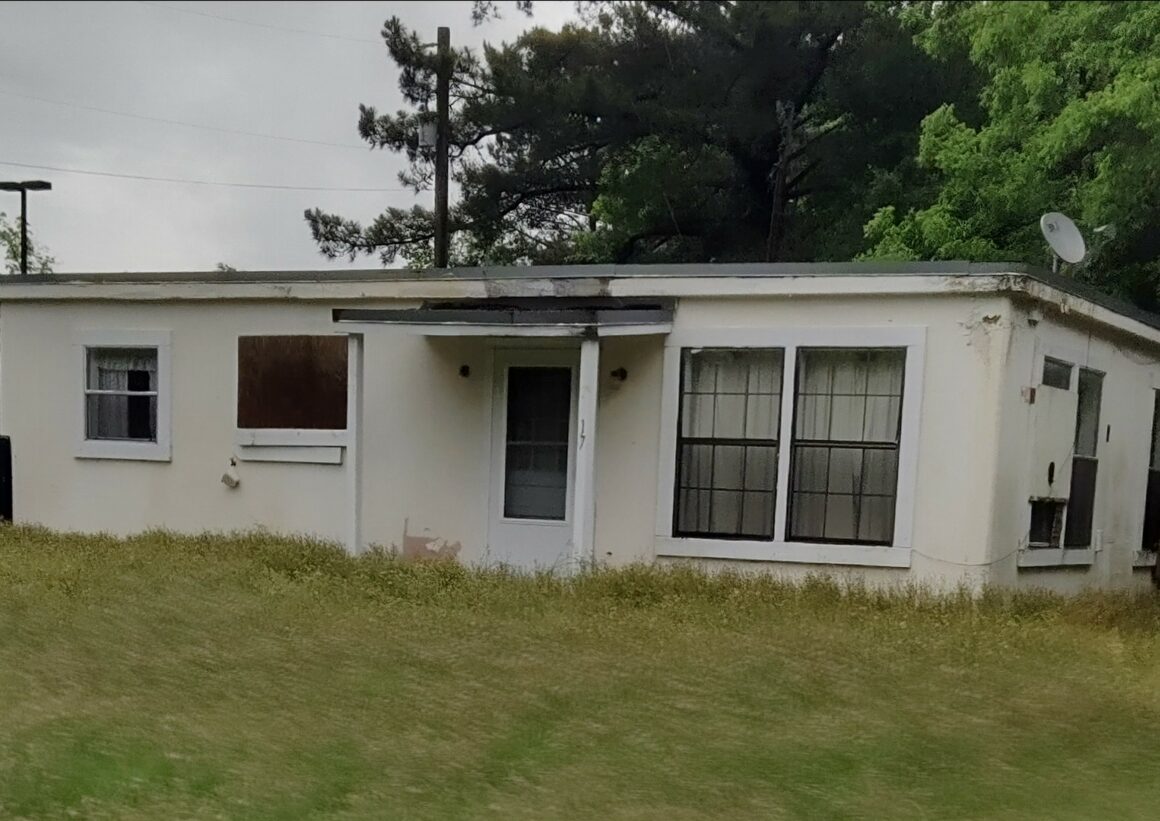
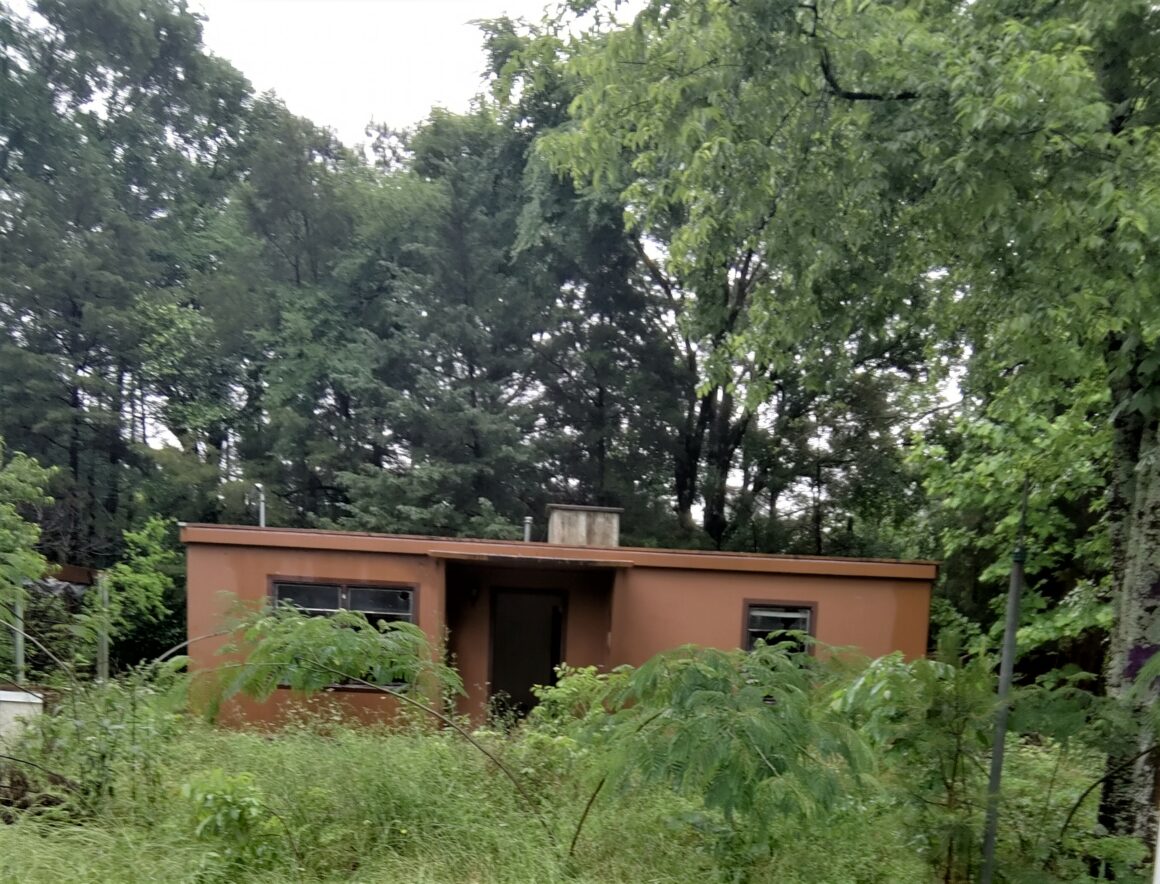
Each Tournalaid home had a footprint of 30 feet by 20 feet. It had a living room, kitchen, utility room, and two bedrooms. Two Tournalaid homes exist next to the Longview factory, seen below.
When I visited the LeTourneau’s old factory grounds in 2021, I took the following two pictures of the Tournalaid homes.
1 of 2 Tournalaid homes facing demolition in Longview, tx2/2 tournalaid homes facing demolition in Longview, tx
Efforts to Save These Existing Tournalaid Homes
A local Longview, TX group started a website at https://tournalaid.com with the goal of saving the Tournalaid homes from demolition. Please sign up for updates from the aforementioned website and follow their updates. Let’s hope that we can save them.
“We are publicly petitioning Komatsu Mining Corp. (Joy Global Longview Operations llc) to immediately cease from demolition or taking any adverse action against the two Tournalaid homes located on their properties on Macarthur street in Longview, Tx.”
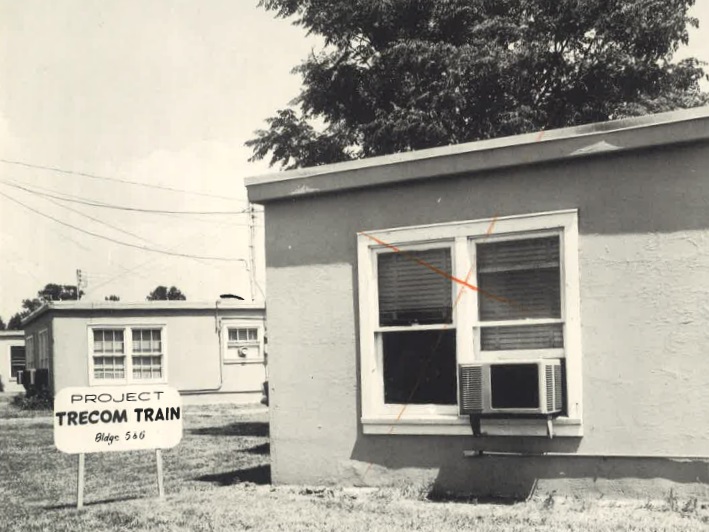
project trecom train tournalaid homes, image courtesy r. g. letourneau museum & archives at Letourneau university
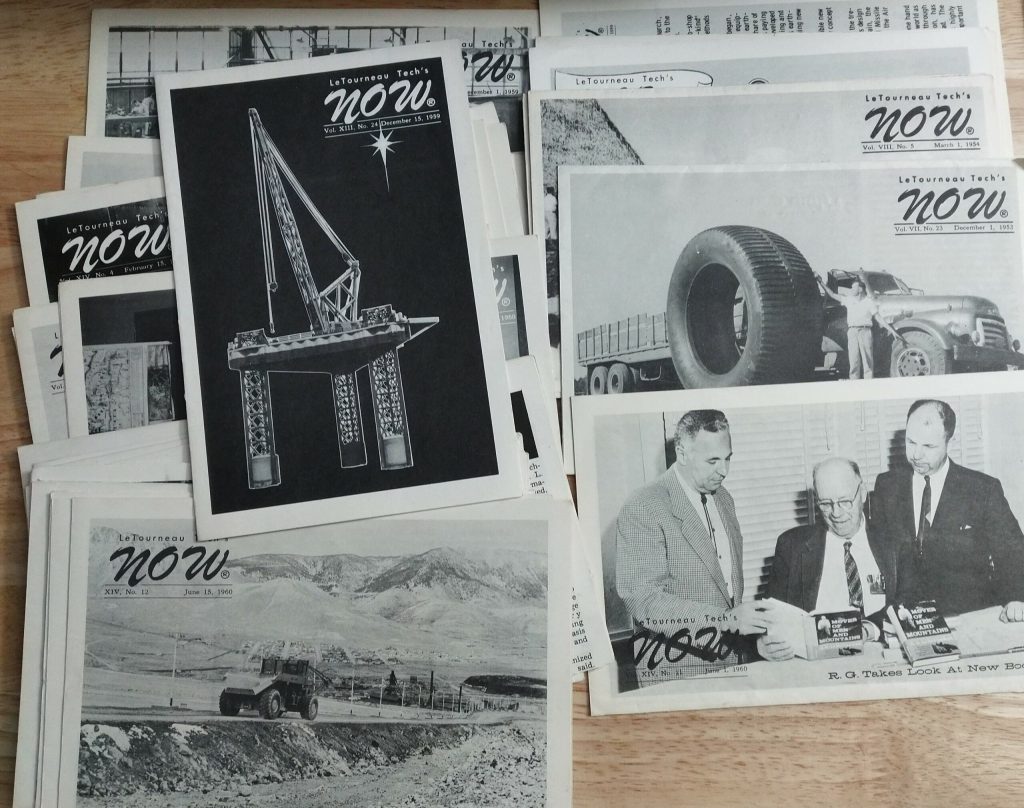
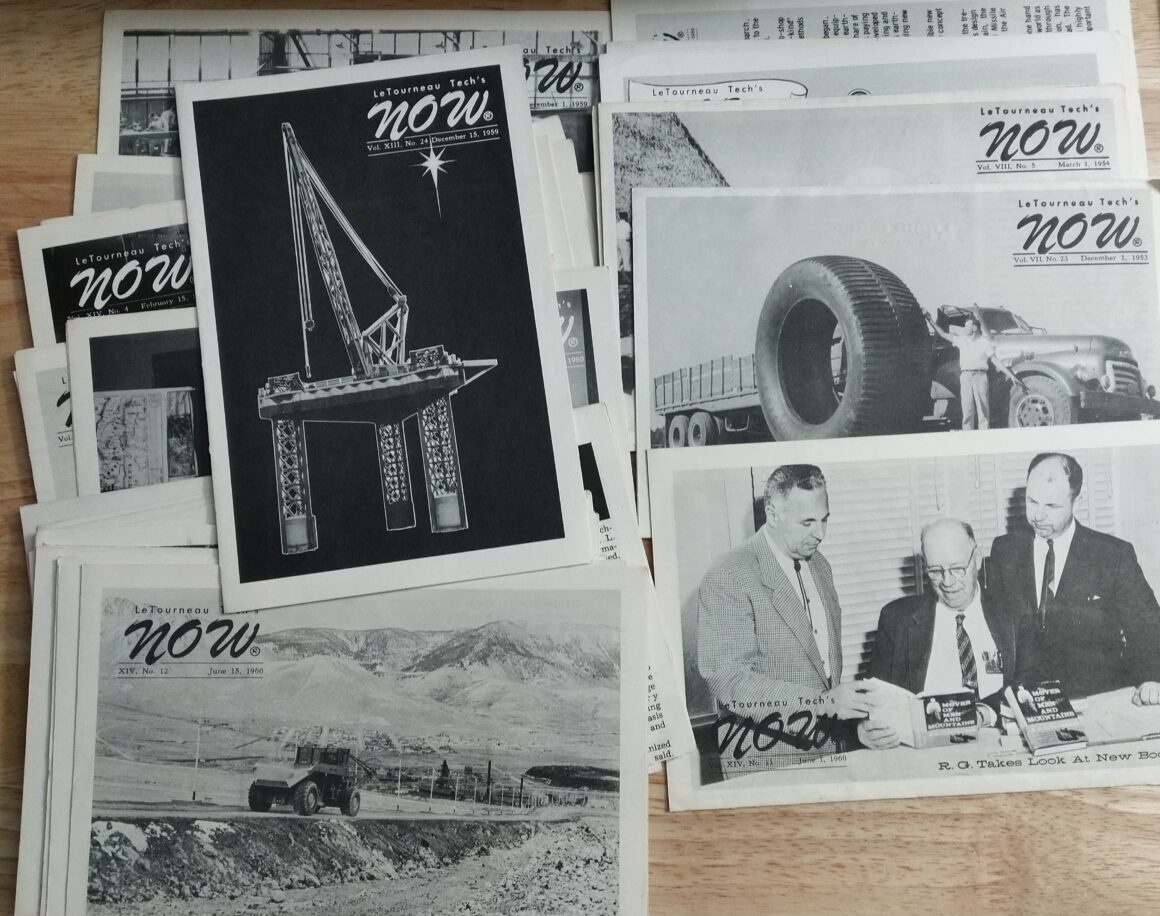
I received a cache of gently read LeTourneau NOW newsletters in the mail yesterday. These company newsletters were published by R. G. LeTourneau. Inc. and mailed to whomever wanted to read it free of cost. The date range for these newsletters closely aligns with the Overland Trains development, including the Firestone 120x48x68 tires. I have scanned the December 1, 1953 issue and embedded it if you would like to read or download the issue.
I started writing this book in February of 2020. Two and a half years later, I have captured the most complete Overland Trains story ever published. Buy the book now on Amazon.com (https://www.amazon.com/dp/B0BFL91FX6).
My wife and I had brunch with some friends yesterday. He just celebrated his 90th birthday over the weekend. He has had a significant impact on the Overland Trains story. His direct involvement with the Sno-Train and Sno-Freighter, along with the never before seen images and stories are significant history contributions. I couldn’t imagine a better way to spend our Saturday morning. Thank you for meeting up for brunch Marty and Cyndi!
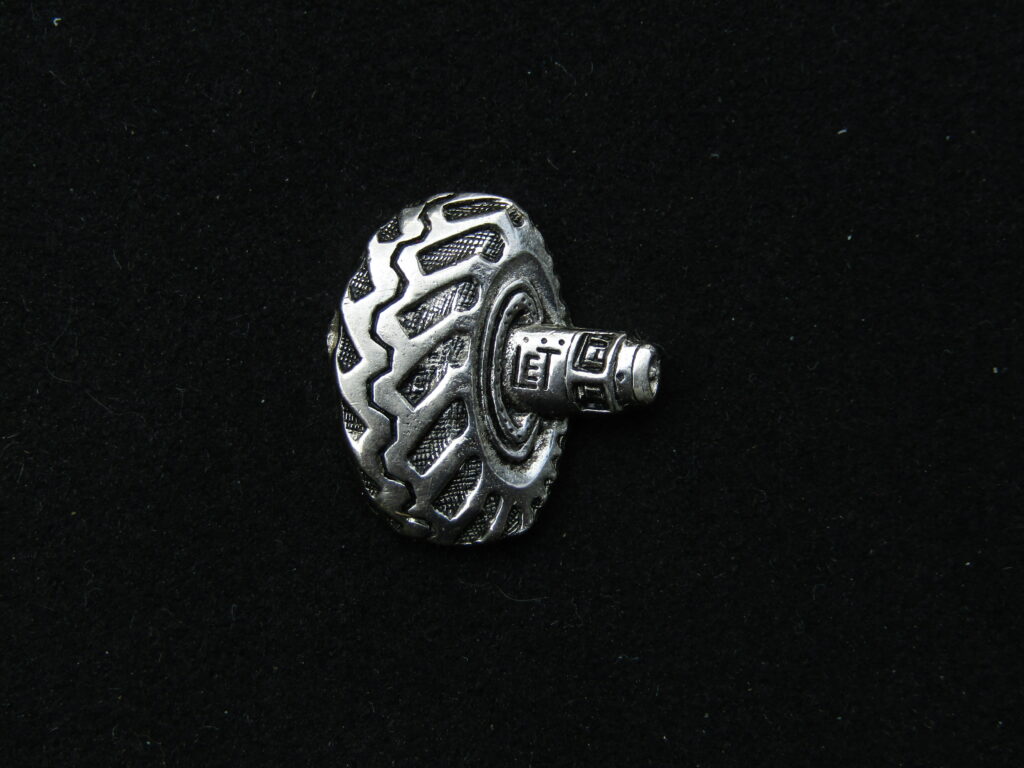
This Electric Drive metal is part of a tie clip. It fell off the clip on the way home, but can be easily glued back on again. The tie clip also came with a matching set of cufflinks – not shown. Thank you Marty!
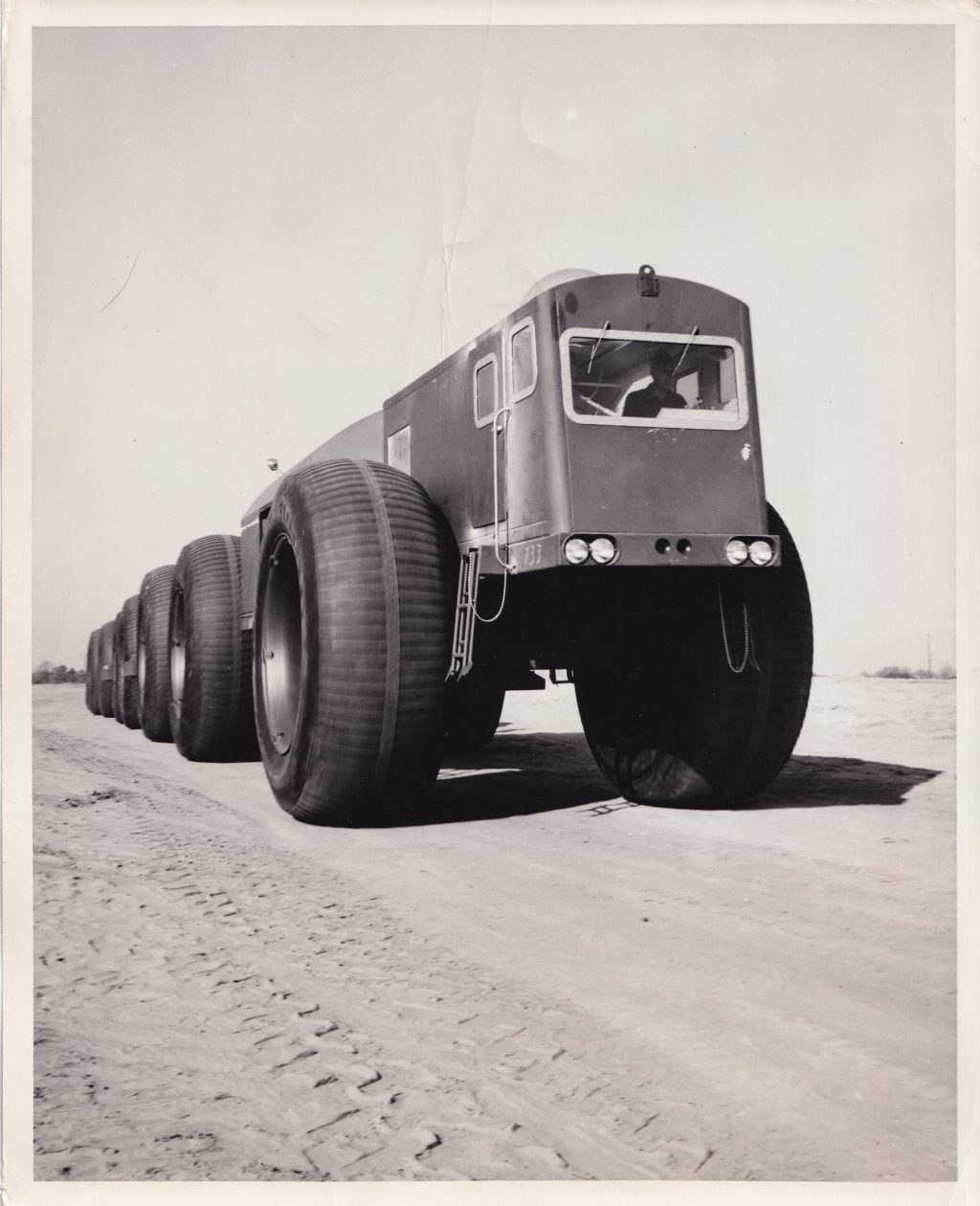
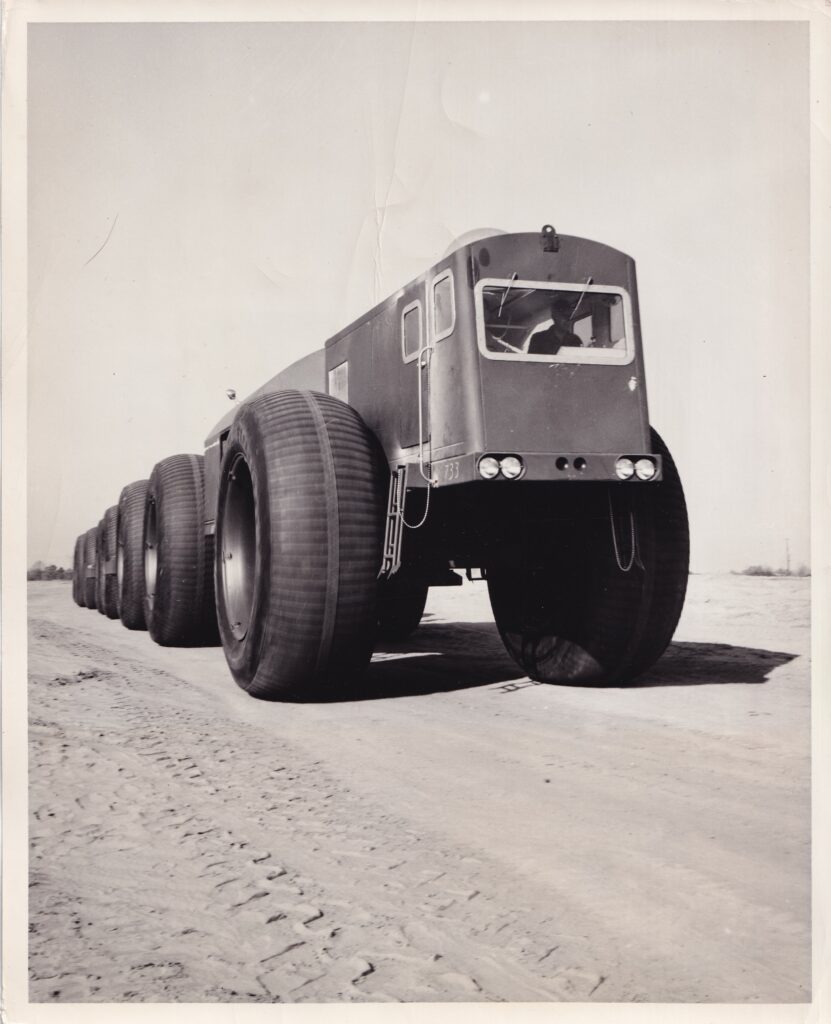
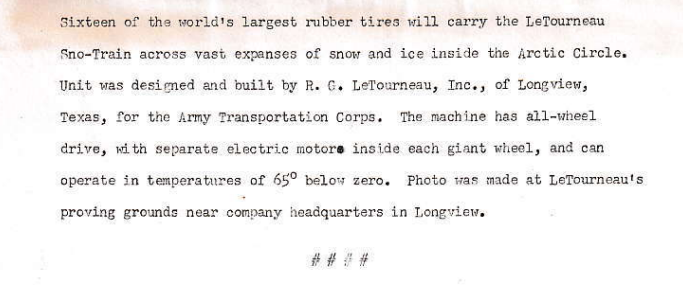
In this black and white Sno-Train image, you can tell by the tires that it is moving. This image was captured prior to it leaving R. G. LeTourneau, Inc.’s property for Greenland. The two small circles in the middle of the bumper are the horn. If I were a betting man, I would say that the train is unpainted in this picture. Notice the apparent oil stain on the top left of the cab, the chalk marking “733” on the lower left of the front bumper and the overall lack of continuity in the overall vehicle shading. The metadata, or description, reads like an advertisement.
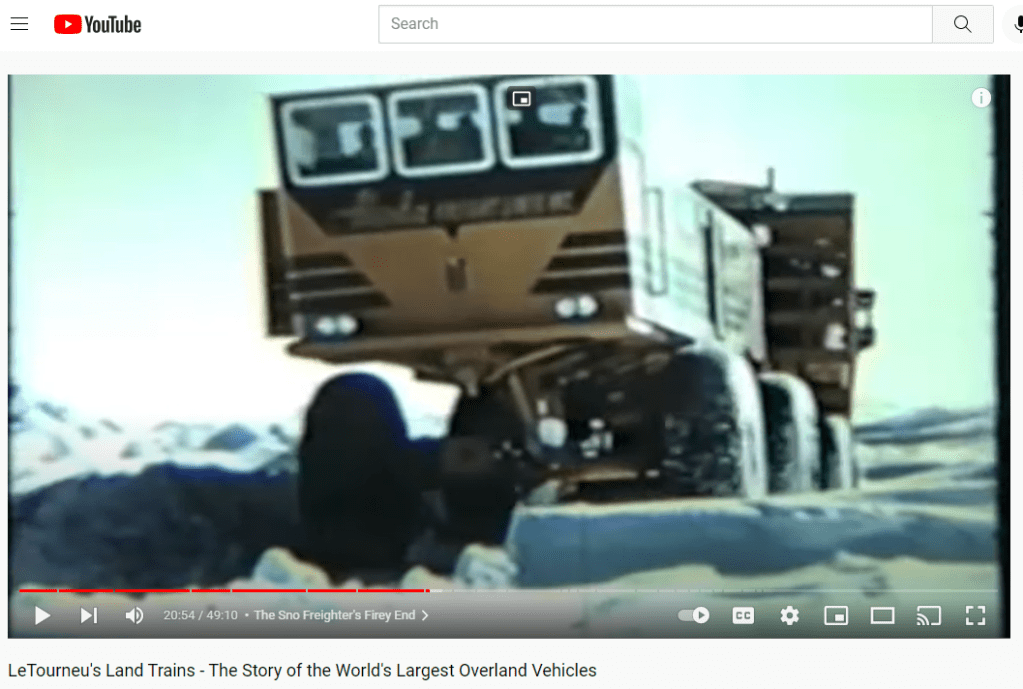
An acquaintance of mine posted a video on the Overland Trains today. It has been a labour of love for him over the past 2 years. His research and narration are top class. I can’t recommend watching his video enough.
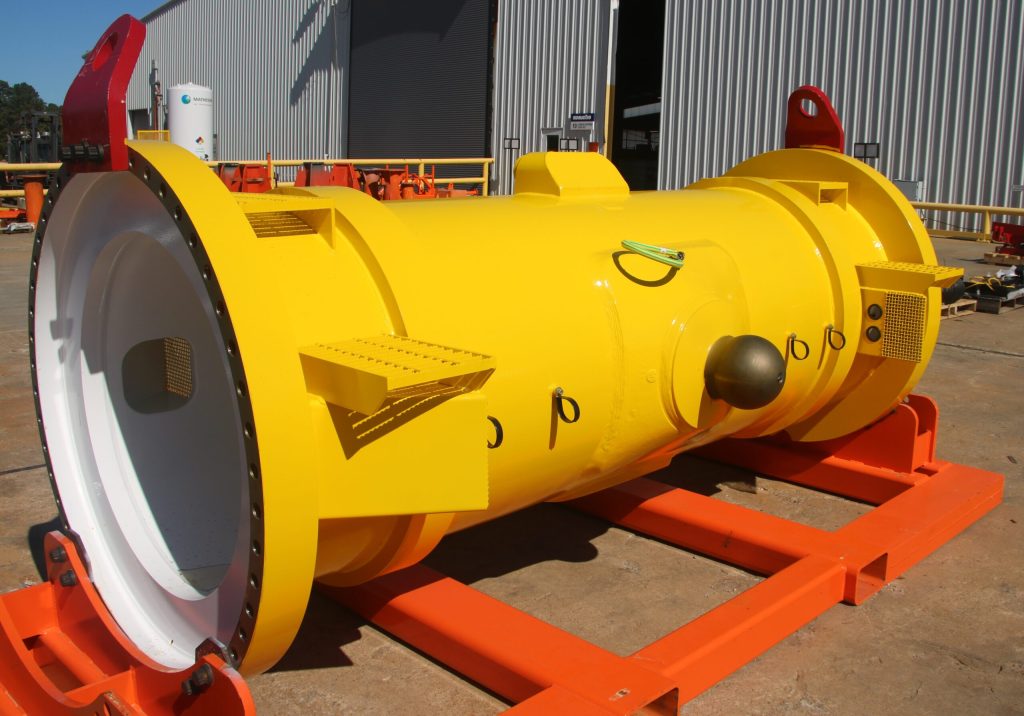
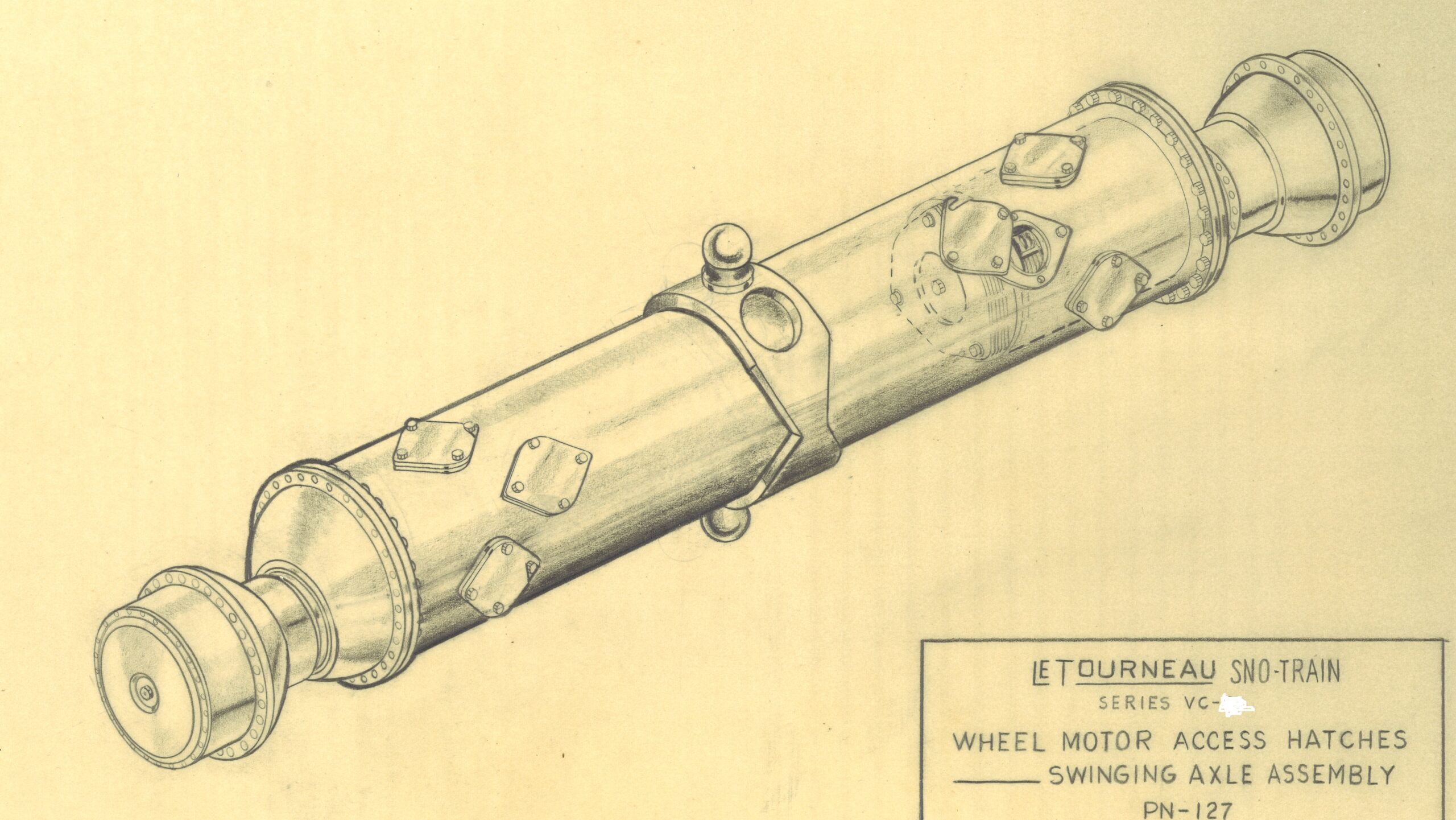
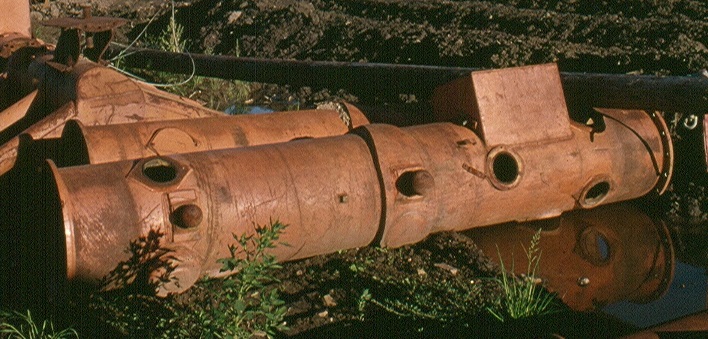
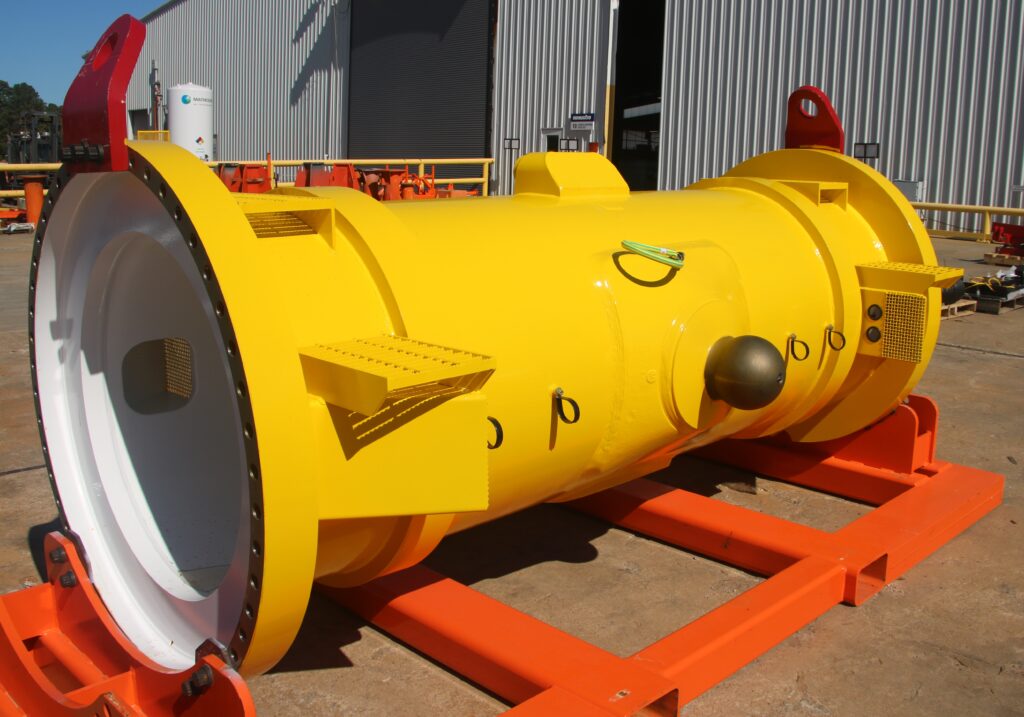
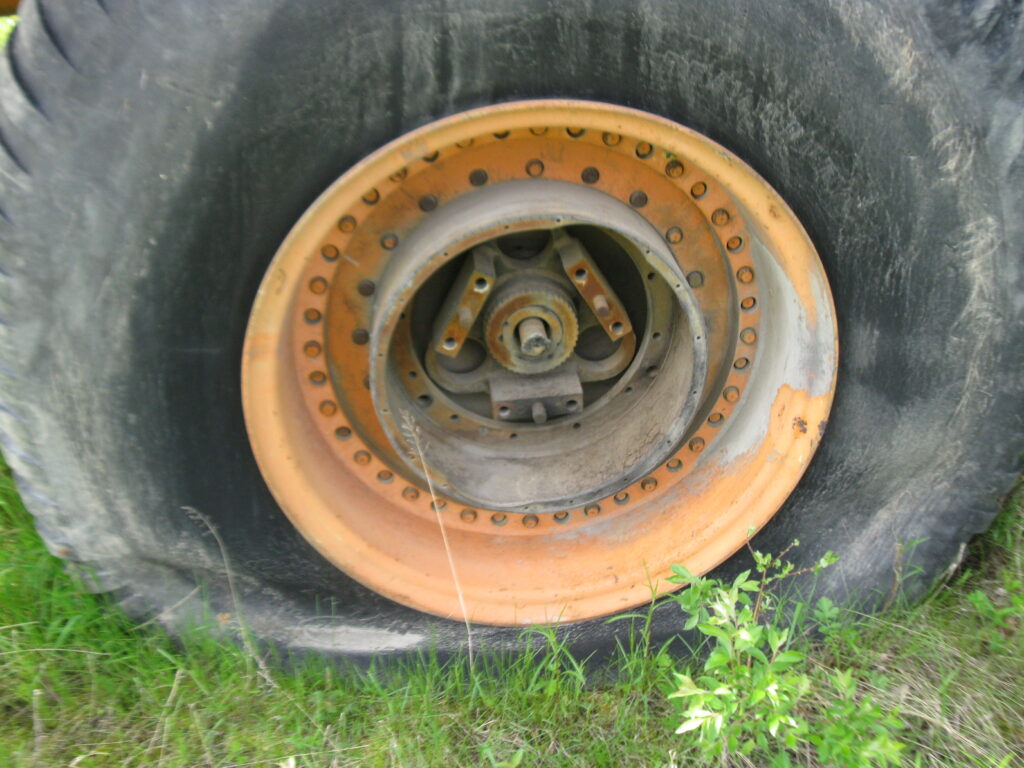
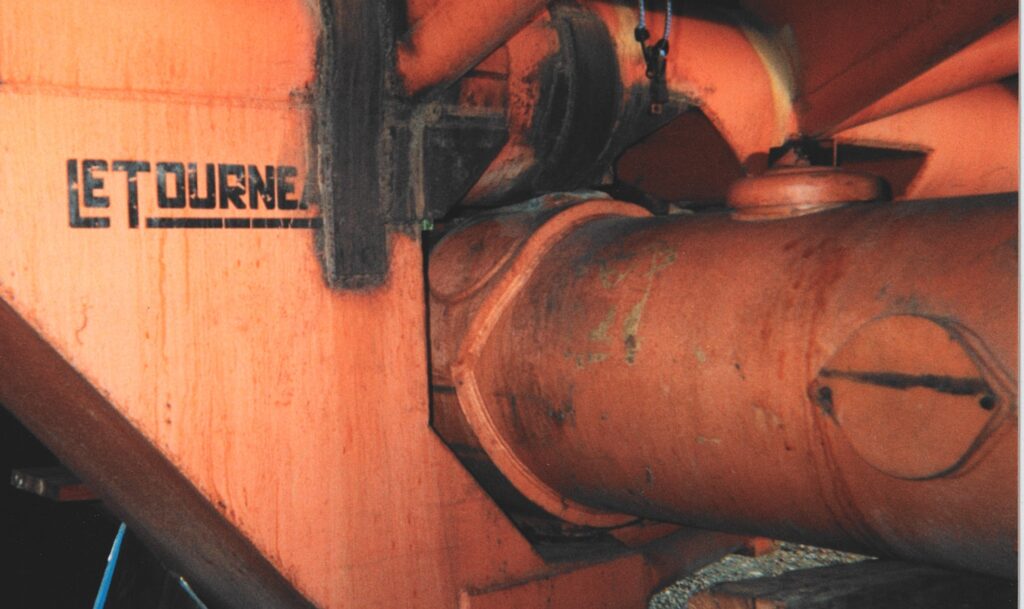
When Alfred Ghezzi purchased the Sno-Freighter for supply runs to the Distant Early Warning Line, he never realized that it would make just three working trips before coming inoperable. Over the last couple of months, I have been contacted by two individuals about suspension and steering mechanisms. I thought that I would go ahead and pre-emptively post these images of the Sno-Freighter swinging axle assembly and explain LeTourneau’s Electric Drive assembly. A LeTourneau built electric motor is bolted to the mechanical gear reduction called a Driver. The entire assembly is inserted into the swinging axle assembly. The axle assembly also had wheel motor access hatches. You can see in the assembly drawing below where the electric motor would be accessible by removing the small hatch cover.
Swinging axle assembly and electric drive drawing. While the drawing shows it is for the Sno-Train, the drawing listed here was for a VC-XX model not produced
VC-22 axle assembly. Image: Mike Haskins
The modern day swinging axle assembly with pivot balls. Image Dale HardySno-Freighter exposed Driver housing. Image Jeffrey Smoker.The pivot balls are on the top and bottom, hidden from sight. Image source unknown – for education purposes.
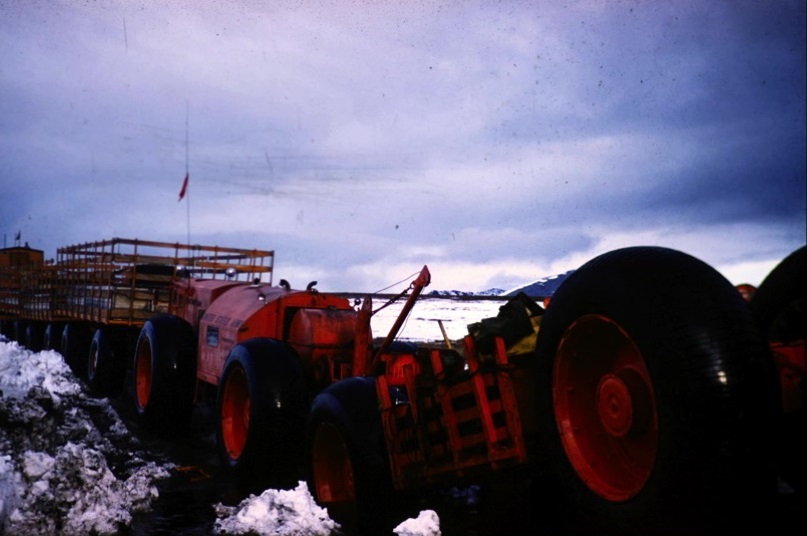
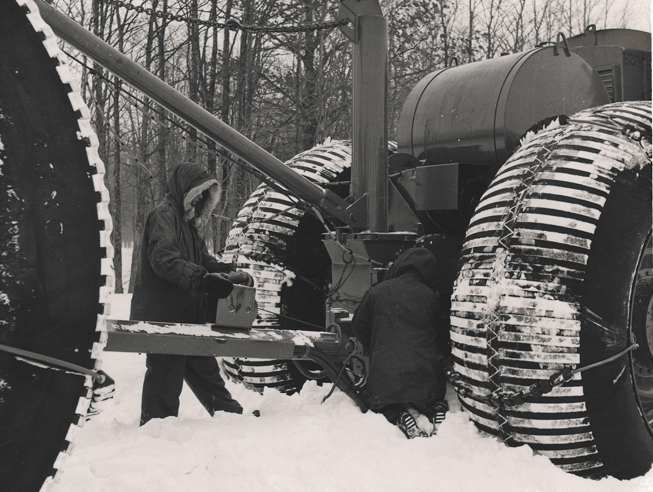
When the Sno-Train manufacturing was completed, it was sent to Houghton, MI for the Army to test capabilities. In the image shown below, you see two personnel checking trailer connection or power cables. The large pill-shaped canister between the rear tires is the fuel tank. This photo also shows the Sno-Train with traction lugs attached.
Inspecting the Sno-Train in Houghton, MI dated 3-10-56
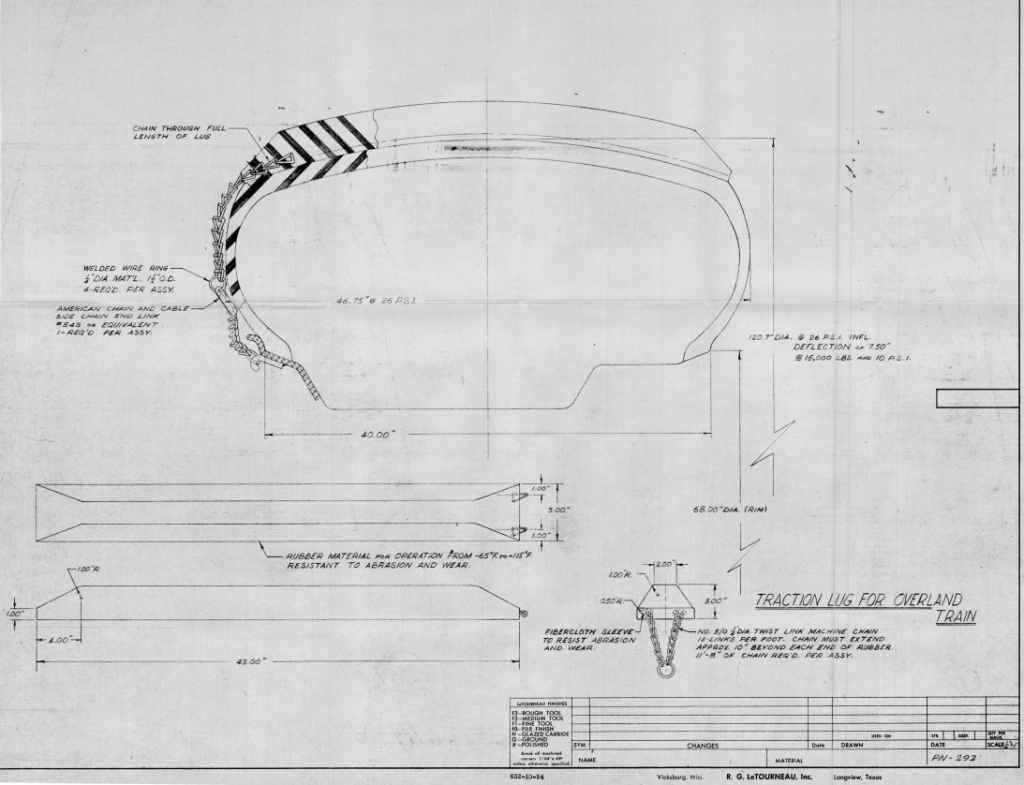
Traction lugs are the equivalent to tire chains, but they are for the monster 120x48x68 tires. Seen below is the diagram showing the Overland Mark 2 traction lugs, which vary from the lugs seen above. R.G. and his engineers iterated on many of the designs as they learned more about how they operated in field conditions. The traction lugs were one of those iterative devices.

 Overland Trains