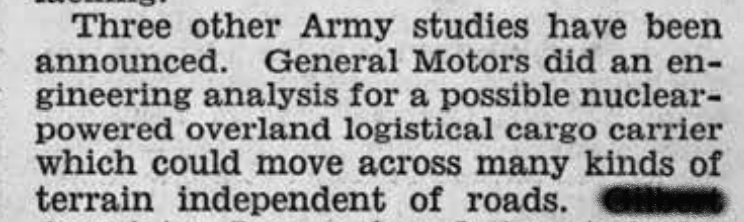
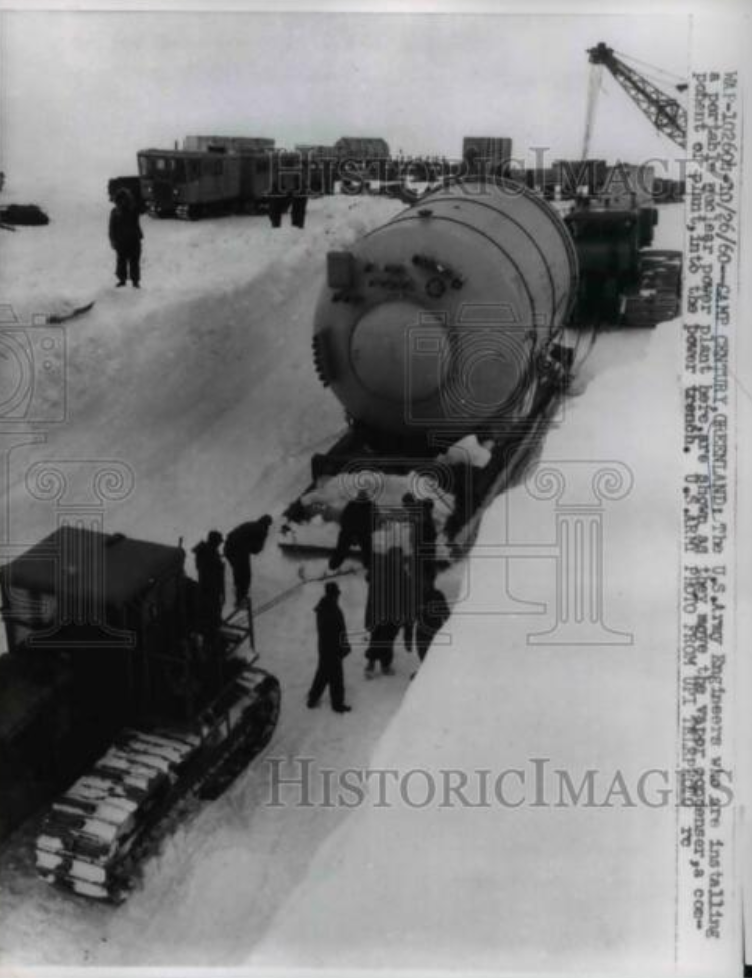
As early as 1956, the United States Army Nuclear Power Program had been researching and developing a compact nuclear power plant. These compact reactors would be movable on semitrailers, railroad flatcars, or barges. The January 15, 1958 United State House of Representatives record relates the following.
The Army’s Nuclear Power Program was heavily scaled back in 1966 because of budget cuts related to the Vietnam War. Nuclear power never found its way to any of the 6 Overland Trains.
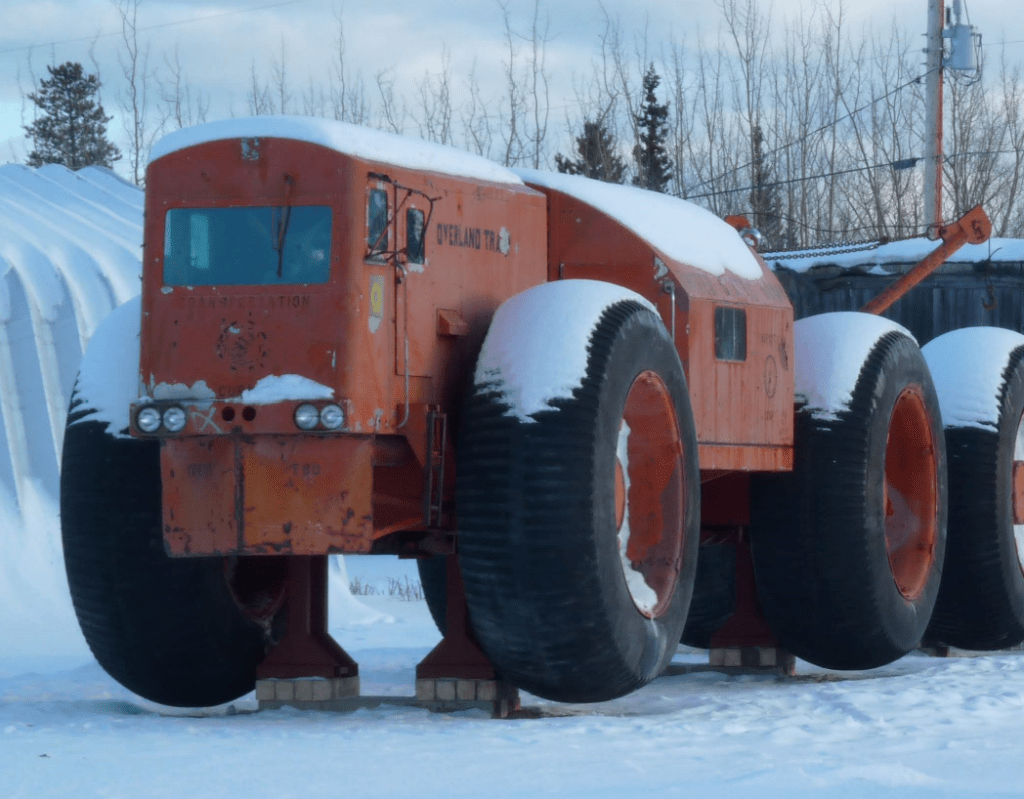
“The Monster” was noted in a Canadian geology publication. Local residents saw the VC-22 Sno-Freighter abandoned for many years. It’s awesome size led to the term “The Monster.” The resulting name led to geologic formations known as “Monster Syncline” and “Monster Formation” and also the “Monster River.”
The LCC-1 Sno-Train also received a similar and endearing name. Because of it’s size and large wheels, local residents referred to the Sno-Train as the “Snow Monster.” Read the other names associated with the Sno-Train.
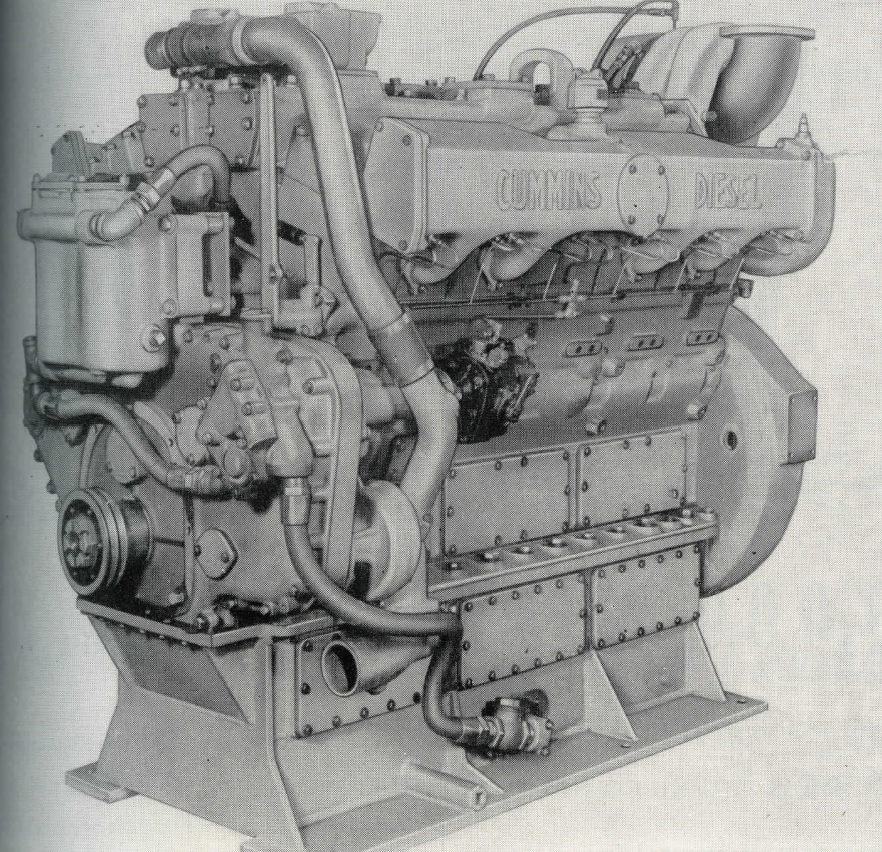
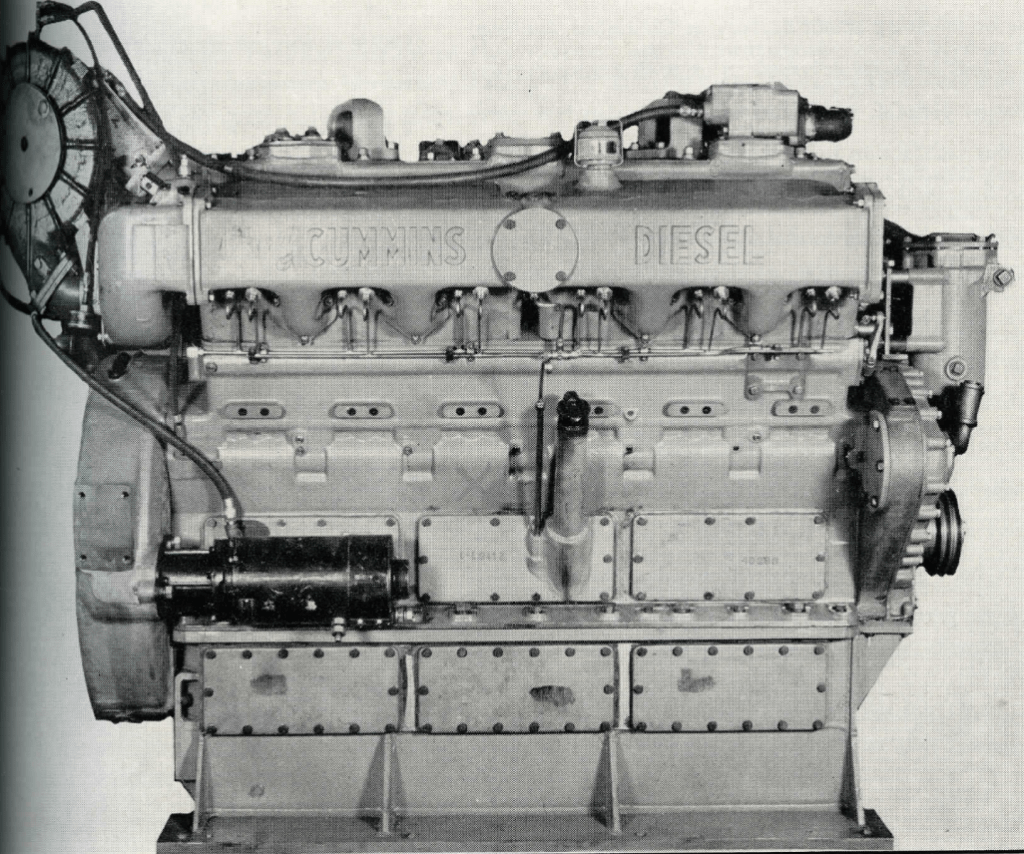
The Cummins VT-12 produced 600 horsepower for the Logistical Cargo Carrier – 1 (LCC-1). The images below show the engine used in the LCC-1 with a right and left side view. The images are from the Illustrated Parts Catalog for Army Sno-Train X-1, Volume 2 of 2, 30 March 1955.
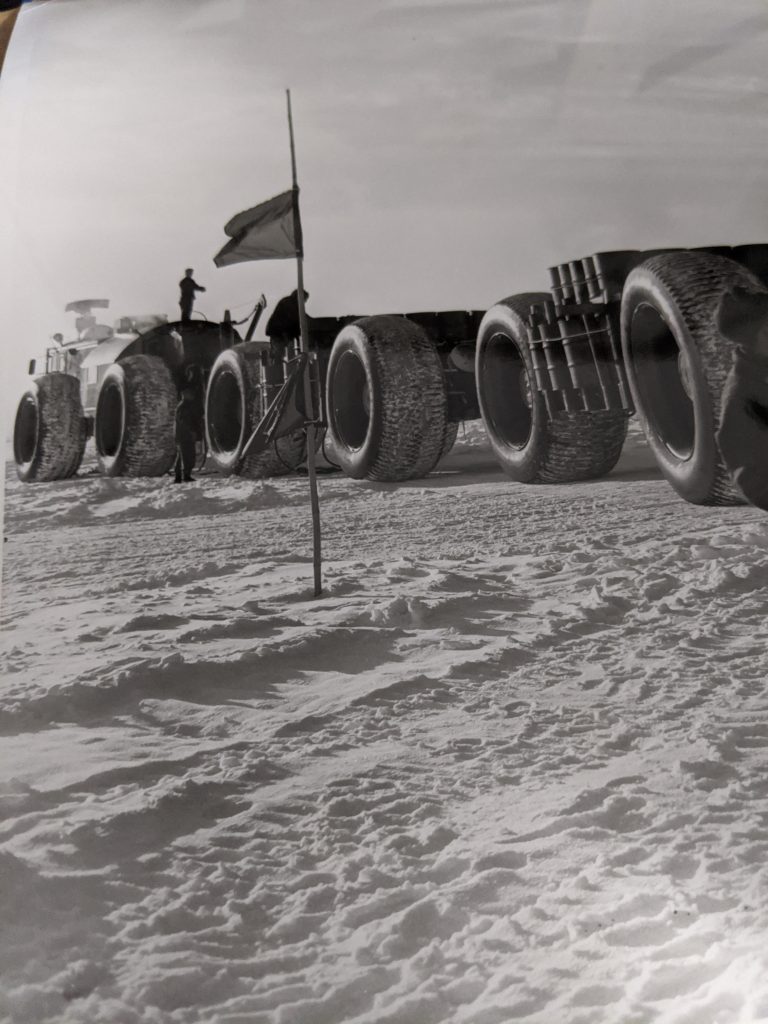
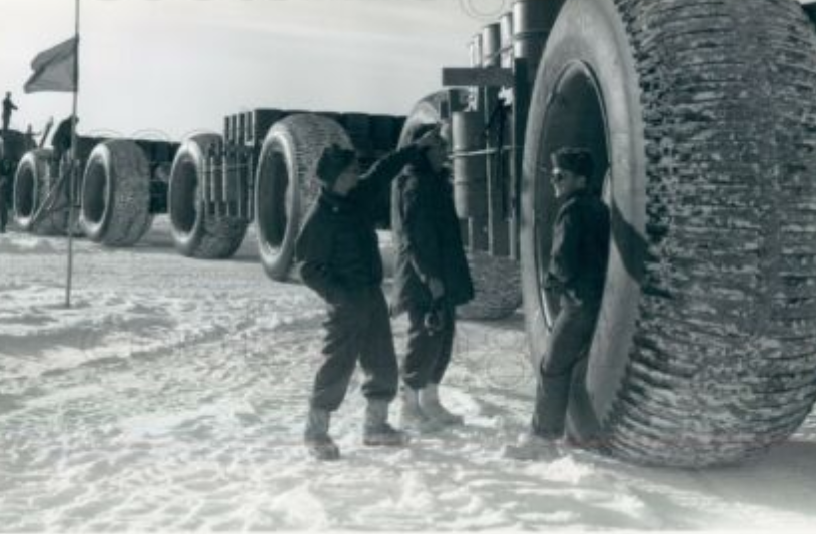
My photo from Coots Imagery arrived this weekend. It is an original press photo with types metadata on the reverse. I was really excited to see that the original photo includes a rear perspective of the LCC-1 as it accomplished the supply mission to Camp Century. The image typically seen on the internet (below) cuts out the LCC-1 and only shows the freight car.
I found and bought a fantastic photo of the LCC-1 Sno Train on eBay yesterday. I’ve seen this photo on the net, but didn’t have any verifiable background to the source.
Source: U.S. Army Photos
As part of the photo purchase, it comes with a typed description (metadata) about the photo. This photo was captured on 25June55 at Camp Century, Greenland. Camp Century was part of Project Iceworm. The barrels mounted to the side of the freight cars are Petroleum, Oil, and Lubricants (POL). The base was abandoned and decommissioned in 1967. Historic photographs like this are available from Coots Imagery and Historic Images to name a few.
I just finished reading Brian Jeffrey’s book “Adventures from the Coldest Part of the Cold War.” Brian’s book reviews his DEW Line and life experiences. The DEW Line represents a time in our history when the United States took huge risks. The Soviets and the United States were in a Cold War. Both sides had their hands on the triggers, so to speak. Nuclear technology was being tested on the Bikini Atoll, along with experimentation with small, portable nuclear reactors like the one seen below.
The DEW Line was a logistical feat, worthy of only the strongest and toughest minds. Built, in cooperation with Canada, the DEW Line completion proved to the world that North America could intelligently detect enemies. We transported equipment and supplies by the thousands of tons, including 140,400 tons by aircraft, 281,600 tons by naval convoy, 17,600 tons by cat train, and 20,300 tons by barge. LeTourneau’s Overland Trains, more specifically, the VC-22 Sno-Freighter and LCC-1 Sno-Train helped transport those materials over the snow and to the doorstep of those who needed it most.
Technical Note: As an avid Kindle reader, I find the highlighting and notes within the device extremely useful. All of these highlights and notes are found at https://read.amazon.com/notebook. Export them as a PDF and you have a “paper copy” ready to print.
 Overland Trains