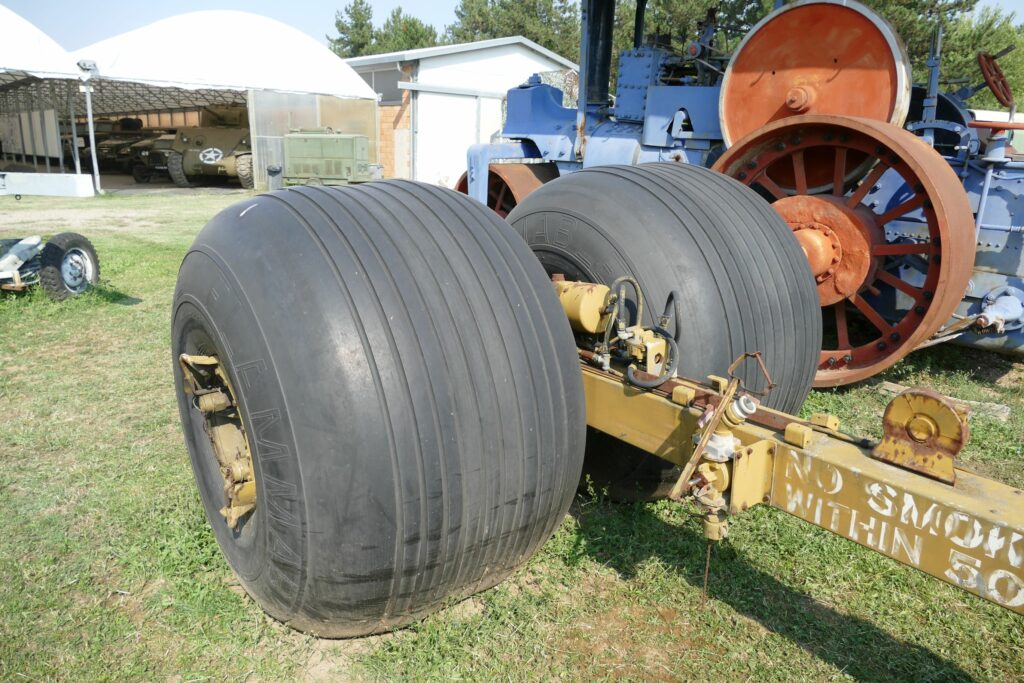
In April 1954, visitors from TRADCOM inspect the 120x48x68 tires. These tires were designed by LeTourneau and built by Firestone.
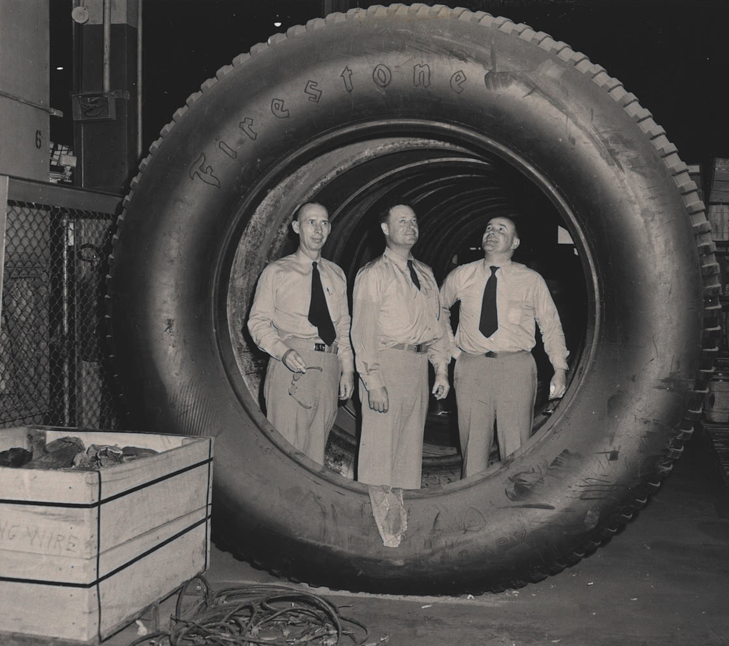
In April 1954, visitors from TRADCOM inspect the 120x48x68 tires. These tires were designed by LeTourneau and built by Firestone.
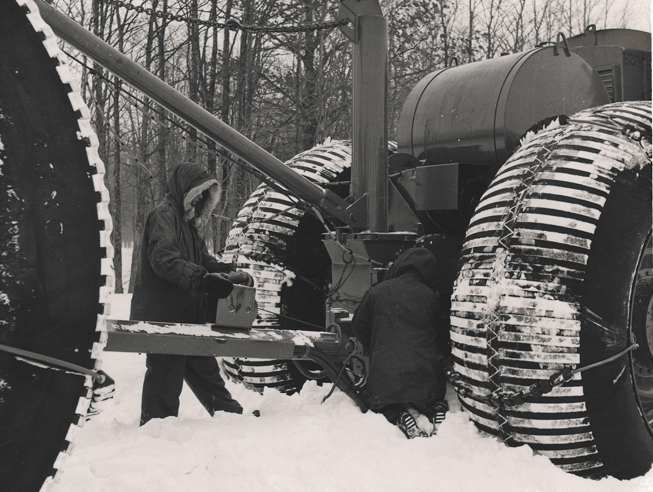
When the Sno-Train manufacturing was completed, it was sent to Houghton, MI for the Army to test capabilities. In the image shown below, you see two personnel checking trailer connection or power cables. The large pill-shaped canister between the rear tires is the fuel tank. This photo also shows the Sno-Train with traction lugs attached.
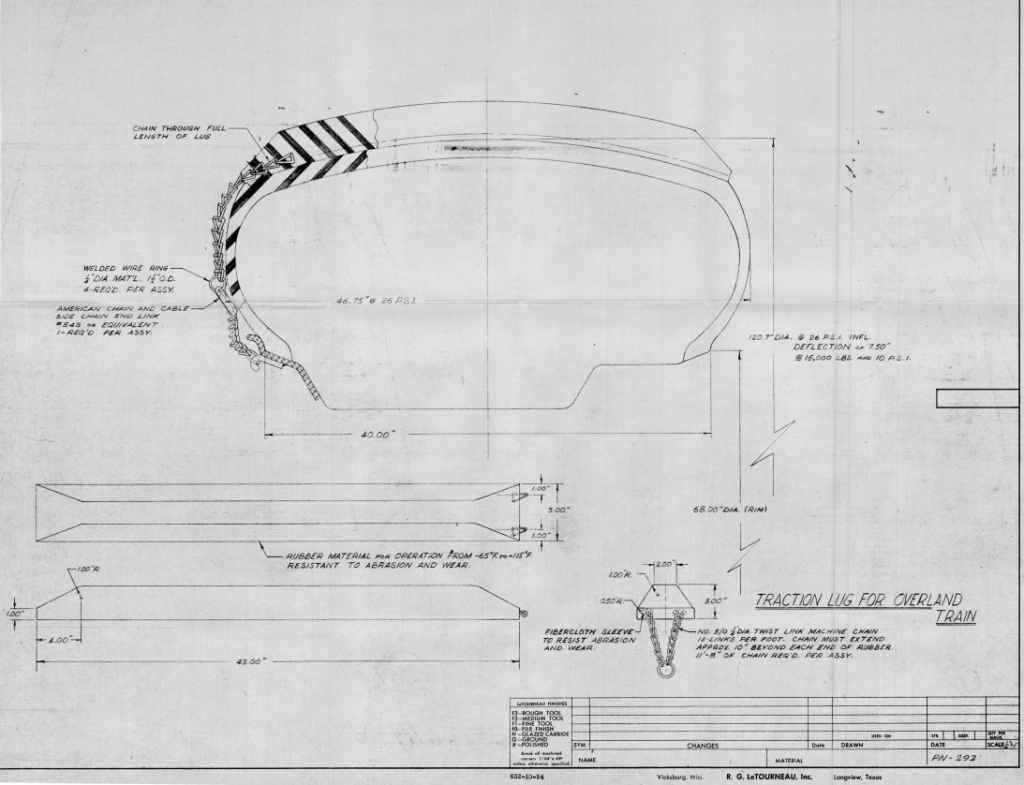
Traction lugs are the equivalent to tire chains, but they are for the monster 120x48x68 tires. Seen below is the diagram showing the Overland Mark 2 traction lugs, which vary from the lugs seen above. R.G. and his engineers iterated on many of the designs as they learned more about how they operated in field conditions. The traction lugs were one of those iterative devices.
If the military is involved, you can be certain that they will use an abbreviation or acronym for their organized name, project, or equipment. Here are a few of the more commonly used abbreviations and acronyms used during the scope of the Overland Trains.

ACAN – Army Command and Administrative Network
ACFEL – Arctic Construction & Frosts Laboratory
APPR – Army Package Power Reactor
ERDL – Engineer Research & Development Laboratory
FESA – Facilities Engineering Support Agency
LCC – Logistical Cargo Carrier
PR&DC – Polar Research & Development Center
SIPRE – Snow, Ice, Permafrost & Research Establishment
TRADCOM – Transportation Research Development Command
TRARG – Transportation Arctic Group
TRECOM – Transportation Research Command
TREOG – Transportation Research & Environmental Operations Group
USARSG – United States Army Research & Standardization Group
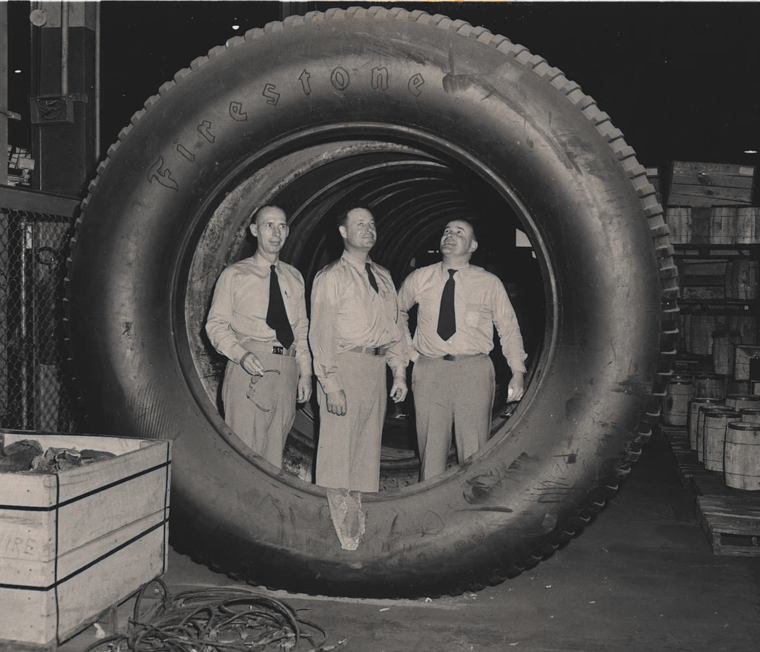
The Firestone 120x48x68 tires are arguably, one of the most recognizable features on the last 3 LeTourneau Overland Trains. These tires were first produced in 1952. The numbers describe the tire dimensions as 120 inches tall – diameter (10 feet), 48 inches wide (4 feet), and 68 inches inner diameter. The were manufactured in thicknesses of 10-ply to 36-ply based on the machine it was used. If you wanted to buy a tire and rim combination during the 1960s, you would expect to shell out around $3,500 per tire and $1,600 per rim.
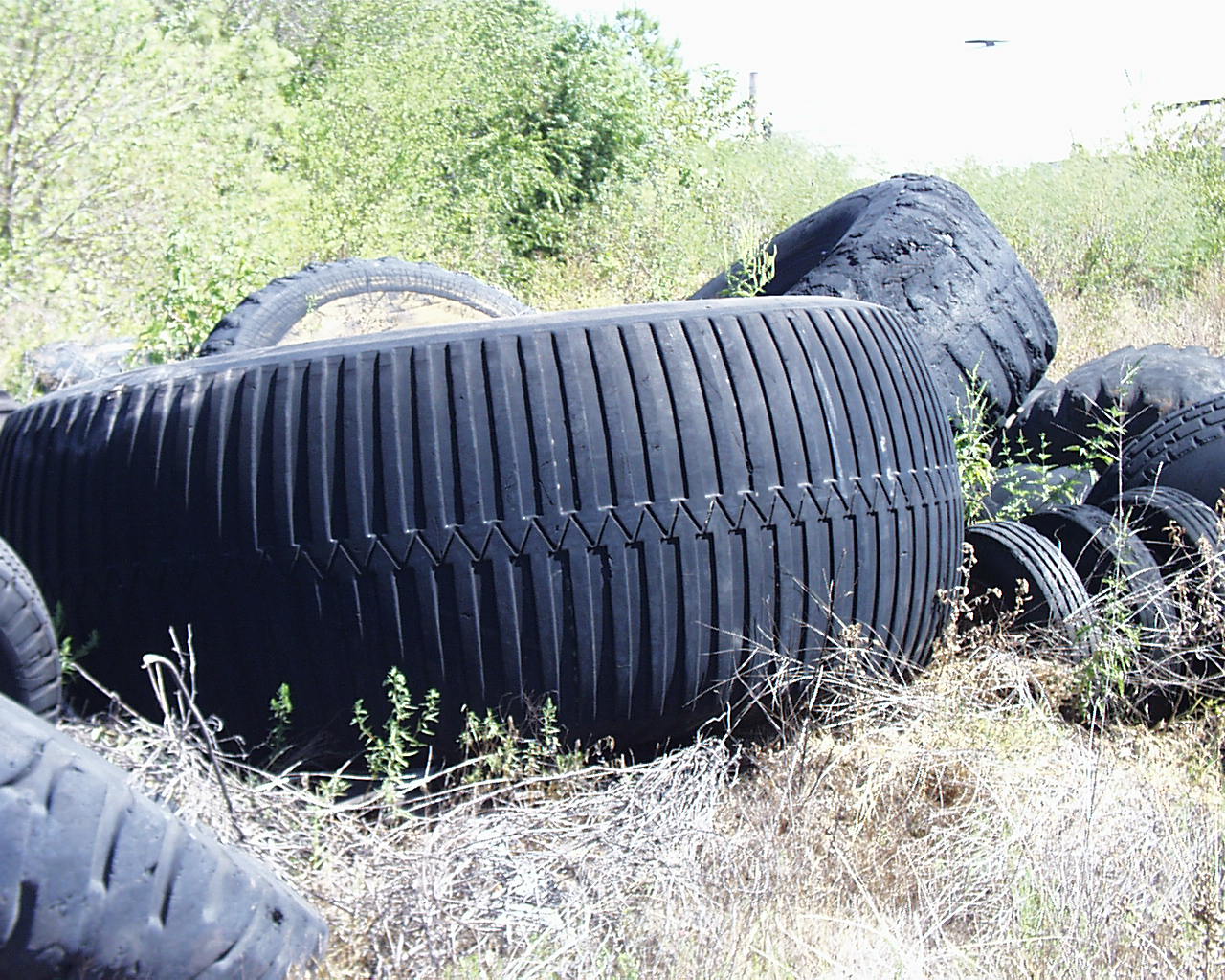
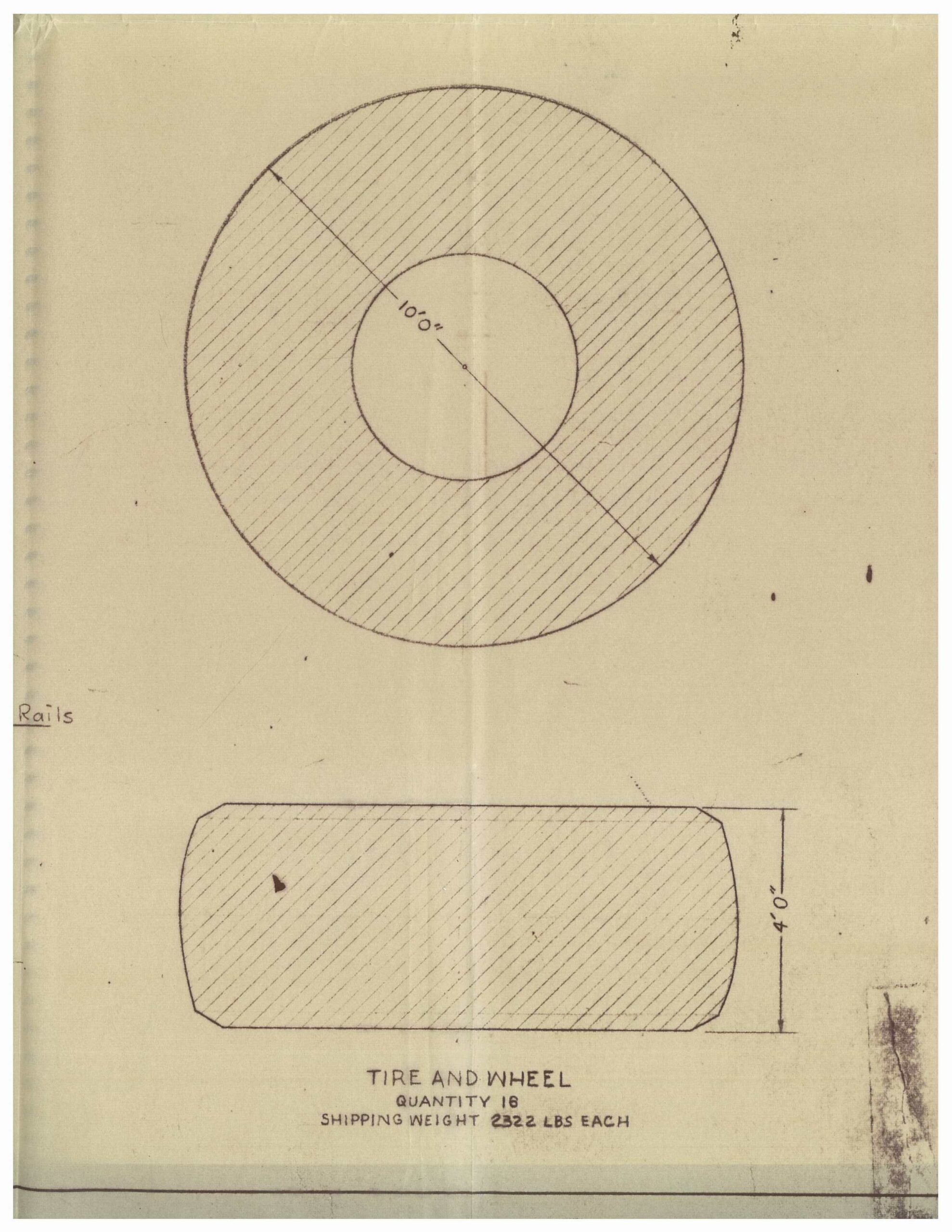
Tire and rim combination weights will vary by rim model, rim metal composition, and tire plies. These tires were also used on the Crash Pusher, Water Wagon, Marsh Buggy, Sno/Swamp-Buggy, and possibly a few others that I have not seen.
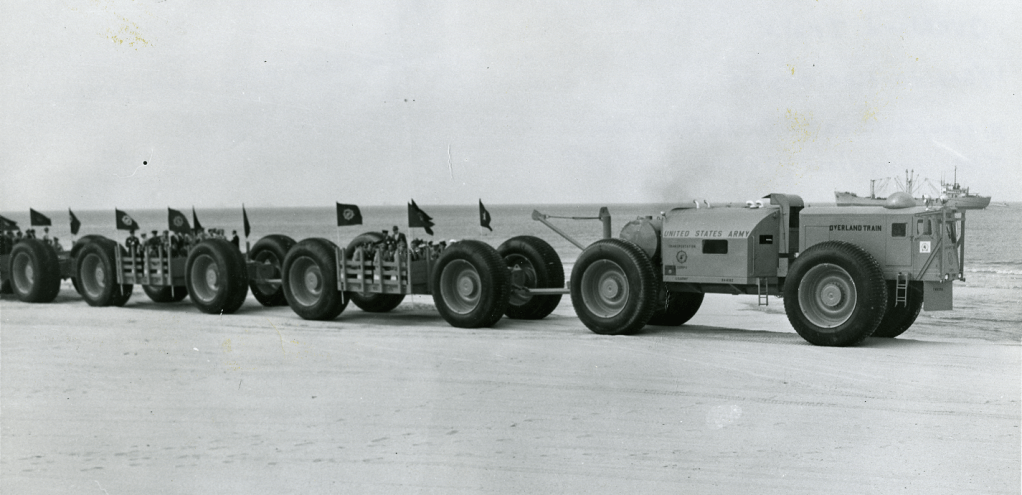
It is uncommon to see an image with the Sno-Train on the beach, let alone with troops and company or battalion guidon. I date this photo sometime after it came back from Greenland in early to mid 1957 and before August of 1960. Why August of 1960? You will have to wait until the book comes out!
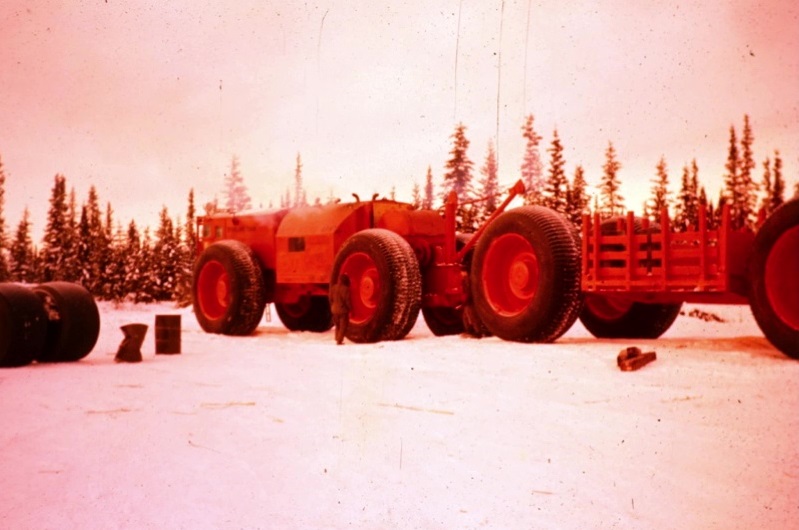
Willow Freeze was a 5 phase maneuver during the winter of 1960-1961. It involved elements from the United States Army Transportation Corps, United States Army Transportation Board Task Detachment Logistical Support, and others. The goal of Willow Freeze was to figure out logistical operations in Arctic terrain. The Sno-Train was one of many different types of logistics machinery. I will cover Willow Freeze and subsequent recovery operations in great detail within my book.
The image above shows the Sno-Train and two large wheels to the left-hand side. These wheels were the 1,000 gallon Rolling Liquid Transporters (RLT). The RLT were designed to transport fuel within the wheels. They performed well over the terrain. The Army’s only concern was that fuel could only be dispensed out of one RLT at a time.
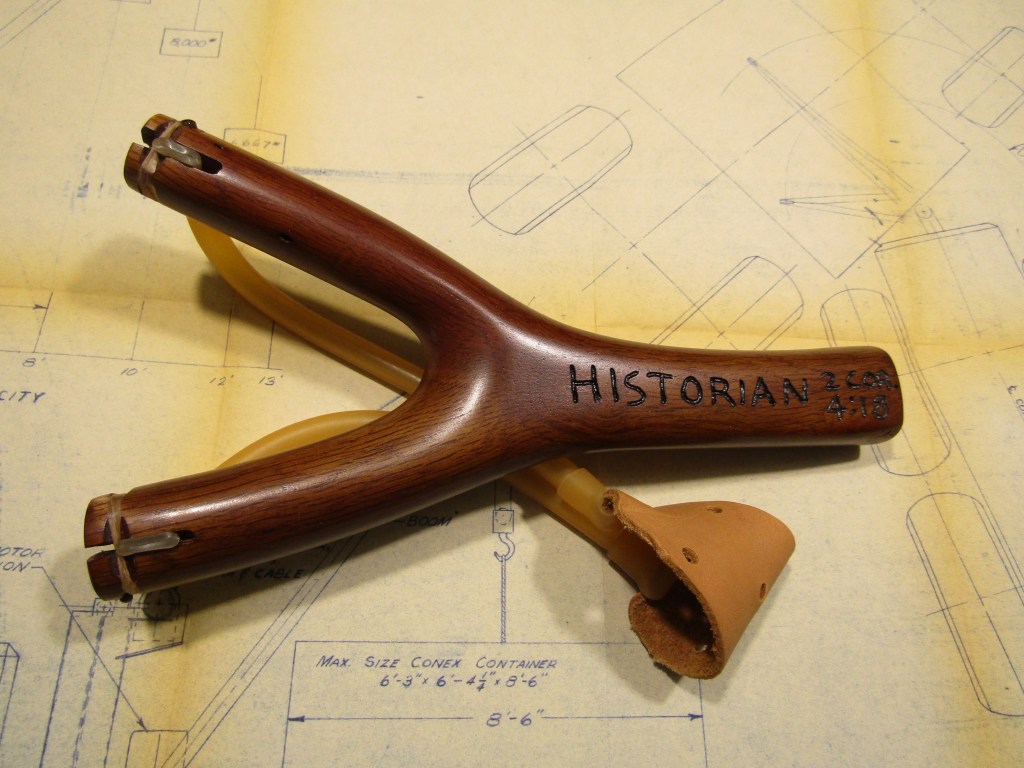
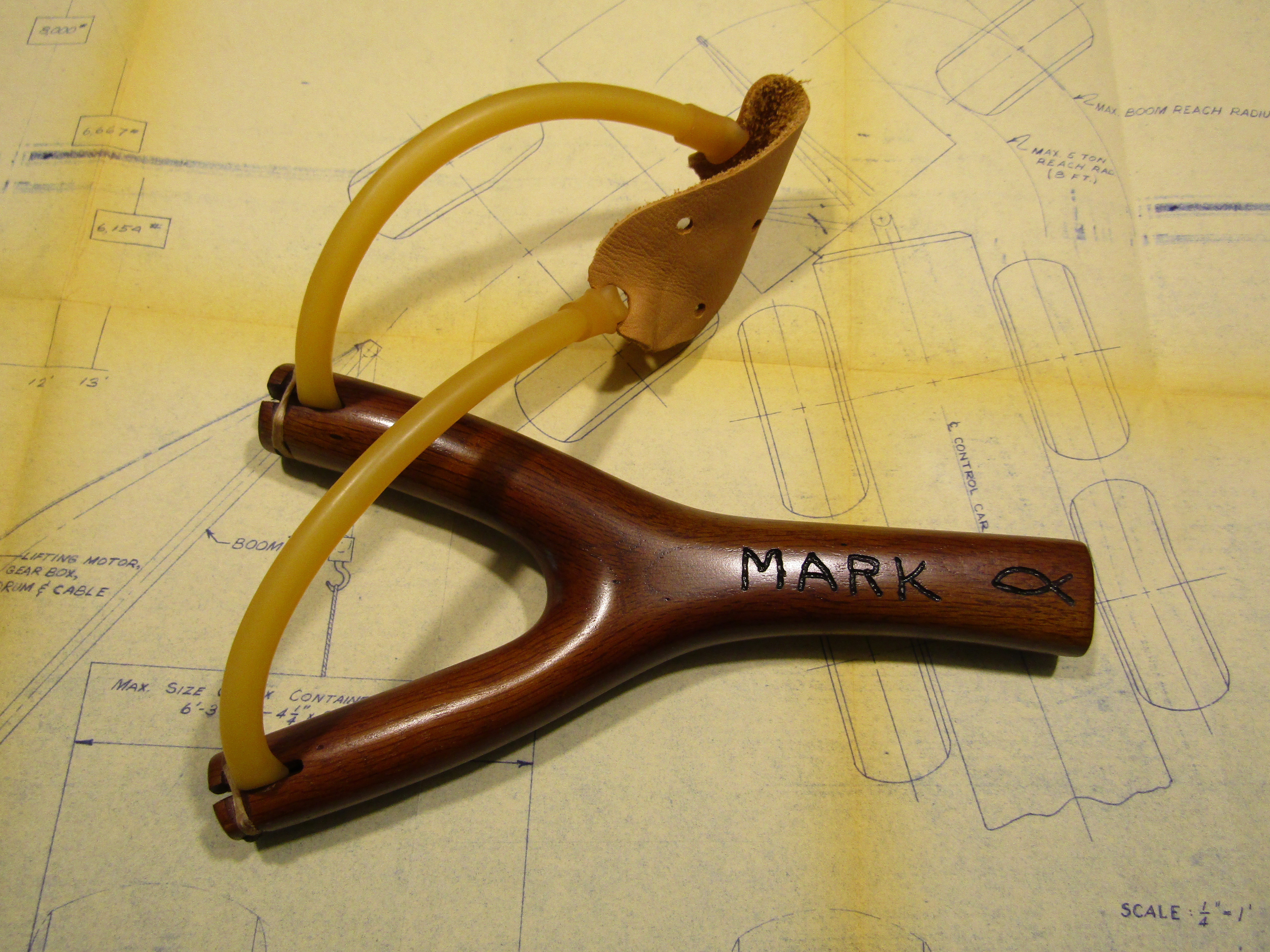
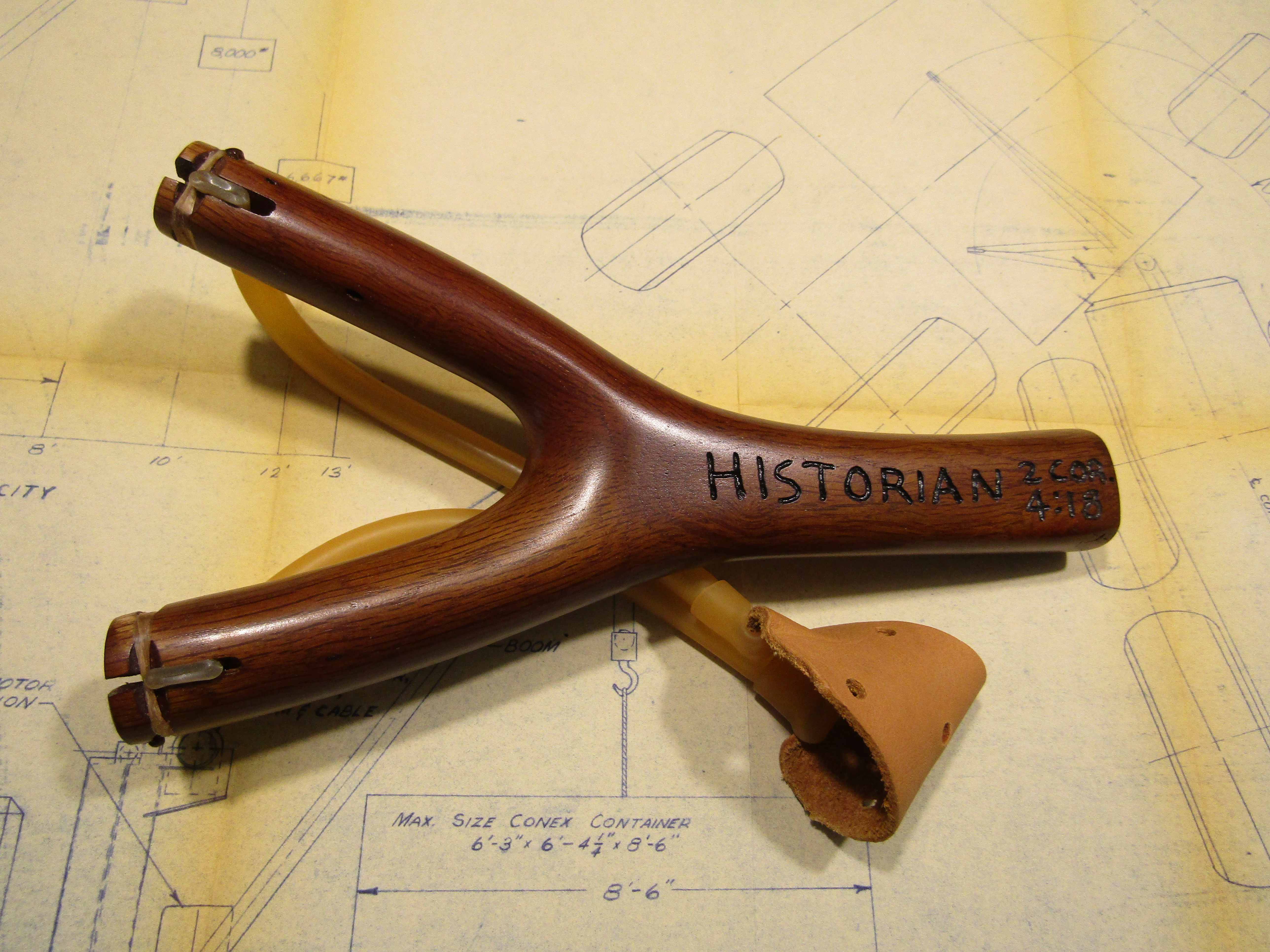
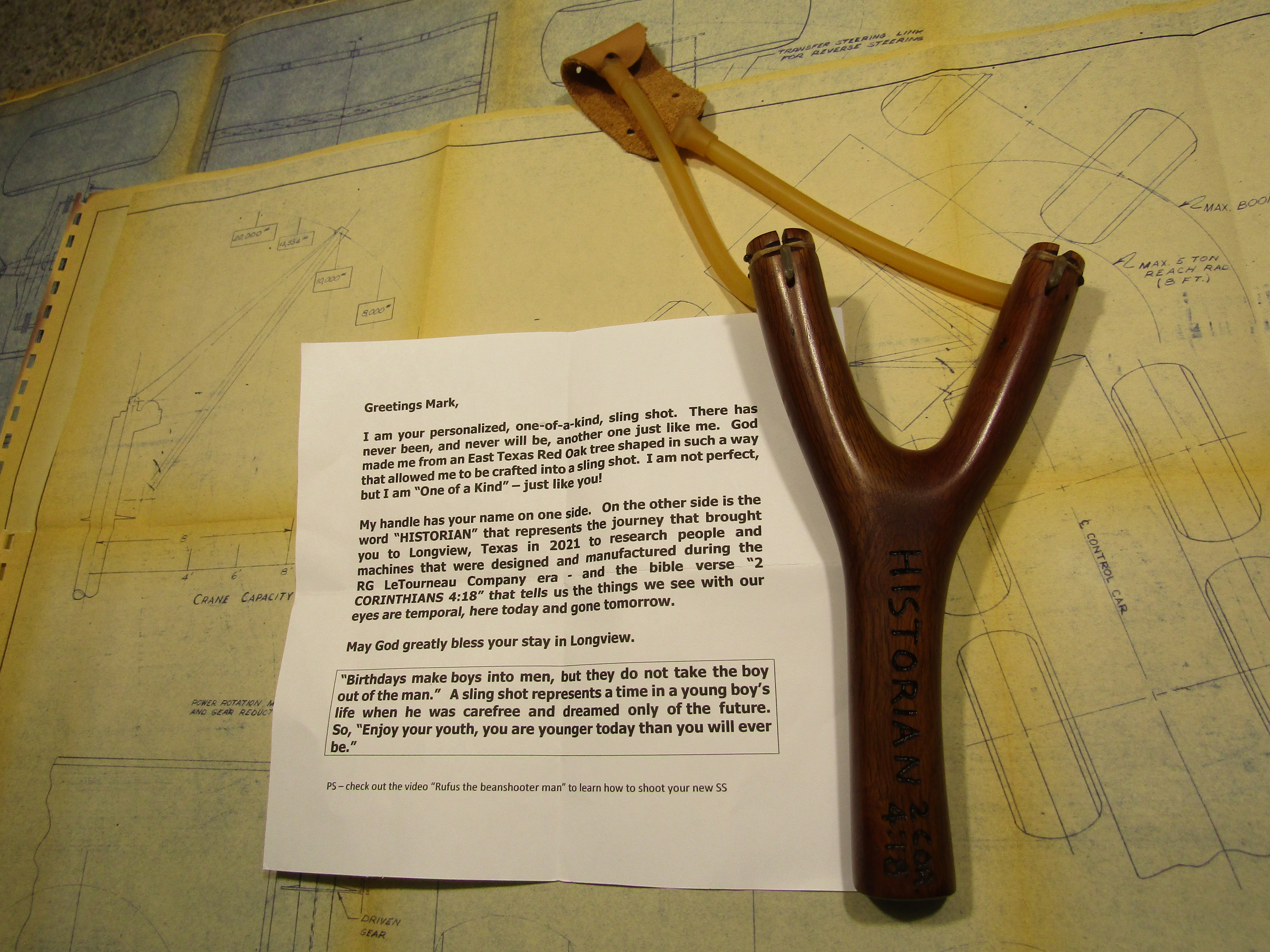
During my trip to Texas last week, I interviewed a man who drafted the suspension components for the Overland Train MkII. The interview lasted only an hour. A couple of days later, we met up with another man who worked on the R.G. LeTourneau, Inc assembly line. During the 2 hour lunch, he gave me a custom slingshot. He makes these custom for each person that he deems worthy of his creations. This is built out of Red Oak and has custom engravings on each side.
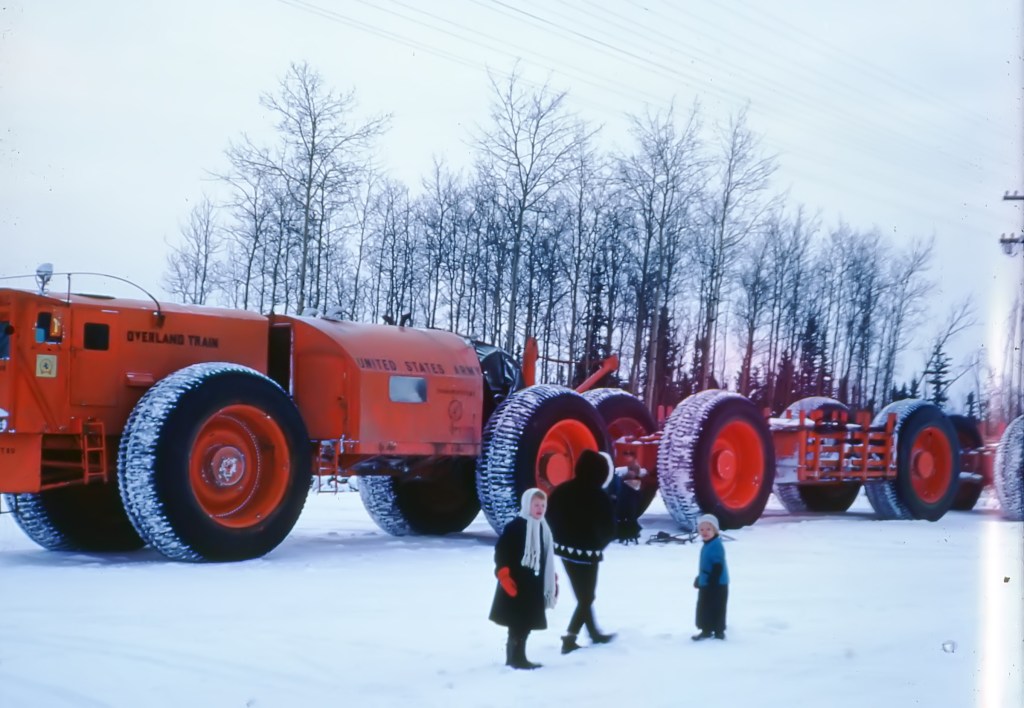
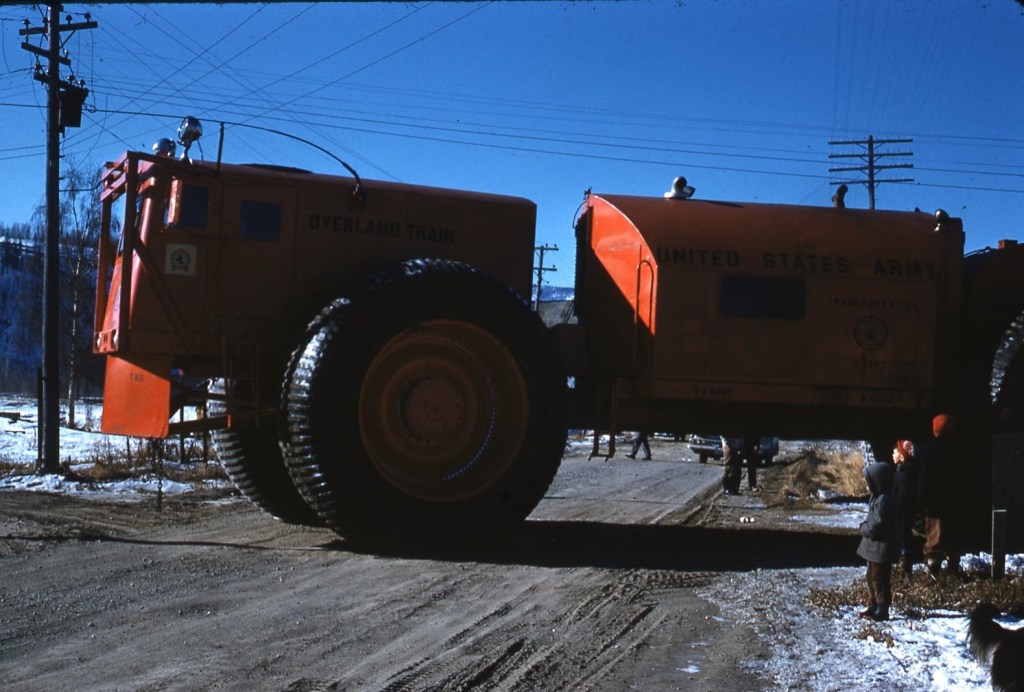
I made a connection yesterday that had some new Sno-Train images. They were taken by her father Jack Stalberg. The image below was taken in their front yard in Beaver Creek. No matter how much I dig and dig, it seems like there are always new family members finding that box of stuff with gems like these!
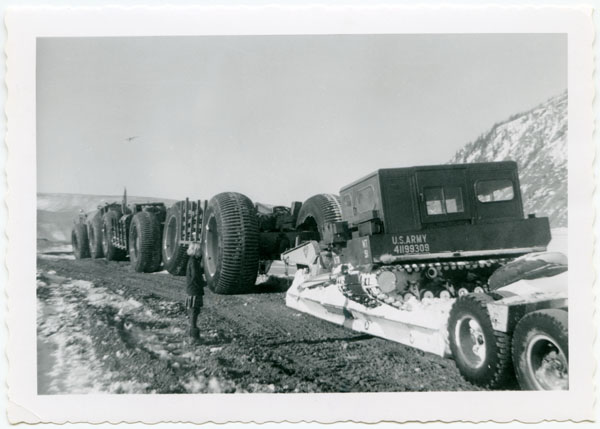
Between 1960 and 1962, the Sno-Train stopped on a gravel road, with light snow. It was carrying a small U.S. Army tracked vehicle with the number 41199309. The Sno-Train was pulling a low-boy with the tracked vehicle. The Archdeacon’s daughter, name unknown, was present while the Sno-Train stopped.
The image below shows the Sno-Train (LCC-1) in, or around, Dawnson, YT. Based on a few indicators from the machine’s image, this picture was taken prior to January of 1961. The square steel structure on the front of the LCC-1 was used to mount a radar unit.
 Overland Trains