Category: LCC-1-Sno-Train

  • The Sno-Train’s Last Overland Journey to the Yukon Transportation Museum

    The Sno-Train’s Last Overland Journey to the Yukon Transportation Museum

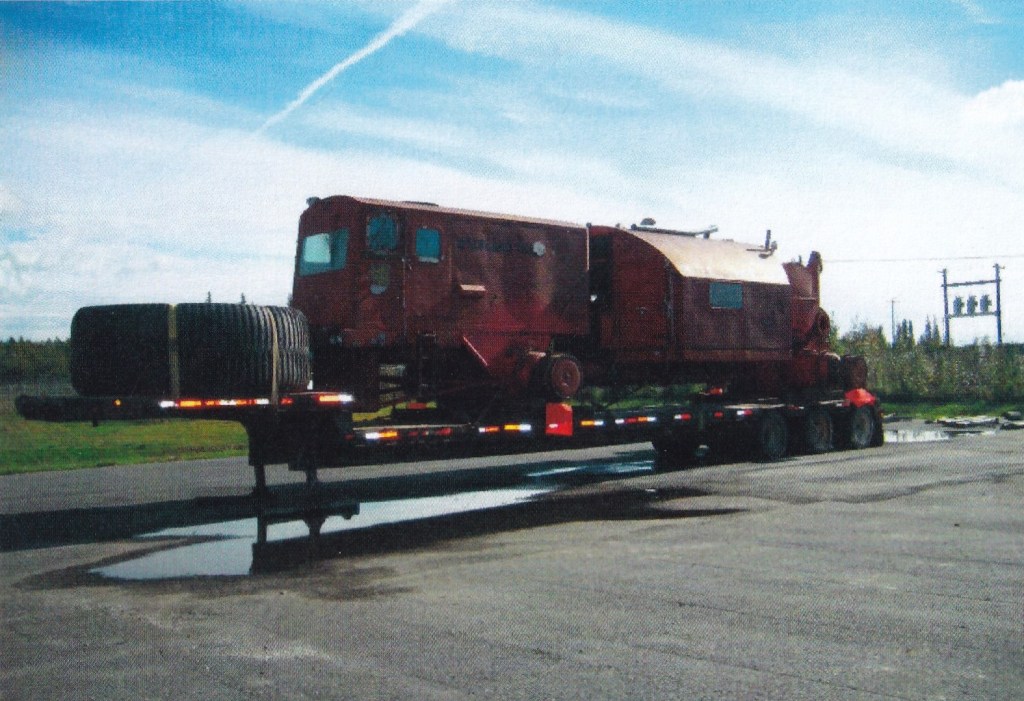
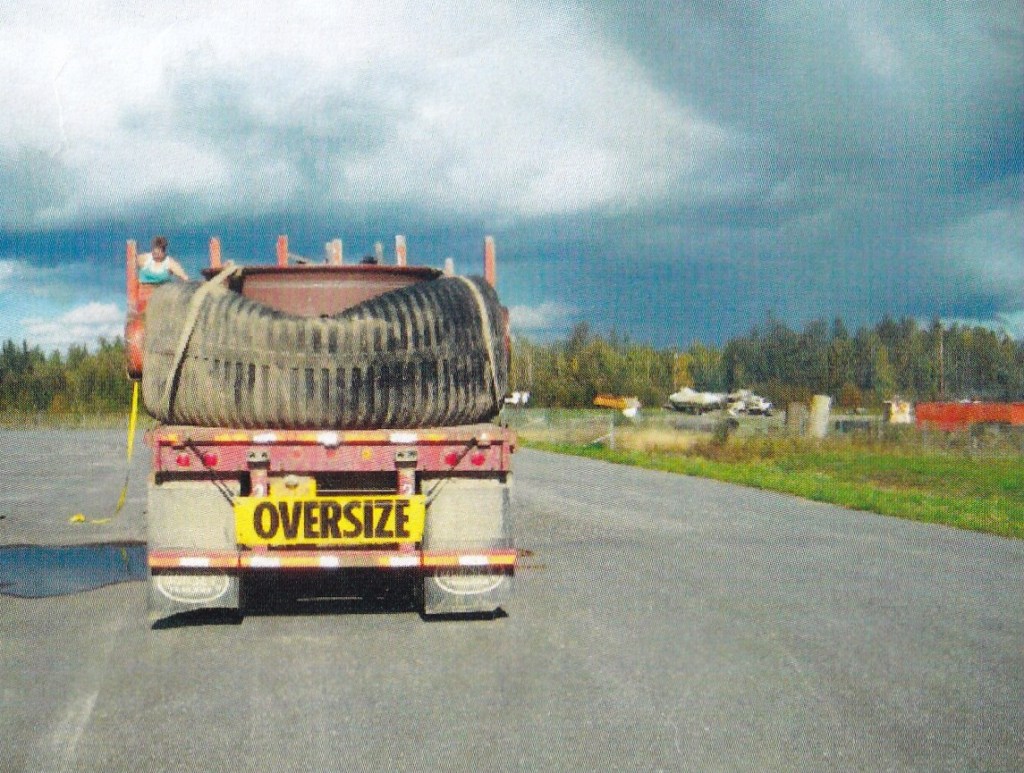
    The Sno-Train was purchased by a private party in 2010. After its purchase, a company was hired to transport the Sno-Train and its wheels to the Yukon Transportation Museum in Whitehorse, YT.
    Shipping this behemoth was not an easy task, nor was it cheap. Every trailer was an oversized load and required a pilot car for safe transit.
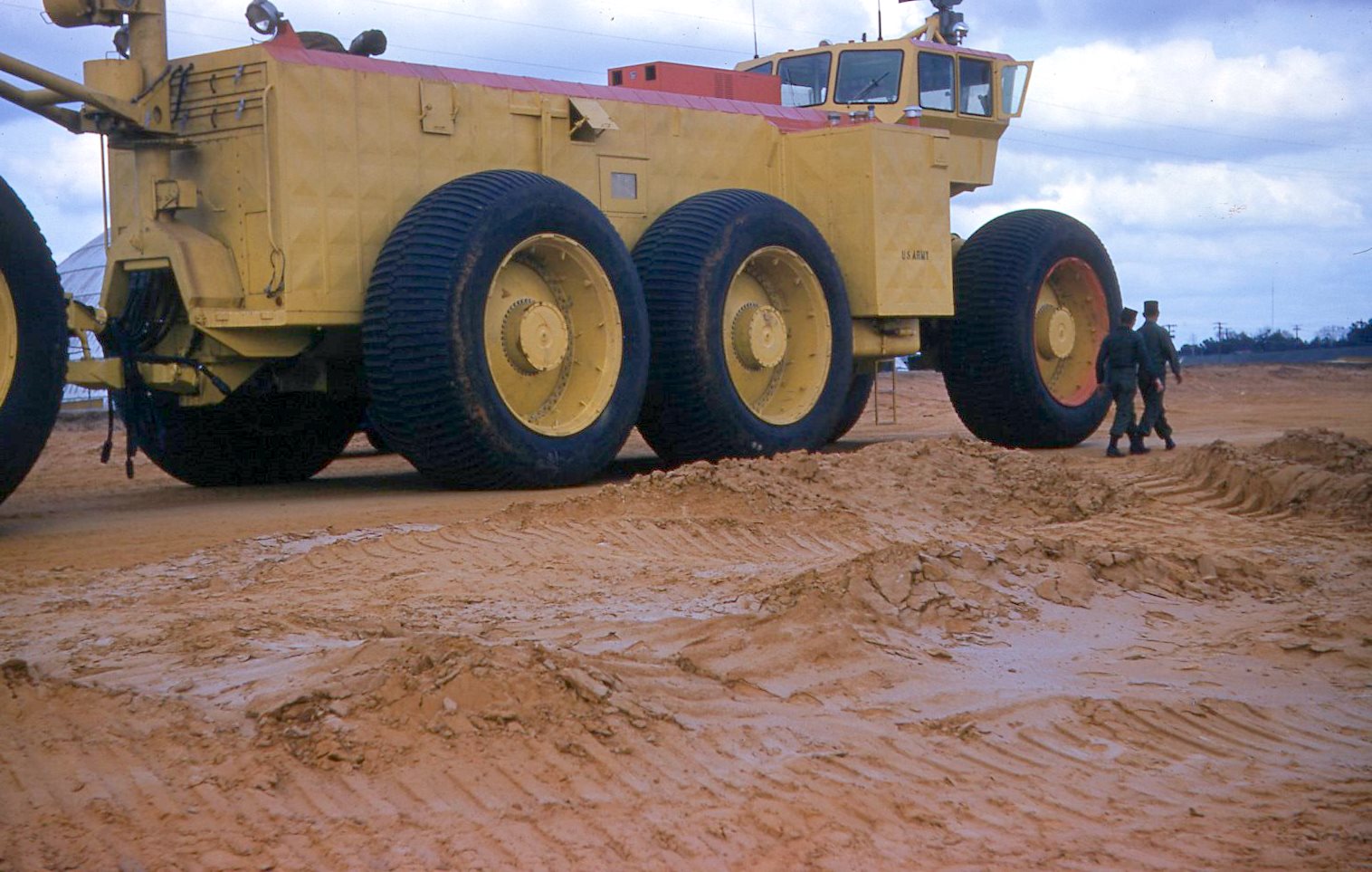
    When the Sno-Train arrived at the Yukon Transportation Museum, it was placed on wood blocks until a crane arrived to help mount the tires and place The Monster.
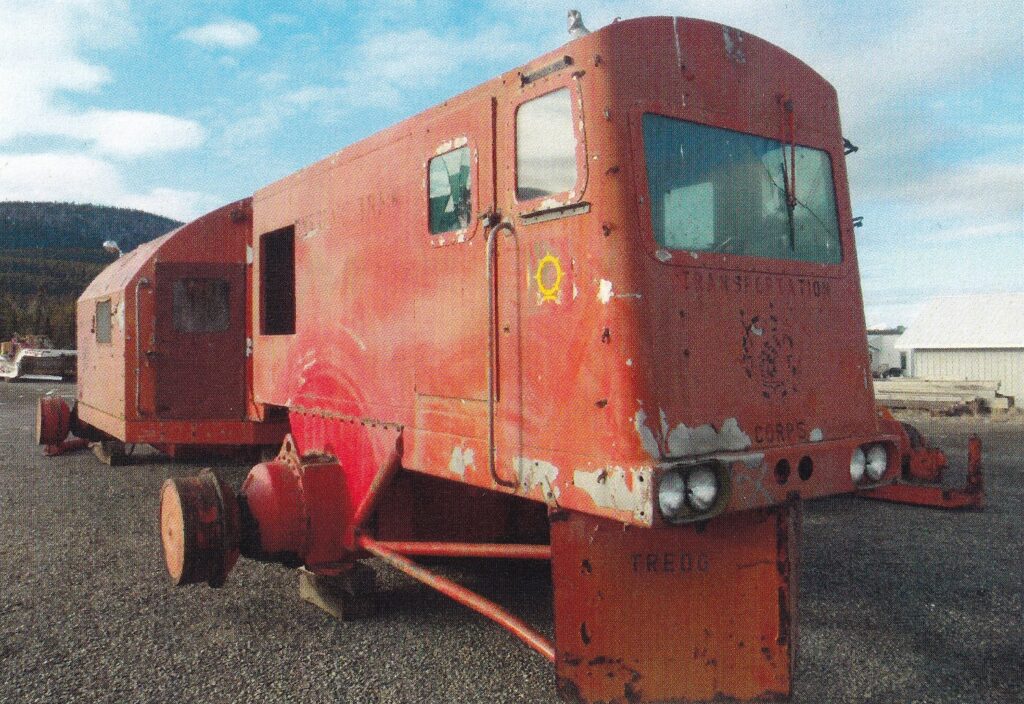
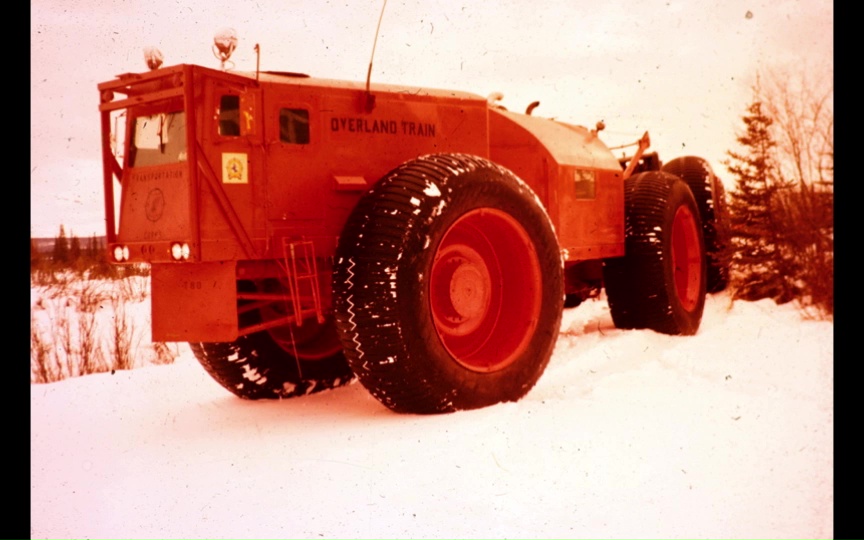
    You can see the non-oxidized paint color right above the Electric Drive. The lack of UV exposure and the large Firestone 120x48x68s slight rubbing on the body likely helped keep this area nice and clean – relatively so. The Sno-Train has been on a long-term loan to the Yukon Transportation Museum since 2010.
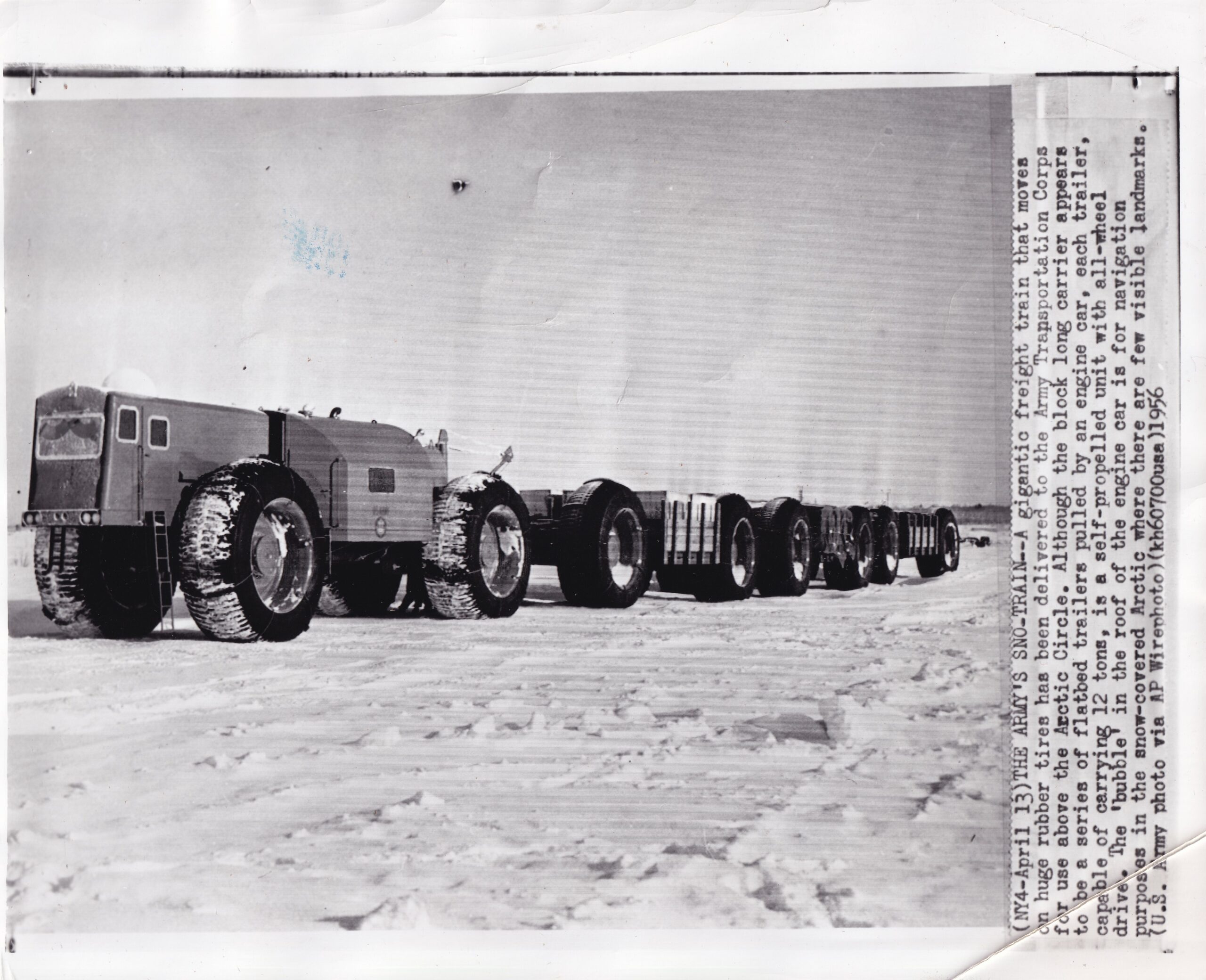
  • Sno-Train in Houghton, MI for Testing

    Sno-Train in Houghton, MI for Testing

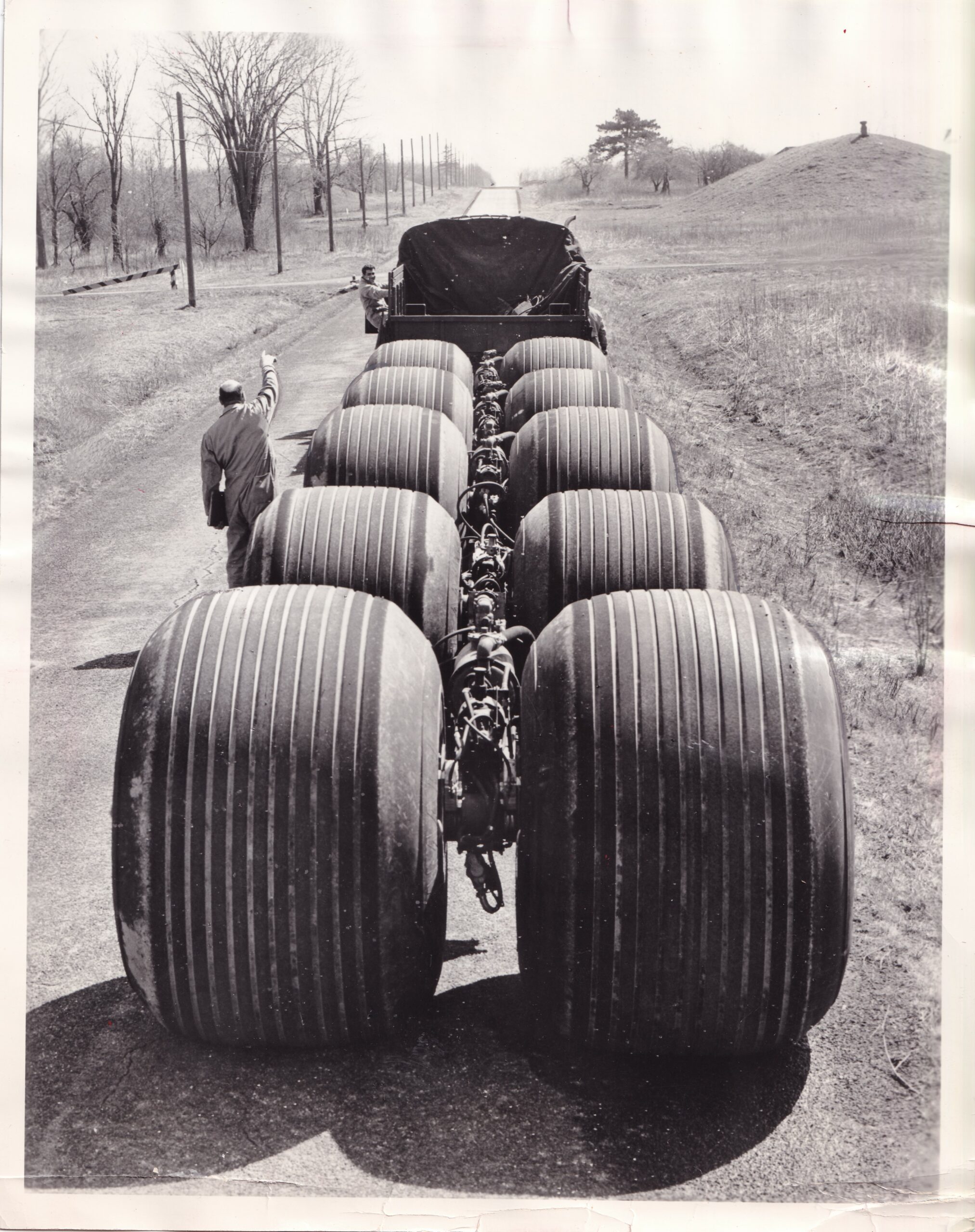
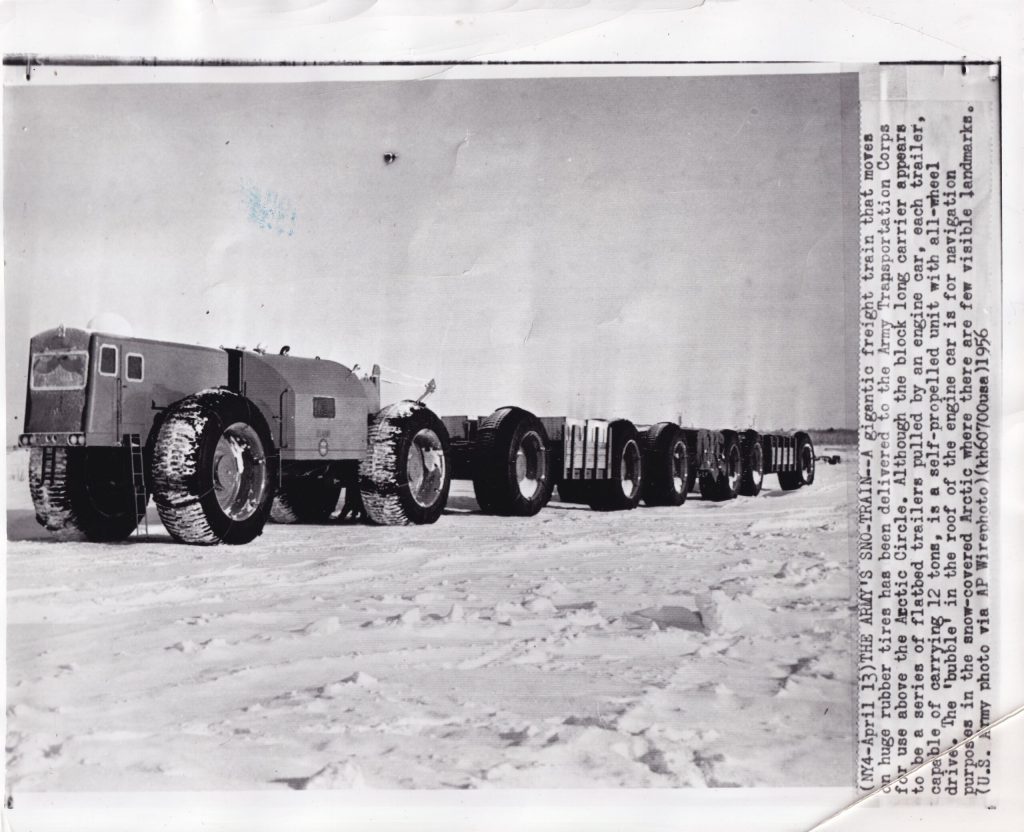
    The Sno-Train departed R. G. LeTourneau, Inc in early February, 1956, to the Army’s Houghton, MI testing grounds. It arrived in the middle of February, 1956. It was tested alongside other equipment such as the Rolling Liquid Transporter, or RLT. On April 2, 1956, the Sno-Train departed Houghton, MI for Maryland.

  • The Overland Train and Project Mobility

    The Overland Train and Project Mobility

    Project Mobility occurred from June 5-10, 1961 at Fort Eustis, Virginia. During the 6 day exercise, The United States Army Transportation Training Command conducted daily demonstrations at Fort Eustis and Fort Story – Fort Story is a sub-installation of Fort Eustis. The exercise goals were to help the audience understand (1) the new techniques under development in resupply and amphibious areas and (2) demonstrate equipment recently added to the Army capabilities.

    A paper booklet lists out the exercise scope, events schedule, observer participation, other equipment not shown during the exercise, maps of Fort Eustis and Fort Story, and administrative information.

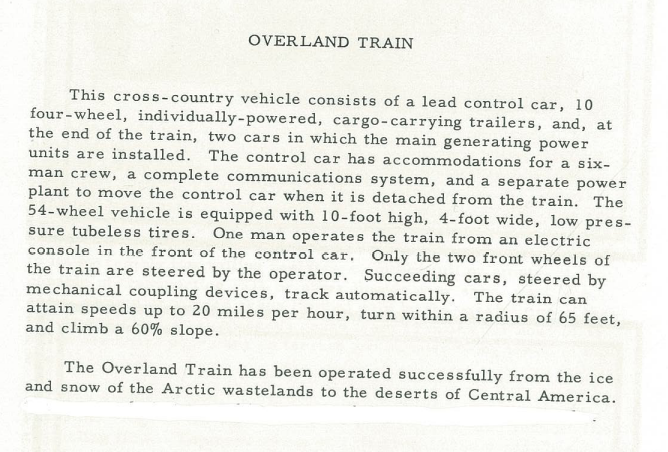
    Some of the equipment not shown during the exercise, but highlighted in the booklet include the LARC, BARC, Rolling Liquid Transporter, GOER vehicle, Sikorsky S-60 helicopter, Landing Craft Retriever, and the Overland Train. Page 22 and 23 of the booklet show a brief description of the Overland Train. This description was for the TC-497.

    Overland Train description from Project Mobility 1961, U.S. Army Fair Use.

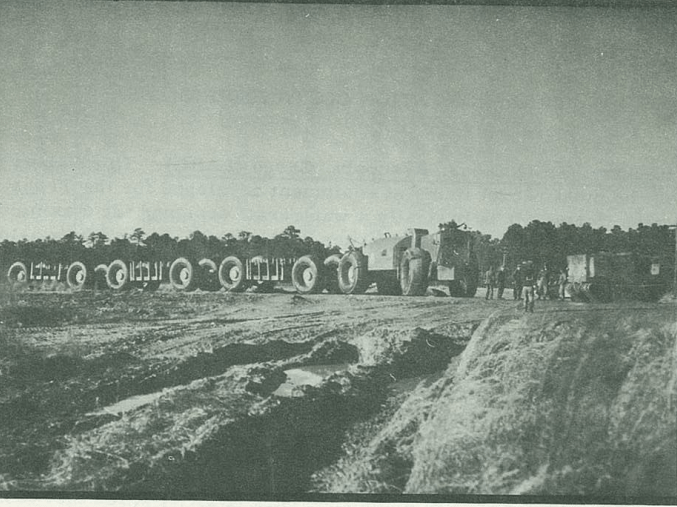
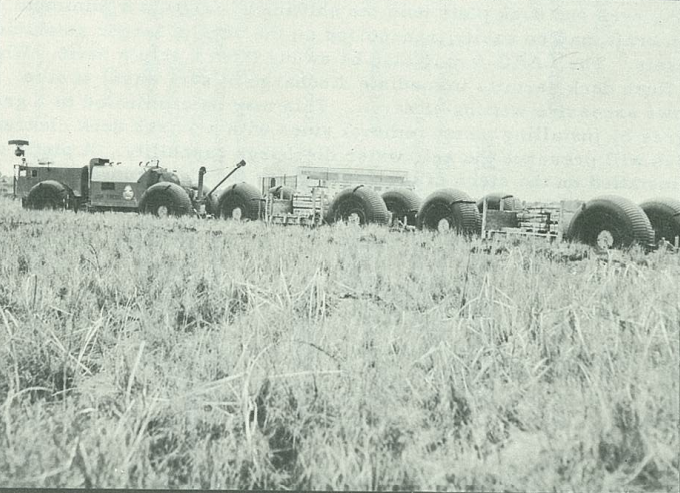
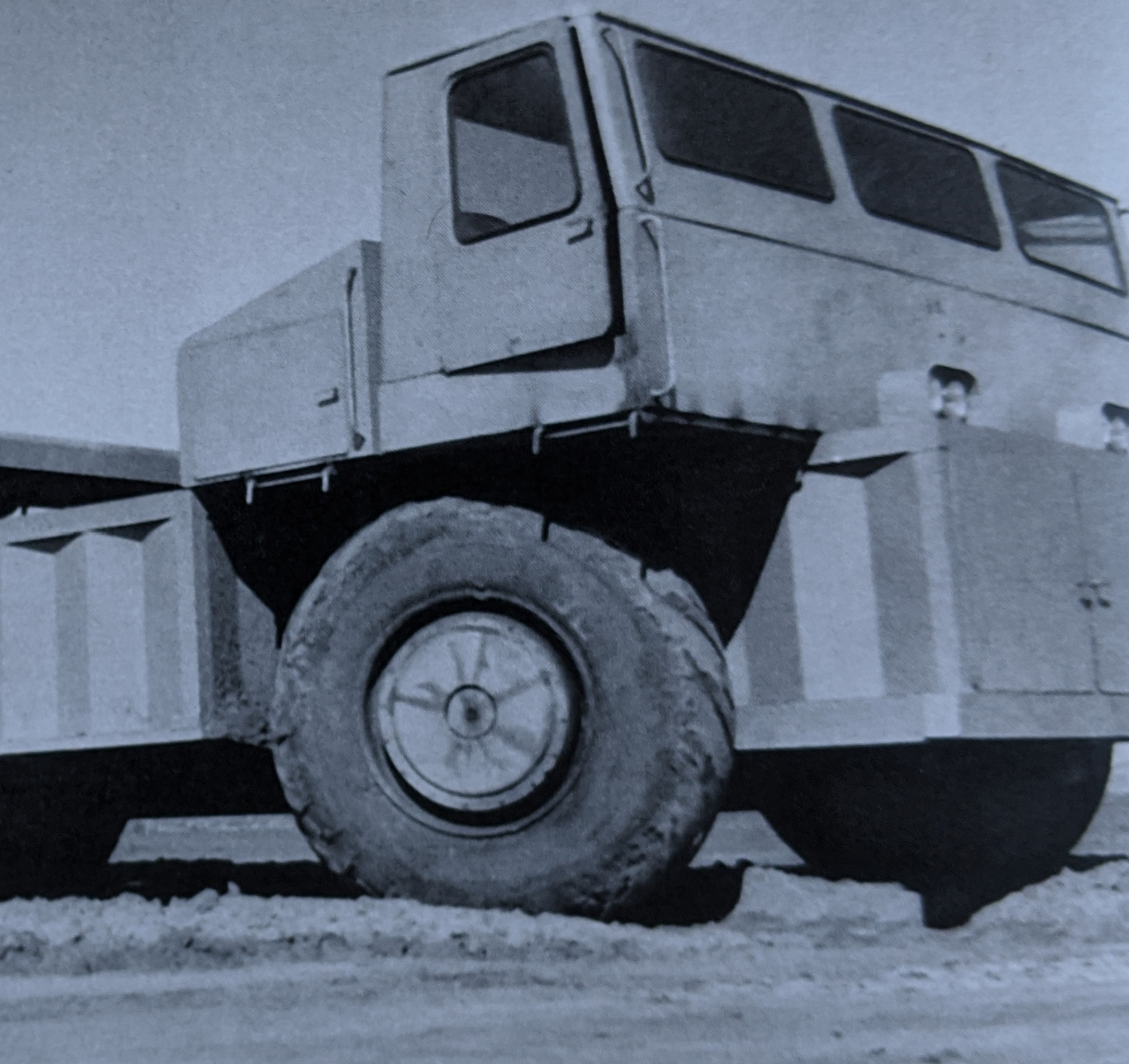
    However, the images below the TC-497 description were of the Sno-Train.

  • Sno-Train Model Driving up a Hill

    Sno-Train Model Driving up a Hill

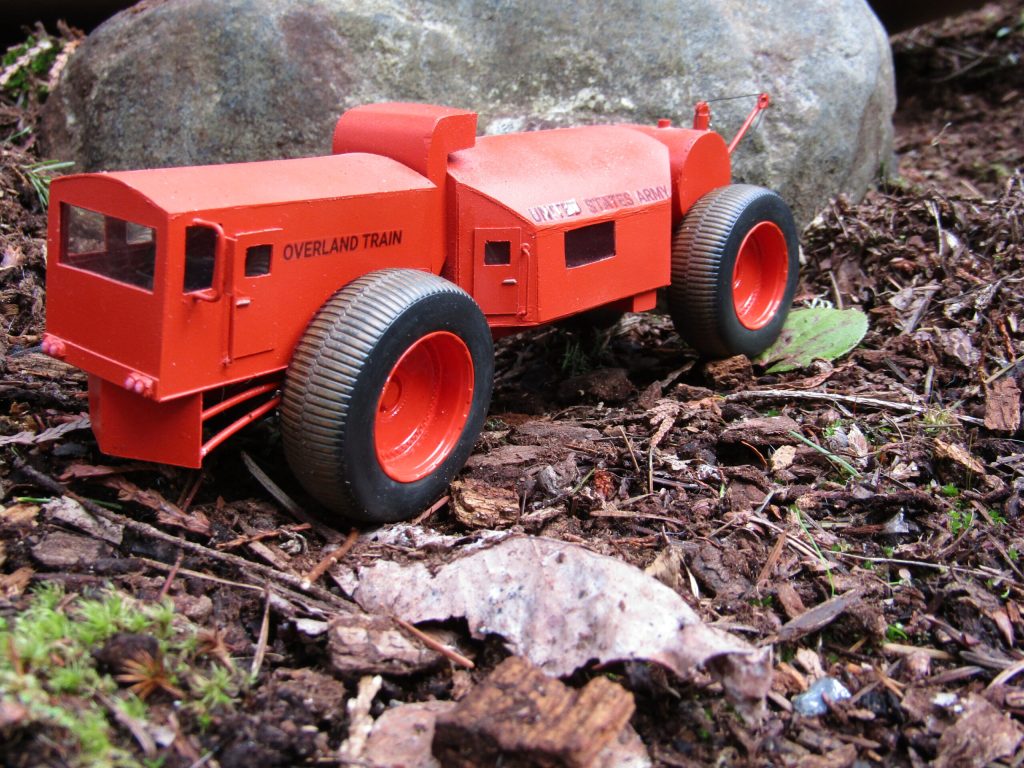
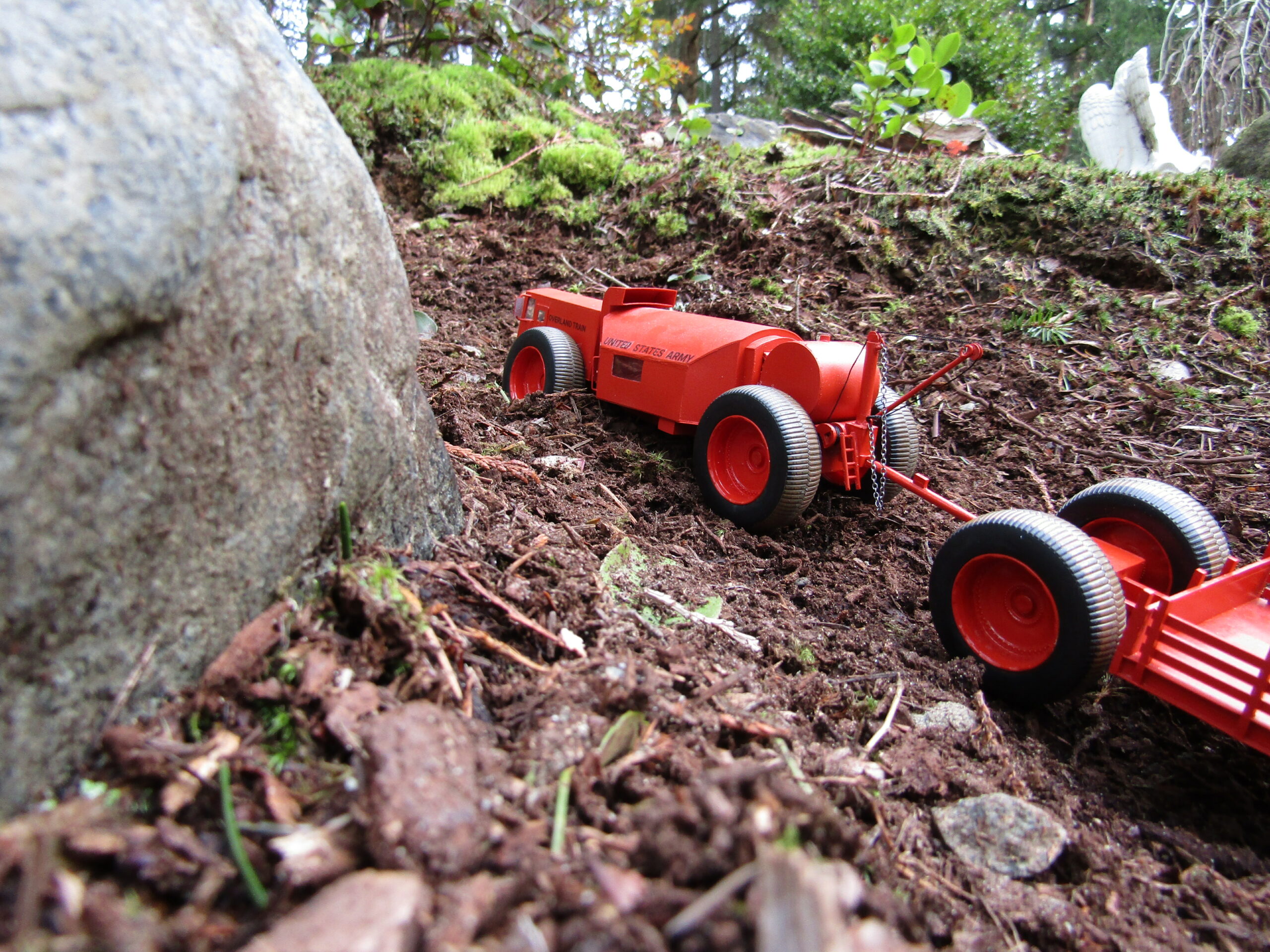
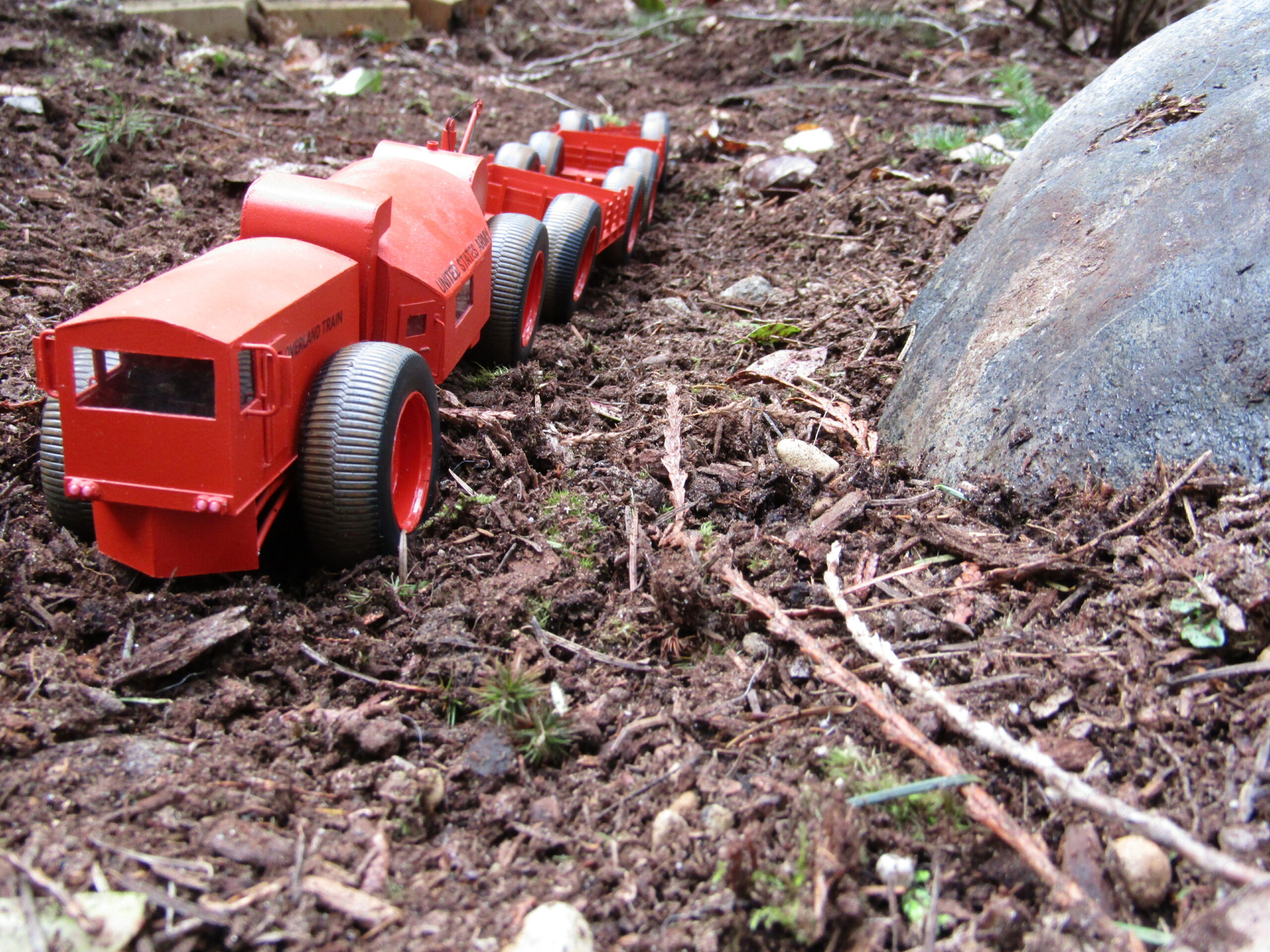
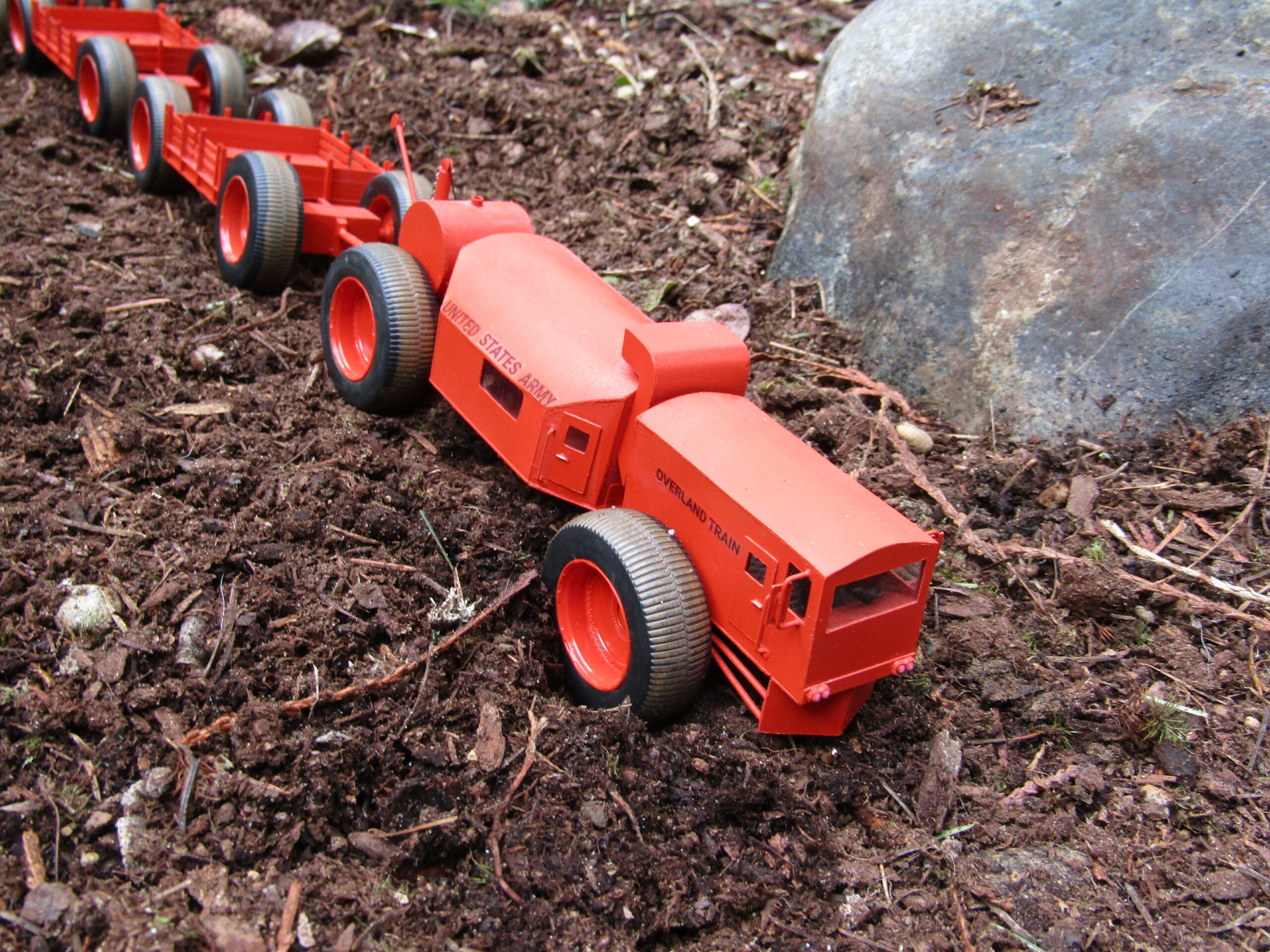
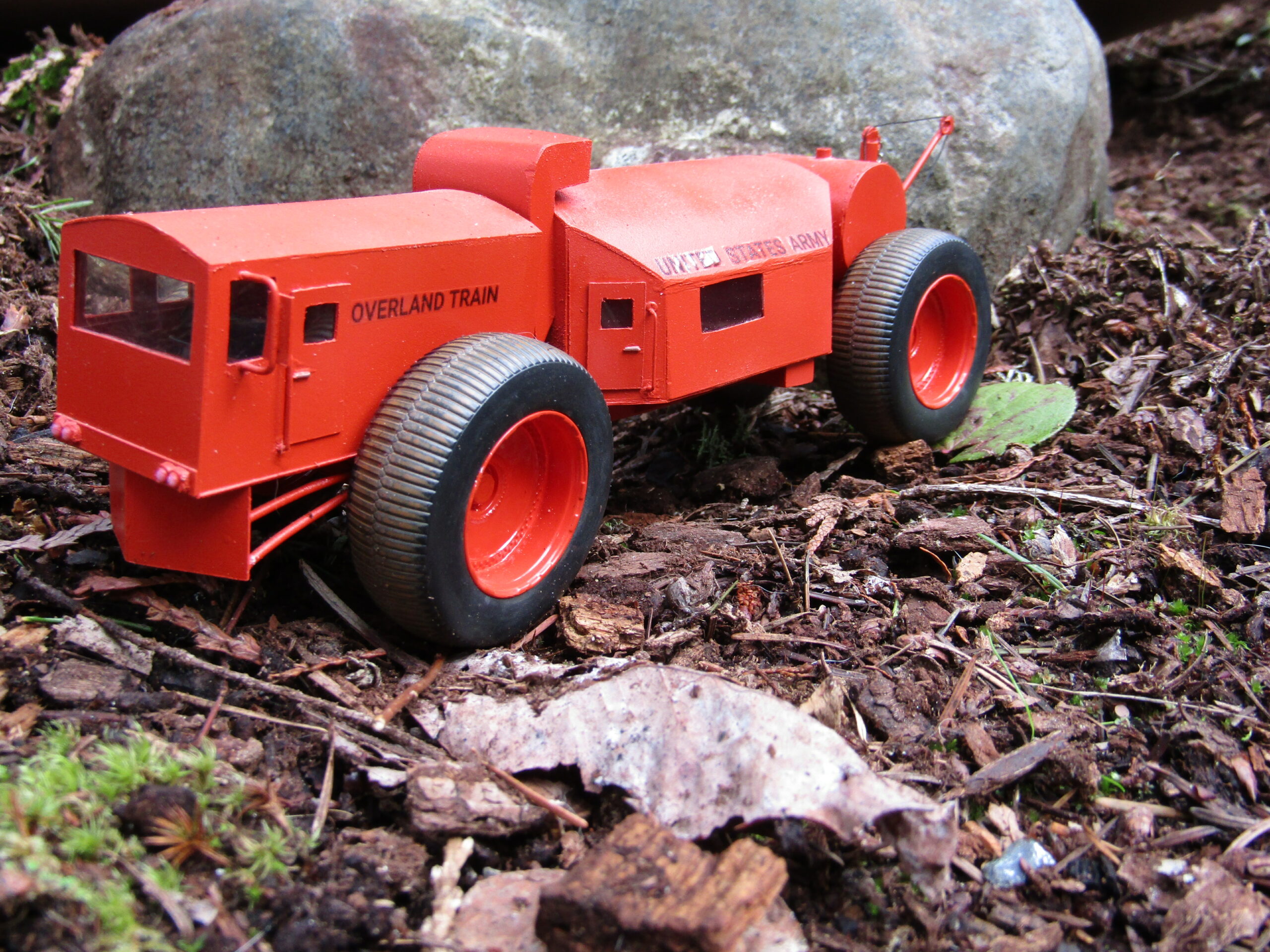
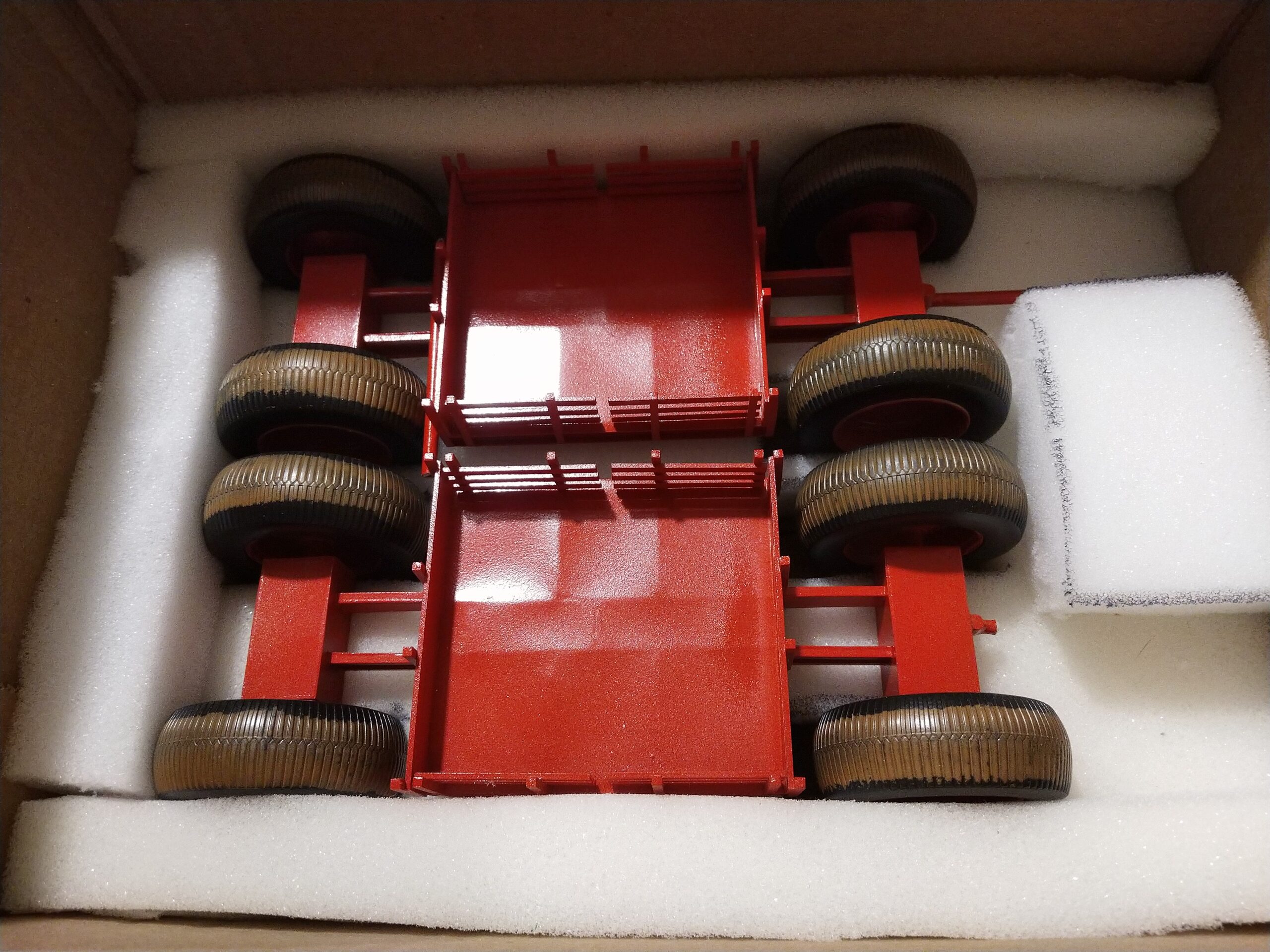
    I purchased a model of the Sno-Train from a talented individual on Instagram. I am a grown adult, but playing with models is still fun!

  • Sno-Train Model First Look

    Sno-Train Model First Look

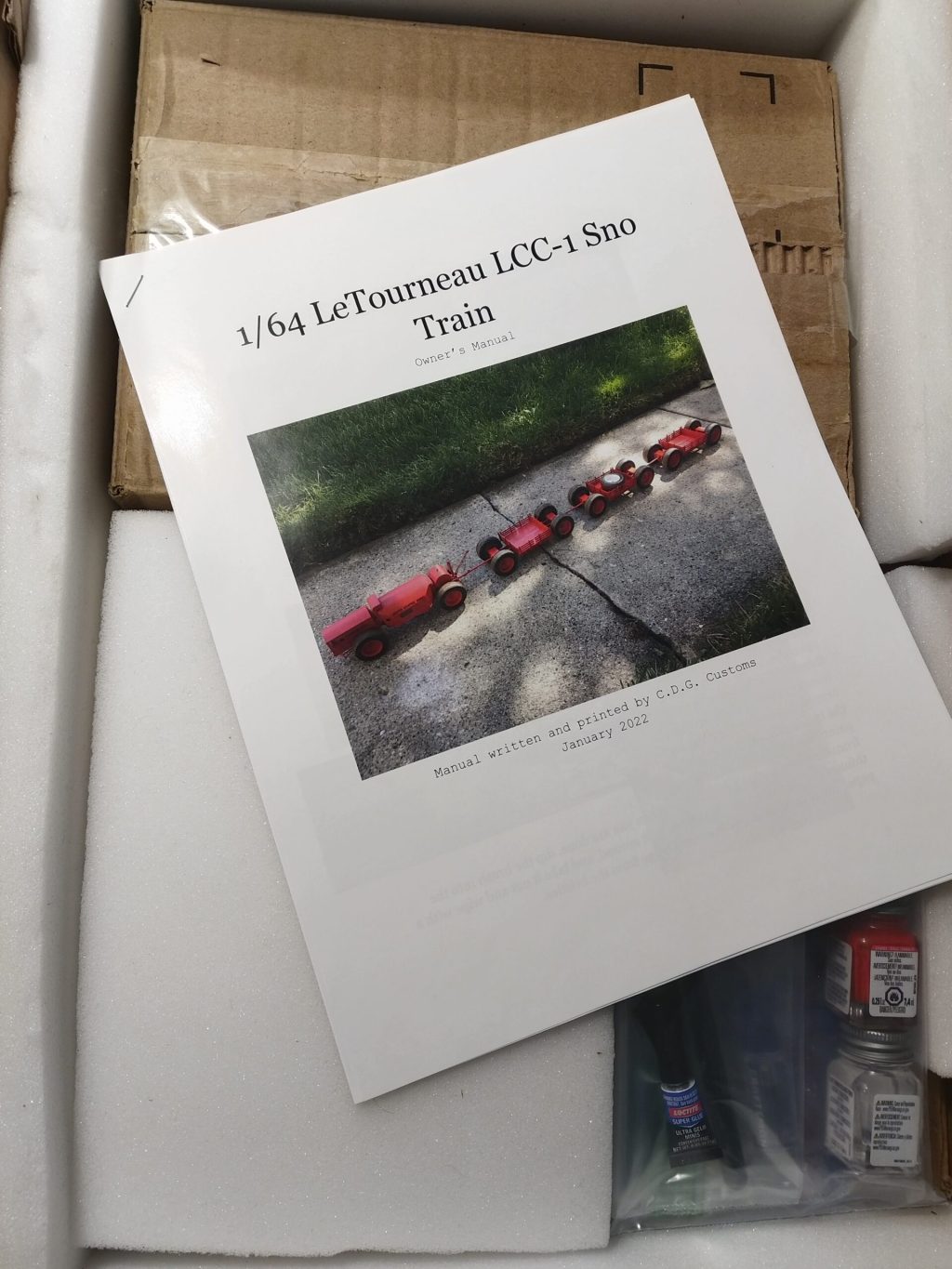
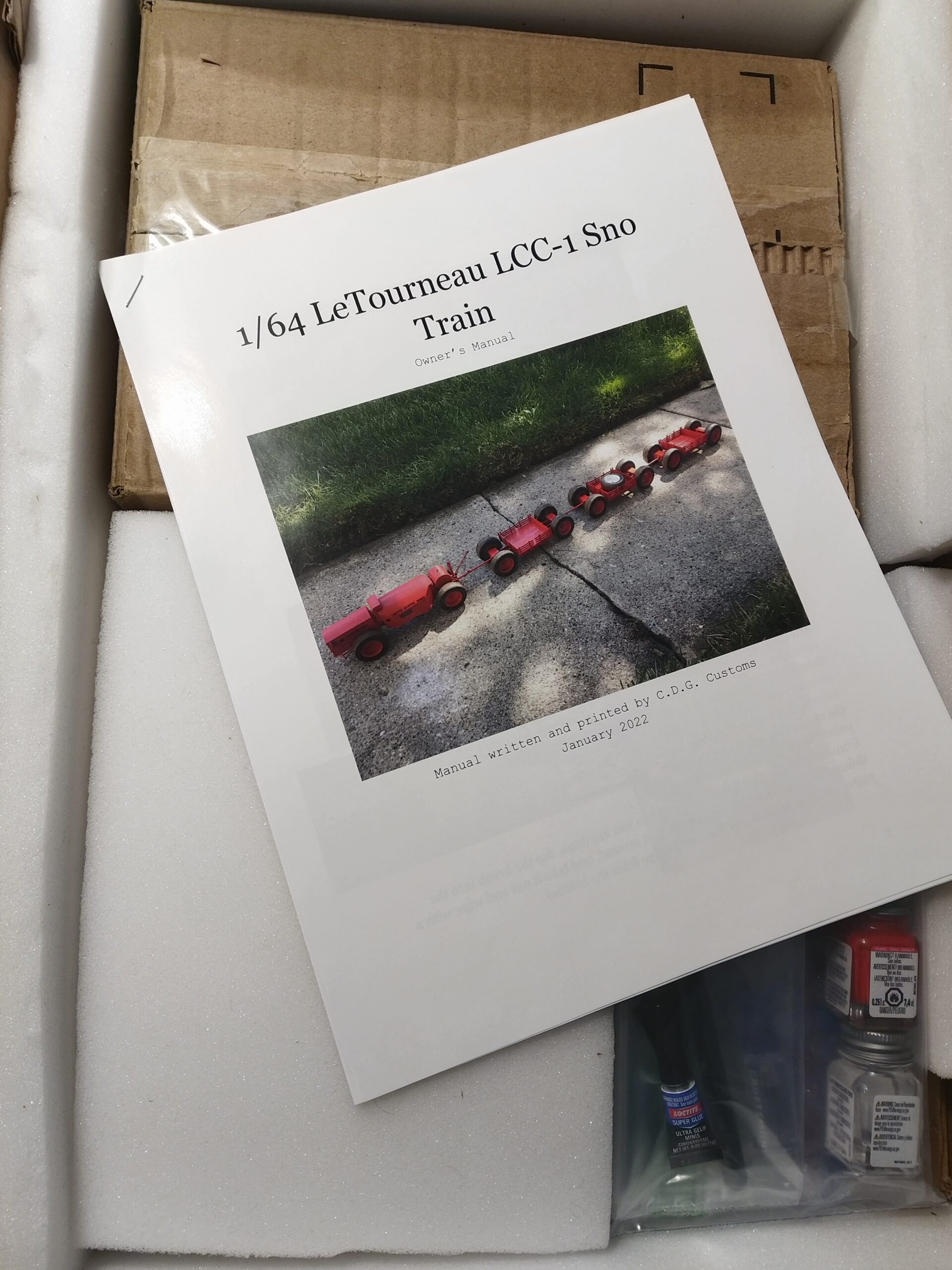
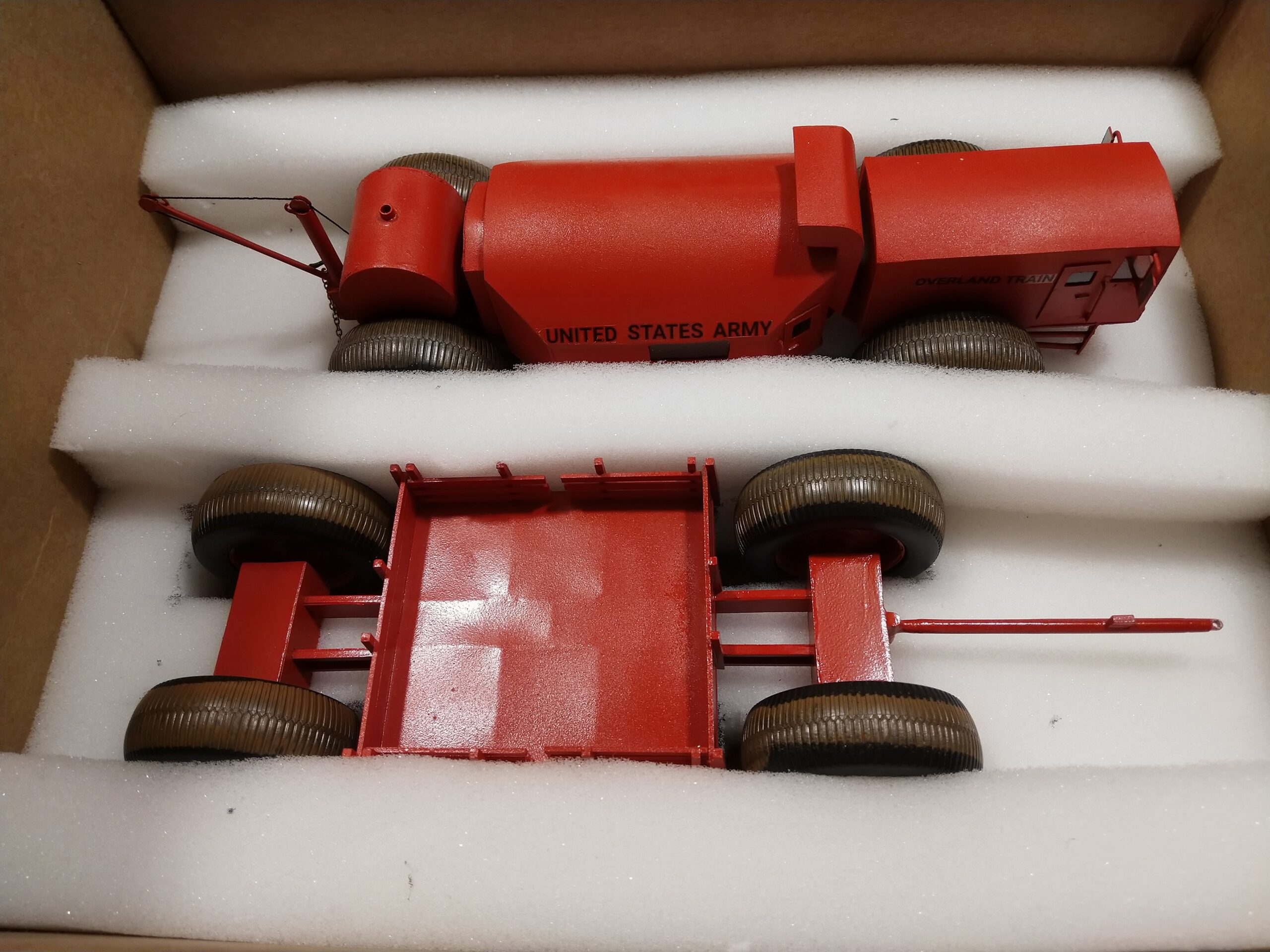
    Over the last couple of years, I have spoken with a number of model builders. They ask for specifications and any drawings that I could provide. Several months ago, one such model builder caught my attention. C.D.G. Customs on Instagram (https://www.instagram.com/c.d.g.customs/) built a model of the LCC-1 Sno-Train. After a conversation, he decided to build the trailers too! We spoke over video chat; I asked if he would be willing to sell the model to me. He provided a detailed list of materials costs and an hourly wage for assembly. I agreed to his terms and the model arrived today. One of the really fantastic surprises was the custom model manual. He provided instructions on how to unpack, pick up, and repair the model if needed. He even provide a bag of paint, glue, screwdriver, and more to help me repair it. He did a fantastic job with the model. Expect more images of this creation in the near future!

  • Bob Hope and Anita Ekberg at Thule Air Base New Years 1955

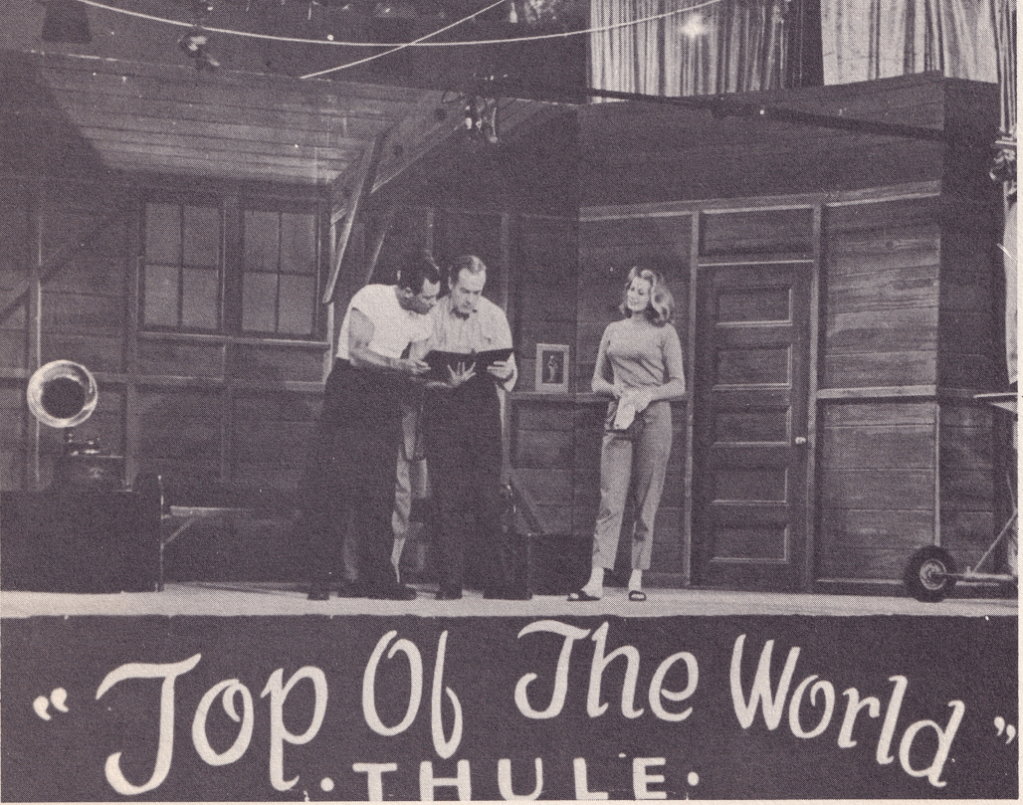
    Bob Hope and Anita Ekberg at Thule Air Base New Years 1955

    On New Years night, December 31, 1954, Bob Hope, Anita Ekberg, Margaret Whiting, Bill Holding, Jerry Colona, and others travelled to the far north Arctic at Thule Air Base Greenland. It was -27 degrees Fahrenheit that night. Just over 4,000 attended the New Years show to bring in the year – it was going to be 1955.

    Bill Holden, Bob Hope, and Anita Ekberg practice the show: Image: NBC Photo.

    During my interviews for the Overland Trains book, I heard several Service Members use the Bob Hope show as a reference. Comments like, I showed up to Thule right after the Bob Hope show, were referenced. The Sno-Train arrived in Greenland in the spring of 1955. While there, the Sno-Train underwent over 2,000 miles of testing.

    Image: Marty Martinez
  • Sno-Train in R. G. LeTourneau, Inc. Longview, TX Proving Grounds

    Sno-Train in R. G. LeTourneau, Inc. Longview, TX Proving Grounds

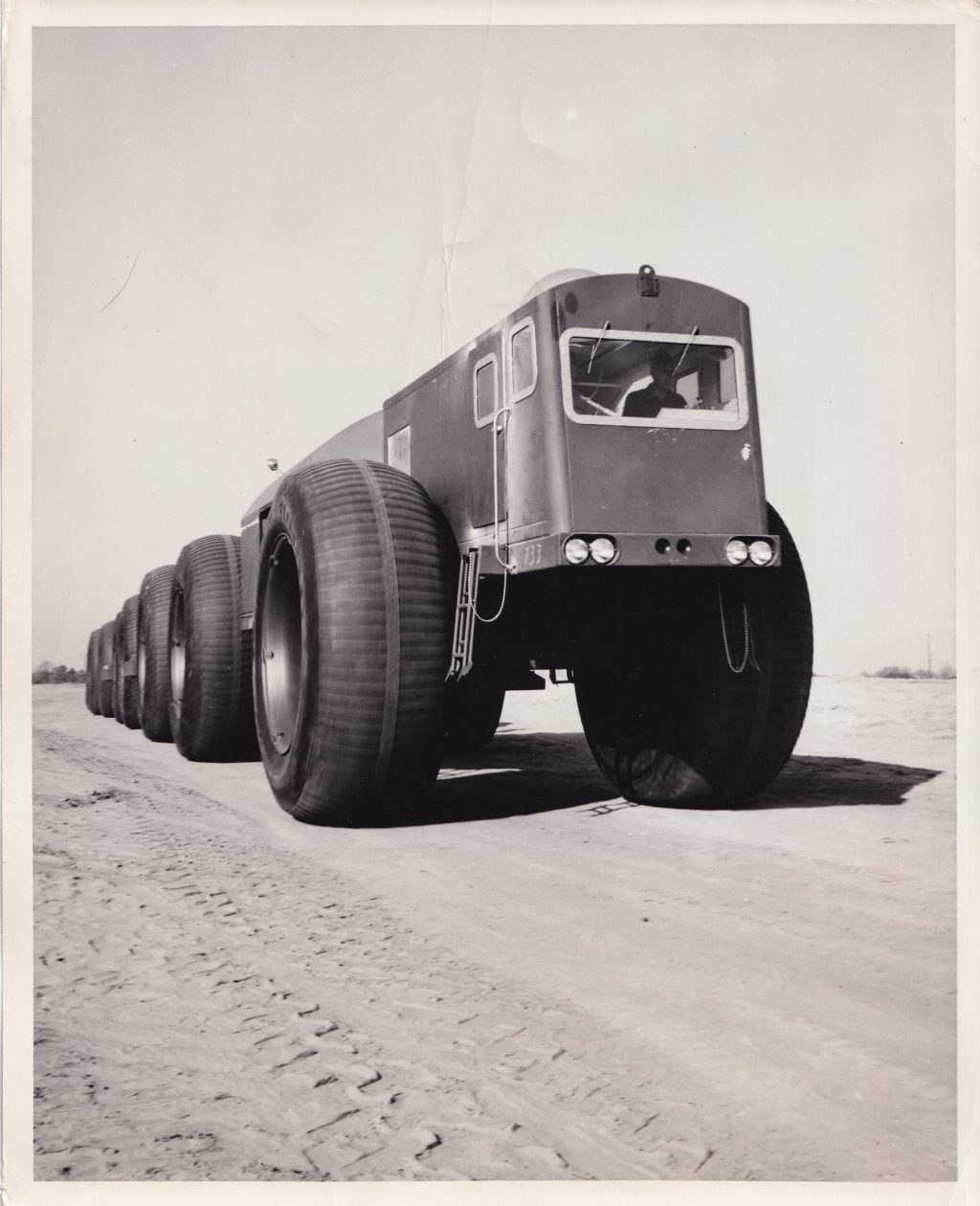
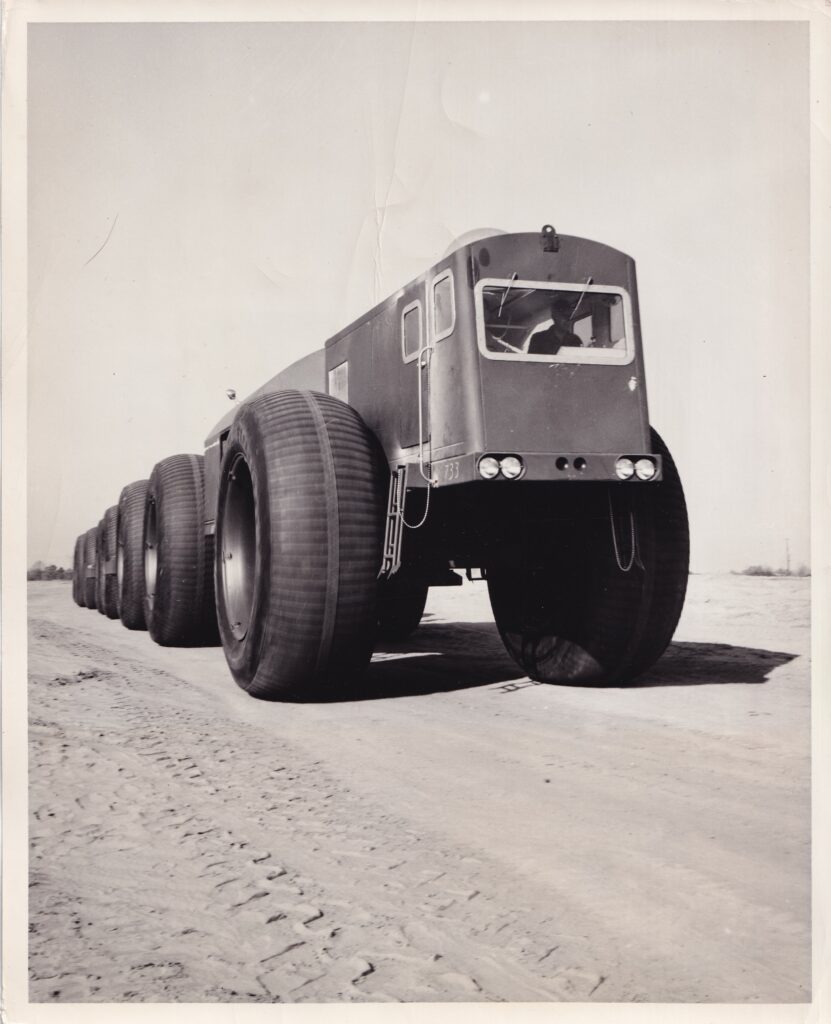
    In this black and white Sno-Train image, you can tell by the tires that it is moving. This image was captured prior to it leaving R. G. LeTourneau, Inc.’s property for Greenland. The two small circles in the middle of the bumper are the horn. If I were a betting man, I would say that the train is unpainted in this picture. Notice the apparent oil stain on the top left of the cab, the chalk marking “733” on the lower left of the front bumper and the overall lack of continuity in the overall vehicle shading. The metadata, or description, reads like an advertisement.

    Sno-Train in Longview, TX. Image: Physical print, unknown source.
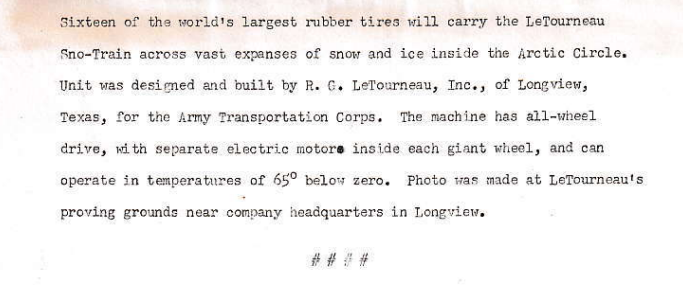
    Sno-Train reverse image metadata. Image: Physical print, source unknown.
  • There were 6 Overland Trains

    There were 6 Overland Trains

    When I watch or read about Overland Trains, authors typically forget, or don’t know, that there are 6 of them. The Overland Trains were built from 1952-1961.

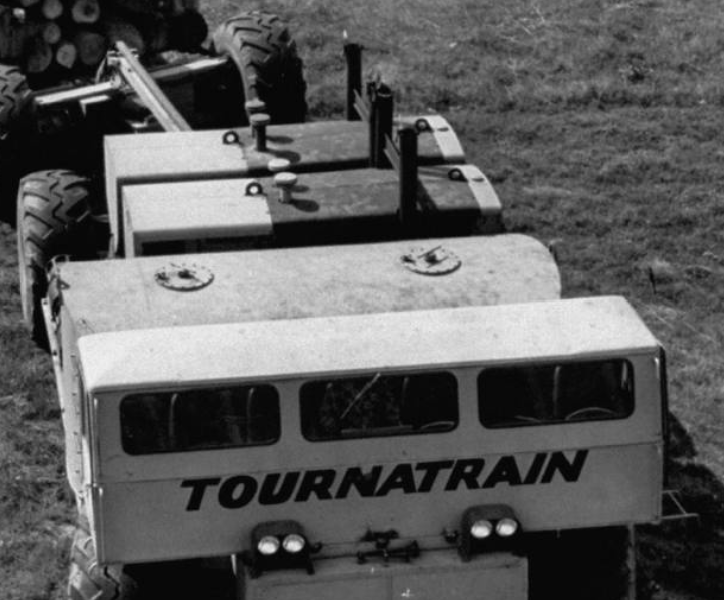
    The first built train was the Tournatrain. R. G. had many concepts prior to building the first train.

    Next, was the VC-12 Tournatrain. This was an entirely different machine than the first train. It had two engines versus one in the original.

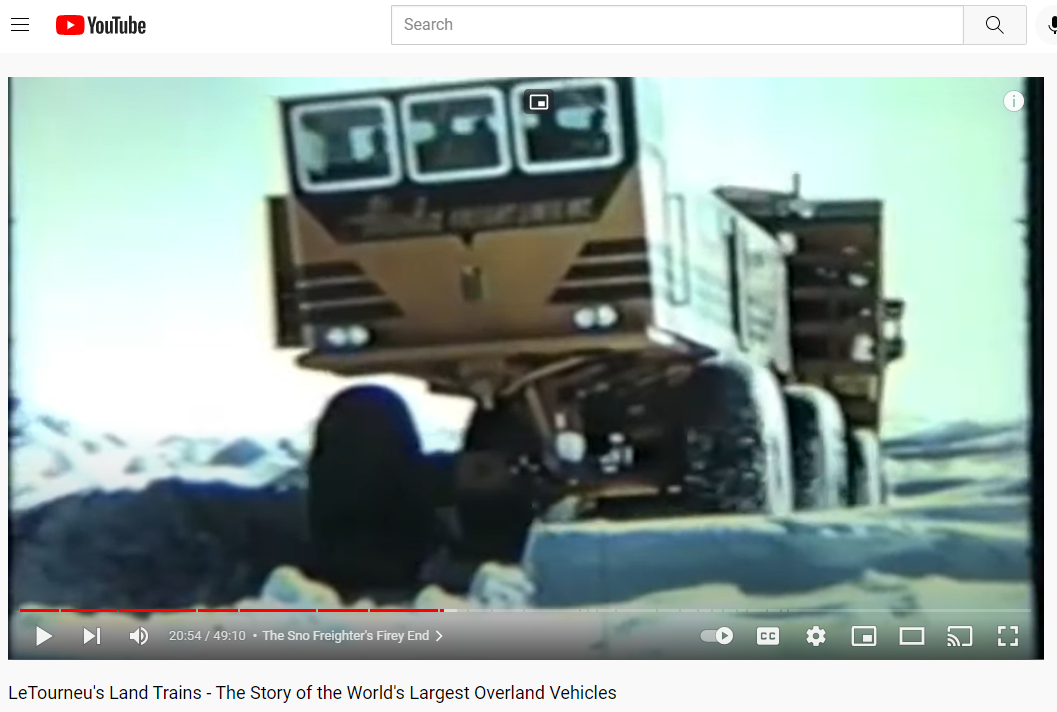
    Alaska Freight Lines was the recipient of the 3rd Overland Train, the Sno-Freighter. This was the only train that was purchased by a private party. This train made several trips to the Distant Early Warning (DEW) Line stations

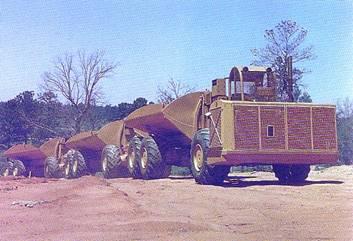
    The Side Dump Train had a few concepts before coming up with the built machine we know of. It also had a royal visitor!

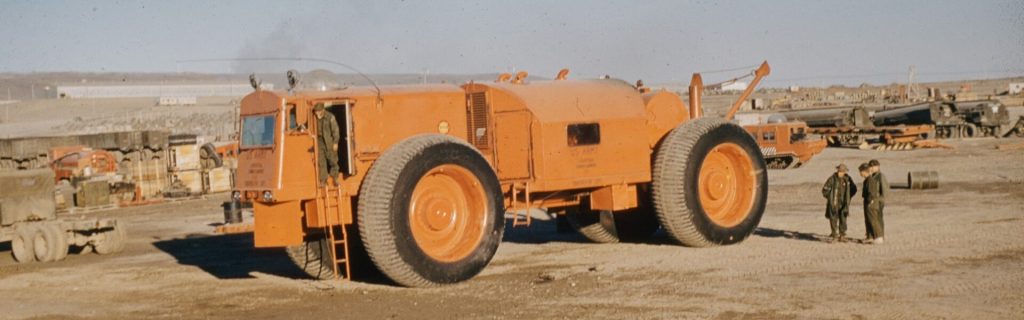
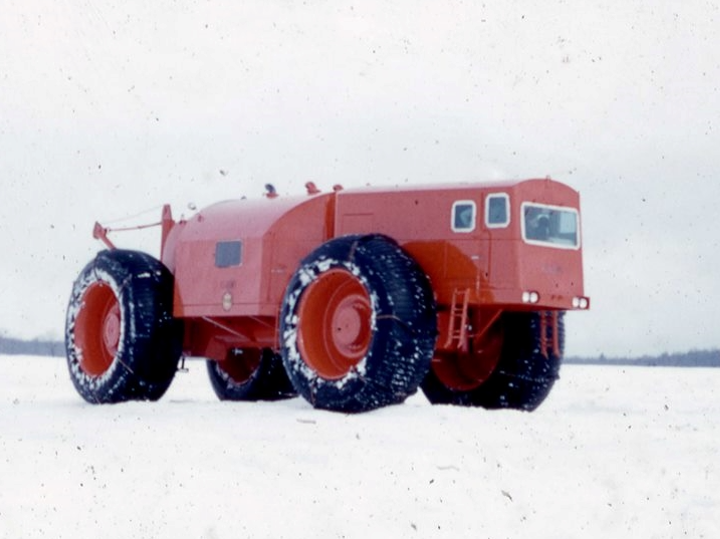
    The Sno-Train has the most complex and active history out of all the trains. Expect some mind blowing stories and facts when the book comes out. This was the first Overland Train to use the Firestone 120x48x68 tires.

    Lastly, the Overland Train Mark 2. It was the most engineered and well thought out train of them all. it never entered active service and went from Longview, TX to Yuma, AZ. While it is said that none of the train made it out of the scrapper besides the control car, that is not accurate.

  • Sno-Train Exterior Components Description

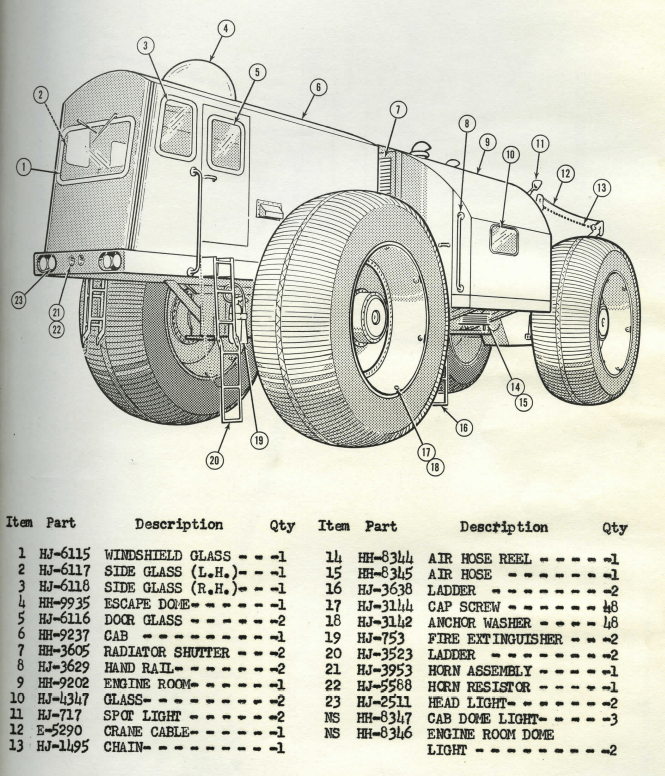
    Sno-Train Exterior Components Description

    Sno-Train exterior parts identification. Image: Illustrated Parts Catalog for the Army Sno-Train, March 30, 1955
  • Sno-Train in Houghton, Michigan

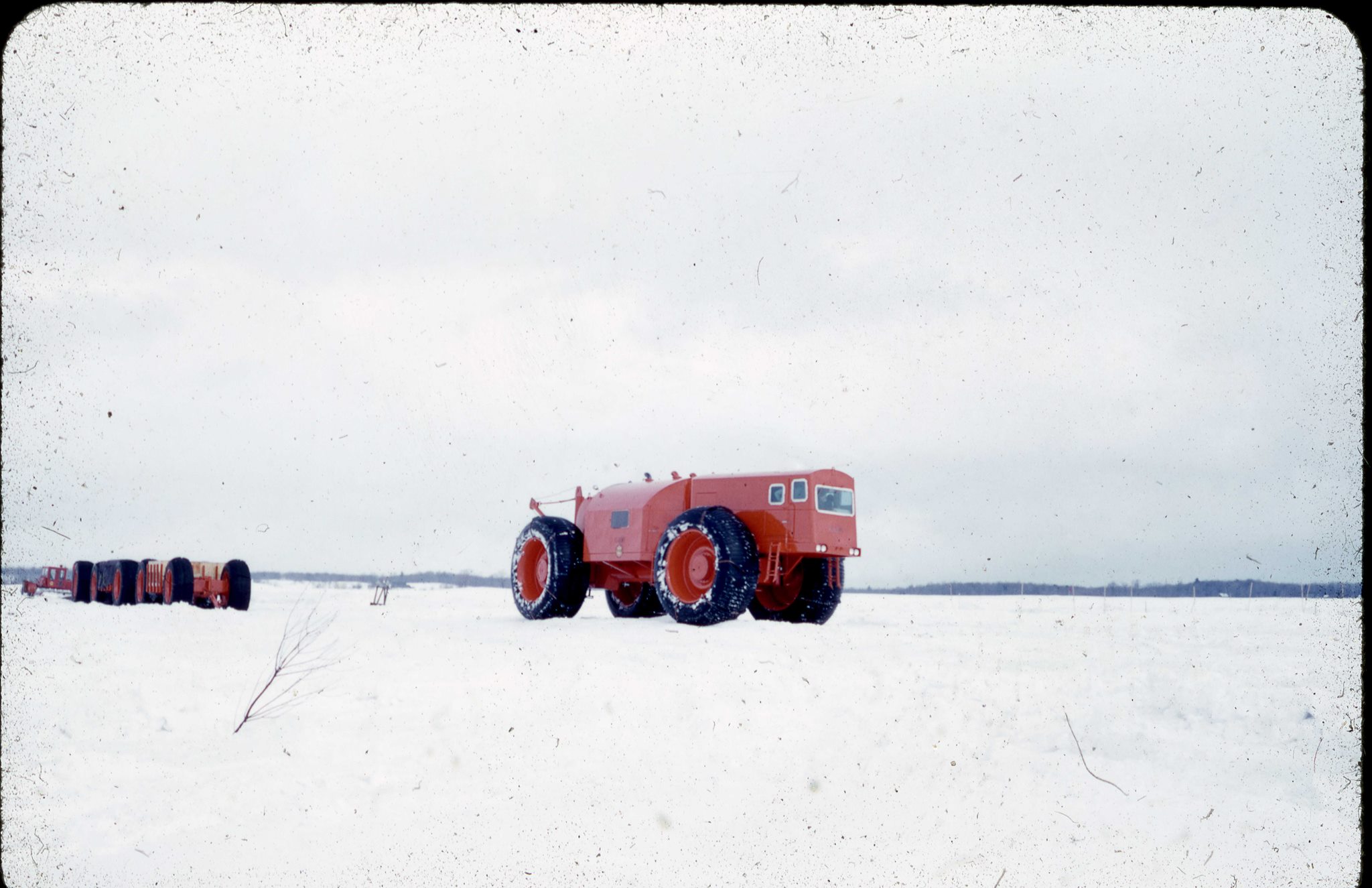
    Sno-Train in Houghton, Michigan

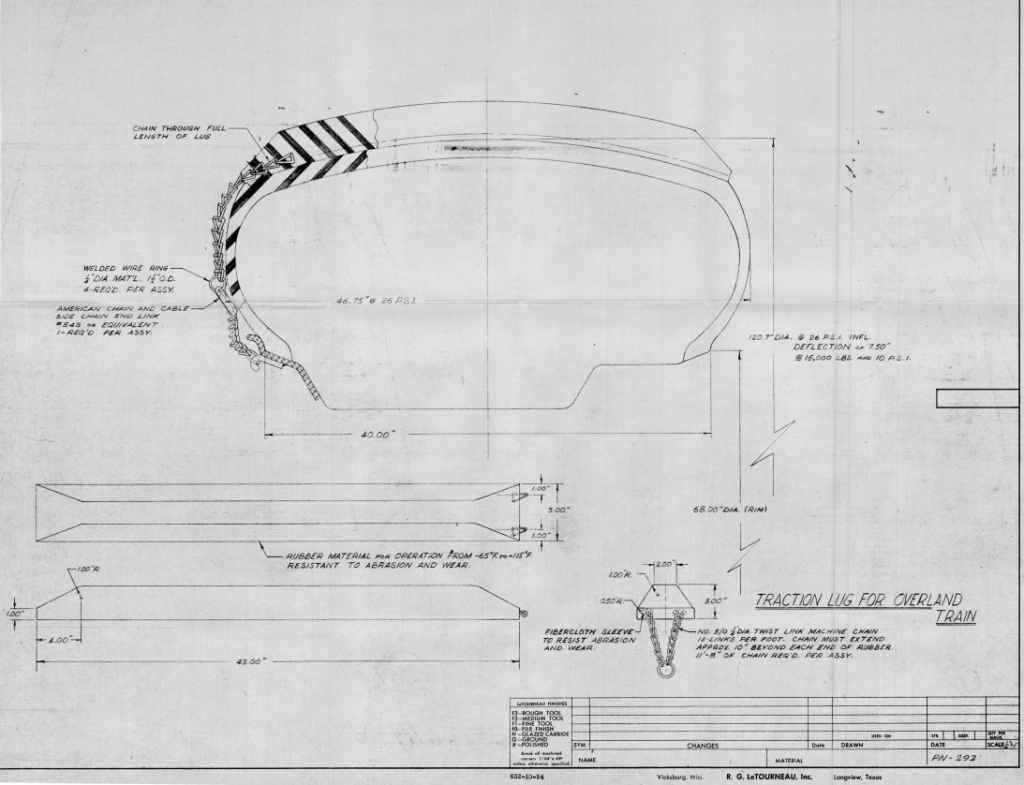
    The Sno-Train arrived in Houghton Michigan in the middle of February 1956. It would stay there until early April 1956, where it was tested in a variety of snow and ice conditions. R. G. LeTourneau took the opportunity to visit Michigan in early March to see how his new machine was progressing. During the tests, the Sno-Train tried out the traction lugs for the first time. These were the equivalent of tire chains. There appear to be 6 traction lugs present on each wheel.

    Traction Lug drawing. Image: Phase 4 Overland Train book, U.S. Army Fair Use.