In December 2024, I received an email from someone who told an interesting story about Steve McPeak and owning one of the Overland Trains. McPeak was a daredevil and holder of 24 world records.
“Around 1980 I met a guy named Steve Mcpeak who at the time was doing a daredevil act act at Chicago fest at navy pier where he performed on a trapeze under a helicopter. He said that he owned a snow train in Alaska and he even showed us a video tape that was produced by an Anchorage TV station. The tape showed the snow train going through the woods knocking small trees as it went. It also showed it in a parade in Anchorage. He said that he bought it from the salvage yard and got it running again. This would of been late 70s. He said that he looked into getting new tires for it and the molds still existed then and it would very expensive to have them made. Does this make any sense to you? You can google Steve Mcpeak daredevil for more information on him. The best I can find I think that he went to prison in his later years for drugs. He lived in Las Vegas.“
Analysis
In trying to figure out whether McPeak had ties to the Sno-Train or the Sno-Freighter, I looked back at the documentation to understand where each machine was located during the 1970s and whether the details of a parade and tires had any traceable elements.
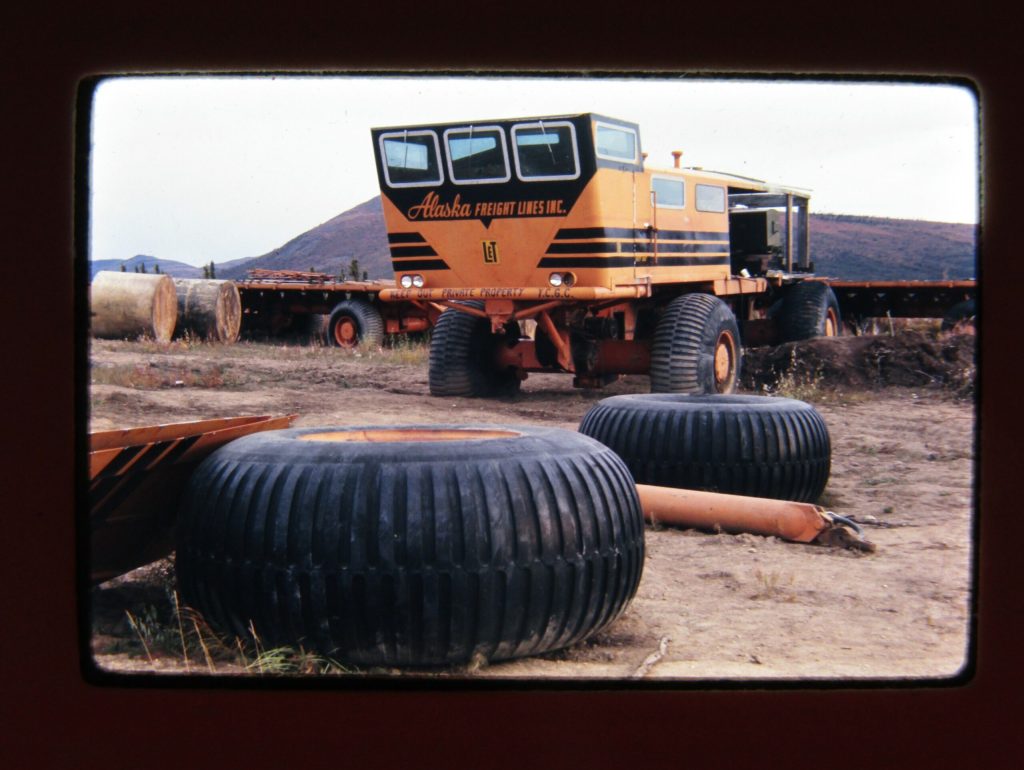
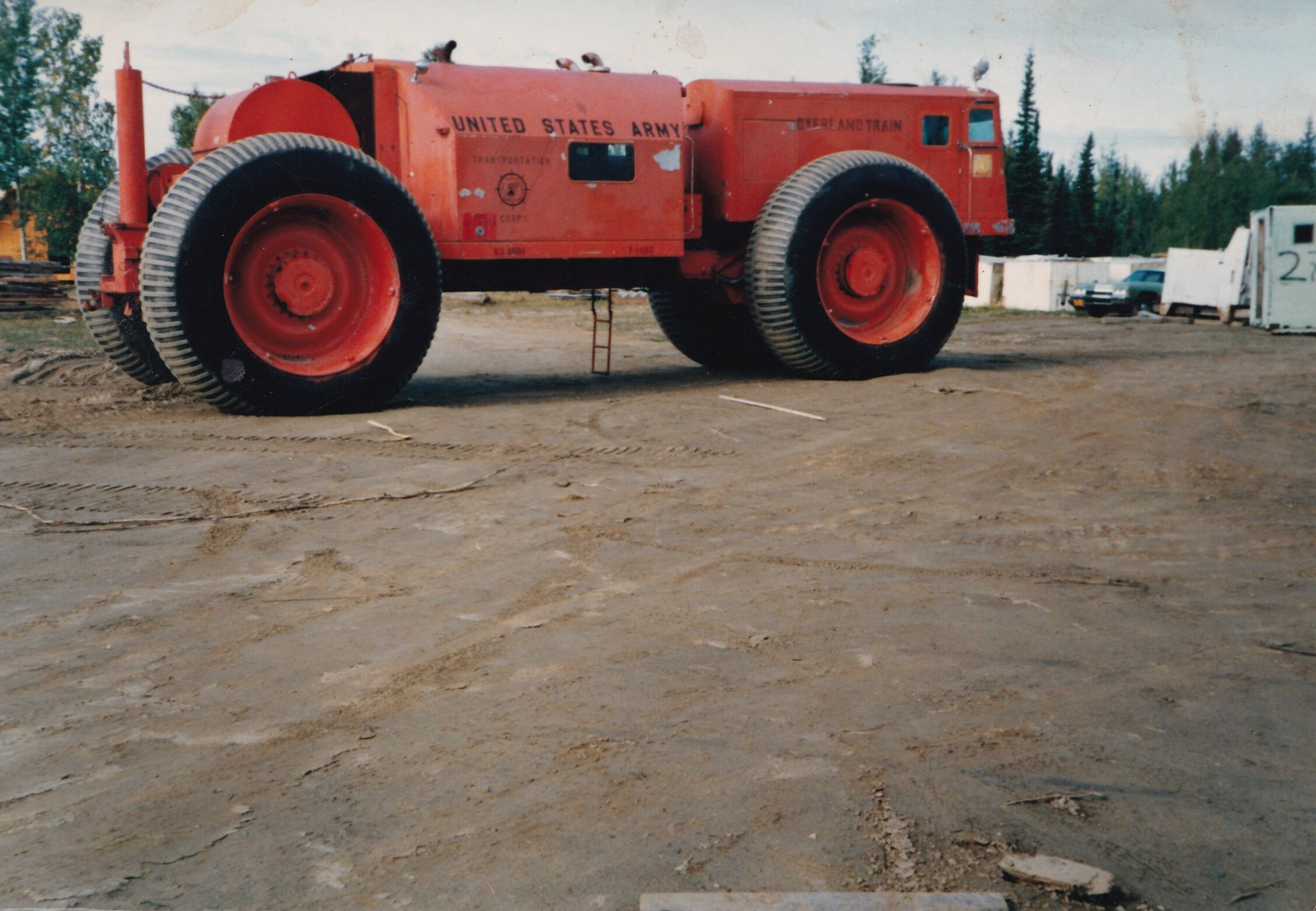
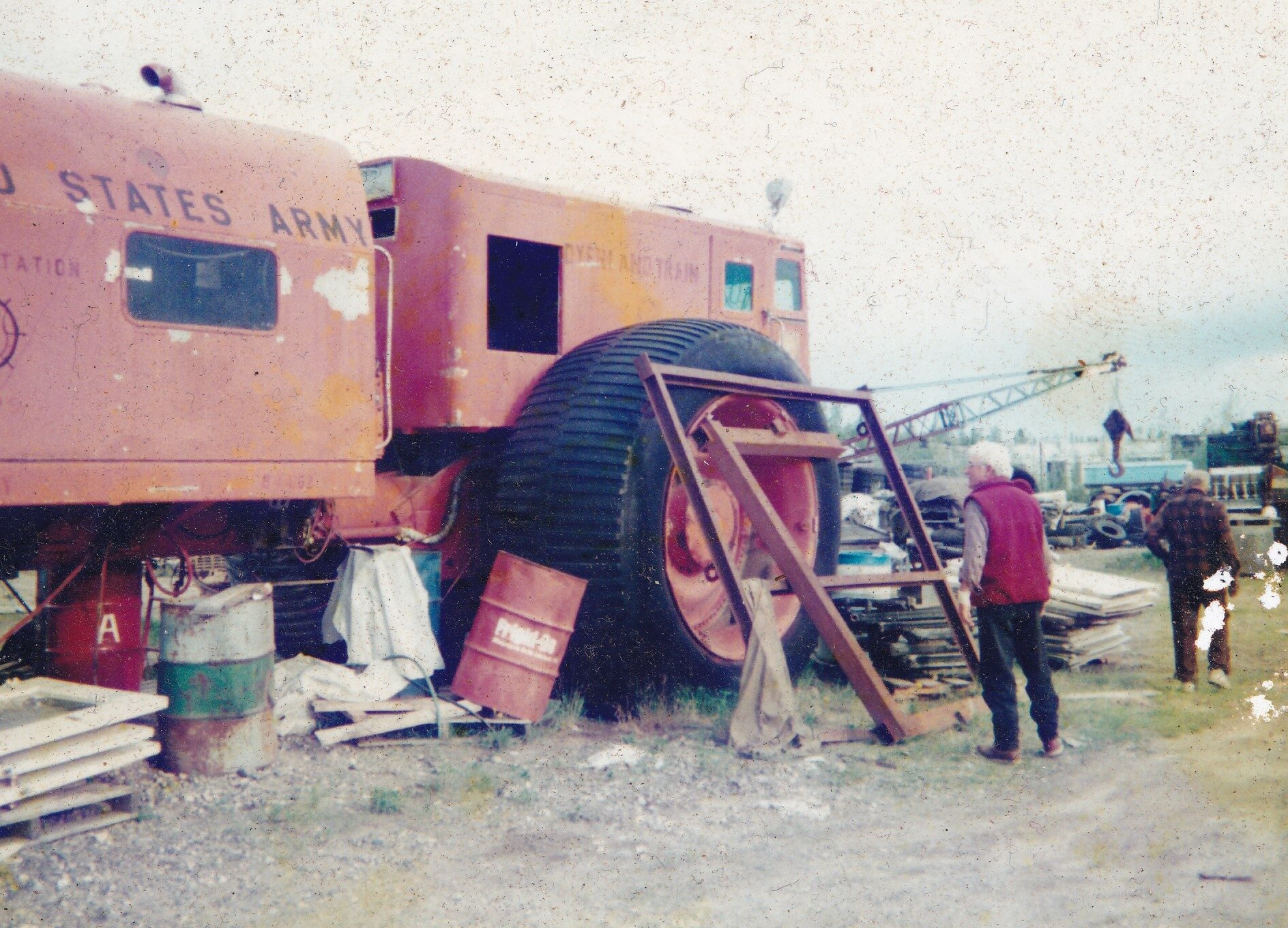
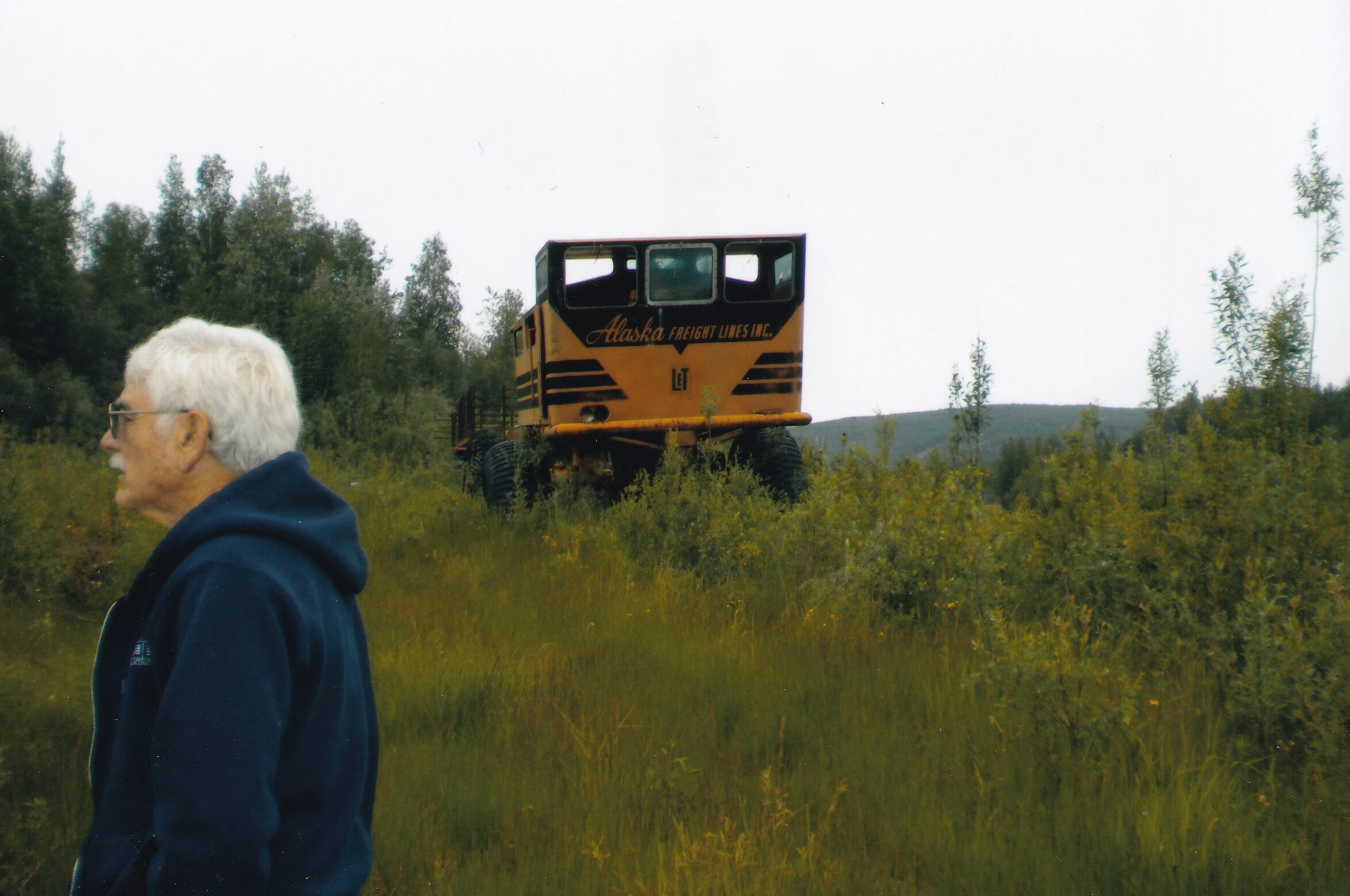
The Sno-Freighter sat at International Boundary for three years, from 1968-1971. Bobby Miller was trying to sell it to the oil industry. Miller later placed the Sno-Freighter at his salvage yard called Miller Salvage at 1485 30th Avenue in Fairbanks, AK. Eventually, Rick Winther purchased the Sno-Freighter from Miller’s Salvage for $2,000, with hopes to have it on display at Pioneer Park.
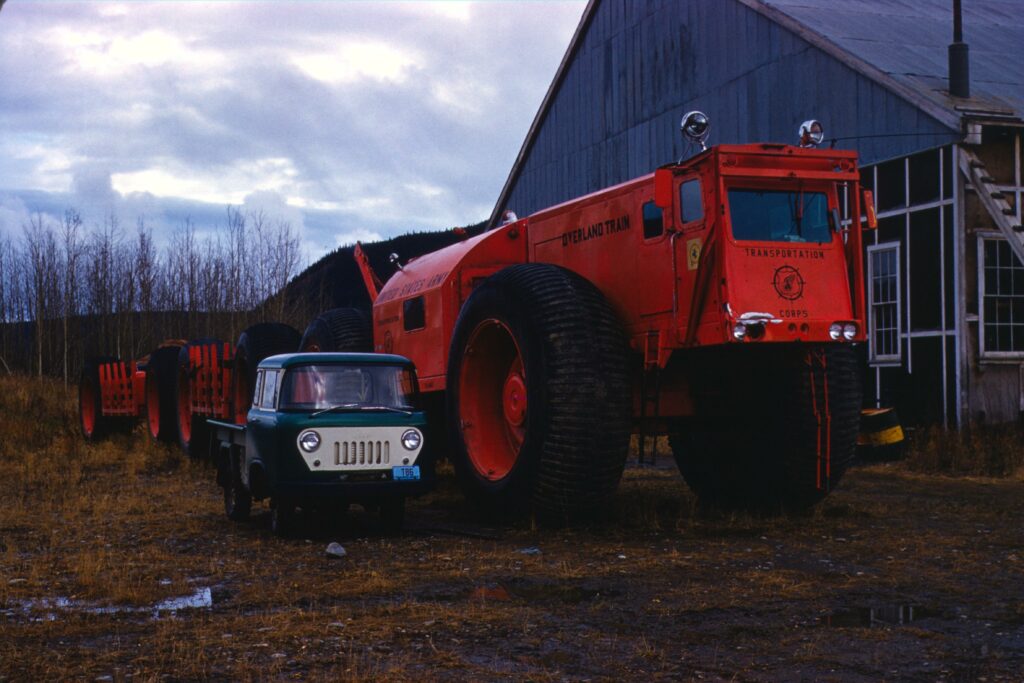
Shortly after 1964, the Sno-Train was purchased from Fort Wainwright by Carl Peterson. It then sat in Peterson’s Arctic Plus Salvage Yard until 2010, when it was purchased by Keith Byram off of eBay for $15,000.
In the July 16, 2020 version of the Sno-Freighter chapter, I had notes about Steve McPeak that never made it to the final book. He was involved in one of the machines, but I didn’t have enough supporting documentation to support his ownership at the time.
The comment that the reader sent me about getting new tires for the Overland Train also struck me as an important detail. Tires for the Sno-Freighter were not available during the 1970s. It’s unclear whether LeTourneau produced the tires for other machinery models. However, the tires on the Sno-Train were used for a number of machines and projects to include the Sno-Buggy, TC-497, the Panama Canal Tug system, Gold Digger, Crash Pusher, and Thompson Trailers to name a few. They would be relatively widely available without the need for reproduction.
At many times during the Sno-Freighters’ existence, it was transported on public roads. I don’t have any evidence of a parade, but it stands to reason that it could be part of one considering the massive size and general oddity.
During one of many interviews for my Overland Trains book, Mike Haskins did mention that “the family of Steve McPeak lived down the road…” in Alaska. This lends itself to McPeak having a tie within Alaska and potential knowledge of the Overland Trains.
Conclusion
The data suggests that Steve McPeak may have owned the Sno-Freighter for a short period of time or was in discussions or researching to purchase the Sno-Freighter from 1968 to 1971. Numerous people, including the reader who sent in the email mention McPeak with ties to Alaska, the potential machine ownership, and the multiple accounts of McPeak’s ownership. The Sno-Freighter was actively for sale during that time and McPeak would have the opportunity to purchase the machine.
If you, the reader, has more information about Steve McPeak and his ties to the Overland Trains, please reach out to me at mark@nwlinux.com.
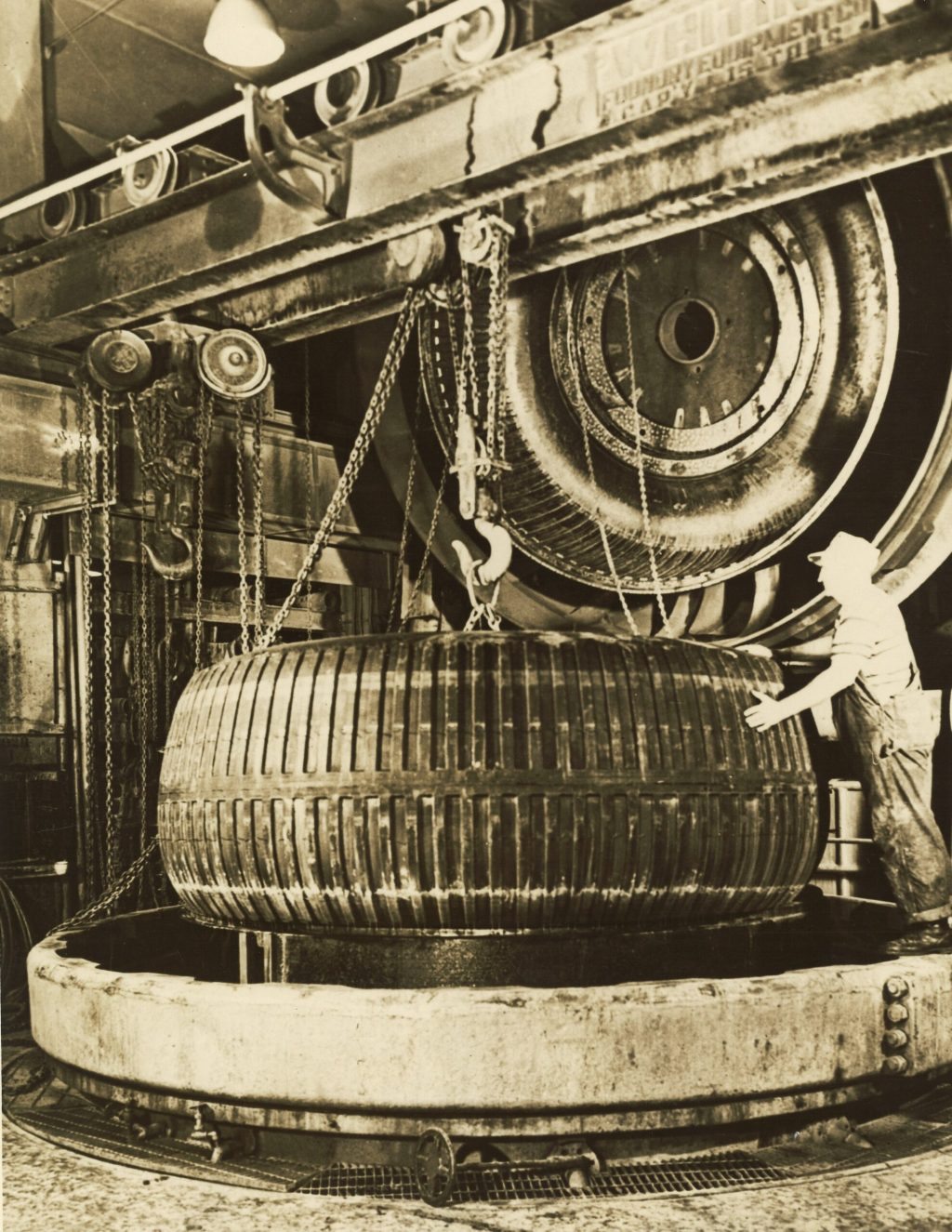
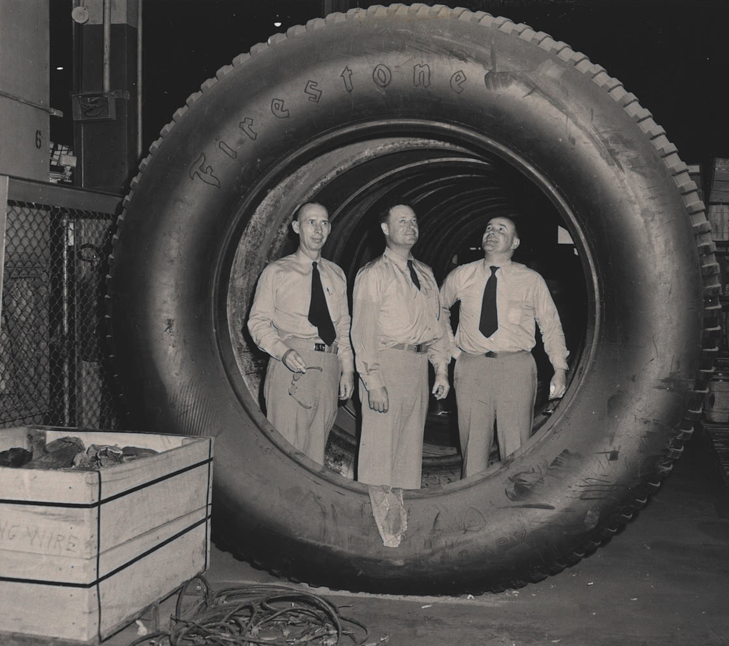
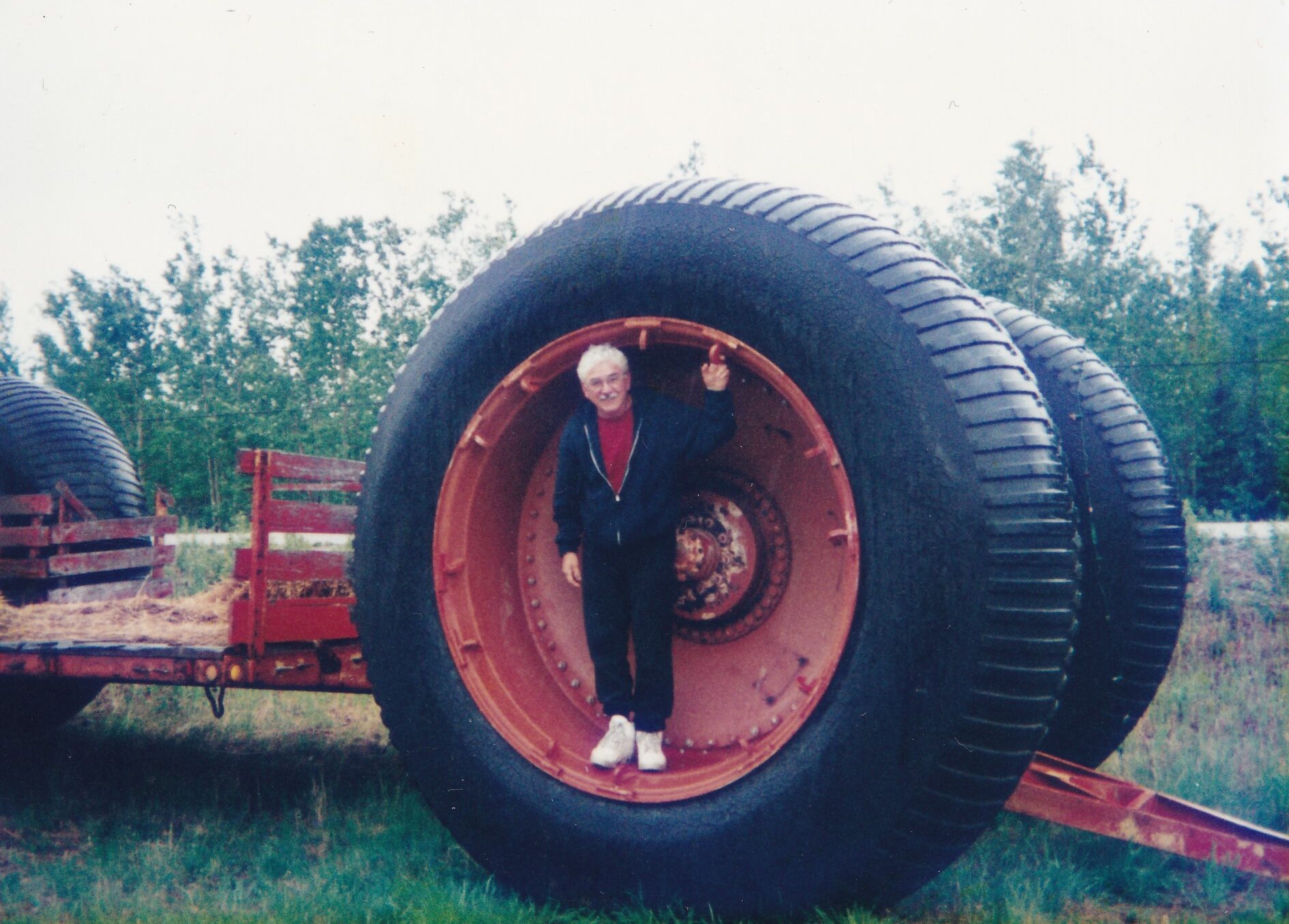
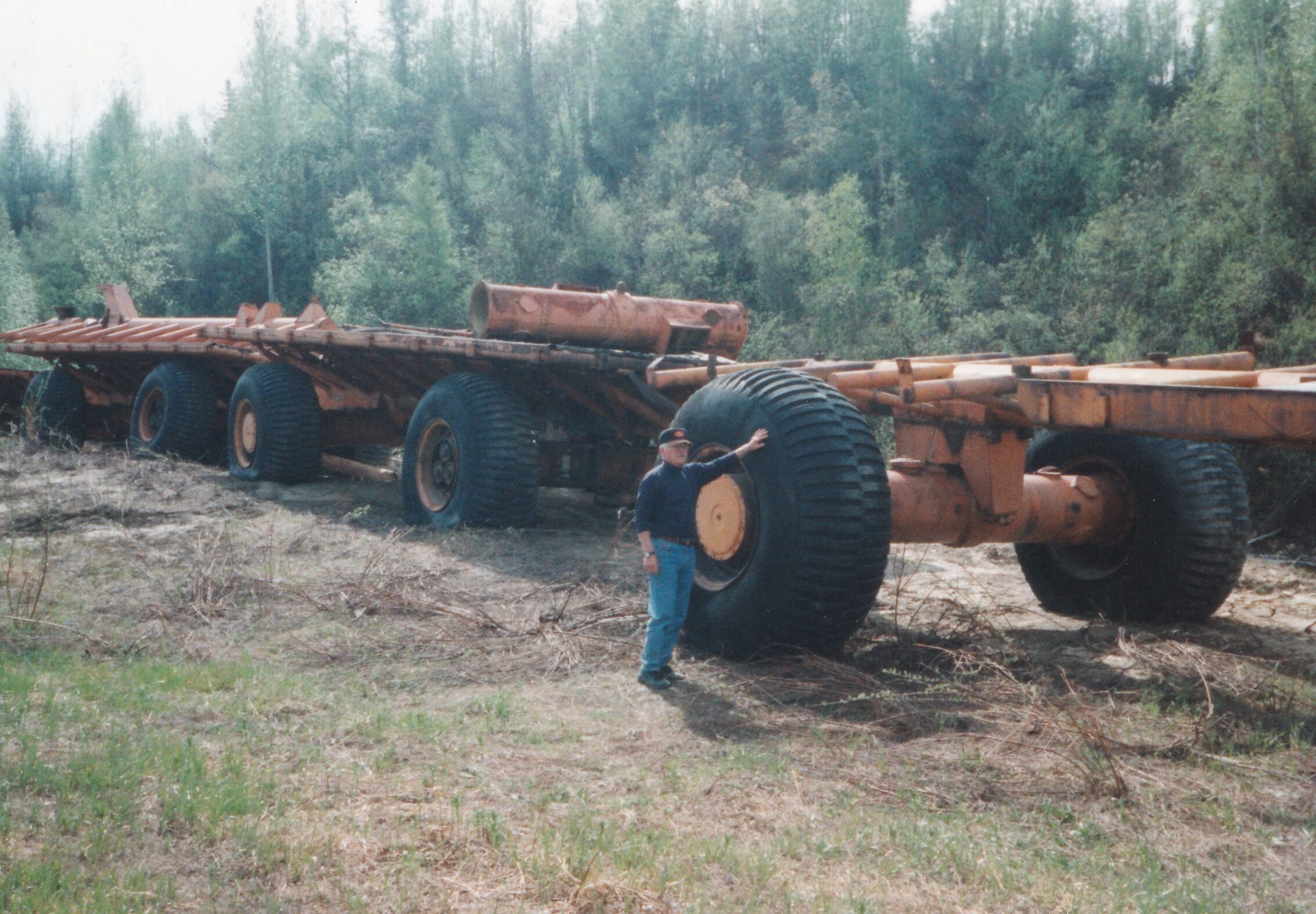
R. G. LeTourneau, Inc. was no stranger to building huge machinery. However, it wasn’t until 1952 that R. G.’s son, Ben LeTourneau built the tire mold that would help shape a critical component of the Overland Trains story – the monstrous tires! From this custom mold came the Firestone 120x48x68 tires that would support the Crash Pusher, the Swamp Buggy, Marsh Buggy,Sno-Buggy, the Thompson Trailers, Gold Digger, and several of the Overland Trains.
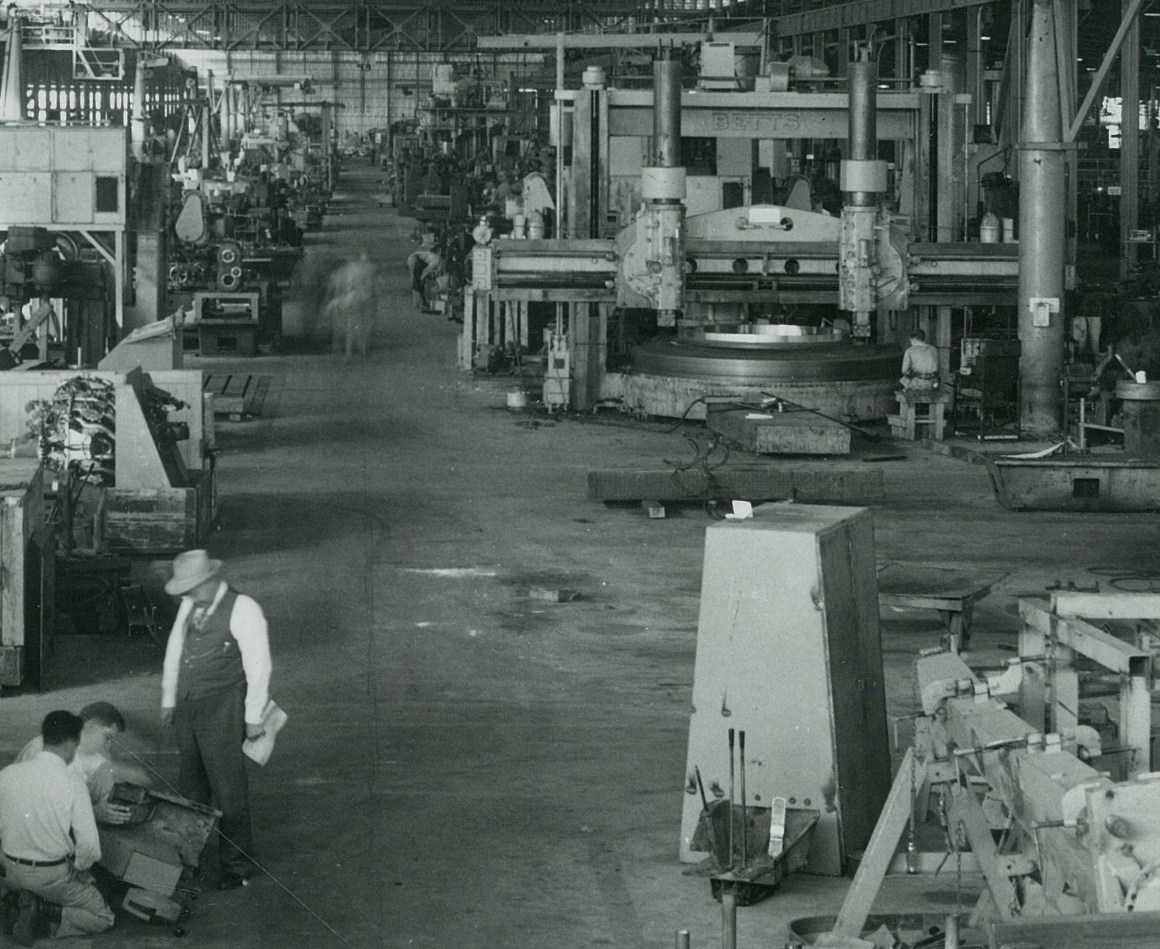
R. G. LeTourneau (left in hat) in the Longview, TX manufacturing line with the BETTS Vertical Boring Mill in the top-right, 1948.
In 1952, R. G. LeTourneau entered into contract with the Firestone Rubber and Tire Co. to build the 10 foot tall and 4 feet wide tires. However, they did not have a mold for them. At the age of 18, Ben LeTourneau helped build this mold for Firestone.
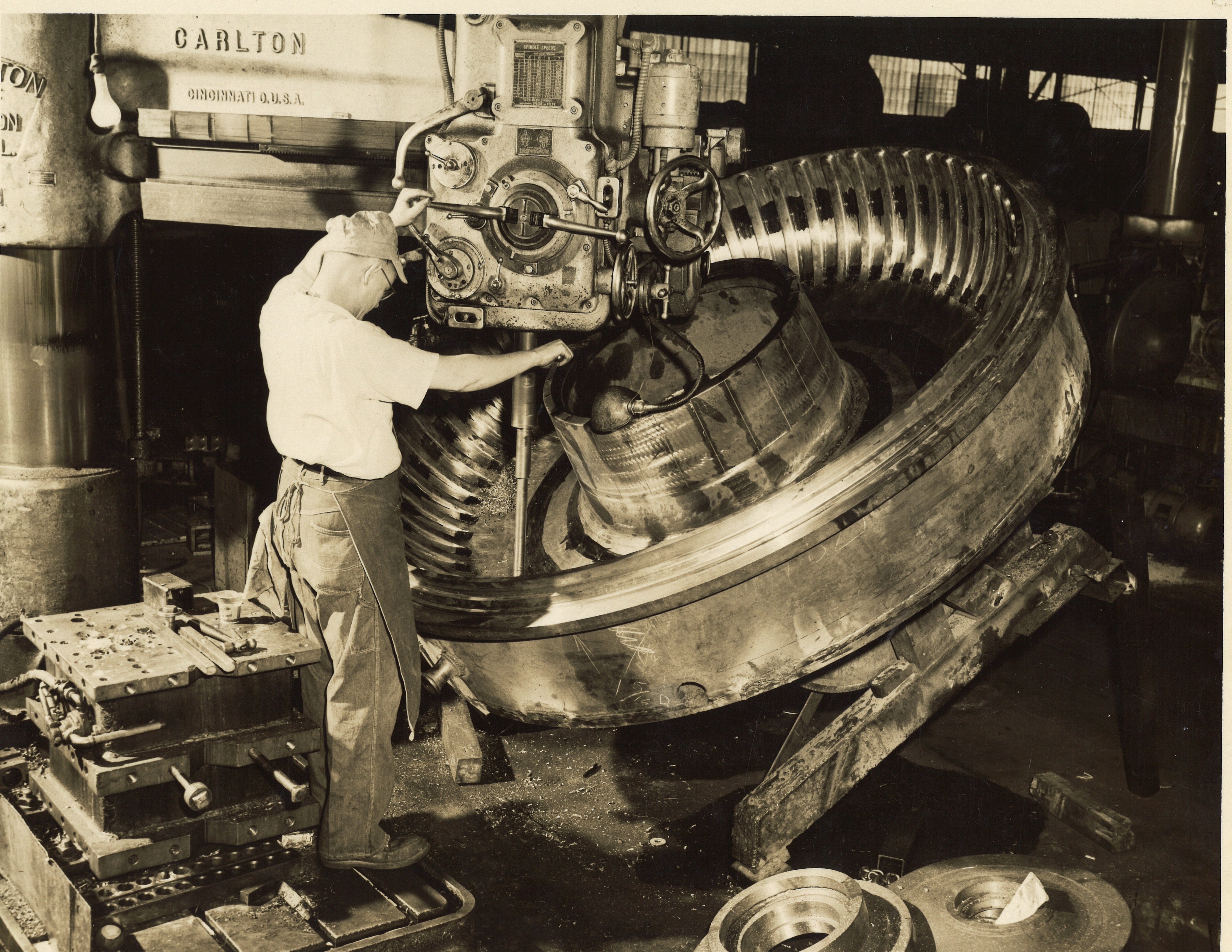
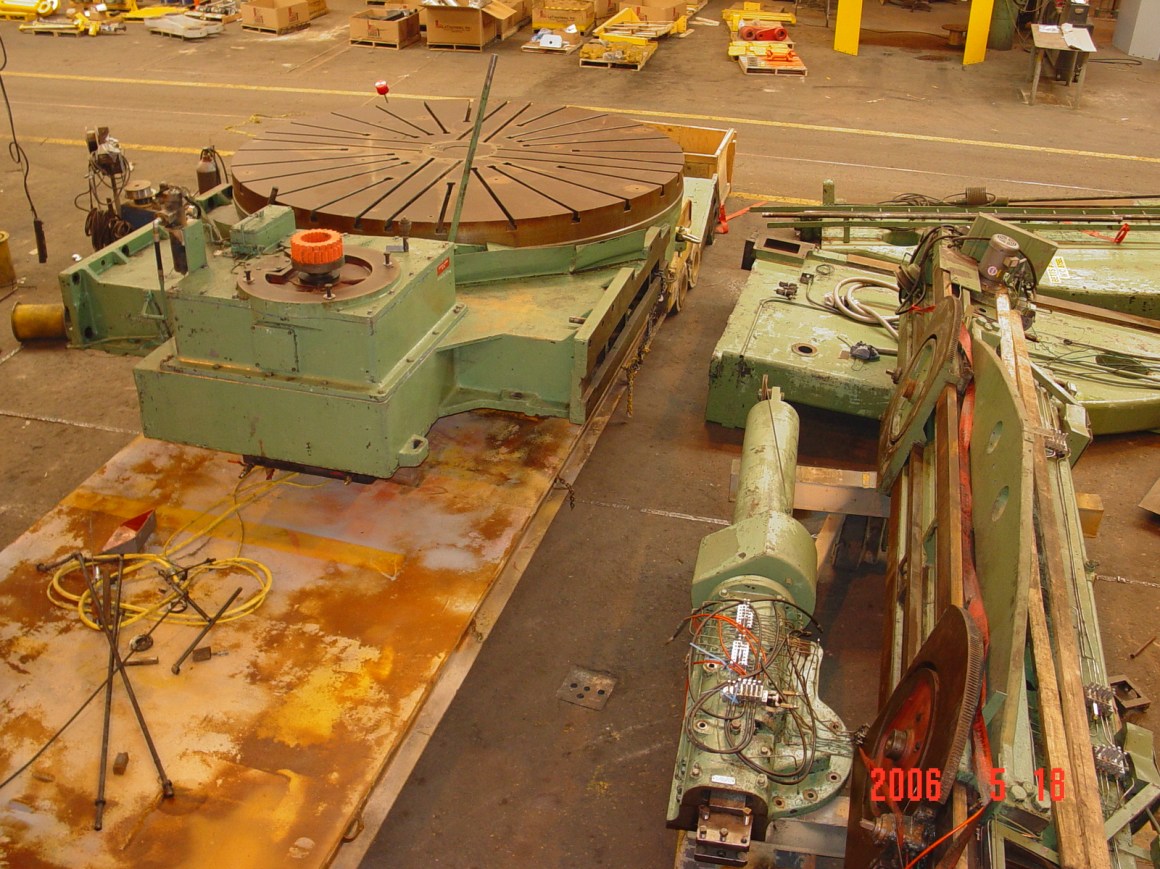
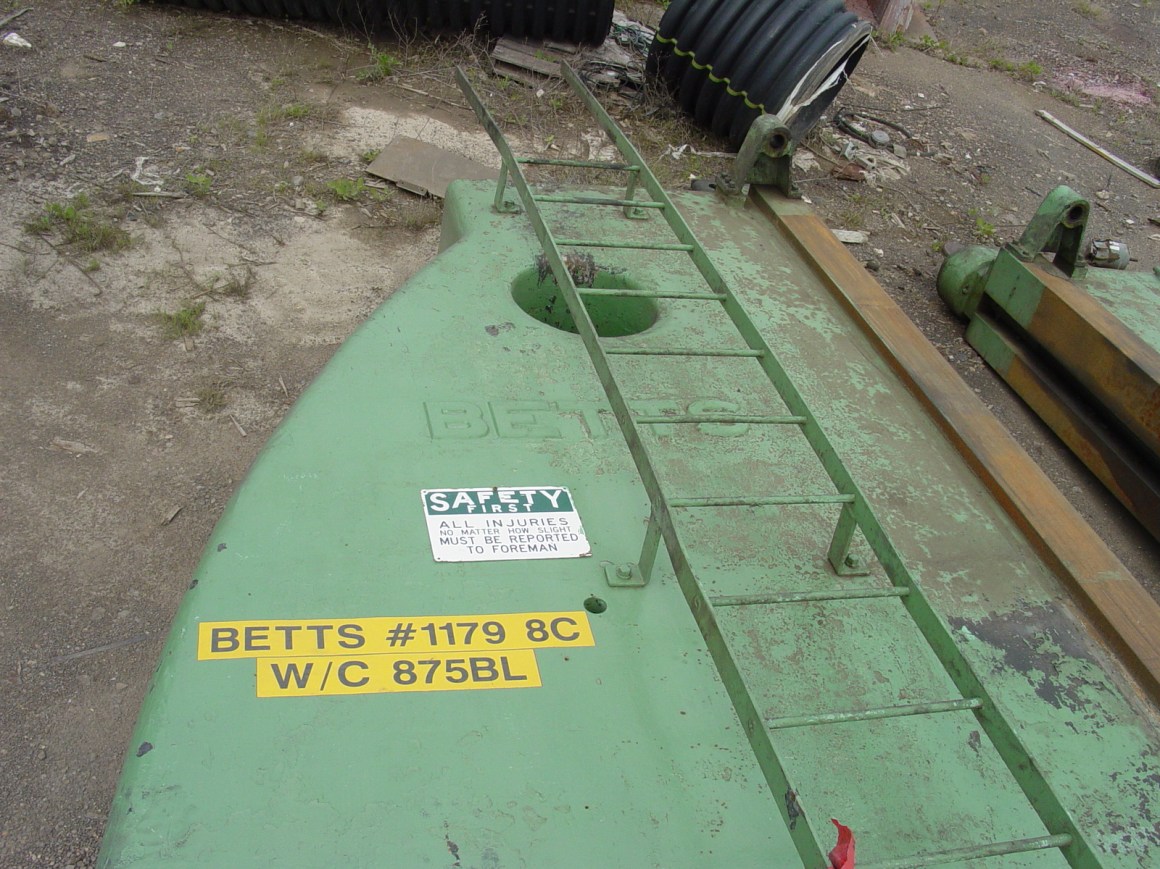
The BETTS Vertical Boring Mill (BETTS) had a 12’ diameter table and was used to build the custom tire mold. The table “rotated with tools mounted on a bridge over the table, while the table rotated under the bridge.”
After the two-halves of the mold were built and placed on the BETTS 12 foot diameter table, Ben “mounted it onto the rotating table and, after making a basket which I attached to the tool bar, rode the tool down into the mold while it was rotating under me. In this way we cut a smooth mold which was used to form the new tires.”
The BETTS was still in use at the factory until 2006, when the company owners at the time dismantled and removed it. It is unknown whether it was scrapped or sold to another company.
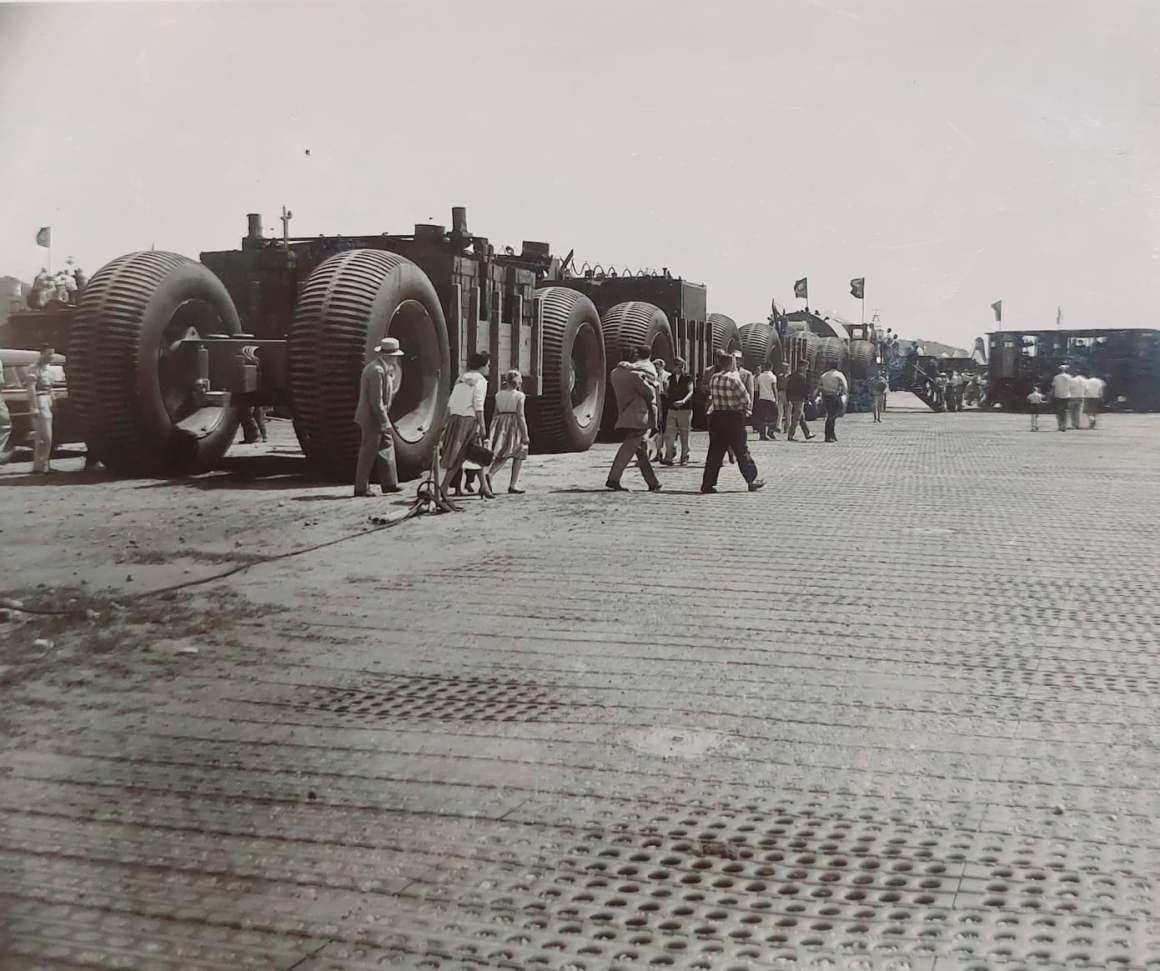
The first iteration of Pierced Steel Planking (PSP), or Marston Mats began in 1941. Approximately 35 miles north of Fort Bragg, NC, USA, Gen. H. H. “Hap” Arnold, Chief of the Army Air Forces visited Marston, NC to witness a 3,000 foot long by 150 foot wide Marston Strip used as a runway. The steel planks were easy to assemble and did a nice job of dispersing the mud. They could be emplaced easily and quickly, durable enough to support heavy bombers… or a Sno-Train.
Marston Mat at the Museum of Flight near Seattle, WA. Photo: author
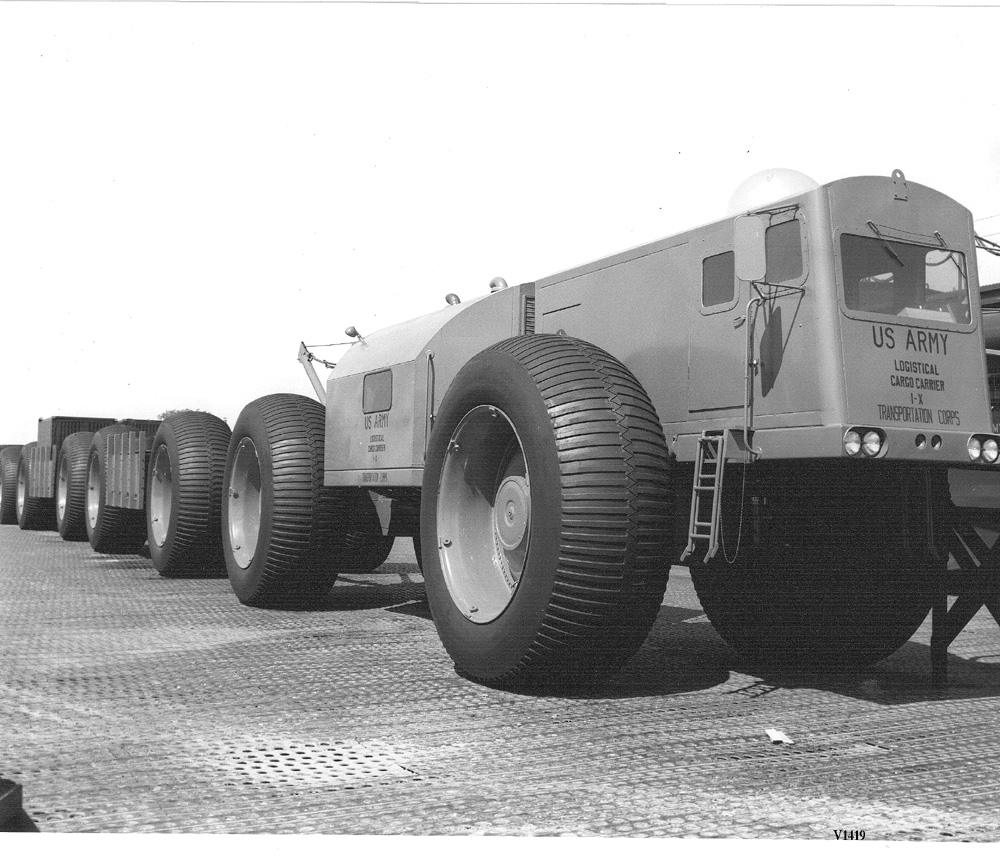
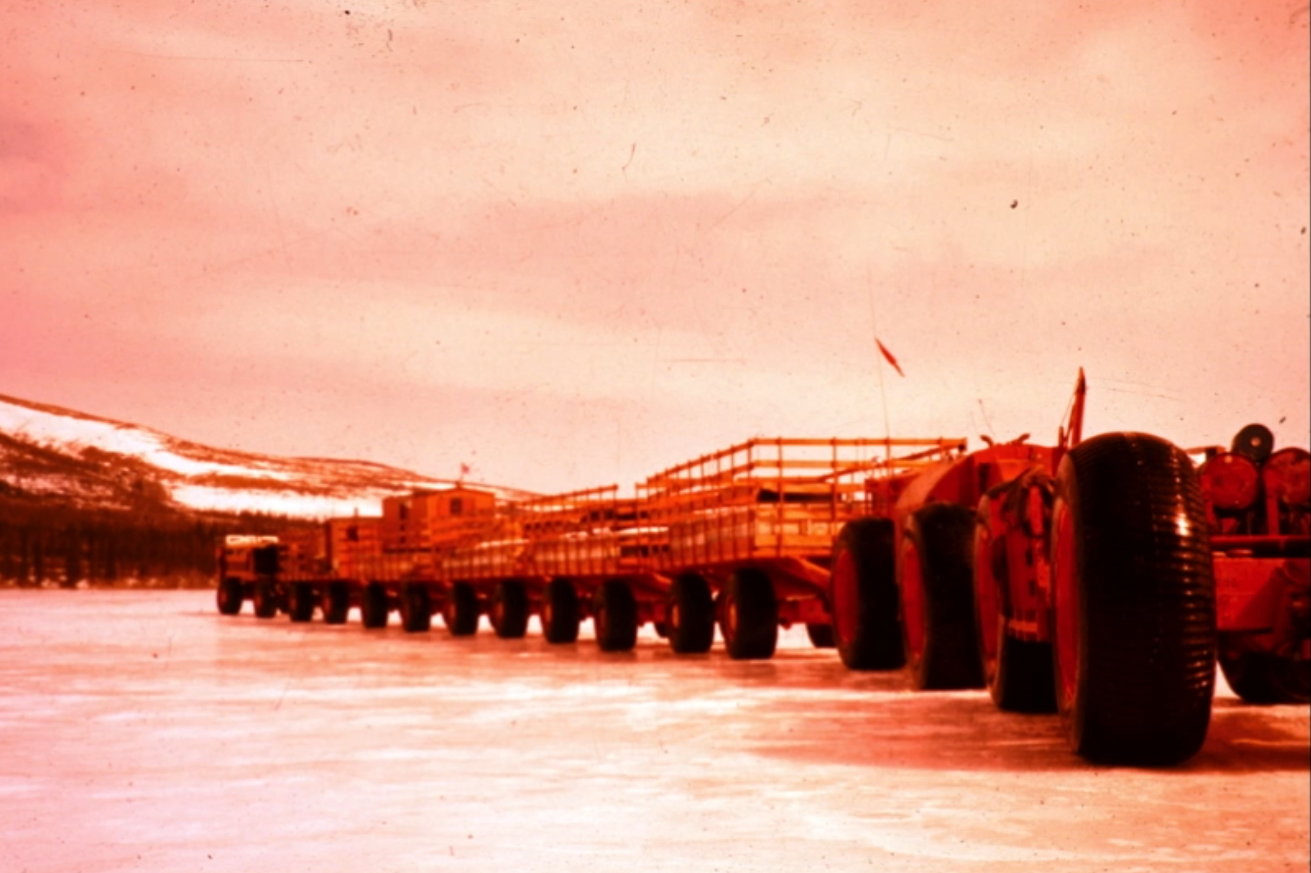
Seen below on Marston Mats, the Sno-Train was on display after coming back from Greenland for testing.
Logistical Cargo Carrier, 1-X, painted International Orange for use in snow covered area, Transportation Corps, US Army is displayed on Armed Forces Day, 19 May 1956 at Bolling AFB Wash, DC.Logistical Cargo Carrier (rear view), 1-X, painted International Orange for use in snow covered area, Transportation Corps, US Army is displayed on Armed Forces Day, 19 May 1956 at Bolling AFB Wash, DC.
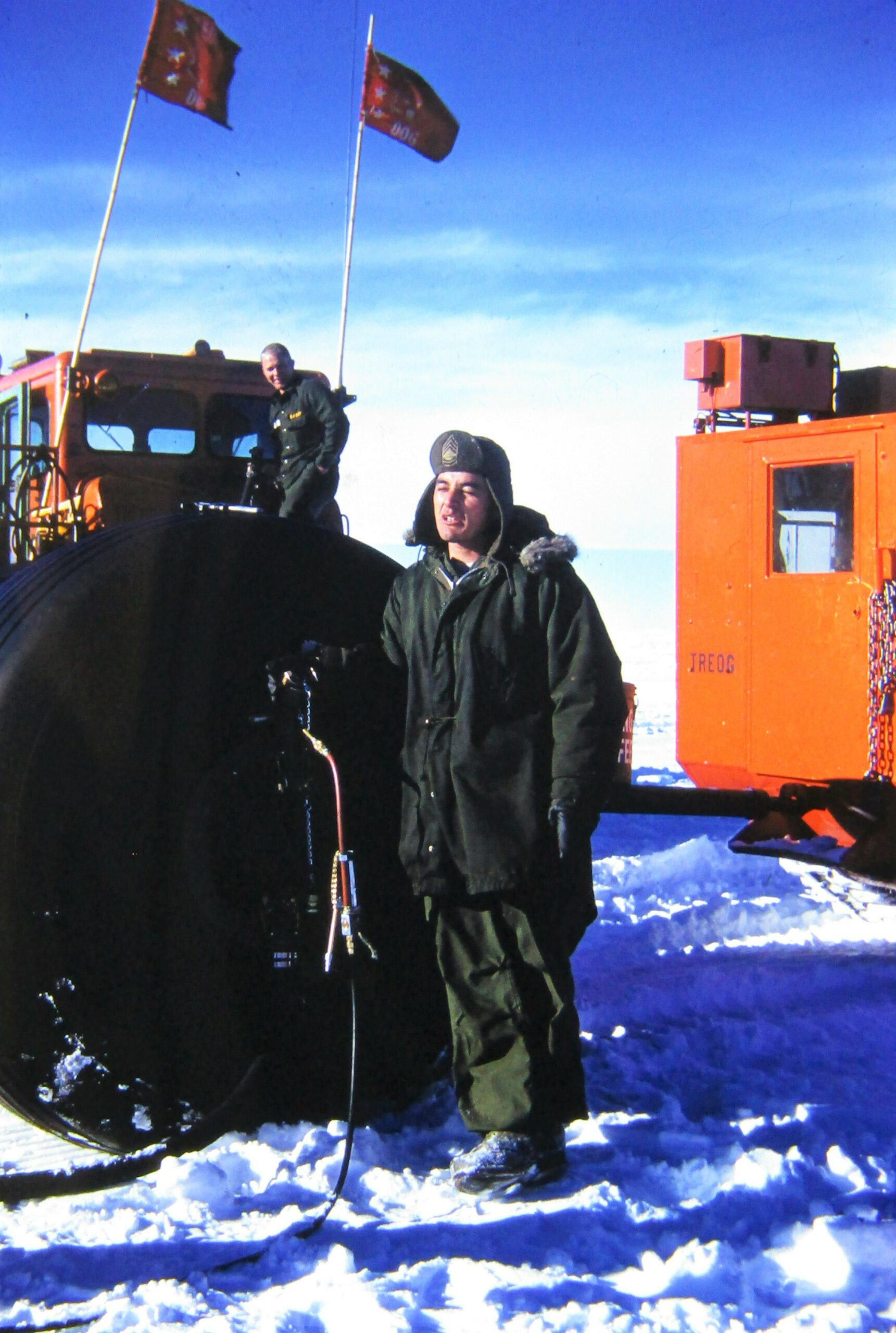
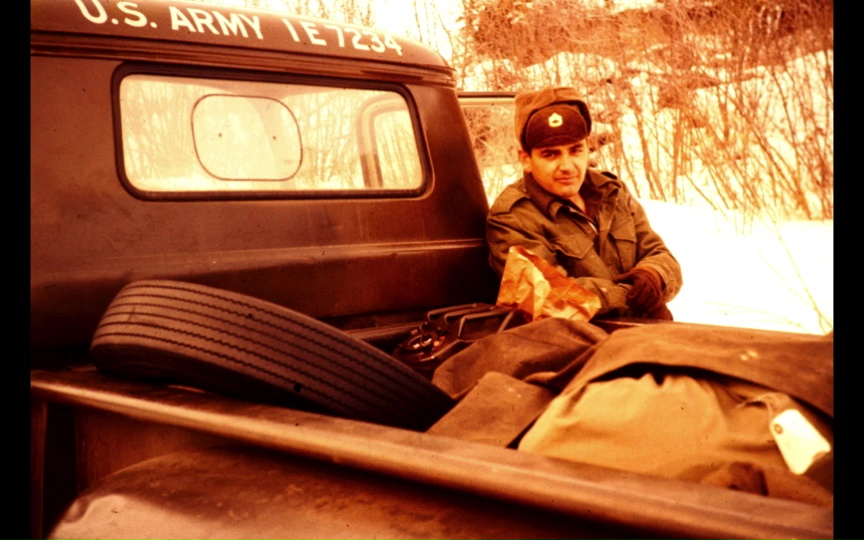
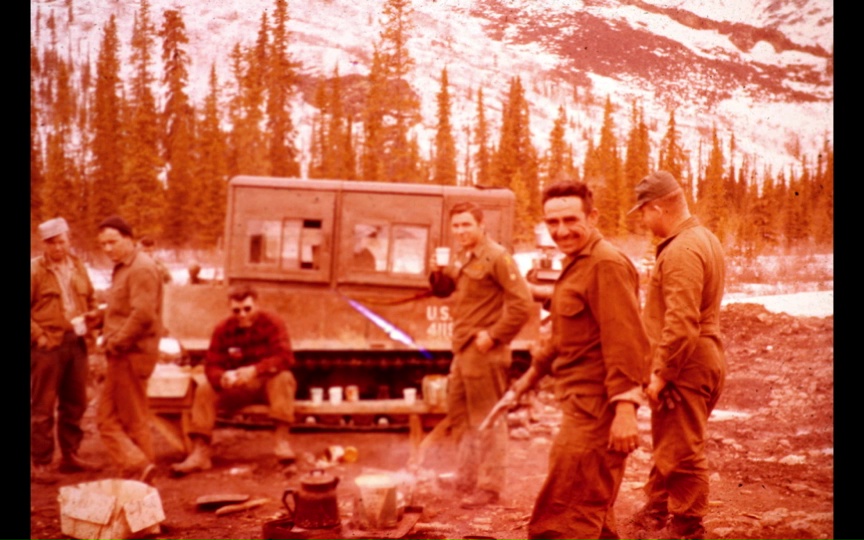
Augustin “Marty” Martinez has had more hands-on time with Overland Trains story than any one individual. He was the primary Non-Commissioned Officer (NCO) in charge of the Sno-Freighter’s recovery after it caught fire and was immobilized deep in the Yukon. His documentation, slides, and personal stories of these events adds significant depth to our events understanding. Aside from his firsthand knowledge, he and his wife are just good human beings.
How Did we Meet?
On June 2, 2021, I received an email that said,
Hello; I just stumbled upon your Overland Train website. I wish I had found it sooner than today! Thank you for keeping the history alive. Would you be interested in speaking with my husband? He was the Sergeant in charge of the recovery of the snow train that jackknifed in the Yukon. He has some photos and the Army assessment report of the MKll from 1961-62. It was called “Operation Willow Freeze”. It took place after the Willow Freeze maneuvers that year. My husband may be the only one left from that adventure. We tried to find the crew members in Alaska a few years ago but everyone seems to have passed on. If you are interested, let me know.
The email was from Marty’s wife. As I continued reading her email, I saw that in her signature they were located in Tacoma, WA. I live in Gig Harbor, WA, making this right across the way – 20 minutes or so! When she said that her husband may be the only one left from that adventure, she was likely correct. I am not aware of anyone else alive that could tell the story that you are about to read. As I found out, Marty’s stories, documentation, and slides significantly drive the Sno-Freighter and Sno-Train history.
Marty’s Beginnings
Marty was born in Colorado, April 1932. He enlisted in the U.S. Army in 1950 and retired as an E-8 (First Sergeant) in August 1972. His enlistment took him to Korea, Germany, Vietnam, Fort Belvoir, Fort Eustis, Alaska, Yukon Territories, and others.
Lead Dog 60
From May to July 1960, Marty participated in the U.S. Army Transportation Corps Operation Lead Dog 60. The official report was titled, “A Traverse of North Greenland and an Aerial and Surface Exploration of Peary Land and Crowne Prince Christian Land.” Some of his slides from that maneuver are found below. You can read the original report at https://apps.dtic.mil/sti/citations/AD0263548.
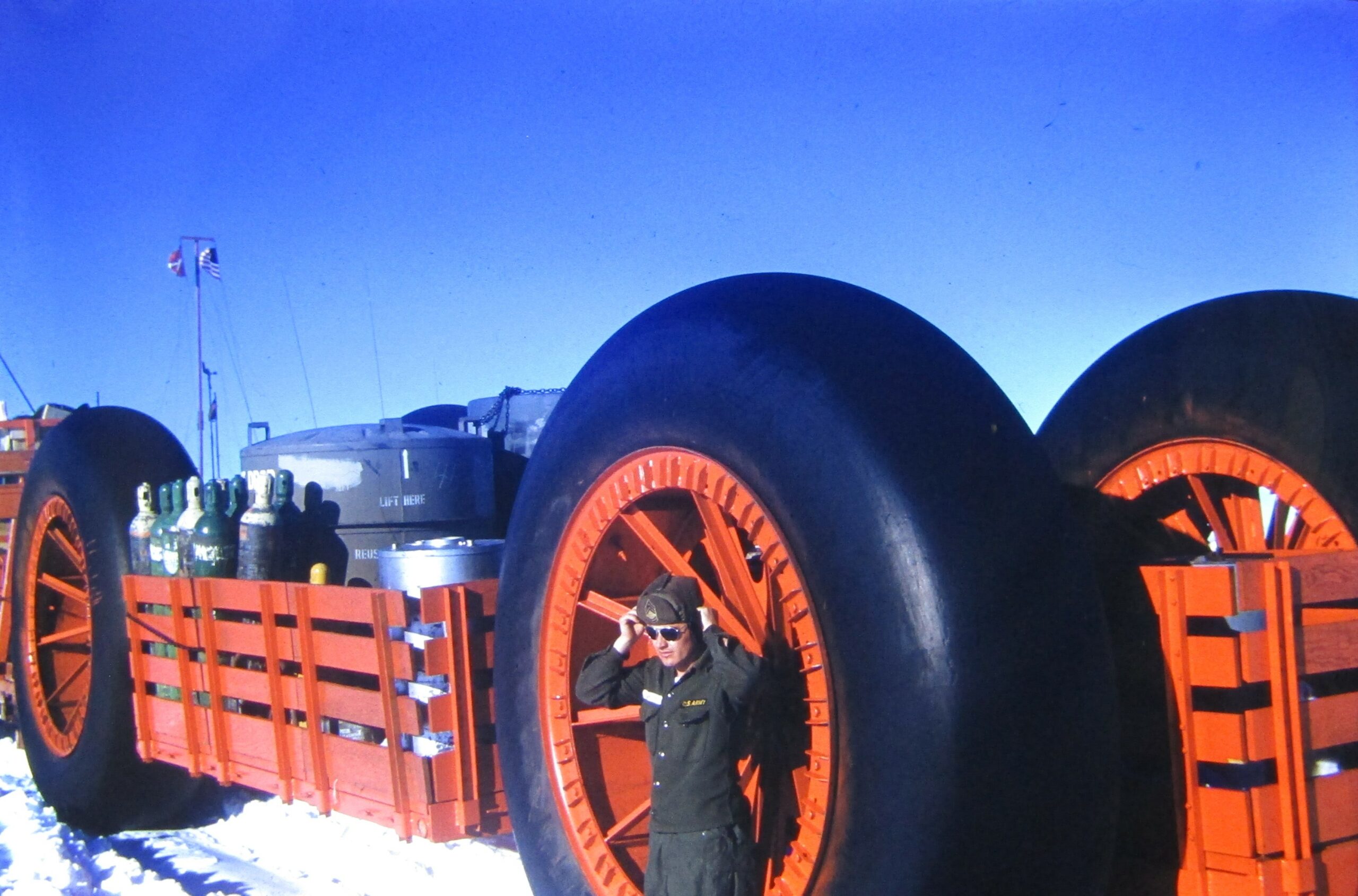
During Lead Dog 60, large unpowered Thompson Trailers were used to haul petroleum, oil, and other liquids to support the mission. These trailers would later incorporate LeTourneau manufactured rims and Firestone 120x48x68 tires, which were used on the Overland Trains. The image below with “Martinez in front of a Thompson Trailer” used the original smooth tread Bridgestone tires and metal spoked rims.
Martinez in front of a thompson trailermartinez filling a rollagonthompson trailer shown left with two rollagons trailing
Since 1952, the United States Army has operated annual exercises and scientific studies to expand military and civilian knowledge of the Greenland icecap and other neighboring land areas. Project Lead Dog 60 is a continuation of those studies from 1952 that includes the Department of Defense and 9 other agencies.
During this study, PR&DC at Camp Tuto, Greenland provided cached fuel support for the convoy. They also provided support in the way of spare parts, communication, and two support flights. The convoy, or swing, departed Camp Tuto on May 18, 1960. Scientists conducted geologic, geographic, and archeologic studies. The operation lasted 68 days.
R. G. LeTourneau, Inc. Sno-Train Service Training Course
When the Sno-Train was sent back to R. G. LeTourneau, Inc. in December 1960, the Army also negotiated a contract for a service training course. Martinez and his crew attended the course to further their knowledge and understanding of the Sno-Train’s systems.
During the Sno-Train Service Training Course, the factory was building another Overland Train, the TC-497. You can read more about the TC-497 here.
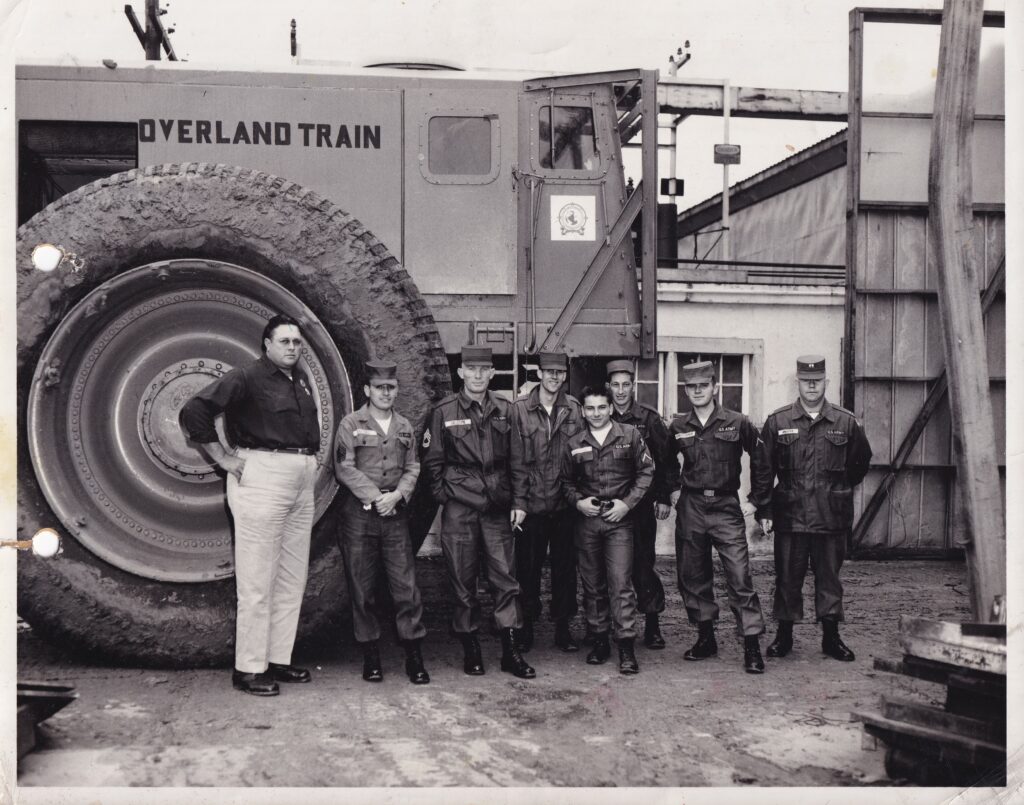
Martinez and his crew at R. G. LeTourenau’s Service training in Longview, TX (Martinez is second from the left). Image courtesy Augustin “Marty” Martinez
Environmental Operation Willow Freeze
Operation Willow Freeze was a five phase field exercise designed to understand logistic operations were needed to support independent, disperse armed forces in Artic terrain. The exercises occurred from January 5th to March 8th, 1961. During the exercise, the Sno-Train experienced tire puncture after tire puncture. The machine had performed well and traversed hundreds of miles in the Arctic. However, the current operations took place in marshy and woody terrain in the bitter cold.
Any time that the Sno-Train would trample over small trees, they would get broken off several feet from the ground level. The snow cowl, which was installed in Camp Tuto, Greenland was used to push the snow to the sides, instead of building up in front of the Sno-Train. However, the snow cowl acted like a large bumper, breaking off these small diameter trees at about waste level.
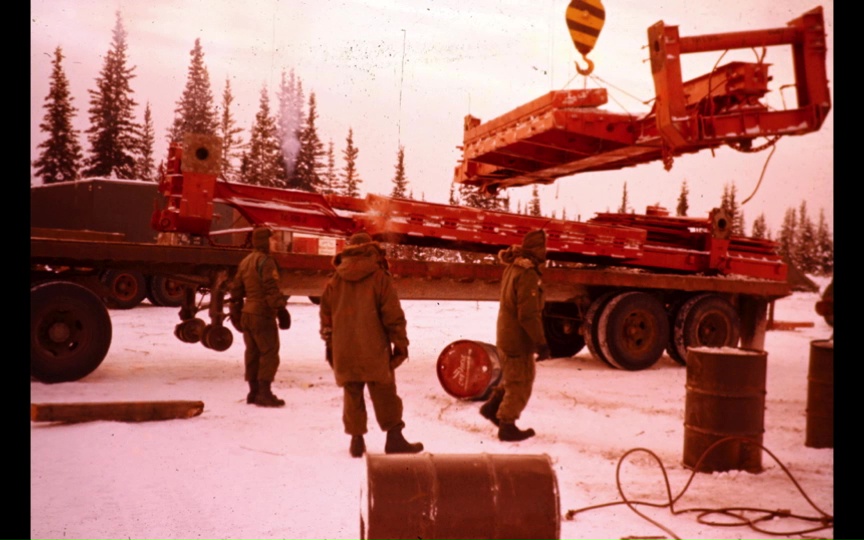
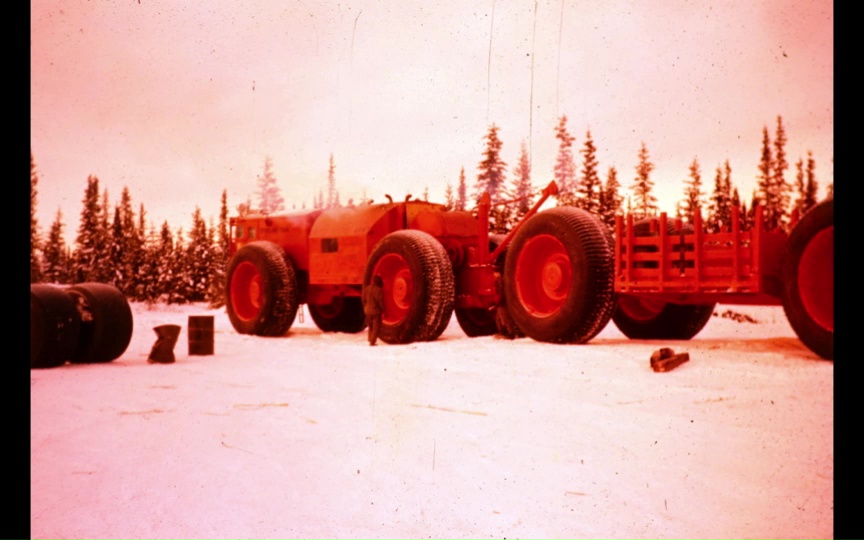
The Sno-Train at Operation Willow Freeze; Image courtesy Augustin “Marty” Martinez
These trees acted like spears to the relatively thin 12-ply tires. Puncture after puncture occurred until the Sno-Train was deemed unfit for continuing. The Army called on Martinez to figure out how to replace these tires on site. Martinez would replace the tires from those found on the trailer and another type of non-LeTourneau trailer called the Thompson Trailer.
“The Sno-Train traveled three miles before the two passenger-side tires were punctured at the same time – front and rear. The passenger side front tire developed a puncture and subsequently tore an eight-inch gash through the entire tire. The culprit was a broken and frozen Birch tree. The passenger side rear tire also fell victim to a piece of frozen Birch and completely punctured the tire. The Sno-Train did not carry a repair kit or spare wheel assemblies – those were back at [Gulkana Support Base] GSB. A Wagner 4-Track Transporter went back to GSB to bring tools, a replacement wheel assembly (rim and tire), and other equipment to repair the tire damage from the Birch trees. The Wagner vehicle made a second trip back to GSB to get a 6,000 pound forklift. Changing the 2,322-pound wheel assemblies was a relatively straightforward task. [Martinez] used the Sno-Train’s rear-mounted jib crane to lift the old wheel assembly away and then lift the new assembly on the hub. This process took three hours. Changing the passenger side front tire was much more involved. The operators figured out a creative way to change the passenger front tire using a forklift, the Wagner vehicle, and a jack. The Sno-Train’s jib crane is positioned to the rear of the control car. The jib crane was unable to reach to the front of the Sno-Train, making it useless for changing out the front tires. Operators secured the 6,000-pound forklift to the rear of the Wagner vehicle with chains. Then, cables were attached to the forklift forks, which were attached to the wheel assembly. At the same time, a 20-ton jack was used to lift the Sno-Train’s axle to give clearance and remove ground tension on the tire. The procedure took eight hours to change out the wheel assemblies, with an average temperature of -20F. Unfortunately, they would find problems with the replacement wheel assemblies and have to complete the process all over again. The Sno-Train was equipped with original equipment manufactured wheel assemblies. The clearance between the front wheels and the frame was only 3-inches, leaving just enough room for tire deflection. The replacement rims acquired from the GSB were a newly designed rim from TRADCOM that had slightly different measurements, enough to cause incompatibility with the Sno-Train’s front wheel clearances. When these new wheel assemblies were mounted on the Sno-Train, they reduced clearance between the frame and tire to zero. Wheel assemblies were removed from one of the Sno-Train’s trailers and mounted on the front of the Sno-Train’s control cars, while the newly designed TRADCOM wheel assemblies were used on the trailer. This time, an M62 5-ton wrecker was used to help expedite the wheel assembly swaps.“
Image courtesy Augustin “Marty” Martinez
You can read more about Operation Willow Freeze here.
Augustin “Marty” MartinezUnloading a trailer body at Willow FreezeSno-Train at Operation Willow FreezeAll images courtesy Augustin “Marty” Martinez
Recovering the Sno-Freighter
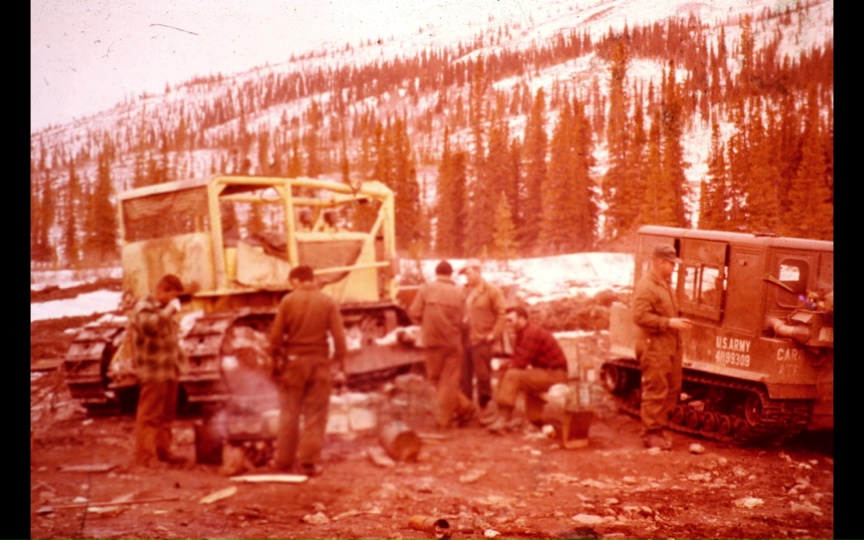
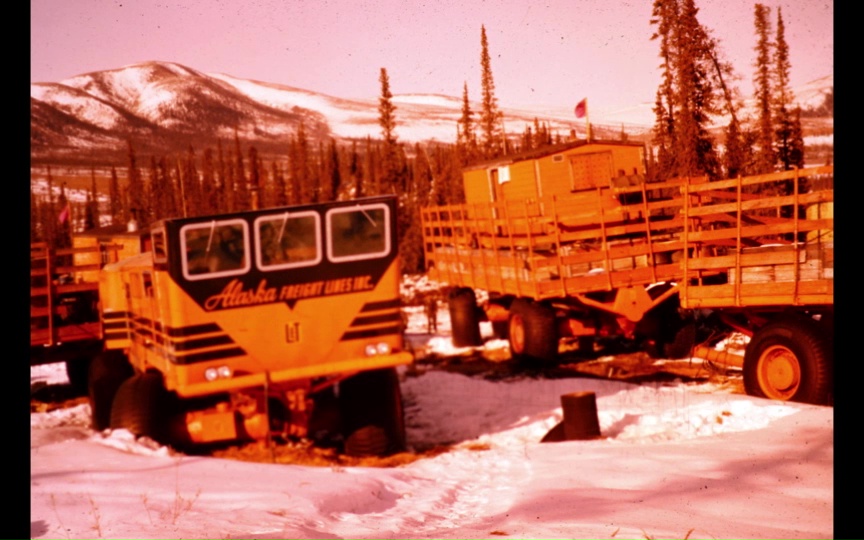
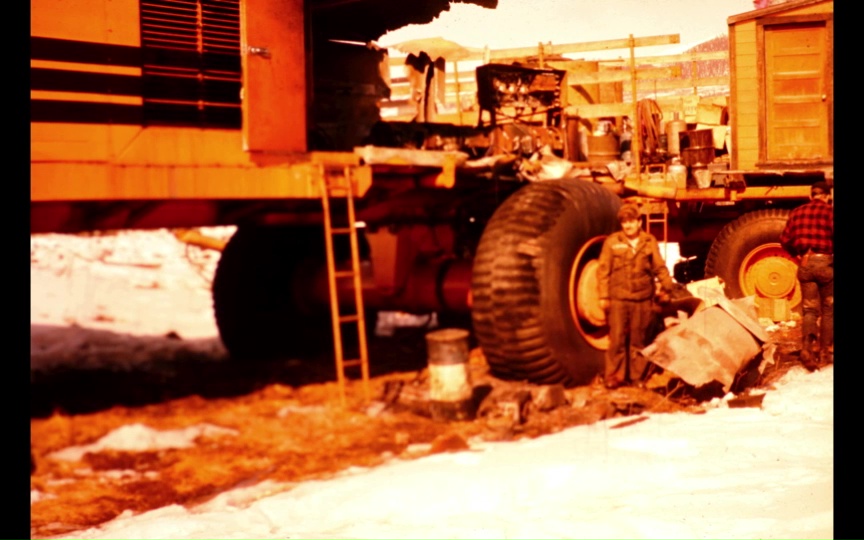
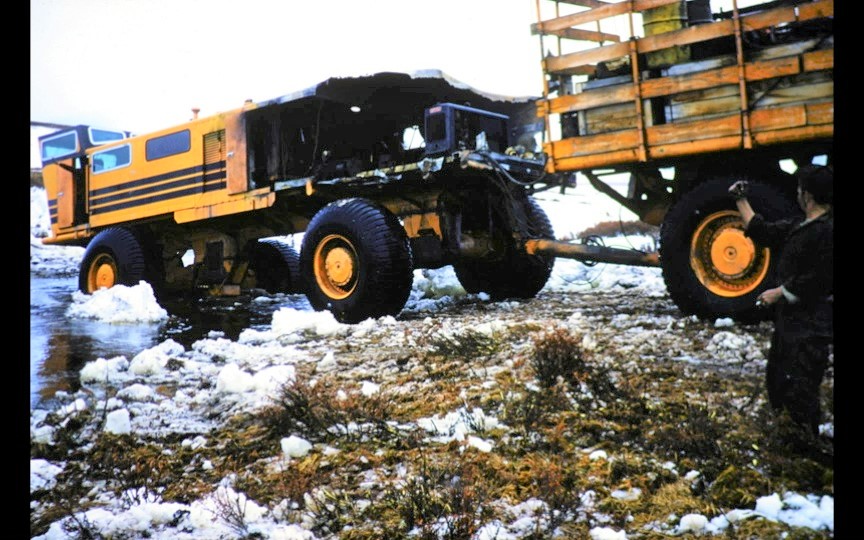
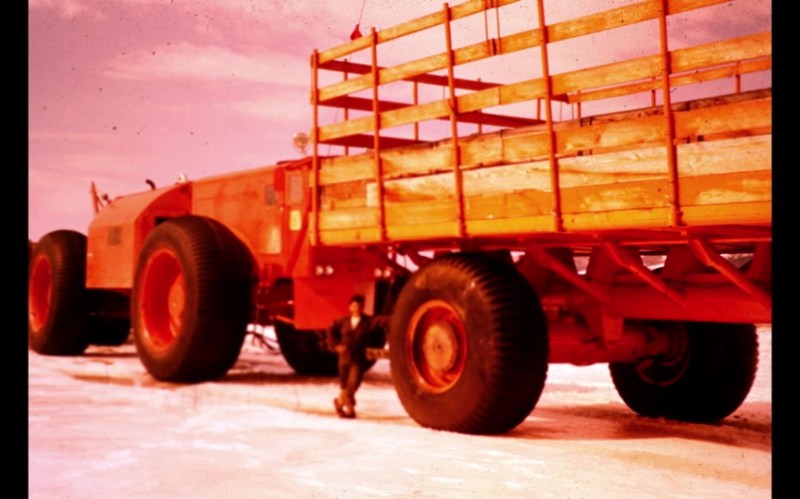
While Martinez was at Willow Freeze with the Sno-Train, he and his team was redirected to recover the Sno-Freighter. Alaska-Canadian Freightways, the owner at the time, contracted with the U.S. Army to recover the machine. The Army would provide recovery equipment, personnel, and supplies for the contingent during their efforts.
Exiting from Willow Freeze in Galkana, AK, the Sno-Train, Martinez and crew first traveled 137 miles to Fort Greely, AK for resupply and maintenance. The Sno-Train left one of its three trailers at Fort Greely, as it was not needed for recovery operations. The crew left Fort Greely on March 31, 1961.
Images courtesy Augustin “Marty” Martinez
The Sno-Train traveled east to the Yukon Territories, Canada through Tok Junction and to Dawson. From Dawson, the crew made it to Chapman Lake on April 29, 1961. A decision was made to leave one of the two trailers at the lake. It was hauling a spare tire and rim. If it was needed, a small contingent would travel back to retrieve the trailer. The crew continued through Cache Creek Valley and on to the Sno-Freighter’s location, where it had been for nearly five years.
All images courtesy Augustin “Marty” Martinez
Crew had to seal and repair the Sno-Freighter’s tires using powdered milk, which worked extremely well. A significant amount of electrical work was needed to prepare the Sno-Freighter and Sno-Train for travel. Martinez and his crew used a small generator, which was mounted on the rear of the Sno-Freighter’s control car, to provide electrical energy to release the brakes on each of the wheel motors.
the small generator is seen at the rear of the sno-freighter, which was used to provide power to release the “brakes.” image courtesy augustin “marty” martinez
Connecting the Sno-Freighter to the Sno-Train
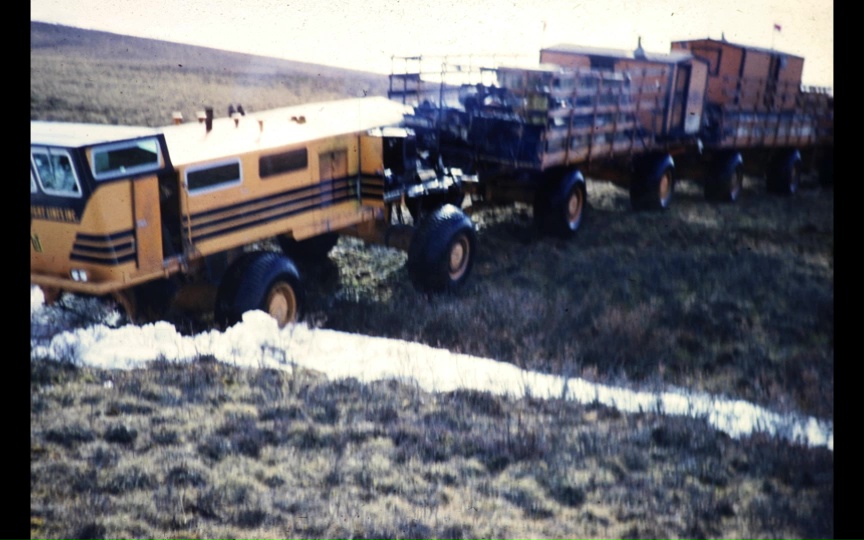
sno-train connected to the sno-freighter (right); image courtesy Augustin “Marty” Martinez
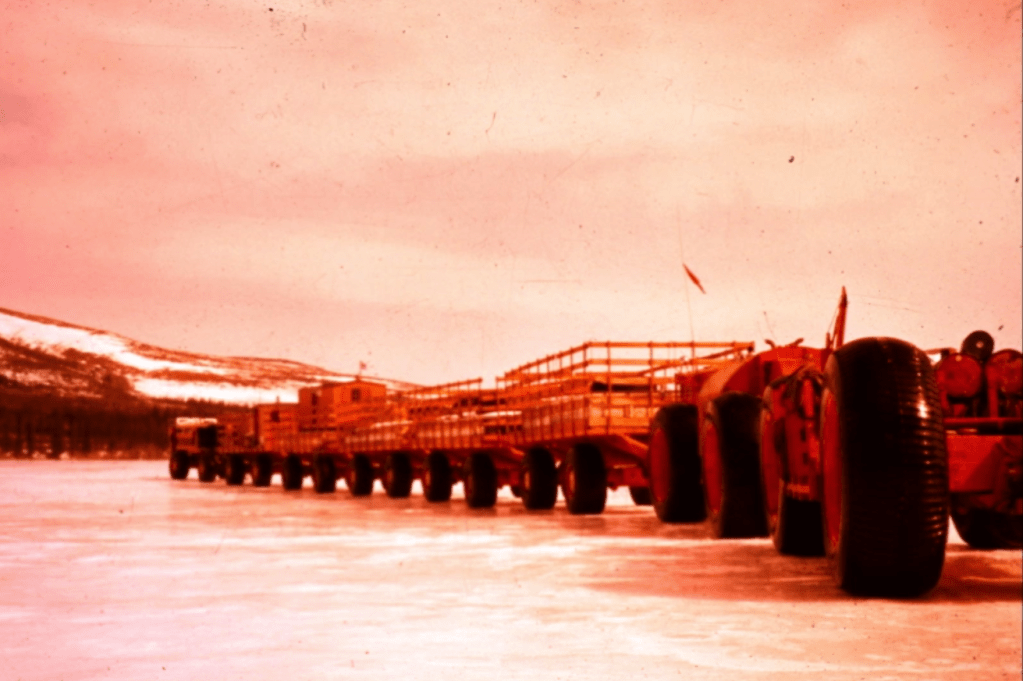
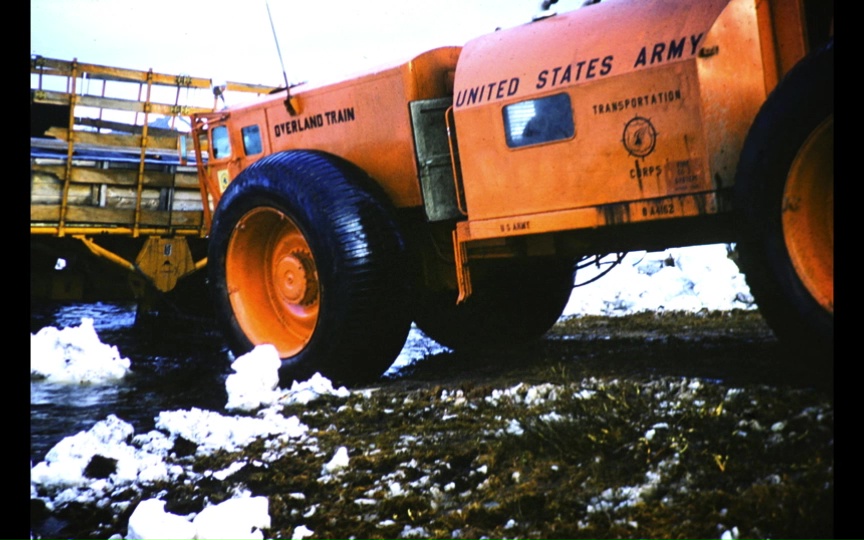
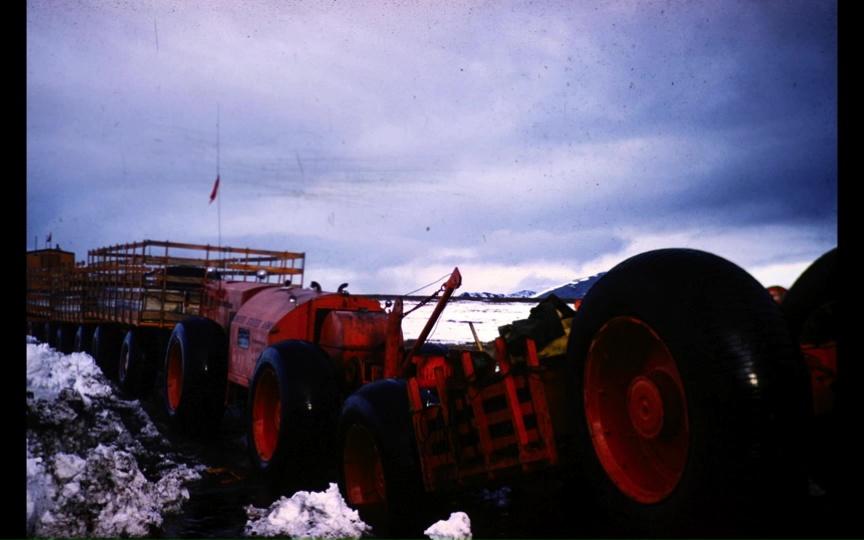
The Sno-Train’s electrical system was connected to the Sno-Freighter to power each of the LeTourneau Electric Drives. In short, the Sno-Train’s power generation system was going to work double-time to recover the Sno-Freighter. The Overland Train convoy was largely underpowered. The Sno-Train did not have enough current to move both Overland Trains from a dead stop in the marshy ground. A bulldozer was used to pull the two trains and start the momentum.
All images courtesy Augustin “Marty” Martinez
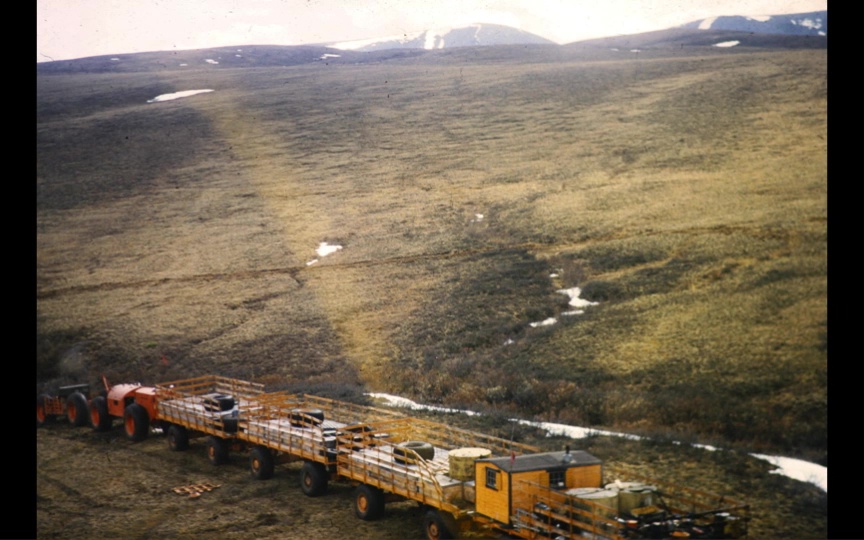
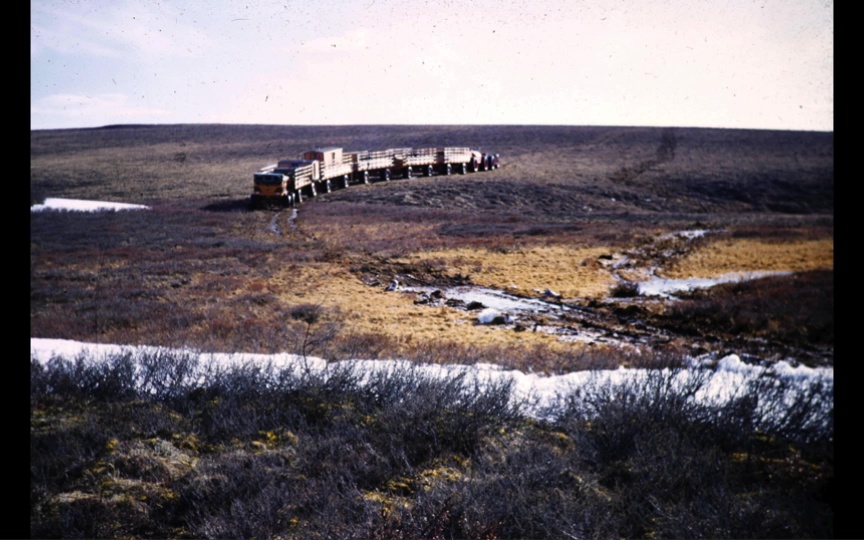
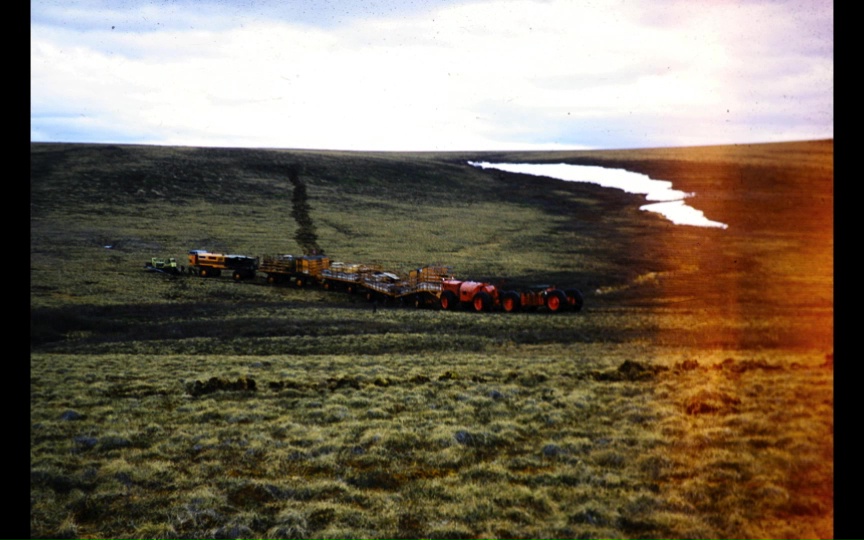
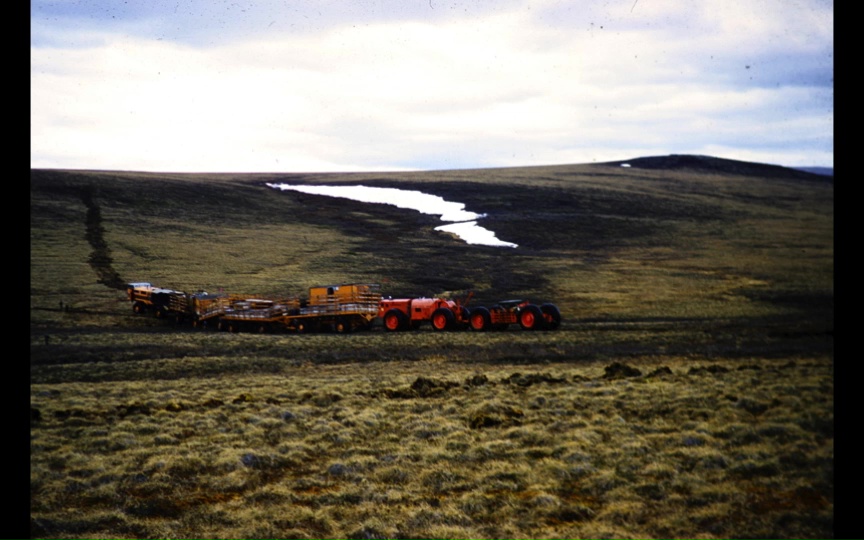
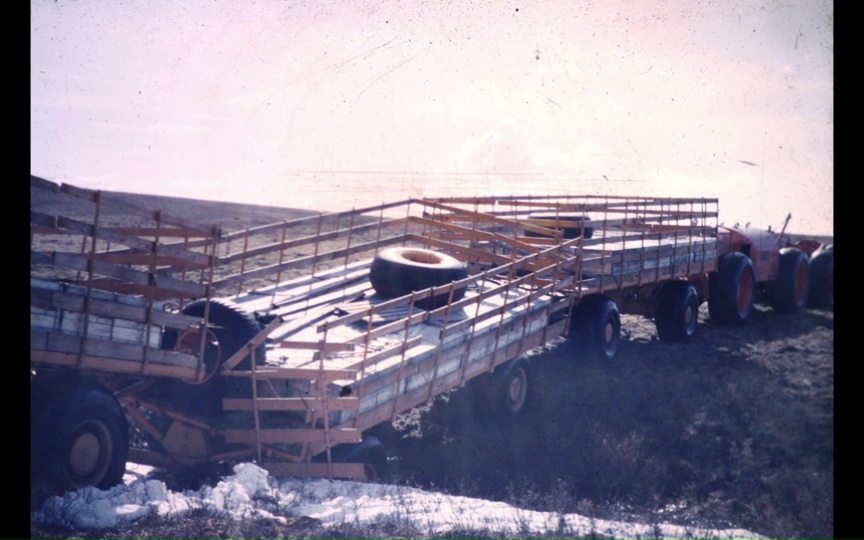
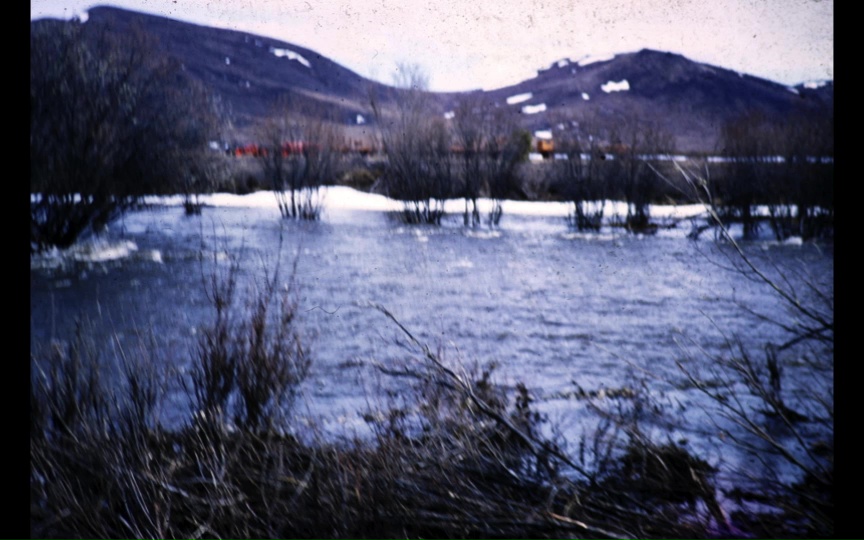
Traveling across the melting permafrost was difficult on the machinery. There were breakdowns, electrical generator failures, and bent pushrods… The Overland Train convoy eventually made it back to more civilized terrain after many miles of rough goings. The Army’s recovery contract was terminated on July 5, 1961.
All images courtesy Augustin “Marty” Martinez
The Sno-Freighter was towed to Bear Creek, where it sat for many years. The Sno-Train was left at the Dawson airport for the winter.
Sno-Train at the dawson airport, right where martinez left it; image courtesy the millen collection.
Several months after leaving the Sno-Train at the Dawson airport, Martinez flew back from Fort Eustis and then drove it back to Fort Greely. The Sno-Train was eventually sold at auction to Carl “Pete” Peterson, who owned a salvage yard near the Fort. Several years later, the Sno-Train has a familiar visitor.
Visiting the Sno-Train and Sno-Freighter in Alaska
When Marty retired from the military, he worked in Tacoma, WA. He maintained an active tinkering lifestyle, often looking for obscure parts for his creations. One of his frequent salvage yards was found in Roy, WA.
One day, Marty was looking for a specific part at that Roy yard and started talking to a man named Pete. As Marty and Pete began talking, they made a connection to the Sno-Train. Pete owned the Sno-Train and had it in his Alaska based salvage yard. They stayed in touch over the years until one day Martinez traveled up north for a vist. Years after leaving the Sno-Train behind at Fort Greely, Martinez went back to Alaska, visited Pete at his salvage yard, and became reacquainted with a few old friends.
martinez inside the sno-freighterMartinez inside a Thompson trailer wheelmartinez in the sno-freightersno-train in pete’s yardAll images courtesy Augustin “Marty” Martinez
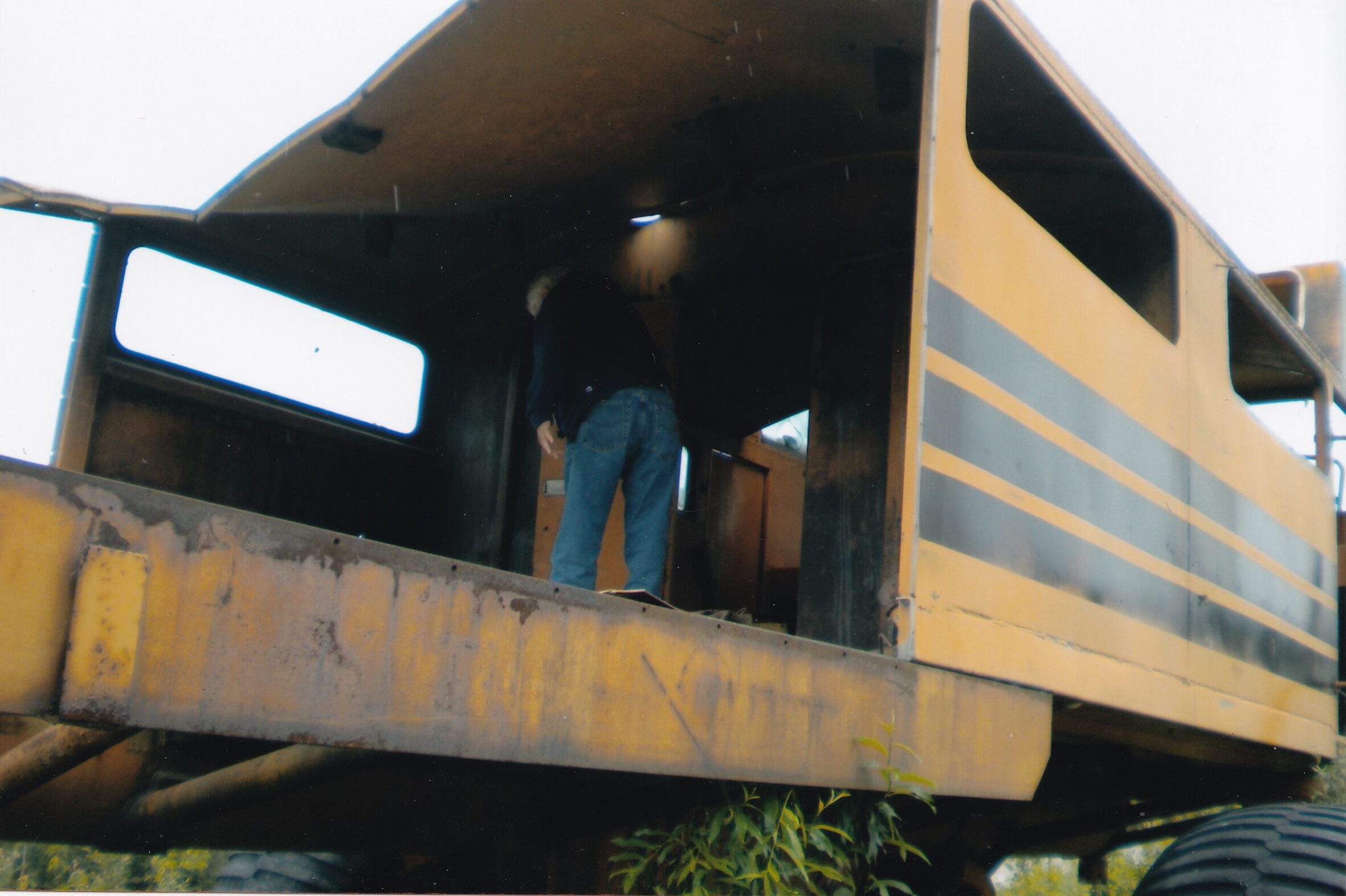
While in Alaska, Marty also had the opportunity to visit the Sno-Freighter outside of its home near Fox, AK. Inside the machine, he found a 3/8″ wrench that was likely leftover from the recovery operations. As Marty said, he likely signed for the wrench in the Army anyways; he still has that wrench today.
The Sno-Train was in Pete Peterson’s yard for many years prior to his passing. After his death, Pete’s son sold the Sno-Train on eBay – see the original listing.
Martinez (left) and PeteAll images courtesy Augustin “Marty” Martinez
While in Alaska, Marty also had the opportunity to visit the Sno-Freighter outside of its home near Fox, AK. Inside the machine, he found a 3/8″ wrench that was likely leftover from the recovery operations. As Marty said, he likely signed for the wrench in the Army anyways; he still has that wrench today.
Martinez visiting the Sno-Freighter at Gold Daughters; Images courtesy Augustin “Marty” Martinez
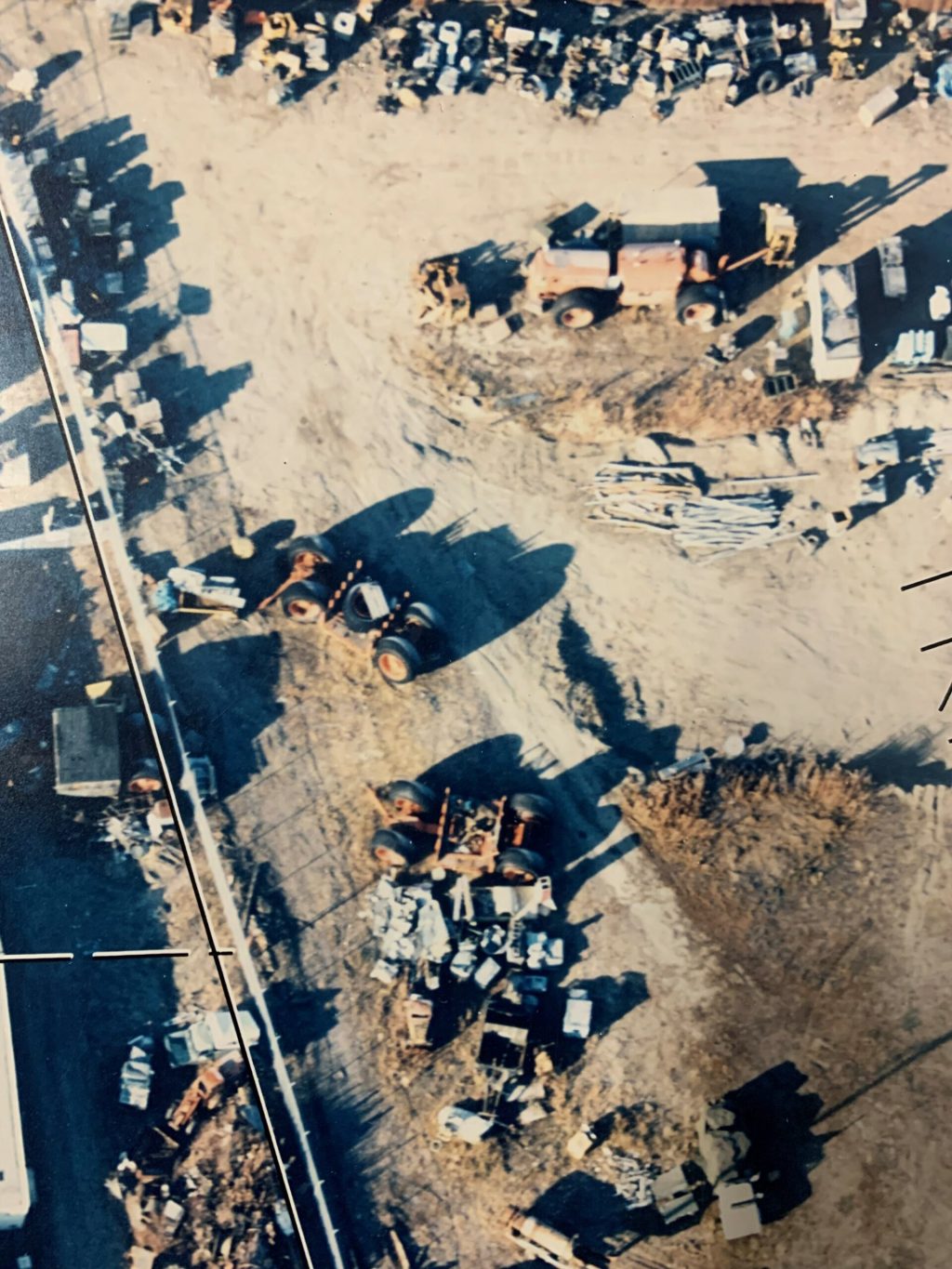
When the Army sold the Sno-Train for surplus in 1964, it was bought by Carl “Pete” Peterson of Miller Salvage. The site would later be called the Arctic Surplus Salvage Yard Superfund site in the early 1990s. The following aerial photographs from 1993 show the Sno-Train in the salvage yard prior to its sale on eBay.
aerial view of the sno-train in 1993; image courtesy Shannon & Wilson, Inc., 1993, Technical Memorandum, Debris Inventory, Arctic Surplus Salvage Yard, Fairbanks, Alaska: Report prepared by Shannon & Wilson, Inc., Fairbanks, Alaska, X-0532-21, for the U.S. Army Corps of Engineers, Alaska District, June.Another aerial view of the sno-train in 1993; image courtesy Shannon & Wilson, Inc., 1993, Technical Memorandum, Debris Inventory, Arctic Surplus Salvage Yard, Fairbanks, Alaska: Report prepared by Shannon & Wilson, Inc., Fairbanks, Alaska, X-0532-21, for the U.S. Army Corps of Engineers, Alaska District, June.
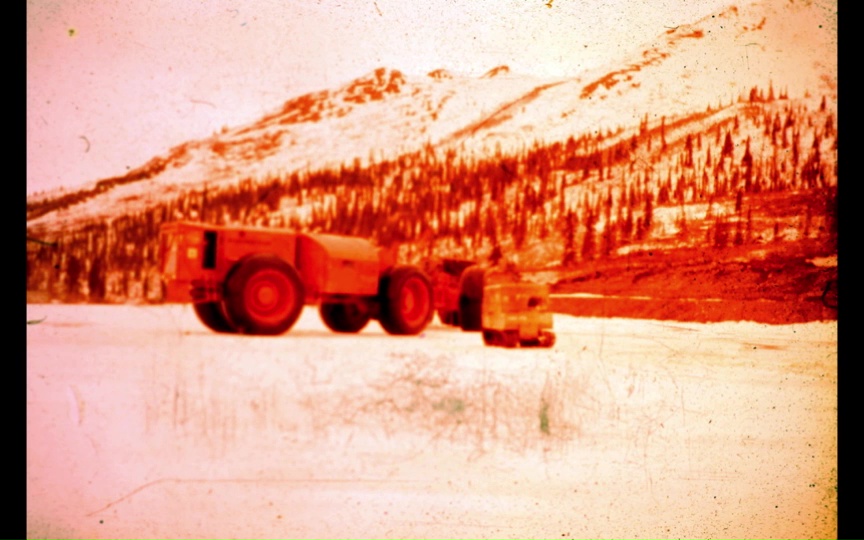
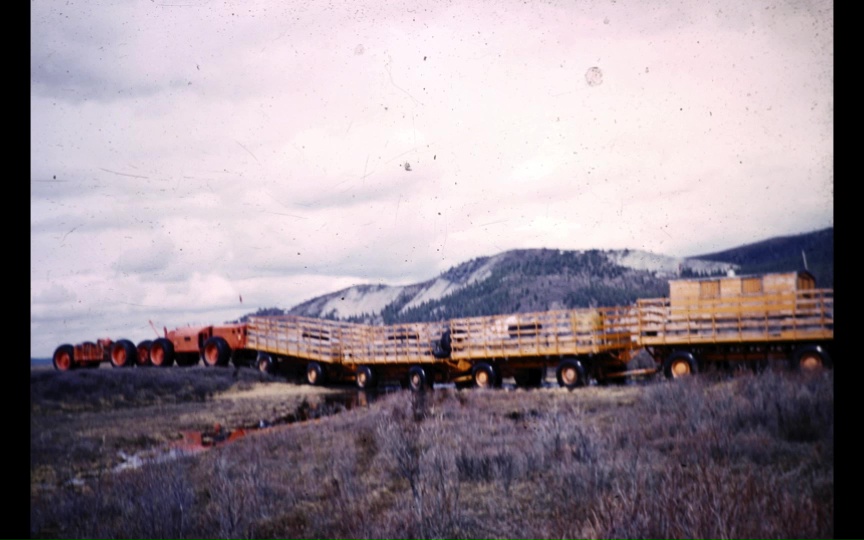
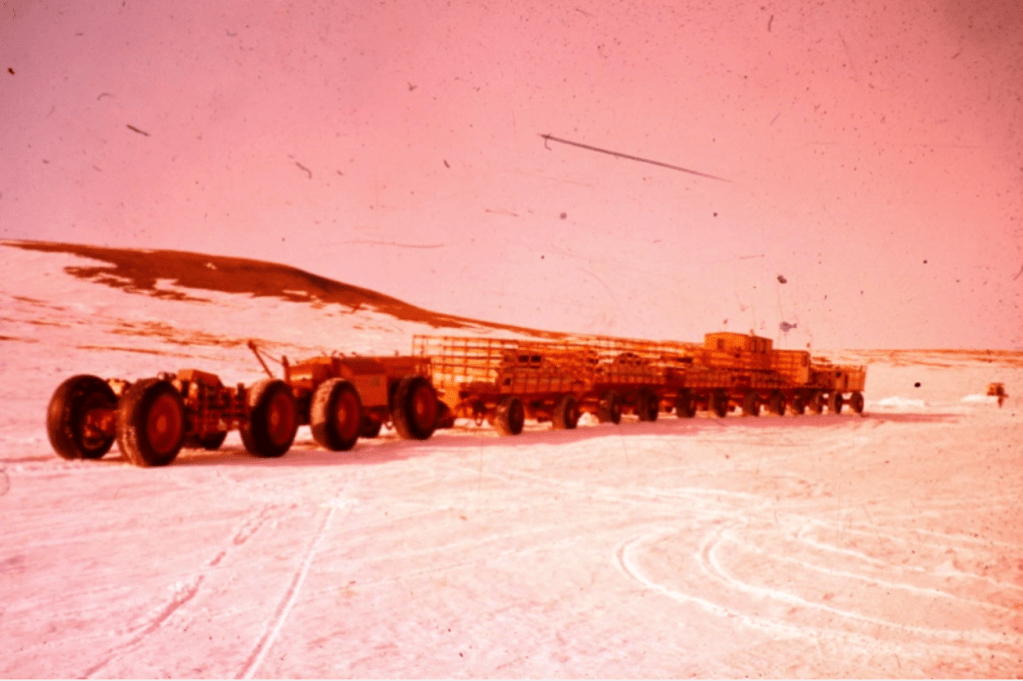
After the Sno-Freighter caught fire and became immobilized, it sat for five years in a valley within the Yukon Territories. The Sno-Freighter’s owner contracted with the Army to go in and retrieve the Sno-Freighter with the Sno-Train and personnel familiar with the machines. The image seen below was captured by Augustin “Marty” Martinez, the Non-Commissioned Officer in charge of the recovery mission.
image courtesy Augustin “Marty” Martinez
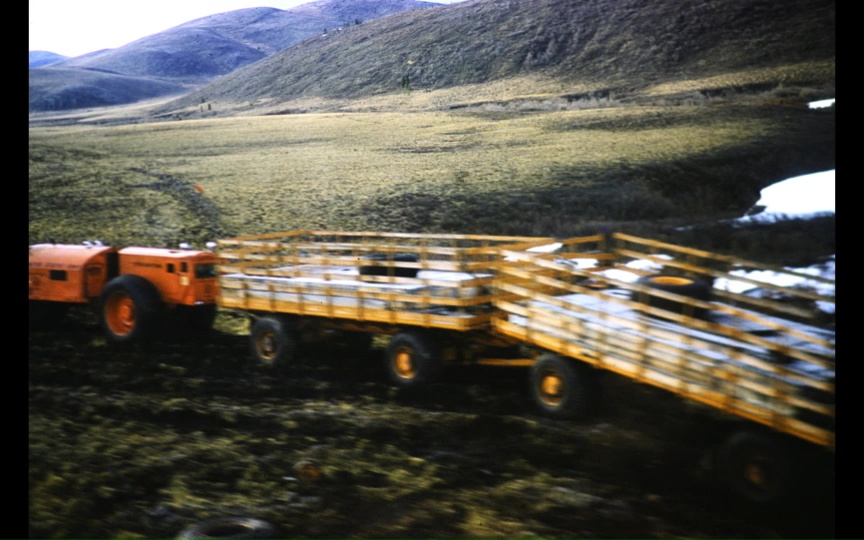
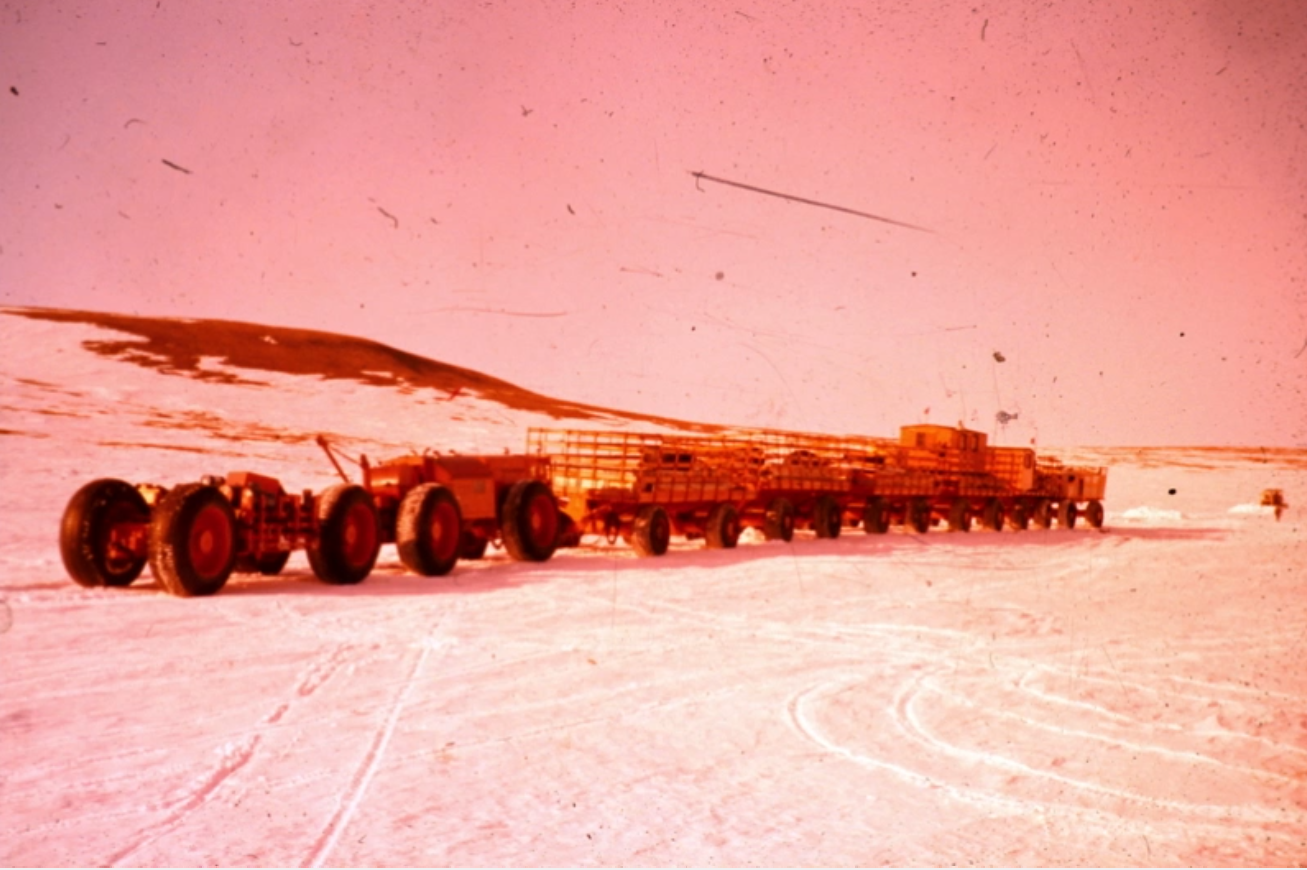
This photo shows the Sno-Train in the rear of the Overland Train convoy. It is supplying power to each of the Sno-Train and Sno-Freighter wheel motors. It progressed at a blistering 0.5-2.0 MPH.
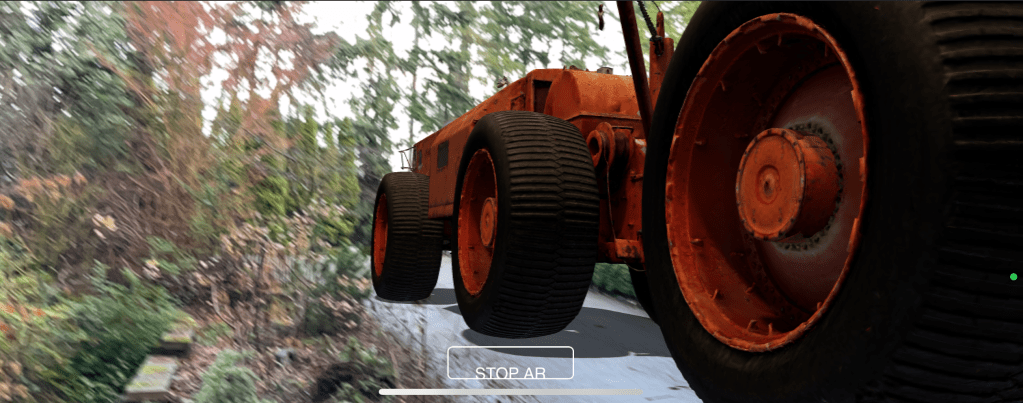
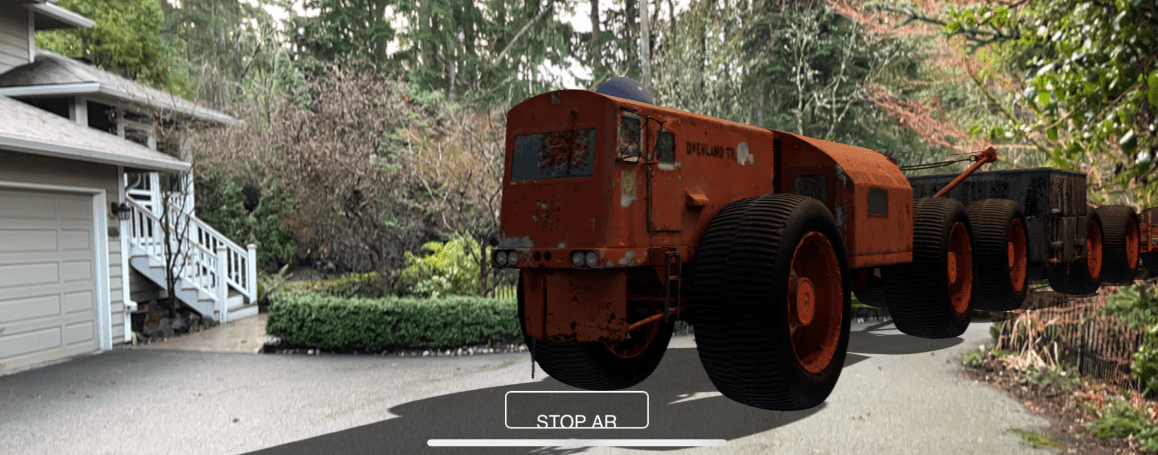
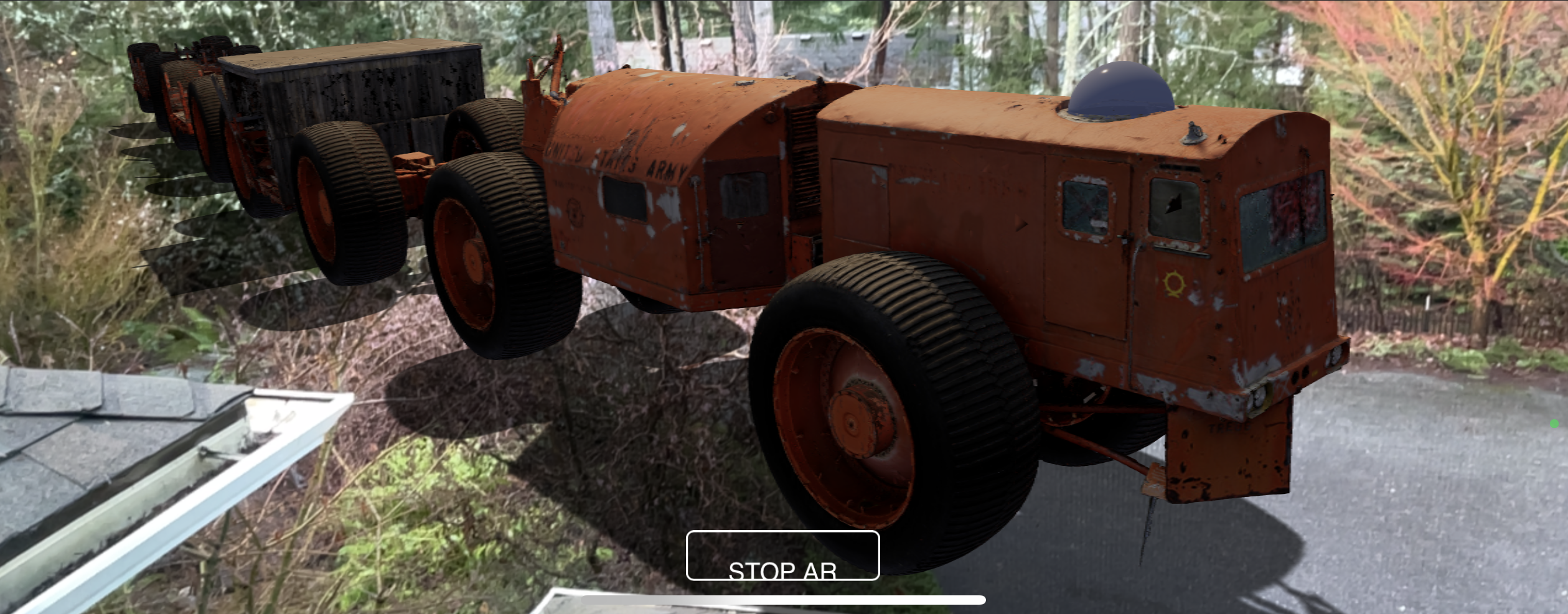
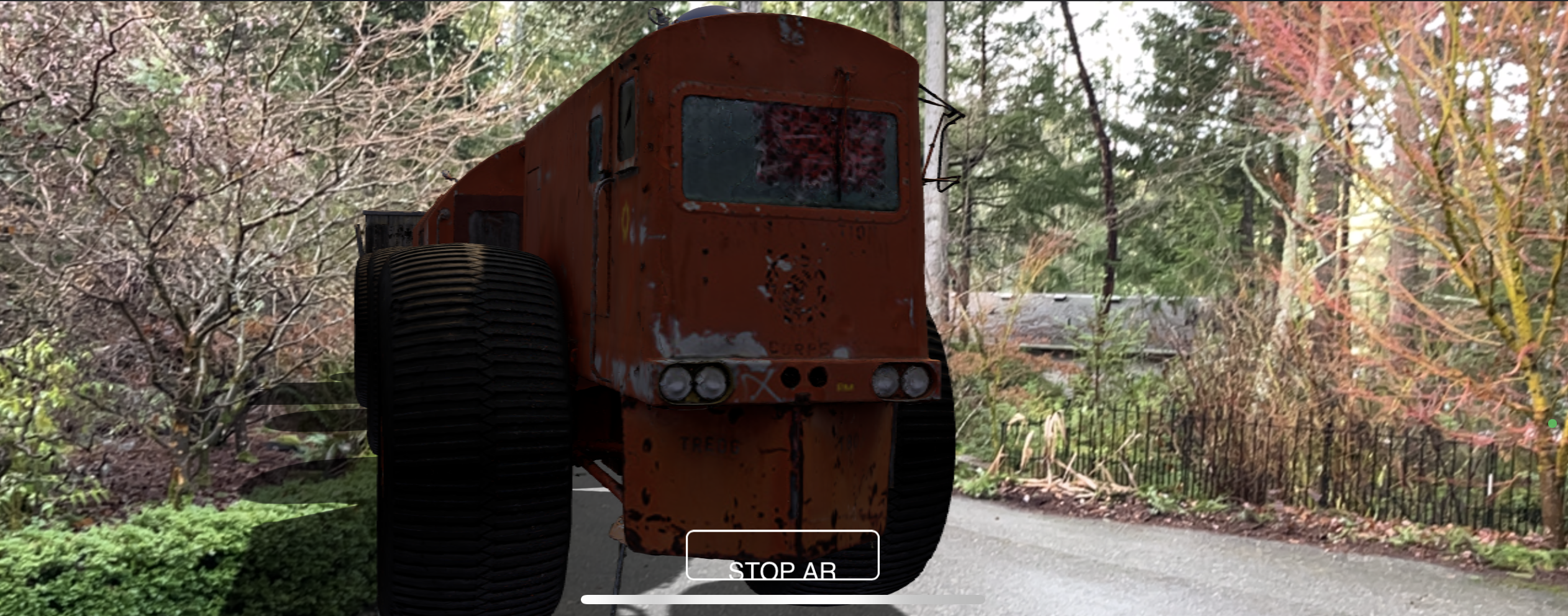
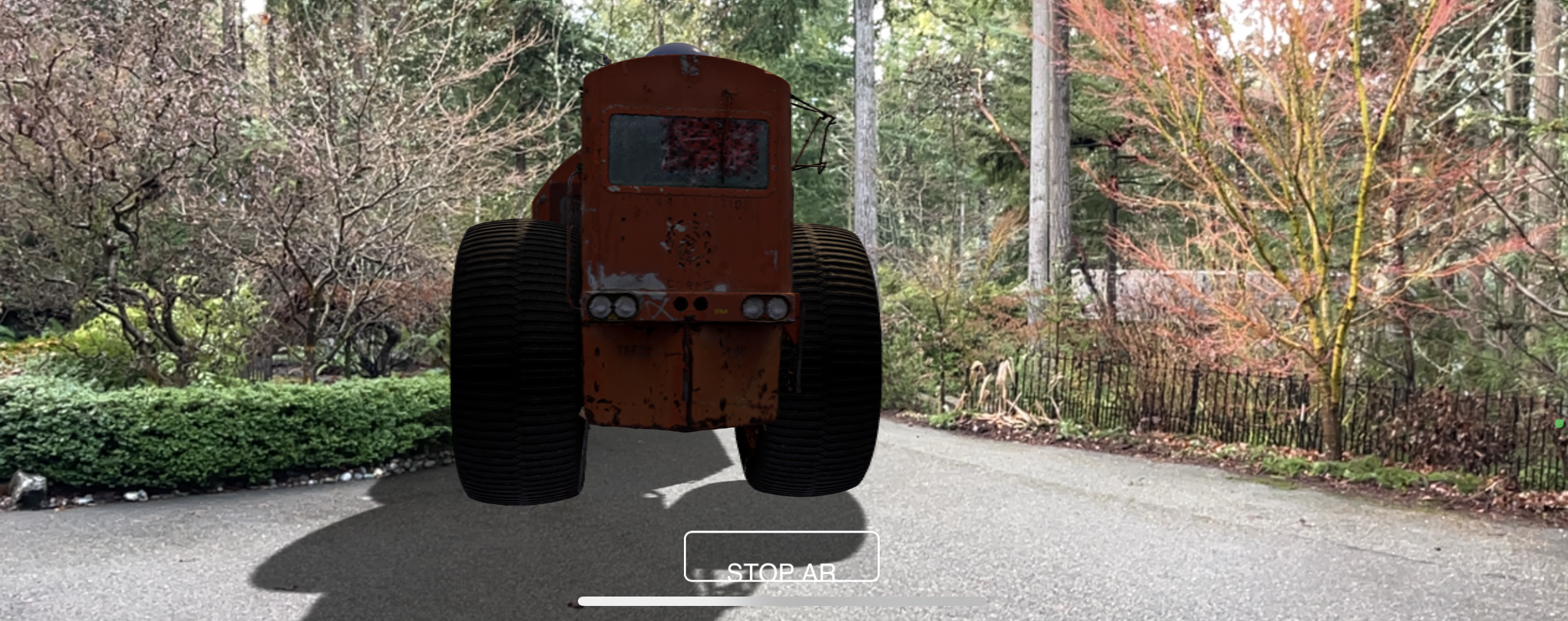
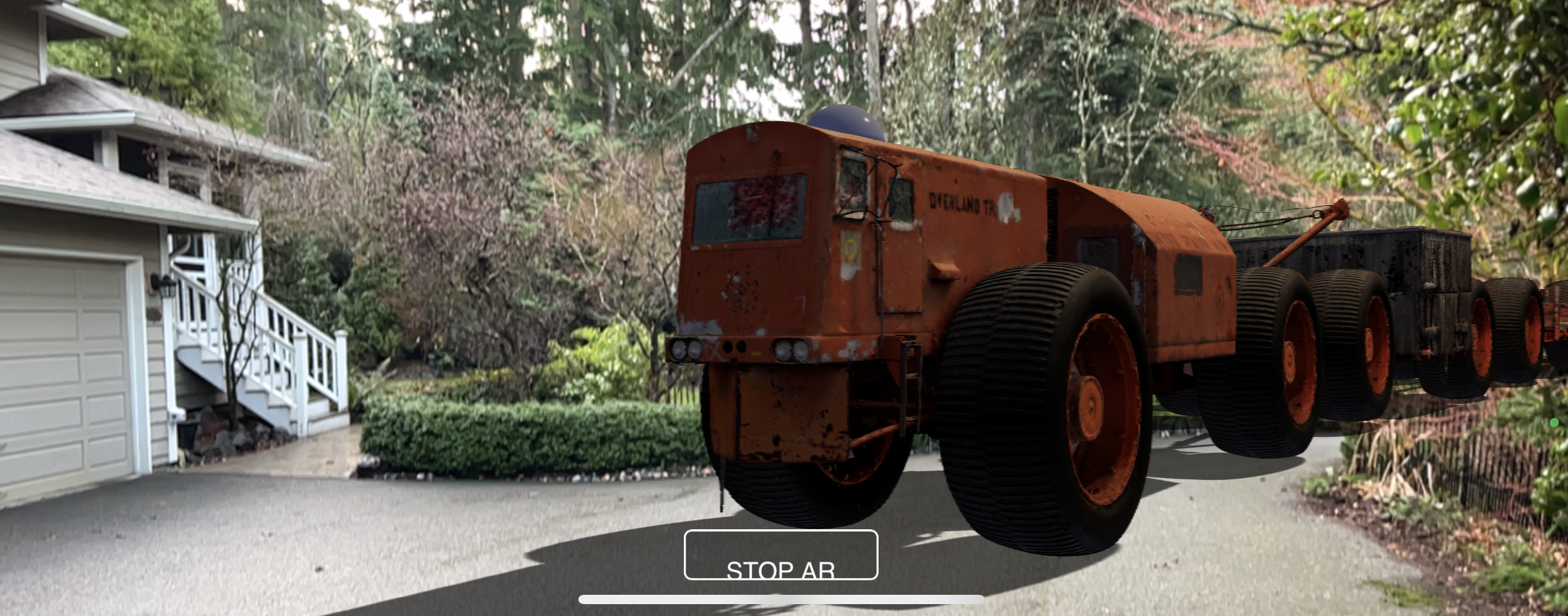
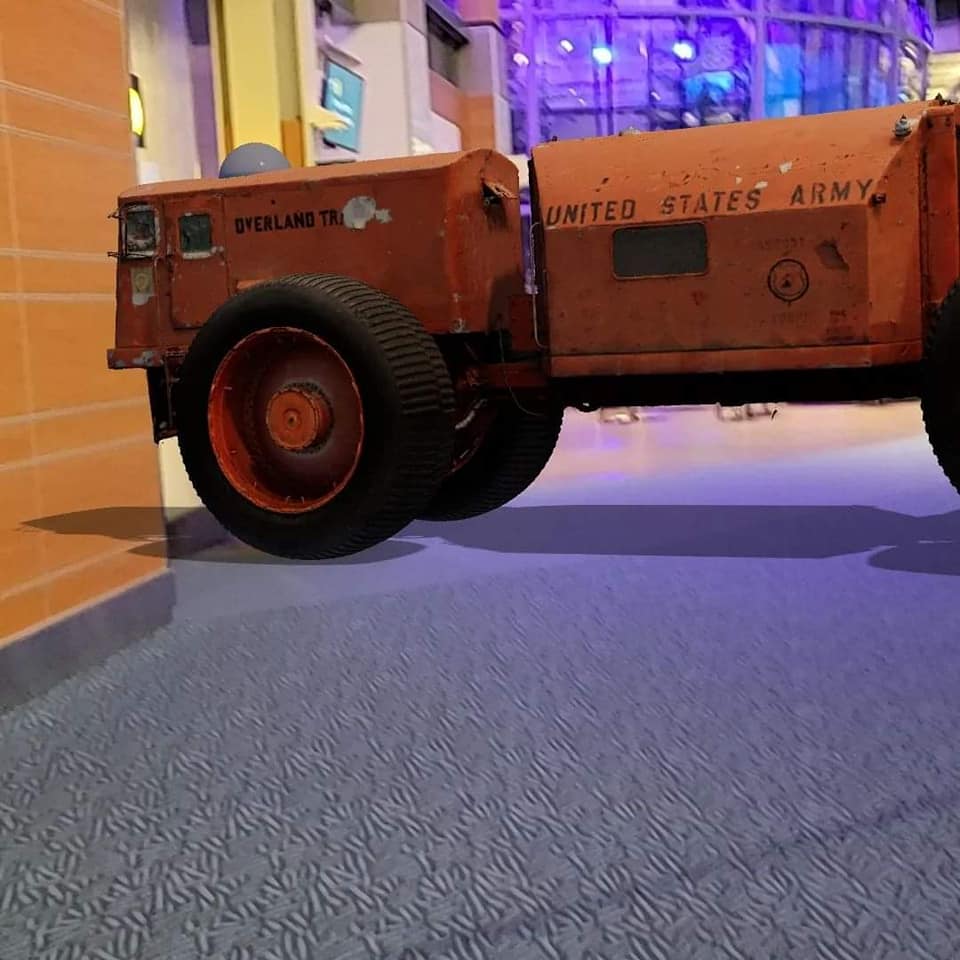
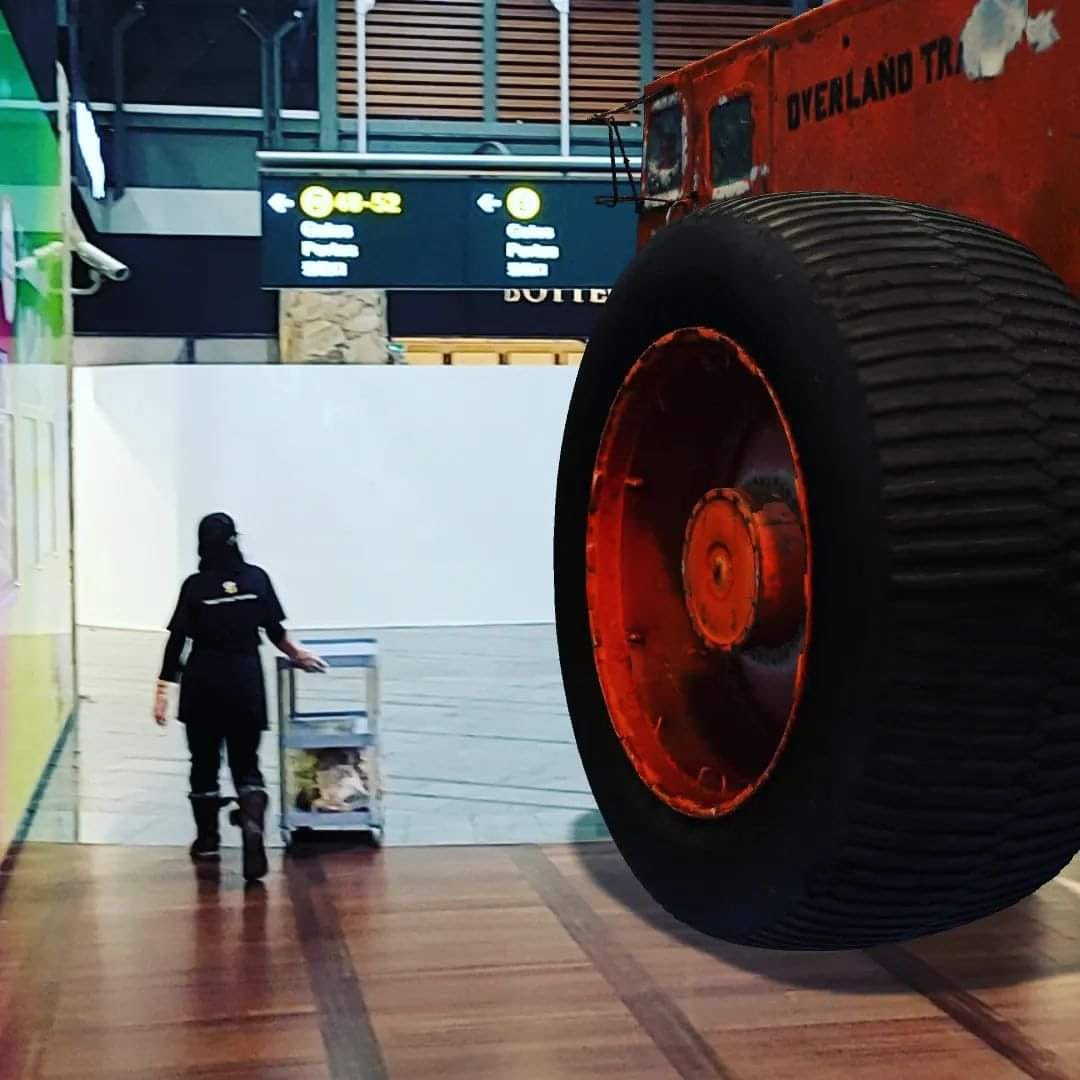
I figured out how to use the Yukon Transportation Museum’s Augmented Reality application this morning. Here are a few shots of the Sno-Train in my driveway and in front of my house. Our driveway goes down a small hill, which makes the Sno-Train render like it is floating in mid-air towards the rear of the machine. Still, this is a pretty cool!
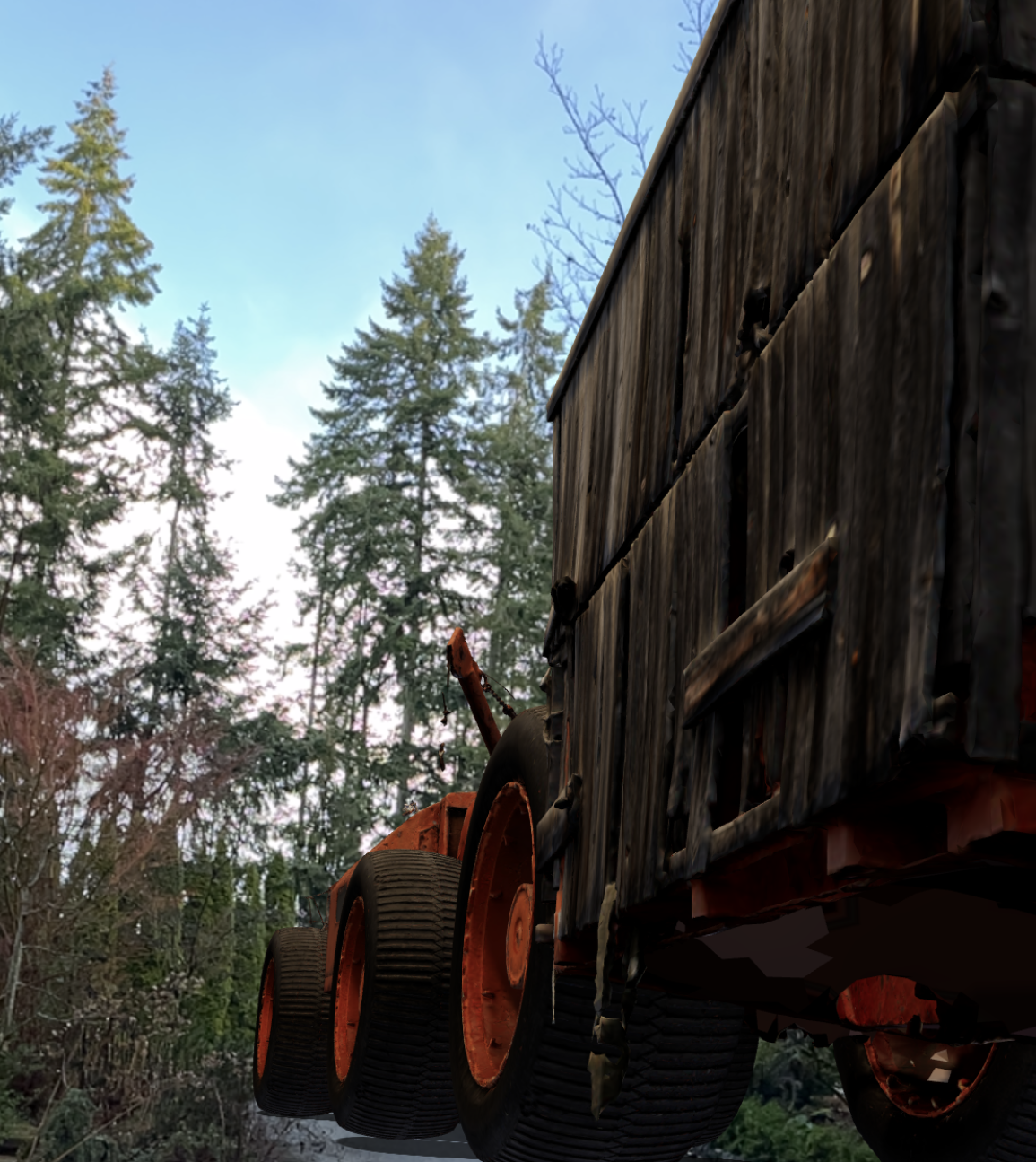
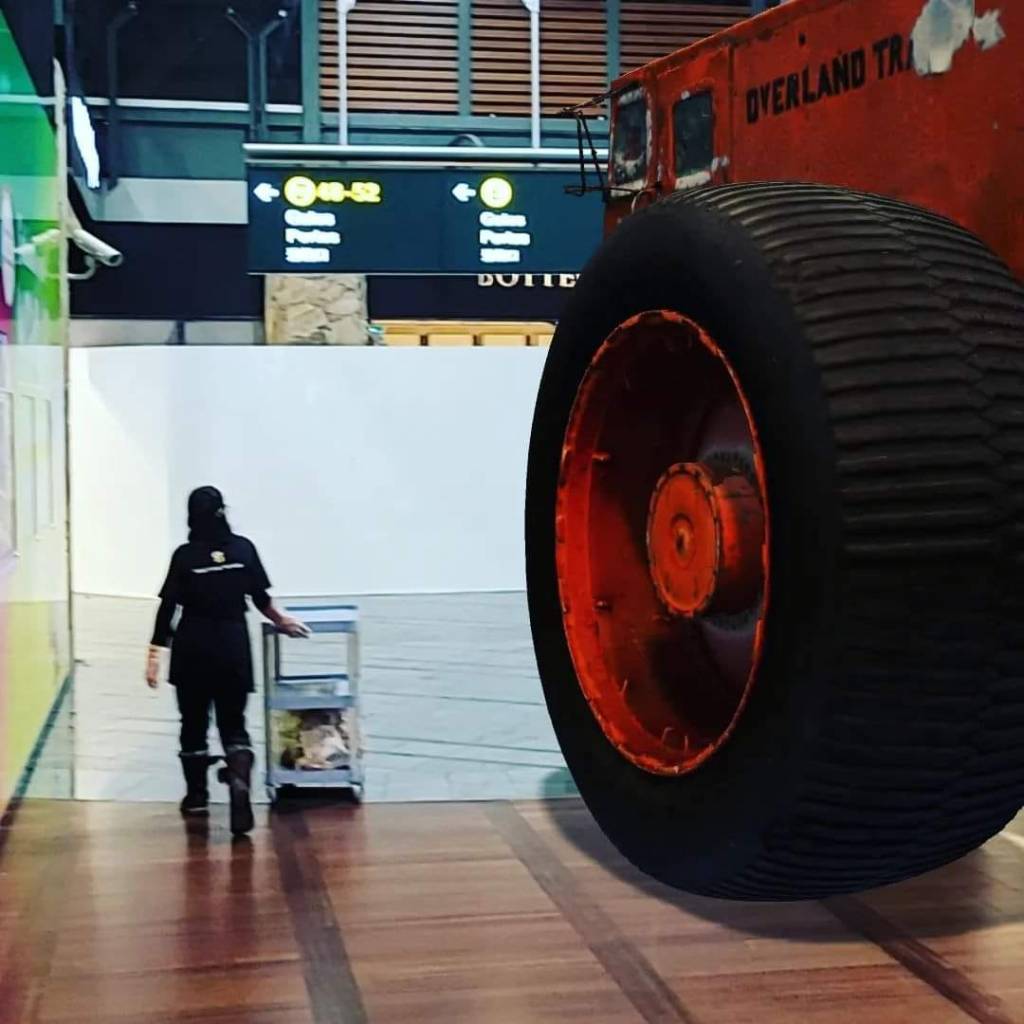
The Yukon Transportation Museum is testing out a Virtual Reality (VR) platform for the Sno-Train. In short, you will be able to use your smartphone and place the Sno-Train anywhere within your current landscape or an image. Here are a few images that should give you an idea of the capabilities.
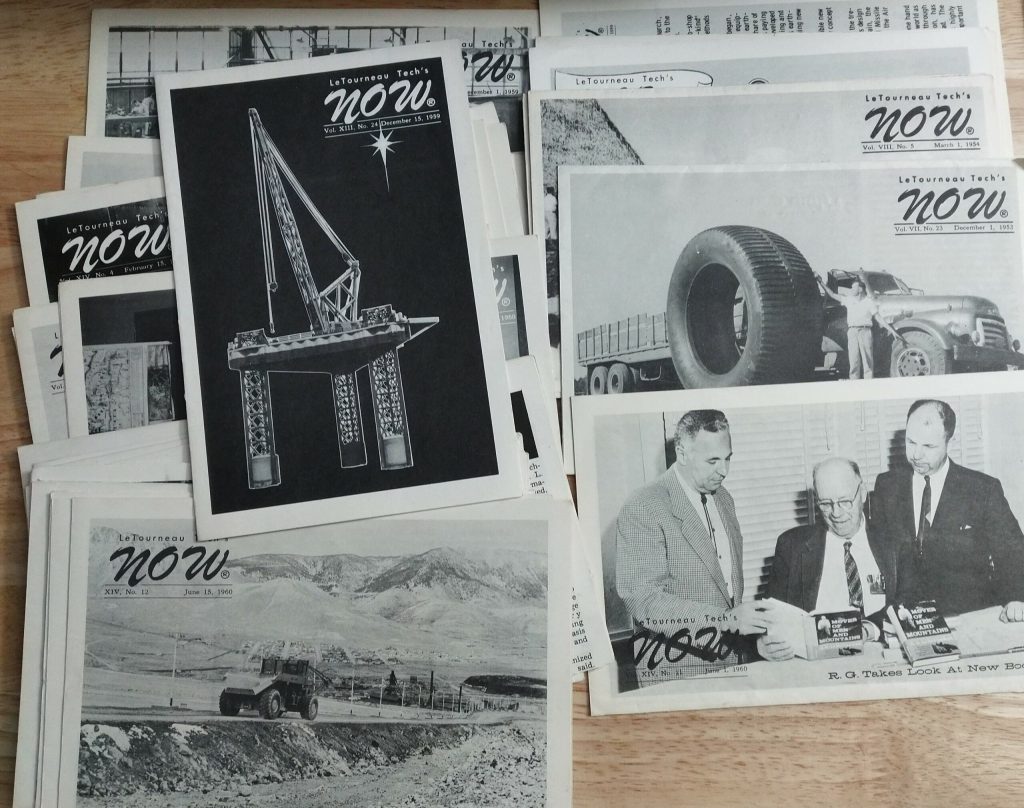
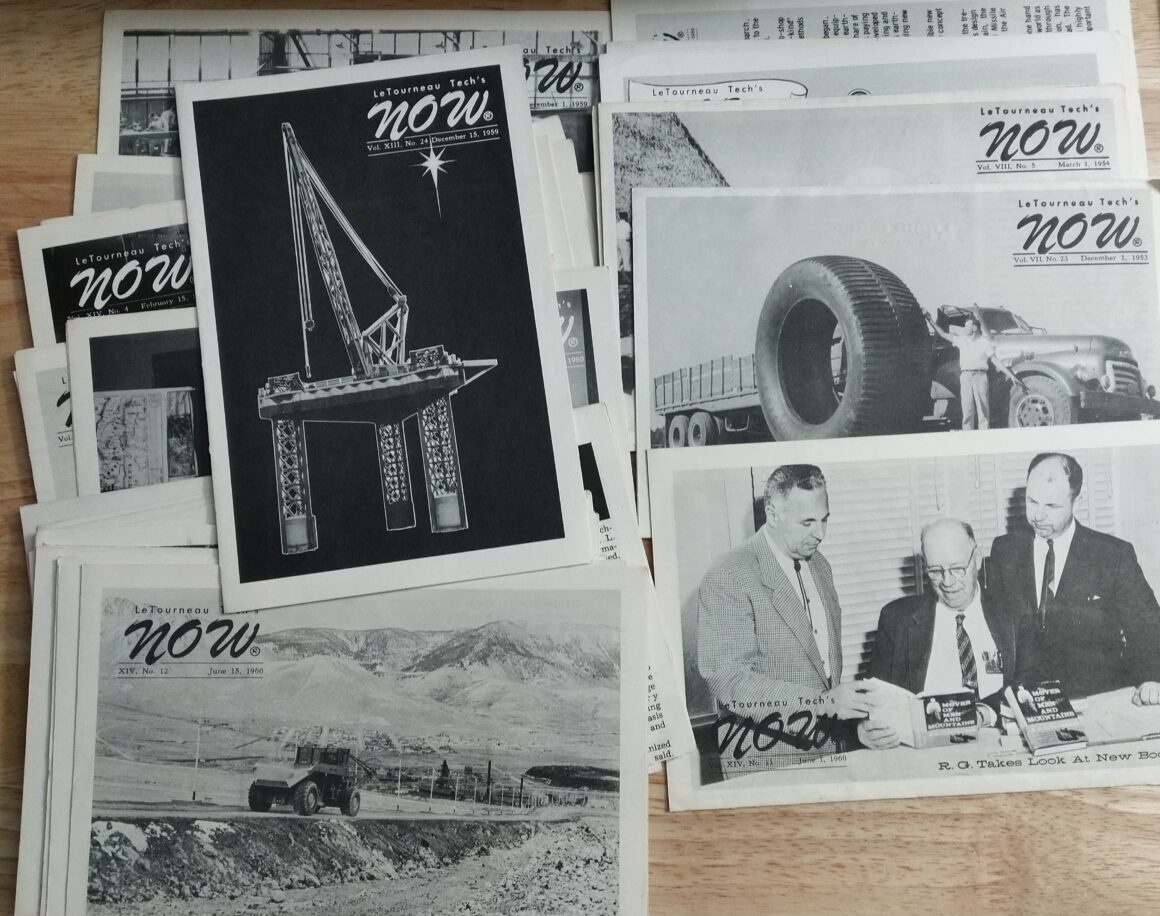
I received a cache of gently read LeTourneau NOW newsletters in the mail yesterday. These company newsletters were published by R. G. LeTourneau. Inc. and mailed to whomever wanted to read it free of cost. The date range for these newsletters closely aligns with the Overland Trains development, including the Firestone 120x48x68 tires. I have scanned the December 1, 1953 issue and embedded it if you would like to read or download the issue.



 Overland Trains