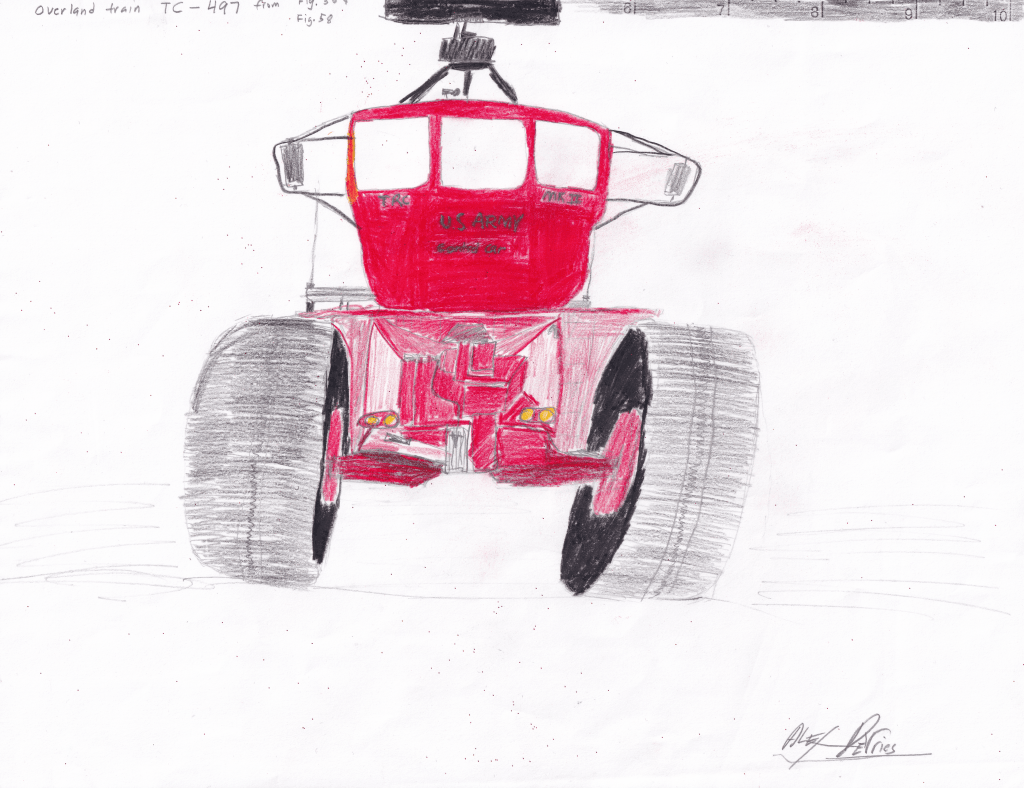
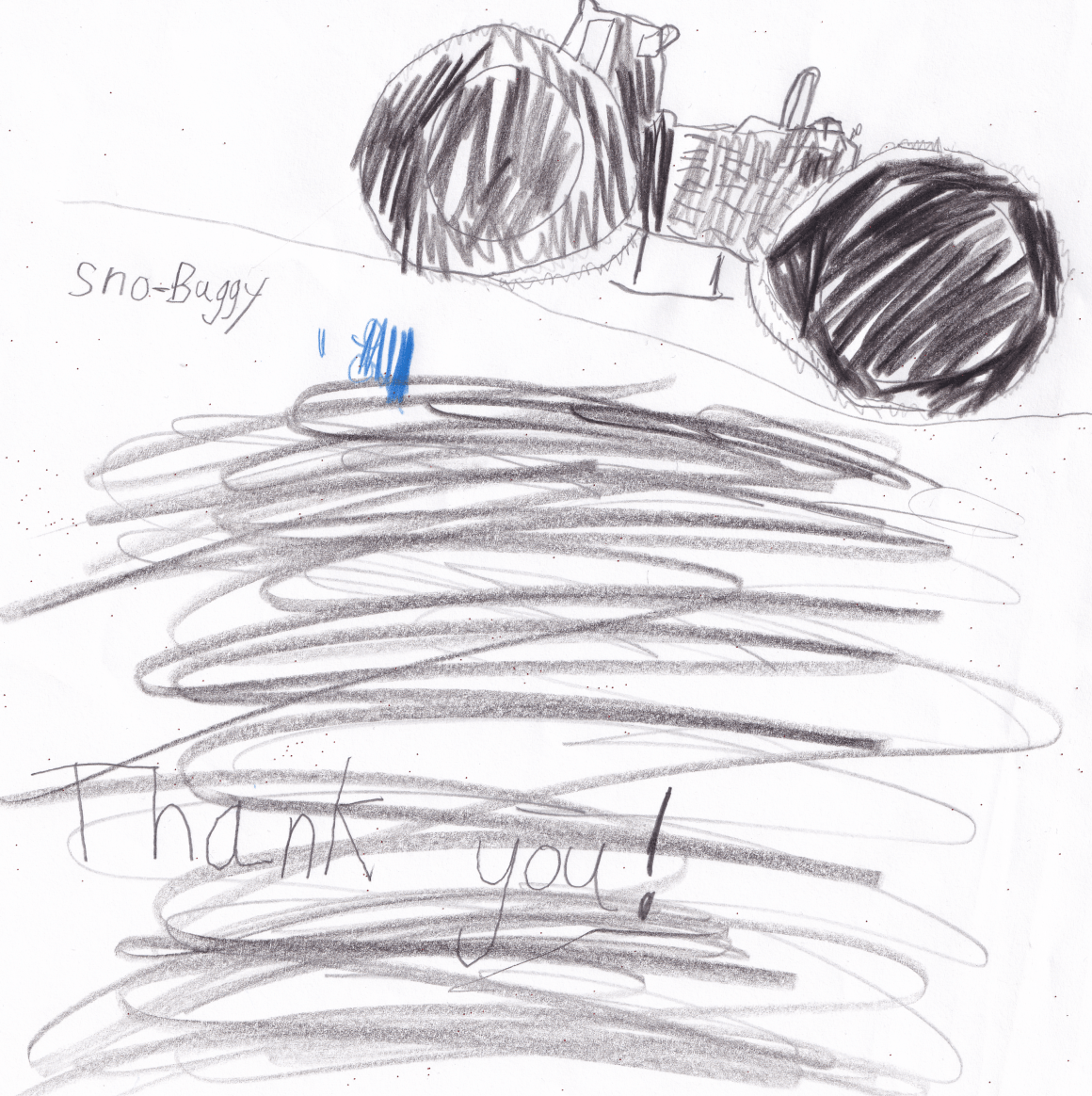
Several young fans of R. G. LeTourneau’s Overland Trains sent in their fan art. The first drawing is of the Sno-Buggy. It had eight Firestone 120x48x68 wheels and was tested in Greenland.
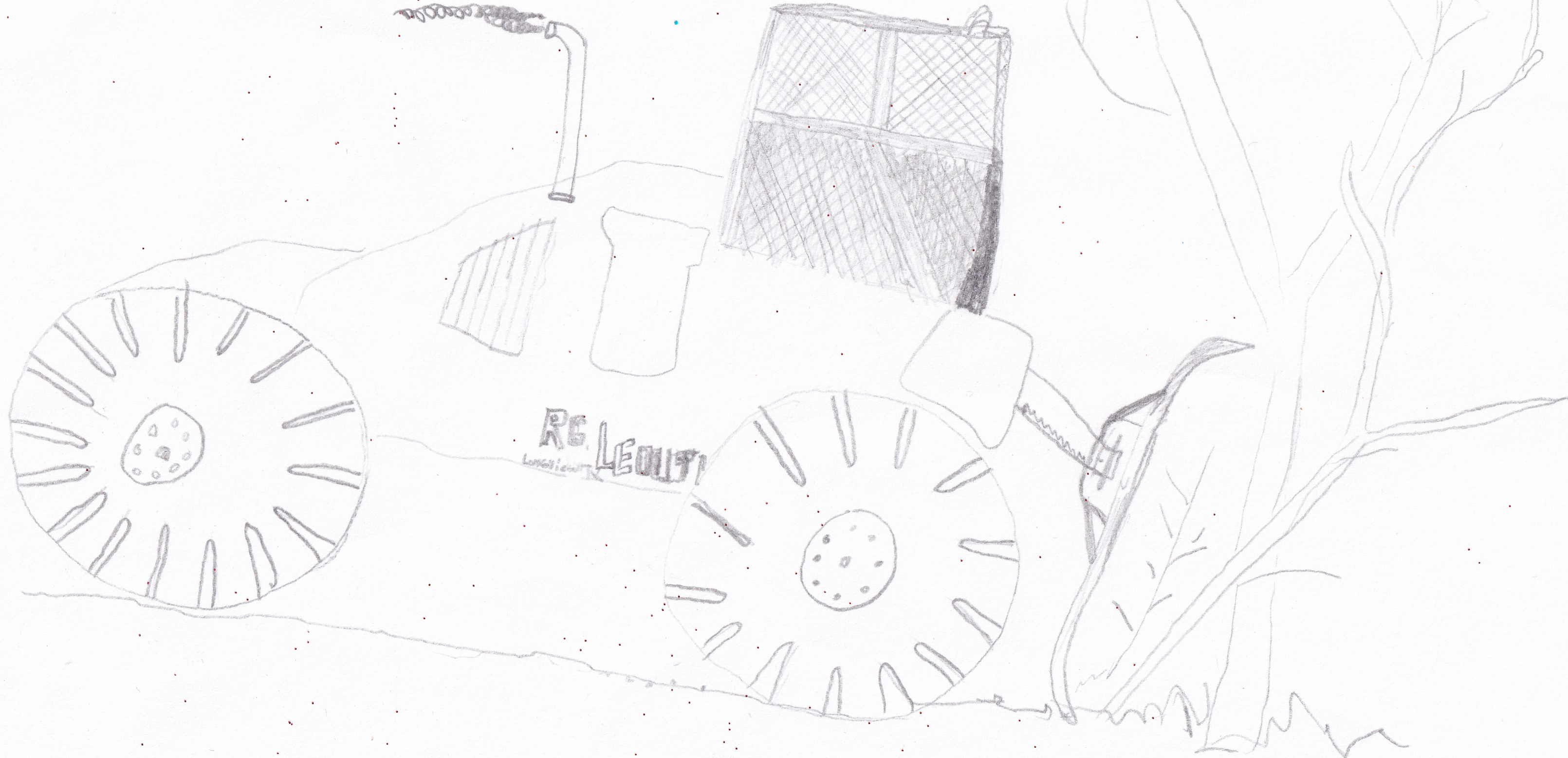
The next drawing is the Marsh Buggy. It used an AC electric motor and gear drive to lower and raise a blade, which was used for pushing down small vegetation or shaping small amounts of overburden.
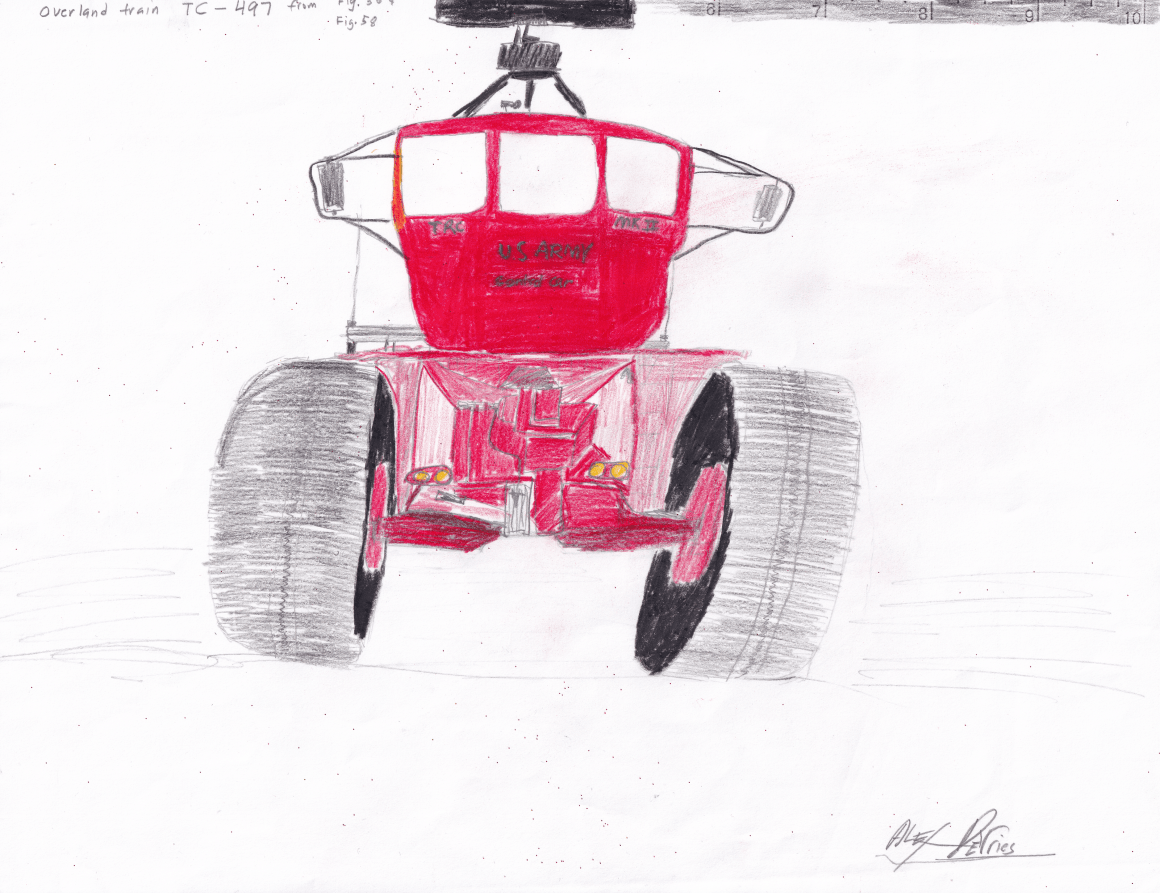
The final drawing is the TC-497. The control car is at the U.S. Army Proving Ground in Yuma, AZ. The two power cars and most of the trailers were scrapped. At least one trailer is in Nome, AK and was part of a gold dredging project built by Lloyd Molby called Gold Digger.
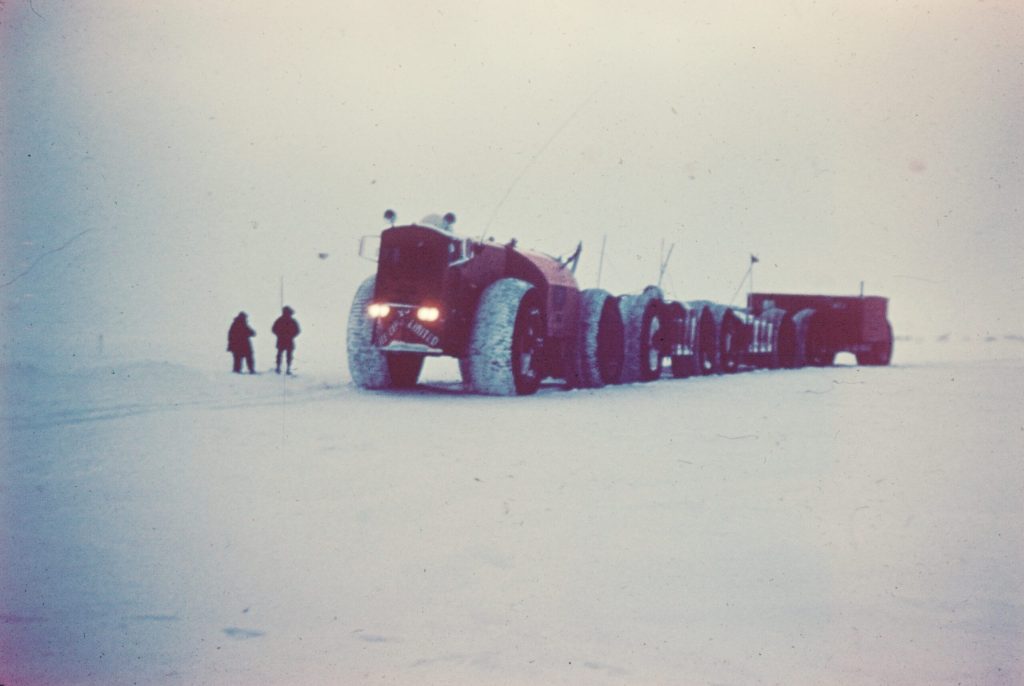
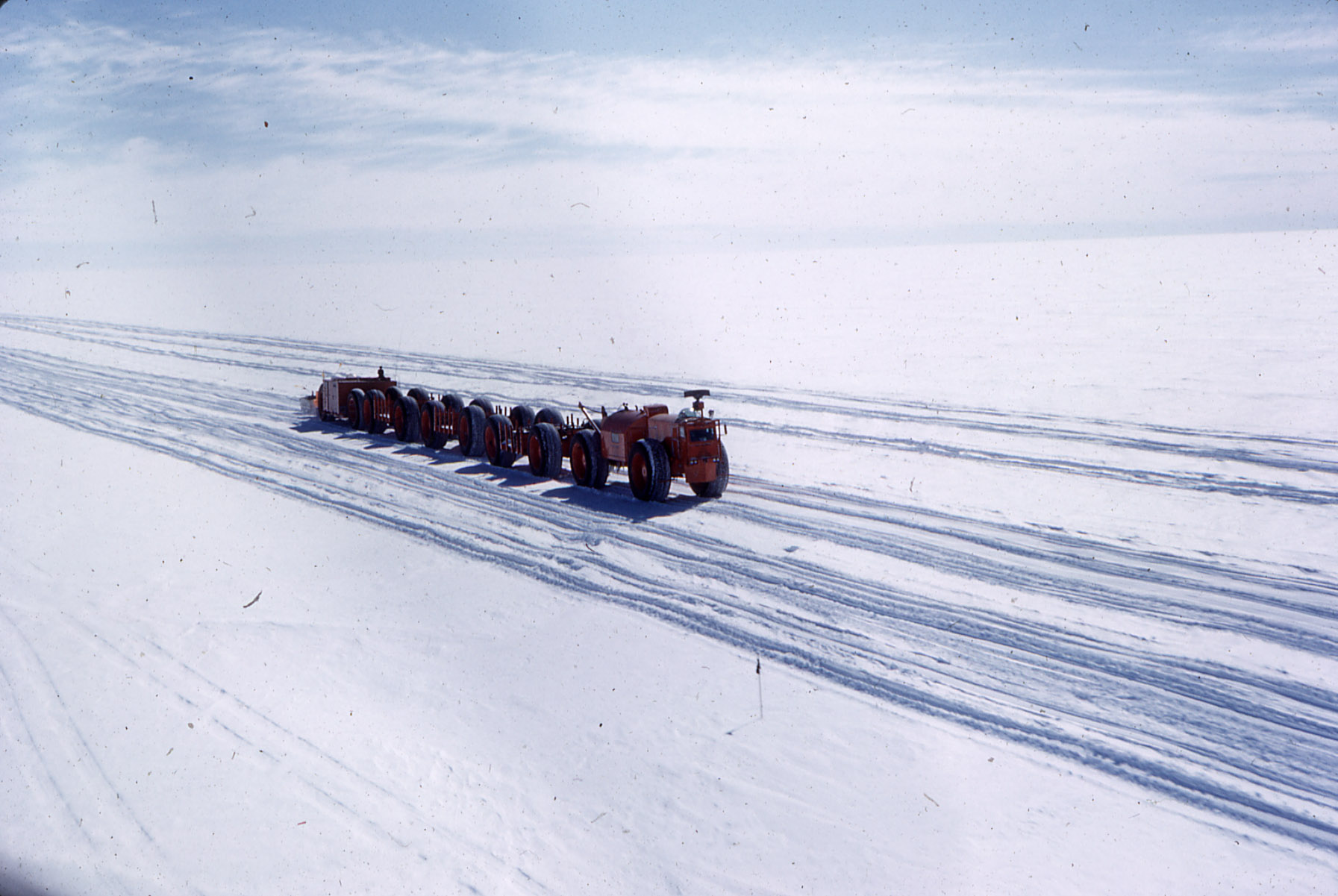
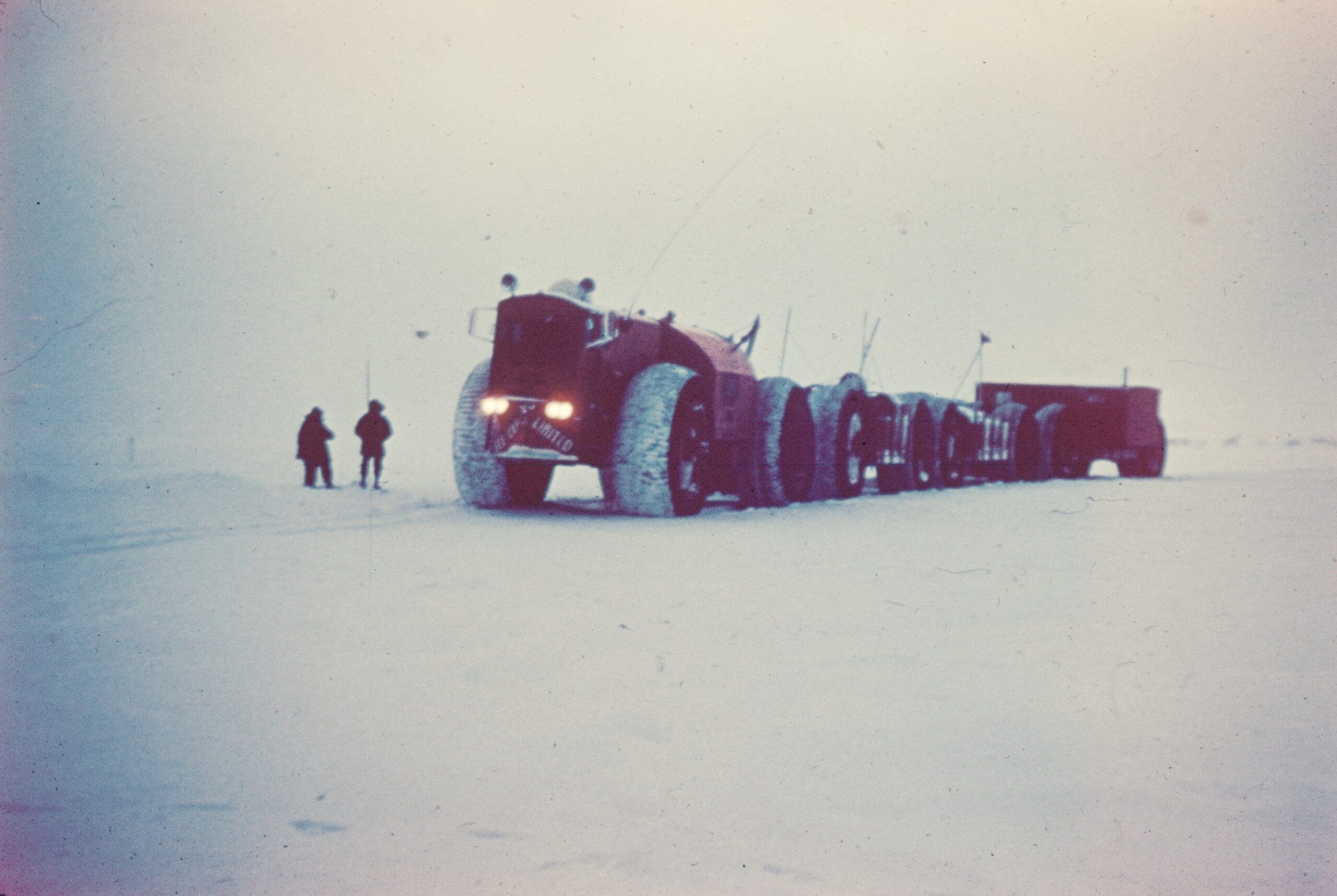
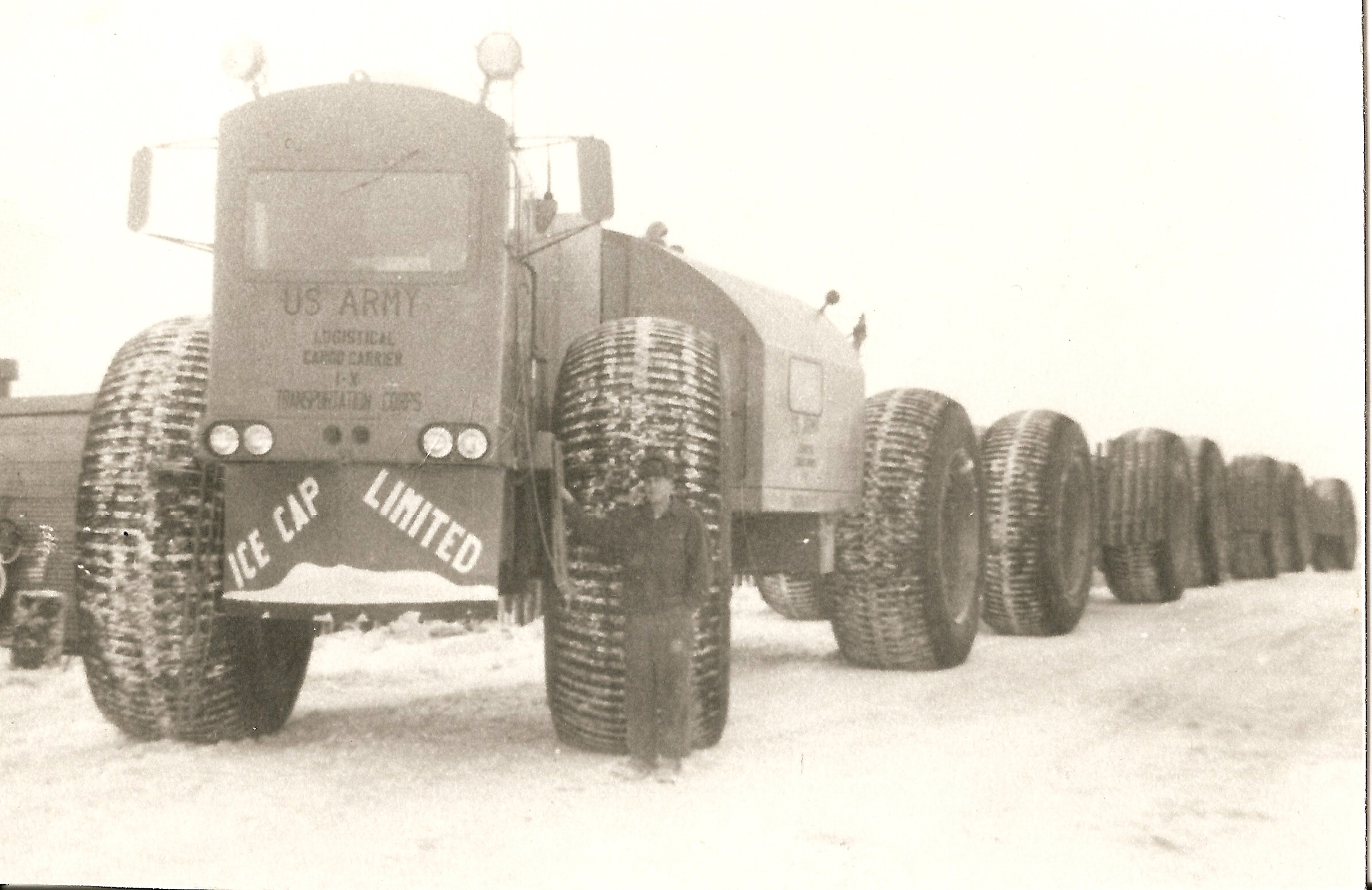
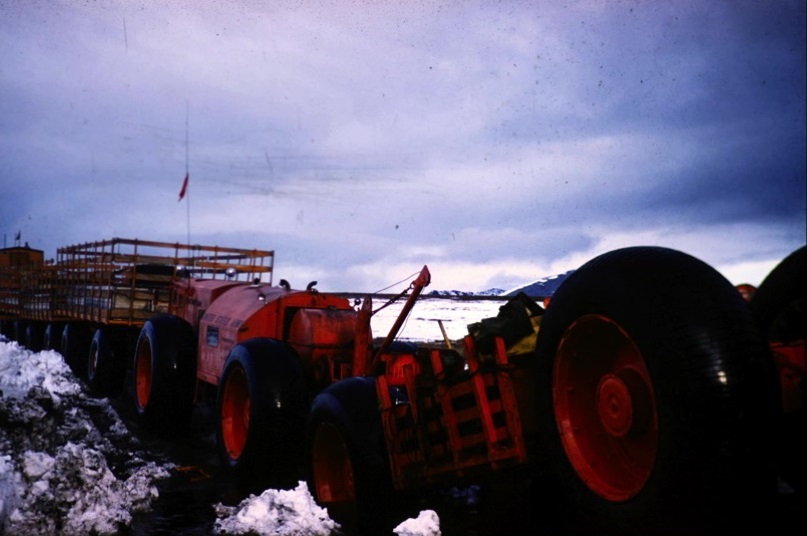
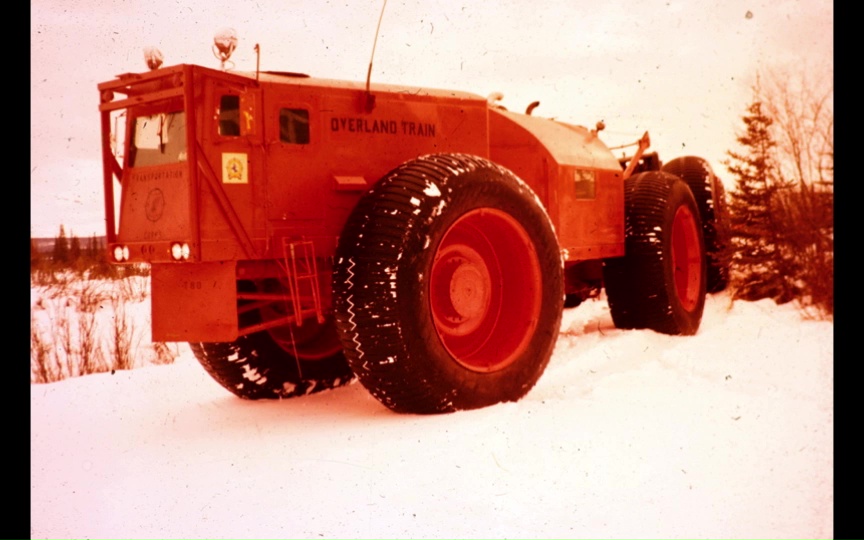
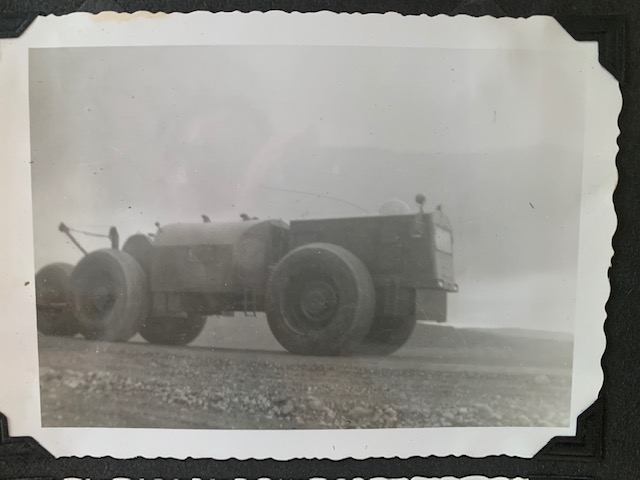
When the Sno-Train arrived in Greenland, it logged over 2,000 miles across the Ice Cap. Several men that were stationed in Camp Tuto, Thule Air Base, and others captured these images of the Sno-Train.
Image courtesy of John Davis.
Above: The Sno-Train travels across the CAT train road with a Goodyear tired based Thompson Trailer towing what appears to be a wanigan. The horizontal bar atop the Sno-Train’s front car, or control car, is a radar unit.
Image courtesy of Joe Cahill
Above: The Sno-Train in Greenland pulling a wanigan and Thompson Trailer. The “ICE CAP LIMITED” on the snow cowl was more of a hazing than anything else. It did not last too long.
Image courtesy of Arnold Haynes
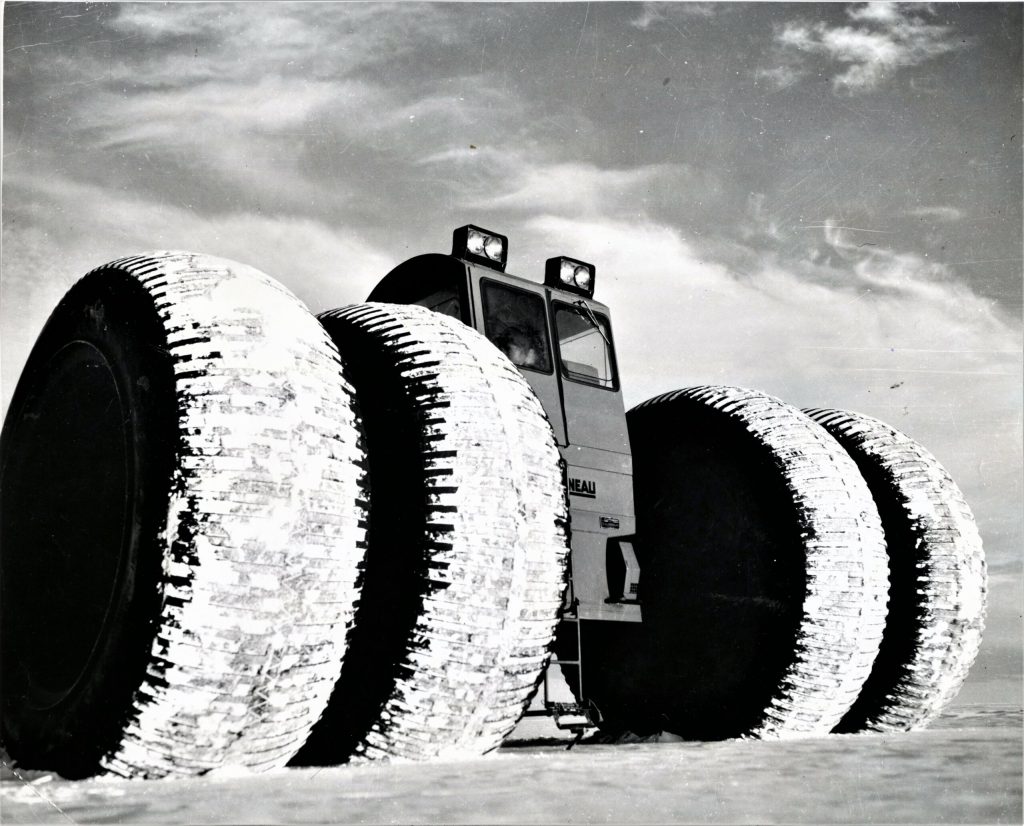
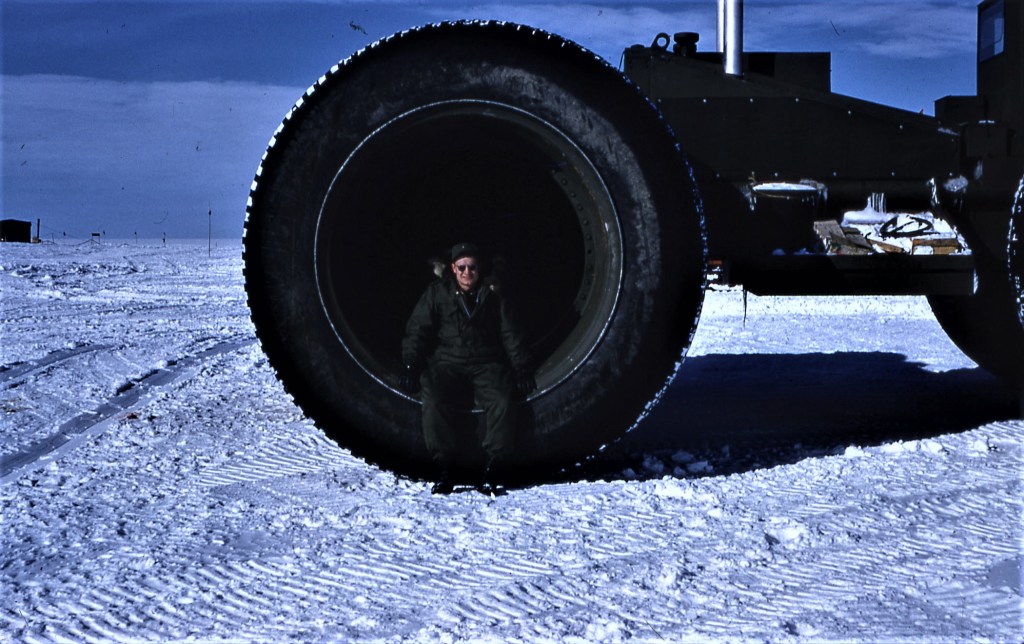
Above: One last image of the Sno-Train in Greenland with Arnold Haynes standing in front of the massive Firestone 120x48x68 tires.
I started writing this book in February of 2020. Two and a half years later, I have captured the most complete Overland Trains story ever published. Buy the book now on Amazon.com (https://www.amazon.com/dp/B0BFL91FX6).
Camp Century, Greenland was an American Cold War era under-ice base designed for research and development. It hosted the first nuclear reactor used for energy production and part of the Army Nuclear Power Program. There have been numerous articles and papers about electrical production. However, let’s talk water.
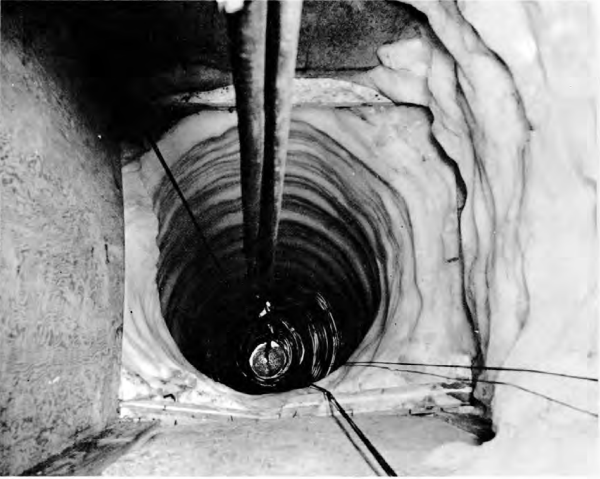
Greenland is largely made up of ice – glaciers to be more specific. When the United States began populating Camp Century, they had to come up with a way to provide for drinking water and sanitation needs. Their solution was a subsurface water well called the Rodriguez Well.
Rodriguez Well, U. S. Army Public Domain.
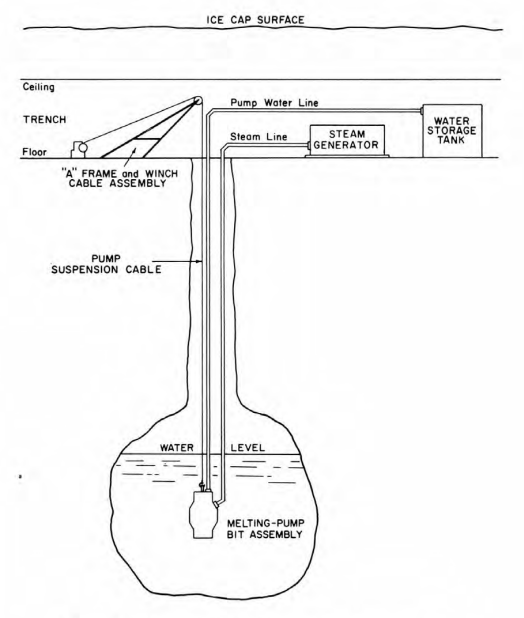
The 500 feet deep well was installed at Camp Century during the summer of 1960. The primary well components were a diesel-fired steam generator capable of producing 165 psi of saturated steam, a melting-drill bit assembly for melting a well shaft into the ice; a melting-pump, and a pump for moving the melted water to the surface. Engineers also used a gasoline engine-powered cable winch for raising and lowering the bit assemblies. Once water was melted by the steam and pumped up the well shaft, it was stored in a 5000-gallon insulated and heated water storage tank.
Line diagram of Rodriguez Well at Camp Century, U. S. Army Public Domain.
The water that the Camp consumed was suitable for drinking without the need for filtration or chemical sanitization. A report of the water quality cited that it was better than “water obtained by triple distillation in glass.”
Source: CRREL Technical Report 174, Camp Century Evolution of Concept and History of Design Construction and Performance, Clark, Elmer F., October 1965
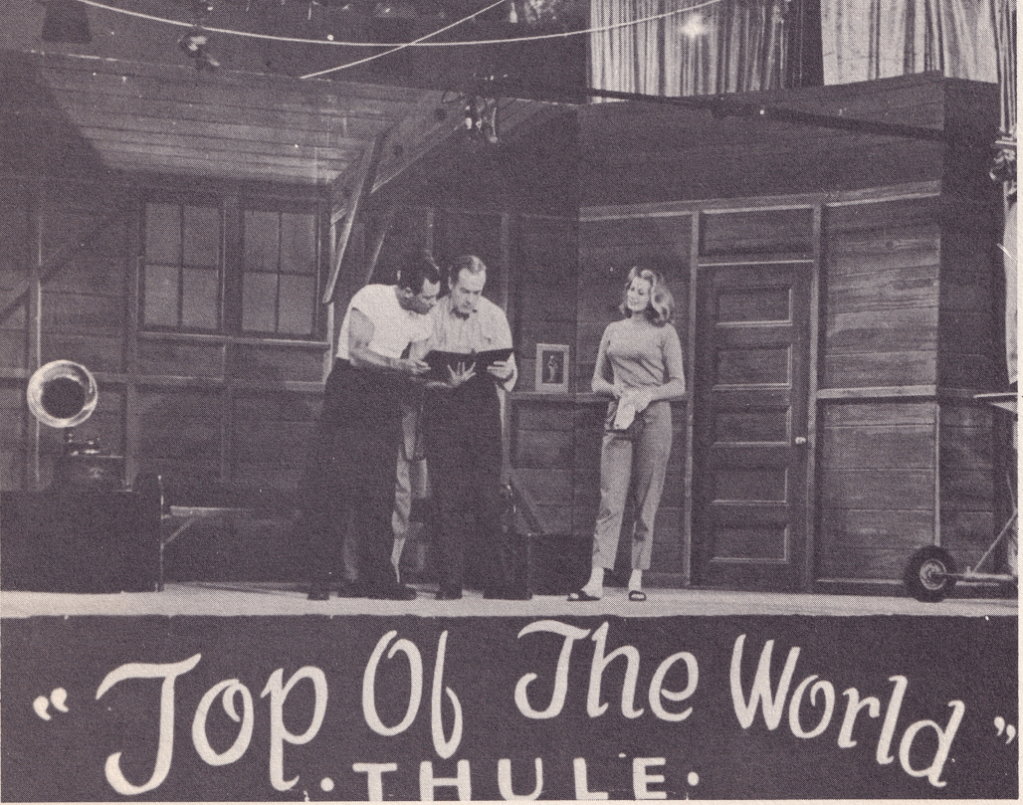
On New Years night, December 31, 1954, Bob Hope, Anita Ekberg, Margaret Whiting, Bill Holding, Jerry Colona, and others travelled to the far north Arctic at Thule Air Base Greenland. It was -27 degrees Fahrenheit that night. Just over 4,000 attended the New Years show to bring in the year – it was going to be 1955.
Bill Holden, Bob Hope, and Anita Ekberg practice the show: Image: NBC Photo.
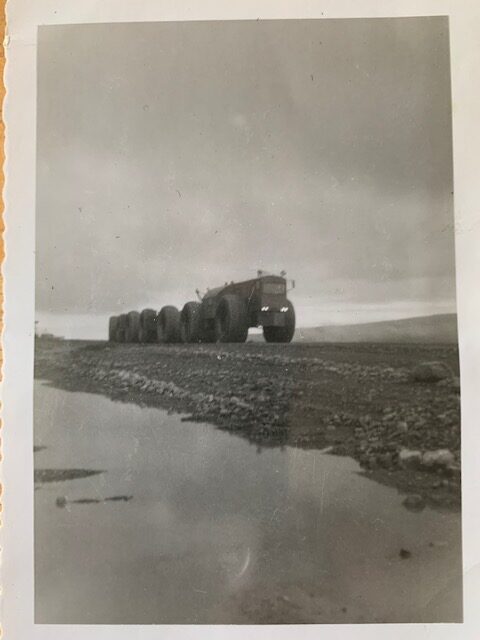
During my interviews for the Overland Trains book, I heard several Service Members use the Bob Hope show as a reference. Comments like, I showed up to Thule right after the Bob Hope show, were referenced. The Sno-Train arrived in Greenland in the spring of 1955. While there, the Sno-Train underwent over 2,000 miles of testing.
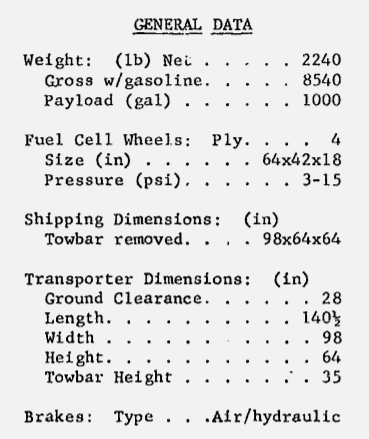
The Rolling Liquid Transporters (RLT (Model T-3)) are 1,000 gallon fuel vessels. These were unique in that the primary storage device were the two large wheels. During a military exercise in Greenland called Lead Dog 60, they performed well at transporting diesel fuel for the exercise.
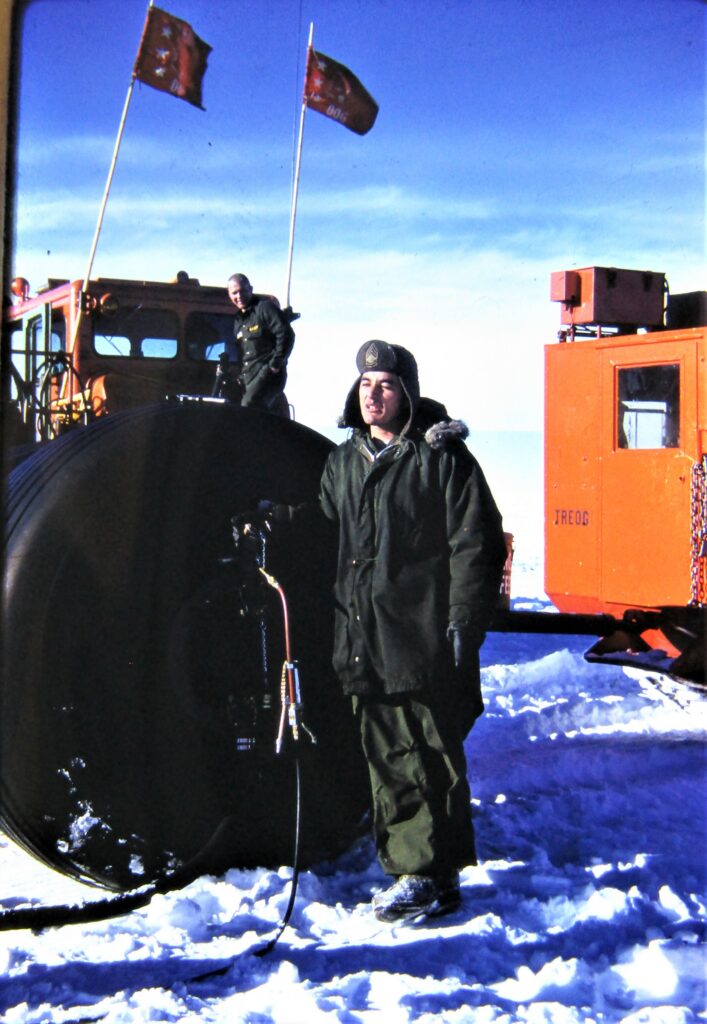
The two – 500 gallon fuel cells (the tires) were filled using a gasoline powered pump, at a volume of 30 gallons per minute. Extracting the fuel was done using a 6 CFM compressor, creating a pressurized cell. In the image below, you can see Marty Martinez using a welding torch to melt ice around the spring loaded fueling valve. Ice formations around the filling valves was a common problem with the RLTs.
A Rolling Liquid Transporter wheel. Image: Marty Martinez – also shown above
During the exercise, four of the wheel bearings failed. The Army’s only concern was that fuel could only be dispensed out of one RLT at a time. A total of 7 RLTs were used during the exercise.
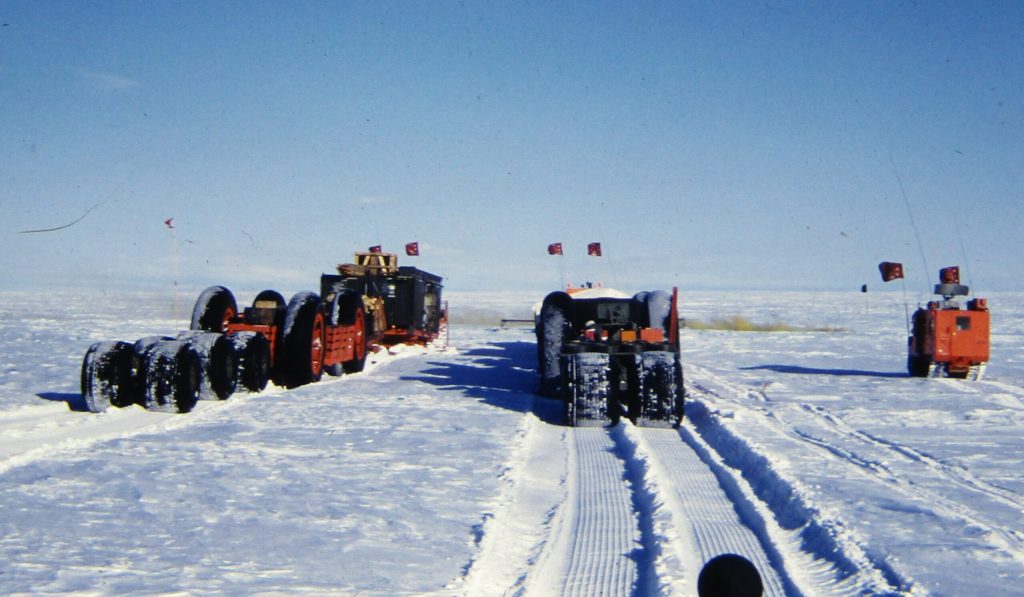
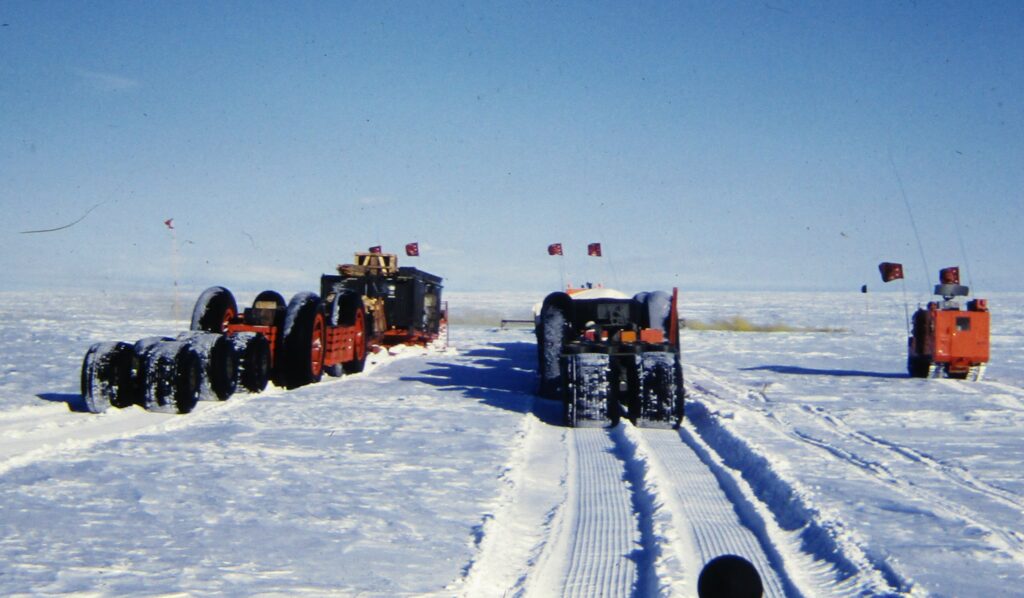
Rolling Liquid Transporters on the Greenland ice cap during Lead Dog 60. Image: Marty Martinez.Rolling Liquid Transporters general data. Image: Lead Dog 60 report.
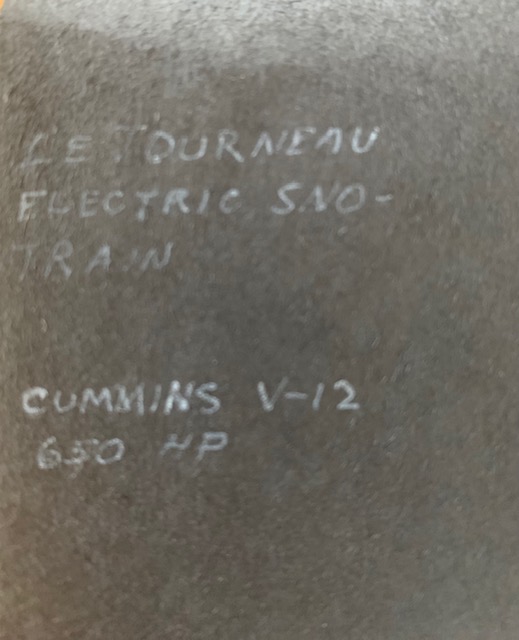
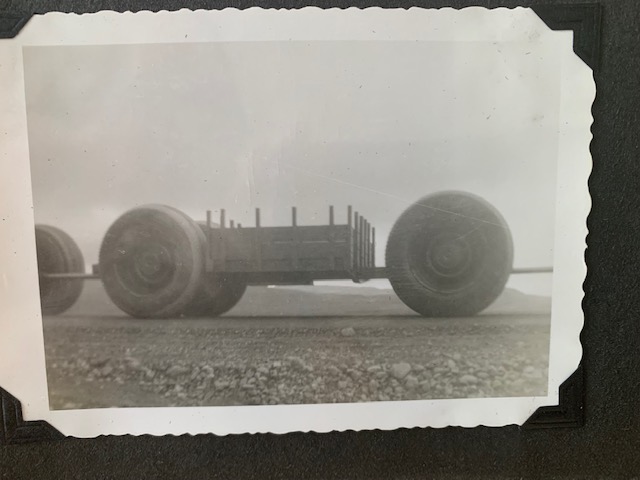
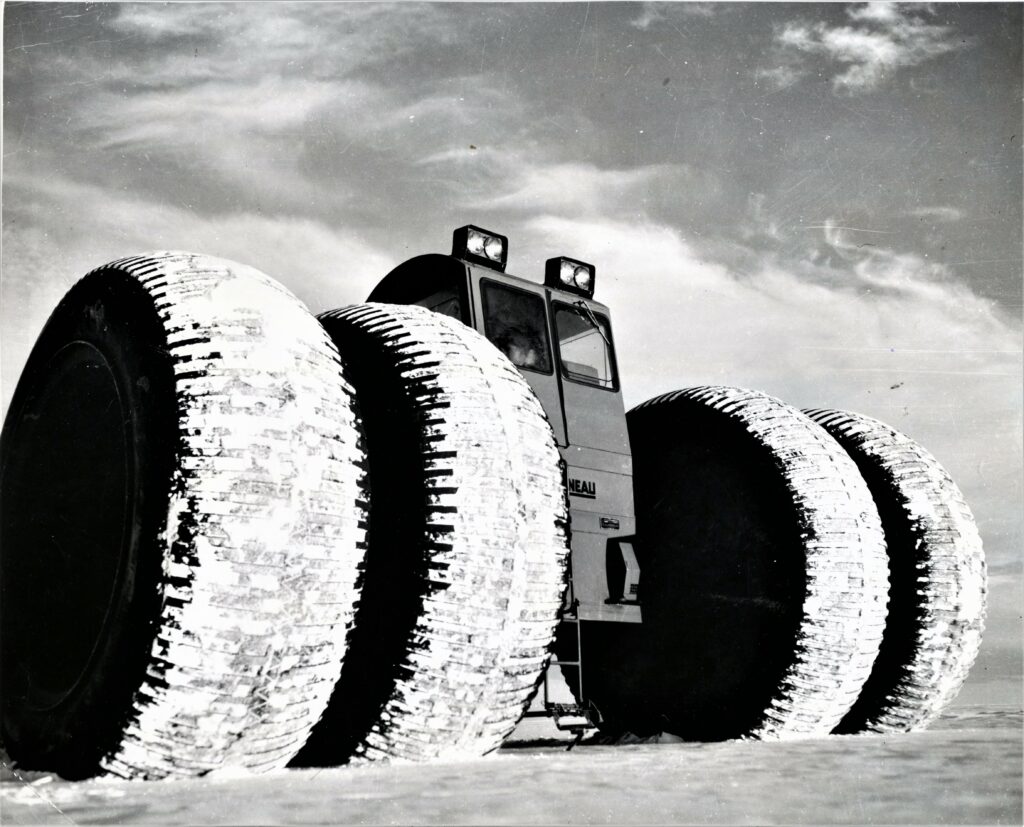
The Sno-Train arrived in Greenland in June 1956. It was being tested in extreme conditions. The Army Transportation Corps was looking at how the Sno-Train performed in the cold Arctic terrain. The Army was also testing how the huge Firestone 120x48x68 tires performed. During the Sno-Train’s time in Greenland, it was also tested with a variety of other trailers and load configurations. The image below were captured between June and December 1956. One year earlier, R. G. LeTourneau visited Greenland to see firsthand how the Sno-Buggy was performing with its dual stacked Firestone tires.
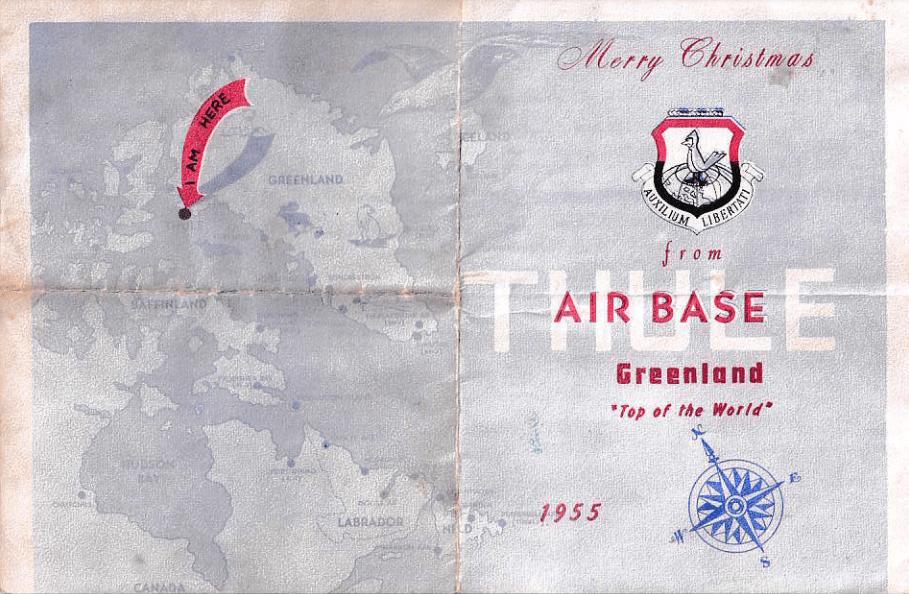
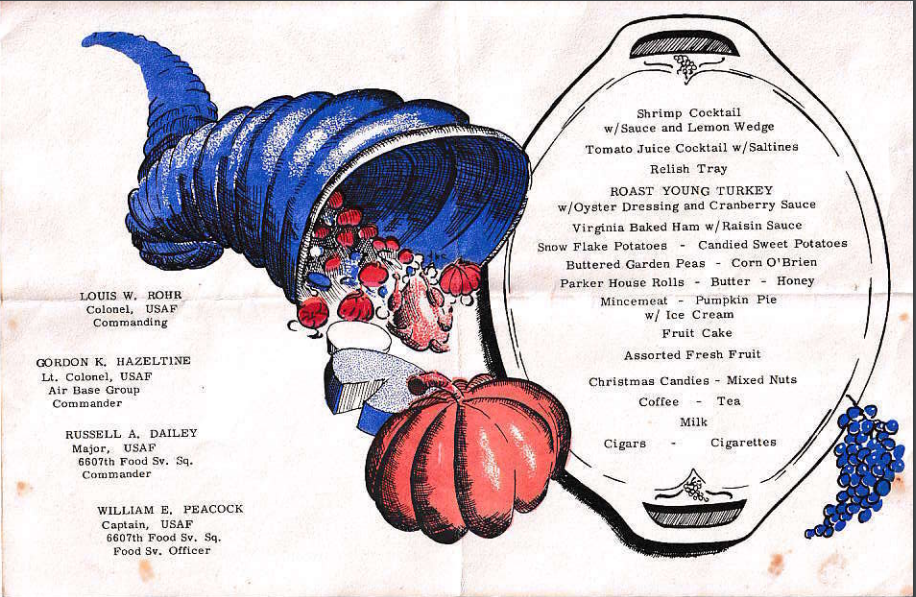
In 1955, Christmas dinner looked and felt a little different for Air Force Service Members at the “Top of the World.” The menu included Shrimp Cocktail, a relish tray, roast young turkey, Virginia baked ham, Christmas candies, coffee, tea, and milk. Something that you won’t typically see on a Christmas menu are cigars and cigarettes. Thank you to Jackie for sharing your father’s small piece of history with me. Jackie’s father spent 27 years in the United States Air Force. He was stationed in Thule Air Base during Christmas, 1955.
Thule Air Base, Greenland Christmas Dinner 1955Thule Air Base, Greenland, Christmas menu
The TC-264 Sno-Buggy spent some time in Greenland testing out the HUGE Firestone 120x48x68s and a few unpowered trailers. It participated in tests as Camp Sierra and was driven by Nate Galbreath. Galbreath was assigned to the 9223rd Transportation Service Unit (Transportation Arctic Group). We know a great deal about the Sno-Buggy and its time in Greenland. During testing, R.L. and R.G. LeTourneau visited the testing areas and received valuable feedback that would eventually shape the Overland Trains we know today. R.L. kept a photo journal with original images and descriptions that very few have seen, which is part of why we have such a rich machine and storyline history.
Nate Galbreath in Greenland, 1954. Image: U.S. Army, fair use.
Nate Galbreath. Image: thule1954.com
Unlike many of R.G. LeTourneau’s machines, the Sno-Buggy was painted an olive, or drab green. With its dual tires on each of LeTourneau’s Electric Drives, it spanned 24 feet wide and was 27.5 feet long.
Camp Century was a United States military installation buried under the northwestern tip of the Greenland ice sheet. It was active from 1959 and quickly dismantled in 1967. In 1960, Camp Century received it’s electrical and heat energy from a Portable Medium-sized nuclear reactor, starting operations on October 3, 1960. It ceased operations the next year when Camp Century shifted operations to summer only. Camp Century was used for a wide array of experiments, from using the ice for fuel storage to determining if it was feasible to have a city under the ice. When Camp Century was abandoned, the Army left behind equipment, petroleum, oil and lubricants (POL), and other materials.
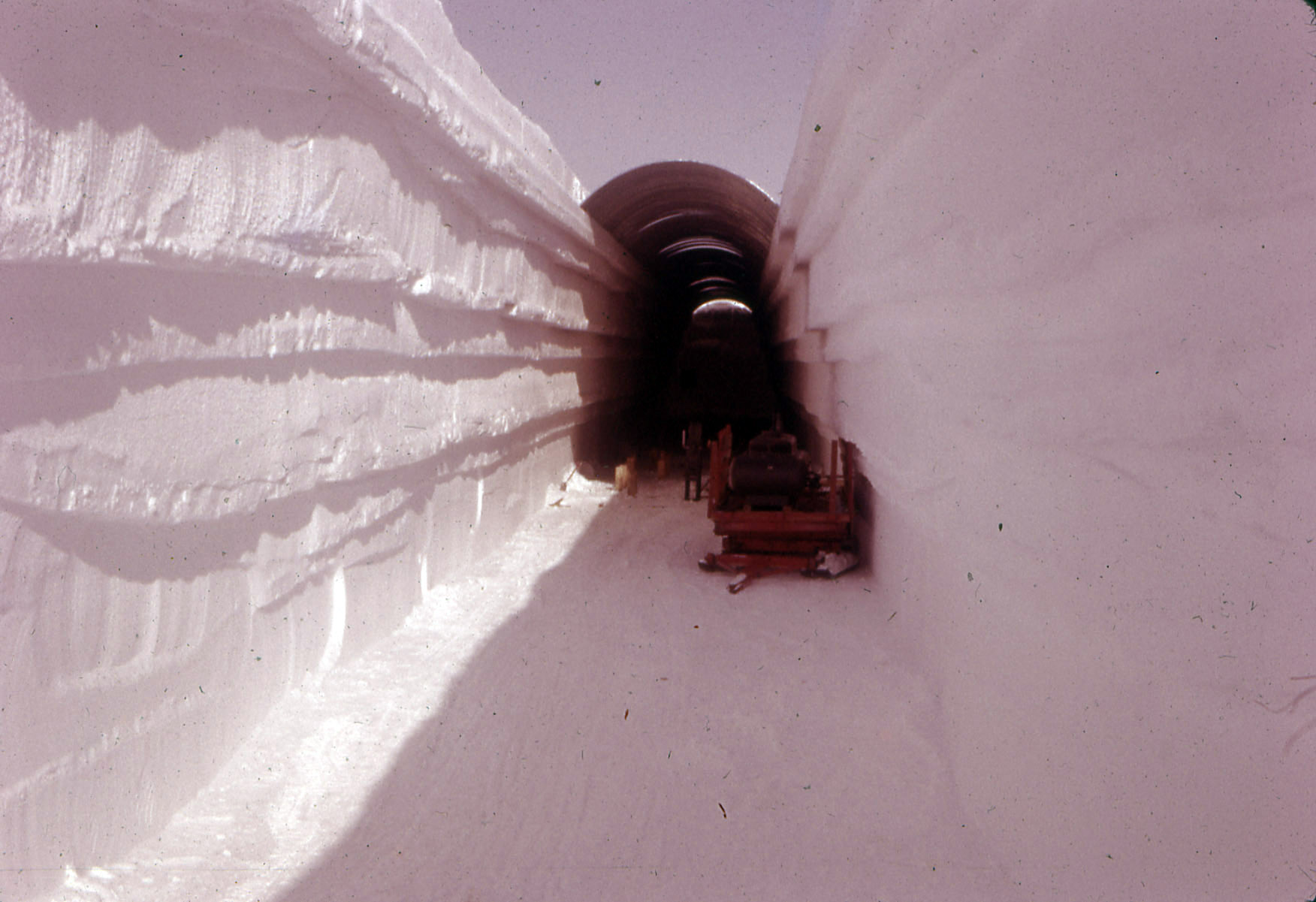
Building a tunnel under the ice at Camp Century. Image: Arnold Haynes.
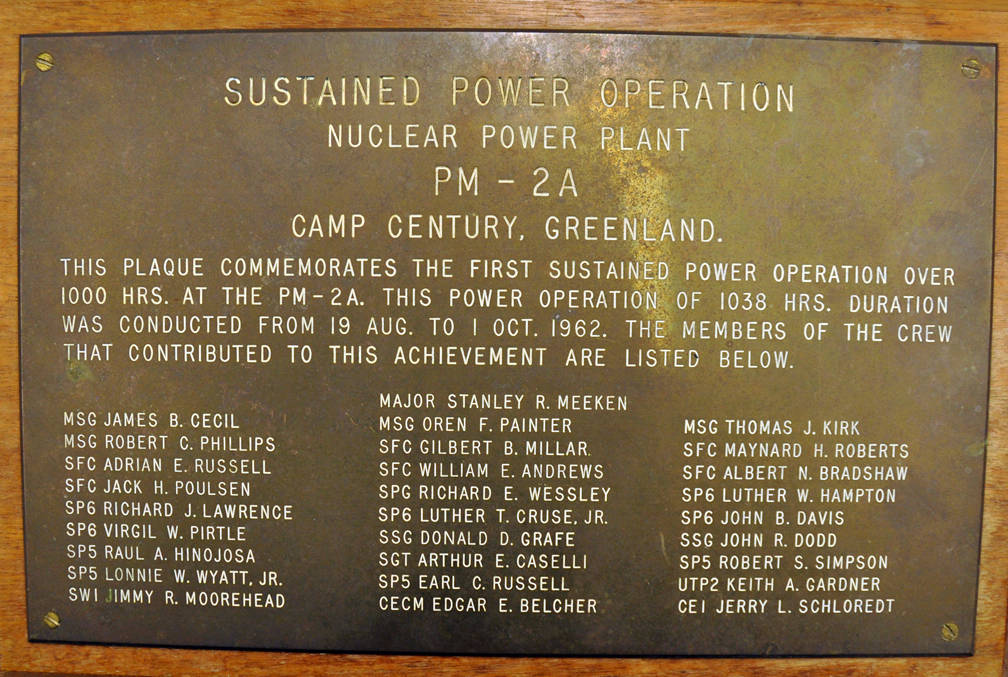
Camp Century Pm-2A plaque. Image: Office of History, HQ, U.S. Army Corps of Engineers
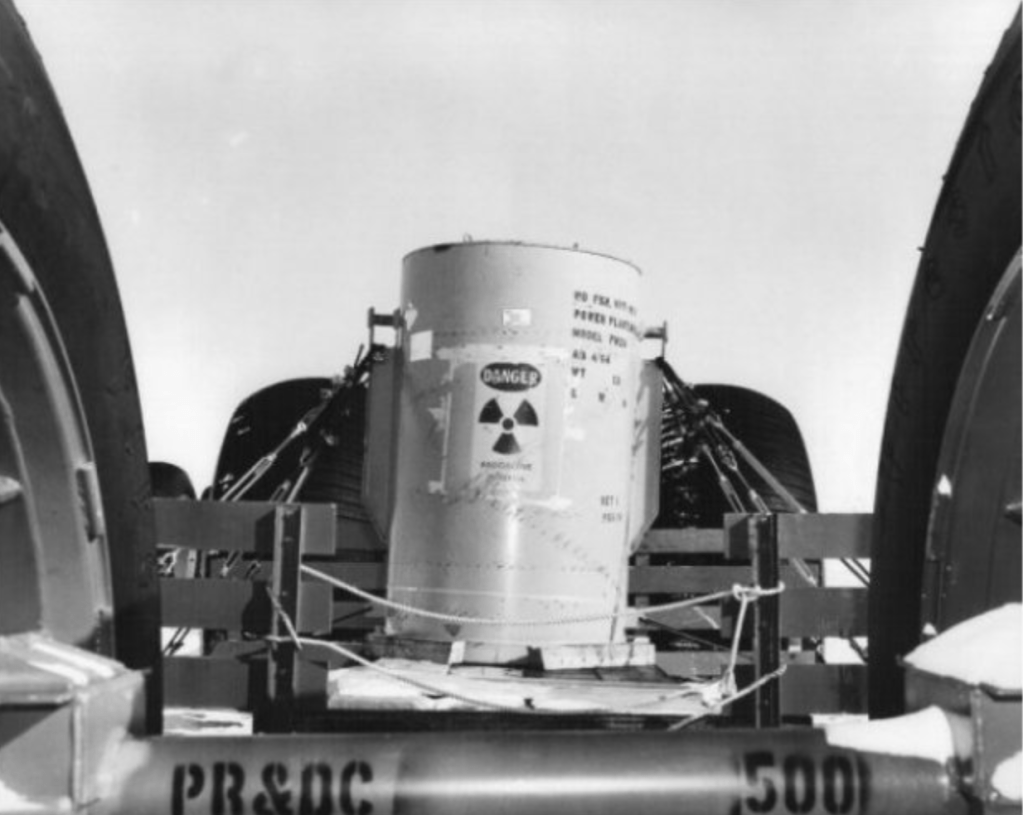
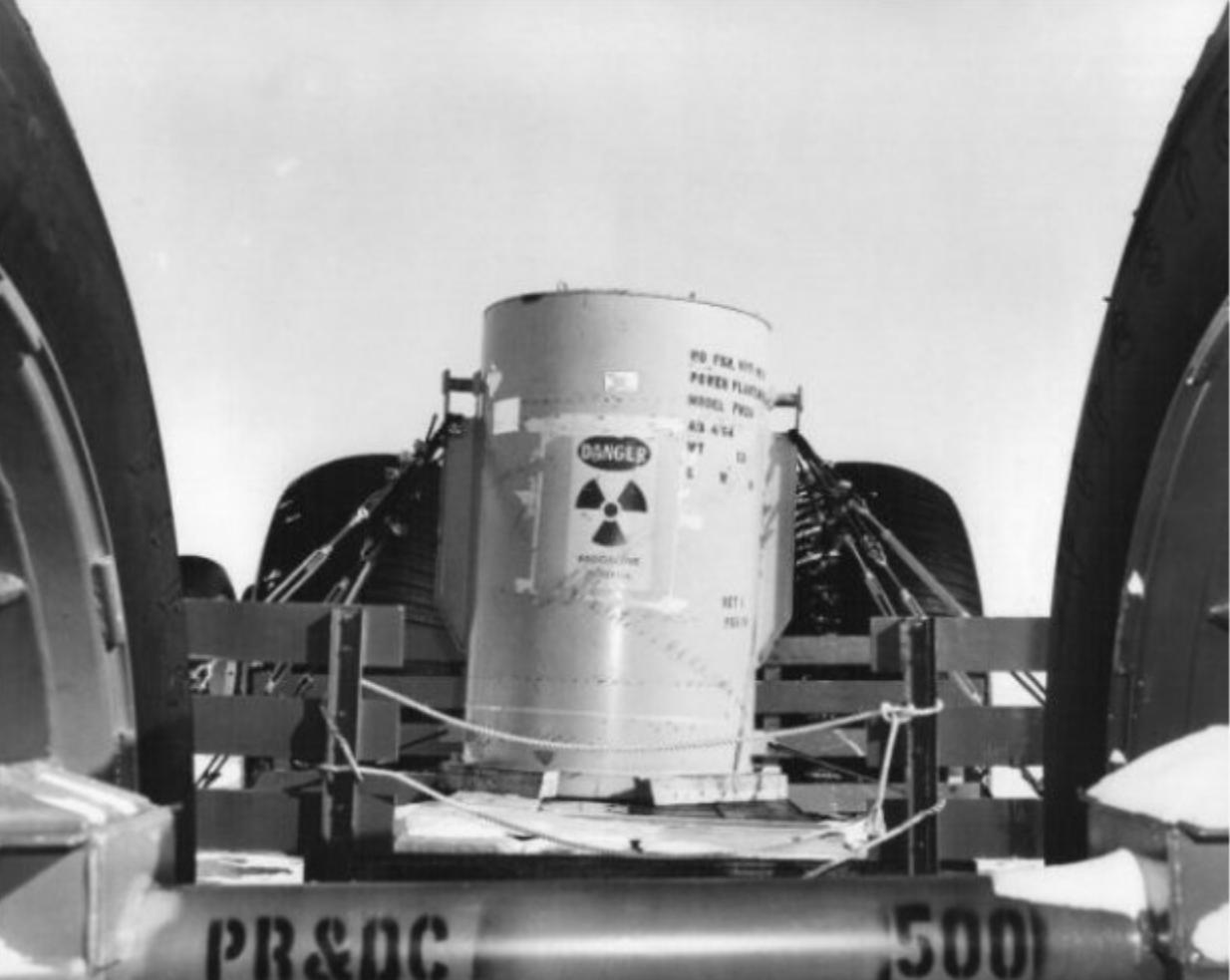
A 14-ton cask of nuclear material from Camp Century, May 1964. Image: Steffan Winther – The ThuleForum
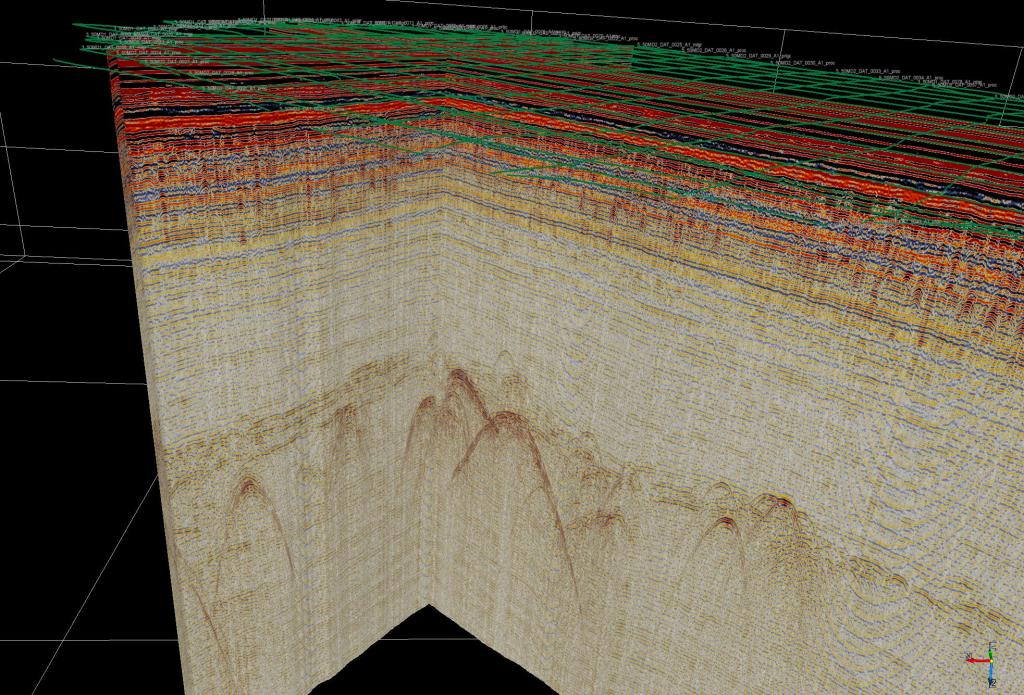
In the summer of 2017, scientists at the Geology Survey of Denmark and Greenland (GEUS), lead by Project Manager William Colgen, headed up a project to understand the climate and snow cover at Camp Century (http://campcenturyclimate.dk/ccc). The nuclear material, POL, and other leftovers from Camp Century has scientists wanting to understand more of how glacial and water flows under the ice might transport these toxic materials. The report conclusion was the snow will continue to accumulate on top of Camp Century and meltwater will not reach the toxic debris field – by the year 2100, it will be buried under 190 feet to 209 feet of ice and snow. Read more about the project and data at http://campcenturyclimate.dk/ccc.
 Overland Trains