I started writing this book in February of 2020. Two and a half years later, I have captured the most complete Overland Trains story ever published. Buy the book now on Amazon.com (https://www.amazon.com/dp/B0BFL91FX6).
Category: DEW Line
-
Alaska Historical Society 2022 Annual Conference Proposal Acceptance
My proposal to speak about R. G. LeTourneau’s Overland Trains was accepted for the Alaska Historical Society’s (AHS) Annual Conference. We are still ironing out the details on the date. However, the presentation will occur on the morning or afternoon of October 6-8 or 13-15, 2022. You can read more about the conference on the AHS website at https://alaskahistoricalsociety.org/about-ahs/conference/.
-
Camp Century Groundwater
Camp Century, Greenland was an American Cold War era under-ice base designed for research and development. It hosted the first nuclear reactor used for energy production and part of the Army Nuclear Power Program. There have been numerous articles and papers about electrical production. However, let’s talk water.
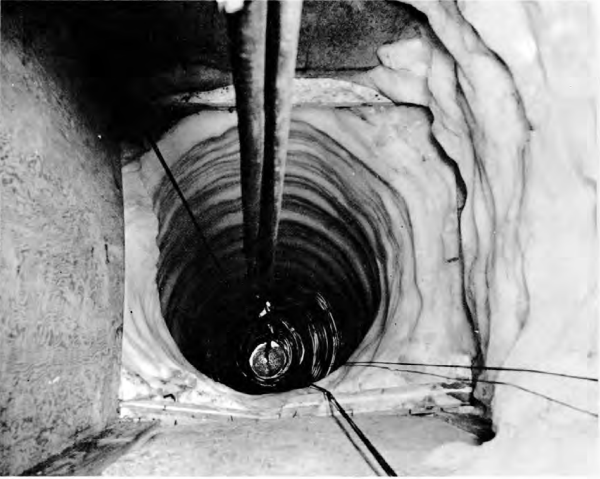
Greenland is largely made up of ice – glaciers to be more specific. When the United States began populating Camp Century, they had to come up with a way to provide for drinking water and sanitation needs. Their solution was a subsurface water well called the Rodriguez Well.
Rodriguez Well, U. S. Army Public Domain. The 500 feet deep well was installed at Camp Century during the summer of 1960. The primary well components were a diesel-fired steam generator capable of producing 165 psi of saturated steam, a melting-drill bit assembly for melting a well shaft into the ice; a melting-pump, and a pump for moving the melted water to the surface. Engineers also used a gasoline engine-powered cable winch for raising and lowering the bit assemblies. Once water was melted by the steam and pumped up the well shaft, it was stored in a 5000-gallon insulated and heated water storage tank.
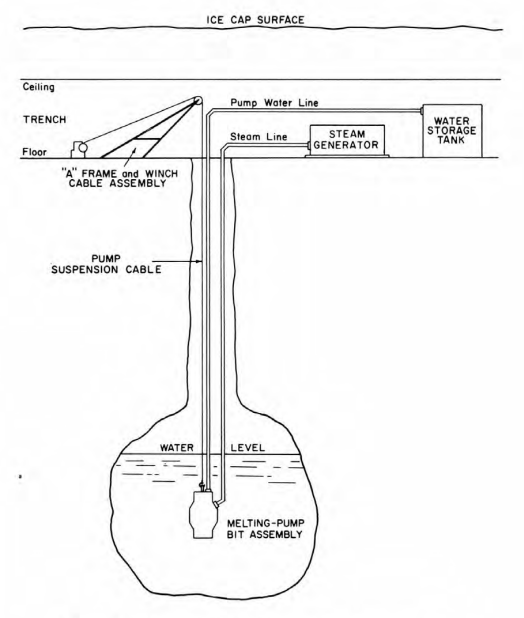
Line diagram of Rodriguez Well at Camp Century, U. S. Army Public Domain. The water that the Camp consumed was suitable for drinking without the need for filtration or chemical sanitization. A report of the water quality cited that it was better than “water obtained by triple distillation in glass.”
Source: CRREL Technical Report 174, Camp Century Evolution of Concept and History of Design Construction and Performance, Clark, Elmer F., October 1965
-
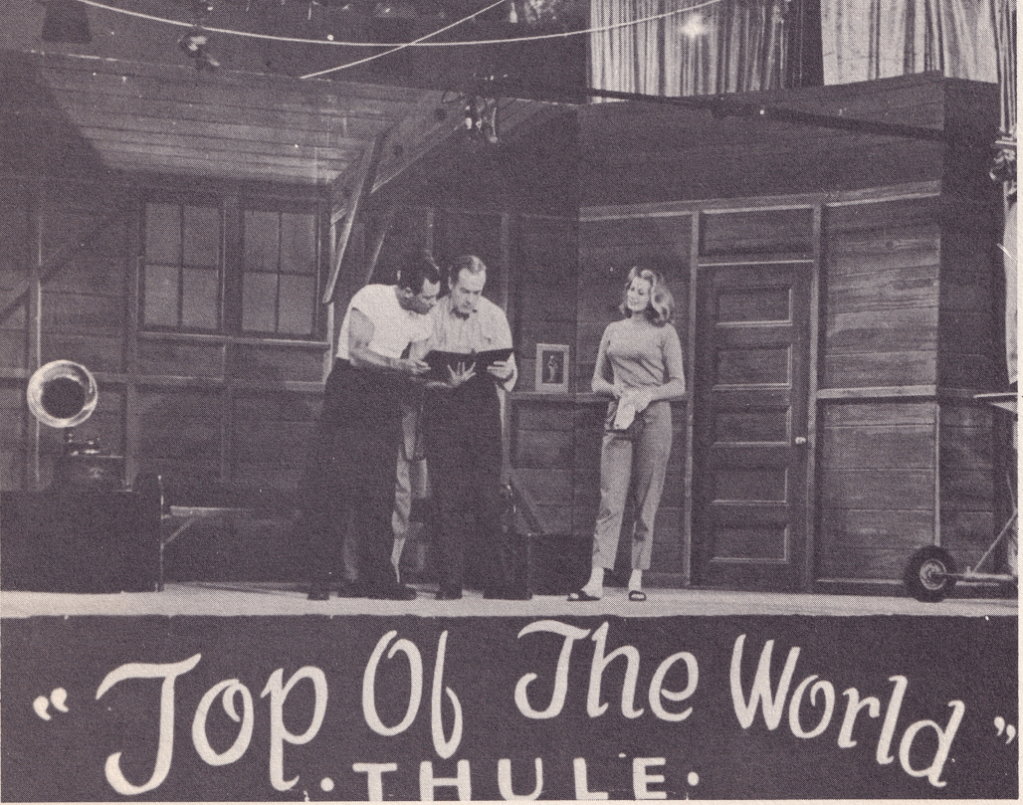
Bob Hope and Anita Ekberg at Thule Air Base New Years 1955
On New Years night, December 31, 1954, Bob Hope, Anita Ekberg, Margaret Whiting, Bill Holding, Jerry Colona, and others travelled to the far north Arctic at Thule Air Base Greenland. It was -27 degrees Fahrenheit that night. Just over 4,000 attended the New Years show to bring in the year – it was going to be 1955.
Bill Holden, Bob Hope, and Anita Ekberg practice the show: Image: NBC Photo. During my interviews for the Overland Trains book, I heard several Service Members use the Bob Hope show as a reference. Comments like, I showed up to Thule right after the Bob Hope show, were referenced. The Sno-Train arrived in Greenland in the spring of 1955. While there, the Sno-Train underwent over 2,000 miles of testing.
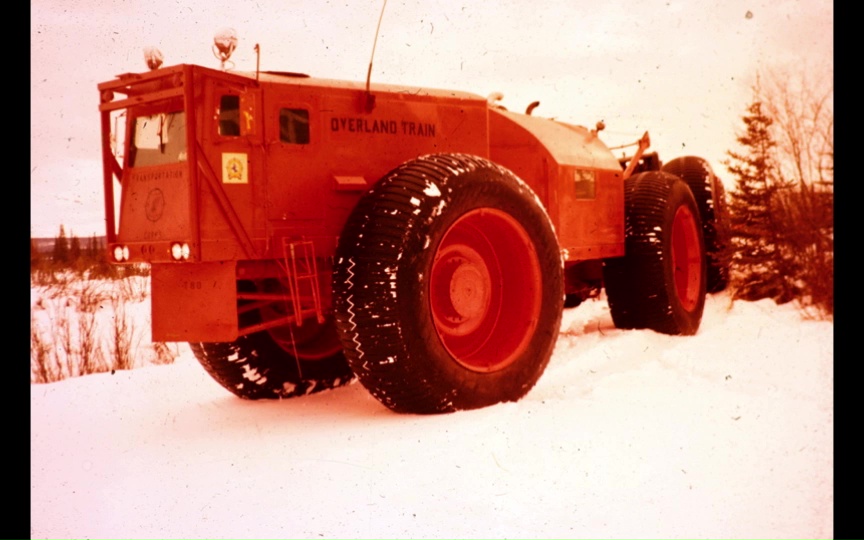
Image: Marty Martinez -
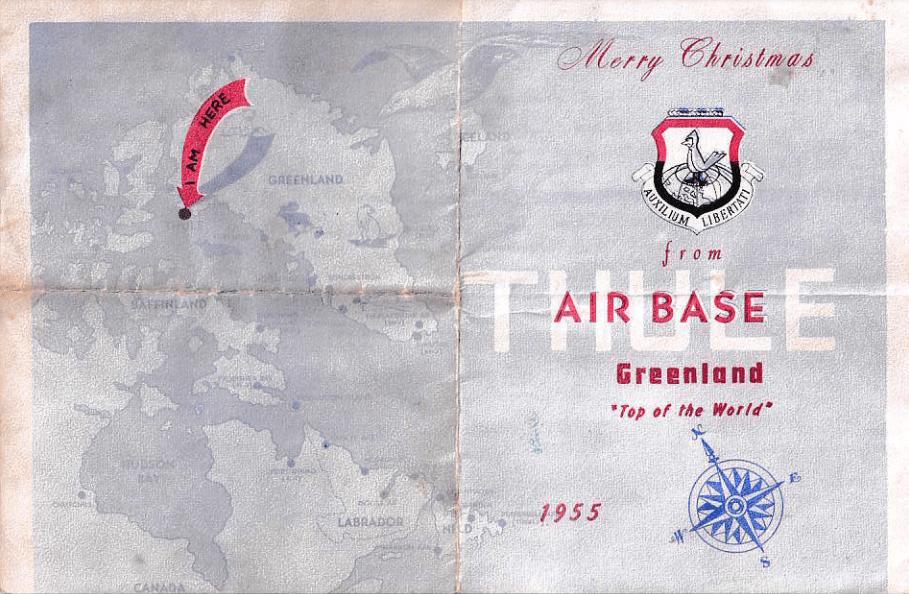
Thule Air Base Christmas Menu 1955
In 1955, Christmas dinner looked and felt a little different for Air Force Service Members at the “Top of the World.” The menu included Shrimp Cocktail, a relish tray, roast young turkey, Virginia baked ham, Christmas candies, coffee, tea, and milk. Something that you won’t typically see on a Christmas menu are cigars and cigarettes. Thank you to Jackie for sharing your father’s small piece of history with me. Jackie’s father spent 27 years in the United States Air Force. He was stationed in Thule Air Base during Christmas, 1955.
Thule Air Base, Greenland Christmas Dinner 1955 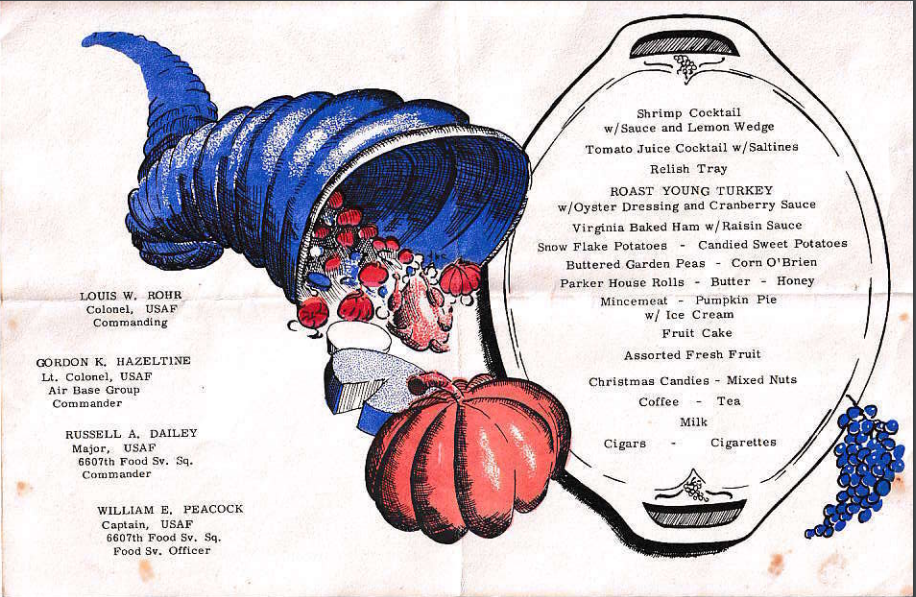
Thule Air Base, Greenland, Christmas menu LTC Louis W. Rohr, Commanding
-
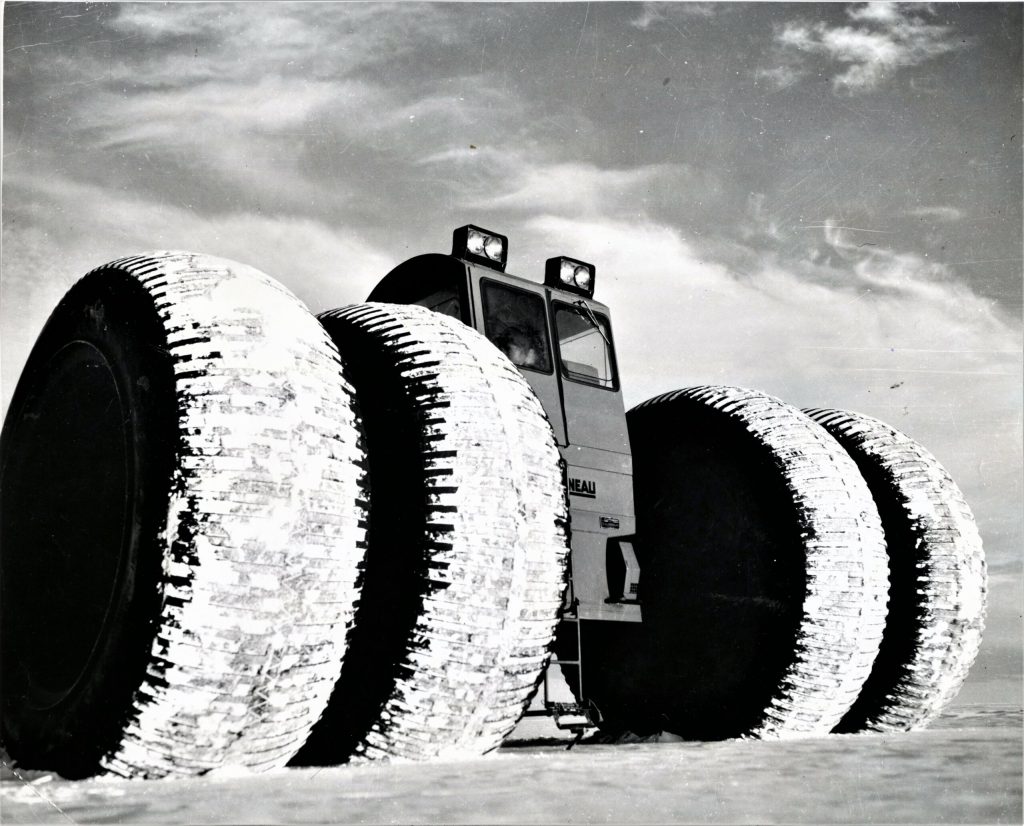
Sno-Buggy in Greenland
The TC-264 Sno-Buggy spent some time in Greenland testing out the HUGE Firestone 120x48x68s and a few unpowered trailers. It participated in tests as Camp Sierra and was driven by Nate Galbreath. Galbreath was assigned to the 9223rd Transportation Service Unit (Transportation Arctic Group). We know a great deal about the Sno-Buggy and its time in Greenland. During testing, R.L. and R.G. LeTourneau visited the testing areas and received valuable feedback that would eventually shape the Overland Trains we know today. R.L. kept a photo journal with original images and descriptions that very few have seen, which is part of why we have such a rich machine and storyline history.
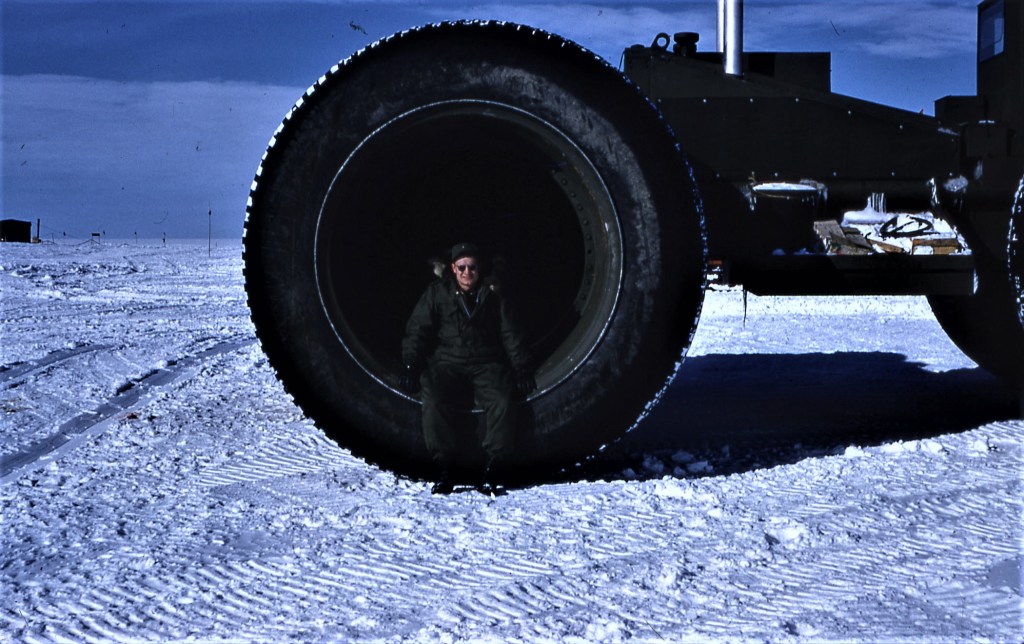
Nate Galbreath in Greenland, 1954. Image: U.S. Army, fair use. 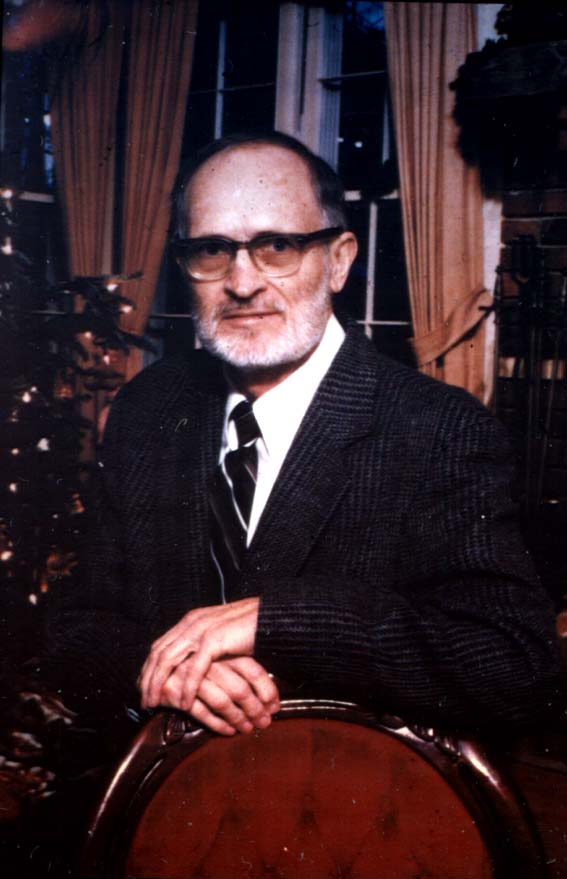
Nate Galbreath. Image: thule1954.com
Unlike many of R.G. LeTourneau’s machines, the Sno-Buggy was painted an olive, or drab green. With its dual tires on each of LeTourneau’s Electric Drives, it spanned 24 feet wide and was 27.5 feet long.
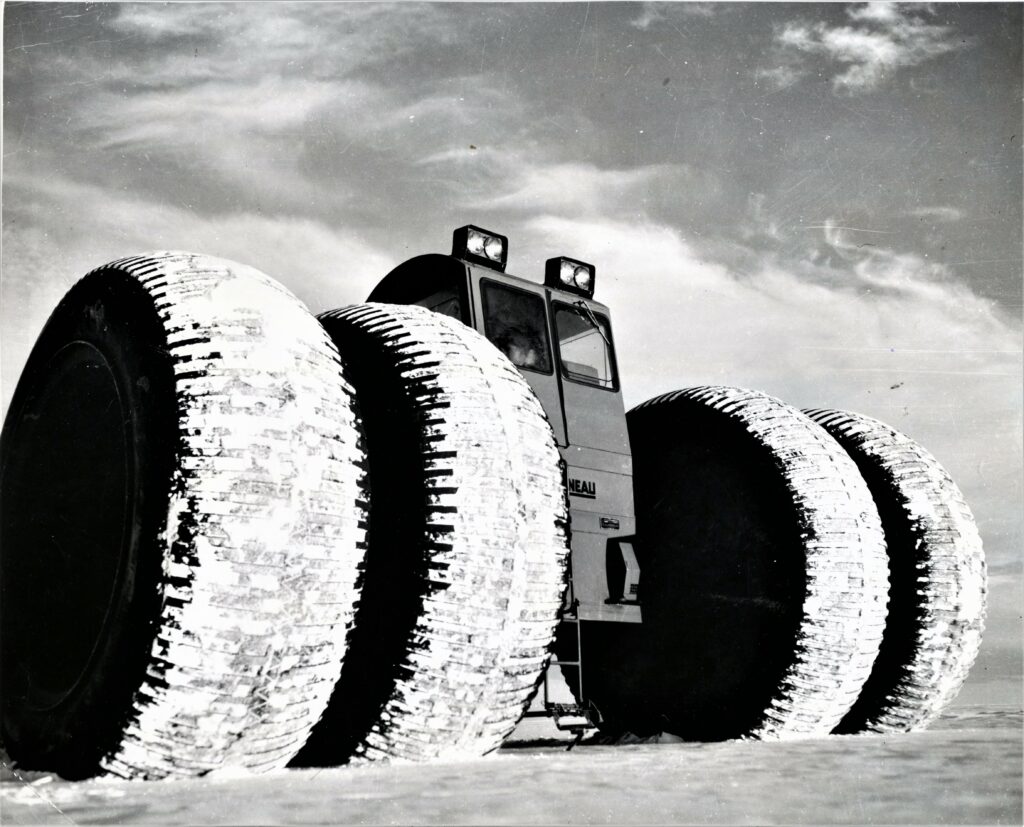
Experimental Letourneau Sno-Buggy, Greenland 1954 -
Studying Camp Century’s Toxic Leftovers
Camp Century was a United States military installation buried under the northwestern tip of the Greenland ice sheet. It was active from 1959 and quickly dismantled in 1967. In 1960, Camp Century received it’s electrical and heat energy from a Portable Medium-sized nuclear reactor, starting operations on October 3, 1960. It ceased operations the next year when Camp Century shifted operations to summer only. Camp Century was used for a wide array of experiments, from using the ice for fuel storage to determining if it was feasible to have a city under the ice. When Camp Century was abandoned, the Army left behind equipment, petroleum, oil and lubricants (POL), and other materials.
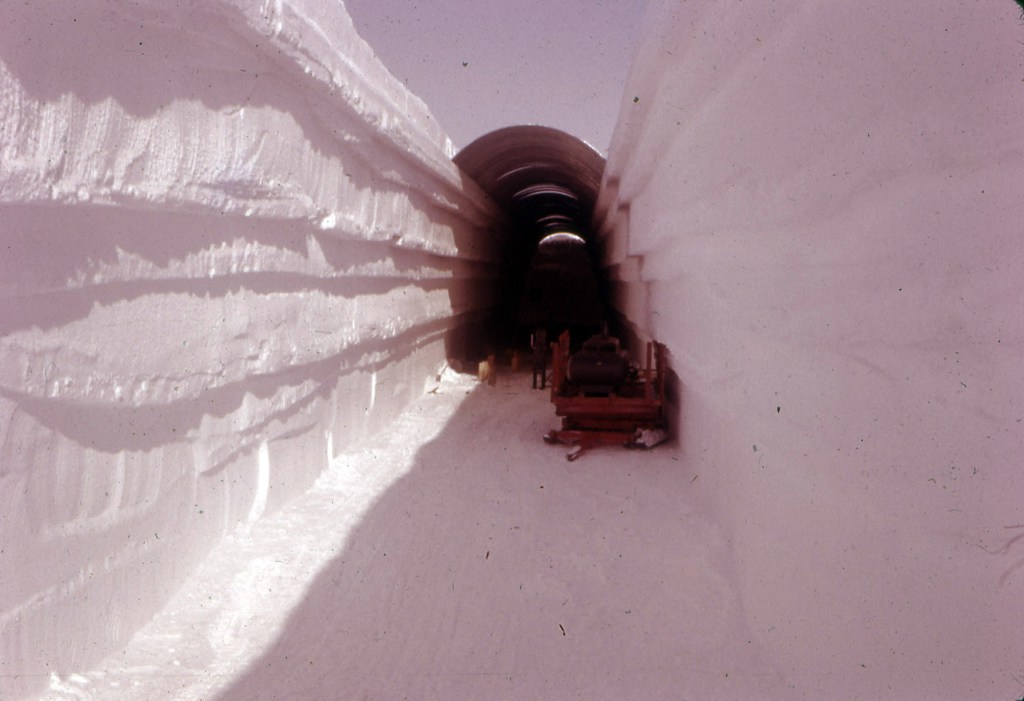
Building a tunnel under the ice at Camp Century. Image: Arnold Haynes. 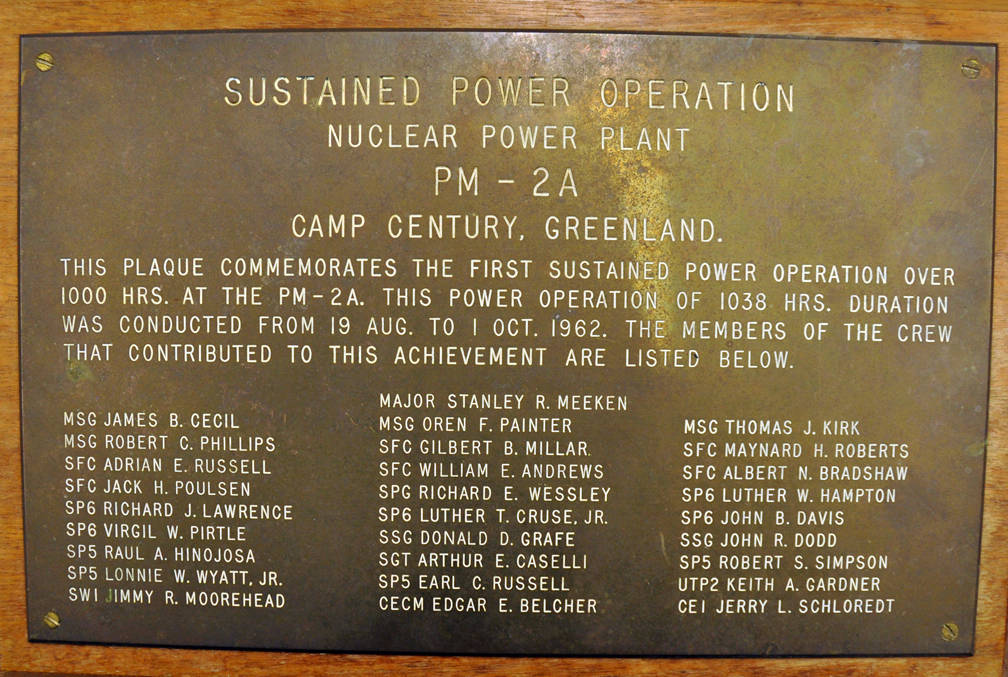
Camp Century Pm-2A plaque. Image: Office of History, HQ, U.S. Army Corps of Engineers 
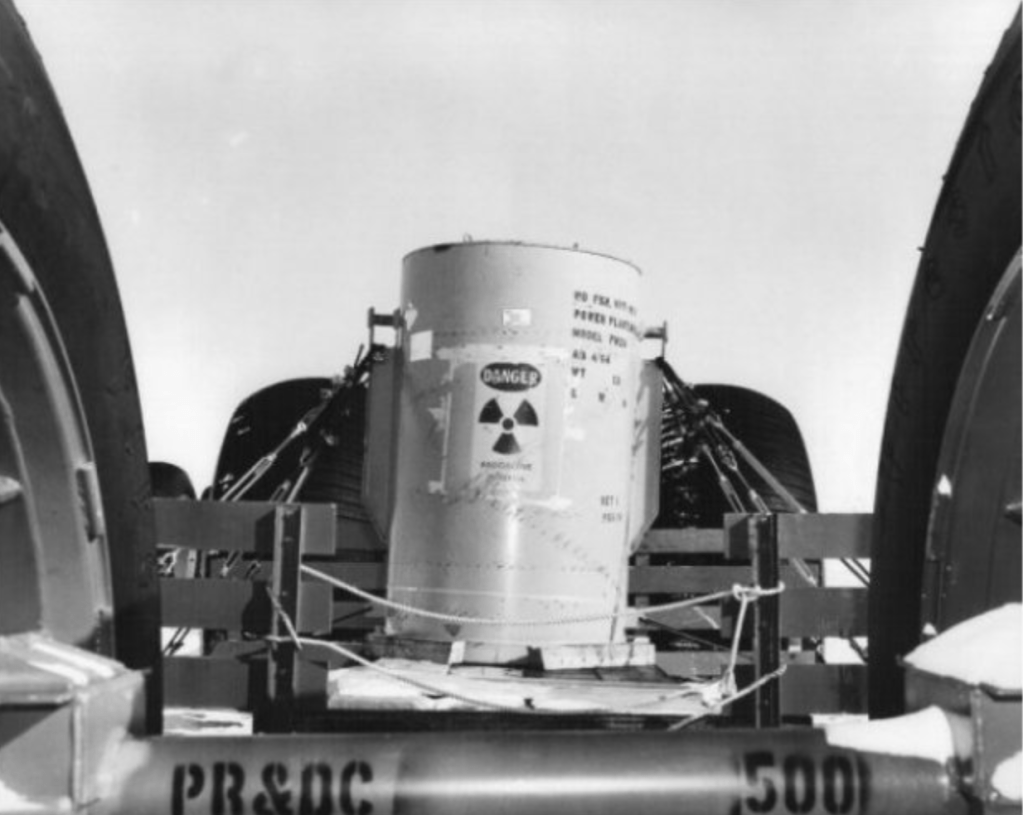
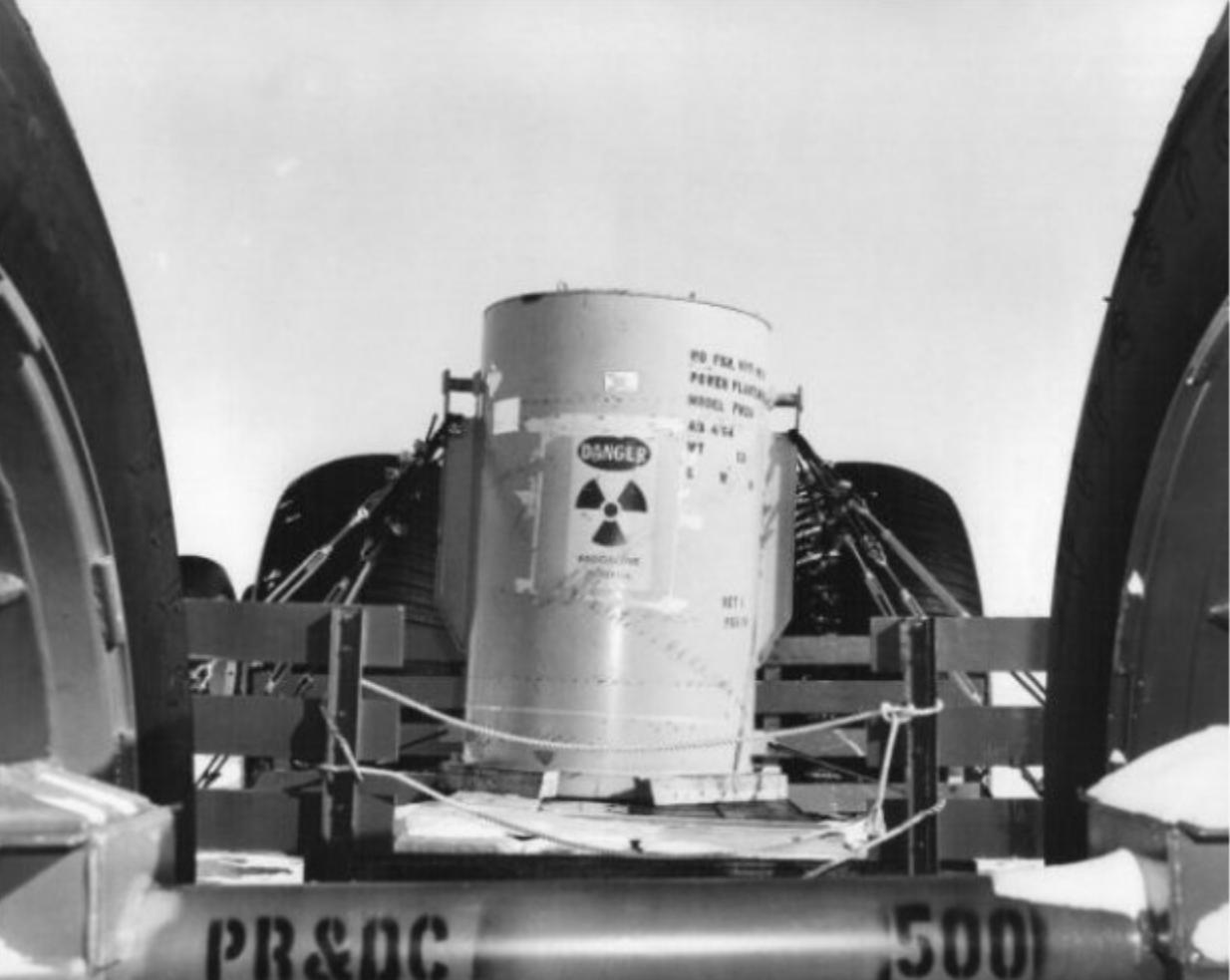
A 14-ton cask of nuclear material from Camp Century, May 1964. Image: Steffan Winther – The ThuleForum
In the summer of 2017, scientists at the Geology Survey of Denmark and Greenland (GEUS), lead by Project Manager William Colgen, headed up a project to understand the climate and snow cover at Camp Century (http://campcenturyclimate.dk/ccc). The nuclear material, POL, and other leftovers from Camp Century has scientists wanting to understand more of how glacial and water flows under the ice might transport these toxic materials. The report conclusion was the snow will continue to accumulate on top of Camp Century and meltwater will not reach the toxic debris field – by the year 2100, it will be buried under 190 feet to 209 feet of ice and snow. Read more about the project and data at http://campcenturyclimate.dk/ccc.
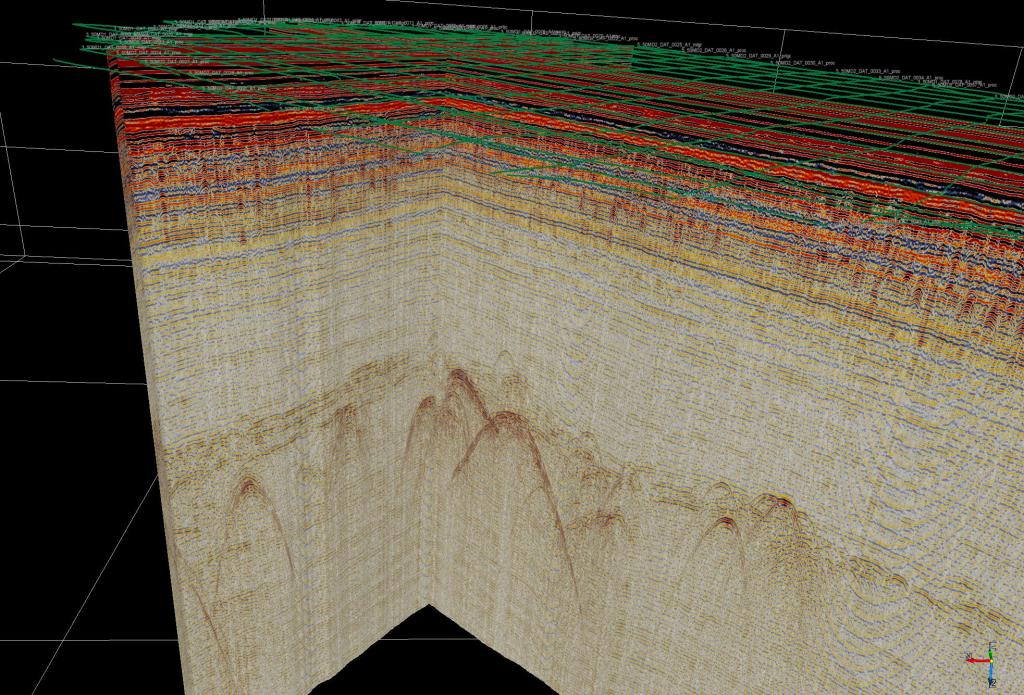
Ice penetrating radar showing Camp Century tunnel arches. Image: GEUS, http://campcenturyclimate.dk/ccc/news/2019_radarreport.html Research links from the project include:
Ice-penetrating radar survey of the subsurface debris field at Camp Century, Greenland – https://www.sciencedirect.com/science/article/pii/S0165232X18304671?via%3Dihub
https://dataverse01.geus.dk/dataverse/campcenturyclimate
Firn Evolution at Camp Century, Greenland: 1966–2100 – https://www.frontiersin.org/articles/10.3389/feart.2021.578978/full
Initial field activities of the Camp Century Climate Monitoring Programme in Greenland – https://geusbulletin.org/index.php/geusb/article/view/4347
New programme for climate monitoring at Camp Century, Greenland – https://geusbulletin.org/index.php/geusb/article/view/4415
-
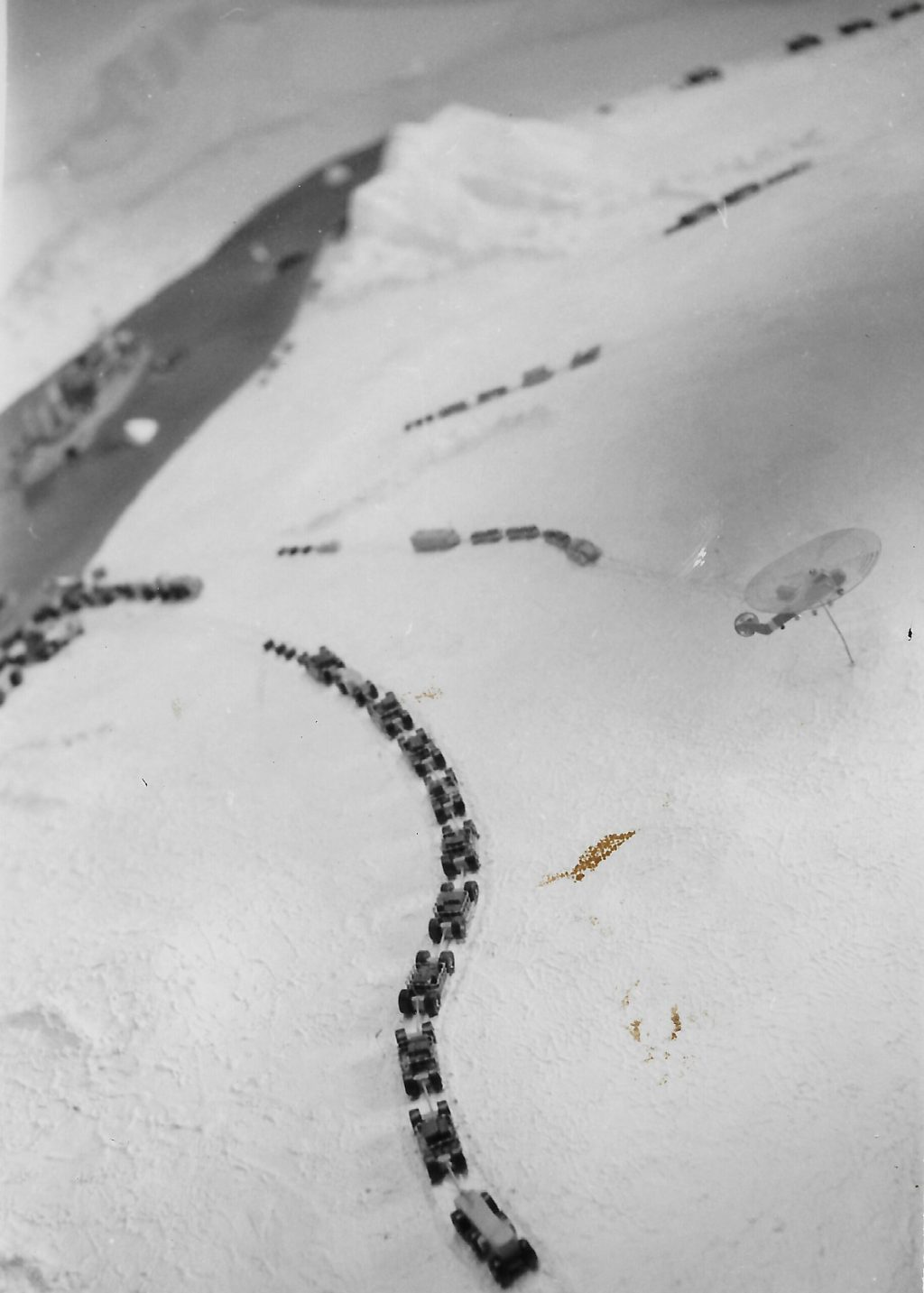
Arctic Scene with Overland Mark 2 Model
Last month I was contacted by a man who said that his father worked at R.G. LeTourneau’s Longview, TX factory. He went on to provide a fascinating story of his father’s birth country of Thailand and a Thailand Army Colonel – more on that in my book. The man included several images of the Overland Mark 2 (Mark 2) while it underwent testing at LeTourneau’s Longview factory. He also provided the image below of an Arctic scene with the Mark 2 in the foreground. In the model image below, the Mark 2 has 10 trailers and the control car leading the charge. It is difficult to say for certain, however there appears to be 4 Rolling Liquid Transporters, or RLTs trailing the Mark 2. These were trailers with very large, balloon-like tires designed to carry fuel. The remaining scene shows a ship (top-left) with a helicopter (middle-right), and what appear to be swings, or vehicle convoys, in the middle and top-middle.
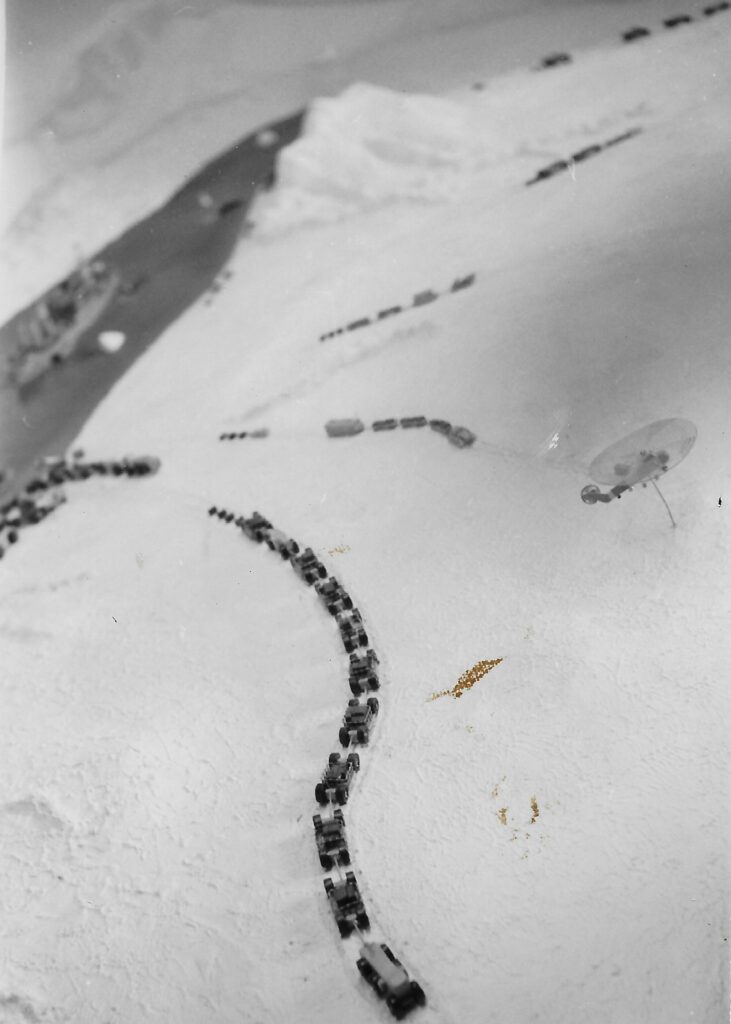
Arctic Scene with Overland Mark 2. Image Virothai “Vic” Vessakosol 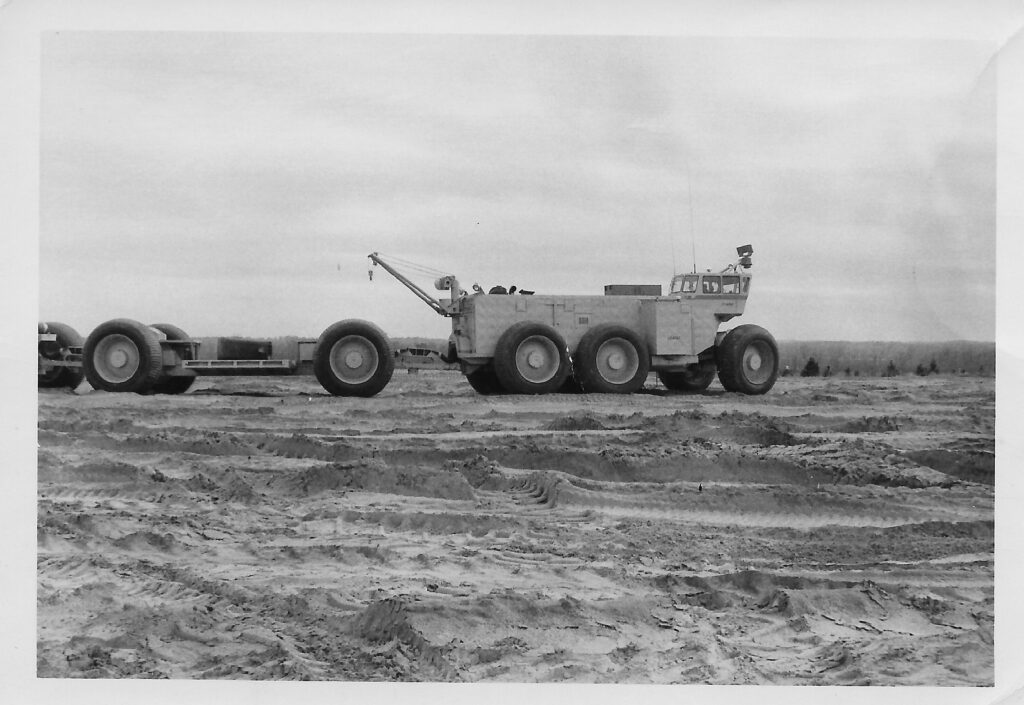
Overland Mark 2 in Longview, TX. Image Virothai “Vic” Vessakosol -
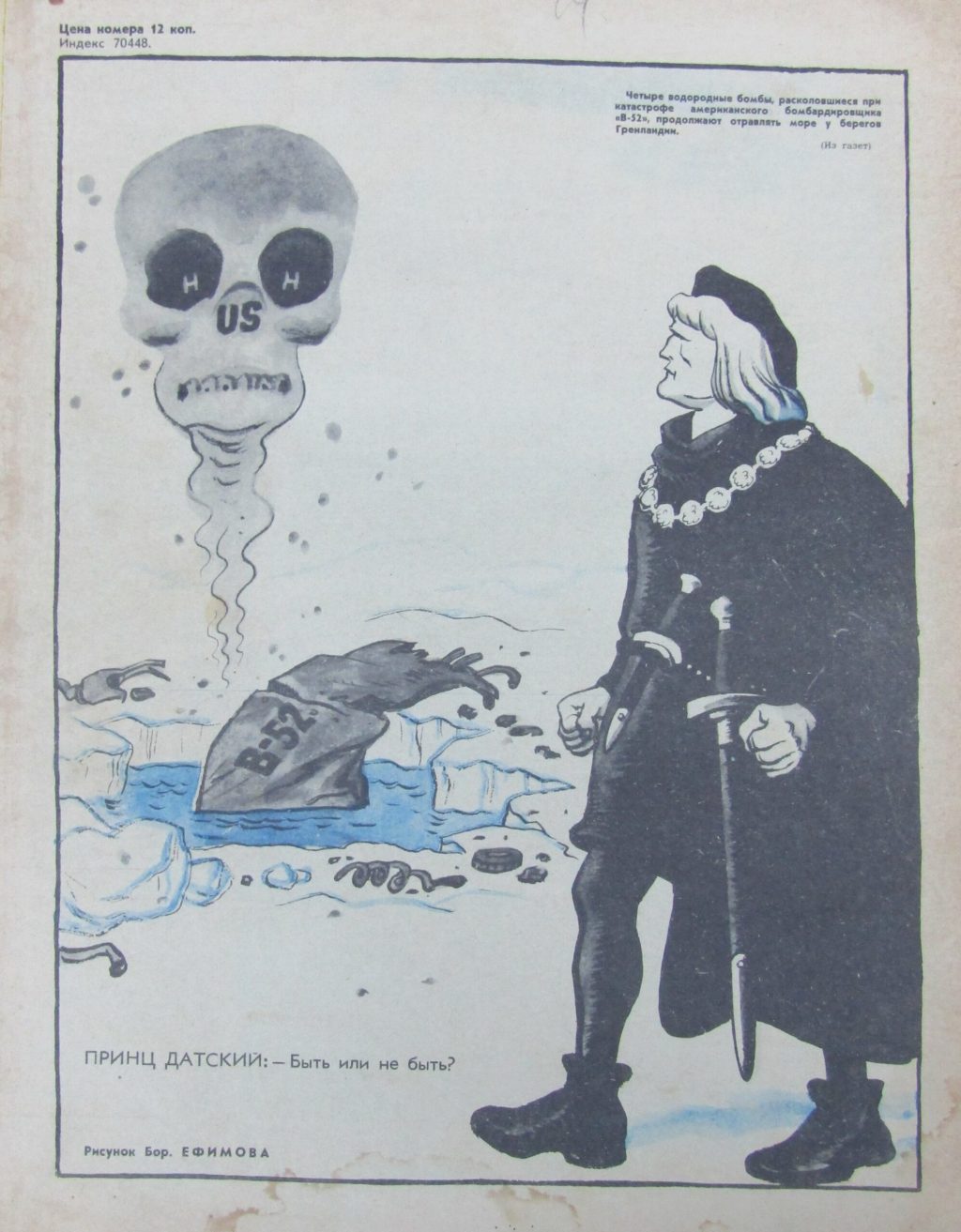
1968 Thule Air Base B-52 Crash Depicted on “Crocodile”
The Russian humor/satirical magazine “Crocodile” began publishing in 1922. During the United States Greenland build-up, the Soviets were watching us closely. Their Moscow Millie radio propaganda broadcasts knew intimate details about the service members that were at the base. For example, the broadcast would call out service members by name and state the hut number where they bunked. Investigators into information leakage at Thule Air Base never revealed their findings. It was assumed that the more than 8,000 individual contractors that helped build the base were leaking information to the Soviets.
In the magazine below, the Soviet magazine “Crocodile” depicts the January 21, 1968 crash of an American nuclear B-52 bomber. The crash was caused by a a crew member placing seat cushions in a heater vent, which later caused a fire onboard. The smoke became so thick that the pilot lost visibility and it crashed. Unknown to the Dutch, the United States had been conducting flyovers with nuclear bombs. The B-52 bomber crashed on the northwest corner of Greenland – Wolstenholme Fjord. 6 of the 7 crew escaped by parachute before impact and the subsequent fire. The fire broke up the hydrogen bomb’s fissionable nuclear material and leaked radiation into the fjord, contaminating the surrounding waters. Russian translation are in the captions. Thank you for the translation Irina. “Crocodile” ceased publication in 2008.
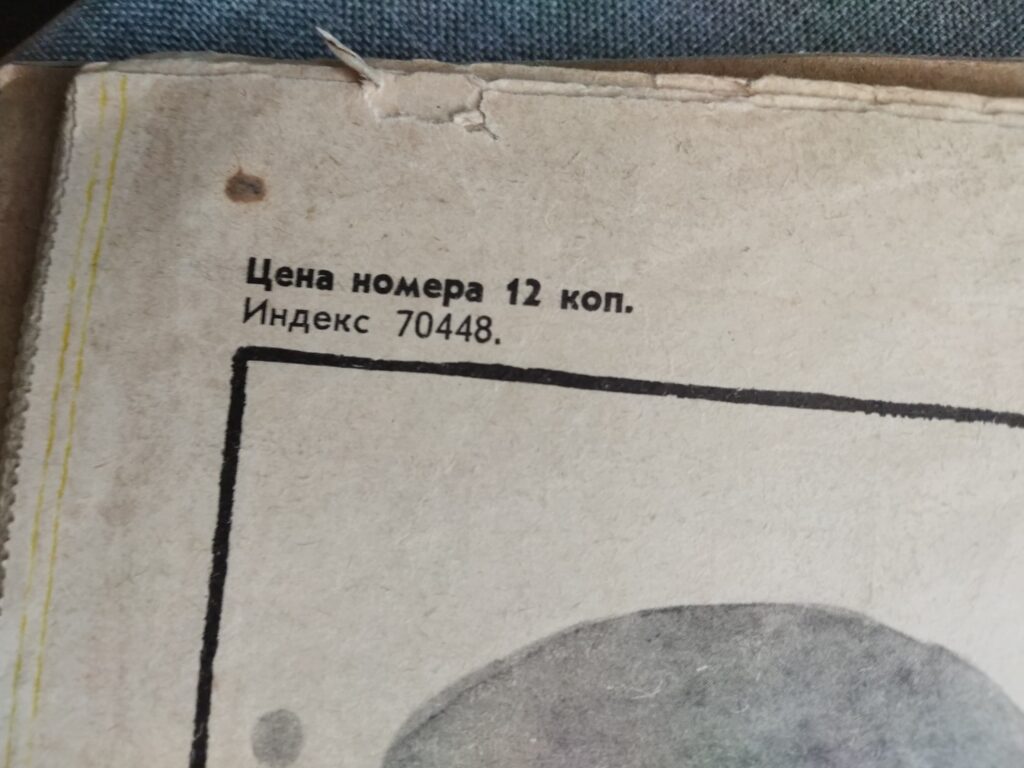
The price of the issue is 12 cents – kopeek are similar to American cents. Index 70448 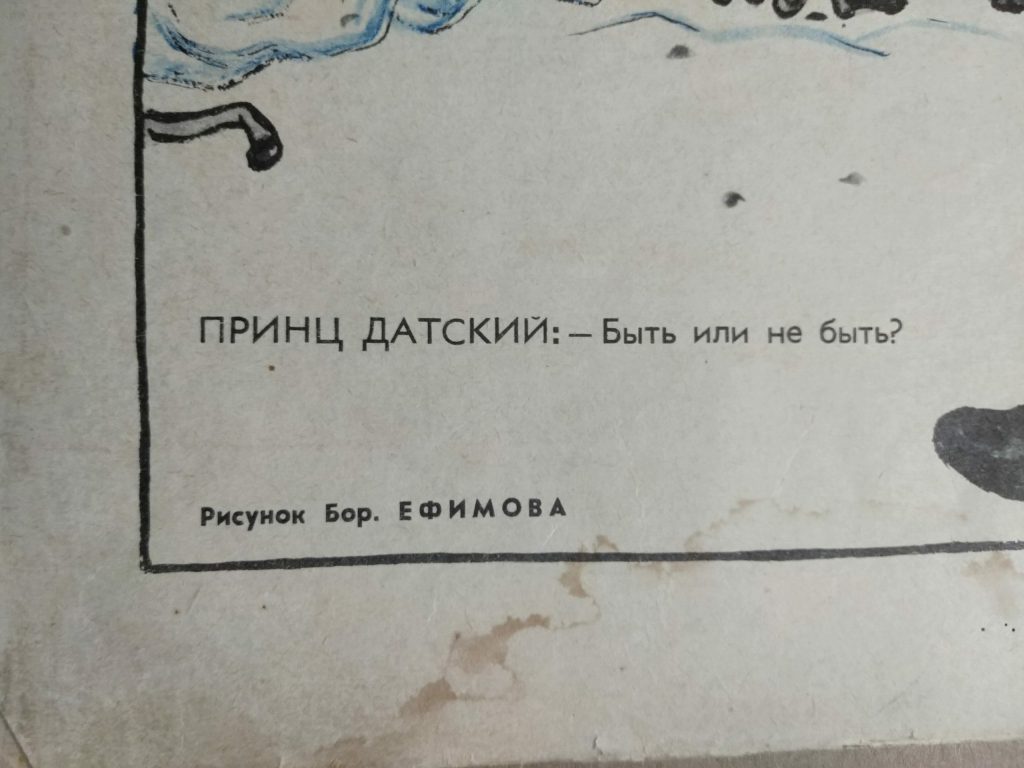
Dutch Prince: “To be or not to be” Drawing by Bor. Efimov 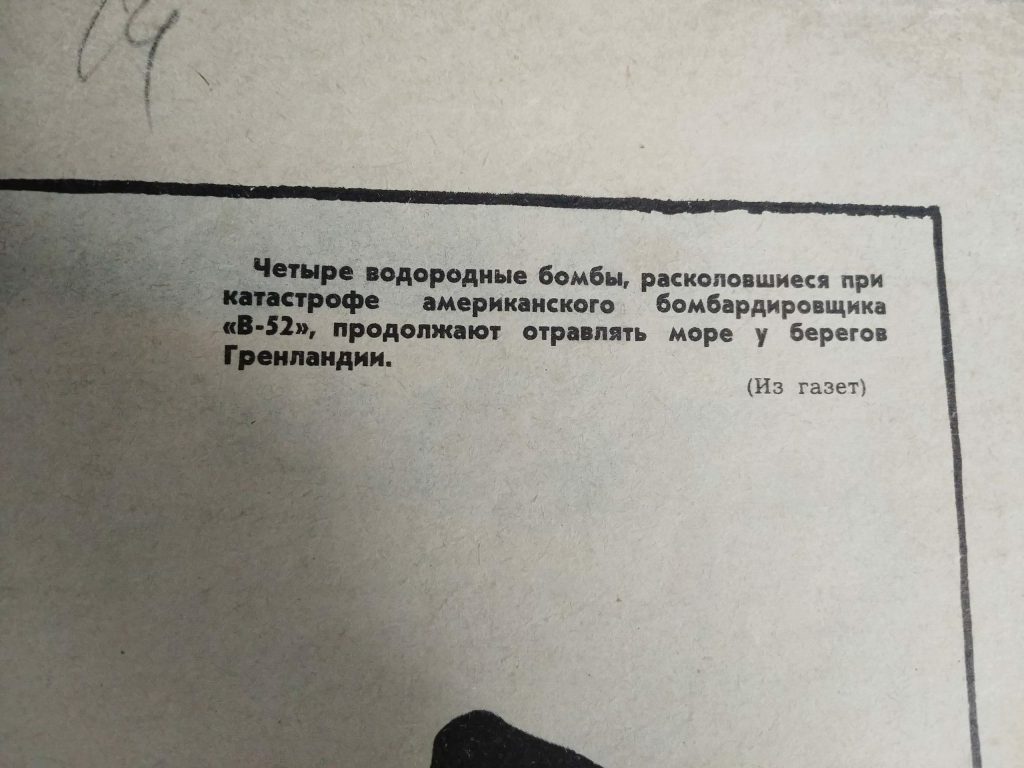
Four hydrogen bombs, that were broken and opened up upon the crash of American “B-52” bomber, continue to poison the see at the coast of Greenland.
Close-up of the three text areas on the magazine back page 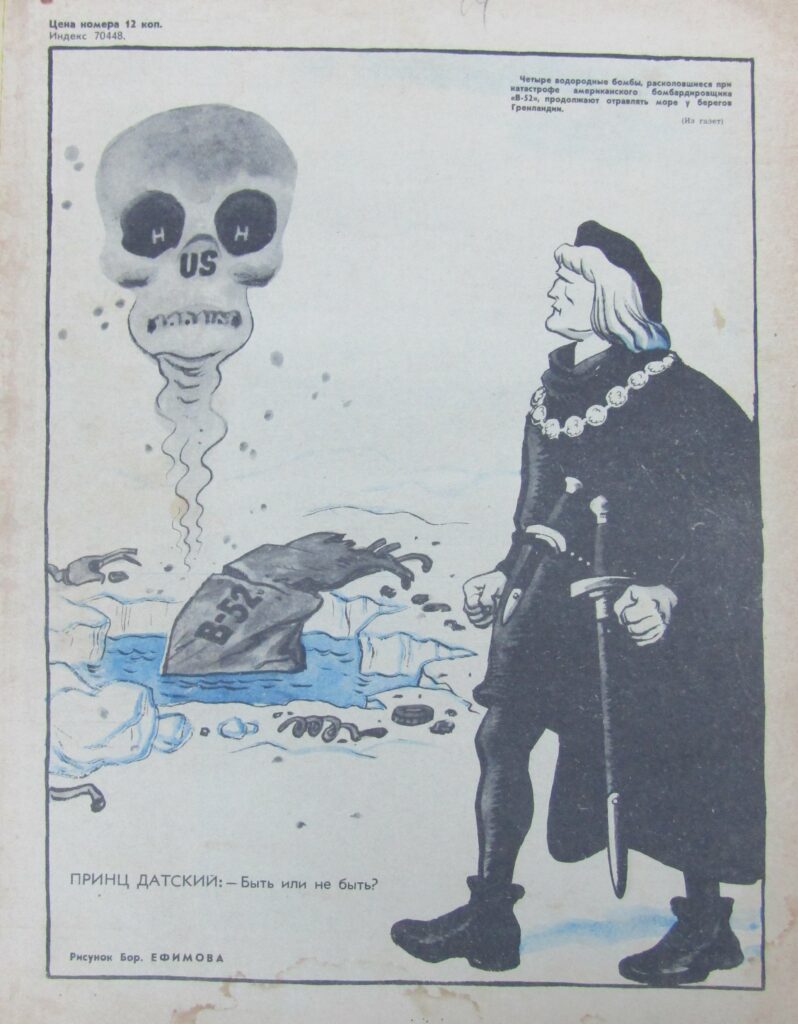
Jens Zinglersen and Jim Calhoun are the only two living members of the United States Air Force EOD SAC team that had the responsibility to find and recover, whatever that was left of the 4 hydrogen bombs. The B-52 crashed with 4-MK28 hydrogen bombs 11 kilometers west of Thule Air Base. The rescue and recovery took 9 months. Jim Calhoun retired as a Chief Master Sergeant after 20 years of service.
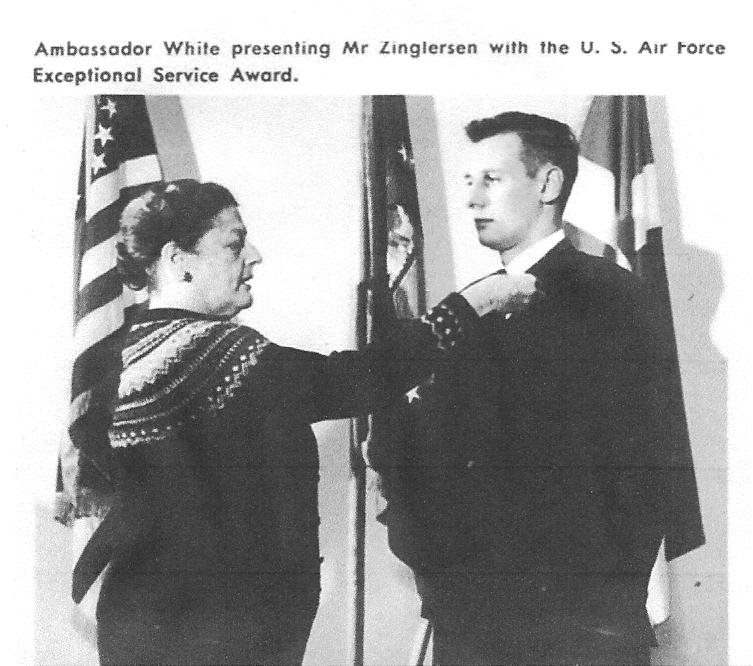
Jens Zinglersen receiving the Exceptional Service Award by Ambassador White. The Prince depicted above is the Soviets depiction of “HAMLET.”
-
The Sno-Freighter’s Final Re-Supply Mission
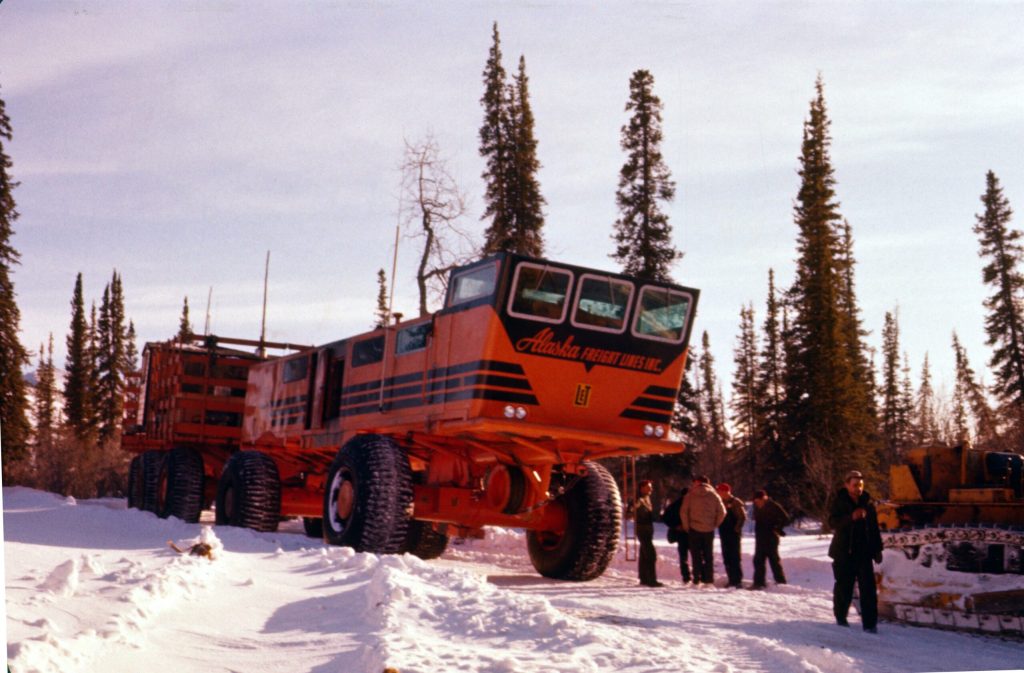
In the spring of 1956, the Sno-Freighter was on it’s last DEW Line resupply mission. The Sno-Freighter did not travel alone on these re-supply missions. It typically convoyed with 3-5 Cats as it traversed the 400 mile road that Alaska Freight Lines had built.
The two images below were captured on the same re-supply route, but at different points in the journey.

The man standing directly in front is Maurice Ivey, April 1956. Image: Millen Collection 
April 1956, men unknown. physical print
The image below shows the same point in time, but a different angle. Notice Maurice standing in the khaki colored jacket and tan shoes with his back turned to us. Shortly after this photo, likely that night, the Sno-Freighter would jack-knife and catch fire, ending Alaska Freight Line’s DEW Line resupply mission.
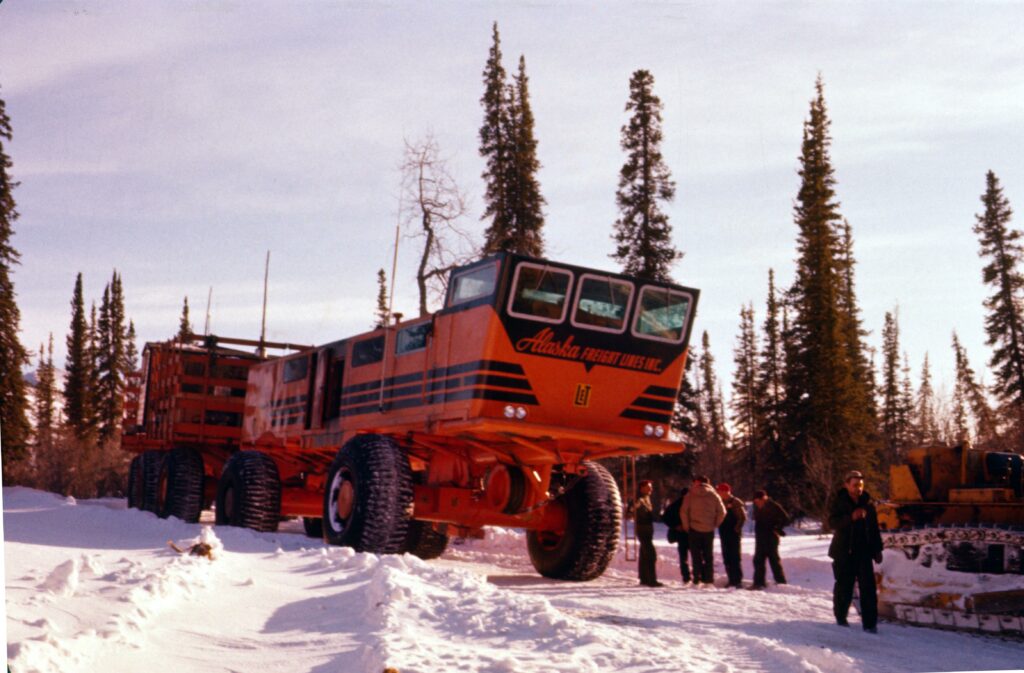
Sno-Freighter in April 1956. Image: Millen Collection
 Overland Trains