Category: Book updates

  • Sno-Train Driving with Lights and Writing Update

    Sno-Train Driving with Lights and Writing Update

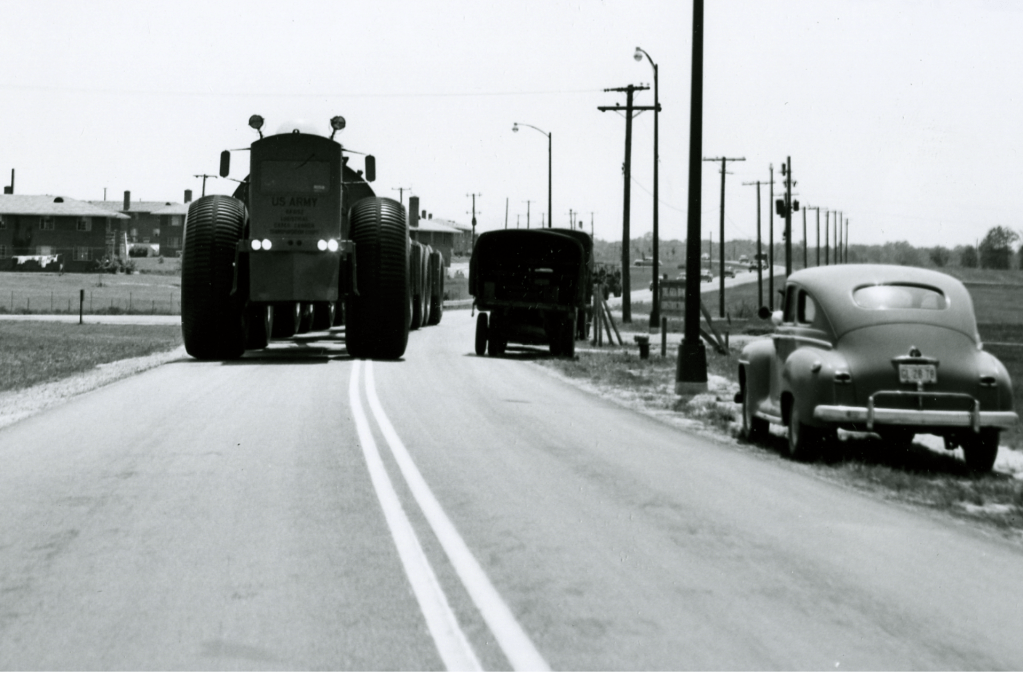
    Imagine driving down the road and seeing this machine taking over part of your lane. You bet that you are going to get over!
    Writing has slowed over the last two weeks. I have been moving from Tacoma, WA to Gig Harbor, WA. It is time to get back to work! With the move comes an upgrade to my office environment. The Overland Trains book is now in full swing, as I have some space to write and a new large monitor to really deep dive into the materials. Next month, I will be traveling to visit a historian that has been helping me with research and conversation. Without him, this book would not be possible. I will be posting updates during the trip.
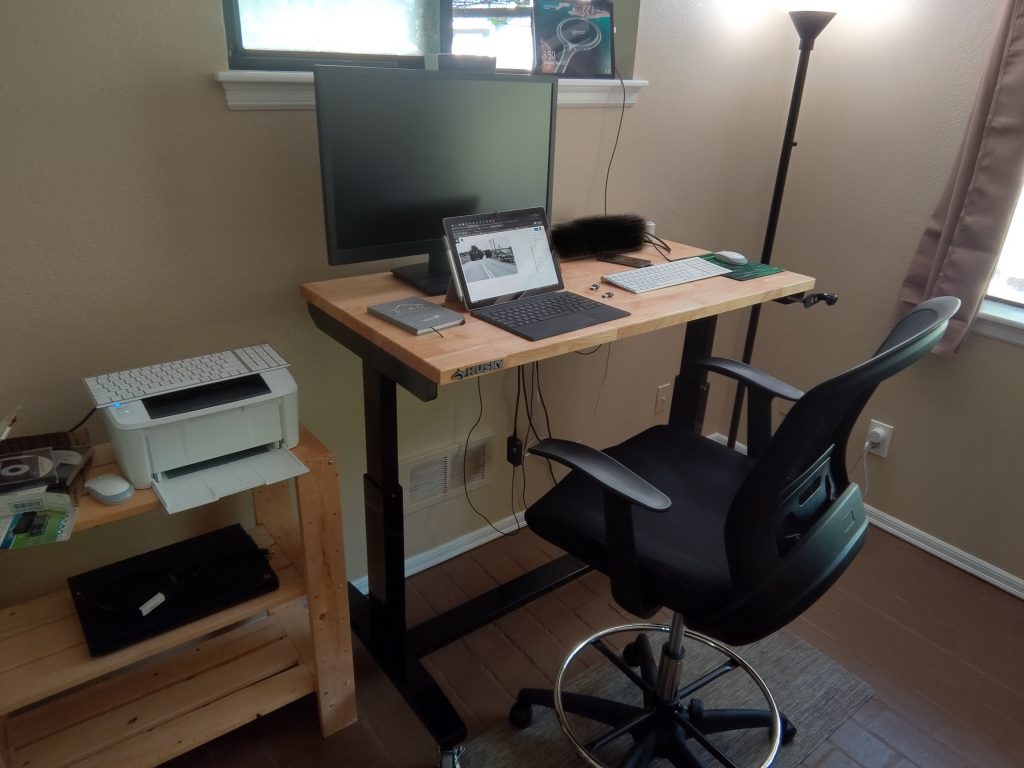
    my office where I am writing the Overland Trains book
  • Moving with the Overland Trains

    Moving with the Overland Trains

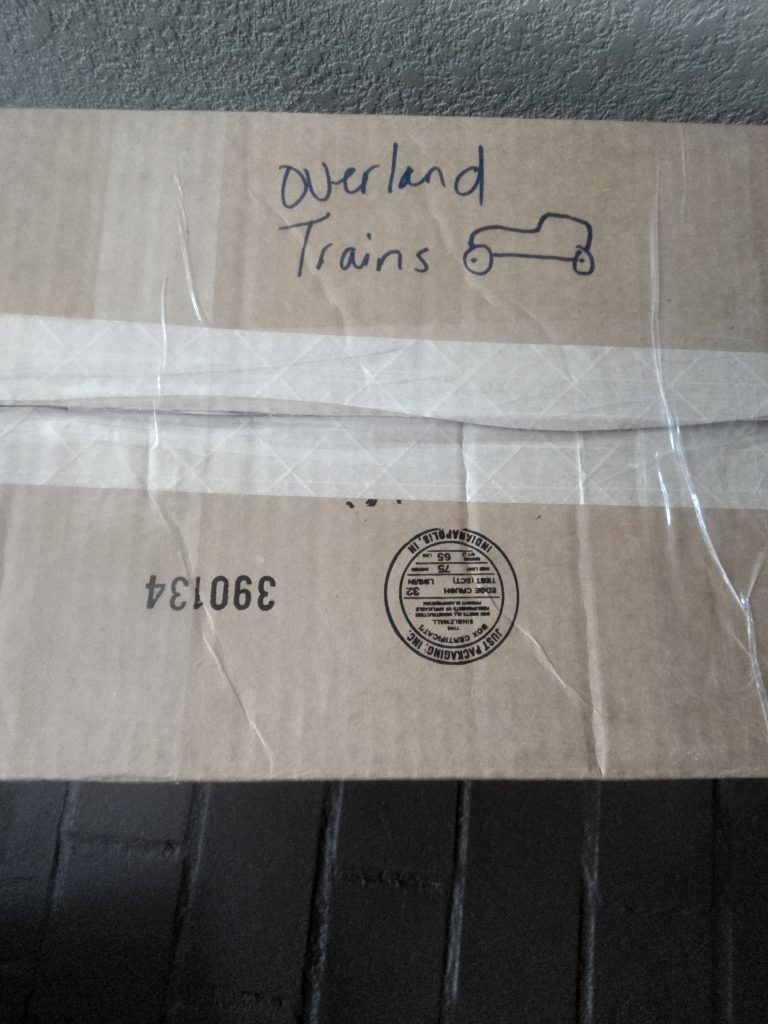
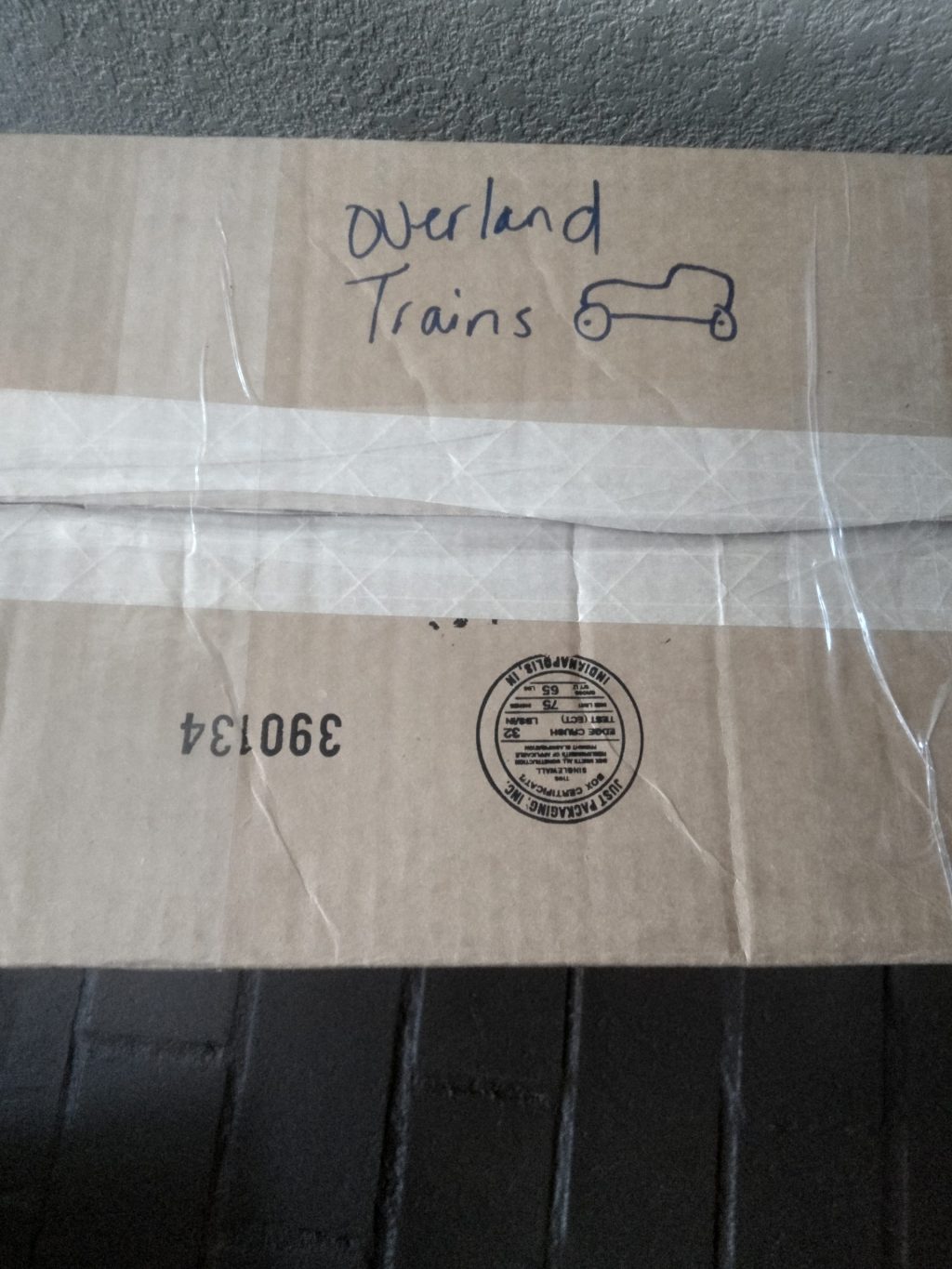
    The last couple of days were spent moving my wife and I to a new home in Gig Harbor, WA. As I started to unpack this morning, I noticed that my box labeling and Overland Train drawing skills need some practice. Back to work on Monday…

  • Working on the Sno-Train Chapter

    Working on the Sno-Train Chapter

    For the most part, I work on some aspect of the book every day. Some days my actual job, the one that sustains my life, will burn me up and I won’t have the energy to work on it during the evening. Last night, I spent some time working on the Sno-Train. This machine is one of the top two popular Overland Trains. It traveled the most and was engaged in the most field based testing.

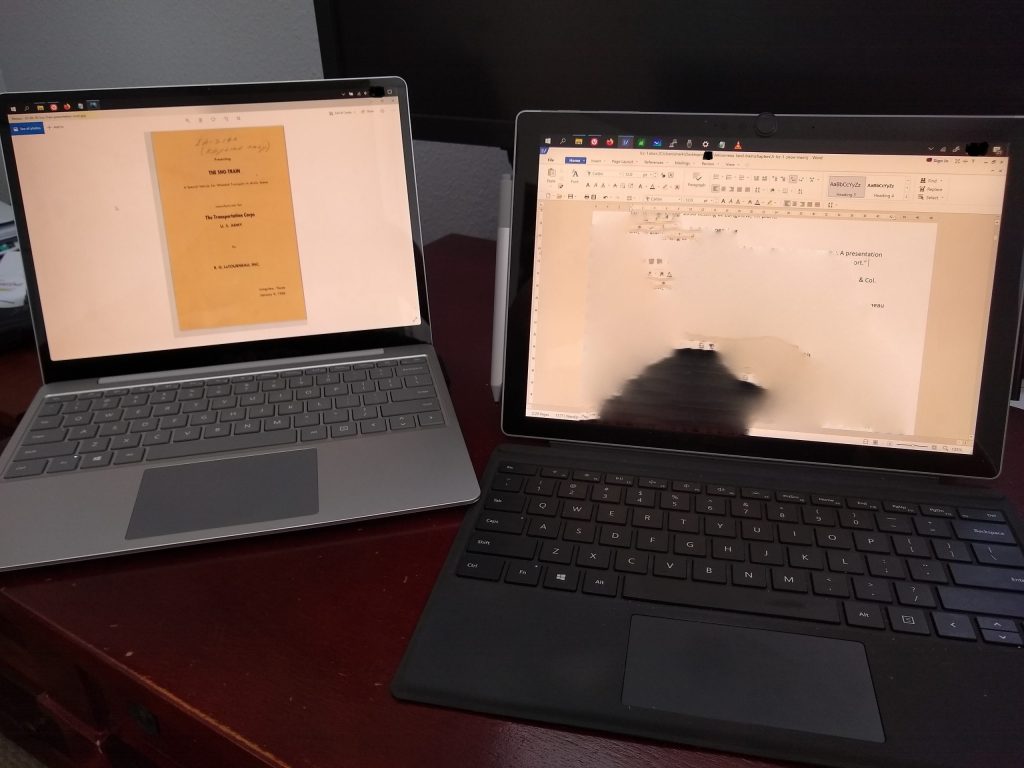
    Writing the Overland Trains book has been much more of an undertaking that I previously thought. As I dug in and started talking to folks, the storyline just kept getting deeper. In the image below, you see both of my laptops that I use for writing. On the laptop to the left, I am working on reviewing “The Sno-Train” demonstration pamphlet. It contains images and details on Train usage and attending military dignitaries.

  • The Overland Train MkII (TC-497) with Power Car

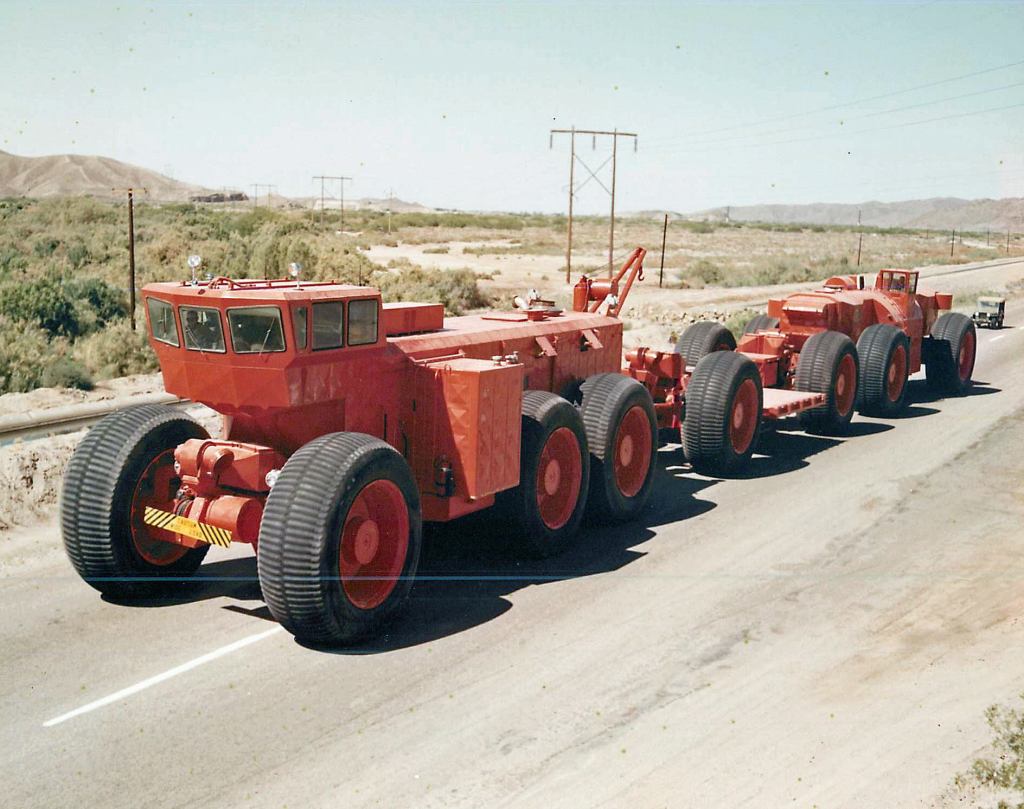
    The Overland Train MkII (TC-497) with Power Car

    Below, the Overland Train MkII rolls along with a Cargo Car and Power Car in Yuma, AZ. There is no backstory for this image and the source is unknown. This week was largely spent working on the TC-497 chapter. Phase I of the Army’s contract for R.G. LeTourneau, Inc. to create the Overland Train, was to build out the preliminary design. Using data from the Sno-Train (LCC-1), LeTourneau engineers worked out the gaps and started work on the machine you see below.

    source: unknown.
  • Scanning: Overland MkII Summary Report December 28, 1959

    Scanning: Overland MkII Summary Report December 28, 1959

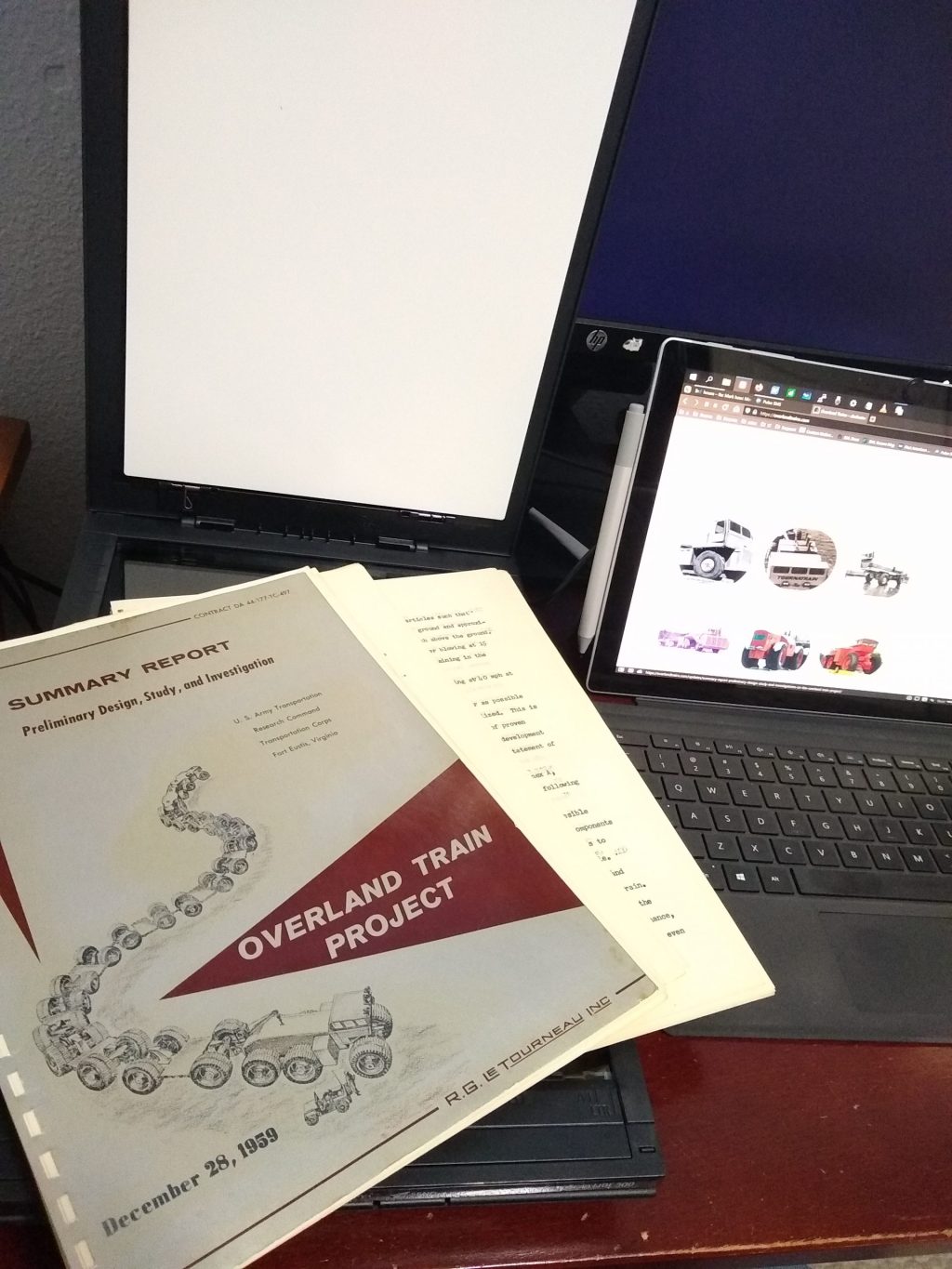
    I worked on scanning the Overland Mk II Preliminary Design, Study, and Investigation report this weekend. The report is unpublished and a one of a kind. Once scanned, it will be given back to the source and held on file at LeTourneau University. Until then, back to scanning!

    Read more about the Summary Report: Preliminary Design, Study, and Investigations on the Overland Train Project

  • Best Search Engine for Research

    I love research. Aside from the the satisfaction of completing a final project, digging deep into archival documentation provides a great deal of satisfaction. I have used a combination of Google and DuckDuckGo for most of my research. The problem with Google is that the search engine tailors your results according to your location, previous, search, and other personalized data.

    A few weeks ago, I gave StartPage (https://www.startpage.com) a try. StartPage anonymously queries Google for results without all of the aforementioned interventions. Almost instantly, I found a couple of amazing gold mines related to the Overland Trains book that I am writing. With that said, it is important to diversify your data search platforms.

    I have been extremely happy with StartPage. It finds really obscure results that even Google doesn’t provide because of built-in search biases.

  • Letter of Inquiry for Alfred P. Sloan Foundation grant

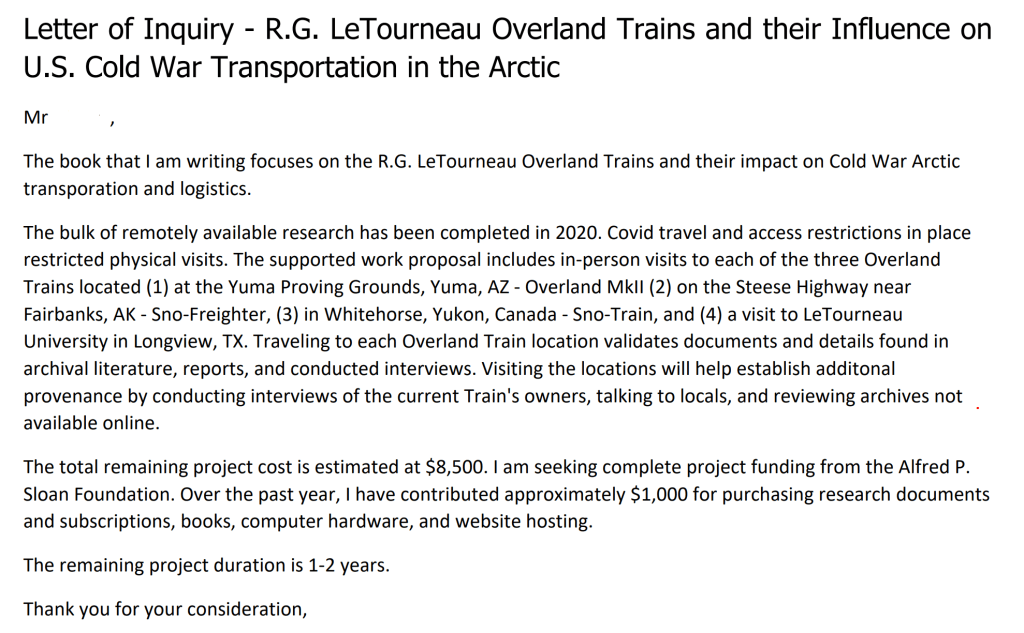
    I had intended on self-funding this project. The deeper that I get into the research and writing, I am realizing that the costs are quickly escalating. I applied for a grant through the Alfred P. Sloan Foundation for a small grants. As part of the application process, a Letter of Inquiry must be written to the program director. If approved, I would be given the green light to write a grant application. Here is the letter of inquiry that I wrote, minus the recipient name and the project participants.

  • Applying for a Grant through Alfred P. Sloan Foundation

    After reading Jon Gertner’s books, I realized that he used a grant from the Alfred P. Sloan Foundation to fund his Greenland endeavors. I have spent around a $1,000 so far on writing this book – research materials, online archive subscriptions, computer hardware, and website hosting comprise my current My plan is to visit the three remaining Overland Trains. Covid travel restrictions and funding have been the two pain points. I calculated that visiting the three remaining Overland Trains would cost around $7,000.

    I do not know if a grant is a long shot. As my old boss used to say, “The answer is already “no” if you don’t ask.” Thanks for that Fran!

  • What am I reading January 24, 2021

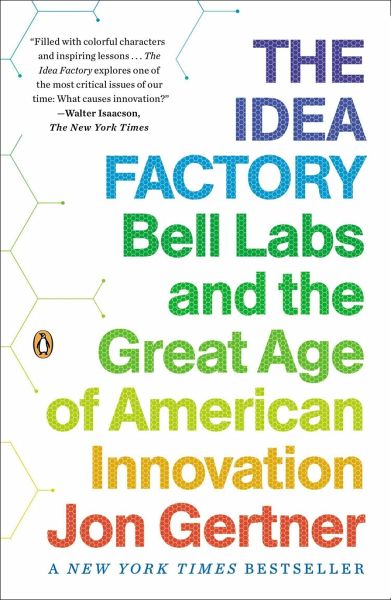
    Jon Gertner’s “The Idea Factory.” I just finished his most recent book about Greenland. His writing style and research depth provide a well-rounded and thoughtful read surrounding the topic. So far, The Idea Factory has lived up to my expectations.

  • Small Break for the Holidays

    I took a month long book writing break during the holidays. My day job has been demanding my full attention and I didn’t have the energy to conduct the research and writing after work hours. I have a tremendous amount of data to parse.

    How I organize data

    Whenever I find or receive new data, I place it in a folder for review. Once I read the information, I place it in one of my chapter folders to review at a later time. Each folder contains a Word document with the chapter contents. As I read through information, I write out the content in timeline order. I have assembled rough topical sections for each chapter. So far, most of the chapters are around 20 full pages, with the longest at 28 pages. Each page is only written content, single spacing, and no images. Images will be the last additions to the book.

    If you have questions about the book or my process, please get ahold of me at mark@nwlinux.com.