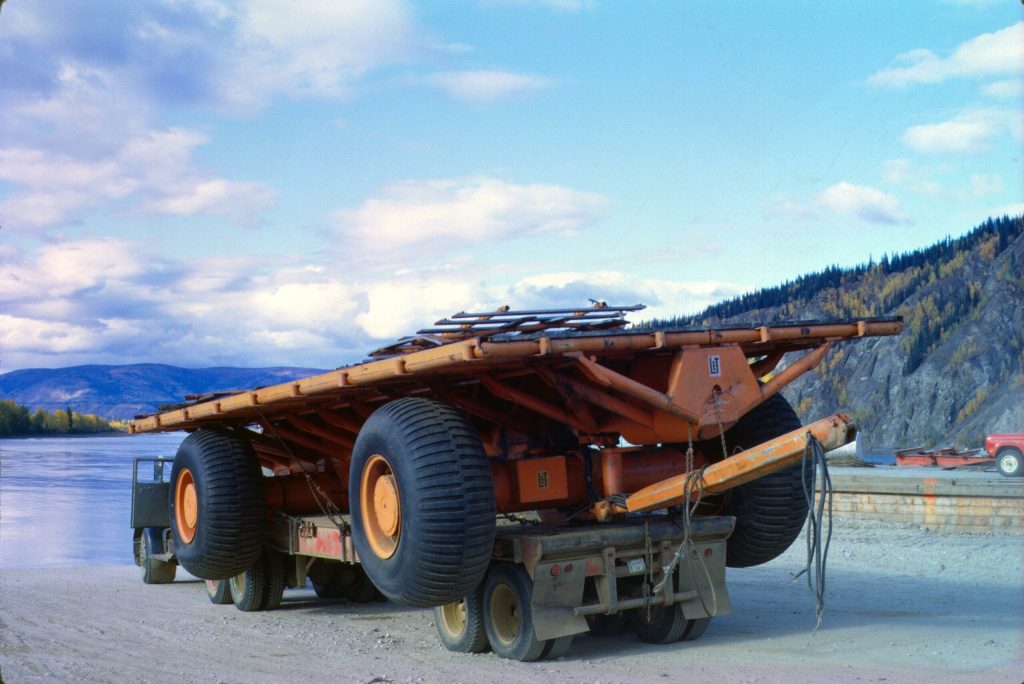
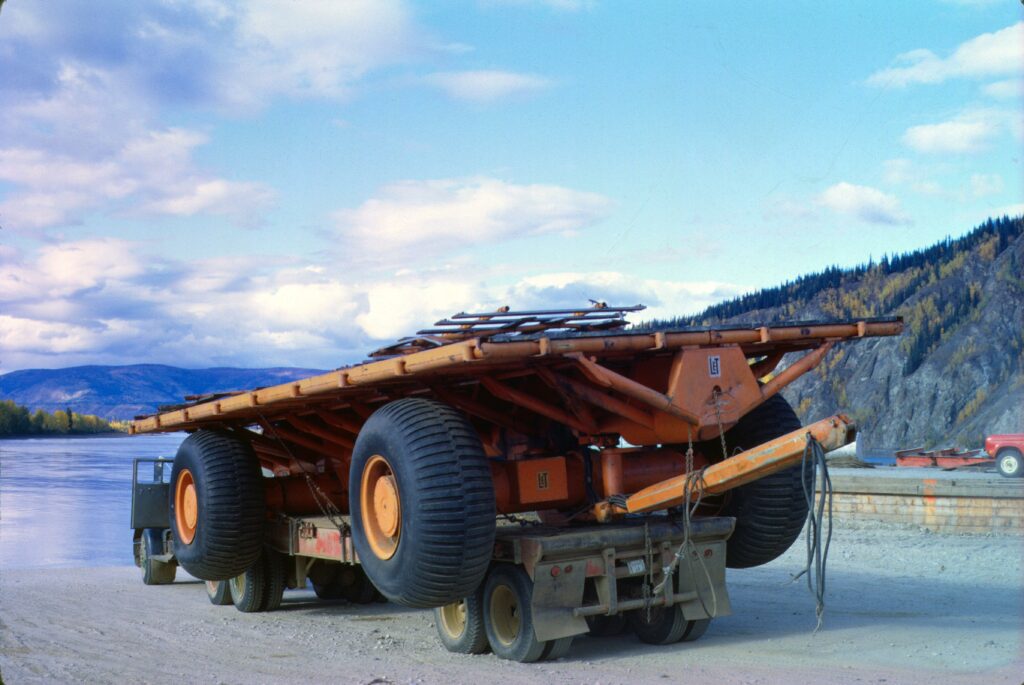
In October 1968, the Sno-Freighter and its trailers were being shipped out of the Yukon. The 5 trailers and Control, or Power Car were transported across the International line to Alaska by a local contractor. The equipment sat at Boundary for several years until it made its way to Miller Salvage in Fairbanks, Alaska. The Sno-Freighter and its trailers would reside in Miller Salvage until purchased by two Fairbanks locals.
One of the Alaska Freight Lines trailers preparing to cross the river. Image: Millen Collection
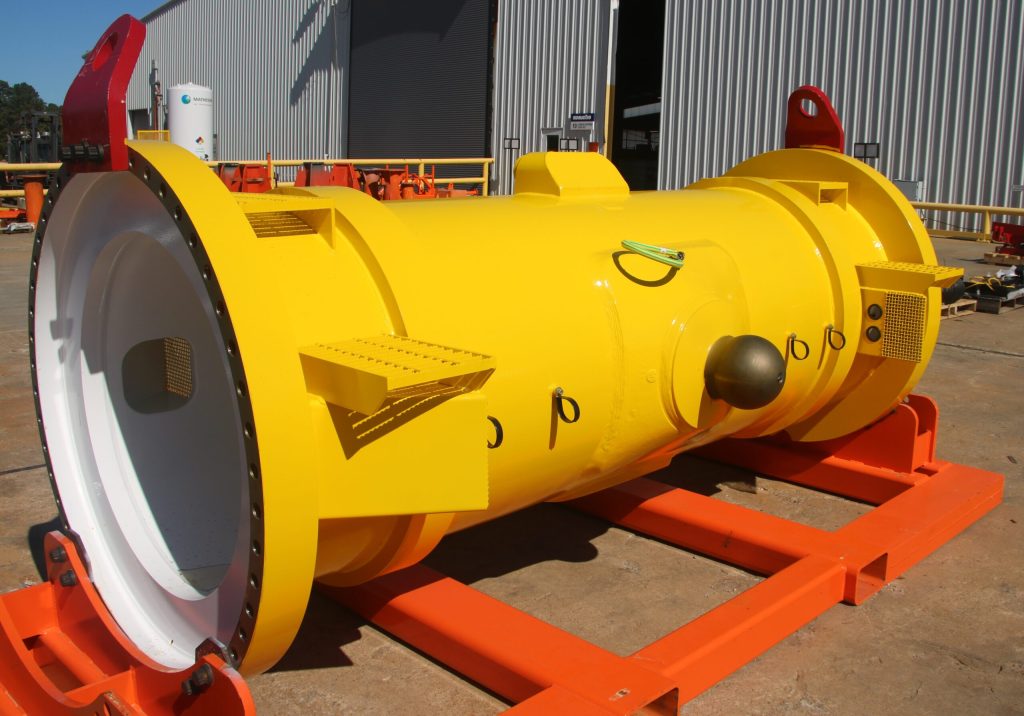
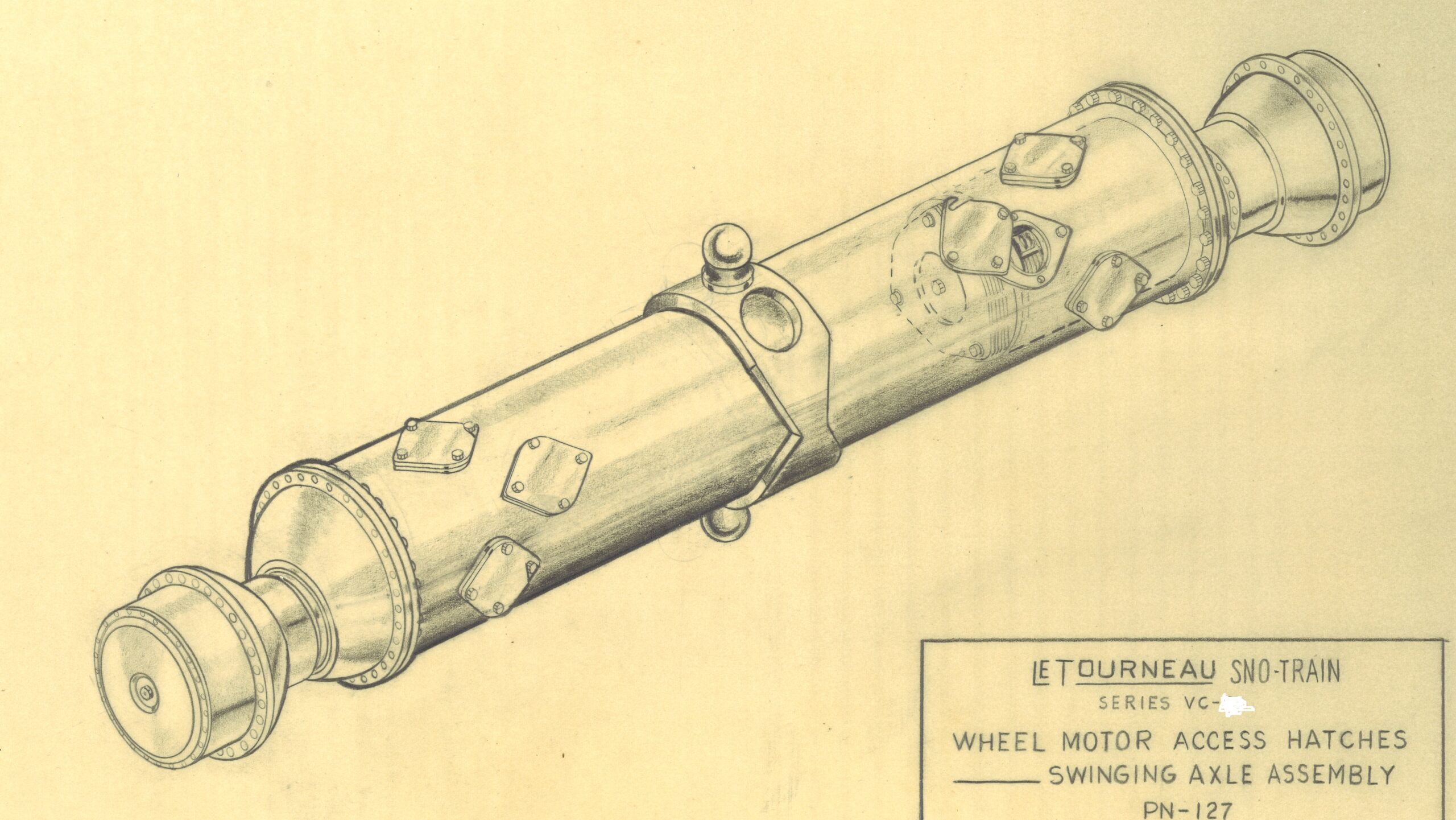
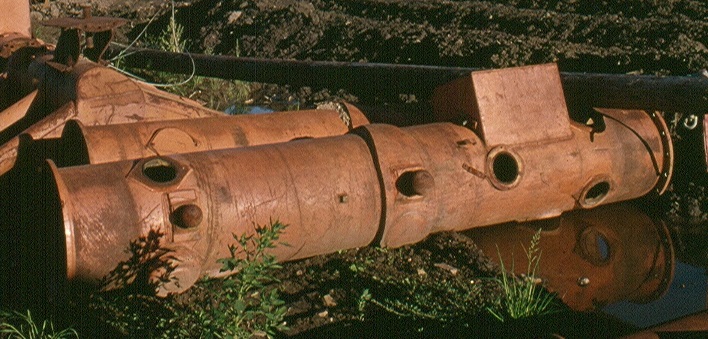
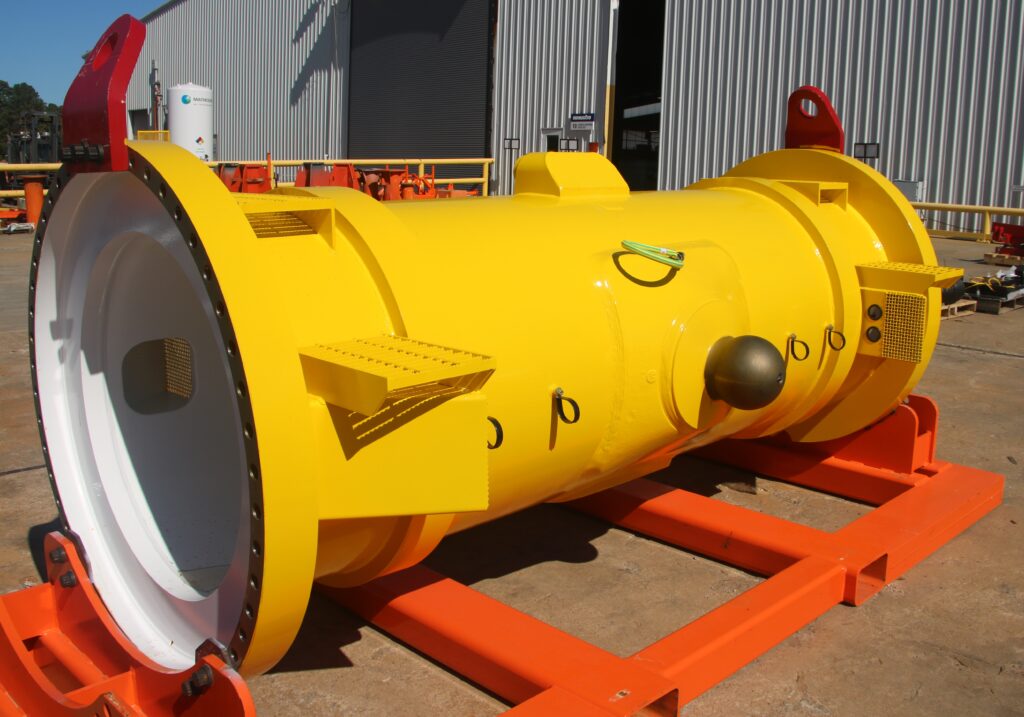
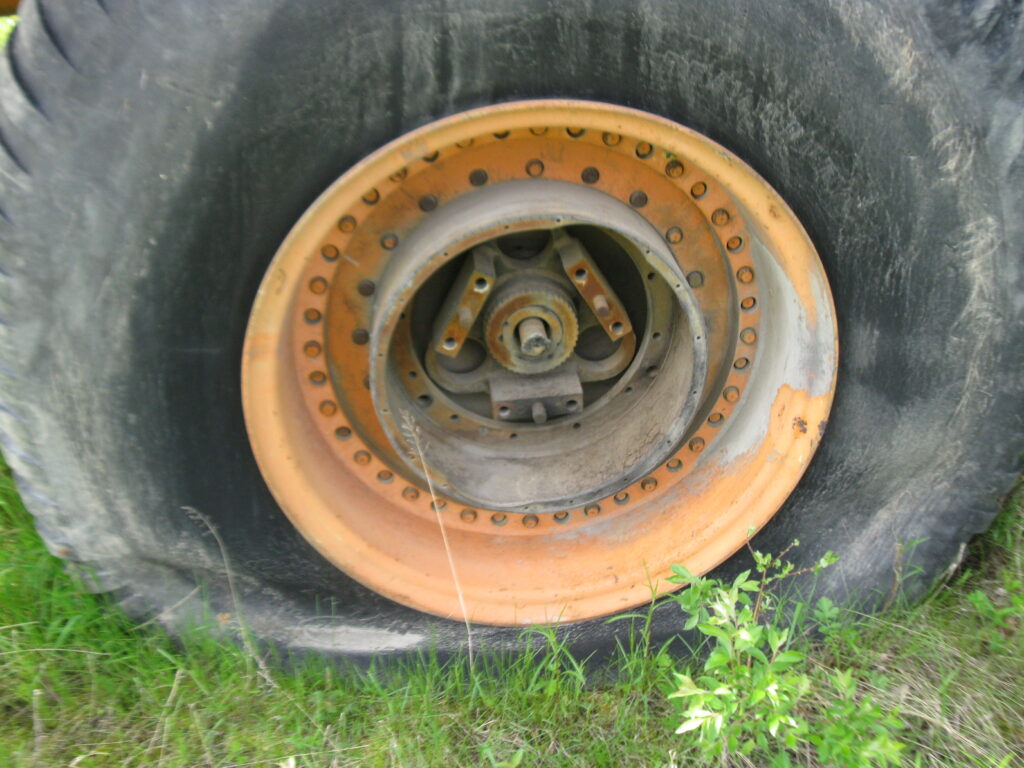
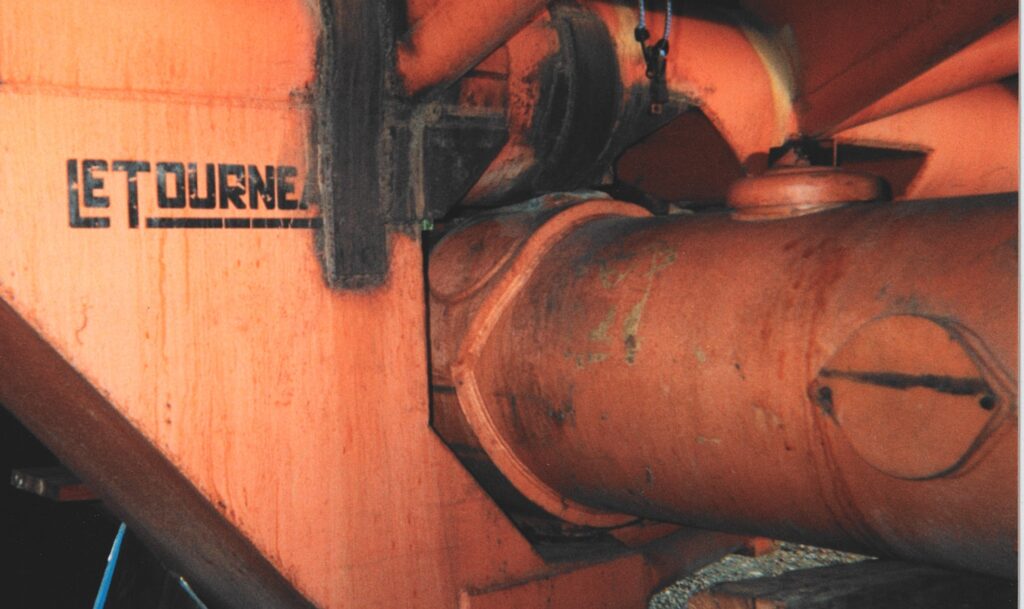
When Alfred Ghezzi purchased the Sno-Freighter for supply runs to the Distant Early Warning Line, he never realized that it would make just three working trips before coming inoperable. Over the last couple of months, I have been contacted by two individuals about suspension and steering mechanisms. I thought that I would go ahead and pre-emptively post these images of the Sno-Freighter swinging axle assembly and explain LeTourneau’s Electric Drive assembly. A LeTourneau built electric motor is bolted to the mechanical gear reduction called a Driver. The entire assembly is inserted into the swinging axle assembly. The axle assembly also had wheel motor access hatches. You can see in the assembly drawing below where the electric motor would be accessible by removing the small hatch cover.
Swinging axle assembly and electric drive drawing. While the drawing shows it is for the Sno-Train, the drawing listed here was for a VC-XX model not produced
VC-22 axle assembly. Image: Mike Haskins
The modern day swinging axle assembly with pivot balls. Image Dale HardySno-Freighter exposed Driver housing. Image Jeffrey Smoker.The pivot balls are on the top and bottom, hidden from sight. Image source unknown – for education purposes.
In the spring of 1956, the Sno-Freighter was on it’s last DEW Line resupply mission. The Sno-Freighter did not travel alone on these re-supply missions. It typically convoyed with 3-5 Cats as it traversed the 400 mile road that Alaska Freight Lines had built.
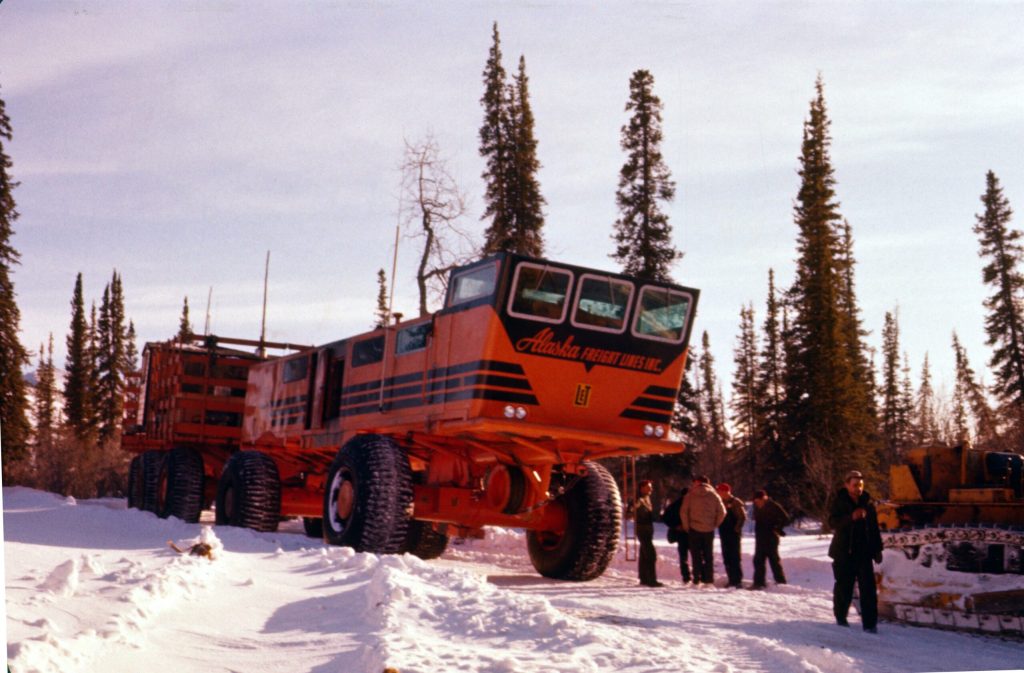
The two images below were captured on the same re-supply route, but at different points in the journey.
The man standing directly in front is Maurice Ivey, April 1956. Image: Millen Collection
April 1956, men unknown. physical print
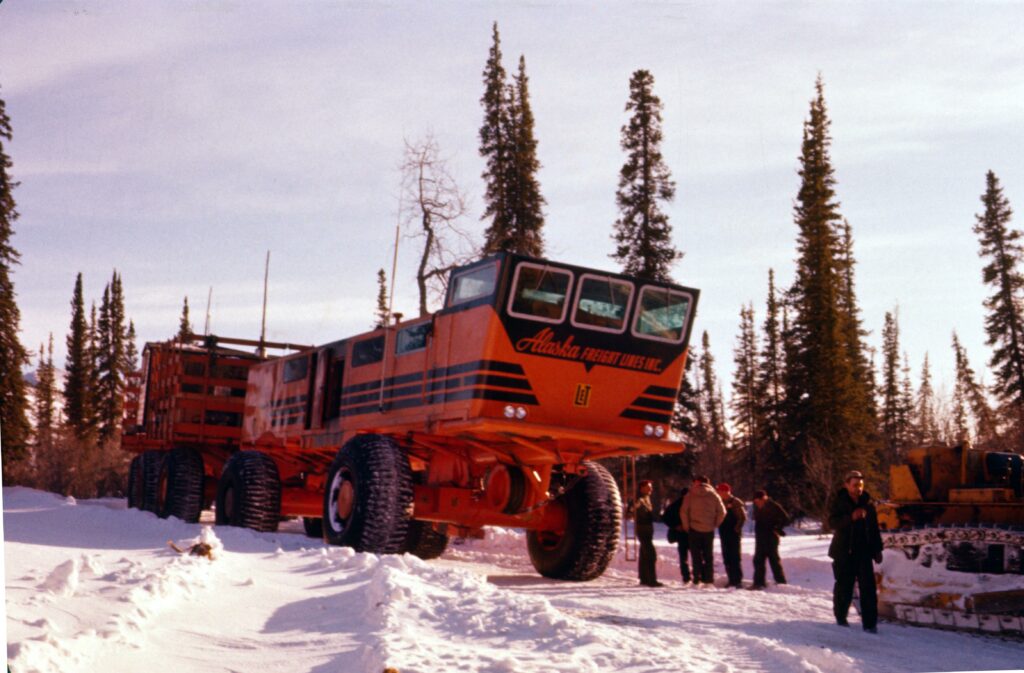
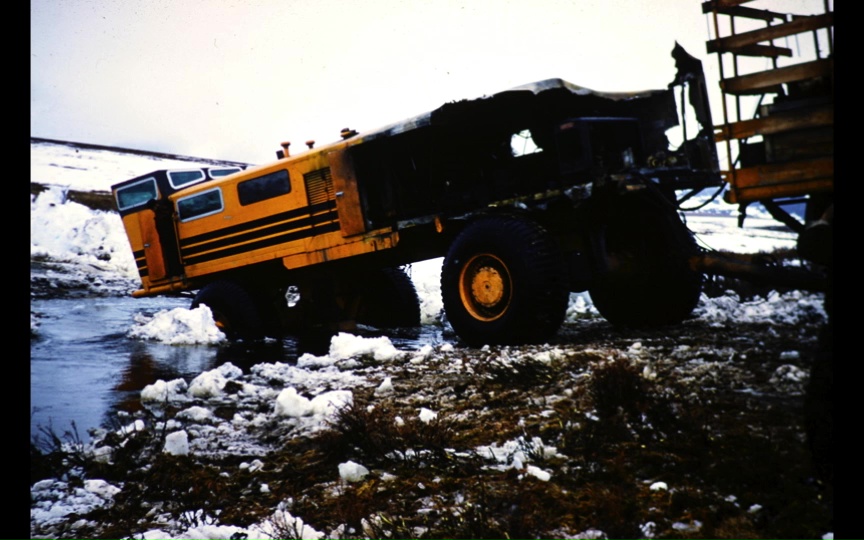
The image below shows the same point in time, but a different angle. Notice Maurice standing in the khaki colored jacket and tan shoes with his back turned to us. Shortly after this photo, likely that night, the Sno-Freighter would jack-knife and catch fire, ending Alaska Freight Line’s DEW Line resupply mission.
Sno-Freighter in April 1956. Image: Millen Collection
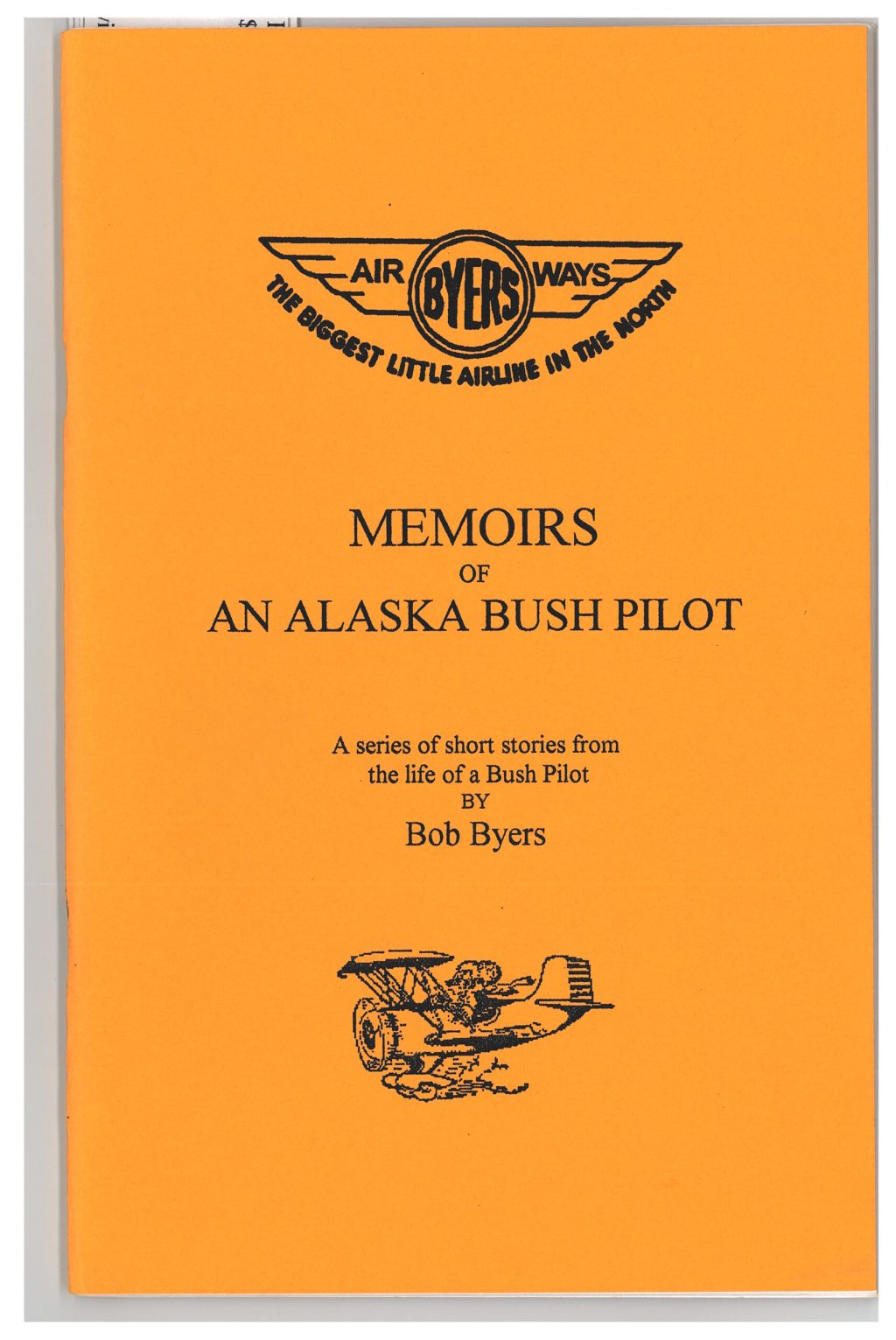
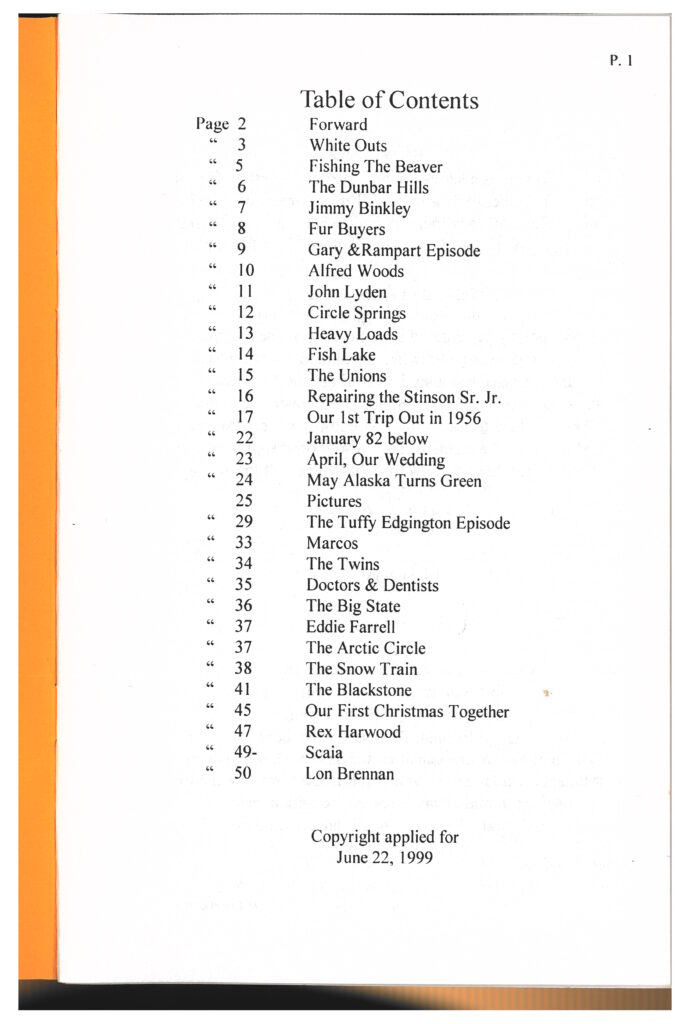
Robert (Bob) Dale Byers was an Alaska Bush pilot for 17 years. In one of his short stories, he talks about Alfred Ghezzi/Alaska Freight Lines and the Distant Early Warning Line resupply mission for the United States government. The Table of Contents is posted below. Much of the content about an Alaska Freight Lines plane going down with Forest Wright and Andy Warwick were sourced from Bob’s book. He only printed a little more than a hundred copies. Bob past away in Des Moines, WA on February 17, 2012.
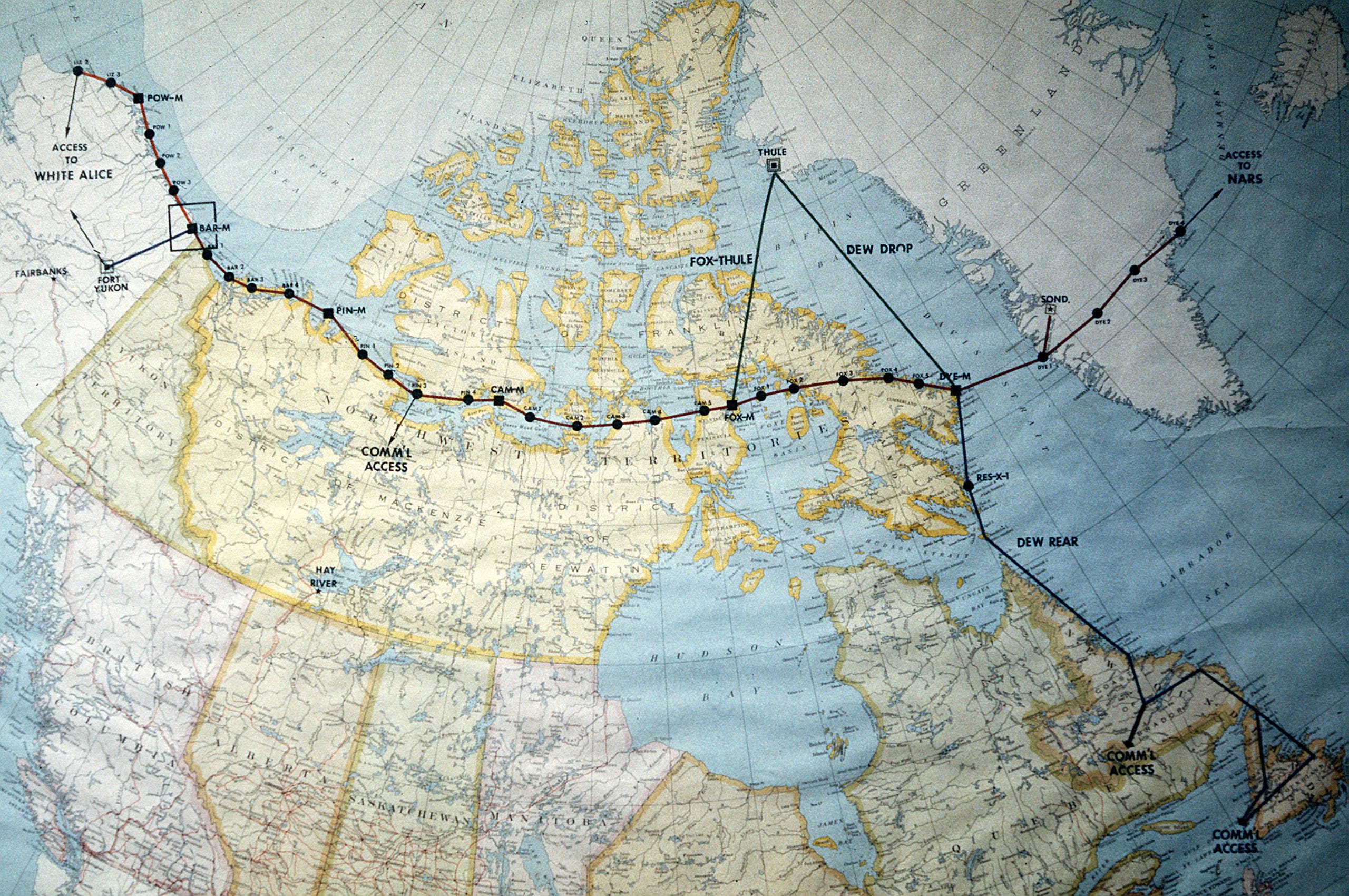
The Distant Early Warning (DEW) Line was a line of radar stations spanning from Alaska, Canada, and parts of Greenland. Large quantities of materials were needed to build and resupply these stations. There were a total of 63 remote radar sites. The President of Alaska Freight Lines (AFL) proposed to the government contractor building the DEW Line, that they could haul 500 tons of materials to these stations. As part of the contract, AFL would not be paid until all 500 tons of freight were supplied. In January of 1955, AFL contracted with R.G. LeTourneau, Inc to build the Sno-Freighter to accomplish the resupply contract.
DEW Line map
image: Millen Collection
In the spring of 1956, its final supply trip, the Sno-Freighter lost control in the ice and snow and jackknifed. A fire started because of the jackknife, which destroyed it’s ability to transport under it’s own power. Cliff Bishop’s book “18 Wheels North to Alaska: A History of Trucking in Alaska” talks about his efforts to recover the Sno-Freighter from its break down. Fast forward 6 years later.
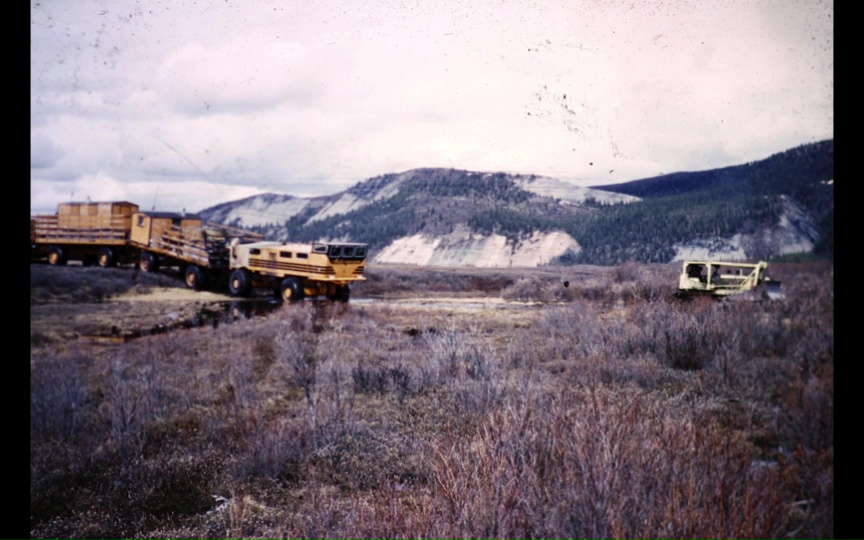
After a number of years of deteriorating in Canada, the government wanted it out of their territory. The United States Army was sent in to recover the Sno-Freighter in 1962. The images below show the Sno-Freighter as it makes its way from the Yukon Territory to Alaska.
image: M. Martinez
image: M. Martinez
The Sno-Freighter did not have the means to make it out of Canada on its own. As you can see from the image above-left, the entire engine and generator compartment are burnt out. As part of the research on the Overland Trains, I was fortunate to meet and interview the Non-Commissioned Officer in charge of the recovery out of Canada. More on how they did it in my book coming late 2021, early 2022.
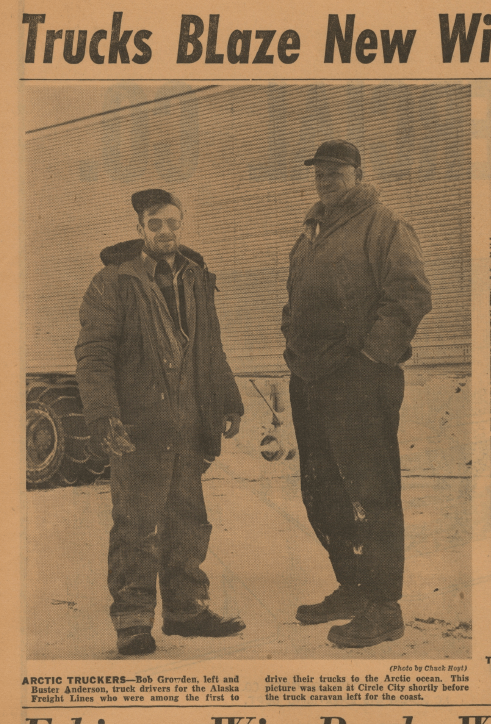
Robert (Bob) Growden was an Alaskan trucking pioneer. He would drive in conditions that other men would not. Bob had a genuine knack for people and greatly contributed to Arctic development. He worked for Alaska Freight Lines during the active time of the Sno-Freighter in 1955.
In an interview with his son Dick on December 30, 2020, he talked about his dad’s boxing history in Alaska.
My father was also a Golden Gloves boxer in Alaska. And when they were young Catholics growing up in Ruby, Alaska, the the boxing was a big deal there in town. Yeah, my father started out boxing I think as a lightweight and then he moved to light middleweight and then the bantamweight. Part of the reason why he moved through the way classes is because he beat everybody in his weight class. My Uncle Andy I was fortunate enough to talk to him shortly after my father before he died himself and I said, well, what was it like then?
You could not believe the turnout in the town. Your dad was like this folk hero. If you know everybody the priest didn’t couldn’t legally bet on anybody because he didn’t want he was against the church’s Doctrine, but they would gladly give $20 to their best friend of bet to bet on your dad. Yeah right now was a lot back then and it was funny. He said as he grew in stature.
During my interview with Dick, I could tell that his father’s passing had a significant impact on him. I know that he is sorely missed. Read more about Bob and his contribution to Alaskan trucking in my Overland Trains book, due out sometime later 2021 or early 2022.
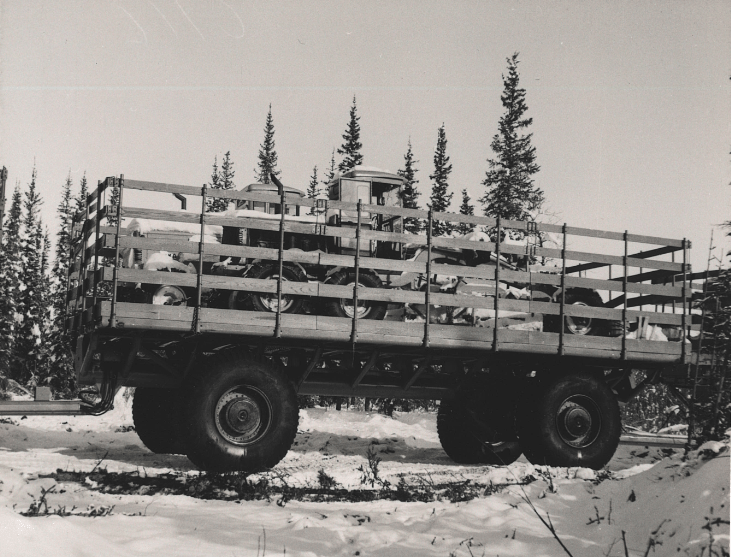
In the image below, the Alaska Freight Lines Sno-Freighter (Model VC-22) carries two scrapers in one of its cargo cars. The image is dated March 01, 1956. This timeframe places the Sno-Freighter during it’s last journey before it jack-knifed and caught fire.
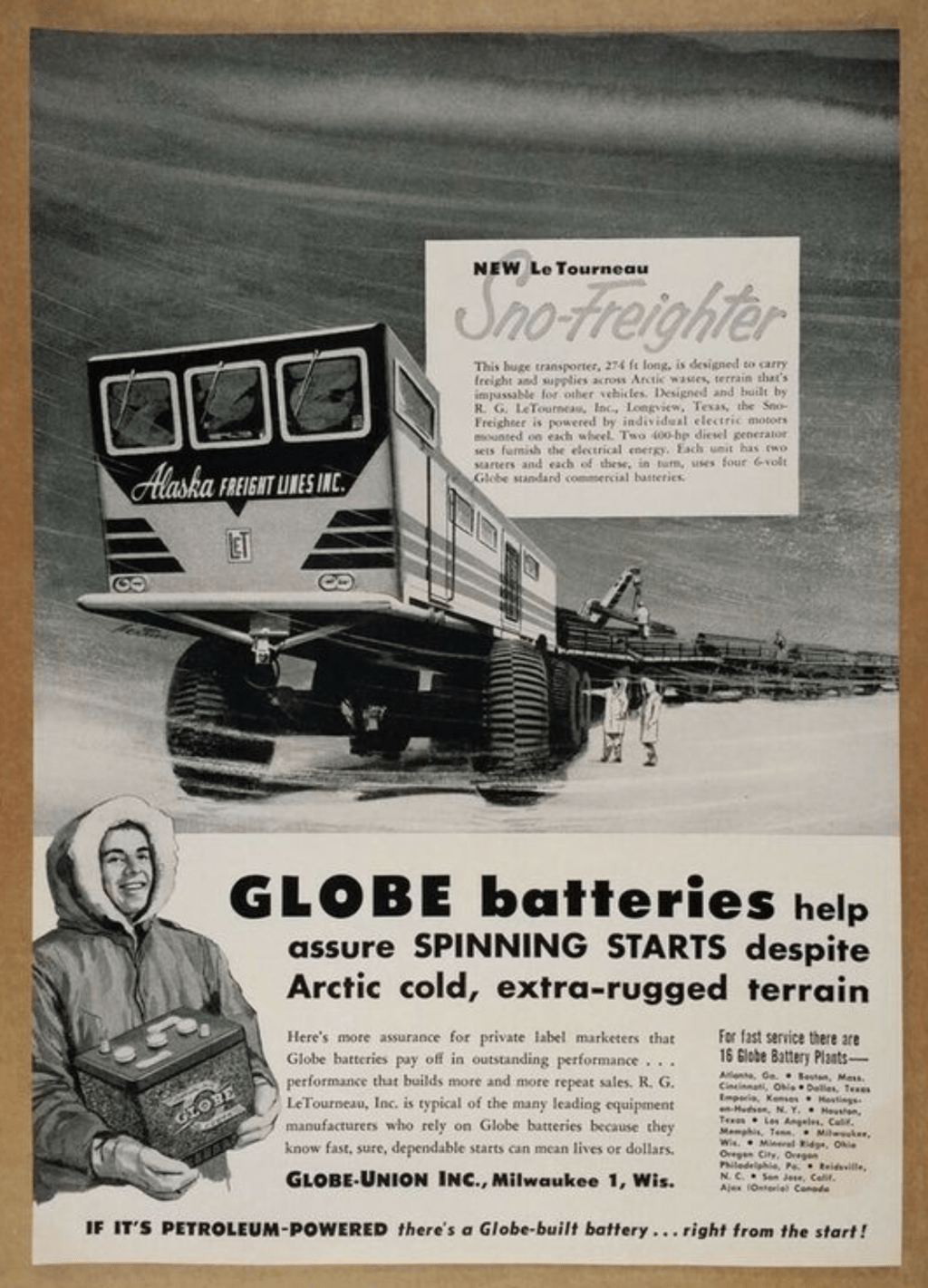
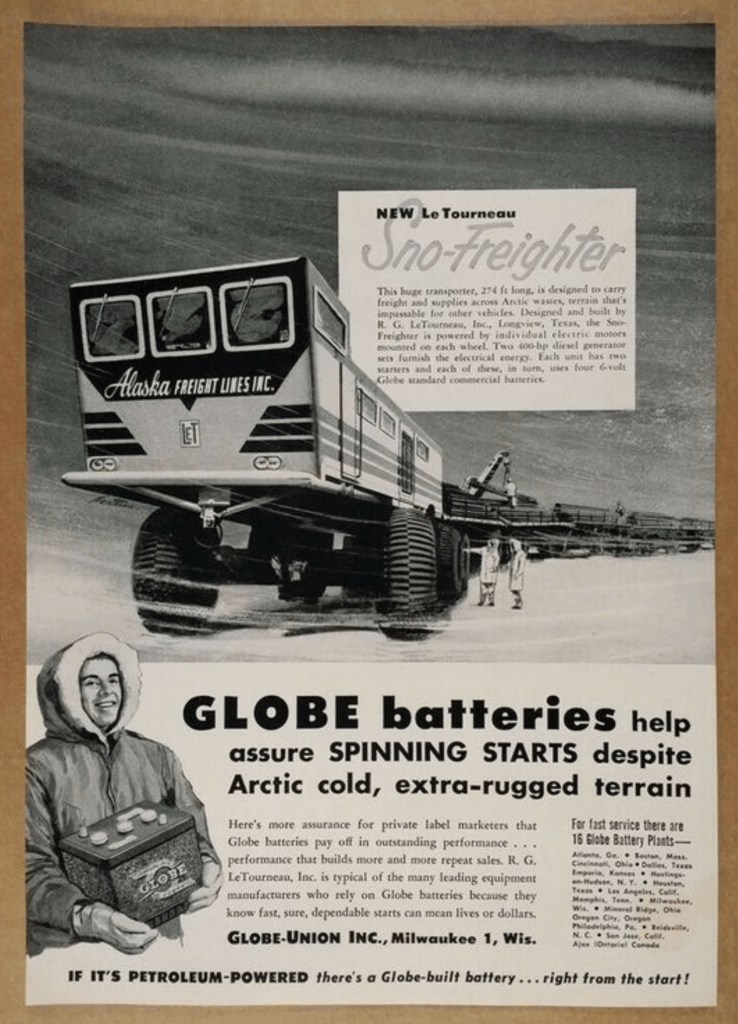
Have you noticed your car, truck, or equipment starts a little slower when it is cold outside? Anyone who lives in or near the Arctic knows that you better have a well maintained battery. When it gets cold, batteries lose efficiency. When the Sno-Freighter came to Alaska to help supply Distant Early Warning (DEW) Line sites, it captured the attention of corporate America. The Sno-Freighter was designed to carry heavy loads through the back country. Companies had the new rugged product comparison that they always wanted.
The advertisement assures performance of Globe-Union Inc. batteries with “…SPINNING STARTS despite the Arctic cold.”
The logs shown in the advertisement above were from the tests at LeTourneau’s Longview, TX facility. Typical cargo for resupplying DEW Line stations were cement, petroleum, oil, and liquids (POL), and a wannigan for housing the men and chef.
Globe-Union Inc. Notes
Globe-Union batteries production started at Tampa Industrial Park in 1958.
In 1970, battery production was up to 400,000 a year
In February of 1982, the Globe-Union factory experienced a gas fire at their factory.
Marc Levison’s “The Box.” So far, this book reads well for anyone interested in history, economics, and a topic that is just a little bit off the norm. I am on Chapter 3 right now. I started reading this book to learn more about shipping during the Cold War and Alaska Freight Lines.
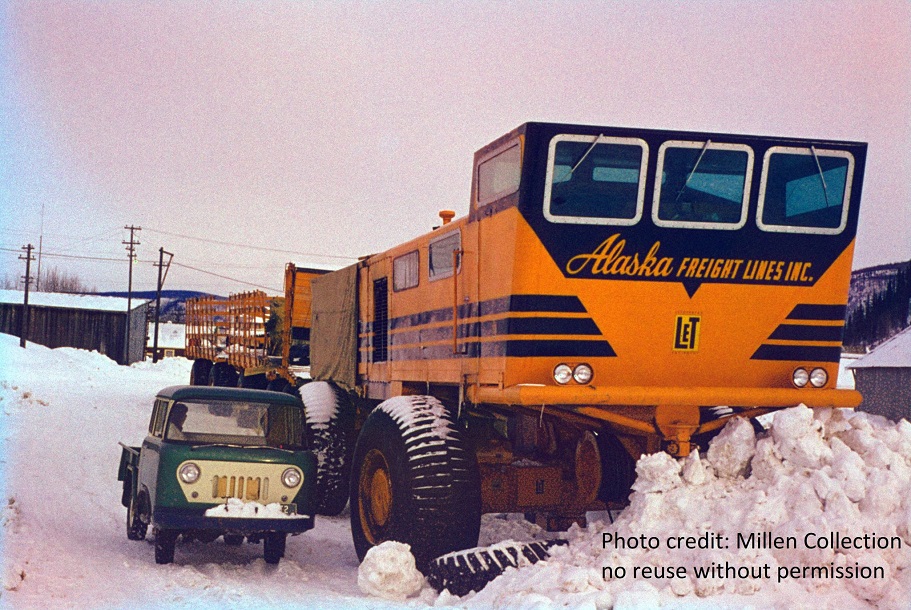
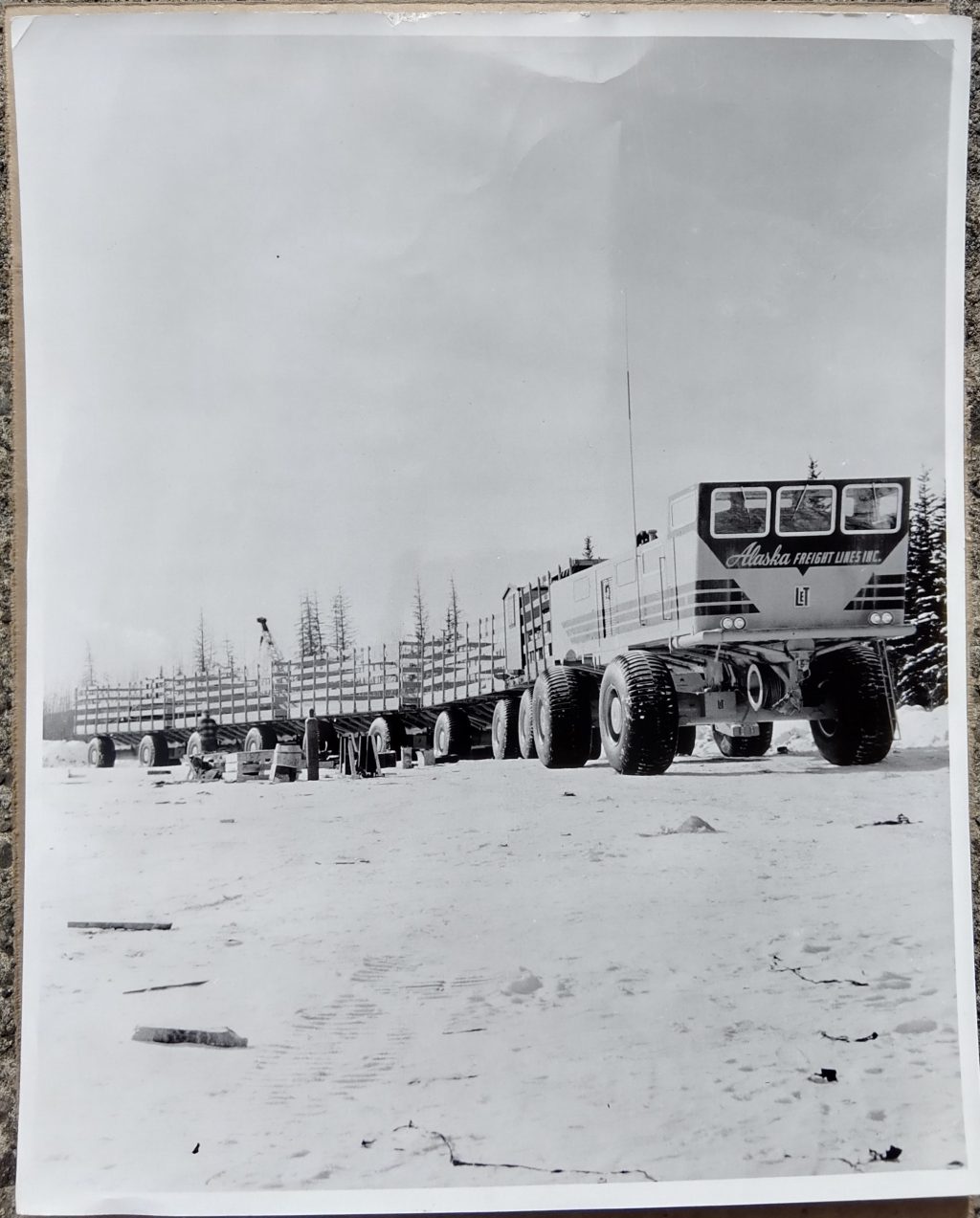
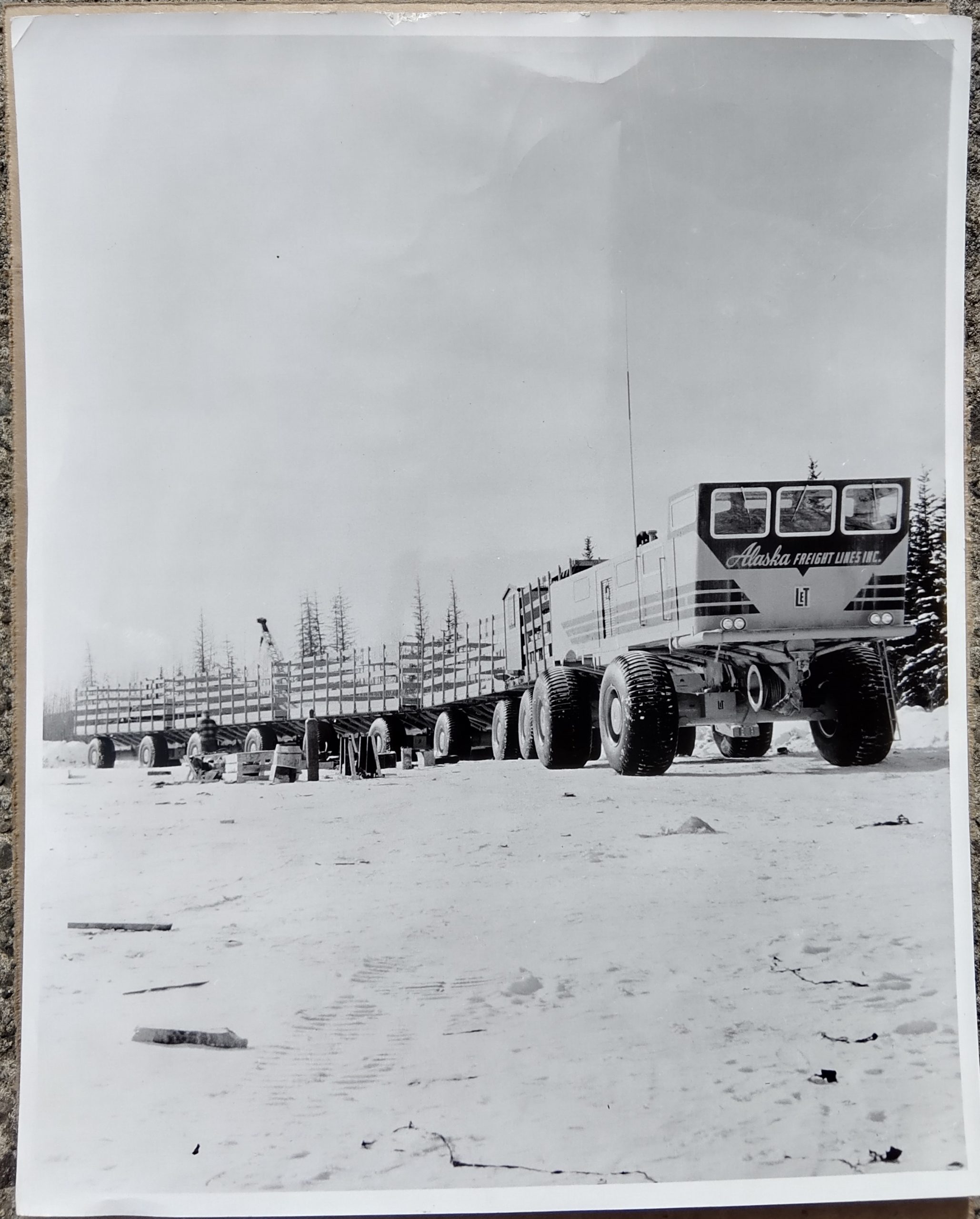
I received an image of the VC-22 Alaska Freight Lines Sno-Freighter Saturday, adding to my collection of historic images. To the left of the third trailer, you can zoom in and see a gas cylinder and an assortment of, what appear to be, wood boxes or crates. On the first trailer, there is a wannagan.



 Overland Trains