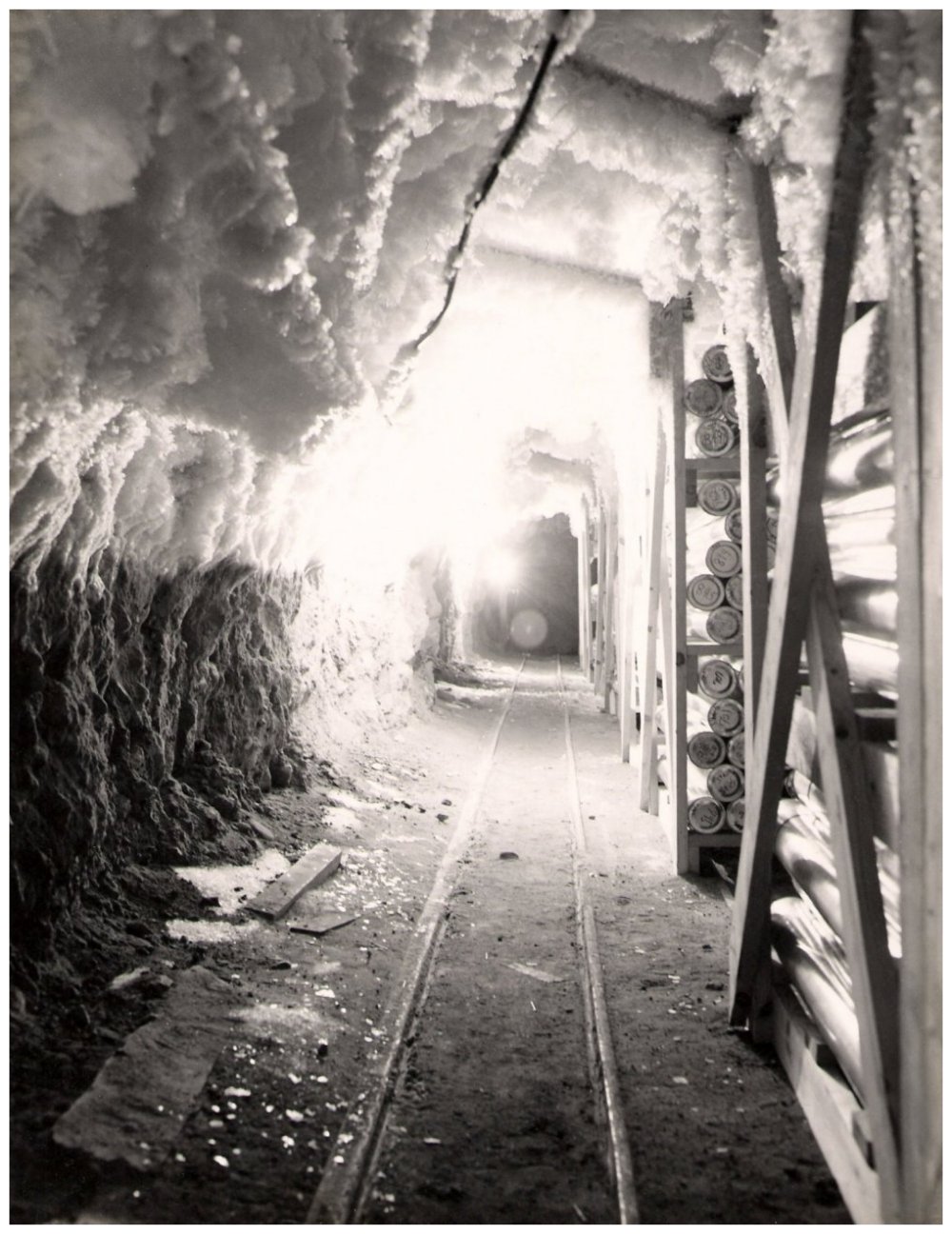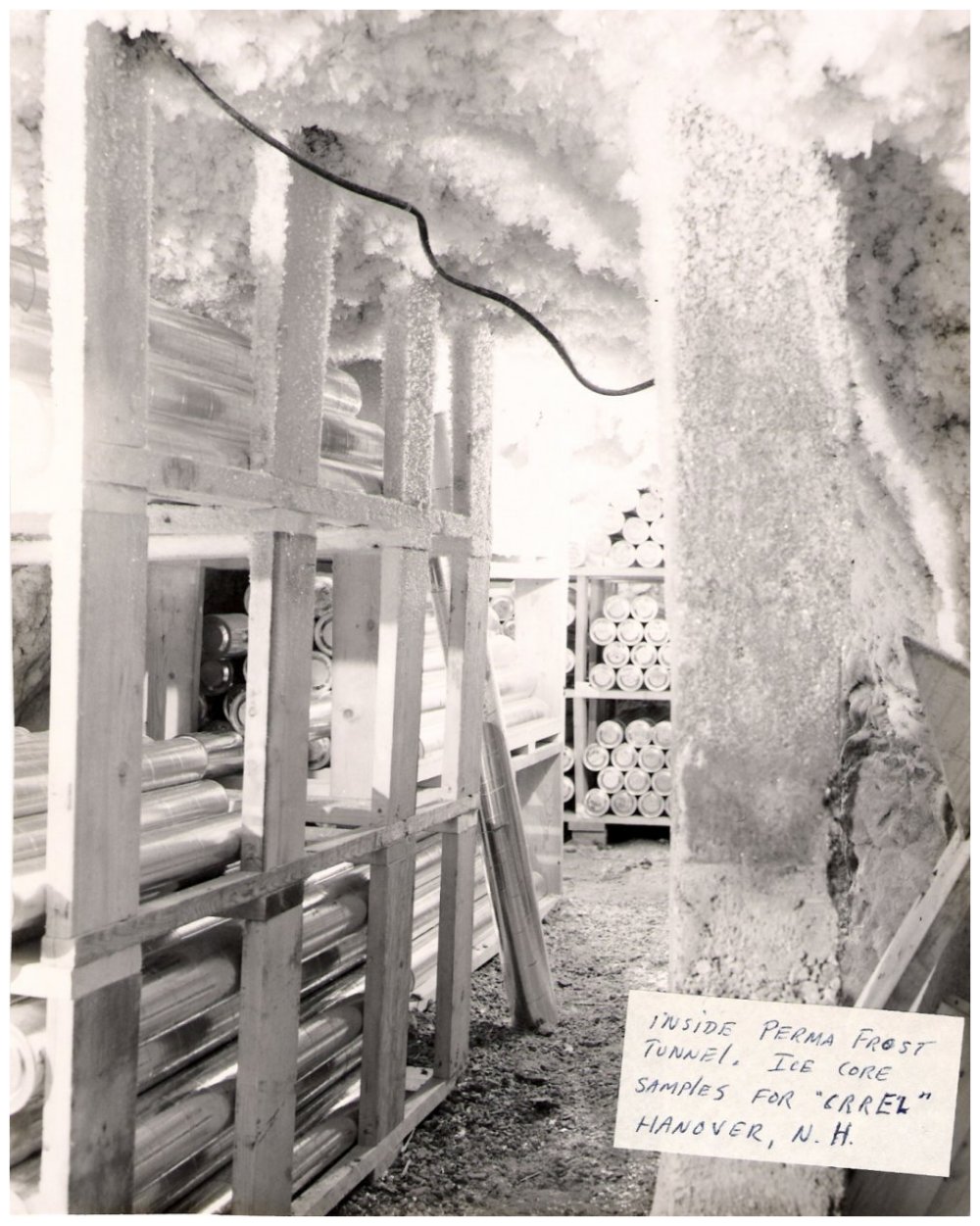
In 1966, after 3 years of drilling, Cold Regions Research and Engineering Laboratories (CRREL) reached 4,550 feet deep in the Greeland ice cap. Data revealed within these ice caps helped shape information about climate change. The images below are some of the CRREL ice cores. These images were captured by SGT. Bill Simmons during the summer of 1967. He drove heavy swings from Camp Tuto to Thule.
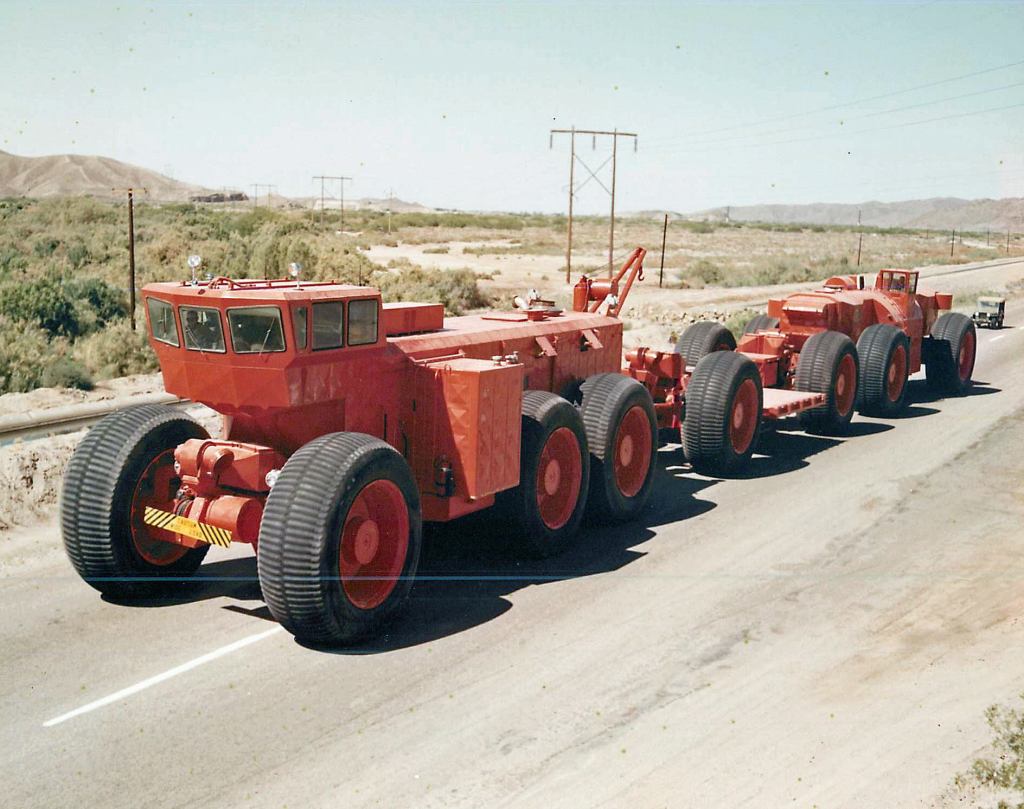
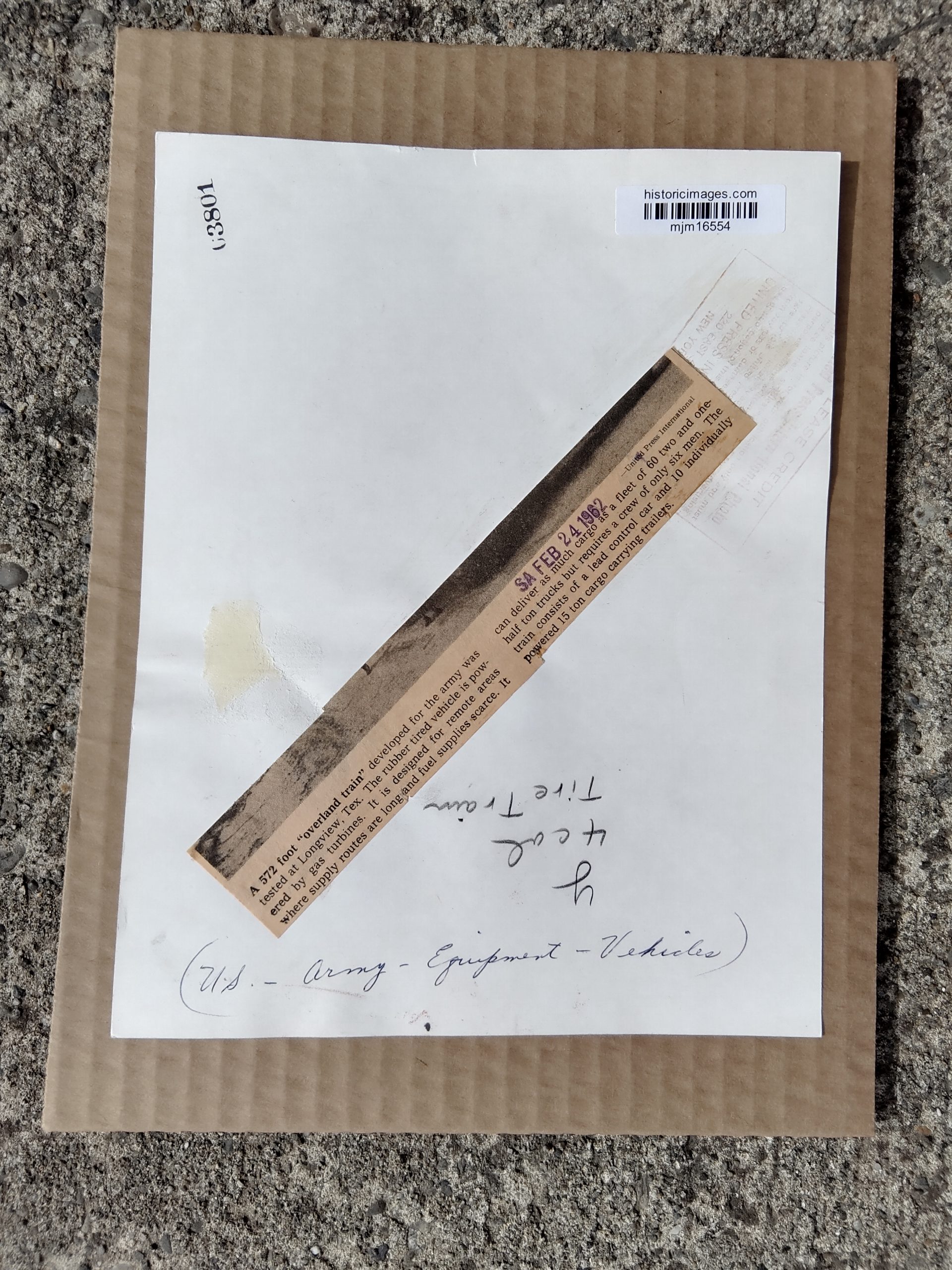
Below, the Overland Train MkII rolls along with a Cargo Car and Power Car in Yuma, AZ. There is no backstory for this image and the source is unknown. This week was largely spent working on the TC-497 chapter. Phase I of the Army’s contract for R.G. LeTourneau, Inc. to create the Overland Train, was to build out the preliminary design. Using data from the Sno-Train (LCC-1), LeTourneau engineers worked out the gaps and started work on the machine you see below.
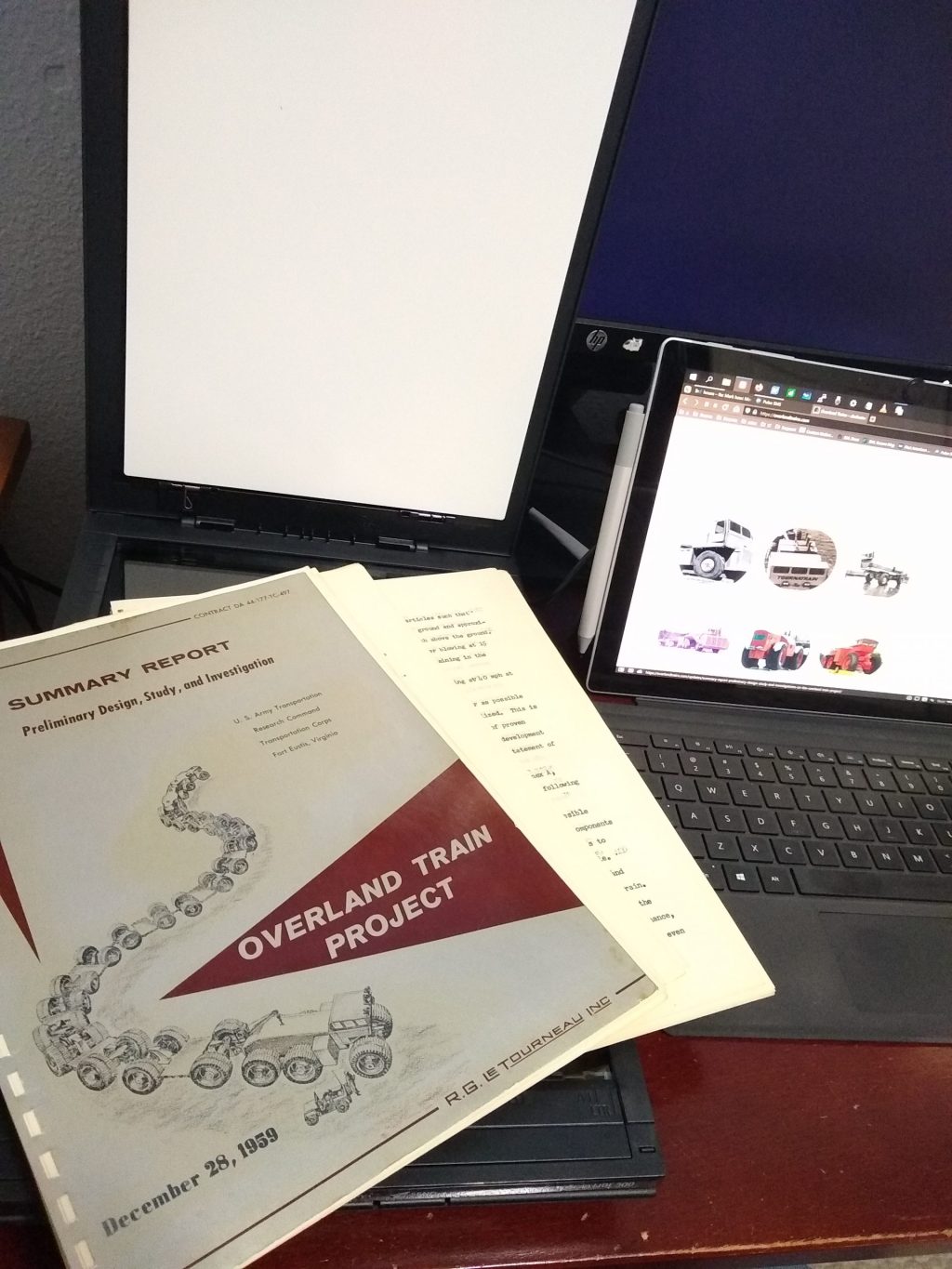
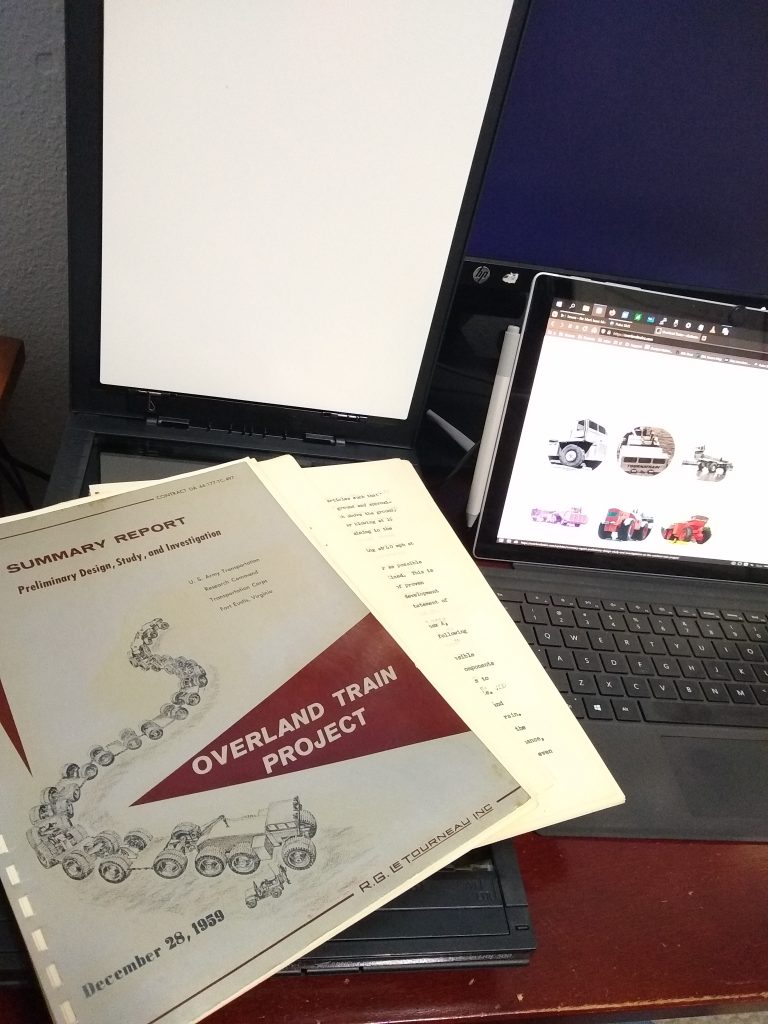
I worked on scanning the Overland Mk II Preliminary Design, Study, and Investigation report this weekend. The report is unpublished and a one of a kind. Once scanned, it will be given back to the source and held on file at LeTourneau University. Until then, back to scanning!
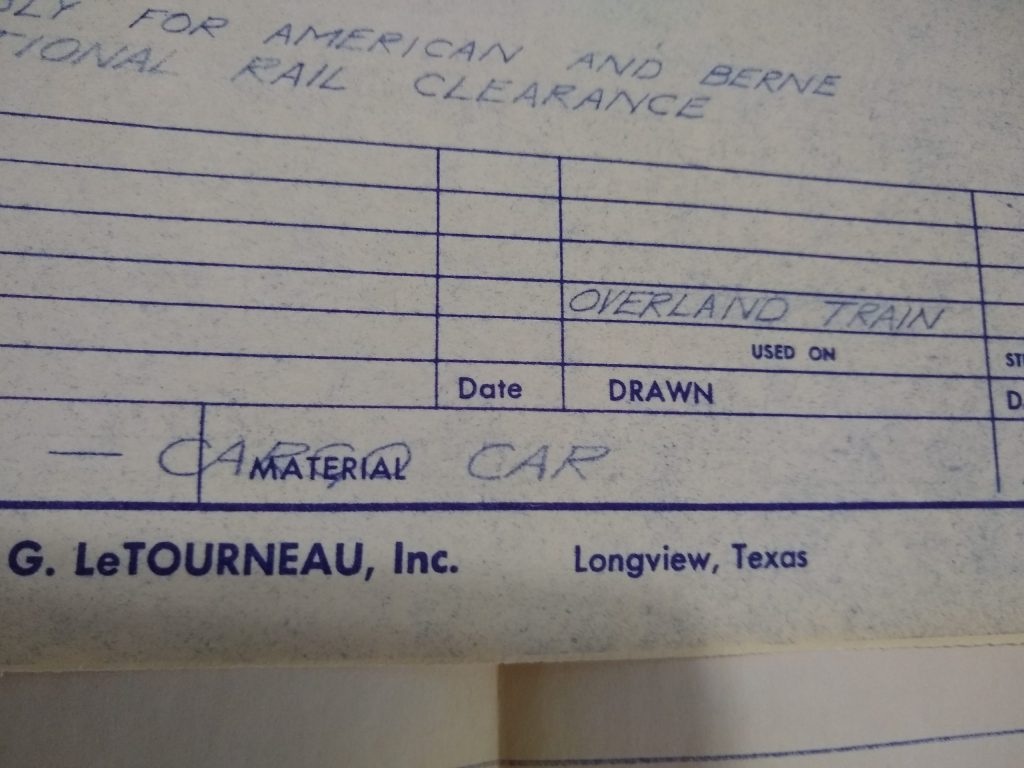
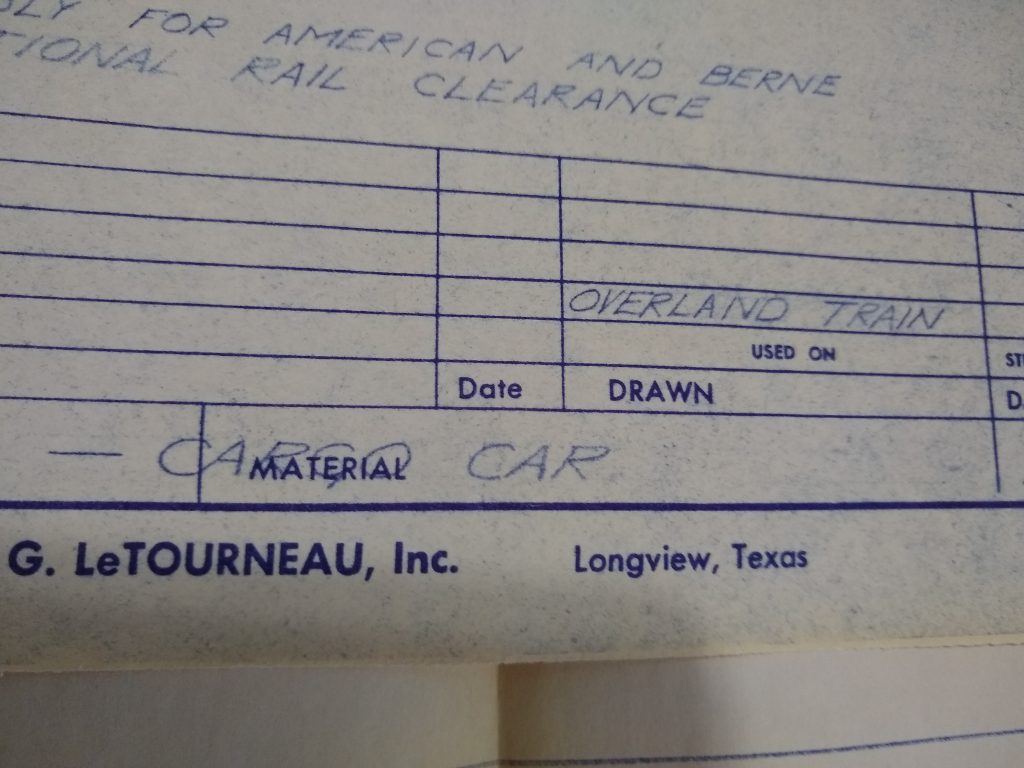
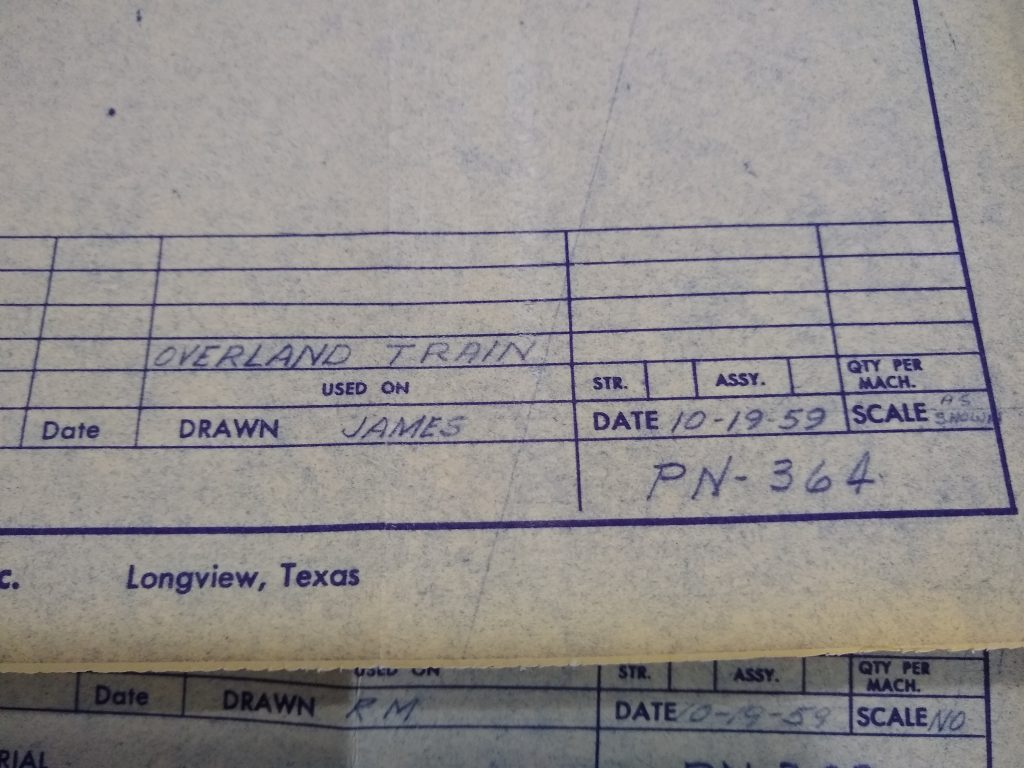
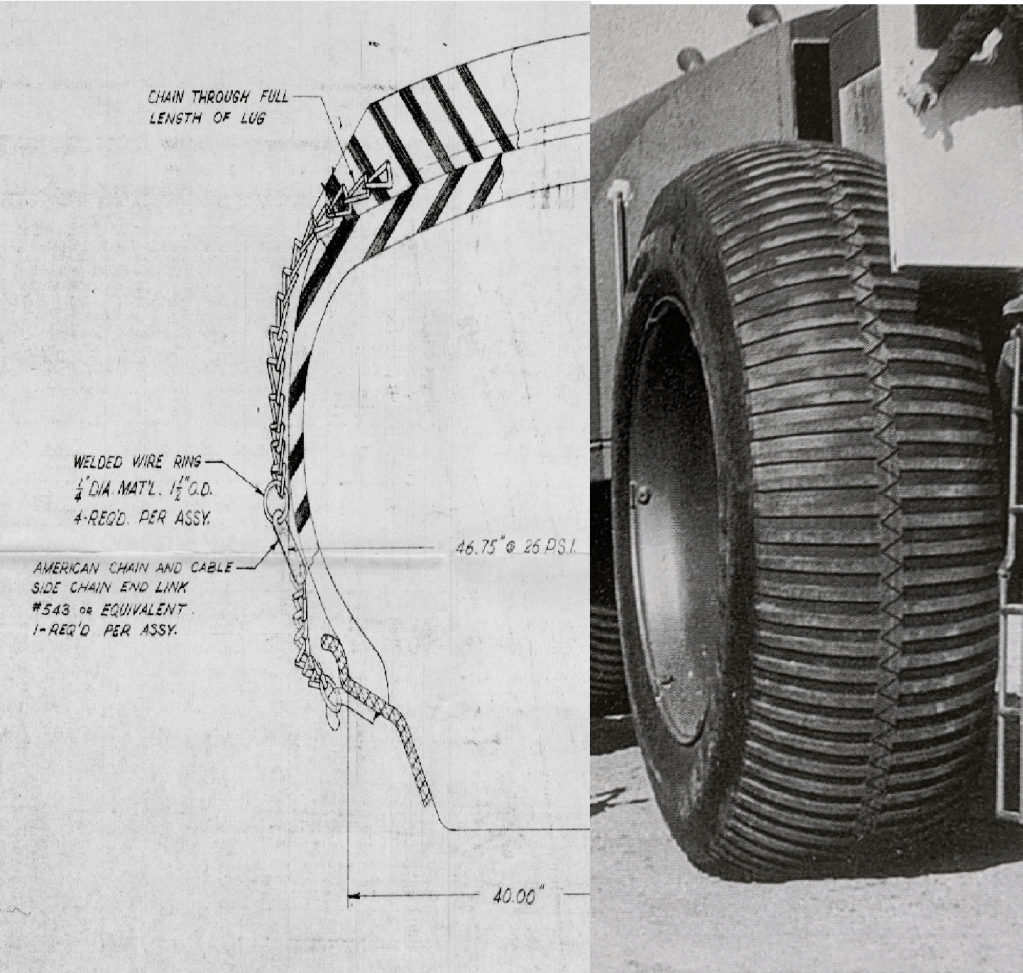
The above titled report is dated December 28, 1959. This unpublished report works through some of the initial ideas for the TC-497 Overland Train MkII. Discussion includes engine choices, decisions that led to the Solar turbines, and much more. The report also includes specifications and engineering drawings for suspension, heating system, electrical diagrams, and others. I have unfolded all of the large format papers and will have them scanned for future historians.
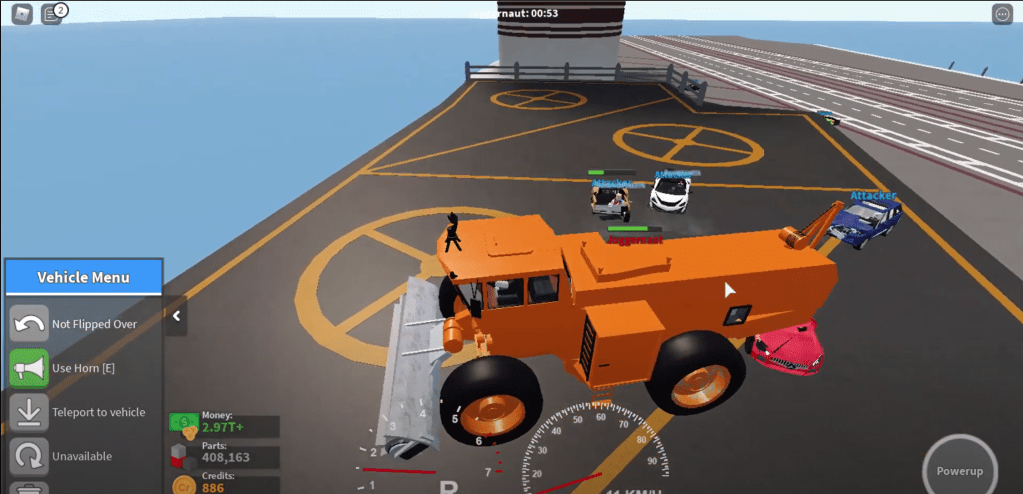
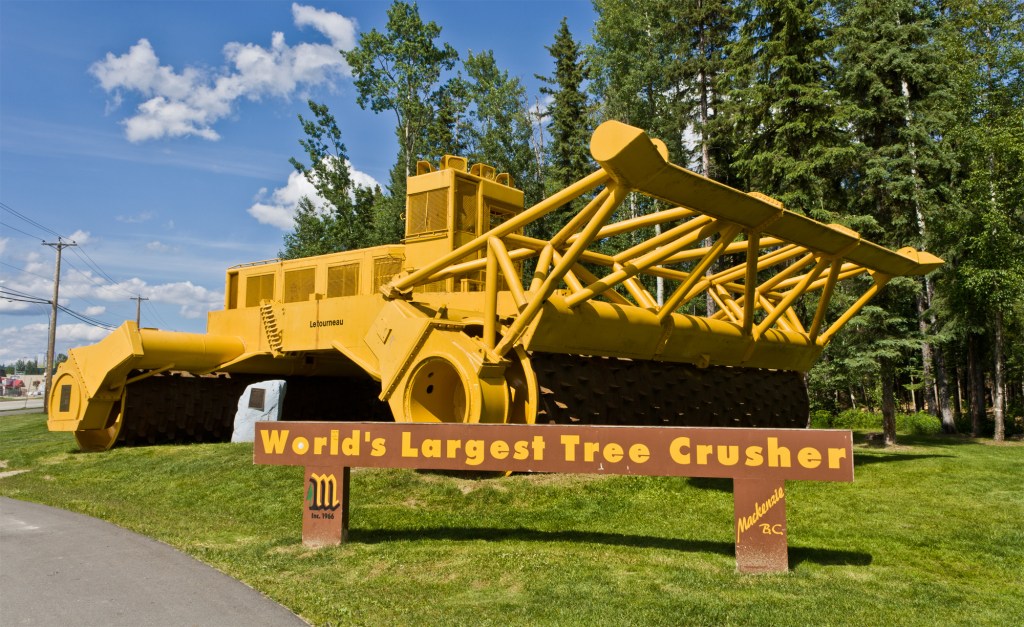
The Overland Trains have inspired others to make one of a kind toys and now video games. Seen below is a screenshot from the video at https://www.youtube.com/watch?v=BncCaFPxTz4. It shows the TC-497 Overland Mk II as a car juggernaut. The front attachment appears to be some sort of spiked roller. It somewhat reminds me of the LeTournea Tree Crusher.
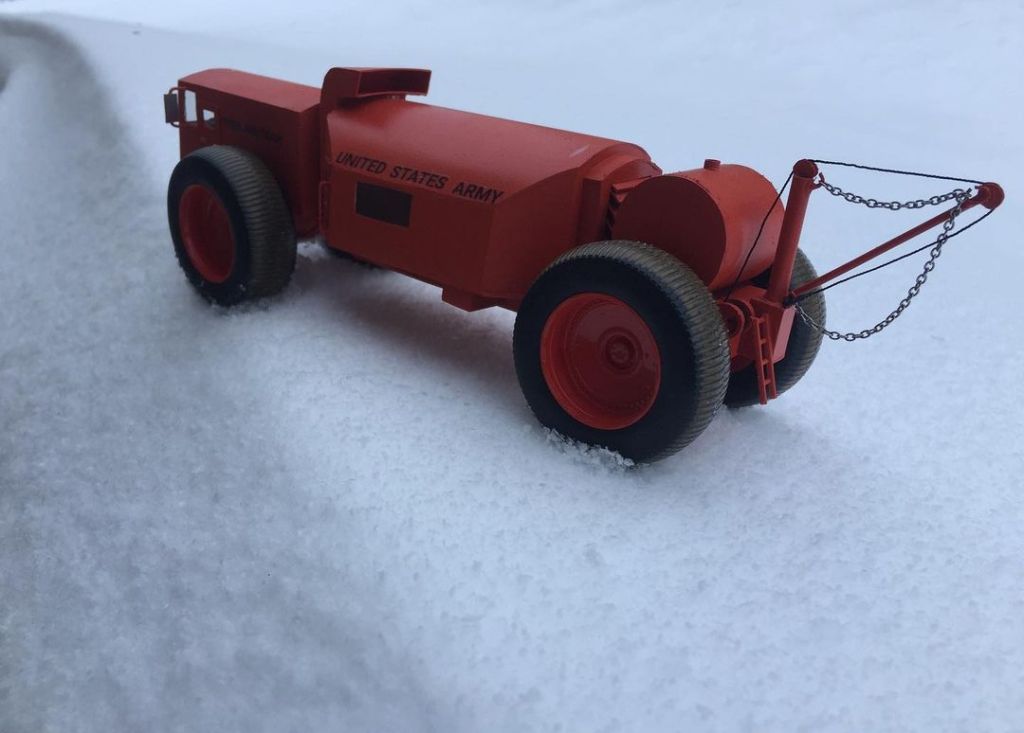
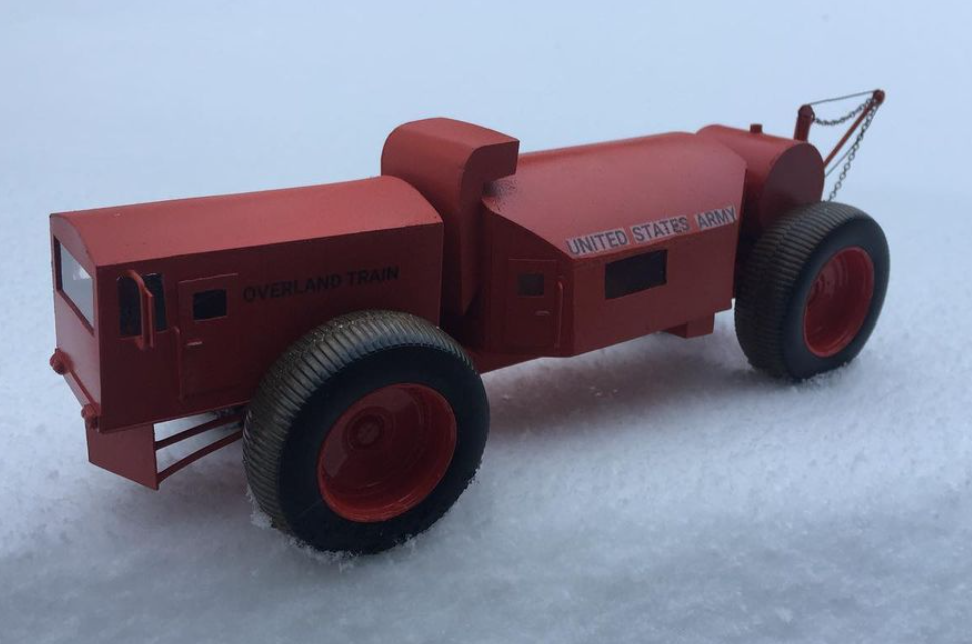
I came across a Instagram page called C.D.G. Customs (https://www.instagram.com/c.d.g.customs/). The page creator built an amazing LCC-1 LeTourneau Sno-Train. Go and give his page some “Likes!”
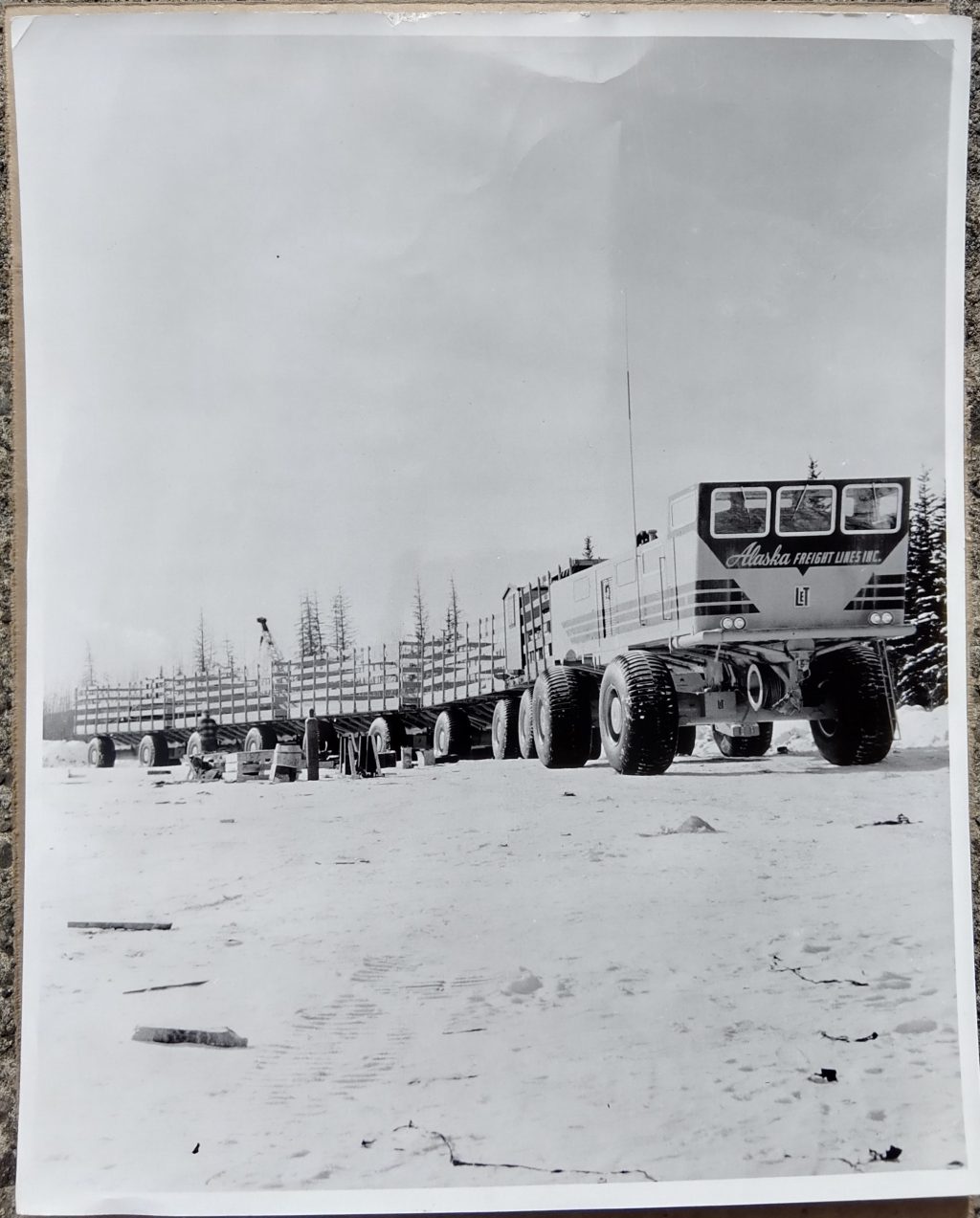
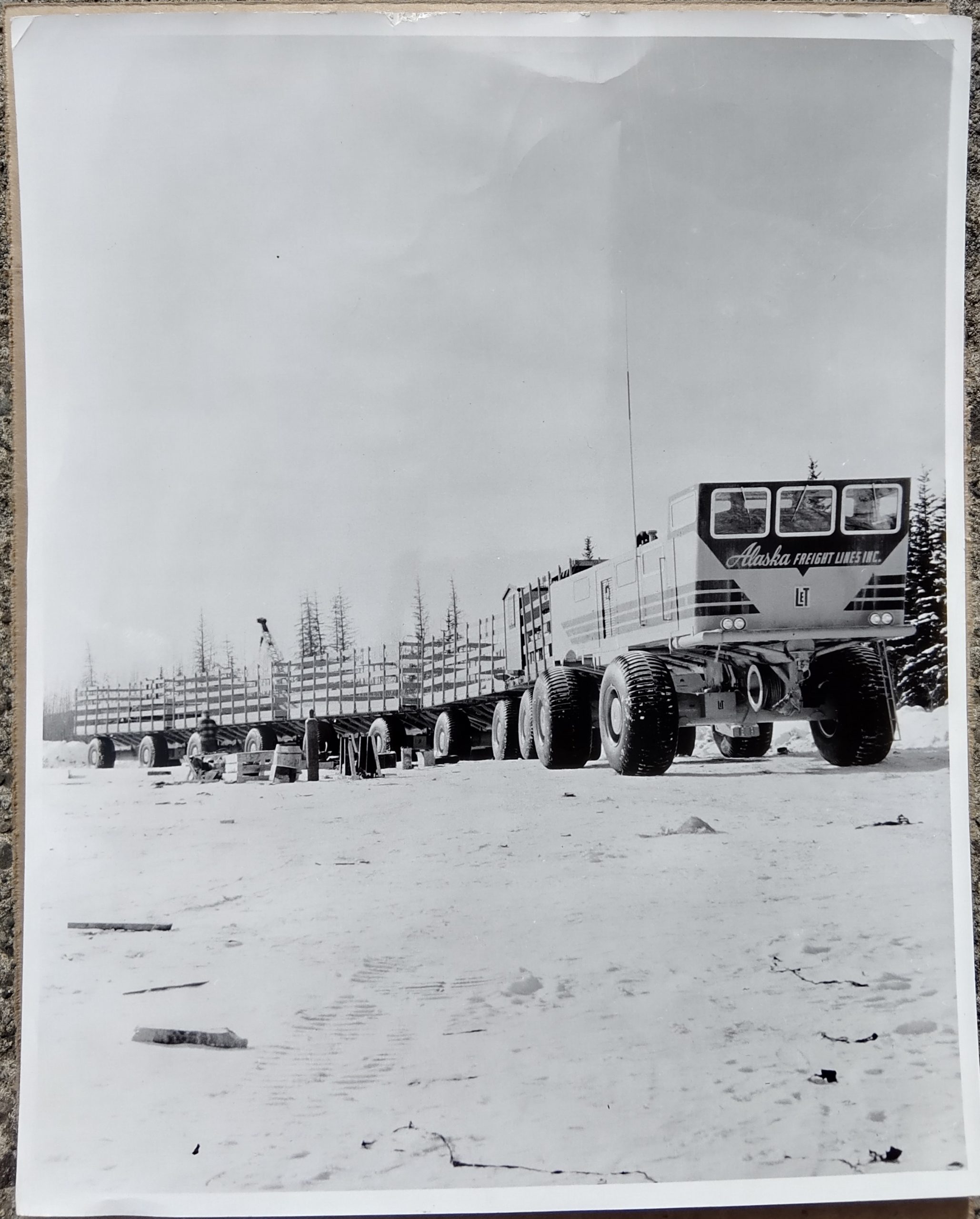
I received an image of the VC-22 Alaska Freight Lines Sno-Freighter Saturday, adding to my collection of historic images. To the left of the third trailer, you can zoom in and see a gas cylinder and an assortment of, what appear to be, wood boxes or crates. On the first trailer, there is a wannagan.
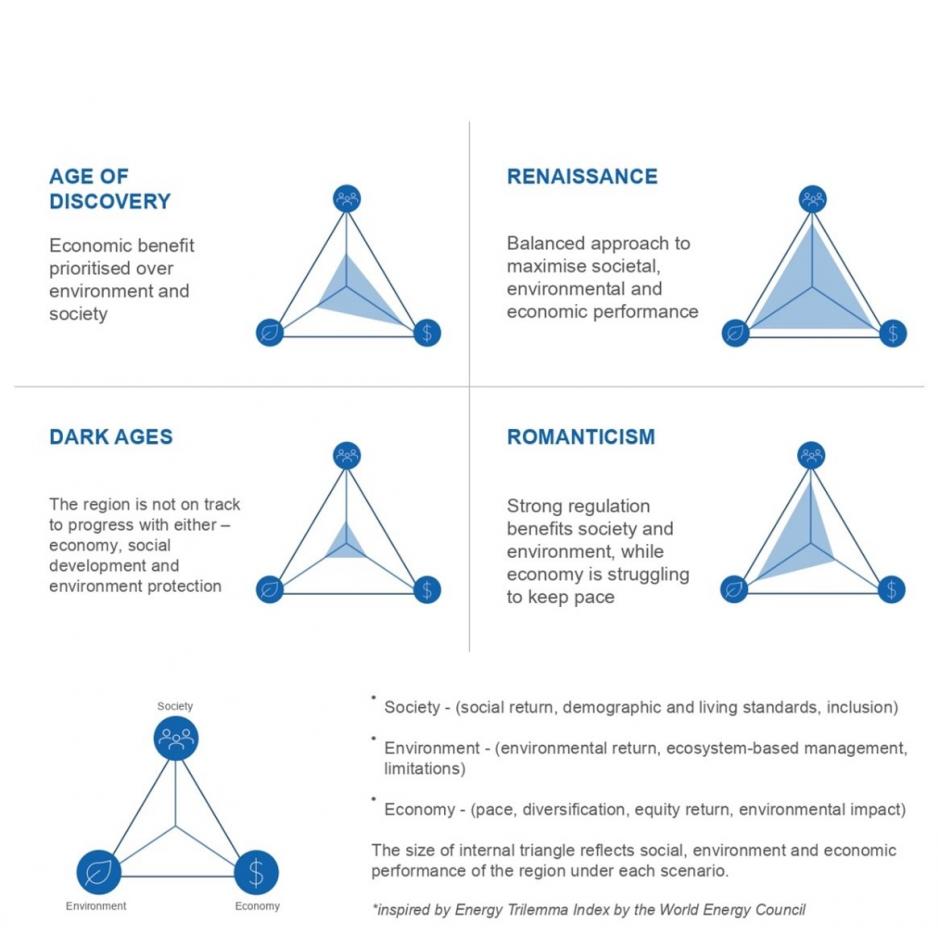
Nord University and Skolkovo Moscow School of Management teamed up to write the Arctic 2050: Mapping the Future of the Arctic. The study breaks down the future of the Arctic into 4 primary possible outcomes or scenarios. The report simplifies the possible scenarios, which makes it simple to understand. Download the report below.
Harry Waldron was a grader operator in Eagle Plains, Yukon. In the summer, he would sit at the Arctic Circle and tell stories to the tourists. The pin, seen below, were sold at the gift shop in Eagle. There used to be a man who would park a camper at the Arctic Circle sign on the Dempster Highway. He would greet all of the travelers and give them an Arctic Circle certificate.
Harry Waldron was Santa Claus in Dawson City, Yukon. Locals left gifts outside and he delivered them to children on Christmas Eve. He is also an accomplished keeper of the Tagish kettle curling rink.
“Of all the wonderful memories I have from two decades of driving tour bus in the Yukon, meeting Harry Waldron is very high on my list of the best ones. Perhaps “experiencing” Harry Waldron would be a better term, because meeting him in his self-appointed role as “Keeper of the Arctic Circle” on the Dempster Highway was an experience that would be hard to forget.
Irene Marushko, in an article written for The Pittsburgh Press in 1988, described the usual encounter perfectly:
As Yukon visitors cross the Arctic Circle – the imaginary northern line marked with a single sign standing in the middle of the barren, windswept tundra – the last thing they expect to see is a man sitting there in a rocking chair. A man. Dressed in a tuxedo, topcoat, tophat and holding a cane. And drinking champagne. Who formally and politely welcomes them when they alight from the tour bus to snap photographs of themselves beside the lonely marker.
Harry had come to the Yukon in the early 1970s to work in placer gold mines, but within a few years he had joined the government as a heavy equipment operator. His usual job became grading the Dempster Highway from a base at Eagle Plains Lodge, which is 36 kilometers (22.4 miles) south of the Arctic Circle. Even by Yukon standards, this is the middle of nowhere – the Arctic Circle is 405.5 km (252 mi) north of the highway’s junction with the North Klondike Highway which runs between Whitehorse and Dawson City.
It was back in 1983 that Harry discovered that his natural tendency to entertain people, combined with his excellent memory for the poetry of Robert W. Service in particular, could be a lot of fun in the evenings in the lounge at the Eagle Plains Lodge and on his days off. When a tour guide that summer asked Harry to meet him at the Arctic Circle one day to share a glass of champagne with his guests, his new “job” was born.
I always told my guests as we approached the Arctic Circle that I hoped that “the Keeper” would be on duty, but gave little other information. When we drove up, Harry would be seated in the rocking chair as you see in the first photo, and as he didn’t move, everybody assumed that it was a mannequin – mildly cute. When Harry got up and walked towards the coach in all his finery, a bit rumpled as it might be, the response was always a lot of fun to hear and watch.
Harry was a wonderful showman, and would share stories, poetry, and champagne with my guests as long as I’d keep the motorcoach there at the Arctic Circle before continuing on to Inuvik. Depending on the weather and the bugs, he’d spend time both on the coach and outside. I shot the photos on this page while he was entertaining one of my groups in July 1991 while I was working for Atlas Tours – click on each to greatly enlarge it.
In those days, Atlas ran up to a dozen motorcoaches a year up the Dempster as part of their Yukon-Alaska offerings, and it was fairly common to see other companies’ coaches up there as well. In 1991 and ’92, I drove many of the Atlas coaches on the Dempster, as well as a few during other summers. As we all stayed at Eagle Plains Lodge (there was and still is no other place to stay) and Harry was in the lounge most nights, it was easy to arrange with him to meet us at the Arctic Circle the next day. We all came well stocked with champagne to celebrate the crossing, and most tour guides came with some cash as well for a performance that was always very well done and much appreciated.
Heavy equipment is hard on a person’s body, and by the time I met him in 1990, Harry was having problems that resulted in a lot of pain some days. Yukon Tourism acknowledged his value as a Yukon good-will ambassador with a small stipend, and on July 30, 1987, Tourism minister Dave Porter presented him with a plaque that proclaimed Harry Waldron as “Keeper of the Arctic Circle”. When Harry asked for a real wage so he could get off the grader, however, the request was rejected. In the mid 1990s sometime, the Arctic Circle lost its Keeper when Harry moved to Whitehorse.
Every long-time Yukoner knows of Harry Waldron even if they never met him. Running into my old friend Jim Robb yesterday made me think about Harry. As well as his wonderful art that usually depicts old buildings, Jim created a series of books starting in 1984 entitled “The Colourful Five Percent“, which honoured the 5% of the people in the Yukon who he thought were particularly interesting. Harry never made it into one of those books, but Jim says that Harry is on his Colourful Five Percent list and will be in a future edition.
Harry Waldron died on February 26, 2010, at the age of 74. His ashes were apparently spread along the Dempster Highway at the Arctic Circle – very fitting , I think.”