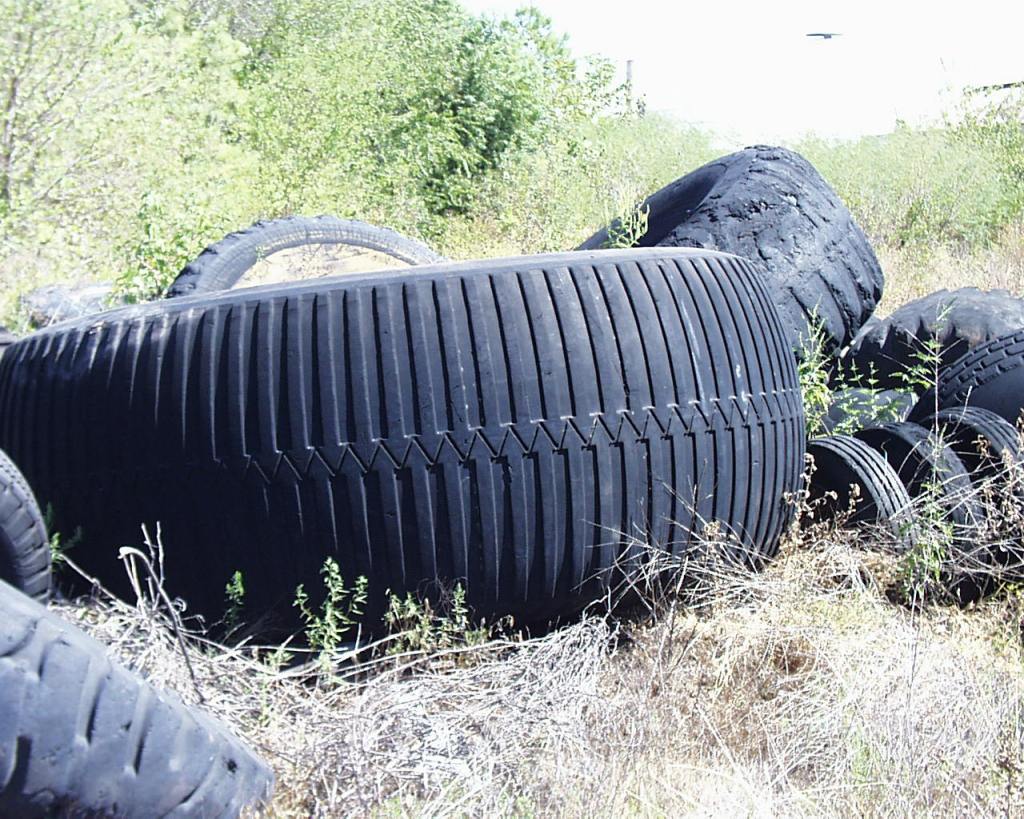
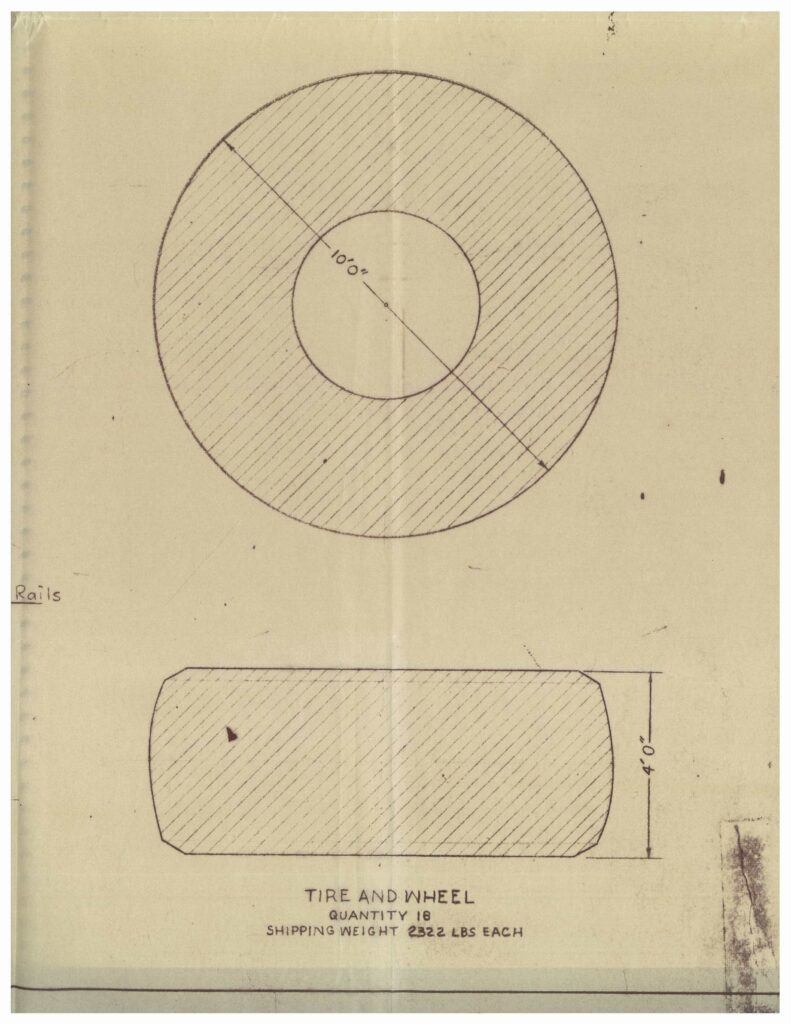
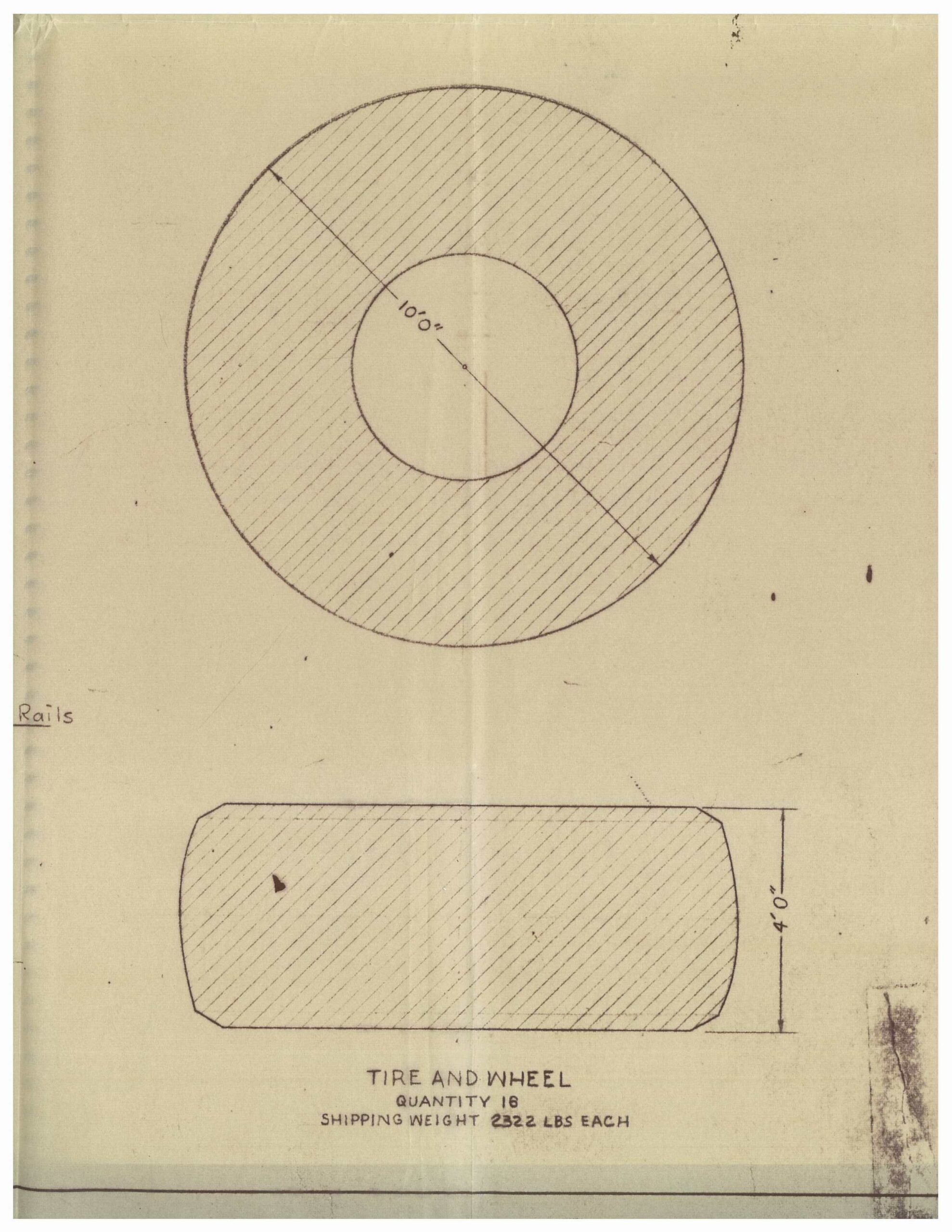
The Firestone 120x48x68 tires are arguably, one of the most recognizable features on the last 3 LeTourneau Overland Trains. These tires were first produced in 1952. The numbers describe the tire dimensions as 120 inches tall – diameter (10 feet), 48 inches wide (4 feet), and 68 inches inner diameter. The were manufactured in thicknesses of 10-ply to 36-ply based on the machine it was used. If you wanted to buy a tire and rim combination during the 1960s, you would expect to shell out around $3,500 per tire and $1,600 per rim.
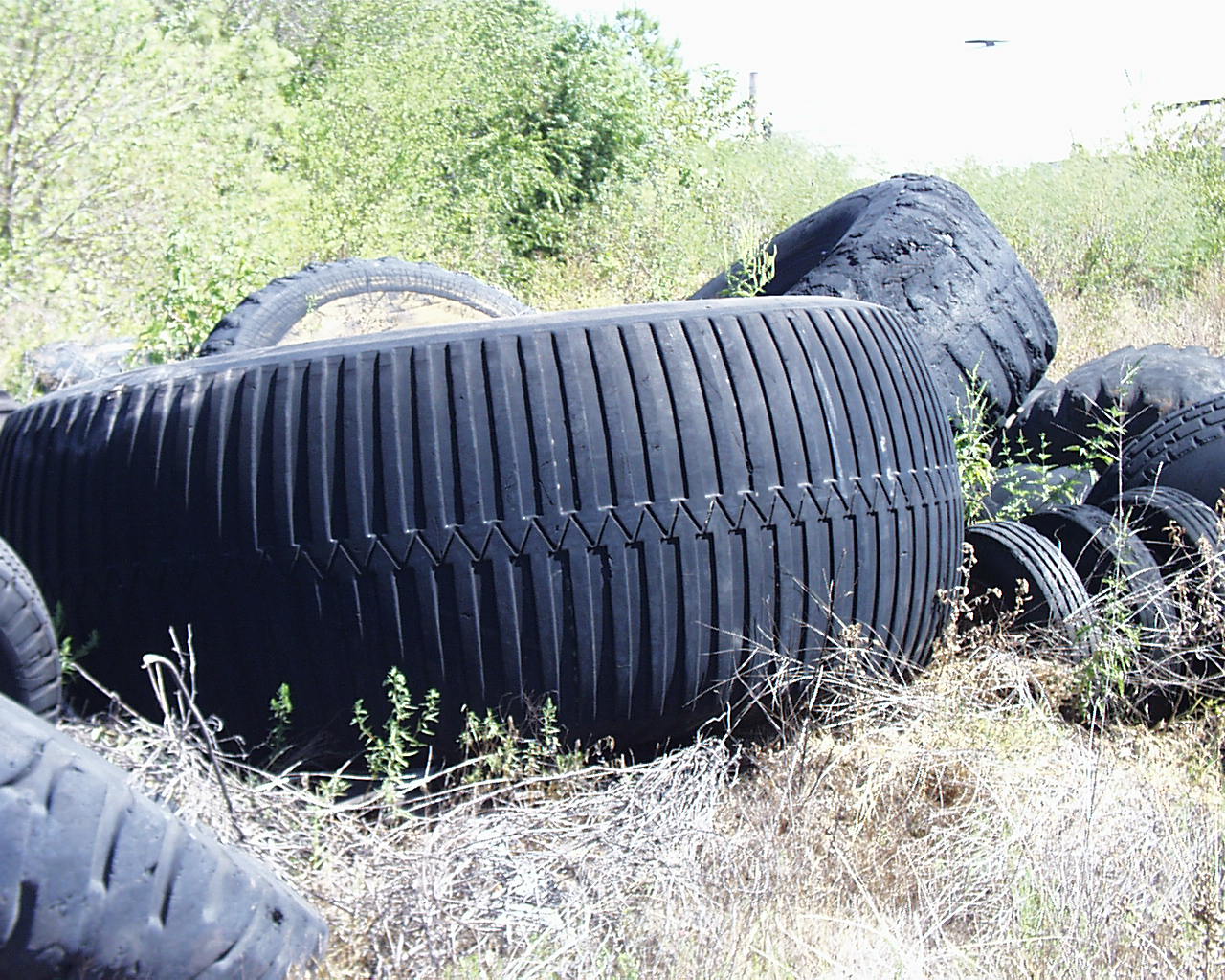
photo: D.Hardy, 2009
Rim and tire combo weight, 2,322 pounds each.
Tire and rim combination weights will vary by rim model, rim metal composition, and tire plies. These tires were also used on the Crash Pusher, Water Wagon, Marsh Buggy, Sno/Swamp-Buggy, and possibly a few others that I have not seen.
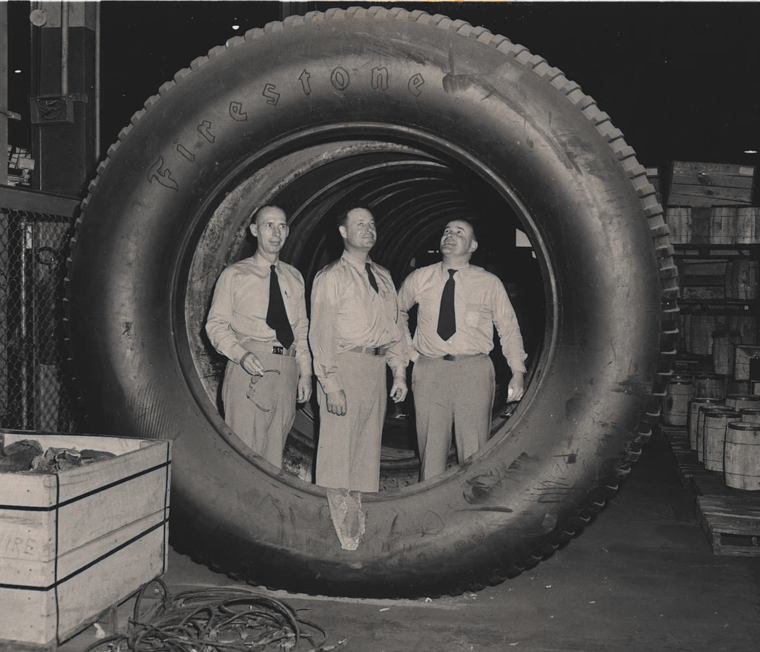
April 15, 1954 – Ft. Eustis, VA. Three visitors marvel at the new Firestone tires.
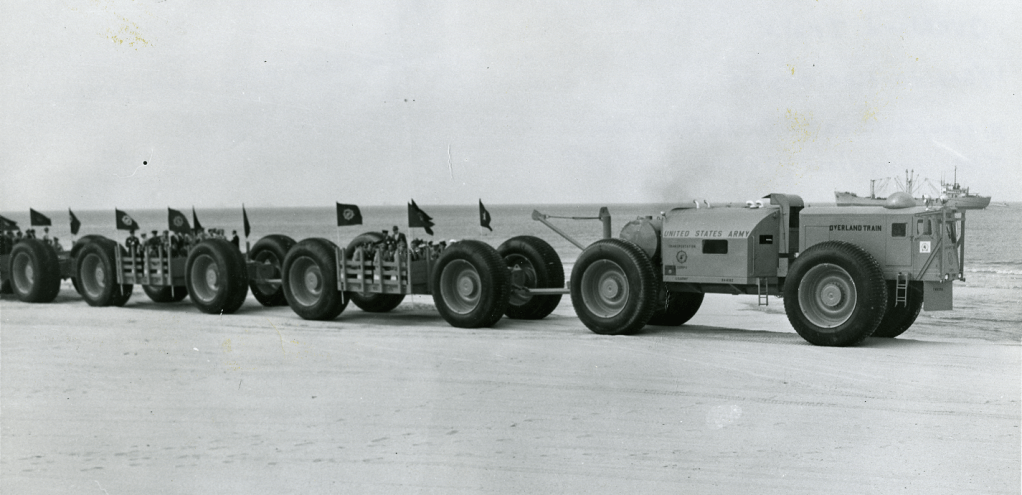
It is uncommon to see an image with the Sno-Train on the beach, let alone with troops and company or battalion guidon. I date this photo sometime after it came back from Greenland in early to mid 1957 and before August of 1960. Why August of 1960? You will have to wait until the book comes out!
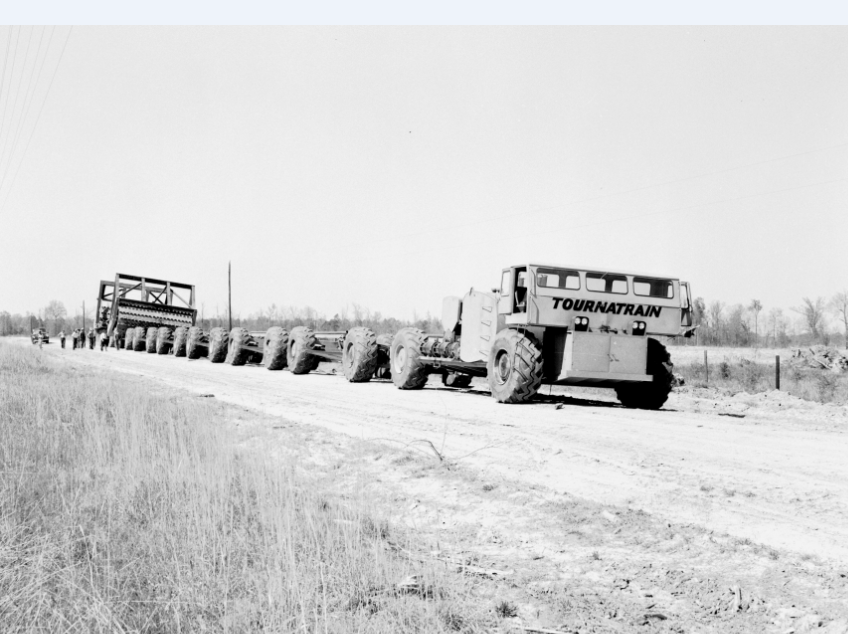
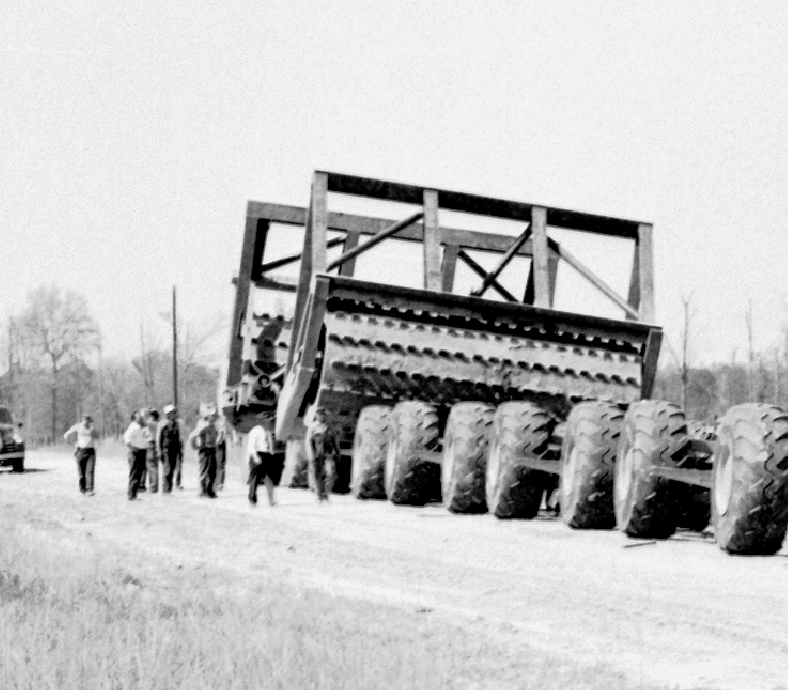
A critical part of any newly developed machine is testing. On April 3, 1954, the VC-12 Tournatrain, R.G.’s successor to the Tournatrain, carried the front and rear push beams and rollers to the Tree Roller/Tree Crusher. The total weight of one machine was 100 tons, with the rollers and push beams seen in the photo, contributing significantly to that weight. The zoomed image at the bottom shows the front roller and beam on one trailer and the rear roller and beam on another trailer.
VC-12 Tournatrain carrying a Tree Crusher push beams and rollerZoomed – VC-12 Tournatrain carrying a Tree Crusher push beams and roller
Later in the month, the VC-12 Tournatrain was scheduled for some very important visitors.
Dale Hardy contributed significantly to this article.
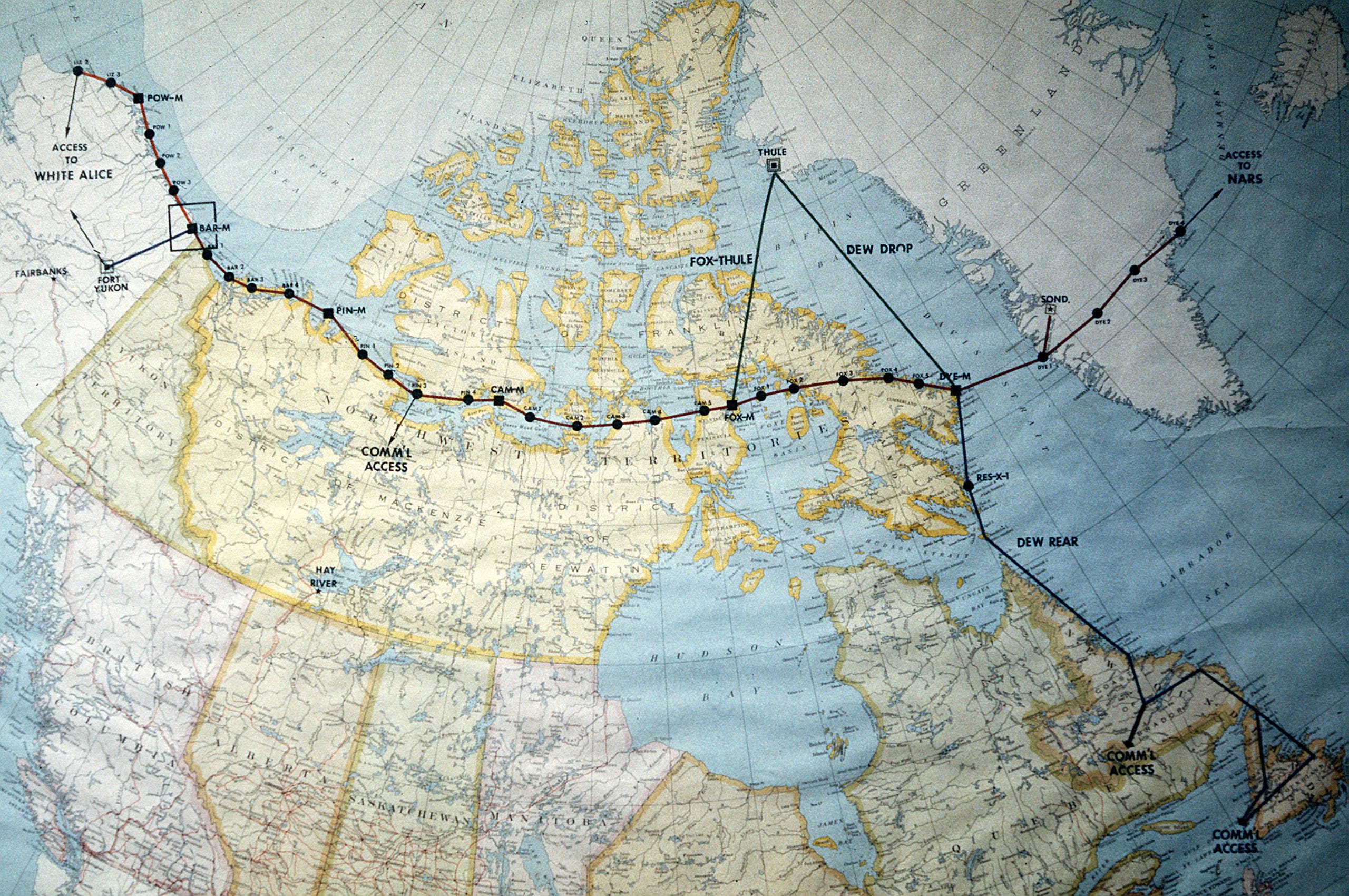
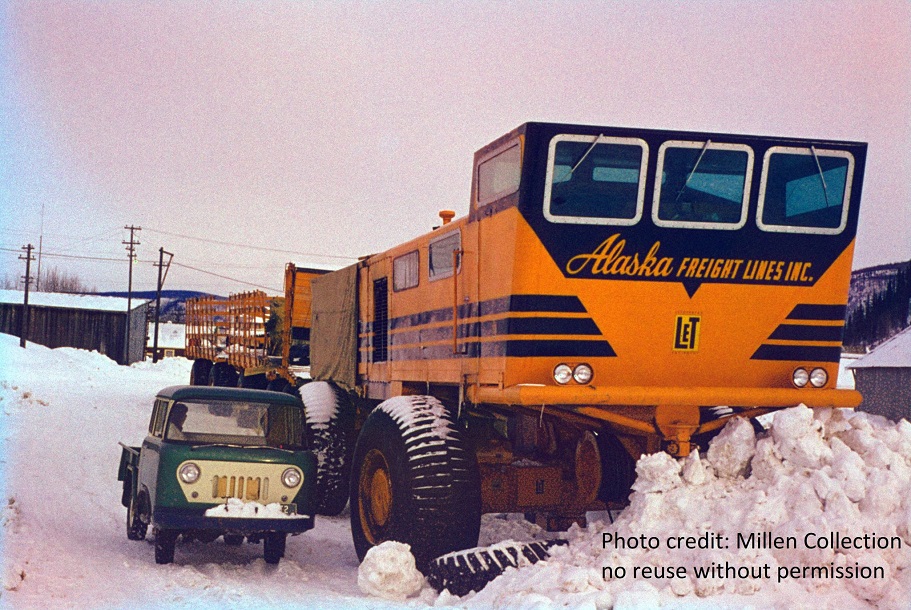
The Distant Early Warning (DEW) Line was a line of radar stations spanning from Alaska, Canada, and parts of Greenland. Large quantities of materials were needed to build and resupply these stations. There were a total of 63 remote radar sites. The President of Alaska Freight Lines (AFL) proposed to the government contractor building the DEW Line, that they could haul 500 tons of materials to these stations. As part of the contract, AFL would not be paid until all 500 tons of freight were supplied. In January of 1955, AFL contracted with R.G. LeTourneau, Inc to build the Sno-Freighter to accomplish the resupply contract.
DEW Line map
image: Millen Collection
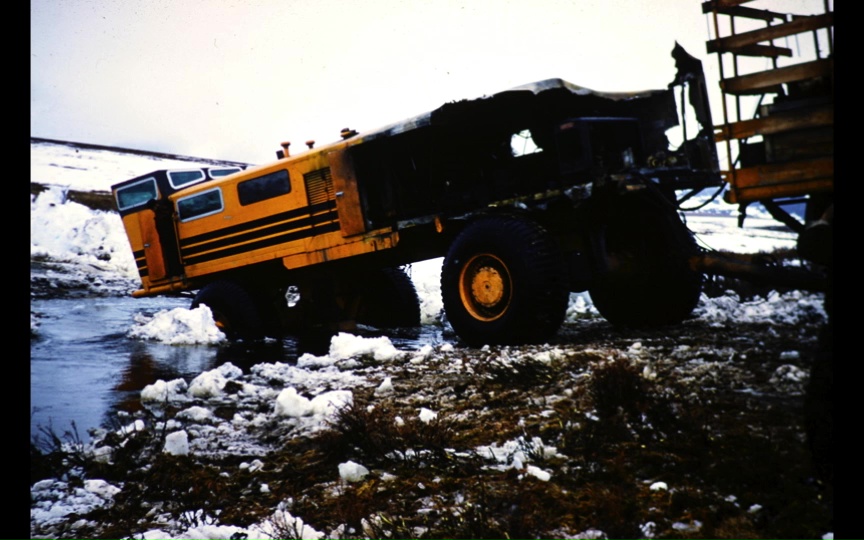
In the spring of 1956, its final supply trip, the Sno-Freighter lost control in the ice and snow and jackknifed. A fire started because of the jackknife, which destroyed it’s ability to transport under it’s own power. Cliff Bishop’s book “18 Wheels North to Alaska: A History of Trucking in Alaska” talks about his efforts to recover the Sno-Freighter from its break down. Fast forward 6 years later.
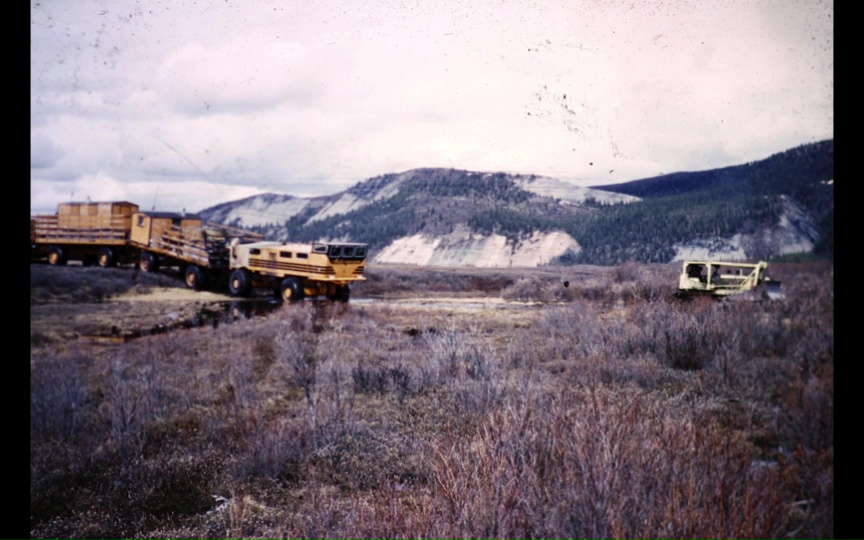
After a number of years of deteriorating in Canada, the government wanted it out of their territory. The United States Army was sent in to recover the Sno-Freighter in 1962. The images below show the Sno-Freighter as it makes its way from the Yukon Territory to Alaska.
image: M. Martinez
image: M. Martinez
The Sno-Freighter did not have the means to make it out of Canada on its own. As you can see from the image above-left, the entire engine and generator compartment are burnt out. As part of the research on the Overland Trains, I was fortunate to meet and interview the Non-Commissioned Officer in charge of the recovery out of Canada. More on how they did it in my book coming late 2021, early 2022.
As part of writing this book on the LeTourneau Overland Trains, I have read a couple of dozen books. Some are background and way off the path, while some are directly relevant to the topic at hand – telling the story of the Overland Trains.
“Atomic America” by Todd Tucker
“The Ice at the End of the World” by Jon Gertner
“Surface at the Pole” by James Calvert
A couple of books stand out for me. I am not even finished with “Atomic America” and it made the list. Jon Gertner’s “The Ice at the End of the World” is extremely well researched and written. I thought it flowed really well and is ripe with information. Finally, “Surface at the Pole” tells the story of the USS Skate, the first submarine to surface in the North Pole. The book takes the reader through a once in a lifetime journey to break through the ice at the North Pole.
We are a little more than half way through 2021. These books captured my attention and respect for well researched and written books. Thank you to the authors!
I started out buying the book Idaho Falls to learn more about the SL-1 reactor. Not more than 5 minutes after I bought the book, I received an email from a friend of mine talking about Atomic America. The latter is a much easier read and really well written so far. I recommend Atomic America for a more well rounded perspective and Idaho Falls for those that want to dive in.
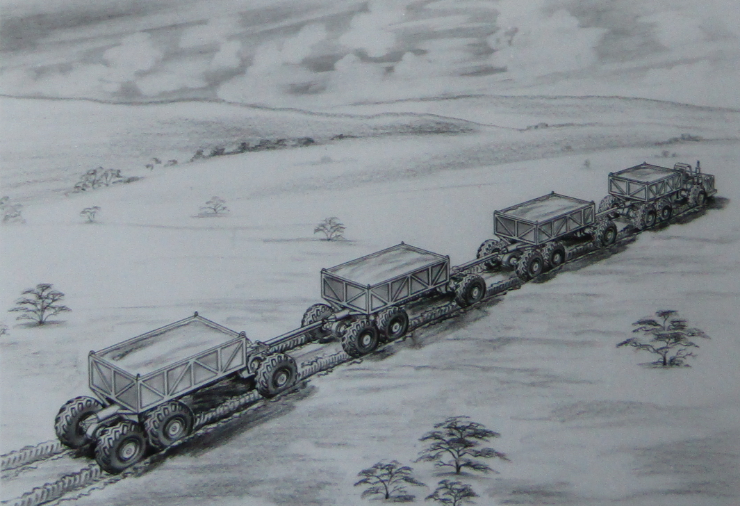
R.G. LeTourneau, Inc. drew a number of trailer concepts and trains before the 6 Overland Trains we know of today. His newly developed electric drive wheel seemed to spur his Train concepts. R.G. developed nearly a dozen train ideas during the early to late 1950s. The train concept below is a 6×6, powered electric drive developed for the Iraqi government. The lead car, or control car looks to use a Side Dump Train style front. The 4 containers on this train were designed to be removed and left at a work site, only to be picked up later. This train was never built.
undated train concept for the Iraqi government
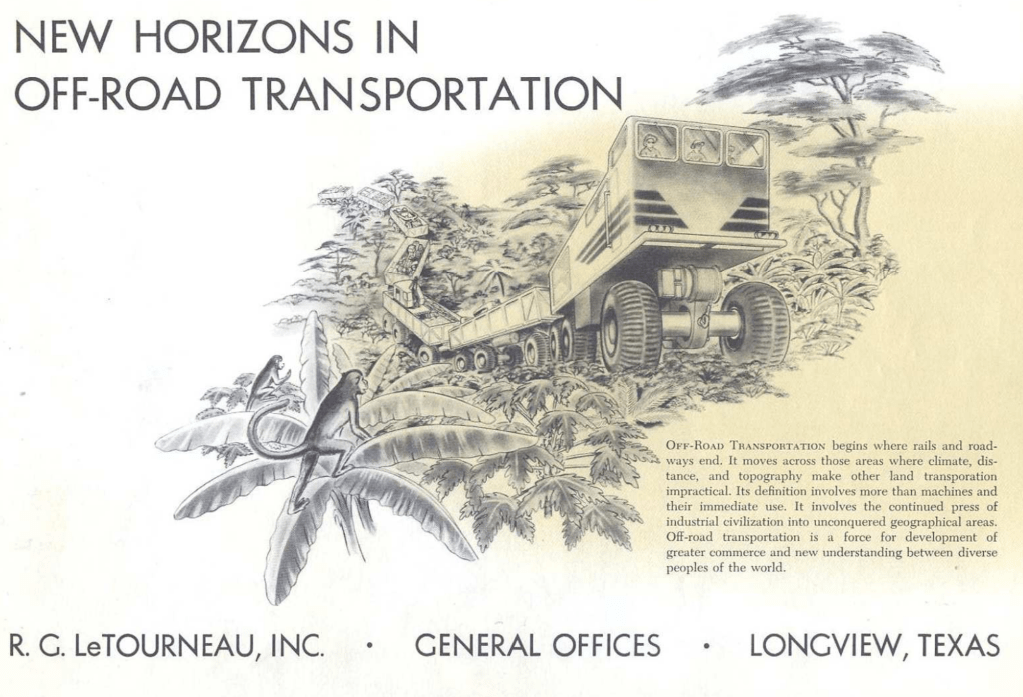
The train above was not the first to be targeted for use in a desert environment. The Sno-Freighter was also marketed for use in the Sahara! Read through the Sno-Freighter brochure below.
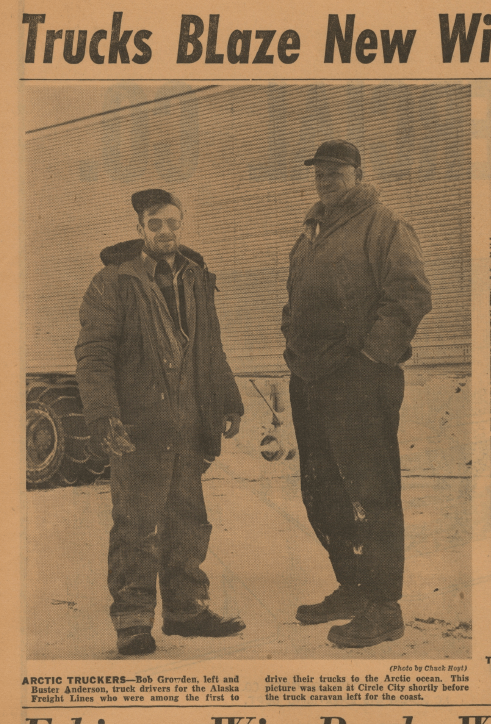
Robert (Bob) Growden was an Alaskan trucking pioneer. He would drive in conditions that other men would not. Bob had a genuine knack for people and greatly contributed to Arctic development. He worked for Alaska Freight Lines during the active time of the Sno-Freighter in 1955.
In an interview with his son Dick on December 30, 2020, he talked about his dad’s boxing history in Alaska.
My father was also a Golden Gloves boxer in Alaska. And when they were young Catholics growing up in Ruby, Alaska, the the boxing was a big deal there in town. Yeah, my father started out boxing I think as a lightweight and then he moved to light middleweight and then the bantamweight. Part of the reason why he moved through the way classes is because he beat everybody in his weight class. My Uncle Andy I was fortunate enough to talk to him shortly after my father before he died himself and I said, well, what was it like then?
You could not believe the turnout in the town. Your dad was like this folk hero. If you know everybody the priest didn’t couldn’t legally bet on anybody because he didn’t want he was against the church’s Doctrine, but they would gladly give $20 to their best friend of bet to bet on your dad. Yeah right now was a lot back then and it was funny. He said as he grew in stature.
During my interview with Dick, I could tell that his father’s passing had a significant impact on him. I know that he is sorely missed. Read more about Bob and his contribution to Alaskan trucking in my Overland Trains book, due out sometime later 2021 or early 2022.
These last couple of weeks have been full of interviews, both in-person, email, phone conversations, and one video chat. The interview usually starts off with me asking when they served in Greenland, Alaska, or in other parts of the world. Once you start jogging the memories of these fantastic people, the information flows well. I do not understand how many of these service men still remember the details of their Temporary Duty deployments over 60 years later. As I rethink that last statement, the raw, mostly untouched Greenland of the mid to late 1950’s and early 1960’s was a sight to see. They were figuring out how to make the equipment work in Arctic extremes.
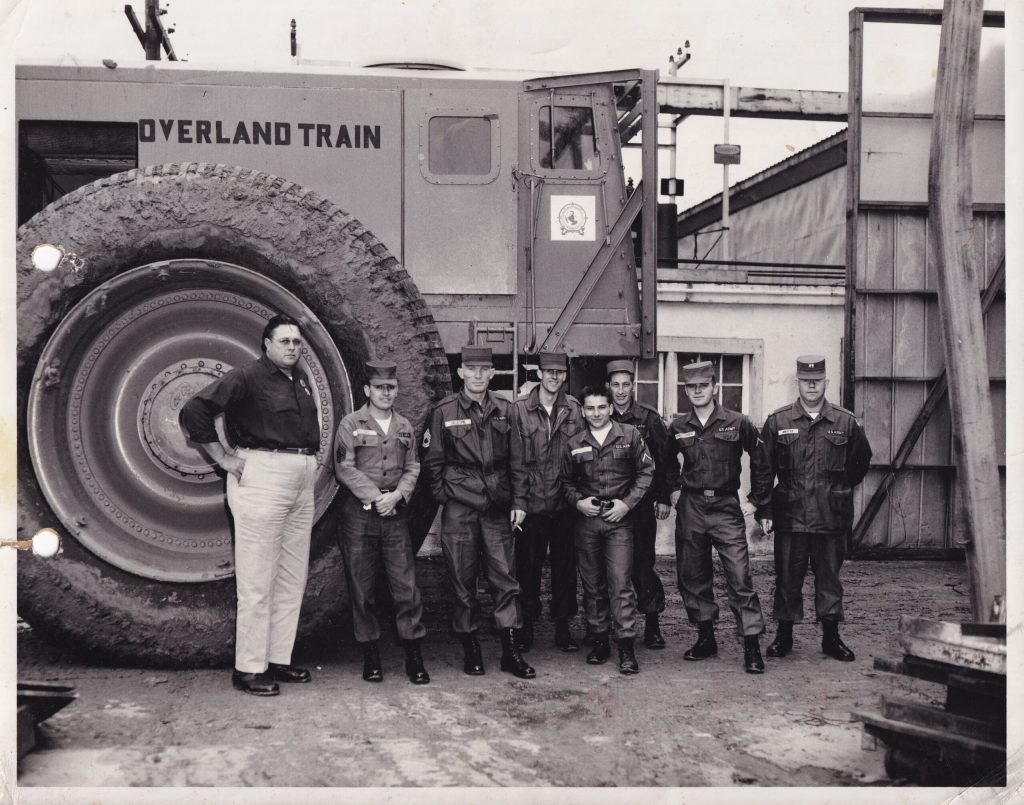
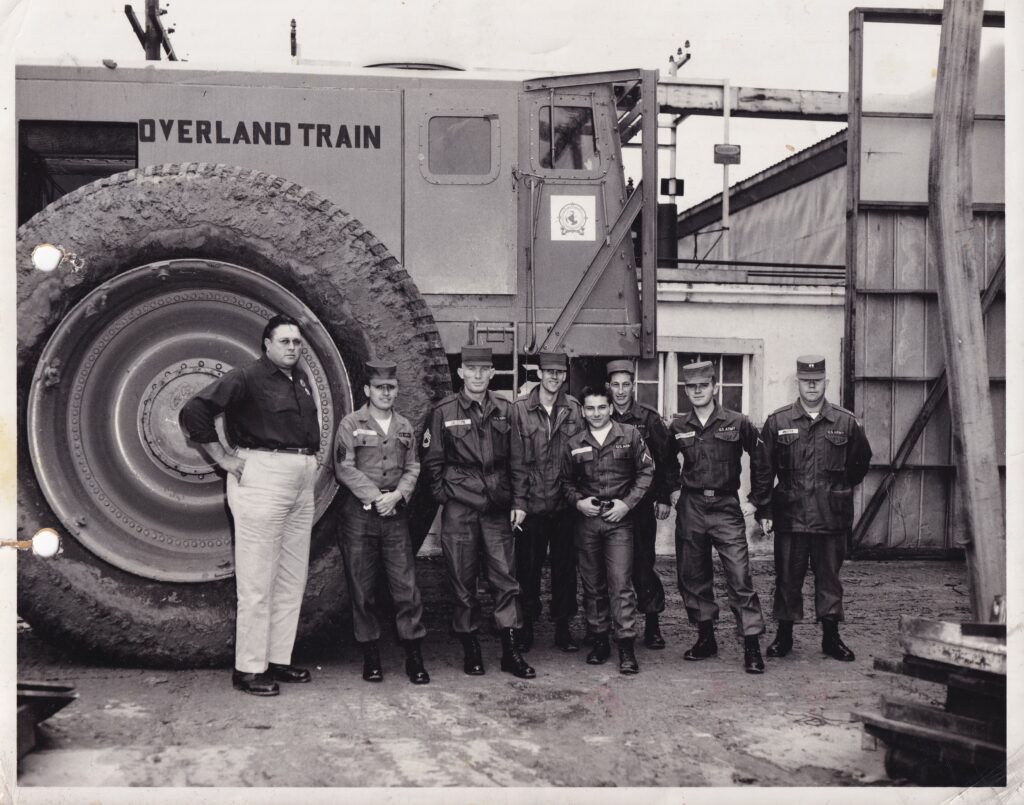
Around a month ago, I had a person reach out to me because they found this website. This contact has led to a wealth of new information and the opportunity for me and my wife to meet some truly great people. I met them both for lunch around 20 minutes from my house. Later next week, my wife and I went over to their house, around 30 minutes away, and spent three hours talking over pizza and beer. He was a Korean and Vietnam Vet, and had extensive time spent with the Sno-Train and Sno-Freighter – you just don’t hear of these individuals any more. He provided the image below from his time in Fort Eustis, VA.
Image courtesy M. Martinez (2nd from the left). Fort Eustis, VA
I am still processing the data from my trip to Texas. Rest assured, the pages are flowing!
Willow Freeze was a 5 phase maneuver during the winter of 1960-1961. It involved elements from the United States Army Transportation Corps, United States Army Transportation Board Task Detachment Logistical Support, and others. The goal of Willow Freeze was to figure out logistical operations in Arctic terrain. The Sno-Train was one of many different types of logistics machinery. I will cover Willow Freeze and subsequent recovery operations in great detail within my book.
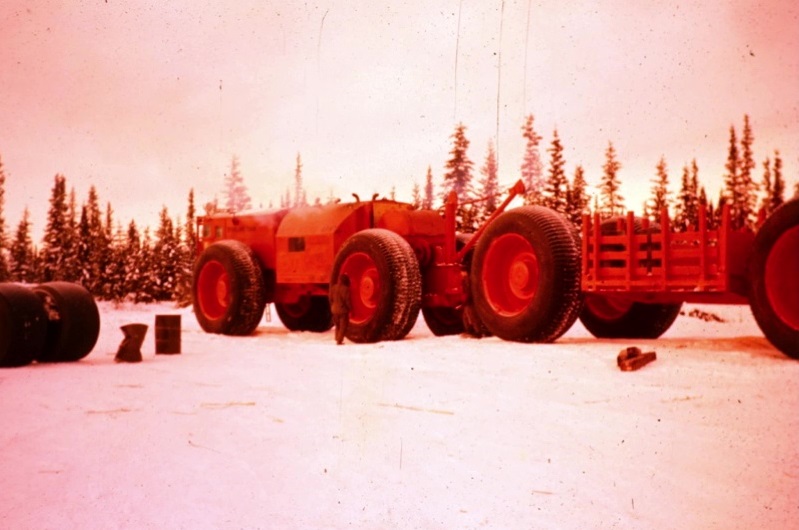
Sno-Train during Willow Freeze – image courtesy Marty Martinez
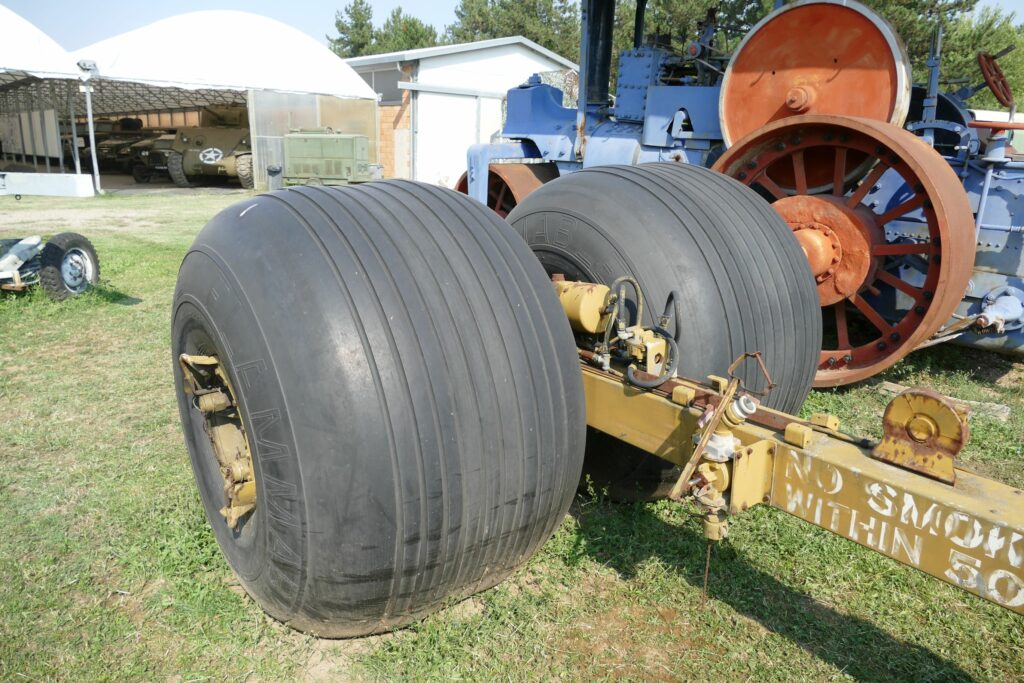
The image above shows the Sno-Train and two large wheels to the left-hand side. These wheels were the 1,000 gallon Rolling Liquid Transporters (RLT). The RLT were designed to transport fuel within the wheels. They performed well over the terrain. The Army’s only concern was that fuel could only be dispensed out of one RLT at a time.
Rolling Liquid Transporter – image: maquetland.com



 Overland Trains