Articles

  • Alaska Freight Lines Sno-Freighter Swinging Axle Assembly

    Alaska Freight Lines Sno-Freighter Swinging Axle Assembly

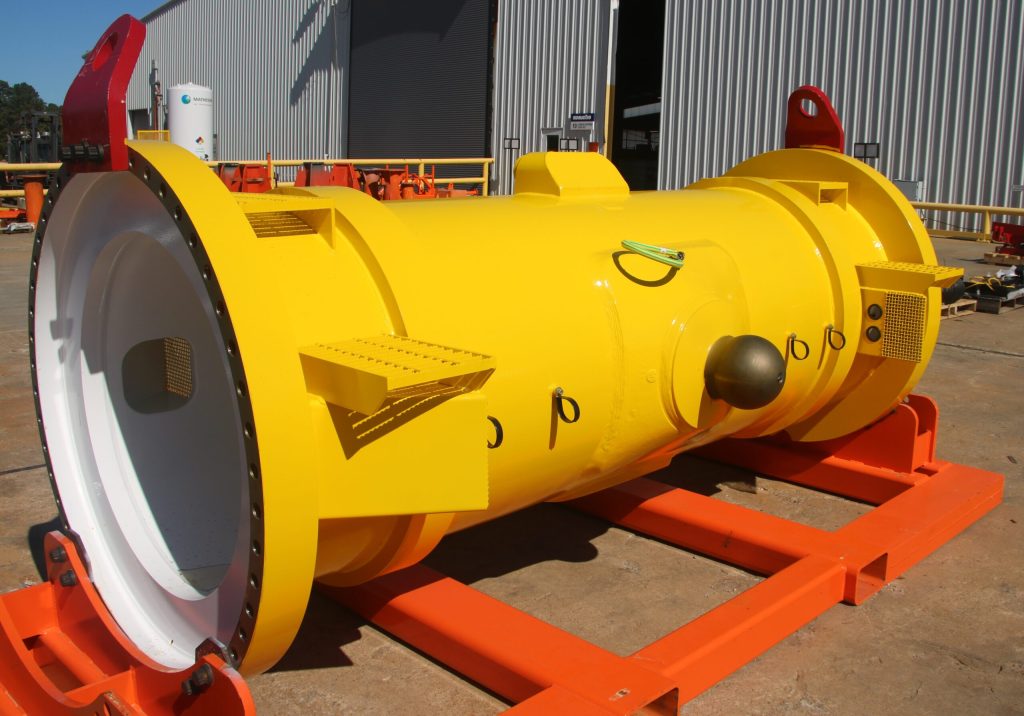
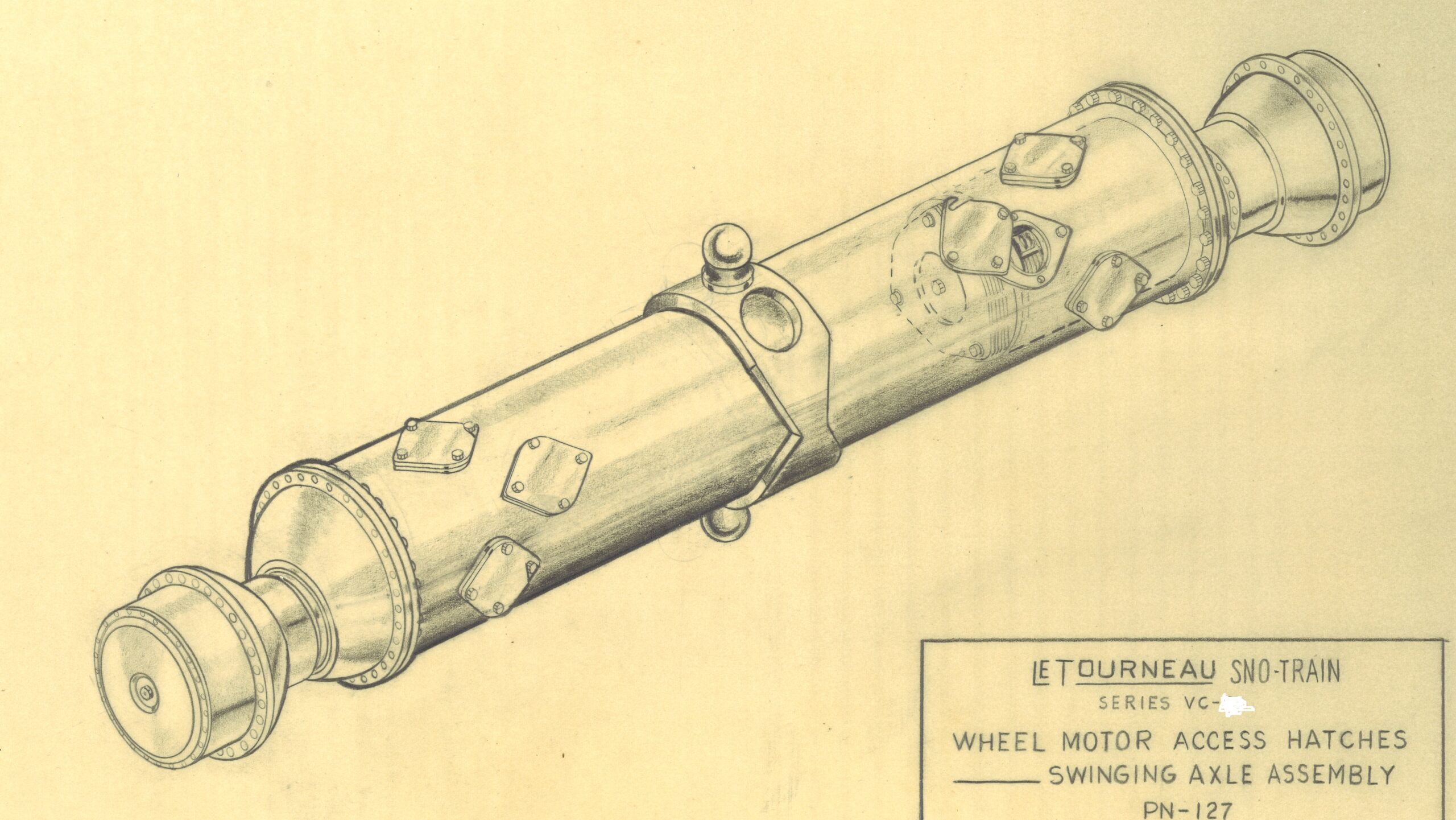
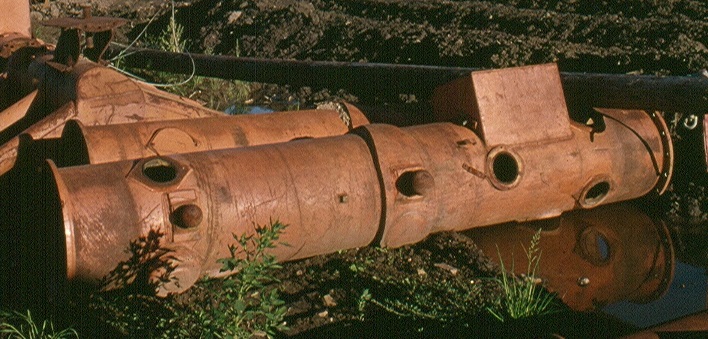
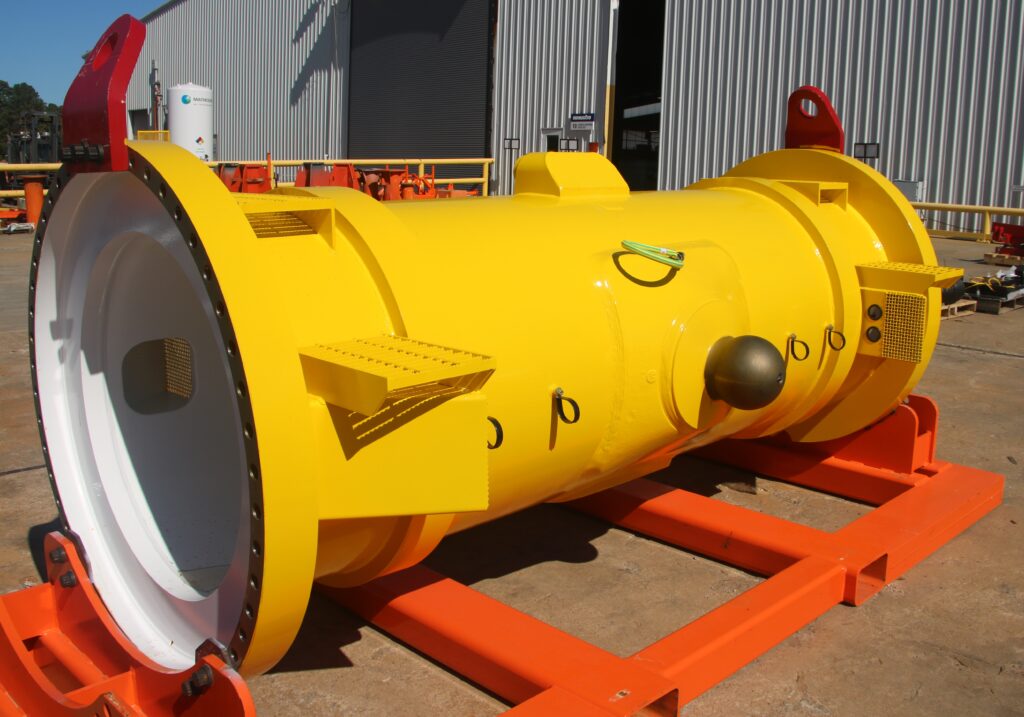
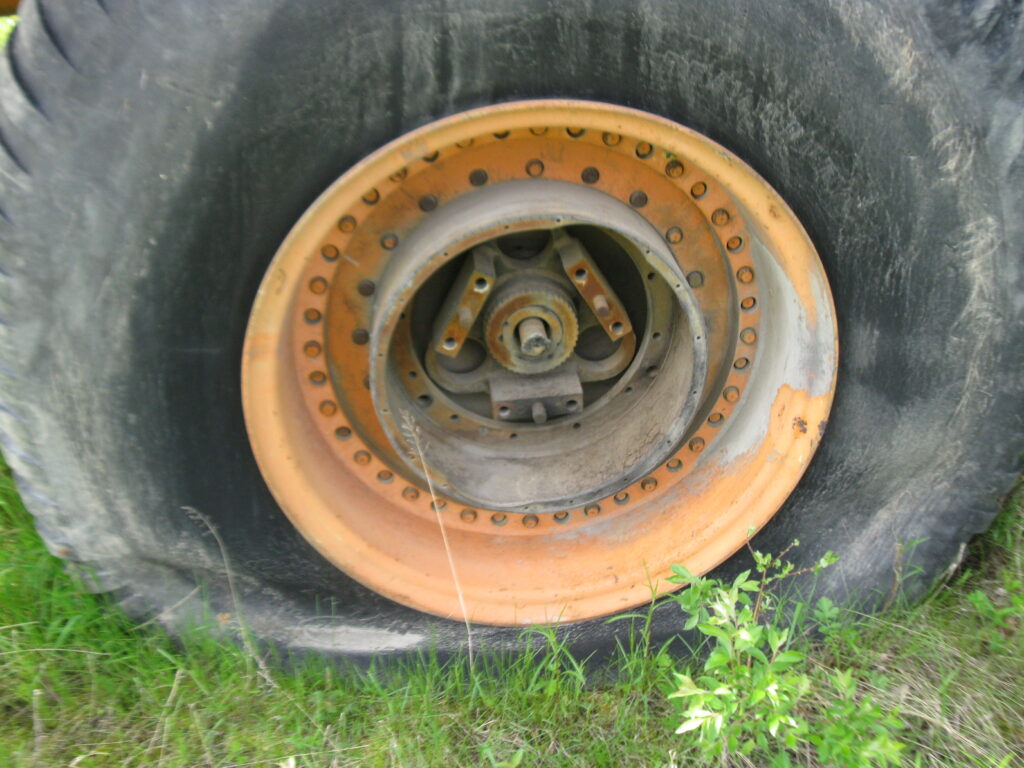
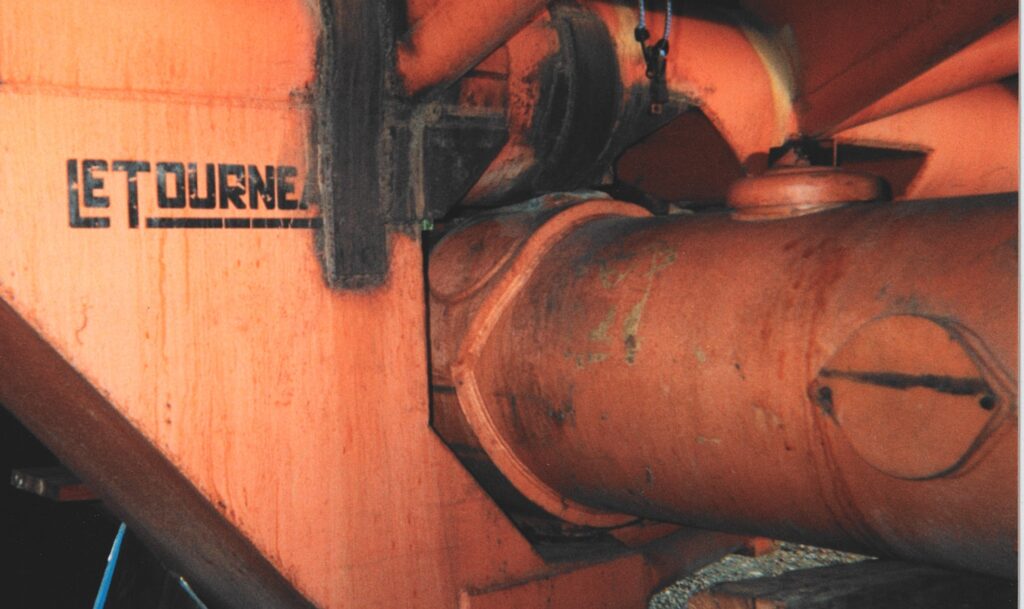
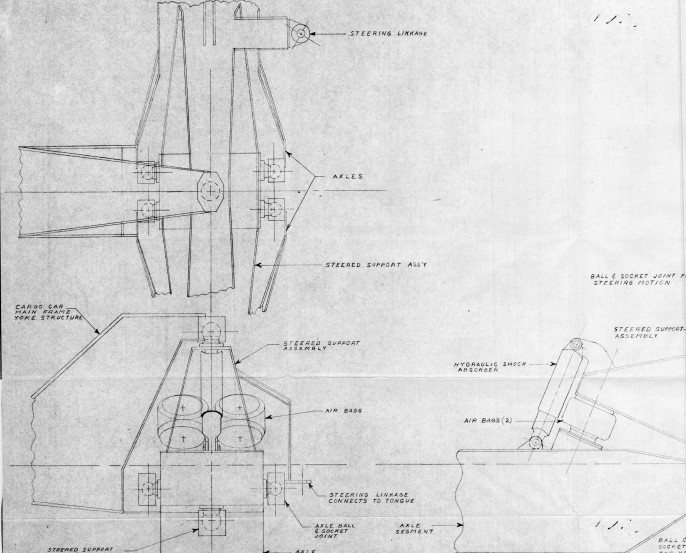
    When Alfred Ghezzi purchased the Sno-Freighter for supply runs to the Distant Early Warning Line, he never realized that it would make just three working trips before coming inoperable. Over the last couple of months, I have been contacted by two individuals about suspension and steering mechanisms. I thought that I would go ahead and pre-emptively post these images of the Sno-Freighter swinging axle assembly and explain LeTourneau’s Electric Drive assembly. A LeTourneau built electric motor is bolted to the mechanical gear reduction called a Driver. The entire assembly is inserted into the swinging axle assembly. The axle assembly also had wheel motor access hatches. You can see in the assembly drawing below where the electric motor would be accessible by removing the small hatch cover.

    The modern day swinging axle assembly with pivot balls. Image Dale Hardy
    Sno-Freighter exposed Driver housing. Image Jeffrey Smoker.
    The pivot balls are on the top and bottom, hidden from sight. Image source unknown – for education purposes.
  • “Red” Overland Train Painting

    “Red” Overland Train Painting

    The image below was painted by Marathon LeTourneau, Co.’s Art Supervisor and company artist H.D. “Red” Reynolds. He started his professional career as a painter in 1951 for LeTourneau College. Reynold’s private paintings mainly focus on nature and wildlife. He was active in local Longview, Texas art events and in his encouragement of youth participation in the art field.

    Before companies had marketing departments filled with Mac laptops, companies used to employ artists. The R.G. LeTourneau, Inc. company art is amazing to see – the shading, precise line work, and attention to detail is unimaginable by today’s standards. The painting shows the Overland Train Mark 2 traveling over Arctic terrain accompanied by a weasel. As you can slightly make out, exhaust is coming from the last two cars and the engine and generator set in the control car. The painting now resides in a private office in Longview, TX.

    Gregg County Historical Museum hosted a R.G. LeTourneau exhibit from April 13, 2021 through June 12, 2021. During which time, the painting, or a print of it, was on exhibit.

  • Eielson Air Force Base to Receive Micro-Reactor in 2027

    Eielson Air Force Base to Receive Micro-Reactor in 2027

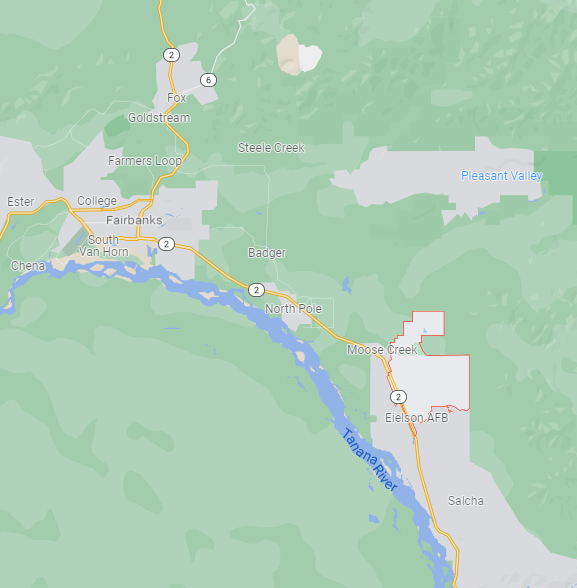
    The United States Department of the Air Force announced that Eielson Air Force Base (AFB) will start producing 1-5 mW micro-reactor nuclear power by 2027. Executive Order 13972 promoted small nuclear reactors for use in national defense and space exploration. Eielson AFB is southeast of Fairbanks, Alaska. This isn’t the first time that Alaska has hosted a nuclear reactor. As part of the Army’s Nuclear Power Program in the mid 1950’s, the Army developed a number of small reactors to test nuclear concepts and feasibility.

    The United States Government is approaching nuclear micro reactors on two fronts. Project Pele is reviewing mobile micro-reactor technology with the Defense Logistics Agency. That reactor will be based at Idaho National Laboratory. Eielson AFB will host the stationary micro reactor technology pilot through the Department of the Air Force. The latter project will post updates at https://www.safie.hq.af.mil/installationenergy/currentinitiatives/.

    Eielson AFB – Google Maps – for educational purposes. https://goo.gl/maps/qVBMJdjjfKgNjbnA9
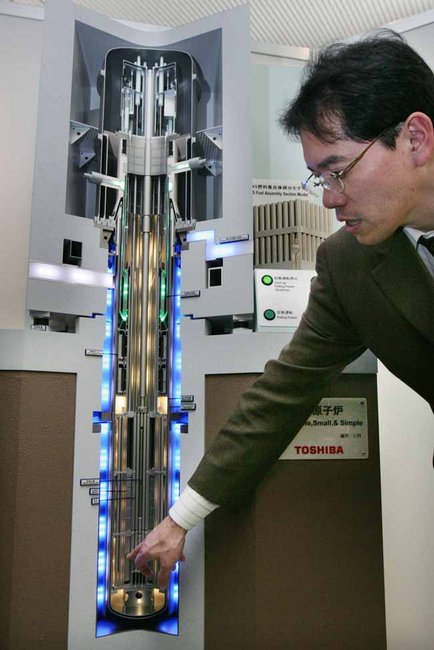
    Toshiba micro-reactor. Image: unknown source. for education purposes only. contact for attribution.

    Here is the timing for the 2027 reactor go-live.

    • Sep 2020: Request for Information (RFI) released
    • Dec 2020: RFI responses received
    • Jul 2021: Data gathering and environmental baselining site visit
    • Oct 2021: Public Announcement of Eielson as chosen micro-reactor pilot location
    • Fall 2021: Draft Request for Proposal (RFP) and compile environmental data
    • Dec 2021: RFP reviews
    • Feb 2022: Release RFP
    • Late 2022: Select vendor and release Notice of Intent to Award (NOITA)
    • 2022-2023: Begin permitting and licensing
    • 2024: Execute contract
    • 2025: Begin construction and pilot phase
    • 2026: Pre-operational testing
    • 2027: End pilot phase, enter commercial operation

    I saved a number of articles on Neeva Spaces for you to review. These links provide access to the Executive Order and other *.GOV sources. https://neeva.com/spaces/O8_mvY8skQ6ZZ8K-9kOAvfkBsb2tDYFFZX3dCS7v.

    • The Sno-Freighter’s Final Re-Supply Mission

      The Sno-Freighter’s Final Re-Supply Mission

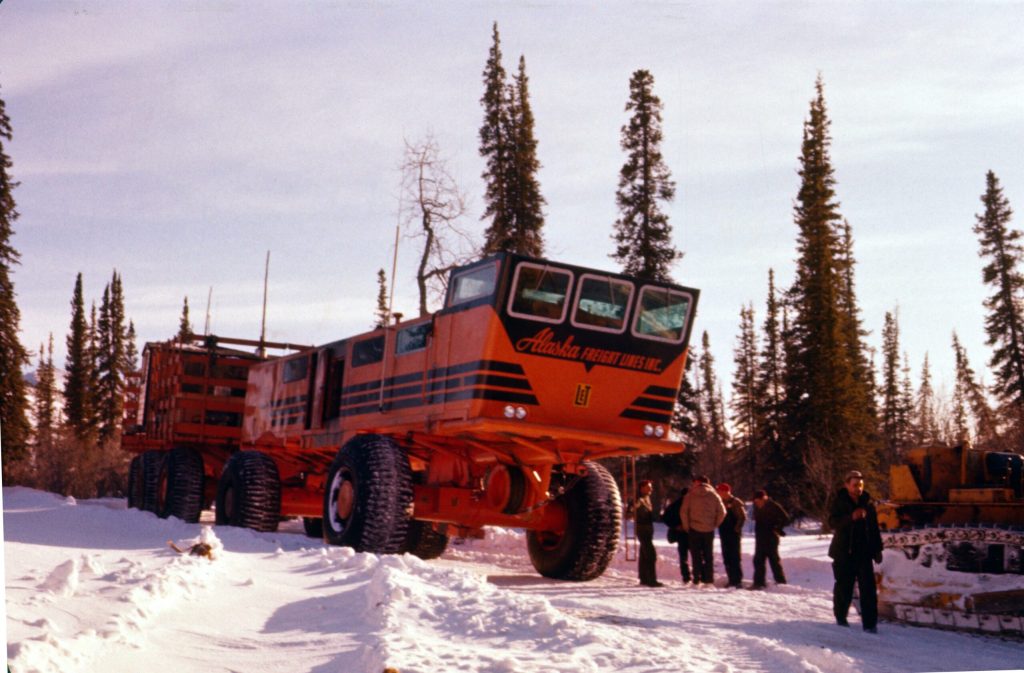
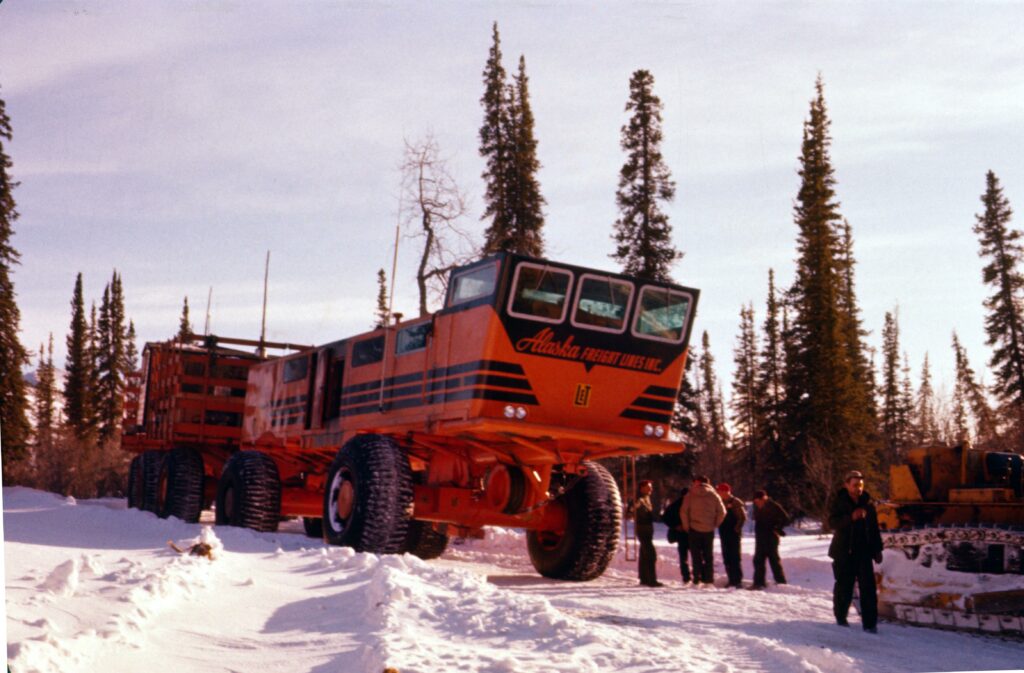
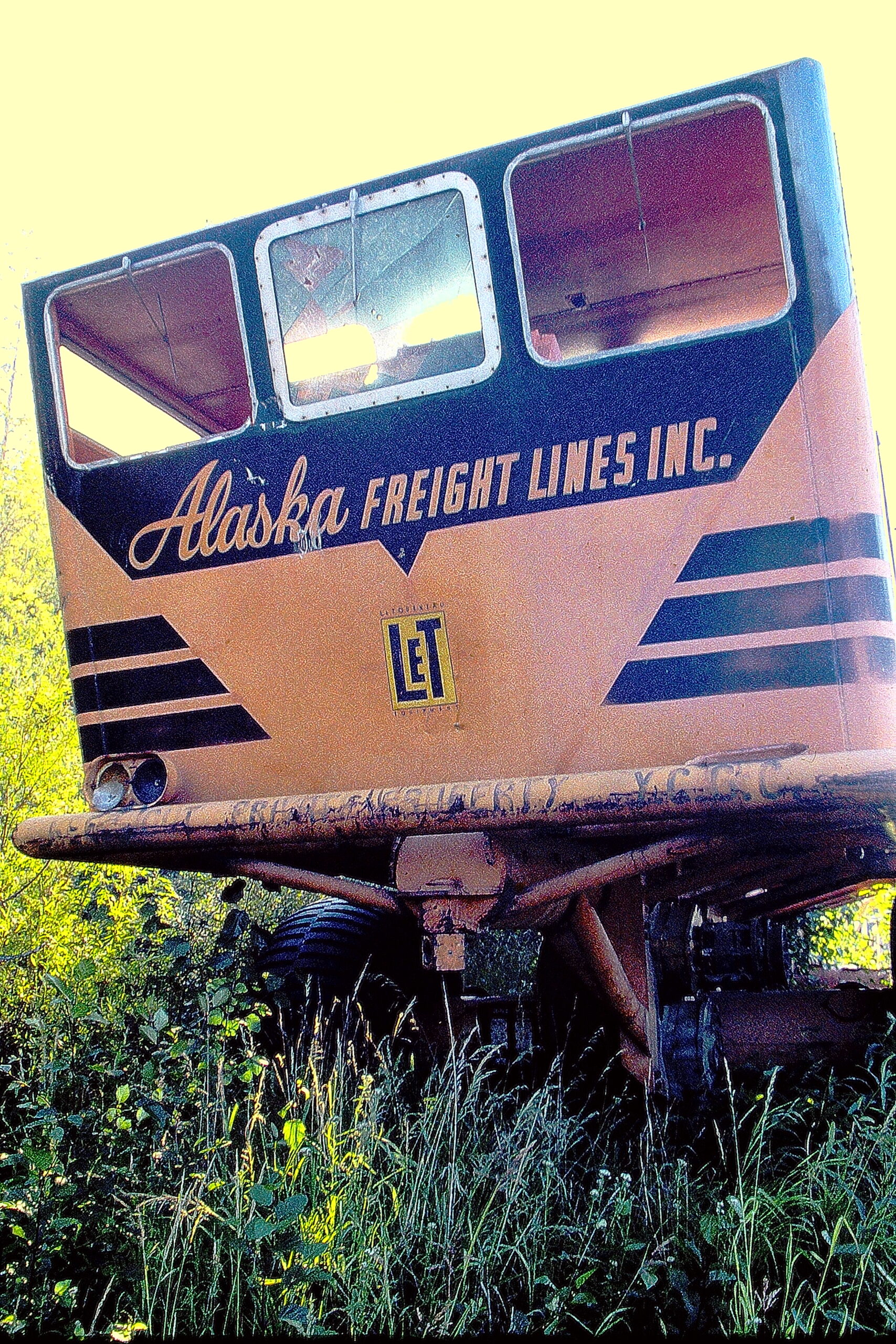
      In the spring of 1956, the Sno-Freighter was on it’s last DEW Line resupply mission. The Sno-Freighter did not travel alone on these re-supply missions. It typically convoyed with 3-5 Cats as it traversed the 400 mile road that Alaska Freight Lines had built.

      The two images below were captured on the same re-supply route, but at different points in the journey.

      The image below shows the same point in time, but a different angle. Notice Maurice standing in the khaki colored jacket and tan shoes with his back turned to us. Shortly after this photo, likely that night, the Sno-Freighter would jack-knife and catch fire, ending Alaska Freight Line’s DEW Line resupply mission.

      Sno-Freighter in April 1956. Image: Millen Collection
    • TRADCOM Visitors Inspect Firestone’s 120x48x68 Tires

      TRADCOM Visitors Inspect Firestone’s 120x48x68 Tires

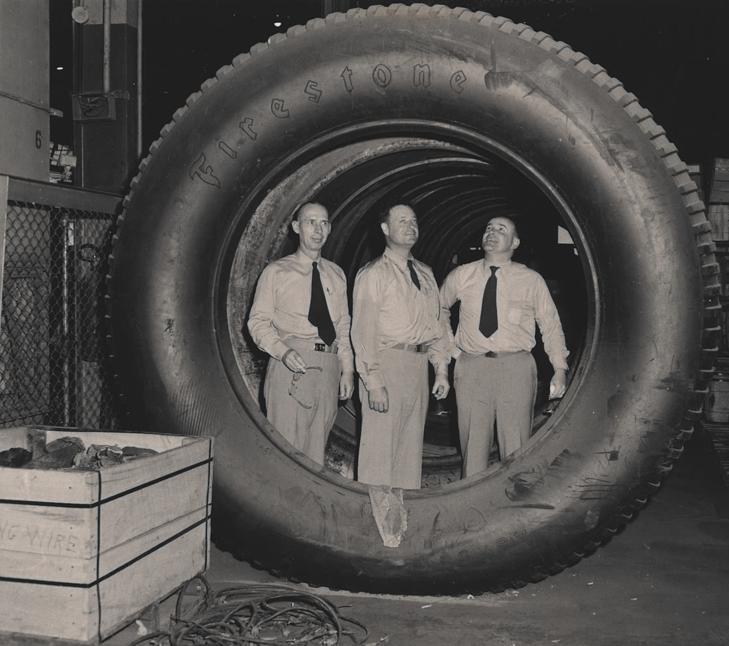
      In April 1954, visitors from TRADCOM inspect the 120x48x68 tires. These tires were designed by LeTourneau and built by Firestone.

    • Bob Byers, “Memoirs of an Alaska Bush Pilot”

      Bob Byers, “Memoirs of an Alaska Bush Pilot”

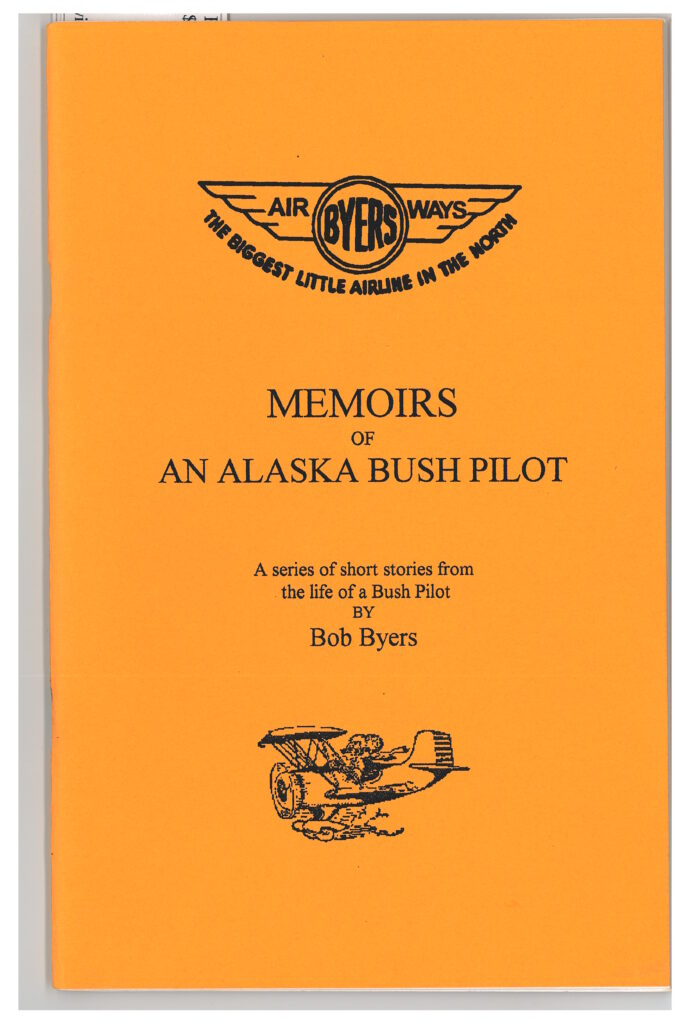
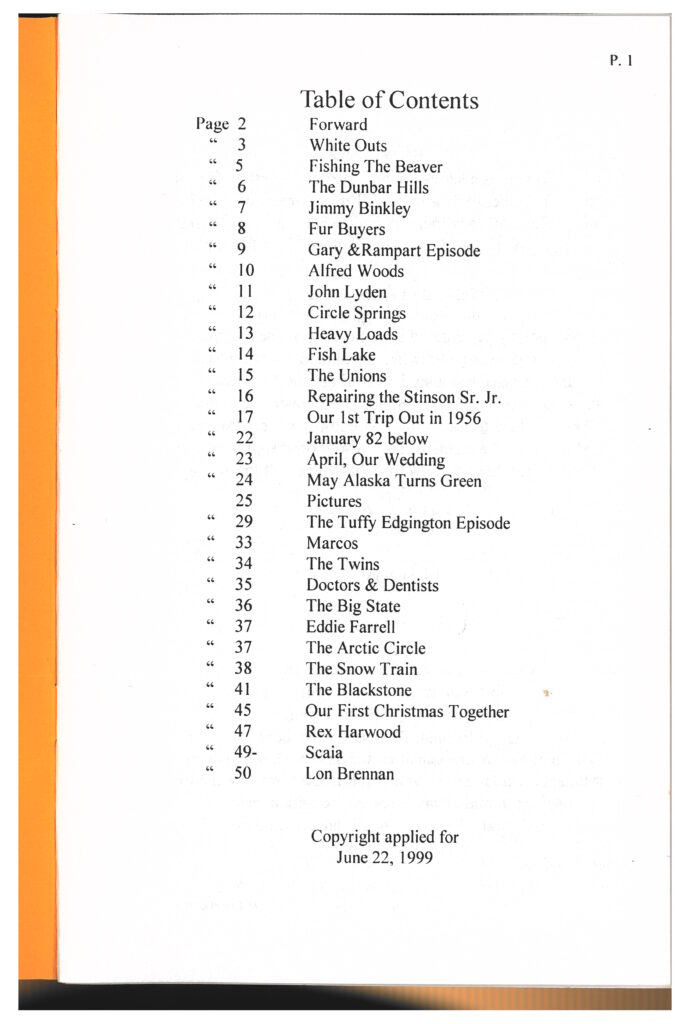
      Robert (Bob) Dale Byers was an Alaska Bush pilot for 17 years. In one of his short stories, he talks about Alfred Ghezzi/Alaska Freight Lines and the Distant Early Warning Line resupply mission for the United States government. The Table of Contents is posted below. Much of the content about an Alaska Freight Lines plane going down with Forest Wright and Andy Warwick were sourced from Bob’s book. He only printed a little more than a hundred copies. Bob past away in Des Moines, WA on February 17, 2012.

    • Sno-Freighter Serial Number Tags

      Sno-Freighter Serial Number Tags

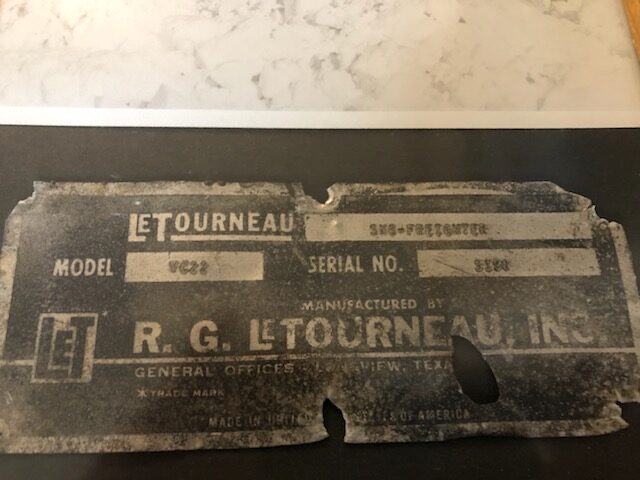
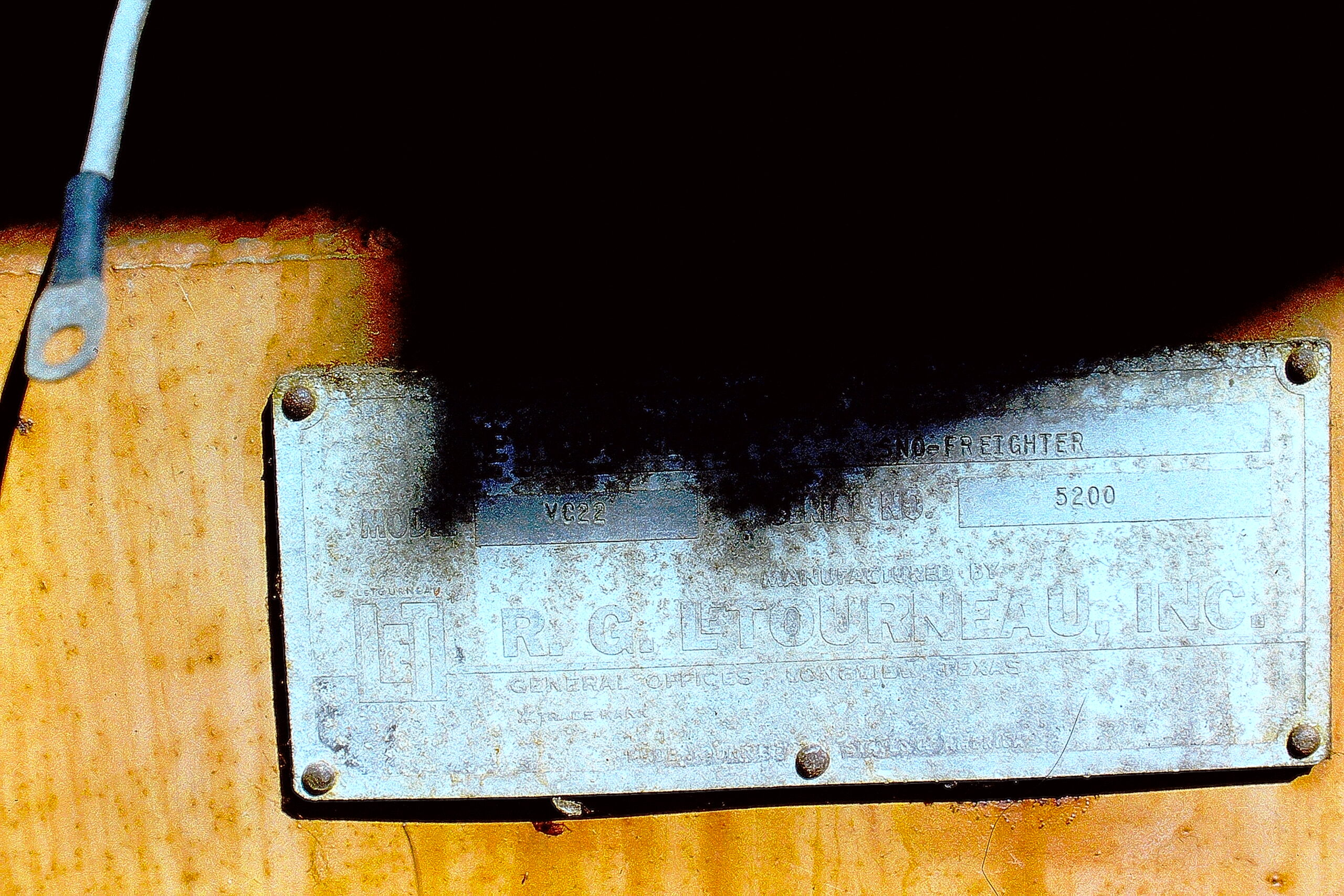
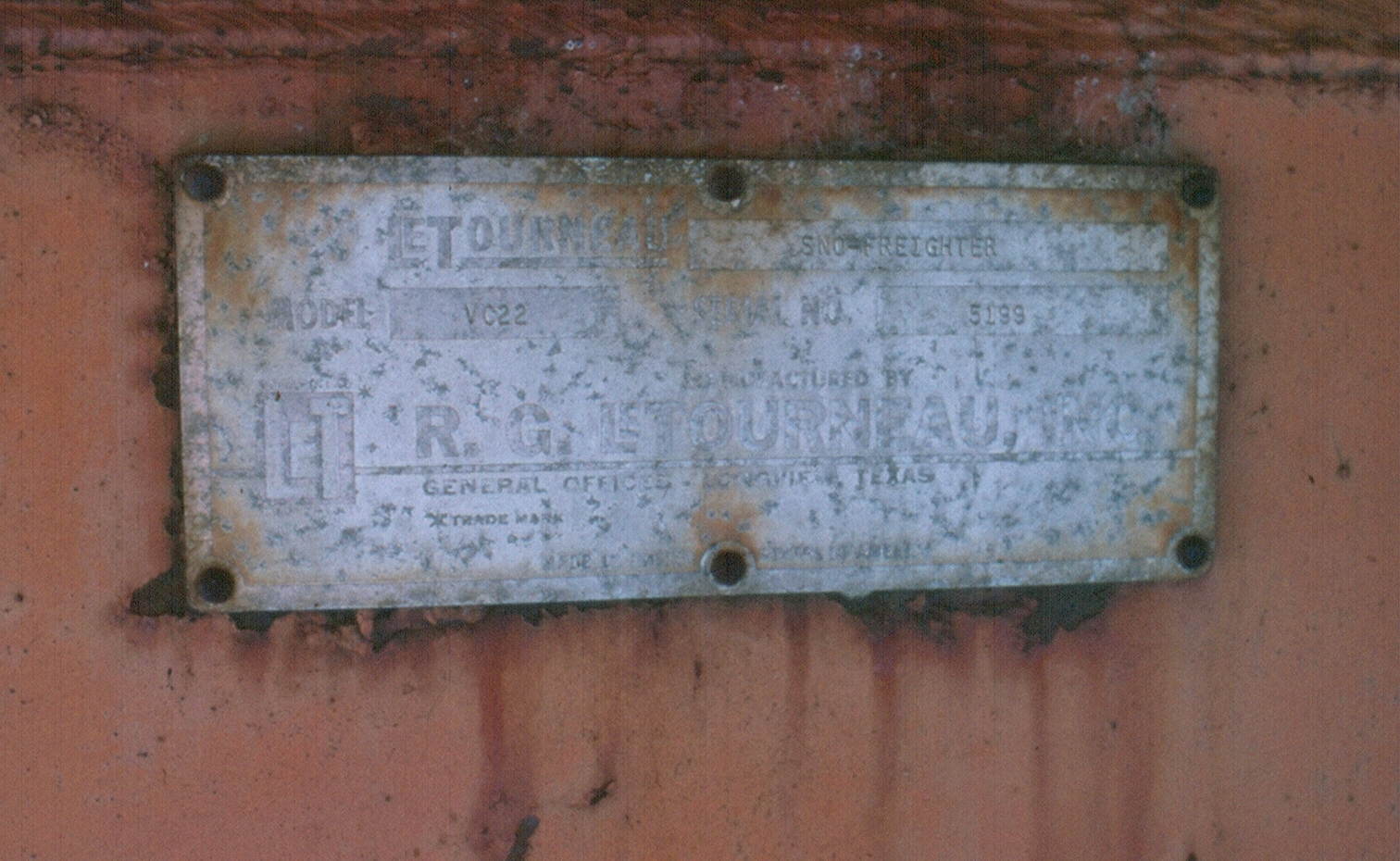
      The Sno-Freighter control car was serial number 5198, while the 4 trailers were serial numbers 5199-5203.

      The serial number tag was pulled from the Sno-Freighter and rests safely framed on a person’s wall in Alaska.

      The Sno-Freighter trailer serial number tag should still be on the unit, unless it has been pulled by someone.

    • Overland Mark II Suspension Drawings

      Overland Mark II Suspension Drawings

      There was a request of Facebook for drawings of the suspension on the Overland Mark II, or as the military contract number was cites, the TC-497. These drawings are from the Phase I Overland Train Project report dated December 28, 1959.

      The first drawing is the suspension.

      The second drawing is the cargo car drawing from the same report.

    • Mobile Micro Reactors Resurrected from the Army’s Nuclear Power Program

      Mobile Micro Reactors Resurrected from the Army’s Nuclear Power Program

      In 1960, the Army’s Nuclear Power Program had completed several nuclear reactors for research and testing purposes. Their micro-reactor (MCR (MM-1)) expected outputs were 500-800kW (MCR) and 2,000-3,000kW (MM-1). The MM-1 was targeted for use on a large logistical train and designed to help offset Petroleum, Oil, and Lubricants (POL) logistics needs in active war-time environments. During the 1960-1970 Army estimates, a theater of military operations would require fuel equivalent to 3.4 gallons/man/day to 7.5 gallons/man/day.

      The Army’s Nuclear Power Program had conceptualized the MM-1 reactor being placed in a logistical cargo carrier. Image from U.S. Army Engineer School, Mobile Nuclear Power Program Plants 1960-1970.

      The MM-1 concept never came to reality, as the radiation shielding needed to protect men and equipment was too heavy. In 2016, the Defense Science Board (DSB) identified energy use as a major requirement for military operations. We have know this since before the Army Nuclear Power Program in the 1960’s. I am not sure why this point needed to be justified again.

      Renewable power sources simply can not keep up with the military demands, which catalyzed the military to restart their efforts at a meltdown-proof (see TRISO fuel), miniature nuclear reactor concepts as Project Pele. As of March 22, 2021, to companies, BWXT Advanced Technologies and X-energy were given the go-ahead for their final mobile micro-reactor designs.

      Similar to the 1960’s designs, these modern day micro-reactors are targeted at electrical output between 1mW to 5mW (1,000-5,000kW). I doubt we will see another logistical cargo train concept anytime soon. If you want to read more about Project Pele and micro-reactors, here are a few good places to start.

      https://www.cto.mil/pele_eis/

      https://www.mobilemicroreactoreis.com

      https://www.defense.gov/Newsroom/Releases/Release/Article/2545869/strategic-capabilities-office-selects-two-mobile-microreactor-concepts-to-proce/

      https://www.ans.org/news/article-3260/draft-eis-released-for-project-pele-mobile-microreactor-demo-at-inl/