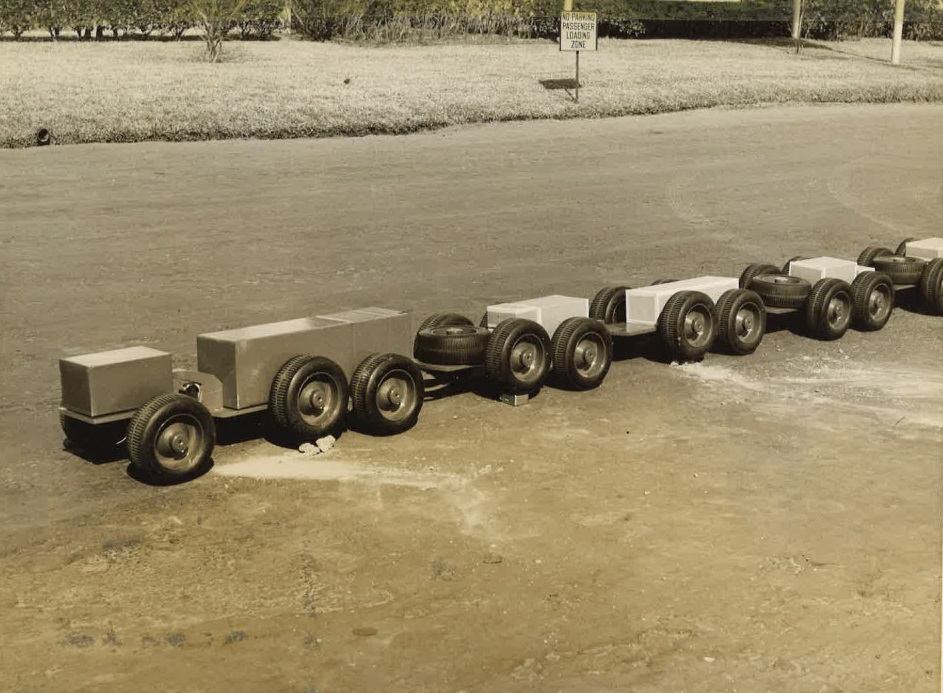
When R. G. LeTourneau, Inc. built the TC-497, it would prove to be the most ambitious Overland Train yet. The project was supervised and led by TRECOM from the Longview, TX factory grounds.
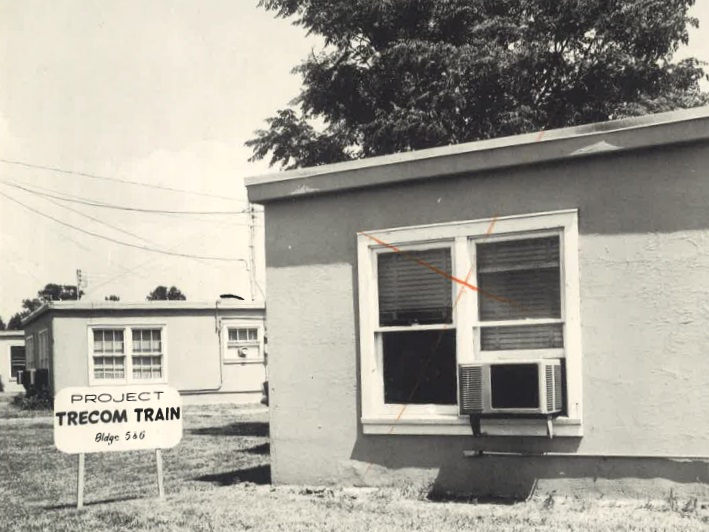
As part of the Army’s contract with LeTourneau, the project was spliced into four parts, or phases. Each of these stages was designed to build upon the previous, with an increasing amount of detail and development.
Building a Model TC-497
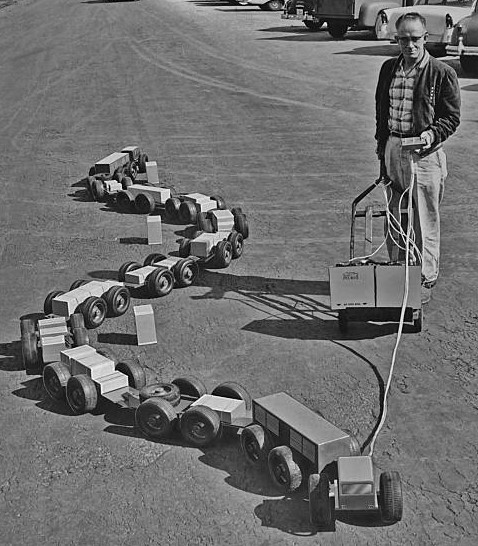
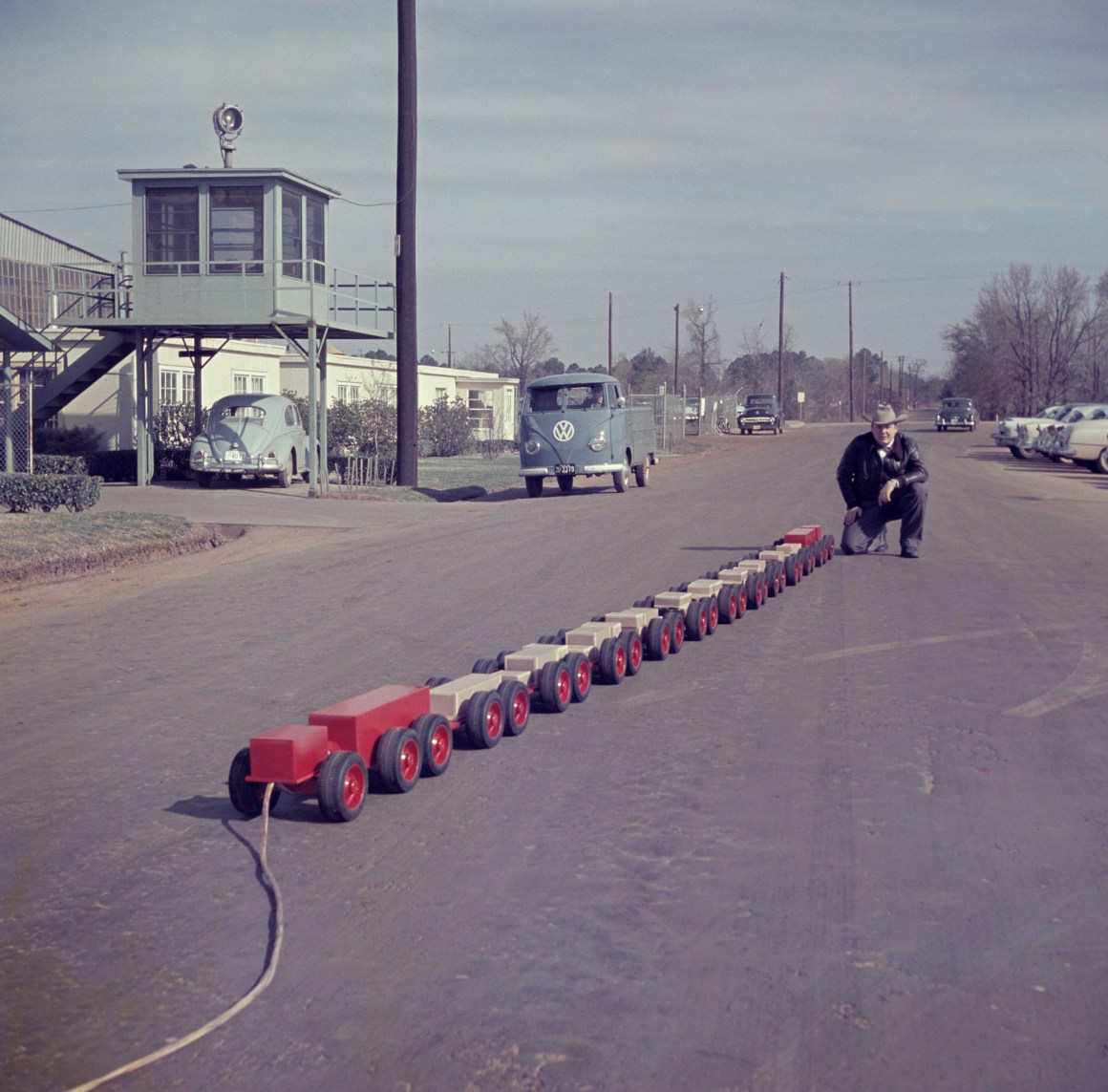
Ted LeTourneau, one of R. G. LeTourneau’s sons, was the Production Control Manager at R. G. LeTourneau, Inc. While not part of the Phase 1 requirements, the model was built during the early development stages. The model was built at a 1:16 scale, with parts made at the LeTourneau factory and off the shelf components. This was an early model, as the trailers all used a walking beam design, which was later scrapped from the design. The only walking beam found on the manufactured TC-497 was found on the Control Car.
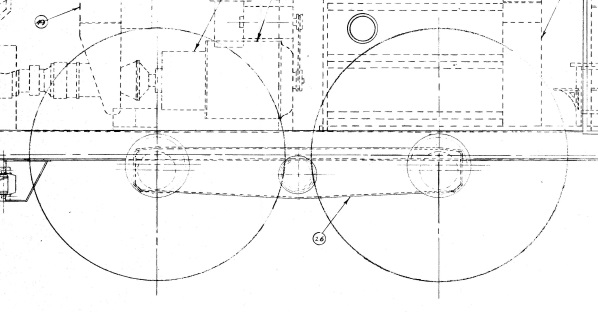
The model had individual wheel motors, just like the TC-497. A battery box delivered power to all of the wheels and controlled using a handheld remote control.
Art Production Order
During the 1950’s, computer based image editing was not possible. All image touch-ups and edits had to be completed by artists. In the image below, you can see the before and after touch-ups that company artist “Red” Reynolds completed on the model. One of the more dramatic changes are the addition of windows and reflectivity in the windows. The Control Car’s right-side tire has also been cleaned up to remove the sand. What other things can you see that have been modified?
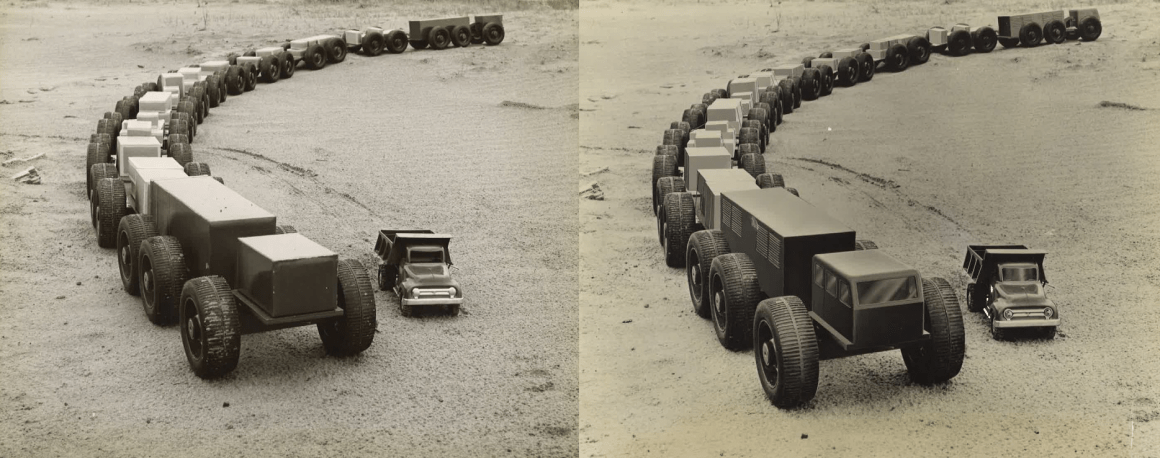
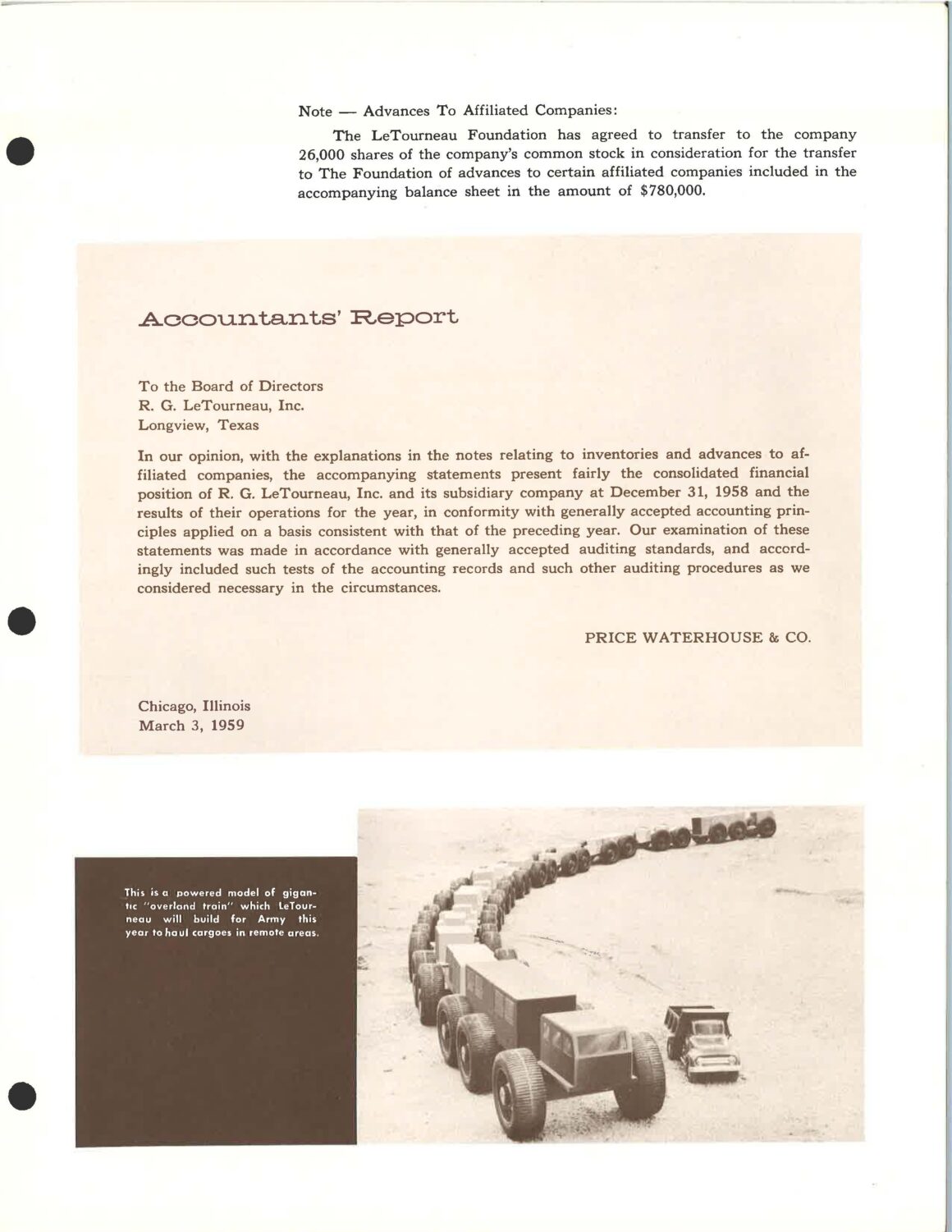
The final image was used in the 1958 R. G. LeTourneau, Inc. Annual Report.
You can read more about this model on page 248-251 of my book.
 Overland Trains